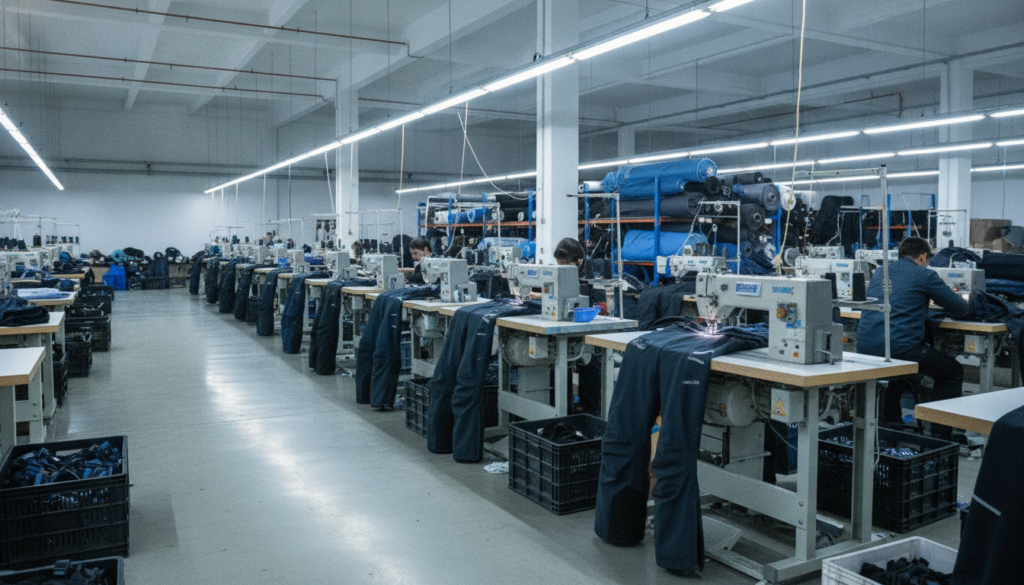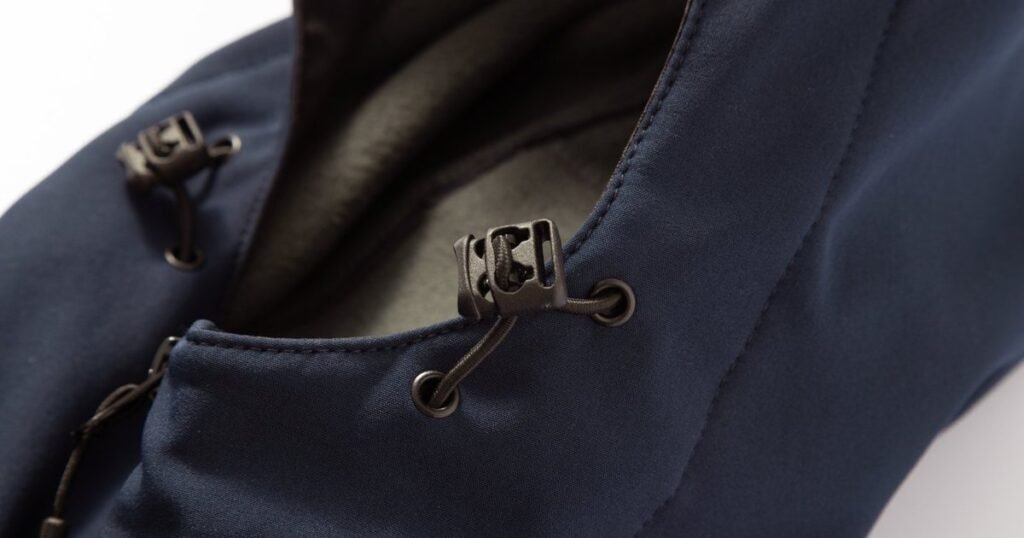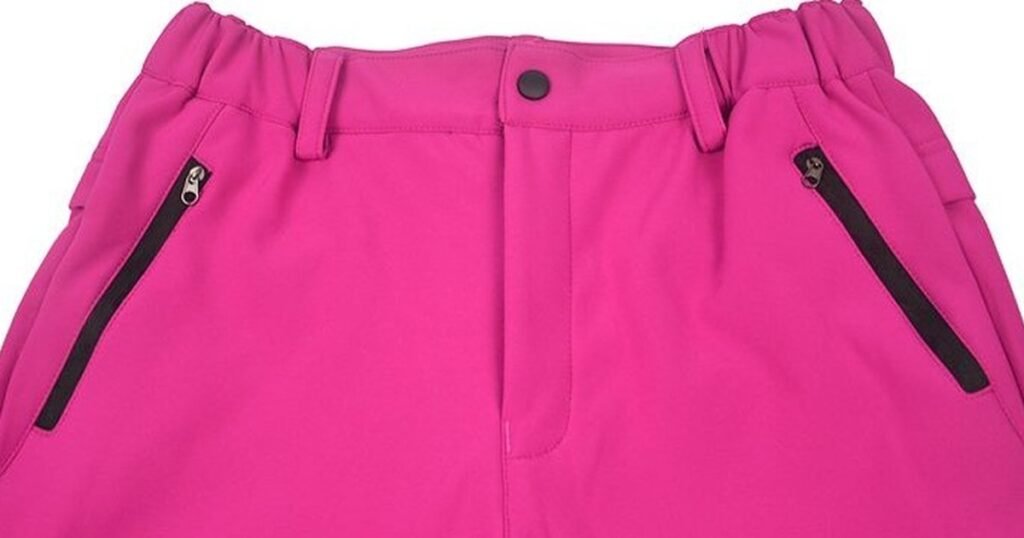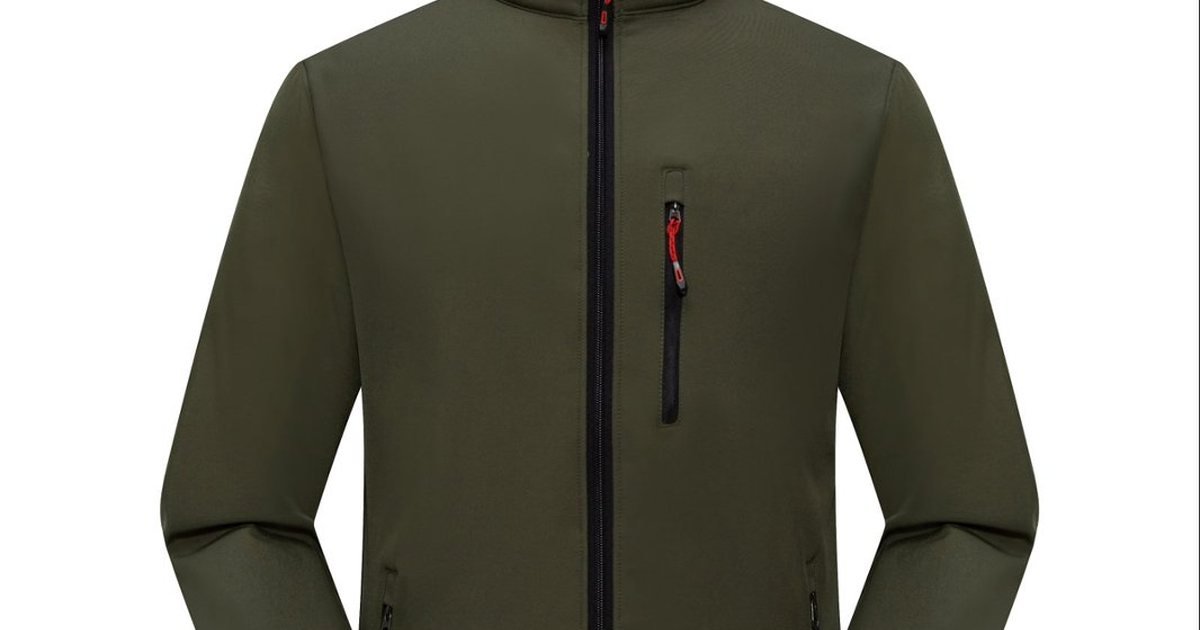
Choosing between a softshell vs hardshell jacket for your brand or team program comes down to three core trade-offs: waterproof protection, breathability during activity, and manufacturing flexibility. Softshell jackets prioritize stretch, comfort, and moisture vapor transmission; hardshell jackets deliver sealed waterproof barriers and storm protection. For buyers sourcing custom outdoor apparel, the decision also affects decoration methods, minimum order quantities, and per-unit cost. This guide walks through the technical, commercial, and application differences between the two shell categories, grounded in fabric construction and production realities from our 12 years manufacturing both jacket types in Taizhou Sanmen.
📋 Table of Contents
Executive Summary
- Waterproof threshold: Hardshell jackets typically achieve hydrostatic head ratings of 10,000mm or higher with taped seams, while softshells rely on DWR coatings and rarely exceed 5,000mm water column resistance without a membrane insert.
- Breathability measurement: Softshell fabrics commonly deliver moisture vapor transmission rates between 10,000 and 20,000 g/m²/24hr, outperforming entry-level hardshells in active-use comfort.
- Sample and bulk MOQ: At our Taizhou facility, softshell and hardshell jackets both start at 1-piece sampling with a refundable fee, and bulk production begins at 30 pieces per SKU, enabling small-batch validation for emerging brands.
- Decoration compatibility: Softshell face fabrics accept direct embroidery and heat-transfer logos without backing concerns, whereas hardshell nylon or polyester shells often require stabilizer backing and careful needle selection to prevent membrane delamination.
- Lead time difference: Softshell production typically runs 25 to 35 days from approved sample to shipment, while hardshell jackets add 5 to 10 days due to seam-taping and waterproof-zipper sourcing steps.
Core Construction Differences
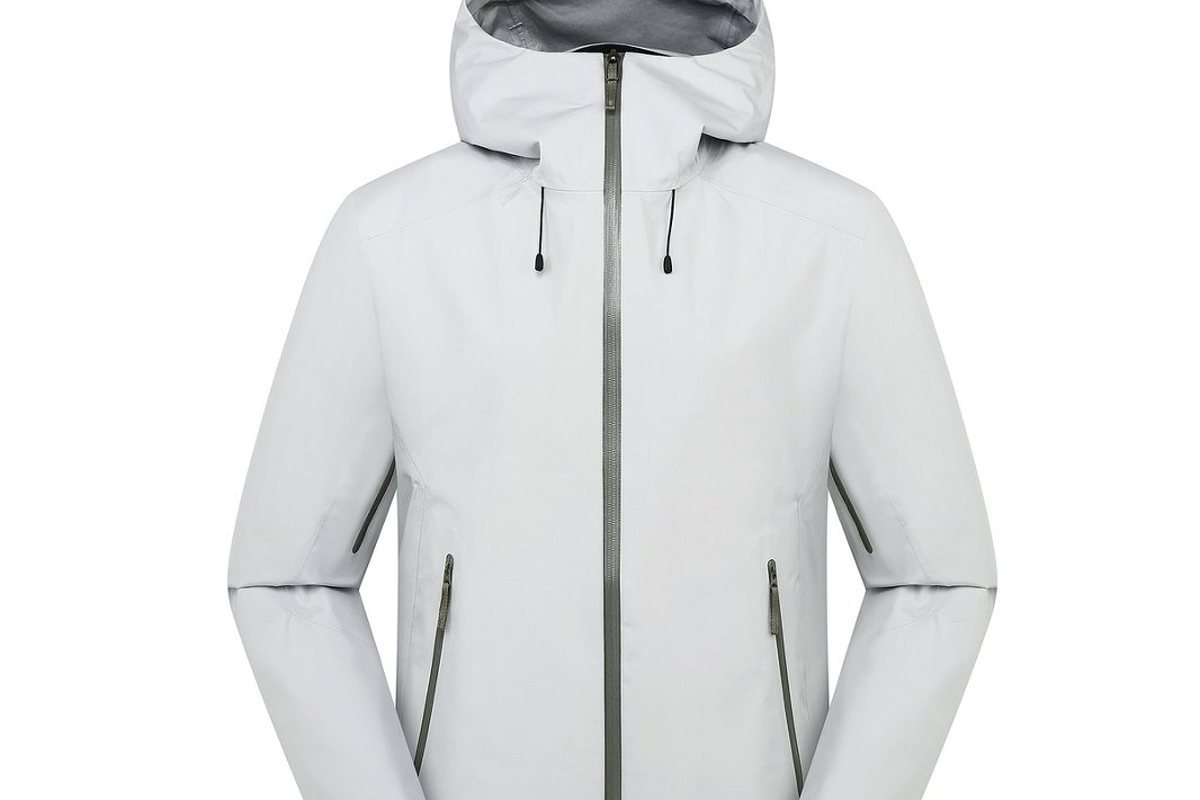
The softshell vs hardshell jacket distinction originates in fabric architecture and lamination strategy. Softshells combine a woven or knit face fabric with a fleece or brushed backing, often bonded to a thin windproof membrane or treated with DWR only. Hardshells layer a lightweight nylon or polyester shell over a waterproof-breathable membrane, sealed with taped seams and waterproof zippers. Construction method drives every downstream attribute: weight, hand feel, packability, and weather resistance.
Softshell Fabric Layup
Softshell construction bonds two or three layers without full seam sealing. The outer face is typically a four-way-stretch woven polyester or nylon, treated with a PFC-free DWR finish. The middle layer is either a microporous film (for wind resistance) or omitted entirely in non-membrane softshells. The inner layer is a grid-fleece or brushed knit that wicks moisture and adds warmth. Total fabric weight ranges from 250 to 400 gsm, creating a jacket that feels substantial and moves with the wearer. Seams are stitched and overlocked but not taped, so sustained rain eventually penetrates stitch holes.
Hardshell Fabric Layup
Hardshell jackets laminate a thin face fabric to a waterproof-breathable membrane, then add a lightweight protective scrim or print on the interior. The membrane is the functional barrier: polyurethane, ePTFE, or polyester variants block liquid water while allowing vapor molecules to pass. Seams receive heat-applied seam tape on the interior to prevent water ingress through needle holes. Zippers are coil or molded waterproof types with welded or laminated tape. Fabric weight is lighter, often 150 to 250 gsm, prioritizing packability and storm-shell duty over insulation.
Mechanical Stretch & Mobility
Softshell fabrics incorporate mechanical stretch (spandex or elastane content) or fabric weave patterns that allow multi-directional give. This makes softshells the preferred choice for climbing, skiing, and high-mobility work applications. Hardshells historically used non-stretch nylon, though newer three-layer constructions now offer limited stretch by using knit face fabrics or elastane blends. For OEM jacket manufacturing targeting active corporate teams or outdoor guide services, the stretch difference often decides the shell type.
Waterproofing & Breathability Trade-Offs
The softshell vs hardshell jacket debate centers on the inverse relationship between waterproof protection and breathability. Hardshells seal out rain but trap heat and moisture during exertion. Softshells breathe freely but wet out in sustained precipitation. Understanding hydrostatic head, MVTR, and DWR durability helps buyers match shell type to end-user activity level and climate.
Hydrostatic Head & Water-Column Resistance
Hydrostatic head measures the height of a water column a fabric can support before leaking, expressed in millimeters. Hardshell membranes typically rate between 10,000mm and 28,000mm, with 10,000mm considered the minimum for reliable rain protection. Softshells without a membrane rely solely on DWR and tight weave, achieving 3,000 to 5,000mm at best. Softshells with a windproof microporous film can reach 8,000 to 10,000mm, but unsealed seams allow water ingress under pressure or prolonged exposure. Buyers report that softshells marketed as water-resistant often wet out or leak in sustained rain, a common complaint in REI community and product review patterns.
Moisture Vapor Transmission Rate (MVTR)
MVTR quantifies how many grams of water vapor pass through one square meter of fabric in 24 hours, measured by ASTM E96 or ISO 11092 methods. Softshell fabrics commonly achieve 10,000 to 20,000 g/m²/24hr due to the fleece backing and absence of a continuous waterproof film. Entry-level hardshell membranes (polyurethane coatings) often fall between 5,000 and 10,000 g/m²/24hr, while premium ePTFE or polyester membranes reach 15,000 to 25,000 g/m²/24hr. During high-output activities like trail running or ski touring, the breathability gap becomes perceptible: hardshell wearers frequently complain they feel stiff, noisy, or sweaty during active use, as noted in outdoor forum and review patterns.
DWR Finish Durability & Maintenance
Both shell types rely on durable water repellent treatments to bead water on the face fabric, preventing saturation and maintaining breathability. Softshell DWR typically lasts 15 to 25 wash cycles before requiring reapplication, depending on detergent type and abrasion exposure. Hardshell DWR on nylon or polyester faces degrades similarly, but the underlying membrane continues to block water even after DWR failure. Buyers of softshells report that cuffs, face fabric, or DWR finish wear out quickly after repeated washing or abrasion, a pattern visible in Amazon review data. For corporate uniform programs washing jackets weekly, hardshells offer longer functional life despite higher upfront cost.
Real-World Weather Threshold
Softshells handle light rain, snow flurries, and wind effectively for 30 to 60 minutes before moisture penetrates seams or saturates the face. Hardshells withstand hours of rain, wet snow, and storm exposure without interior wetting, provided seam tape and zippers remain intact. For school outdoor-education programs or municipal work crews, hardshells reduce the risk of hypothermia in unpredictable weather. For indoor-outdoor sales teams or event staff in temperate climates, softshells provide better all-day comfort without the clammy feel of a sealed shell.
Application Scenarios: When to Spec Each Shell Type
Selecting the right shell type depends on activity intensity, weather exposure duration, and layering strategy. The following scenarios illustrate when softshell or hardshell construction delivers better performance and user satisfaction.
High-Output Activity in Variable Weather
Ski patrol, trail maintenance crews, and outdoor guides generate significant body heat during work. Softshells allow continuous vapor escape, preventing the sweat-chill cycle that occurs when moisture condenses inside a hardshell. For these users, a softshell paired with a packable hardshell in the pack provides flexibility: wear the softshell during exertion, switch to the hardshell when stationary or in heavy rain. This layering approach appears frequently in professional outdoor-worker gear lists.
Prolonged Exposure to Rain or Wet Snow
Municipal utility workers, stadium security, and event staff in the Pacific Northwest or UK face hours of drizzle or steady rain. Hardshells with fully taped seams and waterproof zippers keep wearers dry without requiring mid-shift gear changes. The trade-off is reduced comfort during active tasks: hardshell wearers often report feeling sweaty or clammy after climbing stairs, loading equipment, or walking between posts. Specifying a hardshell with higher MVTR (15,000+ g/m²/24hr) and pit-zip vents mitigates this complaint.
Corporate Uniforms & Commuter Apparel
Sales teams, property managers, and office commuters prioritize appearance, comfort, and versatility over storm protection. Softshells deliver a tailored silhouette, quiet fabric, and stretch that accommodates sitting, driving, and reaching. DWR treatment handles brief rain exposure during parking-lot walks. Buyers in this segment often dislike that softshells are not warm enough on their own in cold, windy conditions, as noted in workwear and outdoor apparel reviews. Pairing a softshell with a removable insulated liner or specifying a fleece-backed softshell addresses this gap.
School & Youth Outdoor Programs
Schools running outdoor-education trips or ski programs need jackets that survive rough handling, frequent washing, and mixed weather. Hardshells withstand abrasion better and maintain waterproof function after 50+ wash cycles. Softshells offer better mobility for climbing walls or ropes courses but require more frequent DWR reapplication. For budget-conscious programs, a hardshell with a durable 70-denier face fabric and reinforced elbows delivers longer service life despite higher per-unit cost.
Technical Climbing & Alpine Use
Climbers and alpinists layer a lightweight hardshell over insulation, wearing it only during belays, summits, or storm exposure. The hardshell packs into a small stuff sack and weighs 300 to 450 grams. Softshells serve as the primary climbing shell, worn continuously for their stretch, breathability, and abrasion resistance on rock or ice. This two-shell system is standard in technical outdoor pursuits and rarely relevant for corporate or uniform buyers, but understanding it clarifies why softshells and hardshells are not direct substitutes.
Manufacturing, MOQ & Decoration Considerations
Production workflows, minimum order quantities, and branding methods differ between softshell and hardshell jackets. These operational details directly affect cash flow, lead time, and the feasibility of custom graphics for emerging brands and uniform buyers.
Sample Development & Pre-Production
Both shell types begin with a pre-production sample to validate fit, fabric hand, and construction details. At our Taizhou facility, sample MOQ is 1 piece for softshell and hardshell jackets, with a $100 sample fee refundable against the first bulk order. Softshell sampling typically requires 7 to 10 days: fabric is cut, panels are bonded if using a membrane insert, and seams are stitched and overlocked. Hardshell sampling adds 2 to 3 days for seam-taping and waterproof-zipper installation. Buyers validating multiple colorways or testing fabric combinations often request 3 to 5 samples before committing to bulk production, a feasible approach with our low-MOQ jacket manufacturer model.
Bulk Production Minimums
Bulk MOQ for both softshell and hardshell styles is 30 pieces per SKU, allowing small brands to test market demand without tying up capital in inventory. A SKU is defined by the combination of style, color, and size. For example, a softshell jacket in navy and black, across five sizes, requires 30 pieces per color (60 total minimum). This structure supports DTC founders launching with two colors and limited size runs, then expanding based on sales data. Larger uniform buyers placing 200 to 500 units per order benefit from per-unit cost reductions and faster lead times due to production-line efficiency.
Decoration: Embroidery, Heat Transfer & Screen Print
Softshell face fabrics accept direct embroidery without backing concerns. The bonded fleece interior provides sufficient stability for 8,000 to 12,000-stitch logos, and the stretch fabric recovers well after needle penetration. Heat-transfer vinyl and screen-print plastisol also adhere reliably to softshell polyester faces. Hardshell nylon or polyester shells require careful decoration planning: embroidery needs stabilizer backing to prevent puckering, and excessive needle penetration risks delaminating the waterproof membrane. Heat transfer works well on hardshells if the membrane can tolerate the press temperature (typically 160 to 180°C for polyurethane membranes). For custom logo service on hardshells, we recommend woven labels, rubberized patches, or sublimation on polyester faces to avoid membrane damage.
Seam-Sealing Capacity & Lead Time
Hardshell production requires seam-sealing equipment and trained operators. Our Taizhou facility runs dedicated seam-tape lines that apply heat-activated polyurethane tape to critical seams: shoulder, underarm, pocket flaps, and zipper plackets. This step adds 5 to 7 days to the production schedule compared to softshells. Softshells skip seam sealing entirely, moving directly from stitching to quality inspection and packing. For buyers with tight launch deadlines, softshells offer faster turnaround, while hardshells require planning for the extended timeline.
Fabric Sourcing & Lead-Time Variability
Softshell fabrics are widely available from Jiangsu and Zhejiang mills, with lead times of 10 to 15 days for standard weights and colors. Custom colorways or special finishes (e.g., cationic dyeing for heather effects) extend fabric lead time to 20 to 25 days. Hardshell membranes and laminated fabrics have longer lead times: 20 to 30 days for stock colors, 35 to 45 days for custom colors or proprietary membrane specs. Waterproof zippers, especially YKK AquaGuard or Vislon types, add another variable: stock sizes ship within a week, while custom lengths or branded pullers require 15 to 20 days. These dependencies explain why hardshell production schedules are less flexible than softshell timelines.
Cost, Margin & Lead Time
Per-unit cost, gross margin, and production lead time vary between softshell and hardshell jackets due to material expense, labor intensity, and component sourcing. Understanding these differences helps buyers model pricing and cash flow for their brand or program.
Material Cost Breakdown
Softshell fabric costs range from $4.50 to $8.00 per meter for standard polyester-spandex blends with DWR, depending on weight and mill. A men’s medium jacket consumes approximately 1.8 to 2.0 meters of fabric. Zippers, cuff binding, and trim add $2.50 to $4.00 per unit. Total material cost for a mid-range softshell is $12 to $18 per jacket. Hardshell membrane fabrics cost $7.00 to $14.00 per meter for two-layer or three-layer constructions, with premium ePTFE membranes reaching $18 per meter. Waterproof zippers cost $3.50 to $6.00 per jacket (front zip plus pocket zips), and seam tape adds $0.80 to $1.50 per unit. Total material cost for a hardshell is $18 to $28 per jacket, a 40% to 60% premium over softshells.
Labor & Manufacturing Cost
Softshell labor cost is $6.50 to $9.00 per unit for cut, sew, and finishing, based on our Taizhou wage rates and production efficiency. Hardshell labor cost is $9.00 to $13.00 per unit due to seam-taping, waterproof-zipper installation, and additional QC steps. Combined material and labor cost positions softshells at $18.50 to $27.00 FOB and hardshells at $27.00 to $41.00 FOB for mid-range styles. Premium features like pit-zip vents, adjustable hems, or helmet-compatible hoods add $2.00 to $5.00 per unit to either shell type.
Retail Pricing & Margin Modeling
DTC brands typically apply a 2.5x to 3.5x markup over FOB cost to cover shipping, duties, fulfillment, marketing, and profit. A softshell with $24 FOB cost retails at $60 to $84, while a hardshell with $35 FOB cost retails at $88 to $123. Wholesale buyers (outdoor retailers, corporate distributors) apply a 2.0x to 2.2x markup, landing softshells at $48 to $59 wholesale and hardshells at $70 to $90 wholesale. For uniform programs purchasing 200+ units, negotiated FOB pricing can reduce per-unit cost by 10% to 15%, improving program budget fit.
Production Lead Time Comparison
Softshell production runs 25 to 35 days from approved sample to shipment: 10 to 15 days fabric sourcing, 8 to 12 days cut-and-sew, 3 to 5 days QC and packing, 2 to 3 days domestic logistics to port. Hardshell production extends to 30 to 45 days: 20 to 30 days fabric and component sourcing, 10 to 14 days cut-sew-tape, 3 to 5 days QC, 2 to 3 days logistics. Ocean freight to the US West Coast adds 18 to 22 days, East Coast 28 to 35 days. Air freight reduces transit to 5 to 7 days but increases per-unit shipping cost by $8 to $12. Buyers launching seasonal collections should place hardshell orders 90 to 120 days before retail availability, softshell orders 75 to 100 days out.
Cash-Flow Implications for Small Brands
A 30-piece softshell order at $24 FOB costs $720 in product, plus approximately $180 in freight and $90 in duties (assuming 10% tariff), totaling $990 upfront. A 30-piece hardshell order at $35 FOB costs $1,050 product, $200 freight, $105 duties, totaling $1,355. The $365 difference per 30-unit batch is meaningful for bootstrapped founders. Our sample development process allows brands to validate softshell styles with 1-piece samples, then scale to 30-unit production runs as preorders or crowdfunding campaigns confirm demand, minimizing inventory risk.
Key Takeaways
- Waterproof threshold: Hardshell jackets with taped seams achieve hydrostatic head ratings of 10,000mm or higher, while softshells relying on DWR and weave rarely exceed 5,000mm without a membrane insert.
- Breathability measurement: Softshell fabrics deliver moisture vapor transmission rates between 10,000 and 20,000 g/m²/24hr, outperforming entry-level hardshells in active-use comfort.
- Sample and bulk MOQ: Sample MOQ is 1 piece with a refundable $100 fee, and bulk production begins at 30 pieces per SKU, enabling small-batch market validation for emerging outdoor brands.
- Decoration compatibility: Softshell face fabrics accept direct embroidery and heat-transfer logos without backing concerns, whereas hardshell shells often require stabilizer backing and careful needle selection to prevent membrane delamination.
- Material cost premium: Hardshell membrane fabrics and waterproof zippers increase total material cost by 40% to 60% compared to softshells, driving higher FOB pricing and retail margins.
- Lead time difference: Softshell production typically runs 25 to 35 days from approved sample to shipment, while hardshell jackets add 5 to 10 days due to seam-taping and waterproof-zipper sourcing steps.
FAQ
Is a softshell jacket waterproof?
Softshell jackets are water-resistant, not waterproof. They rely on DWR coatings and tight weaves to repel light rain and snow for 30 to 60 minutes. Softshells with a windproof membrane insert can achieve 8,000 to 10,000mm hydrostatic head, but unsealed seams allow water ingress under sustained pressure. For prolonged rain exposure, a hardshell with taped seams and waterproof zippers is necessary. Softshells work best for active use in variable weather where breathability and mobility outweigh storm protection.
When should you wear a softshell vs a hardshell jacket?
Wear a softshell jacket during high-output activities in dry or light-precipitation conditions: trail running, ski touring, climbing, or outdoor work where breathability and stretch are priorities. Wear a hardshell jacket when facing prolonged rain, wet snow, or storm exposure, or when stationary in cold wet weather. Many outdoor professionals carry both: a softshell for continuous wear during exertion and a packable hardshell for emergency storm protection. Corporate and uniform buyers typically choose one shell type based on primary use case and budget.
Can you use a softshell as a rain jacket?
Softshells function as rain jackets for brief, light rain exposure (under 30 minutes) but are not suitable replacements for dedicated rain jackets in sustained precipitation. DWR-treated softshells bead water initially, but the face fabric eventually saturates and stitched seams leak. Buyers frequently complain that softshells marketed as rain jackets wet out or leak in real-world use. For commuting, event staff, or light outdoor work, a softshell handles typical drizzle. For utility work, outdoor events, or school programs in wet climates, a hardshell rain jacket is the reliable choice.
Is a hardshell jacket more breathable than a softshell?
Hardshell jackets are generally less breathable than softshells. Entry-level hardshell membranes deliver 5,000 to 10,000 g/m²/24hr MVTR, while softshells commonly achieve 10,000 to 20,000 g/m²/24hr due to their fleece backing and lack of a continuous waterproof film. Premium hardshell membranes (ePTFE or advanced polyester) can match or exceed softshell breathability, but at significantly higher cost. During high-output activity, hardshell wearers often report feeling sweaty or clammy, a common complaint in outdoor gear discussions. Pit-zip vents and higher-MVTR membranes mitigate this issue but do not fully close the comfort gap for active users.
Do you need both a softshell and a hardshell?
Most outdoor professionals and serious enthusiasts own both shell types, using them in a layered system: a softshell for continuous wear during active pursuits and a lightweight packable hardshell for emergency storm protection. For corporate buyers, uniform programs, or casual outdoor users, one shell type usually suffices. Choose a softshell if breathability, comfort, and mobility are priorities and weather exposure is light to moderate. Choose a hardshell if reliable waterproof protection, durability through wash cycles, and storm resistance are critical. Brands launching product lines can validate demand with one shell type, then expand based on customer feedback and sales data.
Ready to source custom softshell or hardshell jackets with 1-piece sampling and 30-unit bulk MOQ?
Request samples & technical specs →
Written by Ivan Chen, Sales Engineer at PTOUTWEAR – 13 years in outdoor apparel manufacturing.