ODM technical jacket factory supply chain transparency means a manufacturer can document and verify every supplier tier-fiber source, yarn spinner, fabric mill, dyehouse, trim supplier, and cut-and-sew facility-with certificates, audit reports, and traceable batch codes. At minimum, expect mill certificates for fabrics, recycled-content documentation for GRS claims, third-party audit reports (BSCI, WRAP, or Sedex SMETA), and a written list of subcontractors. PTOUTWEAR’s 3,000m² Taizhou Sanmen facility maintains ISO 9001 and SGS certification, with PFC-free DWR documentation and supplier records accessible for buyer review.
📋 Table of Contents
- Key Takeaways
- Why Supply Chain Transparency Matters for ODM Jacket Buyers
- What Tier-by-Tier Supplier Disclosure Should Include
- How to Verify Fabric Mill Certificates and Material Claims
- Audit Reports and Certifications You Should Request
- Subcontractor Disclosure and Worker Welfare Evidence
- Practical Documentation Checklist for Small Brands
- Frequently Asked Questions
Key Takeaways
- Full odm technical jacket factory supply chain transparency requires documented proof of every supplier tier, from fiber source through fabric mill, dyehouse, trim suppliers, and final assembly.
- Mill certificates should include batch numbers, fiber composition test results, and the mill’s business license; recycled-content claims require GRS transaction certificates tracing pellet or yarn origin.
- Third-party social-compliance audits such as BSCI, WRAP, or Sedex SMETA provide independent verification of labor conditions, but buyers should request the full audit report, not just a certificate summary.
- Subcontractor disclosure is often the weakest link in jacket supply chains; ask for a written list of cut-and-sew subcontractors, embroidery shops, and any off-site finishing facilities, with their addresses and audit status.
- Small brands can start due diligence with a simple document request: mill certificates, current social-compliance audit, GRS transaction certificate for recycled claims, and a supplier list covering fabric, trim, and assembly.
- PTOUTWEAR maintains ISO 9001 and SGS certification, with supplier records and PFC-free DWR documentation available for buyer review; sample MOQ is 1 piece, bulk MOQ 10 pieces per style.

Why Supply Chain Transparency Matters for ODM Jacket Buyers
Buyers launching outdoor brands face mounting pressure from consumers, retailers, and regulators to prove their jackets are made ethically and sustainably. A factory that cannot document its supply chain leaves you exposed to three risks: reputational damage if labor violations surface, compliance failure if recycled-content claims cannot be verified, and quality inconsistency when subcontractors change without notice.
Reputational Risk from Undisclosed Subcontractors
Many jacket factories subcontract embroidery, screen printing, or even full cut-and-sew to smaller workshops. When a buyer discovers their “direct manufacturer” actually outsourced production to an unaudited facility, trust collapses. Requesting a written subcontractor list before placing an order prevents this scenario. The list should include facility names, addresses, and whether each site holds a current social-compliance audit.
Compliance Risk for Recycled and Organic Claims
If your marketing mentions recycled polyester or organic cotton, you need a GRS transaction certificate or organic-content certificate that traces the fiber back to its certified source. A fabric mill certificate alone is not enough; it proves the mill wove the fabric, but not where the yarn came from. Buyers who skip this step risk regulatory penalties and retailer de-listing when claims cannot be substantiated.
Quality Risk from Invisible Supplier Changes
A factory may switch fabric mills mid-production to meet a deadline or cut costs, resulting in color shifts, hand-feel changes, or waterproofing failures. Transparent factories notify you before changing suppliers and provide updated mill certificates. Opaque factories make the switch silently, and you discover it only when the bulk shipment fails your QC inspection.
What Tier-by-Tier Supplier Disclosure Should Include
A complete supply-chain map for a technical jacket breaks into six tiers. Each tier should be documented with supplier names, locations, and relevant certificates.
Tier 1: Cut-and-Sew Facility
This is the factory you contract with directly. Request their business license, ISO 9001 certificate (if held), and current social-compliance audit. PTOUTWEAR’s Taizhou Sanmen facility operates 20 production lines with 240 workers, all on-site, eliminating the subcontractor risk common in smaller operations. Our OEM jacket manufacturing service includes full supplier disclosure as standard practice.
Tier 2: Fabric Mill
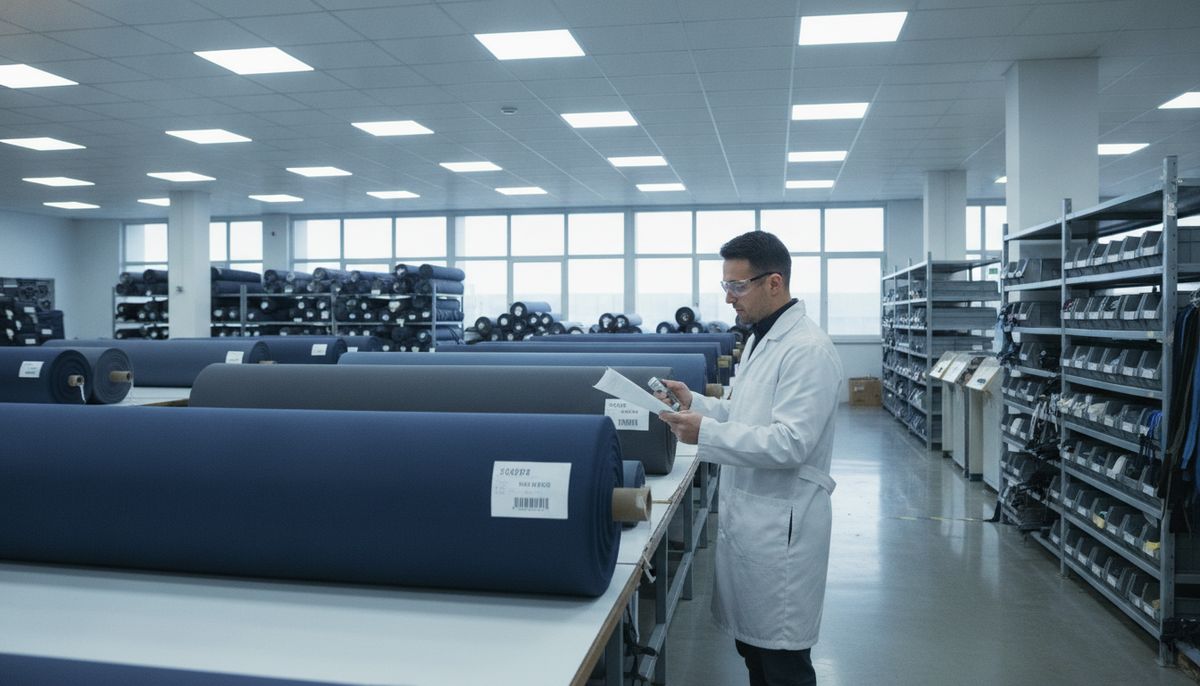
The mill that weaves or knits your shell fabric and lining. Ask for the mill certificate, which should list batch number, fiber composition (confirmed by lab test), weight per square meter, and the mill’s business registration. For waterproof-breathable membranes, request the membrane supplier’s name and any performance-test reports (hydrostatic head, MVTR).
Tier 3: Dyehouse and Finishing Plant
Many mills subcontract dyeing and DWR application to specialized facilities. Request the dyehouse name, location, and any chemical-compliance certificates (OEKO-TEX, ZDHC, or bluesign). For PFC-free DWR claims, ask for the chemical supplier’s technical data sheet and a test report confirming fluorine content below detection limits. PTOUTWEAR uses PFC-free DWR across all waterproof and water-resistant jackets, with SGS test documentation available on request.
Tier 4: Yarn Spinner (for Recycled or Organic Fiber)
If your jacket uses recycled polyester or organic cotton, the yarn spinner is where fiber pellets or bales are turned into yarn. The GRS transaction certificate or organic-content certificate must list this supplier by name. Without it, your recycled-content claim is unverifiable.
Tier 5: Fiber Source
For recycled polyester, this is the pellet manufacturer that processes post-consumer bottles or post-industrial waste. For organic cotton, it is the certified farm or gin. The GRS or organic certificate traces back to this tier, proving the fiber origin matches your claim.
Tier 6: Trim Suppliers
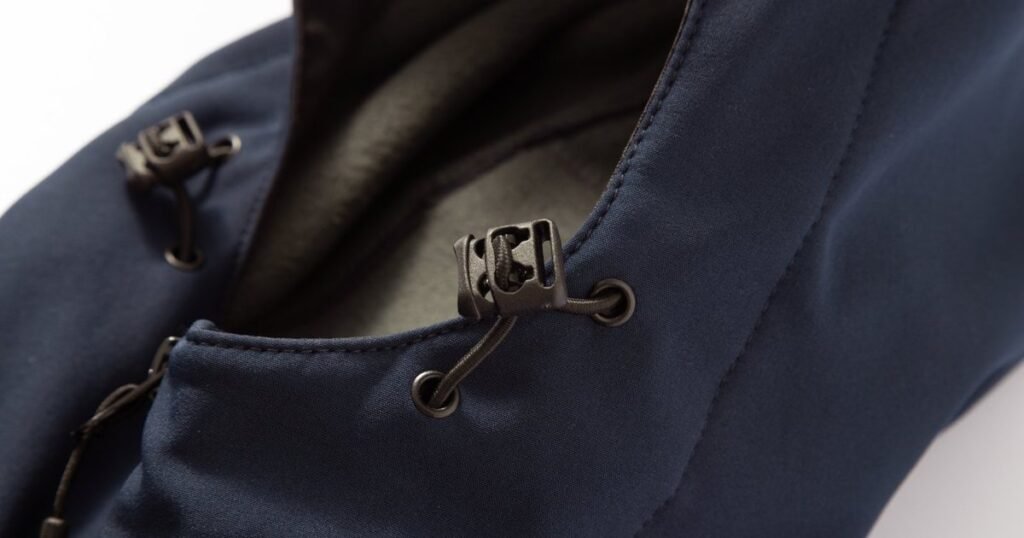
Zippers, snaps, drawcords, elastic, and reflective tape each come from separate suppliers. Request a trim supplier list with brand names (YKK, SBS, Coats) and any relevant certifications (OEKO-TEX for elastic and drawcords, nickel-free for snaps). Buyers often overlook this tier, but a zipper failure or a snap that releases nickel can trigger a product recall.
In practice: A fabric mill certificate that lists only the mill name and fabric weight, with no batch number or fiber-composition test result, cannot verify whether the fabric matches the approved sample or contains the claimed recycled content.
How to Verify Fabric Mill Certificates and Material Claims
A legitimate mill certificate includes five elements. Missing any one of them is a red flag that the document may be generic or fabricated.
Batch Number or Lot Code
The certificate should reference a specific production batch, not a generic fabric type. This batch number should match the one printed on the fabric roll or listed on the packing slip. If the certificate shows no batch identifier, it may be a template the factory uses for multiple buyers, not a record of your actual fabric.
Fiber Composition Test Result
The certificate must state fiber percentages confirmed by lab test, not just the mill’s claim. Look for test-method references such as ISO 1833 (chemical fiber analysis) or AATCC 20A (fiber identification). A certificate that says “100% polyester” with no test method or lab name is unverifiable.
Weight per Square Meter (GSM)
Shell fabrics for softshell jackets typically range from 240 to 320 GSM; hardshell fabrics from 80 to 150 GSM. The certificate should state the tested weight, not just a nominal specification. A variance of more than 5% from the approved sample suggests the mill changed the fabric construction.
Mill Business License and Contact Information
The certificate should include the mill’s registered business name, address, and contact phone number. Cross-check this information against public business registries or the mill’s website. Factories sometimes present certificates from mills that closed years ago or that have no record of the buyer’s order.
Performance Test Data for Technical Fabrics
For waterproof-breathable fabrics, request hydrostatic-head test results (AATCC 127 or ISO 811) and moisture-vapor transmission rate (ASTM E96 or ISO 11092). For stretch fabrics, ask for elongation and recovery percentages (ASTM D2594). These tests prove the fabric meets the performance spec, not just the fiber-content spec.
Audit Reports and Certifications You Should Request
Social-compliance certifications signal that a factory has been audited for labor and environmental practices. The three most common in outdoor-apparel manufacturing are BSCI, WRAP, and Sedex SMETA. Each has different scope and rigor.
BSCI (Business Social Compliance Initiative)
BSCI audits cover working hours, wages, health and safety, and freedom of association. A BSCI certificate is valid for two years, but the audit report includes a risk rating (A, B, C, D, or E) and a corrective-action plan. Request the full report, not just the certificate summary. A “C” rating means the factory passed with deficiencies that must be remediated; an “E” rating means the factory failed and should not be used until re-audited.
WRAP (Worldwide Responsible Accredited Production)
WRAP certification focuses on apparel and sewn-goods facilities. It covers 12 principles, including forced labor, child labor, harassment, compensation, and environmental practices. WRAP certificates are valid for one or two years depending on the certification level (Platinum, Gold, or Silver). Platinum-level factories undergo less frequent re-audits because they demonstrated strong compliance history.
Sedex SMETA (Sedex Members Ethical Trade Audit)
SMETA is not a certification but an audit methodology. Factories upload their SMETA audit reports to the Sedex platform, where member brands can access them. SMETA audits are typically valid for one year. The report includes findings, non-compliances, and corrective actions. Buyers should log into Sedex to review the report directly, rather than relying on a factory-provided summary.
ISO 9001 and ISO 14001
ISO 9001 certifies a factory’s quality-management system; ISO 14001 certifies environmental management. Neither covers labor practices. PTOUTWEAR holds ISO 9001 certification, ensuring documented processes for sampling, bulk production, and inspection. These certifications are renewed annually through third-party audits.
OEKO-TEX Standard 100
OEKO-TEX tests finished textiles for harmful substances, including heavy metals, formaldehyde, and restricted dyes. It does not certify factory labor practices or environmental systems. An OEKO-TEX certificate applies to a specific fabric or garment, not to the factory itself. PTOUTWEAR is working toward OEKO-TEX certification for our core fabric range; it is pending, not yet held.
Subcontractor Disclosure and Worker Welfare Evidence
Subcontracting is the most common gap in odm technical jacket factory supply chain transparency. A factory may hold BSCI certification for its main facility but send embroidery, screen printing, or even full garment assembly to unaudited workshops. Buyers discover this only when a labor violation surfaces or when quality drops unexpectedly.
What to Ask About Subcontractors
Request a written list of all subcontractors used for your order, including facility names, addresses, and the specific processes each handles (embroidery, heat-transfer logos, garment washing, quality inspection). Ask whether each subcontractor holds a current social-compliance audit. If the factory claims “no subcontractors,” verify by visiting the facility or hiring a third-party inspector to photograph production in progress.
Grievance Mechanisms and Worker Interviews
A transparent factory allows buyers to interview workers privately during facility visits. Ask whether the factory has a grievance hotline or suggestion box where workers can report issues anonymously. Audit reports should document whether this system exists and whether any grievances were filed and resolved in the past year.
Remediation Outcomes, Not Just Audit Scores
An audit report that lists non-compliances is less important than evidence those issues were fixed. Request follow-up documentation: photos of improved ventilation systems, payroll records showing back wages paid, or training logs proving supervisors completed harassment-prevention training. Factories that share remediation evidence demonstrate genuine commitment to improvement, not just audit-passing behavior.
Practical Documentation Checklist for Small Brands
Small outdoor brands with limited budgets cannot afford full supply-chain audits, but you can still verify the most critical links. Use this checklist before placing your first bulk order.
- Mill certificate for shell fabric: Must include batch number, fiber-composition test, weight (GSM), and mill contact information. Cross-check the mill name against public business registries.
- GRS transaction certificate (if claiming recycled content): Certificate must list your factory, the fabric mill, and the yarn spinner or pellet supplier. Verify the certificate number on the GRS website.
- Current social-compliance audit: BSCI, WRAP, or SMETA report dated within the past 12-24 months. Request the full report, not a one-page summary. Check the risk rating and corrective-action status.
- Subcontractor disclosure: Written list of any facilities handling embroidery, printing, washing, or assembly. Confirm whether each holds an audit.
- PFC-free DWR documentation (if claiming PFC-free): Chemical supplier’s technical data sheet and a fluorine test report (ISO 14184-1 or similar) showing fluorine content below detection limits.
- Trim supplier list: Names and brands for zippers, snaps, elastic, drawcords, and reflective tape. For metal trims, request nickel-release test results (EN 1811).
- Factory business license and export license: Confirms the factory is a legally registered entity authorized to export. Check the registration date; newly registered companies may be shell entities fronting for unlicensed workshops.
PTOUTWEAR provides all these documents as part of our sample development process. Our low-MOQ jacket manufacturing service starts at 10 pieces per style, making it feasible for small brands to validate supply-chain transparency before scaling to larger orders.
Sample MOQ: 1 piece. Bulk MOQ: 10 pieces per style (mix colours and sizes). Sampling time: 7-10 days. Bulk production: 25-35 days.
Frequently Asked Questions
What is the difference between a mill certificate and a GRS transaction certificate?
A mill certificate proves the fabric mill wove or knitted your fabric and confirms fiber composition, weight, and batch number. A GRS transaction certificate traces recycled content back through the yarn spinner to the certified pellet or fiber source. If your jacket claims recycled polyester, you need both: the mill certificate proves the fabric specs, and the GRS certificate proves the recycled-content claim. One does not replace the other.
How can I verify a factory’s social-compliance audit is legitimate?
Request the full audit report, not a one-page certificate summary. The report should include the audit date, auditor name, facility address, findings, non-compliances, and corrective-action deadlines. For BSCI audits, check the certificate number on the BSCI platform if you have access. For Sedex SMETA audits, log into the Sedex portal to view the report directly. If the factory refuses to share the full report or claims it is confidential, that is a red flag.
What should I do if a factory refuses to disclose subcontractors?
A factory that refuses subcontractor disclosure is hiding risk. You can hire a third-party inspection company to visit the facility unannounced during production and photograph which processes are happening on-site versus off-site. Alternatively, include a contractual clause requiring written subcontractor disclosure and allowing you to audit any subcontractor facility. If the factory still refuses, find a different supplier. Transparent factories view subcontractor disclosure as standard practice, not a competitive secret.
Ready to verify your jacket factory’s supply chain before placing an order?
Request supplier documentation →
Written by Ivan Chen, Sales Engineer at PTOUTWEAR, 13 years in outdoor apparel manufacturing.