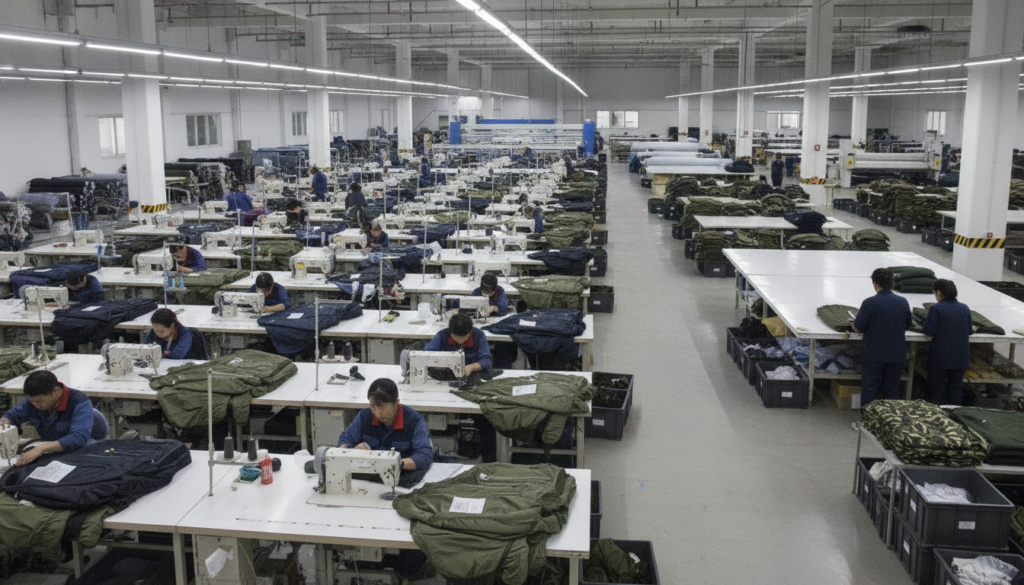
A bonded fleece softshell jacket low MOQ factory produces three-layer bonded softshell jackets with sample minimums as low as 1 piece and bulk minimums starting at 10 pieces per style, allowing DTC brands and small buyers to validate designs and enter the market without tying up capital in 100-piece or 500-piece orders. PTOUTWEAR operates a 3,000m² facility in Taizhou Sanmen with 240 workers, offering 1-piece sample MOQ and 10-piece bulk MOQ for jackets, with colours and sizes mixed within each style.
📋 Table of Contents
Key Takeaways
- Bonded fleece softshell jackets use three-layer construction with a face fabric, TPU or PU membrane, and fleece backing laminated together in a single bonding process, providing wind resistance and light water resistance without the bulk of separate layers.
- Sample MOQ and bulk MOQ are distinct: factories offering 1-piece sample MOQ may still require 30 to 100 pieces for bulk production, while PTOUTWEAR offers 1-piece samples and 10-piece bulk orders per style with mixed colours and sizes.
- ISO 9001 certification verifies a factory’s quality management system, while SGS testing confirms fabric performance for hydrostatic pressure, breathability, abrasion resistance, and wash durability before bulk production begins.
- PFC-free DWR coatings eliminate perfluorinated chemicals from the water-repellent finish, addressing buyer concerns about environmental compliance and long-term fabric wetting out, though all DWR treatments require periodic reproofing regardless of chemistry.
- North American buyers should calculate landed cost including FOB price, ocean freight, import duty, customs brokerage, and inland delivery, with total landed cost typically 25 to 40 percent above the FOB factory price depending on order size and destination port.
- Lead times for bonded fleece softshell jackets typically run 7 to 10 days for sampling and 25 to 35 days for bulk production, with rush production available at a premium for urgent market windows or seasonal deadlines.
What Is Bonded Fleece Softshell Construction?
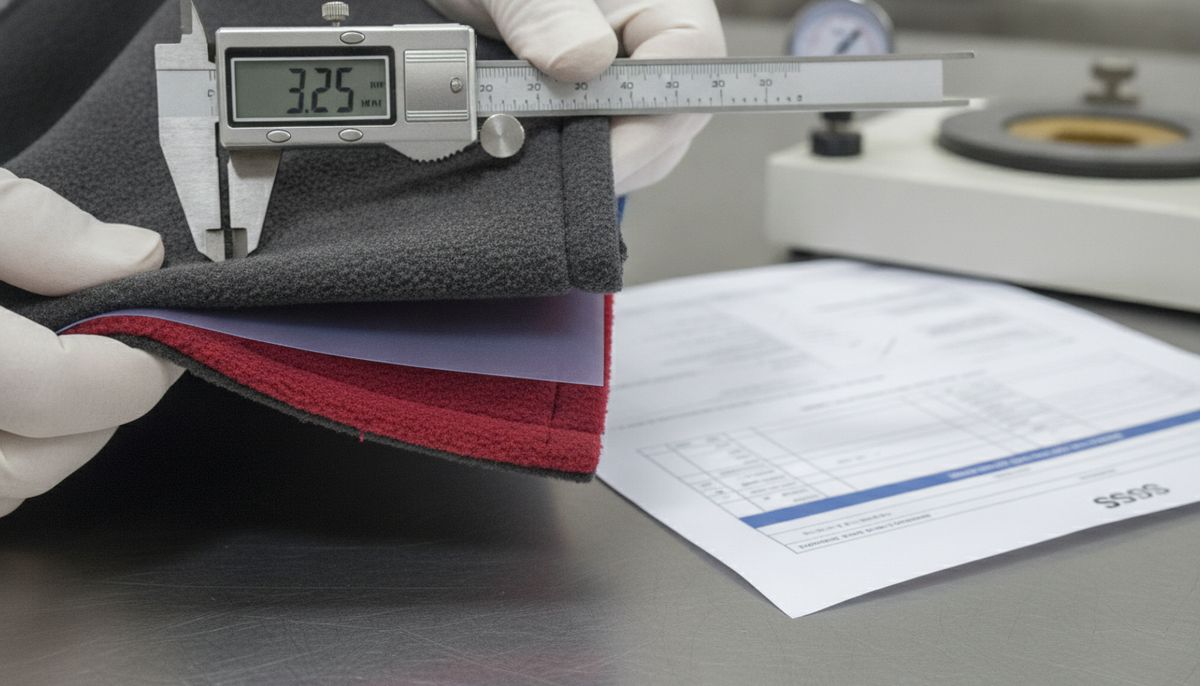
Bonded fleece softshell construction is a three-layer lamination process where the outer face fabric, a breathable membrane, and a fleece backing are heat-pressed and adhesive-bonded into a single composite fabric. This eliminates the need for separate lining and insulation layers, reducing bulk while maintaining wind resistance and light water resistance. The face fabric is typically a stretch polyester or nylon woven, the membrane is usually TPU or PU with a hydrostatic head rating between 5,000mm and 10,000mm, and the fleece backing provides warmth and moisture wicking against the skin.
Face Fabric Layer
The outer layer is a woven polyester or nylon fabric treated with a DWR finish to shed light rain and snow. Most OEM jacket manufacturing operations use 20D to 75D yarns for the face, balancing abrasion resistance with weight and packability. Heavier face fabrics above 50D offer better durability for workwear and corporate uniforms, while lighter 20D to 30D faces suit athletic and trail-running applications where weight matters. The face fabric accounts for roughly 30 to 40 percent of the total fabric weight in a bonded fleece softshell jacket.
Membrane Layer
The middle membrane provides the waterproof and breathable performance. TPU membranes offer higher elasticity and better low-temperature flexibility than PU membranes, making them the preferred choice for ski and winter softshells. PU membranes cost less and work well for corporate jackets and light outdoor use where extreme cold is not a factor. The membrane thickness ranges from 10 microns to 25 microns, with thicker membranes providing higher hydrostatic pressure resistance but lower breathability. Buyers should request a hydrostatic head test report and an MVTR breathability test report before committing to bulk production.
Fleece Backing Layer
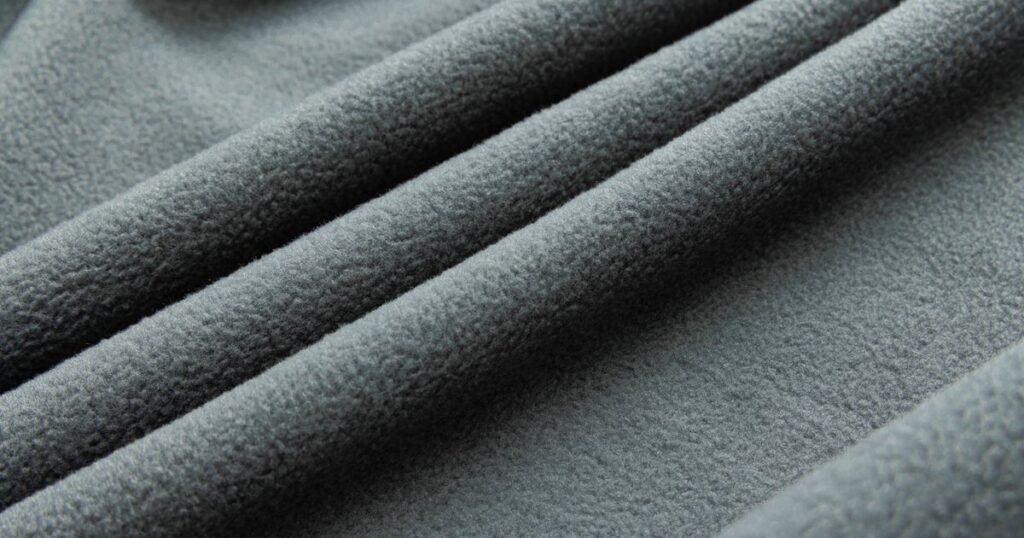
The inner fleece layer is typically a 100gsm to 200gsm brushed polyester fleece that provides warmth, wicks moisture, and feels soft against the skin or a base layer. Heavier fleece backings above 150gsm suit cold-weather applications and winter uniforms, while lighter 100gsm fleeces work for three-season jackets and active use. The fleece backing also hides the membrane, giving the jacket a cleaner interior finish than a visible membrane layer would provide. Some buyers specify anti-pilling fleece treatments to extend the garment’s usable life and maintain a professional appearance after repeated washing.
How Do MOQ Tiers Work at a Low MOQ Factory?
MOQ tiers define the minimum order quantity at different stages of the sourcing process. Most factories state a single MOQ number without clarifying whether it applies to samples, to each colour, to each style, or to the total order value. This ambiguity causes confusion when a buyer discovers that a factory advertising a 30-piece MOQ actually requires 30 pieces per colour per style, pushing the real minimum to 180 or 240 pieces for a three-colour, two-style order. Understanding the specific MOQ definition at each tier prevents costly surprises and allows accurate cash-flow planning.
Sample MOQ: 1 piece. Bulk MOQ: 10 pieces per style (mix colours and sizes). Sampling time: 7-10 days. Bulk production: 25-35 days.
Sample MOQ
Sample MOQ is the minimum number of garments a factory will produce for pre-production sampling and fit validation. PTOUTWEAR offers a 1-piece sample MOQ with a $100 sample fee that is refunded against the first bulk order of 30 or more pieces. Many factories require 5 to 10 pieces per sample round or charge per-piece sample fees above $150, making it expensive to test multiple styles or fabrics before committing to bulk. A 1-piece sample MOQ allows DTC brands to validate one design at a time, test the market with a small crowdfunding campaign, or photograph the sample for pre-orders before placing a bulk order.
Colour MOQ and Size-Run MOQ
Colour MOQ is the minimum quantity required per colour within a single style. Some factories require 30 or 50 pieces per colour, meaning a buyer ordering black, navy, and charcoal must order 90 to 150 pieces total even if the stated style MOQ is only 30 pieces. Size-run MOQ defines whether a buyer can mix sizes within the colour minimum or must order a fixed size curve. PTOUTWEAR allows mixed colours and sizes within the 10-piece style MOQ, so a buyer can order 3 black medium, 3 navy large, 2 charcoal medium, and 2 black extra-large to reach the 10-piece minimum without being locked into a single colour or a standard S-M-L-XL curve.
Bulk Production MOQ
Bulk production MOQ is the minimum total order quantity required to start a production run after sampling is complete. PTOUTWEAR sets this at 10 pieces per style for jackets and pants, allowing small brands and low MOQ jacket orders to enter production without tying up $5,000 to $15,000 in inventory. School and corporate uniform programmes start at 30 pieces per style per colour to ensure consistent dye lots and efficient production scheduling. Buyers ordering multiple styles can combine them in a single production run as long as each style meets its individual 10-piece minimum.
How Do You Verify a Factory’s Bonded Fleece Capability?
Verifying a factory’s bonded fleece capability requires checking three areas: lamination equipment, testing capacity, and production track record. A factory may claim bonded softshell capability but outsource the lamination to a third-party mill, adding lead time, cost, and quality-control risk. Buyers should ask whether lamination is done in-house or subcontracted, request photos or a video walkthrough of the lamination line, and confirm that the factory holds ISO 9001 certification and can provide SGS test reports for fabric performance.
In-House Lamination Equipment
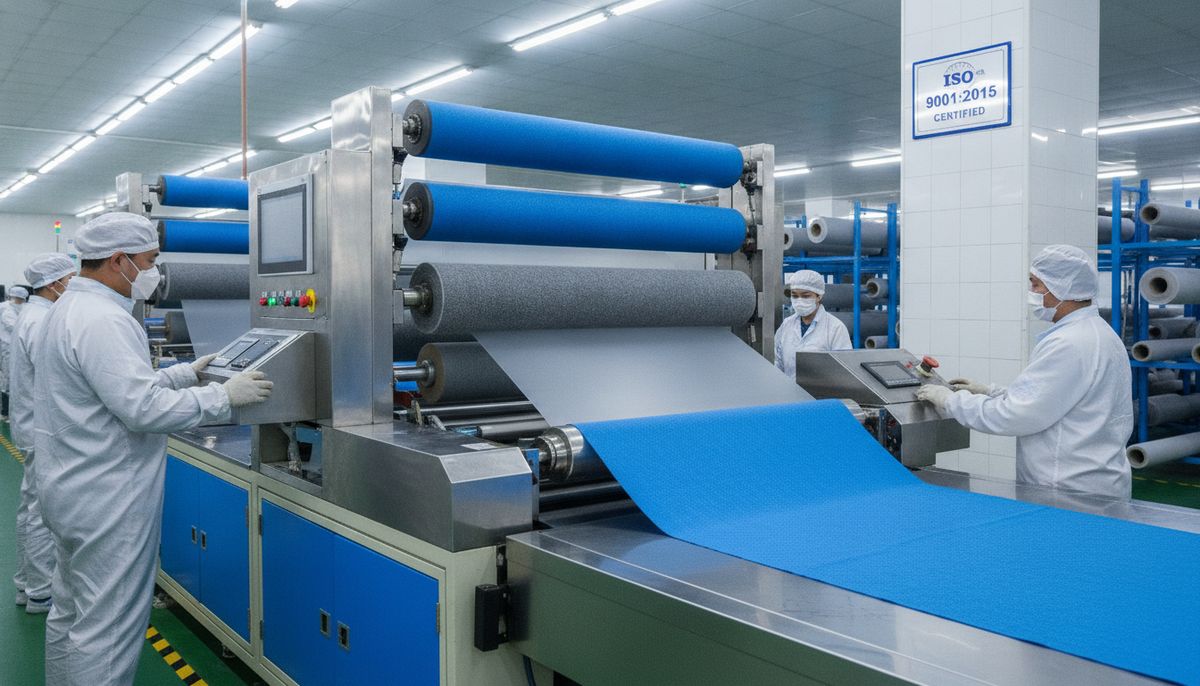
In-house lamination equipment includes a hot-melt or adhesive lamination machine that bonds the three layers under controlled heat and pressure. Factories with in-house lamination can adjust adhesive weight, bonding temperature, and pressure to match different fabric weights and membrane types, giving them flexibility to customize the softshell construction for specific applications. Subcontracted lamination adds 5 to 10 days to the sampling lead time and limits the buyer’s ability to request custom fabric combinations or adjust the fleece weight mid-production. Buyers should request a factory video showing the lamination line in operation and ask how many square meters per day the line can process.
Testing Capacity and Certifications
Testing capacity determines whether a factory can verify fabric performance before bulk production or must rely on mill-provided test reports that may not reflect the finished garment’s performance after sewing, seam sealing, and washing. ISO 9001 certification confirms that the factory operates a documented quality management system with defined inspection procedures and corrective-action protocols. SGS testing provides independent third-party verification of hydrostatic pressure, MVTR breathability, abrasion resistance, pilling resistance, and wash durability. PTOUTWEAR holds ISO 9001 and works with SGS to test fabrics before bulk production, ensuring that the bonded fleece softshell jacket meets the specified performance targets.
Production Track Record
A factory’s production track record for bonded fleece softshell jackets reveals whether it has solved common lamination problems such as delamination after washing, uneven adhesive distribution, and fleece pilling. Buyers should request references from other brands that have ordered bonded softshell jackets in similar quantities and ask about defect rates, wash-test results, and whether the factory proactively identified and corrected quality issues during production. A factory that has produced fewer than 10,000 bonded softshell units per year may lack the process control and troubleshooting experience needed to deliver consistent quality across multiple production runs.
In practice: Seam taping is what separates a jacket that survives a wash test from one that delaminates, which is why it gets checked on the sample before bulk is ever cut.
What Are the Real Landed Costs for North American Buyers?
Landed cost is the total cost to get a bonded fleece softshell jacket from the factory floor in China to the buyer’s warehouse in the United States or Canada, including FOB price, ocean freight, import duty, customs brokerage, and inland delivery. Many buyers compare factories based solely on FOB price and discover too late that the cheapest FOB option has the highest landed cost due to poor packaging, slow lead times that force air freight, or incomplete documentation that triggers customs delays and storage fees. Calculating landed cost accurately requires breaking down each cost component and understanding how order size, incoterms, and destination port affect the final per-unit price.
FOB Price Components
The FOB price includes fabric, trims, labour, factory overhead, and profit, plus the cost to deliver the finished jackets to the departure port in China. For a bonded fleece softshell jacket with TPU membrane, YKK zippers, and custom logo embroidery, the FOB price typically ranges from $18 to $35 per piece depending on fabric weight, construction complexity, and order quantity. Buyers ordering 10 to 50 pieces pay a higher per-unit price than buyers ordering 500 pieces because setup costs, pattern grading, and sample fees are spread across fewer units. Buyers should request a detailed cost breakdown showing fabric, trims, labour, and overhead separately, allowing them to identify cost-reduction opportunities without compromising quality.
Ocean Freight and Delivery
Ocean freight cost depends on shipment volume, departure port, destination port, and shipping season. A 1-cubic-meter carton holding 40 to 60 bonded fleece softshell jackets costs approximately $150 to $250 to ship from Ningbo or Shanghai to Los Angeles, New York, or Vancouver, with transit times of 14 to 28 days depending on the route and carrier. Buyers ordering fewer than 100 pieces often consolidate shipments with other orders to avoid paying for a full container, but consolidation adds 3 to 7 days to the delivery time and increases the risk of cargo mixing or loss. DDP shipping terms shift the freight and customs responsibility to the factory, simplifying logistics for the buyer but typically adding 15 to 25 percent to the FOB price.
Import Duty and Customs Clearance
Import duty for softshell jackets entering the United States under HTS code 6201.93.3510 is 27.7 percent of the FOB value plus international freight, making duty the largest single cost component after the FOB price for most North American buyers. Canadian buyers face duty rates between 16 and 18 percent depending on the specific garment classification and country of origin. Customs brokerage fees range from $75 to $200 per shipment for standard clearance, with additional fees for inspections, compliance holds, or missing documentation. Buyers should work with a licensed customs broker before the first shipment to confirm the correct HTS code, calculate the duty liability, and ensure that all required documents are prepared correctly.
Payment Terms and Cash Flow
Payment terms define when the buyer pays the factory and how much working capital is tied up during production and shipping. Standard terms for new buyers are 30 percent deposit at order confirmation and 70 percent balance before shipment, requiring the buyer to pay the full amount 4 to 6 weeks before the goods arrive and can be sold. Buyers with established relationships may negotiate net-30 or net-60 terms, allowing them to receive and sell the goods before paying the balance. Letter of credit terms protect both parties but add $300 to $800 in bank fees and require the buyer to lock up the full order value as collateral, making them impractical for orders below $10,000.
Frequently Asked Questions
What is the difference between bonded fleece softshell and non-bonded softshell?
Bonded fleece softshell uses a three-layer lamination process where the face fabric, membrane, and fleece backing are permanently bonded together in a single composite fabric, eliminating the need for a separate lining and reducing bulk. Non-bonded softshell uses a woven or knit shell fabric with a separate fleece or mesh lining that is sewn in during garment construction, allowing the lining to be replaced or upgraded independently but adding weight and reducing packability. Bonded construction provides better wind resistance because there are no air gaps between layers, while non-bonded construction offers easier repair and lower fabric cost.
How do you prevent delamination in bonded fleece softshell jackets?
Delamination in bonded fleece softshell jackets is prevented by controlling adhesive weight, bonding temperature, and pressure during the lamination process, and by testing the bonded fabric through multiple wash and dry cycles before bulk production. The adhesive must be compatible with both the membrane and the fleece backing, and the bonding temperature must be high enough to activate the adhesive without damaging the membrane or melting the fleece fibers. Factories should provide a wash-durability test report showing that the bonded fabric survives at least 20 wash cycles at 40 degrees Celsius without delamination, bubbling, or adhesive migration. Buyers should request a pre-production sample that has been washed 5 to 10 times to verify lamination quality before approving bulk production.
Can you mix bonded fleece softshell with other jacket types in a single order?
You can mix bonded fleece softshell jackets with other jacket types such as hardshell, insulated, or windbreaker styles in a single order as long as each style meets its individual MOQ minimum. PTOUTWEAR allows buyers to combine multiple jacket styles in one production run, with each style requiring a 10-piece minimum and colours and sizes mixed within that style. Mixing styles in a single order reduces per-unit shipping costs, simplifies customs clearance, and allows buyers to test multiple product categories without placing separate orders. Buyers should confirm that the factory has the capability and capacity to produce all requested styles within the desired lead time, and should request a detailed production schedule showing when each style will be cut, sewn, and packed.
Written by Ivan Chen, Sales Engineer at PTOUTWEAR – 13 years in outdoor apparel manufacturing.
Ready to source your bonded fleece softshell jacket low MOQ factory with 1-piece samples and 10-piece bulk orders?
Request Your Sample Today →