Finding a wholesale rain jacket distributor low volume orders supplier means identifying factories or distributors that accept minimums below 100 pieces-typically 1-50 units-while still offering custom branding, waterproof performance specs, and reasonable per-unit pricing. The challenge is that many suppliers advertise “wholesale” but enforce 300-500 piece minimums once you request a quote, making it difficult for startup outdoor brands, corporate uniform buyers, and school programmes to test styles or fulfill small team orders without tying up capital in inventory risk.
Key Takeaways
- Wholesale rain jacket suppliers commonly list MOQs ranging from 1 piece for samples to 1,000 pieces for custom production runs, depending on the level of customization and the supplier’s business model.
- Buyers frequently discover that advertised low-MOQ programmes still impose restrictive customization rules or unclear custom logo pricing until late in the quote process, complicating landed-cost estimates for small runs.
- Waterproof performance claims on product pages often lack hydrostatic head ratings, seam-sealing methods, or breathability data, making it hard to compare real-world performance across suppliers.
- Supplier sites optimized for fashion or outdoor retail often fail to address school and corporate uniform ordering workflows, leaving programme managers without clear guidance on colour matching, reorder timelines, or bulk-discount tiers.
- Sample-friendly suppliers may still enforce long lead times or limit fabric and trim choices once a buyer moves beyond the initial sample unit, delaying market validation for small brands.
What Counts as Low Volume for Wholesale Rain Jackets?
Low volume in the wholesale rain jacket market typically means order quantities between 1 and 100 pieces per style. Buyers in this range include DTC outdoor brand founders validating their first product line, corporate HR teams ordering branded jackets for 20-person sales teams, school uniform coordinators equipping a single grade level, and small outdoor retailers testing a new supplier before committing to deeper inventory.
Sample Orders (1-5 Pieces)
A sample order serves as a pre-production proof to verify fabric hand-feel, fit, waterproof seam taping, and logo placement before bulk commitment. According to supplier marketplace listings and buyer-facing catalog pages, many so-called wholesale rain jackets still force buyers into surprisingly high MOQs, making low-volume test orders difficult. PTOUTWEAR’s sample MOQ is 1 piece with a $100 sample fee, refunded against a first bulk order of 30+ pieces, and sampling time runs 7-10 days. Buyers use this window to wash-test seam tape, check zipper durability, and confirm that the waterproof membrane performs as specified before scaling up.
Small Batch Production (10-50 Pieces)
Small batch runs suit corporate uniform programmes, team gear orders, and startup outdoor brands launching a capsule collection. PTOUTWEAR’s bulk MOQ is 10 pieces per style, with colours and sizes mixed within that minimum, allowing a buyer to order 10 jackets across three colourways and four sizes without hitting separate per-SKU minimums. School and corporate uniform programmes start at 30 pieces per style per colour to maintain colour consistency across production lots and ensure reorder availability during the academic or fiscal year.
Mid-Volume Wholesale (50-100 Pieces)
This tier bridges the gap between sampling and full production. Buyers at this level have validated demand through pre-orders or a successful sample sell-in and are ready to stock inventory for a season. Custom logo embroidery and screen-printing become cost-effective at this scale, with per-unit decoration fees dropping as setup costs spread across more garments. Lead time for 50-100 pieces typically runs 25-35 days from approved pre-production sample to ex-factory shipment.
MOQ Structures Across Supplier Types
Understanding how different supplier categories structure their minimums helps buyers identify the right partner for their volume and customization needs. According to technical outerwear manufacturer page data, some custom jacket programs advertise minimum purchase quantities as low as 12 units for decorated jackets, while others quote a 300-piece minimum per style for waterproof jackets, with higher custom-spec runs starting at 500 pieces.
Factory-Direct OEM Manufacturers
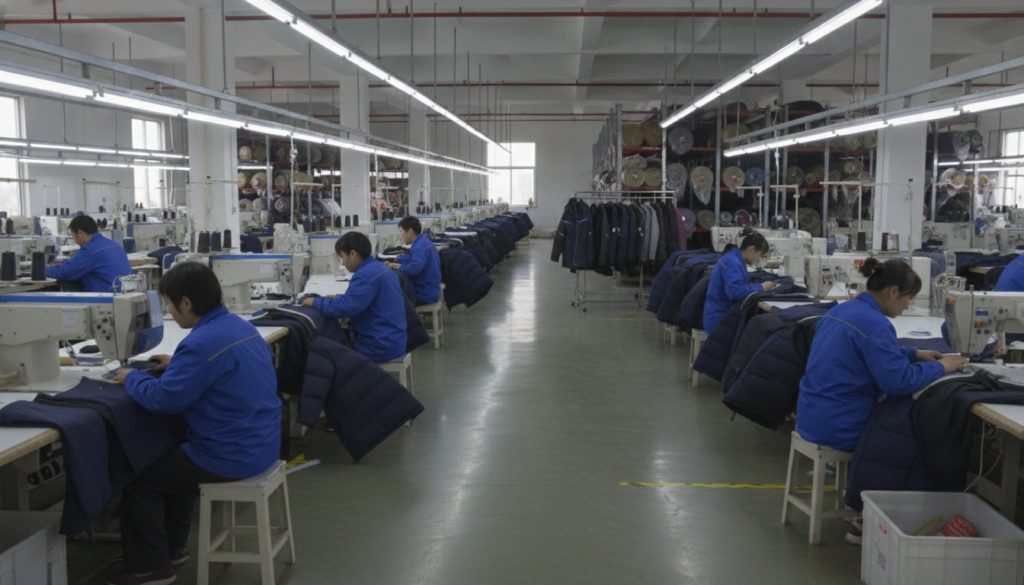
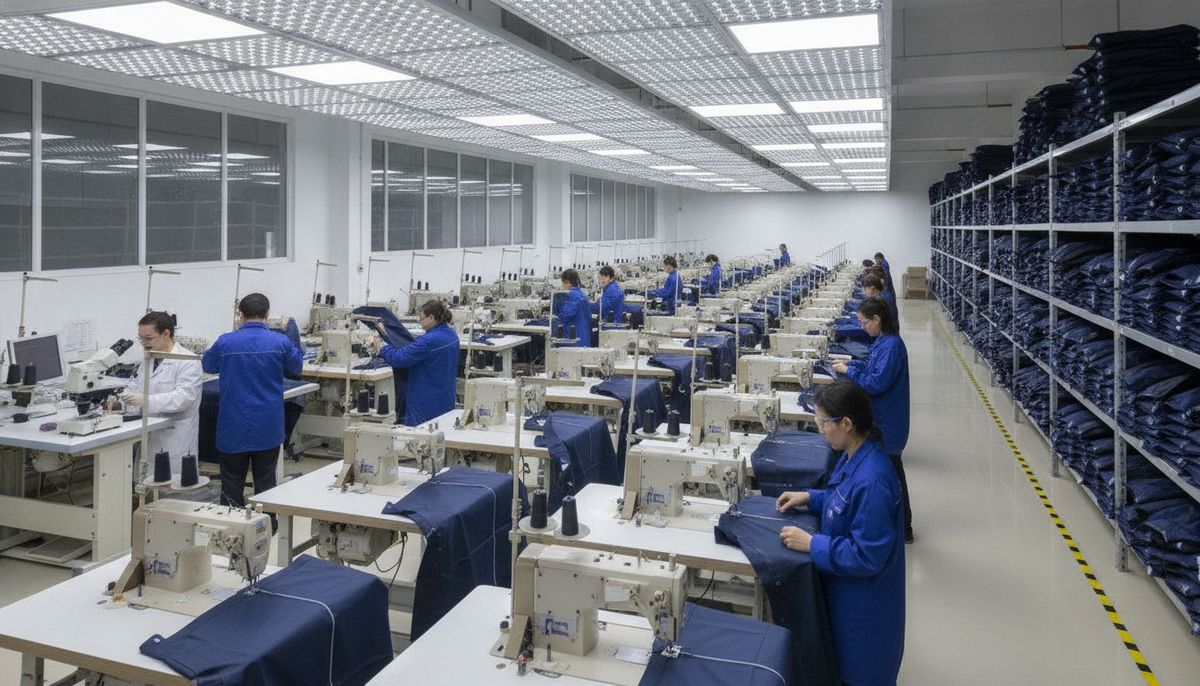
These suppliers own the production floor and can adjust minimums based on fabric availability, production-line scheduling, and the complexity of your spec. PTOUTWEAR operates a 3,000m² facility in Taizhou Sanmen with 240 workers and 20 production lines, producing softshell, hardshell, rain, ski, insulated, windbreaker, 3-in-1, workwear, and varsity jackets. The OEM jacket manufacturing model allows buyers to specify waterproof membrane type, seam-taping method, zipper brand, and trim details, making it the right fit for outdoor brands that need technical performance differentiation.
Promotional Product Distributors
Distributors stock a catalog of pre-approved styles and offer decoration services-embroidery, screen print, or heat transfer-on top of base garments. According to MPower Distributor Store, distributor store pricing for branded rain jackets is published at a 12-unit quantity tier, showing that small wholesale programs are commercially active. Buyers gain fast turnaround and low minimums but sacrifice fabric choice, fit customization, and waterproof-spec control. This model works well for corporate teams ordering matching jackets with a company logo, where brand consistency matters more than technical innovation.
Private-Label and Stock-Plus-Customization Hybrids
Private-label suppliers maintain a library of pre-developed styles and allow buyers to swap hang tags, labels, and packaging while keeping the garment construction unchanged. MOQs typically start at 50-100 pieces per style because the supplier has already absorbed fabric and trim development costs. Stock-plus-customization suppliers offer the fastest path to market for buyers who need a rain jacket in their catalog but lack the volume or timeline to justify full custom logo service and fabric sourcing.
How to Evaluate Waterproof Performance at Low Volume
Waterproof claims mean nothing without verifiable test data. Industry seller pages and comparison listings show that shoppers complain product pages highlight waterproof claims but give little clarity on hydrostatic head, seam sealing, or breathability, so they cannot compare real performance. A rain jacket that passes a light drizzle but soaks through in sustained rain damages your brand reputation faster than any cost saving justifies the risk.
Hydrostatic Head Rating
Hydrostatic head measures how much water pressure a fabric can withstand before leaking, expressed in millimeters. A 5,000mm rating handles light rain and snow; 10,000mm is the baseline for serious outdoor use; 20,000mm+ suits alpine and expedition conditions. Ask your supplier for the fabric mill’s test report, not just a number on a spec sheet. PTOUTWEAR provides SGS-certified fabric test data with every pre-production sample, so buyers can verify the membrane’s waterproof rating before committing to bulk.
Seam-Taping Method and Coverage
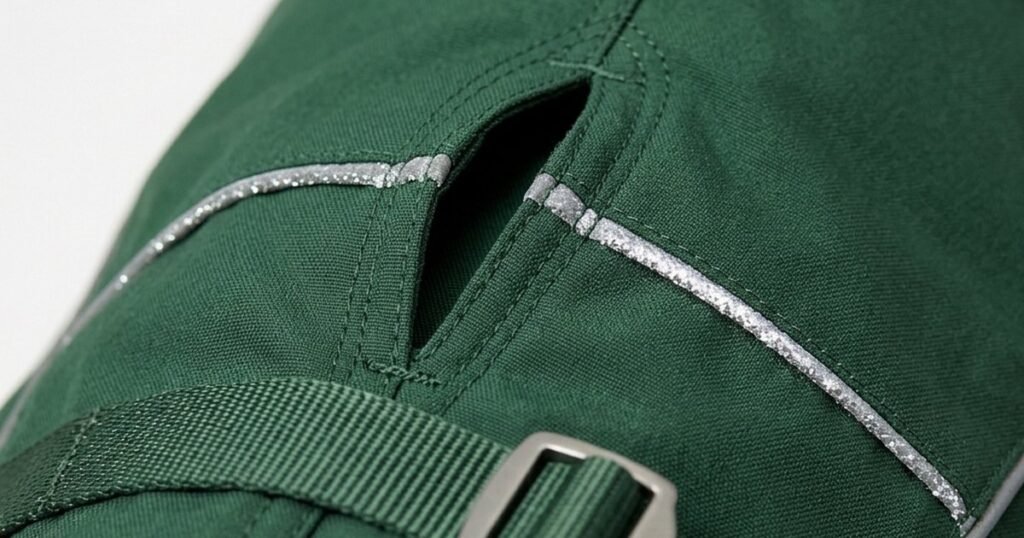
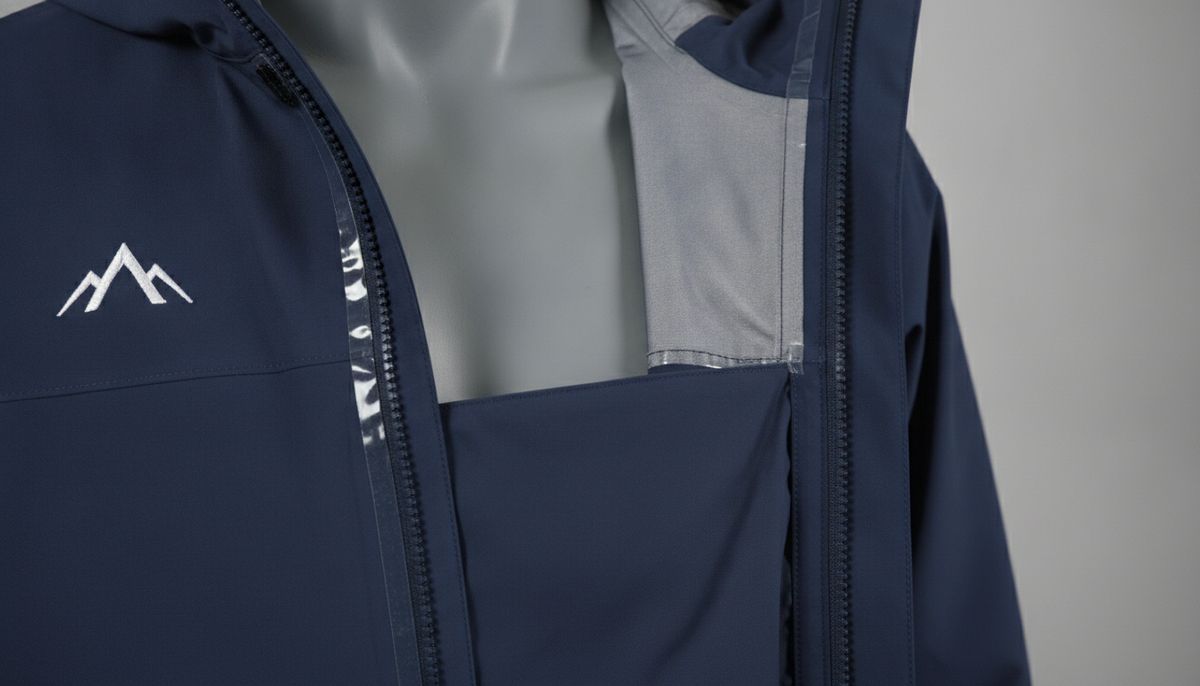
Untaped seams are the most common failure point in budget rain jackets. Water seeps through needle holes even when the face fabric is waterproof. Fully taped seams cover every stitched join with heat-bonded waterproof tape; critically taped seams cover only high-exposure areas like shoulders and hood. Buyers ordering low volumes should request a sample and run a shower test: hang the jacket under running water for five minutes, then check the interior for moisture along seams, zippers, and pocket openings.
In practice: Seam taping separates a jacket that survives a wash test from one that delaminates after three wears, which is why it gets checked on the sample before bulk is ever cut.
Breathability and MVTR
Moisture vapor transmission rate (MVTR) measures how much perspiration vapor escapes through the fabric, preventing that clammy feeling during active use. A 5,000 g/m²/24hr MVTR suits low-intensity wear; 10,000-15,000 handles moderate hiking and cycling; 20,000+ is necessary for high-output mountain sports. Buyers sourcing rain jackets for corporate uniforms or school programmes can often accept lower MVTR because wearers are not generating heavy perspiration, but outdoor brands targeting trail runners or alpinists need verifiable breathability data from the fabric mill.
Custom Logo Pricing Transparency for Small Orders
Small brands frequently note that custom logo pricing is unclear until late in the quote process, making it hard to estimate landed cost on a low-volume run. Understanding decoration setup fees, per-unit costs, and artwork requirements upfront prevents budget surprises when the final invoice arrives.
Embroidery Setup and Per-Unit Costs
Embroidery requires a one-time digitizing fee to convert your logo artwork into a machine-readable stitch file. Setup fees range from $50 to $150 depending on logo complexity and stitch count. Per-unit embroidery costs drop as order quantity rises: expect $8-12 per logo at 10-20 pieces, $5-8 at 50 pieces, and $3-5 at 100+ pieces. Left-chest logos under 4 inches wide are the most cost-effective; large back or sleeve placements increase both setup and per-unit fees.
Screen Print and Heat Transfer
Screen printing works well for simple logos with 1-3 colours and offers the lowest per-unit cost at higher volumes, but setup fees for screens make it less economical below 50 pieces. Heat transfer (also called vinyl or CAD-cut) has minimal setup cost and suits small runs, but the print can crack or peel after repeated washing if the vinyl quality is poor. Buyers ordering low MOQ jacket manufacturer runs should ask for wash-test documentation showing the decoration method’s durability over 20+ home laundry cycles.
Woven Labels and Hang Tags
Custom woven labels sewn into the neck or side seam add brand legitimacy at low cost. Minimums typically start at 100-200 labels, with per-unit costs around $0.15-0.30. Hang tags require a separate print setup and die-cut tooling, adding $100-200 to the first order but becoming negligible on reorders. Buyers launching a private label outdoor brand should budget for these identity elements even on small initial runs, because they signal product quality and brand ownership to retail buyers and end consumers.
Lead Time Expectations for Low-Volume Wholesale
Low-volume buyers report that sample-friendly suppliers can still have long lead times or restrictive customization rules once they move beyond the sample unit. Knowing realistic timelines for each production phase helps buyers plan product launches, corporate event deadlines, and school uniform delivery windows.
Sampling Phase
A pre-production sample confirms fit, fabric, and construction before bulk cutting begins. PTOUTWEAR’s sampling time is 7-10 days from approved tech pack and fabric selection to sample shipment. Buyers should add 3-5 days for international courier delivery and another 2-3 days for internal review and revision requests. Total sampling cycle: 12-18 days. Brands that skip sampling to save time often face fit issues, colour mismatches, or construction defects that cost far more to fix in bulk production than a sample would have cost upfront.
Bulk Production
Standard bulk production for 10-100 pieces runs 25-35 days (approximately 4 weeks) from approved pre-production sample to ex-factory date. This includes fabric cutting, sewing, seam taping, quality inspection, and packing. Rush production is available: PTOUTWEAR can produce 1,000 pieces in 2 weeks at a +25% surcharge, useful for buyers facing an unexpected corporate event or a school uniform deadline that moved up. Buyers should request a production timeline with milestone dates-cutting complete, sewing 50% done, QC inspection-so they can track progress and adjust downstream logistics if delays occur.
Shipping and Customs Clearance
DDP (Delivered Duty Paid) shipping transfers customs, duties, and final-mile delivery risk to the supplier, simplifying the process for first-time importers. Air freight from China to Europe runs 5-8 days transit; sea freight 25-35 days. Buyers ordering small volumes (under 100 pieces) often find air freight cost-competitive because the speed allows faster market validation and reduces inventory holding time. Buyers should confirm whether the quoted price includes duties and VAT; a $20 per-unit ex-factory price can become $28 landed once import fees are added.
Vetting Checklist for Low-Volume Suppliers
Buyers looking for uniform programs often find supplier sites optimized for fashion or outdoor retail, not for school or corporate ordering workflows. A structured vetting process prevents quality failures, communication breakdowns, and hidden fees that erode the cost advantage of low-MOQ sourcing.
- Request a physical sample before quoting: Suppliers confident in their quality ship samples early. Factories that delay sampling until after a deposit often hide construction shortcuts or fabric substitutions.
- Verify fabric mill certificates: Ask for the waterproof membrane’s hydrostatic head test report, the DWR finish’s PFC-free certification, and the fabric mill’s name and contact. Generic