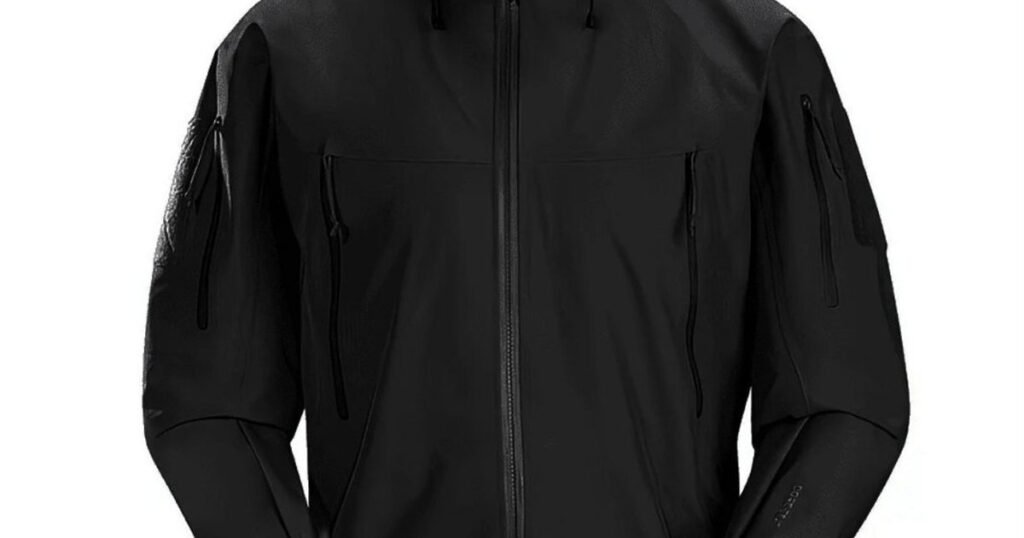
A jacket manufacturer moq 30 pieces for ski wear exists, but the structure varies widely: some suppliers define 30 pieces as a total across all sizes and colors, while others require 30 units per SKU (style-color combination). PTOUTWEAR accepts 30 pieces per SKU for bulk ski jacket orders, meaning a brand can launch with a single colorway in six sizes without inflating the order to 180 units. Sample MOQ is 1 piece with a $100 refundable fee.
📋 Table of Contents
- Executive Summary
- What Does 30 Pieces Mean in a Ski Jacket Order?
- Verified Low-MOQ Ski Jacket Suppliers
- Per-SKU vs Per-Color MOQ Structures
- Technical Specs Buyers Verify at 30-Piece Volume
- Cost Implications of Low-MOQ Ski Jacket Production
- Sampling Before Bulk: How to Validate a 30-Piece Supplier
- Key Takeaways
- FAQ
Executive Summary
- MOQ Definition Variance: Some suppliers advertise 30 pieces but split by color or fabric, inflating actual minimums to 90-180 units.
- Per-SKU Clarity: PTOUTWEAR’s 30-piece bulk MOQ applies per SKU, allowing brands to order one colorway across standard size runs without multiplying the minimum.
- Factory vs Trading Company: Low-MOQ claims from trading companies often lack in-house seam-sealing and waterproof testing, creating quality inconsistency.
- Technical Specification Gaps: Many low-MOQ listings omit waterproof ratings and seam-seal standards, which corporate and school buyers require for ski wear.
- Sampling Access: One-piece sample MOQ with refundable fees enables validation before committing to 30-unit production runs.
What Does 30 Pieces Mean in a Ski Jacket Order?
The phrase “30 pieces” can describe three distinct order structures, and buyers discover the difference only after requesting a quote. A jacket manufacturer moq 30 pieces claim may refer to 30 total units mixed across all styles, 30 units per style but split further by color, or 30 units per SKU where each style-color combination stands alone. The last structure offers the lowest cash outlay for a brand testing a single design.
Total Order Minimum
Some suppliers state 30 pieces as the absolute minimum across all items in the purchase order. A buyer ordering two ski jacket styles in three colors each would need only 30 total units, distributed as 5 units per SKU. This structure suits multi-style sampling but creates size-run gaps: five jackets cannot cover XS through XXL without leaving holes in the range.
Per-Style Minimum
Other factories require 30 pieces per style, then subdivide by color. A single hardshell design in navy, black, and red would demand 90 total units. Buyers launching with one colorway still hit the 30-piece threshold, but adding a second color doubles the commitment.
Per-SKU Minimum
The per-SKU model treats each style-color pairing as an independent minimum. A brand ordering a ski jacket in black needs 30 black units distributed across sizes, and adding red requires another 30 red units. This structure gives the clearest cost visibility and prevents hidden multipliers. PTOUTWEAR applies the 30-piece minimum per SKU, so a startup can launch with one design in one color and a full size run.
Verified Low-MOQ Ski Jacket Suppliers
According to PTOUTWEAR (2026), low-MOQ custom outerwear suppliers are advertising bulk minimums as low as 30 pieces per SKU for technical jackets. According to Eliian (2026), some custom outdoor jacket manufacturers are advertising 10 pieces per design for OEM/ODM jacket production. According to AFS Aeroflex Sports (2026), one sportswear manufacturer lists low MOQ of 25 pieces per style and positions this as flexible for emerging labels. These claims require verification of in-house production, seam-sealing capability, and waterproof testing before a buyer commits.
PTOUTWEAR
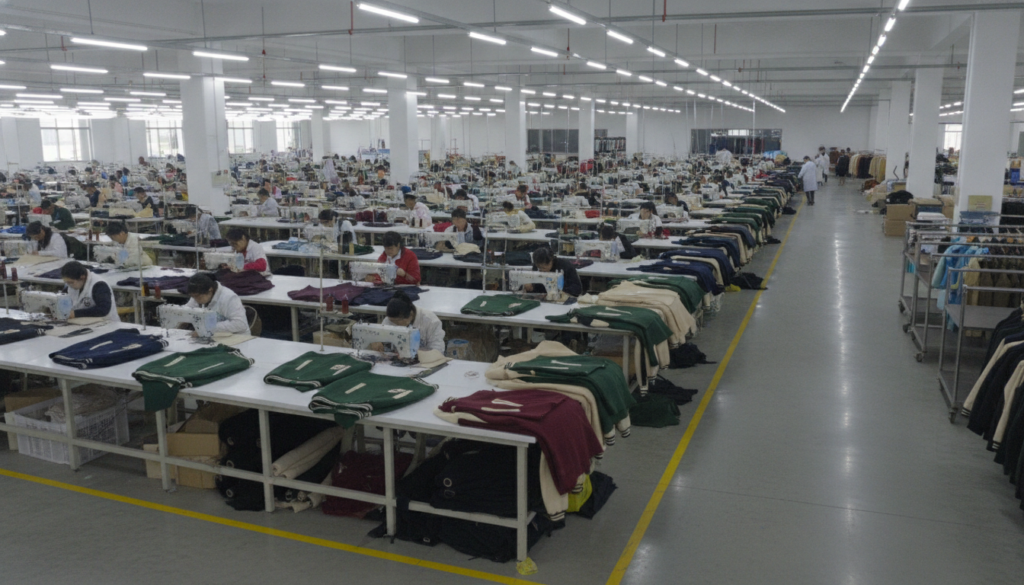
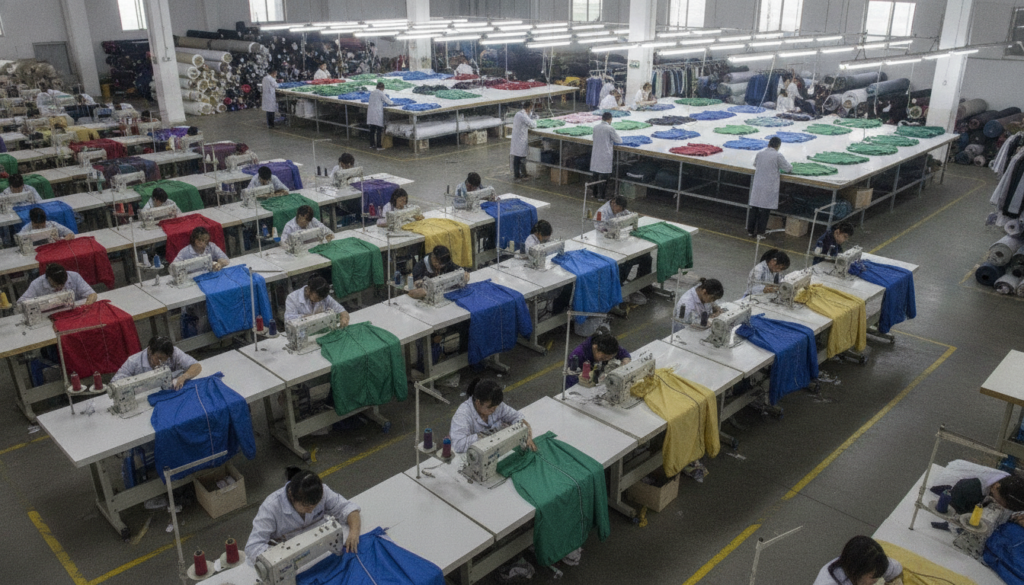
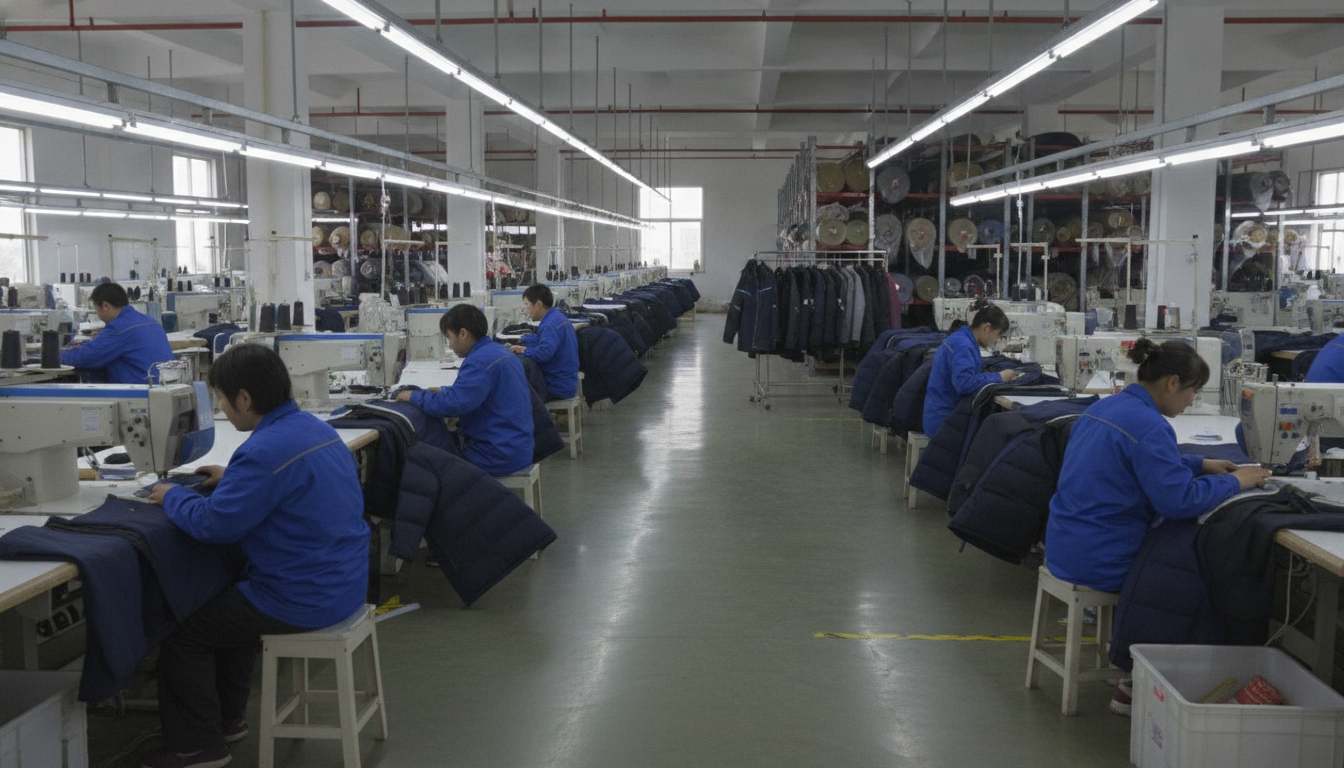
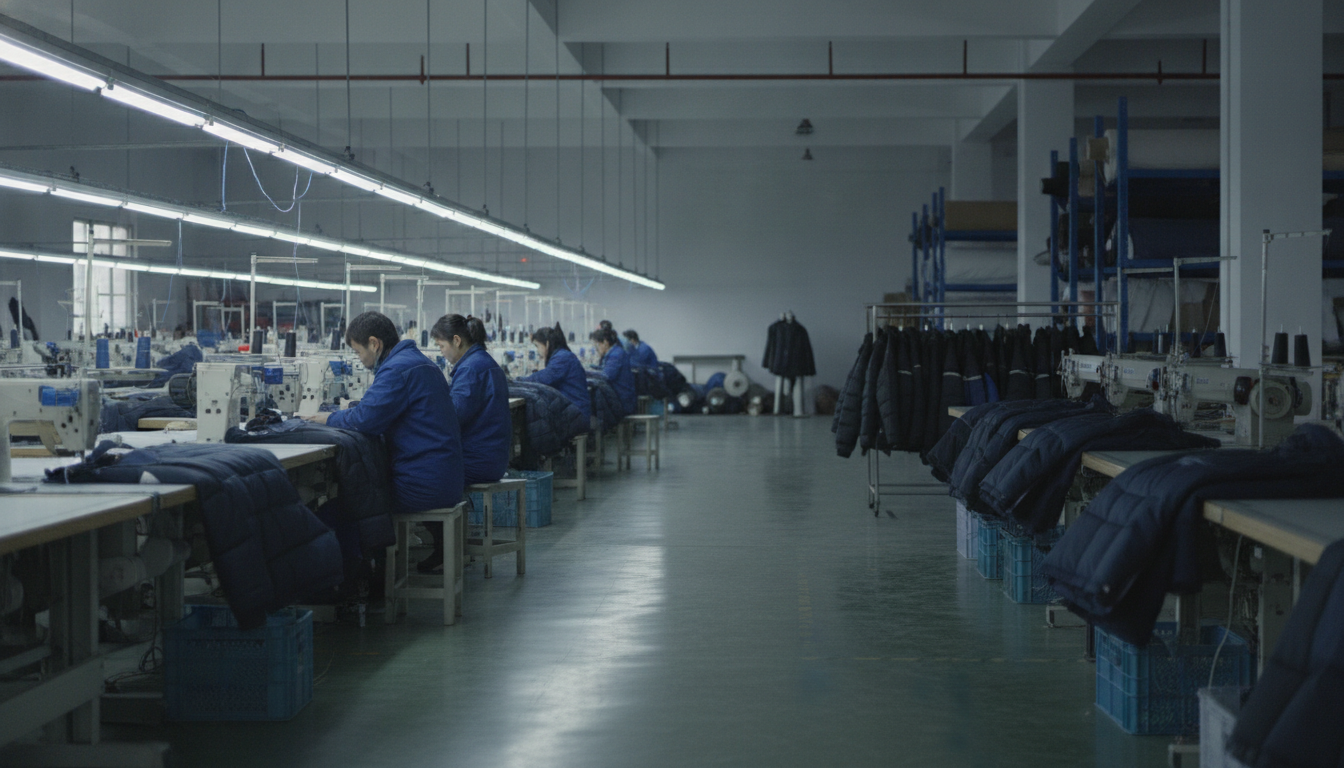
PTOUTWEAR operates a 3,000m² facility in Taizhou Sanmen with 240 workers and 20 production lines, producing 200,000 pieces annually. The factory accepts 1-piece sample orders with a $100 refundable fee and sets bulk MOQ at 30 pieces per SKU. In-house capabilities include cut-and-sew, seam sealing, and PFC-free DWR application, with ISO 9001 and SGS test reports. OEKO-TEX and BSCI are pending, not yet held. The facility produces softshell, hardshell, rain, ski, insulated, windbreaker, 3-in-1, workwear, and varsity jackets for brands, corporate teams, and schools.
Eliian
According to Eliian (2026), the supplier advertises a 10-piece MOQ for custom outdoor jackets. The listing does not specify whether this applies per style, per color, or per total order, and does not detail in-house seam-sealing or waterproof testing capabilities. Buyers should request factory audit reports and sample jackets with specified waterproof ratings before placing production orders.
AFS Aeroflex Sports
According to AFS Aeroflex Sports (2026), the manufacturer lists a 25-piece-per-style MOQ and targets emerging sportswear labels. The page does not clarify color breakdowns or technical fabric capabilities. Corporate and school buyers requiring ASTM F1671 water-resistance testing or EN 343 compliance should verify testing protocols during the sampling phase.
Per-SKU vs Per-Color MOQ Structures
Buyers often discover that a supplier’s advertised 30-piece minimum multiplies when colors or fabrics enter the order. A factory stating “30 pieces per style” may require 30 units in black, another 30 in navy, and another 30 in red, turning a perceived 30-piece order into a 90-piece commitment. Clarifying the MOQ structure in writing before sampling prevents budget overruns.
How Per-Color Minimums Inflate Orders
A ski jacket design offered in three colorways under a per-color MOQ structure requires 90 total units. If the brand planned for 30 units and a $45 per-unit cost, the actual outlay jumps from $1,350 to $4,050. Small brands testing market fit cannot absorb this variance without cutting other styles or delaying the launch.
Size-Run Implications
A 30-piece-per-SKU order allows a brand to distribute units across six sizes (XS, S, M, L, XL, XXL) with five units per size. A per-color structure forcing 30 units per color creates either size gaps or excess inventory in slow-moving sizes. Corporate uniform buyers ordering for a 40-person ski team need specific size distributions, and rigid color minimums prevent efficient ordering.
Fabric and Membrane Variations
Some suppliers apply the MOQ per fabric or membrane type, not per color. A brand ordering the same ski jacket style with a 10K/10K membrane and a 20K/20K membrane may face two separate 30-piece minimums. Buyers should confirm whether fabric upgrades reset the count or allow mixing within a single 30-piece order.
Technical Specs Buyers Verify at 30-Piece Volume
Low-MOQ ski jacket suppliers often omit waterproof ratings, seam-seal methods, and breathability figures from product pages. Corporate buyers sourcing for outdoor education programs and school uniform managers need ASTM F1671 water-resistance data and EN 343 ratings, but many 30-piece suppliers list only fabric weight and fill power. Requesting a pre-production sample with a third-party test report closes this gap.
Waterproof and Breathability Testing
A ski jacket claiming “waterproof” without a hydrostatic-head figure may use a water-resistant coating that fails after three washes. ASTM F1671 measures water penetration under pressure, and ISO 811 quantifies the millimeter threshold at which water breaches the fabric. Buyers should request test reports dated within the past 12 months and verify the lab name against accredited testing-body directories.
Seam-Seal Coverage
Critical-seam taping covers shoulder, sleeve, and hood seams where water pools, while fully taped construction seals every stitched join. A 30-piece supplier may offer only critical-seam taping to reduce labor cost, leaving underarm and side seams exposed. Buyers ordering for wet-climate ski programs need full taping, and the sample jacket should show continuous tape on every seam when inspected inside-out.
DWR Durability
Durable water repellent (DWR) coatings bead water on the shell fabric surface, but PFC-based formulations face regulatory phase-outs in the EU and California. PFC-free DWR using polyurethane or silicone chemistry meets REACH Annex XVII and bluesign criteria, though wash durability may require reapplication after 20-30 cycles. PTOUTWEAR applies PFC-free DWR certified by SGS, and buyers can request the chemical supplier’s safety data sheet (SDS) to verify formulation.
Cost Implications of Low-MOQ Ski Jacket Production
A 30-piece ski jacket order typically carries a 15-25% per-unit cost premium compared to 300-piece runs, driven by fabric minimum buy-ins, setup time allocation, and reduced cutting-room efficiency. A softshell ski jacket priced at $38 per unit at 300 pieces may cost $45-48 per unit at 30 pieces. Buyers should model the premium against the cash-flow benefit of lower inventory risk.
Fabric Minimum Buy-Ins
Technical membranes and laminated fabrics often carry 300-meter mill minimums. A factory accepting a 30-piece order either stocks the fabric (limiting color and membrane options) or absorbs the excess yardage cost, passing part of it to the buyer. Brands willing to choose from in-stock fabric libraries reduce per-unit cost by $3-6 compared to custom fabric orders.
Setup and Sampling Allocation
Pattern grading, cutting-table setup, and seam-seal machine calibration consume the same labor hours whether the run is 30 pieces or 300 pieces. Spreading these fixed costs across 30 units increases the per-unit burden. A factory may charge a $200 setup fee on a 30-piece order, adding $6.67 per jacket, while the same fee on 300 pieces adds $0.67 per unit.
Economies of Scale in Cutting and Sewing
Cutting-room efficiency peaks at 100+ units per style, where nested marker layouts minimize fabric waste. A 30-piece run generates 8-12% more waste, and sewing-line workers require longer task-switching time between styles. The combined effect raises labor cost per jacket by 10-15% compared to volume production.
Sampling Before Bulk: How to Validate a 30-Piece Supplier
Requesting a 1-piece sample before committing to a 30-piece bulk order reveals construction quality, fit accuracy, and waterproof performance that product photos cannot show. PTOUTWEAR accepts 1-piece sample orders with a $100 fee refundable against bulk, and the sample arrives in 7-10 days. Buyers should test the sample jacket in simulated use conditions and verify that seam tape, zipper pulls, and DWR coating match the agreed specification.
Sample Testing Protocol
A ski jacket sample should undergo shower testing (10 minutes under a handheld showerhead at 45-degree angle), seam inspection under magnification, and zipper cycle testing (50 open-close cycles). Buyers can send the sample to an independent lab for ASTM F1671 waterproof testing and ASTM E96 breathability measurement, with results available in 5-7 business days. The cost is $150-250 per test, and discrepancies between tested performance and factory claims justify sample rejection.
Fit and Grading Validation
A sample jacket in size M allows verification of body length, sleeve length, and shoulder width against the brand’s fit spec. If the bulk order will span six sizes, buyers should request a second sample in size L or XL to confirm grading accuracy. A 2cm error in sleeve-length grading between M and XL creates fit complaints across the size run, and correcting the pattern after bulk production is cut is not feasible.
Material and Trim Confirmation
The sample jacket should use the exact shell fabric, lining, insulation, zippers, and logo placement specified in the tech pack. Buyers frequently discover that a factory substituted a lighter-weight zipper or a different membrane to meet the sample deadline, then quotes the upgraded version for bulk. Photographing the sample’s interior labels, zipper branding, and seam-tape width creates a reference for bulk-production QC.
Key Takeaways
- A jacket manufacturer moq 30 pieces claim can mean 30 total units, 30 per style split by color, or 30 per SKU; per-SKU structures offer the lowest cash commitment for single-colorway launches.
- According to PTOUTWEAR (2026), low-MOQ custom outerwear suppliers are advertising bulk minimums as low as 30 pieces per SKU for technical jackets, with sample MOQ at 1 piece.
- Buyers ordering ski jackets at low volume should verify waterproof ratings via ASTM F1671 or ISO 811 test reports and confirm seam-seal coverage through sample inspection.
- Per-unit cost at 30-piece volume typically runs 15-25% higher than 300-piece pricing due to fabric buy-ins, setup allocation, and cutting-room efficiency losses.
- One-piece sampling with refundable fees enables validation of construction quality, waterproof performance, and fit accuracy before committing to bulk production.
- Factory-direct suppliers with in-house seam-sealing and waterproof testing provide more consistent quality than trading companies relying on subcontracted production.
FAQ
Can a brand order 30 ski jackets in multiple colors from the same supplier?
The answer depends on whether the supplier’s MOQ applies per SKU or per color. A per-SKU minimum of 30 pieces allows a brand to order 15 black jackets and 15 navy jackets within a single 30-unit order, treating both colors as part of the same style. A per-color minimum requires 30 black units and 30 navy units separately, doubling the total order to 60 pieces. Buyers should request written confirmation of the MOQ structure and ask whether mixed-color orders are permitted within the minimum threshold before finalizing the purchase order.
What is the typical lead time for a 30-piece ski jacket order?
Lead time for a 30-piece custom ski jacket order is 25 to 35 days after deposit, assuming fabric is available. If the buyer selects from in-stock fabrics and standard colorways, production can complete in 25-30 days. Custom fabric orders requiring mill production add 15-20 days to the timeline. Sampling before bulk production adds 7-10 days for sample manufacturing and 5-7 days for shipping and buyer review. Buyers should add 10-15 days for international shipping and customs clearance when calculating total order-to-delivery time.
How do buyers verify that a low-MOQ supplier operates a real factory?
Buyers can verify factory ownership by requesting a video walkthrough of the production floor showing cutting tables, sewing lines, and seam-sealing equipment with the company name visible in the background. A factory audit report from SGS, Bureau Veritas, or Intertek dated within the past 12 months confirms facility size, worker count, and production capacity. Buyers should cross-check the factory address on the audit report against the supplier’s business license and request photographs of finished jackets with the factory’s QC tags attached. Trading companies often provide stock photos or generic facility images, while direct manufacturers can produce time-stamped production-floor videos within 24-48 hours of the request.
Ready to validate ski jacket quality at 30-piece volume? Request a 1-piece sample with full seam-seal inspection and waterproof test data.
Request Sample & MOQ Quote →
Written by Ivan Chen, Sales Engineer at PTOUTWEAR – 13 years in outdoor apparel manufacturing.