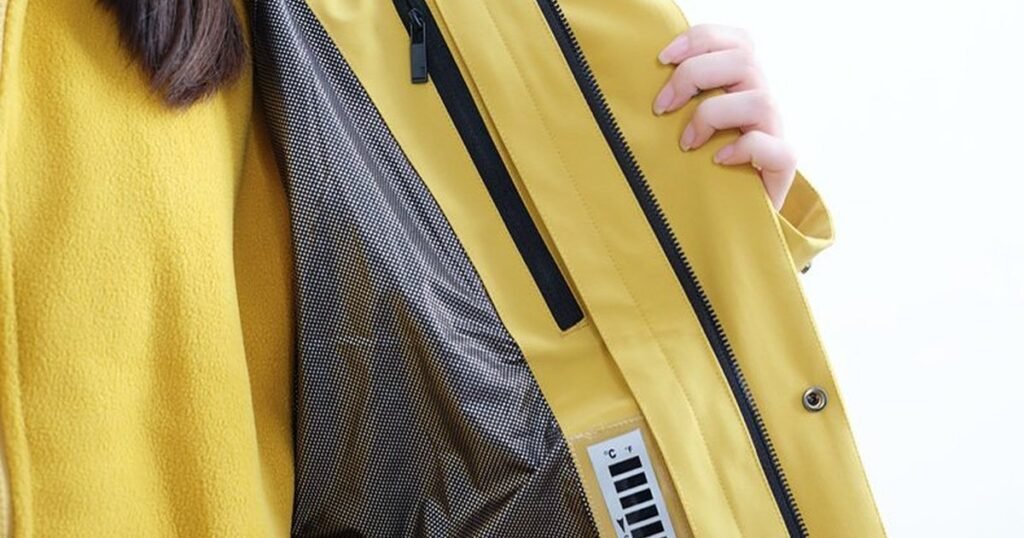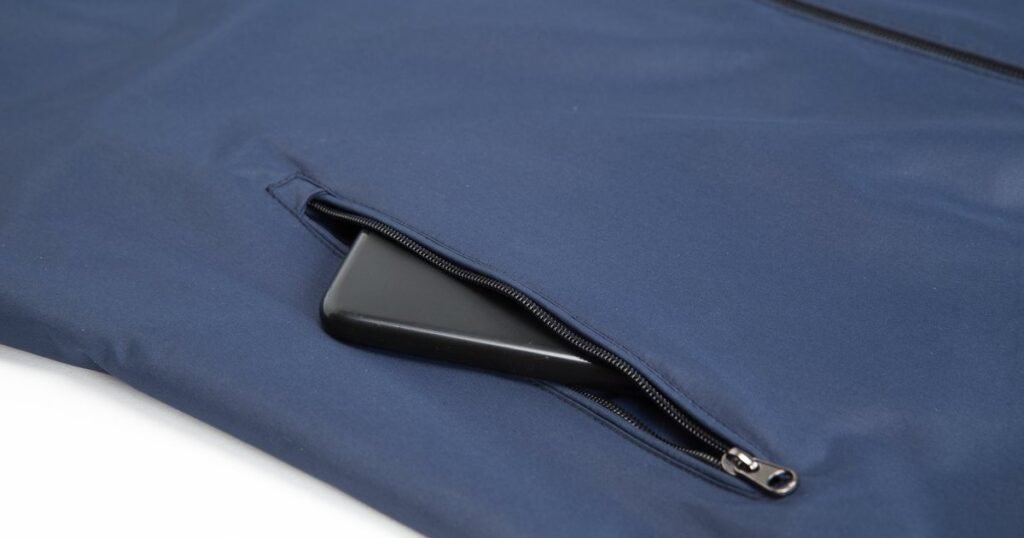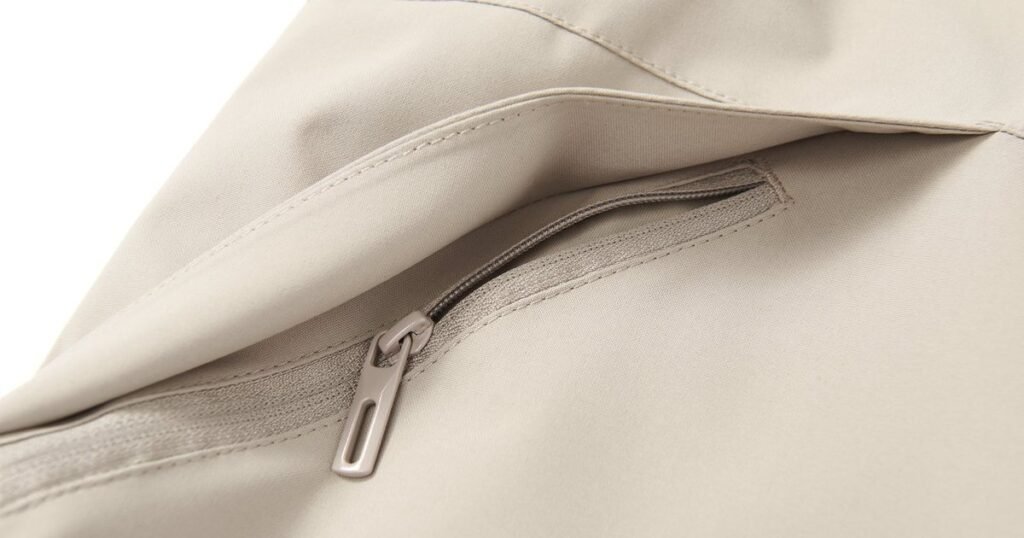
A complete waterproof testing lab standards jacket manufacturer audit covers fabric hydrostatic-head testing (ISO 811 or AATCC TM127), seam-tape integrity, zipper water-entry resistance, and finished-garment weak-point inspection, verified by an ISO/IEC 17025 accredited laboratory with a scope that includes the specific methods you require. Fabric-only testing misses construction failures-seam tape delamination, zipper leaks, cuff openings-that account for most field complaints. Request pre-production samples, specify wash cycles before testing, and require batch-traceability documentation so every shipment can be traced to its test report.
📋 Table of Contents
- Key Takeaways
- Executive Summary
- Which Test Standard Applies to Your Market?
- Fabric-Level Waterproof Testing: ISO 811 and AATCC TM127
- Finished-Garment Audit: Seams, Zippers, and Construction Weak Points
- How to Verify ISO/IEC 17025 Laboratory Accreditation
- Procurement-Ready Audit Checklist for Jacket Buyers
- Commercial Risk Controls: Pre-Production to Shipment
- Frequently Asked Questions
Key Takeaways
- ISO 811 measures fabric waterproofness using a 100 cm² specimen at 10 or 60 cm H₂O per minute pressure rise, reporting the pressure at which water appears at the third penetration point.
- A 20,000 mm hydrostatic-head rating measured under AATCC conditions is not directly equivalent to 20,000 mm under ISO 811 because pressure rate, test duration, sample size, and conditioning differ between the two methods.
- EN 343 Class 1 requires at least 8,000 Pa for new fabric and seams, while Class 4 requires 20,000 Pa on fabric after specified pretreatments and on seams after cleaning.
- High-performance outdoor jackets commonly offer approximately 10,000-20,000 mmH₂O hydrostatic-head resistance, though field performance depends equally on seam construction and zipper quality.
- ISO/IEC 17025 accreditation confirms a laboratory operates under documented quality controls, but buyers must verify the accreditation scope explicitly includes the test methods required for their product category.
- Fabric testing alone misses the majority of real-world failures-seam-tape delamination, zipper water entry, cuff openings, and pocket construction-which is why finished-garment audits are essential for commercial orders.
Executive Summary
- Fabric testing standards: ISO 811 and AATCC TM127 measure hydrostatic-head resistance; results are not interchangeable because test parameters differ.
- Finished-garment inspection: Seam tape, zipper construction, cuff closures, hood openings, and pocket design must be audited separately because fabric-level waterproofness does not guarantee garment-level performance.
- Laboratory accreditation: ISO/IEC 17025 accreditation ensures documented quality controls, but the accreditation scope must explicitly cover the test methods you require.
- Cross-market compliance: Germany and France typically require EN 343 or EN ISO 24232, the United States and Canada often specify AATCC methods, and Australia accepts ISO 811 or AATCC depending on end-use.
- Commercial controls: Pre-production sample approval, inline inspection during bulk production, shipment testing, and batch traceability protect buyers from quality drift between sample and bulk.
Which Test Standard Applies to Your Market?
Test-method requirements vary by destination market and product category. Germany, France, and most European buyers specify EN 343 for protective rain clothing or EN ISO 24232 for outdoor apparel. The United States and Canada commonly require AATCC TM127 for hydrostatic-head testing. Australia accepts either ISO 811 or AATCC methods depending on the end-use category and retailer specification.
EN 343: European Protective Rain Clothing
EN 343 defines four classes of waterproof performance. Class 1 requires at least 8,000 Pa for new fabric and seams. Class 4 requires 20,000 Pa on fabric after specified pretreatments and on seams after cleaning. The standard mandates both fabric and seam testing, making it stricter than fabric-only benchmarks. Buyers sourcing for corporate workwear or school uniform programs in Germany should specify EN 343 Class 2 or higher to meet typical tender requirements.
ISO 811: International Fabric-Level Standard
ISO 811 testing uses a 100 cm² specimen and allows pressure-rise rates of 10 or 60 cm H₂O per minute. The reported result is the pressure at which water appears at the third penetration point. The method is widely accepted for commercial outdoor jackets but does not address seam construction or finished-garment weak points. Buyers using ISO 811 must supplement it with a seam-integrity test such as ISO 4920 spray testing or a finished-garment water-penetration check.
AATCC TM127: North American Hydrostatic-Head Method
AATCC TM127 is the common North American equivalent to ISO 811, but results are not automatically comparable. A 20,000 mm rating measured under AATCC conditions is not necessarily directly equivalent to a 20,000 mm rating measured under ISO 811 because pressure rate, test duration, sample size, and conditioning can differ. Buyers shipping to both European and North American markets should specify both methods in the purchase order and require the laboratory report to state which standard was used.
High-performance outdoor jackets are commonly described as offering approximately 10,000-20,000 mmH₂O hydrostatic-head resistance, though field performance depends equally on seam construction and zipper quality.
Fabric-Level Waterproof Testing: ISO 811 and AATCC TM127
Fabric-level testing measures the pressure at which water penetrates the material, not the finished garment. The test result tells you the fabric’s intrinsic resistance but says nothing about seam tape, zipper construction, or assembly quality.
ISO 811 Procedure and Reporting
ISO 811 specifies a 100 cm² circular specimen clamped between two metal rings. Water pressure increases at either 10 or 60 cm H₂O per minute until water appears on the fabric surface at three distinct points. The pressure at the third penetration is the reported hydrostatic head. Laboratories must state the pressure-rise rate in the test report because a faster rate can yield a higher result, making cross-lab comparisons invalid unless both used the same rate.
AATCC TM127 Differences
AATCC TM127 uses a different specimen size and conditioning protocol. Buyers requesting AATCC testing should verify the laboratory’s accreditation scope explicitly lists AATCC TM127, not just ISO 811, because the two methods require separate equipment calibration and operator training. A reported verification exercise found 23 garments marketed as waterproof with hydrostatic-head results below 1,500 mm, compared with a stated basic rain-resistance benchmark of 5,000 mm, demonstrating the gap between claimed and tested performance when buyers do not specify the test method in advance.
When to Use ISO 4920 Spray Testing
ISO 4920 spray testing measures surface wetting rather than full waterproofness. The method simulates light rain and scores fabric on a 1-5 scale based on how much water adheres to the surface. ISO 4920 is useful for evaluating DWR (durable water repellent) finish effectiveness but does not replace hydrostatic-head testing. Buyers concerned about wet-out during extended use should require both ISO 811 and ISO 4920 testing, specifying the number of wash cycles before testing to simulate real-world DWR degradation.
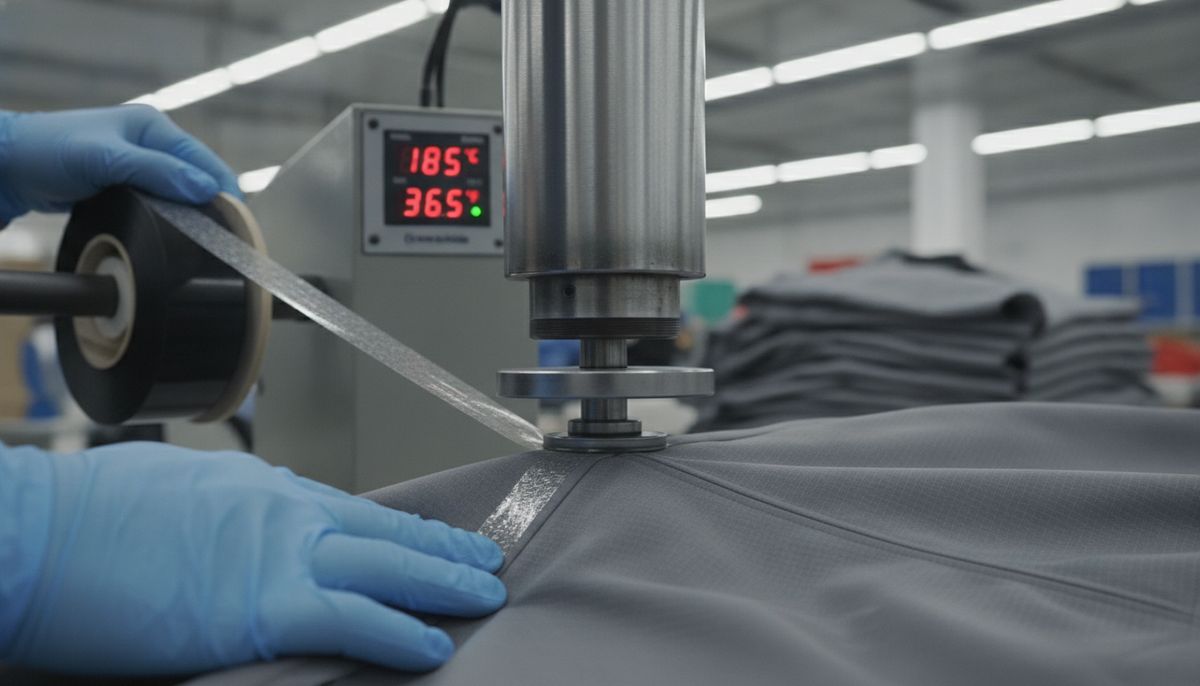
In practice: Seam taping is what separates a jacket that survives a wash test from one that delaminates, which is why it gets checked on the sample before bulk is ever cut.
Finished-Garment Audit: Seams, Zippers, and Construction Weak Points
Fabric testing alone misses the majority of field failures. Seam tape delamination, zipper water entry, cuff openings, hood construction, and pocket design are the most common complaint points buyers raise after shipment, yet none are covered by ISO 811 or AATCC TM127.
Seam-Tape Integrity and Delamination Risk
Seam tape bonds to the fabric using heat and pressure. Insufficient bonding temperature, incorrect dwell time, or contaminated fabric surface cause delamination after washing. Buyers should require a seam-peel-strength test (typically 1.5-2.0 kg/cm minimum) and specify the number of wash cycles before testing. A jacket that passes ISO 811 at 15,000 mm but delaminates after three washes fails the real-world performance standard.
Zipper Water-Entry Points
Front zippers, chest pockets, and pit zips are common water-entry points. Storm flaps, waterproof zippers, and taped zipper construction each add cost but eliminate different failure modes. Buyers should specify which zipper positions require waterproof construction and which can use a storm flap. A finished-garment water-spray test under ISO 4920 or a custom leak-mapping protocol identifies zipper weak points before bulk production.
Cuff, Hood, and Pocket Construction
Adjustable cuffs with hook-and-loop closures, drawcord-adjustable hoods, and welded-seam pockets each require separate inspection. Buyers sourcing for corporate uniforms or school programs should request a pre-production sample with all closures, pockets, and adjustments fully functional, then conduct a wear trial with end users before approving bulk production. OEM jacket manufacturing workflows at vertically integrated facilities allow buyers to specify construction details at the pattern stage, reducing costly revisions after sampling.
How to Verify ISO/IEC 17025 Laboratory Accreditation
ISO/IEC 17025 accreditation confirms a laboratory operates under documented quality controls, calibrated equipment, and trained personnel. Accreditation alone does not guarantee the lab can perform the specific test you require.
Scope Verification
Every ISO/IEC 17025 accreditation certificate lists the methods and product categories covered under the accreditation. Buyers must verify the scope explicitly includes the test methods required for their product category. A laboratory accredited for ISO 811 on woven fabrics may not be accredited for ISO 811 on coated fabrics or laminated membranes. Request a copy of the accreditation certificate and check the scope section before issuing a purchase order.
Accreditation Body Recognition
Accreditation bodies operate under mutual-recognition agreements, but not all agreements cover all countries. Buyers shipping to Germany should verify the laboratory’s accreditation is recognized by DAkkS (Deutsche Akkreditierungsstelle) or another European national accreditation body. Buyers shipping to the United States should verify recognition by A2LA (American Association for Laboratory Accreditation) or NVLAP (National Voluntary Laboratory Accreditation Program). A laboratory accredited in China under CNAS (China National Accreditation Service for Conformity Assessment) is recognized in most markets under the ILAC (International Laboratory Accreditation Cooperation) mutual-recognition arrangement, but buyers should confirm recognition for their specific destination market.
Report Fields and Traceability
A complete test report includes specimen identification, conditioning protocol, test method with revision date, equipment calibration date, operator name, and pass/fail criteria. Buyers should specify required report fields in the purchase order and require the factory to submit the full report, not a summary or certificate. Batch-traceability documentation links each test report to a specific production lot, allowing buyers to verify every shipment was tested under the same protocol.
Procurement-Ready Audit Checklist for Jacket Buyers
A procurement-ready waterproof testing lab standards jacket manufacturer audit checklist specifies sample quantities, batch selection, conditioning, wash cycles, test methods, report fields, and pass/fail criteria before the purchase order is issued.
Sample Quantity and Batch Selection
Buyers should require the factory to submit samples from at least three different production batches or fabric rolls to detect batch-to-batch variation. Each batch requires separate testing. A single sample from one roll does not represent bulk production. Sample development workflows at PTOUTWEAR allow buyers to request 1-piece samples from multiple fabric batches before committing to a 10-piece minimum bulk order, reducing the risk of approving a sample that does not match production fabric.
Conditioning Protocol
Fabric conditioning before testing affects the result. ISO 811 specifies conditioning at 20°C ± 2°C and 65% ± 4% relative humidity for at least 24 hours. Buyers should require the laboratory report to state the conditioning protocol and confirm it matches the purchase-order specification. Inconsistent conditioning between sample testing and bulk testing invalidates the comparison.
Wash Cycles Before Testing
DWR finish degrades with washing, and seam tape can delaminate after repeated wash cycles. Buyers should specify the number of wash cycles before testing based on the product’s expected service life. A corporate uniform jacket worn daily for one year should be tested after 20-30 wash cycles. A retail outdoor jacket marketed for multi-season use should be tested after 50 wash cycles. The wash protocol (temperature, detergent type, tumble-dry setting) must match the care label on the finished garment.
Pass/Fail Criteria
Buyers must define pass/fail criteria in the purchase order. A fabric hydrostatic-head result of 10,000 mm is neither pass nor fail without a specification. Buyers sourcing for Germany should specify EN 343 Class 2 (12,000 Pa fabric, 8,000 Pa seams) or Class 3 (15,000 Pa fabric, 10,000 Pa seams) as the minimum acceptable performance. Buyers sourcing for the United States should specify a minimum AATCC TM127 result and state whether the result is before or after washing.
- Fabric hydrostatic head: Minimum 10,000 mm (ISO 811) or 10,000 mm (AATCC TM127) after 20 wash cycles
- Seam-tape peel strength: Minimum 1.5 kg/cm after 20 wash cycles
- Zipper water entry: No visible water penetration during 5-minute ISO 4920 spray test at rating 4 or higher
- Cuff closure: No water ingress during 10-minute spray test with arm raised to 90 degrees
- Hood drawcord: No slippage after 10 adjustment cycles under 5 kg tension
Commercial Risk Controls: Pre-Production to Shipment
Quality drift between sample approval and bulk shipment is the most common commercial dispute buyers face. Pre-production approval, inline inspection, shipment testing, and traceability controls reduce this risk.
Pre-Production Sample Approval
Pre-production samples are cut from the same fabric batch and assembled using the same seam-tape and zipper components as bulk production. Buyers should require the factory to submit pre-production samples for testing before cutting bulk fabric. A sample that passes testing does not guarantee bulk will pass unless the sample was cut from the bulk fabric batch. Low-MOQ jacket manufacturing allows buyers to request 10-piece pre-production runs from the actual bulk fabric, providing a statistically valid sample set before committing to larger orders.
Inline Inspection During Bulk Production
Inline inspection checks seam-tape application, zipper alignment, and construction quality during production, not after the order is complete. Buyers should specify inline inspection at 20%, 50%, and 80% production completion. Each inspection includes a random sample of finished garments tested for seam-peel strength and zipper water entry. Failures trigger corrective action before the next production batch is cut.
Shipment Testing and Batch Traceability
Shipment testing verifies the finished goods match the pre-production sample. Buyers should require the factory to submit samples from the actual shipment cartons for third-party testing before the container is released. Batch-traceability documentation links each carton to a specific fabric roll, seam-tape lot, and zipper batch, allowing buyers to identify and quarantine defective material if a post-shipment failure occurs.
Corrective Actions and Retesting After Factory Changes
Factory changes to fabric supplier, seam-tape supplier, or production line require retesting even if the previous batch passed. Buyers should require the factory to notify them of any supplier or process change and submit new samples for approval before resuming production. A factory that switches from Brand A seam tape to Brand B seam tape without notifying the buyer has introduced a new variable that invalidates the original test results. Private-label jacket programs at vertically integrated facilities reduce supplier-change risk because fabric sourcing, seam-tape application, and assembly occur under one roof with consistent quality controls.
Frequently Asked Questions
What is the difference between ISO 811 and AATCC TM127 waterproof testing?
ISO 811 and AATCC TM127 both measure hydrostatic-head resistance, but they use different specimen sizes, pressure-rise rates, and conditioning protocols, so a 20,000 mm result under one method is not directly equivalent to 20,000 mm under the other. Buyers shipping to both European and North American markets should specify both methods in the purchase order and require the laboratory report to state which standard was used. Cross-method comparison requires the laboratory to test the same fabric under both protocols and report both results.
How do you verify a laboratory’s ISO/IEC 17025 accreditation scope?
Request a copy of the laboratory’s ISO/IEC 17025 accreditation certificate and check the scope section to confirm it explicitly lists the test methods required for your product category. A laboratory accredited for ISO 811 on woven fabrics may not be accredited for ISO 811 on coated fabrics or laminated membranes. Verify the accreditation body is recognized in your destination market by checking the ILAC mutual-recognition database or contacting the national accreditation body directly.
Why does seam-tape delamination occur after a jacket passes fabric testing?
Fabric testing measures the material’s intrinsic waterproofness but does not test seam construction. Seam-tape delamination occurs when bonding temperature, dwell time, or fabric-surface preparation is incorrect during assembly. Buyers should require a seam-peel-strength test after the specified number of wash cycles, with a minimum acceptable result of 1.5 kg/cm. A jacket that passes ISO 811 at 15,000 mm but delaminates after three washes fails the real-world performance standard because the seam construction was never audited.
What wash-cycle count should buyers specify before waterproof testing?
The wash-cycle count should match the product’s expected service life. A corporate uniform jacket worn daily for one year should be tested after 20-30 wash cycles. A retail outdoor jacket marketed for multi-season use should be tested after 50 wash cycles. The wash protocol must match the care label on the finished garment, including water temperature, detergent type, and tumble-dry setting, because variations in wash conditions affect DWR finish retention and seam-tape adhesion.
How many fabric batches should buyers test before approving bulk production?
Buyers should require the factory to submit samples from at least three different production batches or fabric rolls to detect batch-to-batch variation. Each batch requires separate testing. A single sample from one roll does not represent bulk production because fabric mills can vary coating weight, laminate thickness, or DWR application between production runs. Pre-production samples cut from the actual bulk fabric batch provide the most reliable quality assurance before committing to large orders.
Ready to audit your jacket manufacturer’s waterproof testing and quality controls?
Request 1-piece samples with full test reports →
Written by Ivan Chen, Sales Engineer at PTOUTWEAR, 13 years in outdoor apparel manufacturing.