📋 Table of Contents
Launching a dog apparel brand with limited capital requires manufacturers who understand the constraints of early-stage DTC businesses. This dog coat MOQ guide walks through the minimum order structures, fabric specifications, sizing protocols, and lead time planning necessary to bring waterproof, insulated, and functional pet outerwear from concept to market without locking up cash in excessive inventory.
Executive Summary
- Sample MOQ: 1 piece allows DTC founders to validate design, fit, and fabric performance before committing to bulk orders, with sample fees typically refundable against production.
- Bulk MOQ: 30 pieces per SKU represents the lower threshold for cost-effective cut-and-sew production while maintaining quality control across waterproof seam sealing and insulation fill.
- Fabric durability: 600D polyester with PU coating or 300D ripstop nylon provides abrasion resistance for active dogs while keeping per-unit material costs manageable for small-batch runs.
- Lead time planning: 7 to 10 days for sampling and 25 to 35 days for bulk production aligns with seasonal demand cycles, requiring orders placed 8 to 10 weeks before peak winter selling periods.
- Safety compliance: Dog coats sold in the US market must meet CPSC guidelines for mechanical hazards such as choking risks from detachable hardware, while EU markets require REACH compliance for restricted chemical substances in textiles.
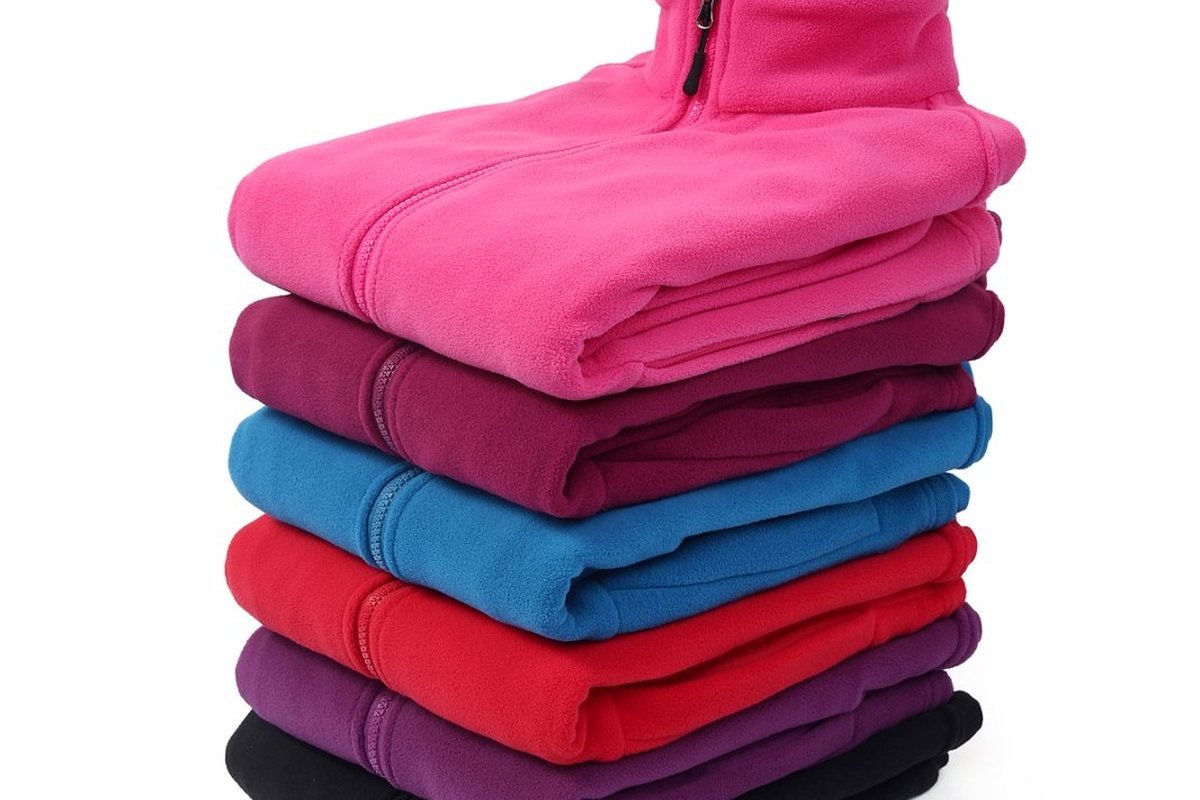
Understanding Dog Coat MOQ Structures
Minimum order quantities for dog coats follow a two-tier structure that separates pre-production validation from bulk manufacturing. Sample MOQs allow brand founders to test fit, fabric, and construction before financial commitment, while bulk MOQs reflect the production efficiencies required for consistent quality across waterproof sealing and insulation processes.
Sample MOQ: 1-Piece Validation
A 1-piece sample MOQ serves as the technical proof-of-concept phase. Manufacturers produce a single unit using production-grade materials and construction methods, allowing founders to assess waterproof membrane performance, insulation loft, and harness-hole placement accuracy. Sample fees range from $80 to $150 depending on complexity, with most OEM jacket manufacturing facilities refunding this cost against bulk orders above 100 units.
The 1-piece sample validates three critical elements: fabric hand-feel and drape on a moving dog, closure system functionality during active use, and seam integrity under stress. Founders should request samples in their mid-range size (typically Medium for most breeds) to evaluate proportional grading before committing to a full size run.
Bulk MOQ: 30 Pieces Per SKU
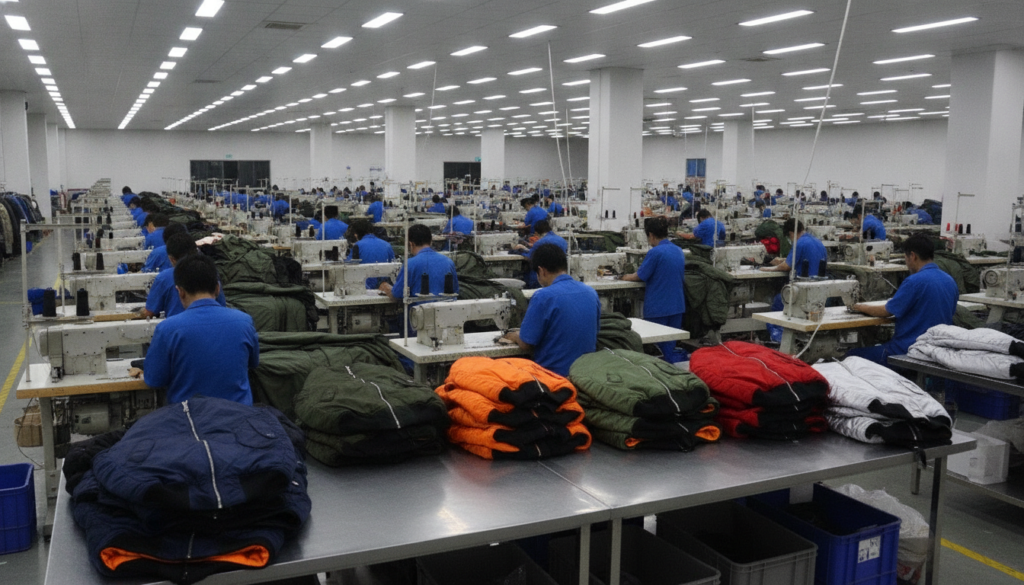
A 30-piece-per-SKU bulk minimum represents the threshold where cut-and-sew efficiency, waterproof tape application, and insulation fill consistency become economically viable. Below this quantity, per-unit costs rise sharply due to setup time for specialized equipment such as hot-air seam-sealing machines and fill-weight calibration for synthetic insulation.
For a brand launching with four sizes (XS, S, M, L), a 30-unit minimum translates to 120 total pieces in the first production run. This volume allows size-ratio flexibility, with founders typically ordering heavier quantities in Medium and Large to match breed distribution data while testing demand for extra-small and extra-large sizes with smaller allocations.
Sample MOQ: 1 piece. Bulk MOQ: 30 pieces per SKU. Sampling time: 7 to 10 days.
Dropshipping and Print-on-Demand Options
Some manufacturers offer 1-piece fulfillment for established designs, allowing brands to test new colorways or seasonal graphics without inventory risk. This model works best for simple shell designs without complex waterproofing, as each unit incurs individual setup costs that make per-piece pricing 40% to 60% higher than bulk rates.
Print-on-demand services typically require standardized blank templates with pre-approved fabric and construction specs. Customization is limited to surface decoration such as screen printing or heat-transfer logos, with lead times of 5 to 7 business days per order. This approach suits brands validating market demand before committing to low-MOQ jacket manufacturing partnerships.
Fabric Selection for Dog Coats
Fabric choice determines both functional performance and per-unit cost structure in dog coat production. Waterproof shells, insulation types, and lining materials each carry different MOQ implications, with technical fabrics requiring minimum yardage purchases that affect total order quantities.
Waterproof and Water-Resistant Shells
600D polyester with polyurethane coating provides a balance of abrasion resistance and water repellency for active dogs at a material cost of $2.80 to $3.50 per yard. This fabric withstands repeated contact with rough surfaces such as concrete and brush while maintaining a durable water repellent finish through 15 to 20 wash cycles before requiring re-treatment.
300D ripstop nylon with PU backing offers lighter weight and packability for travel-focused designs, though it sacrifices some durability in high-wear zones such as chest and shoulder areas. A common complaint buyers raise about water-resistant dog coats is that the DWR finish wets out after extended exposure to rain or snow, leaving the dog damp despite the coating. Manufacturers address this by specifying PFC-free DWR treatments that maintain breathability while shedding water, though all DWR finishes require periodic reapplication after washing.
Insulation Options for Cold-Weather Designs
Synthetic insulation in 60 g/m² to 100 g/m² weights provides warmth without excessive bulk for small to medium breeds. Polyester fiberfill costs $1.20 to $1.80 per yard and maintains loft after washing, unlike down insulation which clumps when wet and requires specialized care instructions that complicate consumer use.
Fleece linings offer a cost-effective alternative for moderate climates, with 200-weight polar fleece adding $1.50 to $2.20 per yard to material costs. This construction eliminates the need for quilting or baffle channels, reducing labor time and allowing lower MOQs. Fleece-lined shells work well for breeds with existing undercoats that need wind protection more than heavy insulation.
Lining and Comfort Fabrics
Mesh linings in chest and belly areas prevent overheating during active use while maintaining waterproof shell integrity. 100D polyester mesh costs $0.90 to $1.40 per yard and allows moisture vapor to escape, addressing the common complaint that waterproof coats trap heat and cause dogs to pant excessively during walks.
Brushed tricot linings provide a soft hand-feel against fur, reducing static and matting in long-haired breeds. This fabric adds $1.60 to $2.30 per yard to material costs but improves the perceived quality of mid-range and premium products. Founders targeting gift buyers or premium positioning should specify brushed linings in customer-contact areas.
Sizing and Fit Engineering
Dog coat sizing differs fundamentally from human apparel due to breed-specific body proportions and the need to accommodate harnesses and leashes. Accurate fit engineering in the sampling phase prevents costly revisions during bulk production and reduces return rates from fit-related complaints.
Measurement Points and Grading
Three primary measurements determine dog coat fit: back length from collar to tail base, chest girth at the widest point behind front legs, and neck circumference at the collar attachment point. A properly fitted coat covers the back and sides without restricting shoulder movement or riding up during walking.
Grading between sizes typically follows 2-inch increments in back length and 3-inch increments in chest girth. A Medium size with 16-inch back length and 22-inch chest girth scales down to Small at 14 inches and 19 inches, then up to Large at 18 inches and 25 inches. This progression accommodates the majority of companion breeds from Beagles to Labrador Retrievers.
Harness and Leash Integration
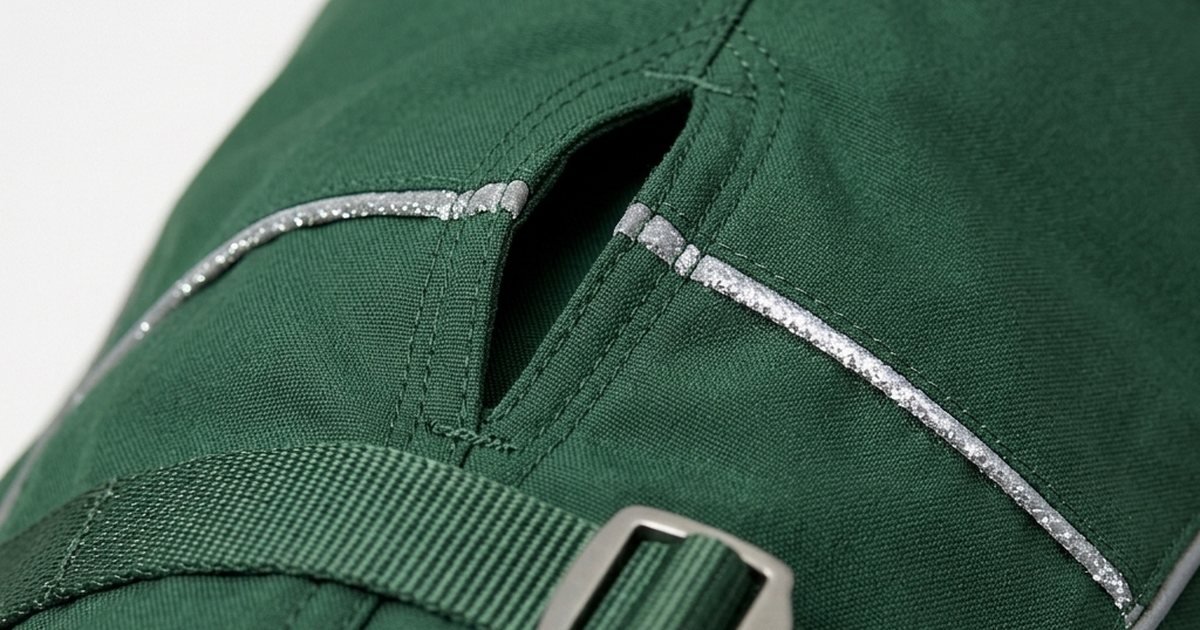
A reinforced opening or slit on the back panel allows leash attachment to harnesses worn under the coat. This opening should measure 3 to 4 inches in length and include bound edges or grommets to prevent tearing during pulls. Placement 4 to 5 inches from the collar seam aligns with standard Y-harness and H-harness D-ring positions.
Velcro or snap closures around the harness opening allow the coat to close securely while accommodating different harness strap widths. Elastic binding around the opening provides flexibility for movement while maintaining weatherproof coverage. Founders should test this feature during the 1-piece sample phase with the specific harness styles their target customers use.
Adjustability Features
Adjustable chest straps with side-release buckles or hook-and-loop closures accommodate body-shape variations within each size range. A 3-inch adjustment range on chest straps allows a single Medium size to fit dogs at both ends of the 21-to-24-inch girth spectrum, reducing the need for half sizes and lowering inventory complexity.
Elastic hem binding at the rear leg openings keeps the coat in place during movement without restricting stride. This detail prevents the coat from riding forward and bunching at the shoulders, a common fit complaint in designs with static hem construction. Elastic costs $0.15 to $0.25 per yard and adds minimal labor time during assembly.
Production Lead Times and Seasonal Planning
Dog coat production follows seasonal demand curves that peak in October through December for cold-weather designs and March through May for lightweight rain shells. Lead time planning must account for sampling, revisions, bulk production, and shipping to align inventory arrival with retail selling windows.
Sampling Phase: 7 to 10 Days
Initial sample production requires 7 to 10 business days from tech pack submission to finished unit delivery. This timeline includes fabric procurement, pattern cutting, assembly, and quality inspection. Founders requesting multiple colorway samples should expect an additional 3 to 5 days for each variant beyond the first.
Sample revisions add 5 to 7 days per iteration. Common revision requests include adjustment of chest strap placement, modification of leg opening diameter, or changes to insulation weight. Minimizing revisions requires detailed tech packs with precise measurements, construction notes, and reference photos during the initial submission to the sample development team.
Bulk Production: 25 to 35 Days
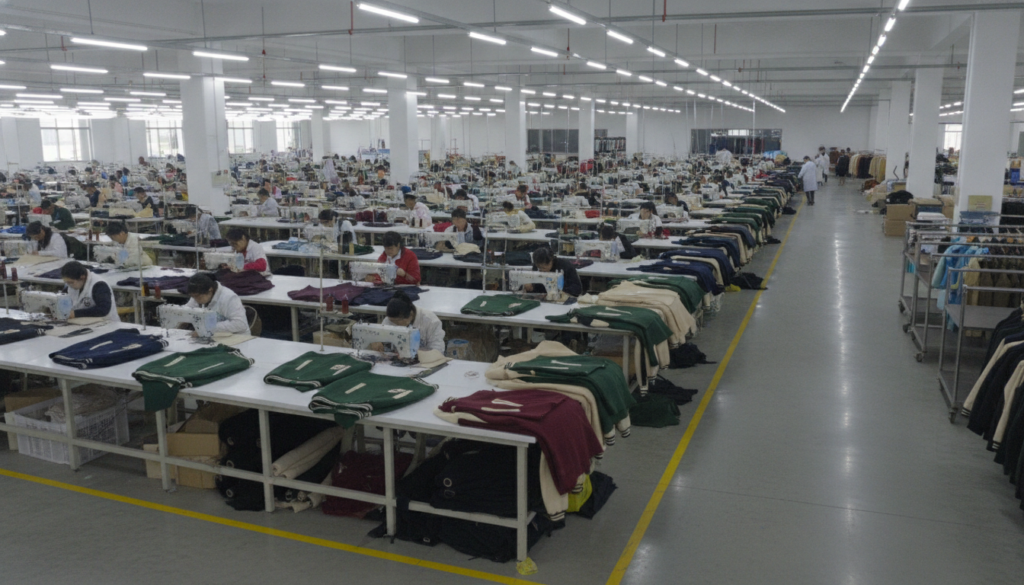
Bulk production for a 120-piece first order (30 units across four sizes) typically requires 25 to 35 days from deposit payment to finished goods ready for shipment. This timeline includes fabric cutting, assembly, waterproof seam sealing, insulation filling, quality control inspection, and packaging.
Rush production options reduce this timeline to 18 to 22 days with a 15% to 25% surcharge on unit costs. Rush fees cover overtime labor and expedited fabric procurement, but quality control steps remain unchanged. Founders should reserve rush production for true emergencies rather than routine seasonal orders, as compressed timelines increase the risk of overlooked defects.
Shipping and Customs Clearance
Ocean freight from China to US West Coast ports requires 18 to 25 days, with an additional 5 to 7 days for customs clearance and inland trucking to final destination. Total landed time from factory departure to warehouse arrival averages 4 to 5 weeks. Founders launching in October should place bulk orders by late July to ensure inventory arrives before peak selling season.
Air freight reduces transit to 5 to 7 days but increases shipping costs by 200% to 300% compared to ocean rates. This option makes economic sense only for initial small-batch launches where speed-to-market justifies the premium, or for emergency restocks of best-selling sizes during peak season. Most established brands reserve air freight for samples and use ocean freight for all bulk orders.
Seasonal Order Planning
Winter coat production should begin with sample requests in May, revisions completed by mid-June, and bulk orders placed by late July for September arrival. This timeline allows 4 to 6 weeks of buffer before October demand peaks, providing time to photograph products, update website listings, and seed inventory to retail partners.
Spring rain shell production follows a similar 12-week lead time, with samples requested in December, revisions in January, and bulk orders placed in February for April delivery. Brands serving both seasonal windows should stagger their development cycles to avoid cash-flow crunches from overlapping deposit requirements.
Compliance and Safety Standards
Dog coats sold in US and EU markets must meet product safety regulations that address choking hazards, chemical content, and labeling requirements. Compliance verification during the sampling phase prevents costly recalls and marketplace listing removals after launch.
US CPSC Mechanical Hazard Guidelines
The Consumer Product Safety Commission evaluates pet products for small-part choking hazards under the same standards applied to children’s products. Detachable buttons, snaps, or decorative elements smaller than 1.25 inches in any dimension present a choking risk if a dog chews them off and must be either eliminated or securely fastened with reinforced stitching.
Drawcords and adjustable straps require breakaway features or cord stops that prevent strangulation if caught on fencing or brush. Elastic cord locks rated for 15 to 20 pounds of pull force provide adequate safety while maintaining adjustment functionality. Founders should specify breakaway hardware in tech packs and verify function during sample testing.
EU REACH Chemical Restrictions
The Registration, Evaluation, Authorization, and Restriction of Chemicals regulation restricts the use of certain dyes, flame retardants, and phthalates in textile products sold in European Union markets. Azo dyes that release carcinogenic aromatic amines are banned, requiring manufacturers to use alternative colorants that meet REACH Annex XVII standards.
Third-party testing labs verify REACH compliance through chemical analysis of finished products, with test reports valid for 12 months. Testing costs range from $180 to $350 per colorway and should be completed before the first shipment to EU customers. Manufacturers with SGS or Intertek partnerships can expedite testing by submitting samples directly from production lines.
Care Label and Country-of-Origin Requirements
US Federal Trade Commission regulations require permanently attached labels showing fiber content, country of manufacture, and care instructions. Dog coat labels must withstand repeated washing without fading or detaching, typically requiring woven polyester labels sewn into side seams rather than printed tags.
Fiber content must list all materials by percentage in descending order, such as “Shell: 100% Polyester, Lining: 100% Polyester, Fill: 100% Polyester.” Generic terms like “synthetic” or “man-made fibers” do not meet FTC labeling requirements and can result in enforcement actions. Manufacturers should provide draft label copy during the sampling phase for founder review and legal verification.
Voluntary Certifications
OEKO-TEX Standard 100 certification verifies that textiles are free from harmful substances through testing of finished products against a list of regulated and non-regulated chemicals. Certification costs approximately $1,200 to $2,500 annually depending on production volume and provides marketing value for brands targeting health-conscious pet owners.
The Global Recycled Standard certifies recycled content in textiles and requires chain-of-custody documentation from raw material through finished product. GRS certification requires a minimum of 20% recycled material content, with most certified dog coats using 50% to 100% recycled polyester to maximize environmental claims. Certification costs range from $1,800 to $3,500 annually and requires annual audits of manufacturing facilities.
Key Takeaways
- Sample MOQ of 1 piece allows DTC founders to validate fit, fabric, and construction with minimal financial commitment, with sample fees typically refundable against bulk orders above 100 units.
- Bulk MOQ of 30 pieces per SKU represents the economic threshold for consistent waterproof seam sealing and insulation fill quality, translating to 120 total units for a four-size launch.
- 600D polyester with polyurethane coating provides abrasion resistance at $2.80 to $3.50 per yard while maintaining water repellency through 15 to 20 wash cycles before requiring DWR re-treatment.
- Production lead times of 25 to 35 days for bulk orders require placement 8 to 10 weeks before seasonal peaks, accounting for ocean freight transit of 18 to 25 days plus customs clearance.
- US CPSC guidelines require breakaway features on drawcords and secure attachment of small parts to prevent choking hazards, while EU REACH regulations restrict certain dyes and chemical treatments in textiles.
- Dog coat sizing follows 2-inch increments in back length and 3-inch increments in chest girth, with adjustable chest straps providing a 3-inch accommodation range within each size to reduce inventory complexity.
FAQ
What is the minimum order quantity for dog coats?
Sample MOQ is 1 piece for pre-production validation, allowing founders to test fit and fabric before bulk commitment. Bulk MOQ is 30 pieces per SKU, representing the threshold for cost-effective waterproof sealing and insulation processes. A four-size launch requires 120 total units at 30 per size. Some manufacturers offer 1-piece dropshipping for established designs, though per-unit costs run 40% to 60% higher than bulk rates.
How much does it cost to start a dog clothing brand?
Initial costs include $100 to $150 for a 1-piece sample, $3,500 to $6,000 for a 120-unit bulk order (30 pieces across four sizes), and $800 to $1,500 for ocean freight from China to US ports. Total startup inventory investment ranges from $4,400 to $7,650 before marketing and website costs. Founders can reduce risk by starting with two sizes rather than four, lowering bulk order costs to $1,800 to $3,000 for 60 units.
Can I get a sample before ordering dog coats?
Yes, 1-piece samples are standard practice in dog coat manufacturing and highly recommended before bulk orders. Sample fees of $100 to $150 are typically refundable against production orders above 100 units. Sampling takes 7 to 10 business days from tech pack submission to delivery. Founders should test samples on dogs matching their target size range to verify fit, harness integration, and freedom of movement before committing to bulk production.
What is the best fabric for dog winter coats?
600D polyester with polyurethane coating and 60 to 100 g/m² synthetic insulation balances durability, warmth, and cost for most winter applications. This combination provides 5,000 mm hydrostatic head water resistance and maintains insulation loft through repeated washing. Fleece-lined shells work well for moderate climates where wind protection matters more than heavy insulation. Brushed tricot linings reduce static and matting in long-haired breeds, though they add $1.60 to $2.30 per yard to material costs.
How do I find a dog coat manufacturer in China or the US?
Search for manufacturers with documented experience in pet apparel and technical outerwear, as dog coat construction requires waterproof sealing and fit-engineering skills distinct from basic pet accessories. Request portfolio samples showing finished products with harness openings, adjustable straps, and insulation. Verify certifications such as ISO 9001 for quality management and SGS testing capability for compliance verification. Founders should compare sample quality, communication responsiveness, and MOQ flexibility across three to five manufacturers before selecting a private label partner for long-term production.
Ready to validate your dog coat designs with 1-piece samples and 30-unit bulk minimums?
Request sample pricing and tech pack templates →
Written by Ivan Chen, Sales Engineer at PTOUTWEAR – 13 years in outdoor apparel manufacturing.