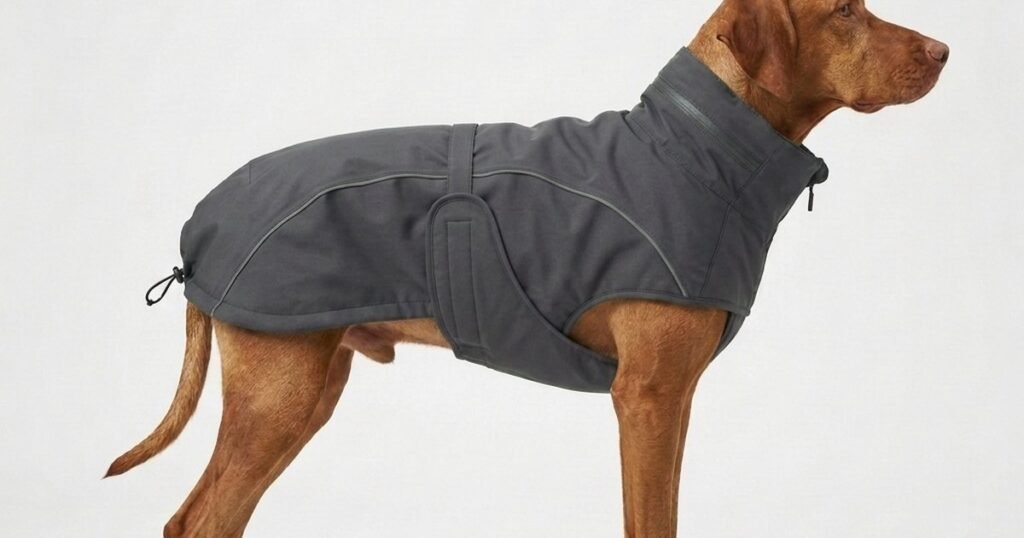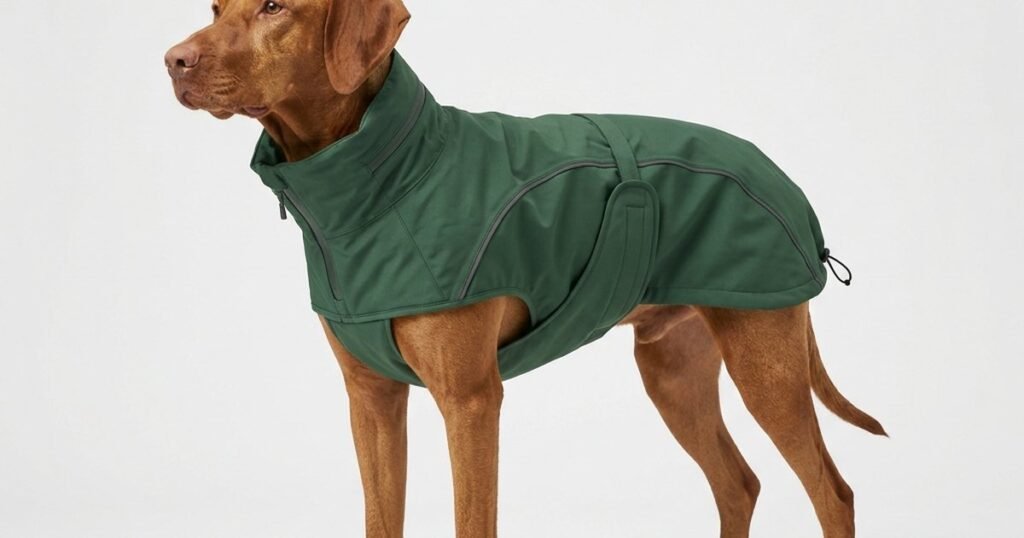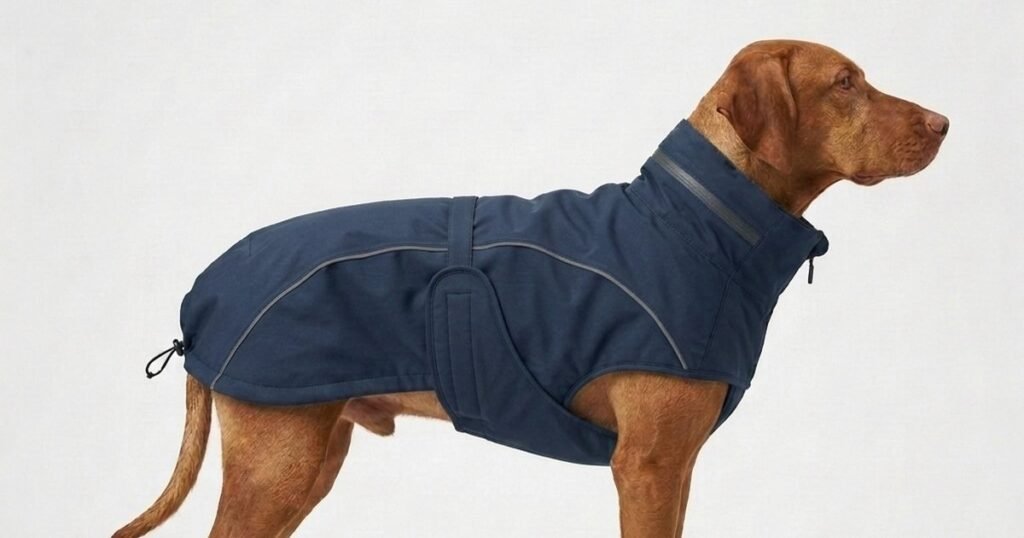
The premium pet market has outgrown the $2 reversible raincoat. Brands now want dog outerwear that performs like human technical apparel — genuinely waterproof, breathable, and built to survive a wet trail, not a photo shoot. The problem: most pet-apparel factories are sweater and PVC-poncho shops with no membrane lamination, no seam-sealing line, and no certified materials. If you are sourcing as a brand, the gap between a waterproof dog jacket manufacturer and a generic pet-clothing supplier is the same gap that separates a real hardshell from a water-resistant windbreaker. This guide breaks down what actually makes a dog jacket waterproof, the dog-specific fit and construction issues human-apparel factories get wrong, and the MOQ, lead-time, and certification realities for building a premium line.
Executive Summary
- Premium pet outerwear is a technical-apparel problem, not a pet problem. True waterproofing on a dog coat uses the same laminates, taped seams, and DWR chemistry as a human hardshell.
- The cheap-factory trap: Most dog-apparel suppliers quote PU-coated polyester with no seam sealing — water enters through every needle hole regardless of the fabric rating.
- Fit is the #1 failure point: Dog garments fail on body-length-to-girth ratio and limb articulation, not on fabric. A factory without a dog-specific size block will deliver coats that ride, gap, or restrict movement.
- MOQ reality: A factory set up for low-MOQ technical production can support 1-piece sampling and bulk MOQs in the 30–50 pieces-per-SKU range, versus the 500-piece minimums common on B2B marketplaces.
- Certification matters for retail: Brands selling into Western retail increasingly require OEKO-TEX / bluesign-class material compliance even on pet products — most pet-only factories cannot supply it.
What Makes a Dog Jacket Actually Waterproof?
“Waterproof” on a marketplace listing usually means a PU-coated face fabric and nothing else. In sustained rain that coat leaks within minutes — not through the fabric, but through the stitching holes. A genuinely waterproof dog jacket needs the same two-part system as a human shell:
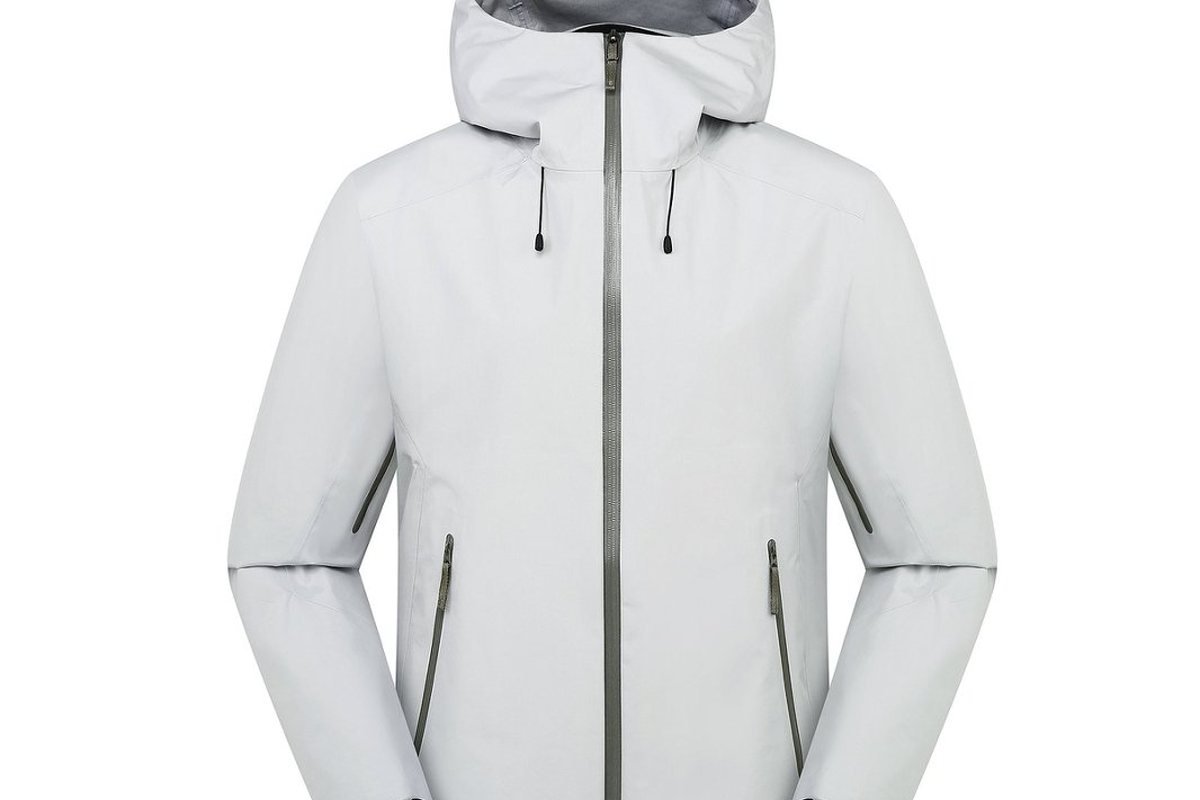
- A waterproof face/membrane system — either a high-mm PU-coated fabric or a laminated membrane. (See our breakdown of 2-layer vs 3-layer shell construction — the same logic applies at dog scale.)
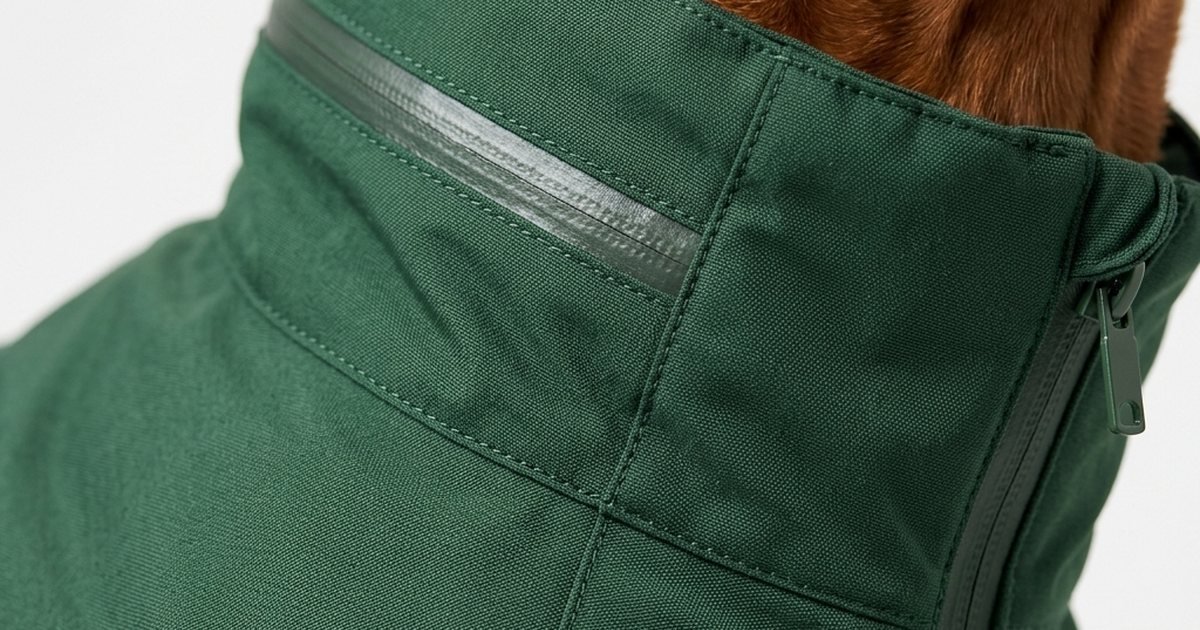
- Sealed seams — heat-applied taped seams over every needle hole. Without tape, the mm rating of the fabric is irrelevant.
A factory that already runs a seam-sealing line for human jackets can apply the identical process to a dog panel. A pet-only sweater shop typically cannot — they have no taping machine. This single capability is the fastest way to separate a real waterproof dog jacket manufacturer from a reseller.
The equipment gap is the clearest tell:
| Capability | Pet-only sweater/raincoat shop | Technical outerwear factory |
|---|---|---|
| Hot-air seam taping machine | ✗ | ✓ |
| Membrane lamination | ✗ | ✓ |
| Hydrostatic / breathability testing | ✗ | ✓ |
| Certified material supply chain | ✗ | ✓ |
Verifying the Claim
Ask any candidate factory two questions: “Do you tape all seams or only critical seams?” and “What is your hydrostatic test method?” A technical factory will reference a standard like ISO 811 hydrostatic testing. A pet-only shop will not have an answer.
Where Human-Apparel Factories Get Dog Fit Wrong
Crossing into pet outerwear is a fit problem before it is a fabric problem. The most common production failures:
| Issue | Why It Happens | The Fix |
|---|---|---|
| Coat rides forward / rotates | Sizing built on chest girth alone | Size block keyed to back length + chest girth + neck girth together |
| Gapping at belly in rain | Flat human-style closure | Adjustable belly straps + hem drawcord |
| Restricted leg movement | No gusseting at limb openings | Articulated leg openings, optional rear leg loops |
| Harness incompatibility | Solid back panel | Reinforced leash port aligned to D-ring placement |
A premium dog outerwear program should be built on a dedicated dog size block — never human patterns scaled down. The size run is typically XS–XL keyed to back length (the collar-to-tail measurement), chest girth, and neck girth, with grading tuned per breed group rather than scaled blindly. When you brief a factory, confirm whether they will develop a dog-specific block for your line rather than reusing a generic one.
Core Dog Measurements (for your tech pack)
- Back length (BL): base of neck (collar line) to tail base — the primary sizing axis.
- Chest girth (CG): widest point of the torso, just behind the front legs.
- Neck girth (NG): thickest part of the neck.
These three define the size run. Grading typically adds +5–7 cm BL, +8–12 cm CG, and +4–6 cm NG per size step.
Insulation: Cold-Wet Performance for Dogs
For winter dog outerwear, the down-vs-synthetic decision mirrors human apparel exactly. In cold-wet conditions synthetic insulation usually wins because it retains loft when damp — the same reasoning we cover in synthetic insulation vs down for cold-wet conditions. For premium brands wanting down, responsible-sourcing certification (RDS) is increasingly a retail requirement. A factory that already sources certified fills for human jackets can carry that compliance straight into a pet line.
DWR and Sustainability
Premium pet brands selling into Western retail face the same chemistry shift as apparel: PFC-free DWR is becoming the default expectation. If your factory still finishes with C6/C8 treatments, that is a compliance risk for EU and several US-state markets. Our PFC-free DWR explainer covers the trade-offs — the standards apply identically to a dog coat’s face fabric.
MOQ, Lead Times, and Customization
The biggest sourcing barrier for emerging pet brands is minimum order quantity. Marketplace pet suppliers commonly require 300–500 pieces per SKU because their lines are built for volume basics. A factory configured for low-MOQ technical production can typically support:
- Sampling: 1-piece development samples (7–10 days)
- Bulk MOQ: from 30–50 pieces per SKU / colorway, depending on fabric and construction complexity
- Lead time: roughly 25–35 days for bulk, depending on fabric availability
- Customization: brand-color fabric, woven/printed labels, custom hardware, embroidered or heat-transfer logo, retail-ready packaging
This lets a brand validate a premium SKU at low risk before committing to scale.
Certifications and Compliance for Brand Buyers
Pet products are increasingly held to apparel-grade standards by serious retailers. The compliance set that matters:
- OEKO-TEX / bluesign-class material certification — chemical safety, relevant because dogs lick and chew garments.
- RDS — if down insulation is used.
- Recycled-content standards (GRS/RCS) — for brands marketing sustainability.
Most pet-only factories cannot supply these because their material supply chain was never built for it. A crossover technical-outerwear factory can — the certified material relationships already exist for the human line.
Recommended Next Step
If you are building a premium dog outerwear line, the fastest way to de-risk is a 1-piece development sample against your tech pack — real taped seams, your chosen membrane, and your size block — before committing to bulk. Send your design (or a reference garment) and target specs, and request a sample quote with the seam-sealing and certification options spelled out.
See our premium technical dog jacket for reference, or get a sample quote →.
FAQ
Is a “waterproof” dog raincoat from a marketplace actually waterproof?
Usually no. Most are PU-coated with unsealed seams, so water enters through the stitching holes in sustained rain. True waterproofing requires taped seams over every needle hole.
What is the minimum order for a custom dog jacket?
A factory set up for technical low-MOQ production can support 1-piece samples and bulk runs starting around 30–50 pieces per SKU (depending on complexity), versus 300–500 on most B2B marketplaces — letting a brand validate a premium SKU before scaling.
Can you private label with our logo and colorways?
Yes — brand-color face fabric, woven or printed labels, custom hardware, and embroidered or heat-transfer logos are standard customization for a private-label dog outerwear program.
Do you help with design and tech pack creation?
Yes. If you have a brand concept but not a finished tech pack, the factory can develop the size block, construction spec, and material selection with you from a reference garment or sketch.
How is a dog jacket sized?
By back length, chest girth, and neck girth together — not chest measurement alone. Fit failures almost always trace back to a size block keyed to only one dimension.
Can you match the waterproofing of a human hardshell?
Yes — the same laminates, taped-seam process, and DWR chemistry transfer directly to dog-scale panels. The differentiator is whether the factory already runs that line.
Do pet products need certifications?
Increasingly yes. Western retailers often require OEKO-TEX-class chemical safety, and RDS for down. Dogs chew and lick garments, so material safety compliance is a real selling point.