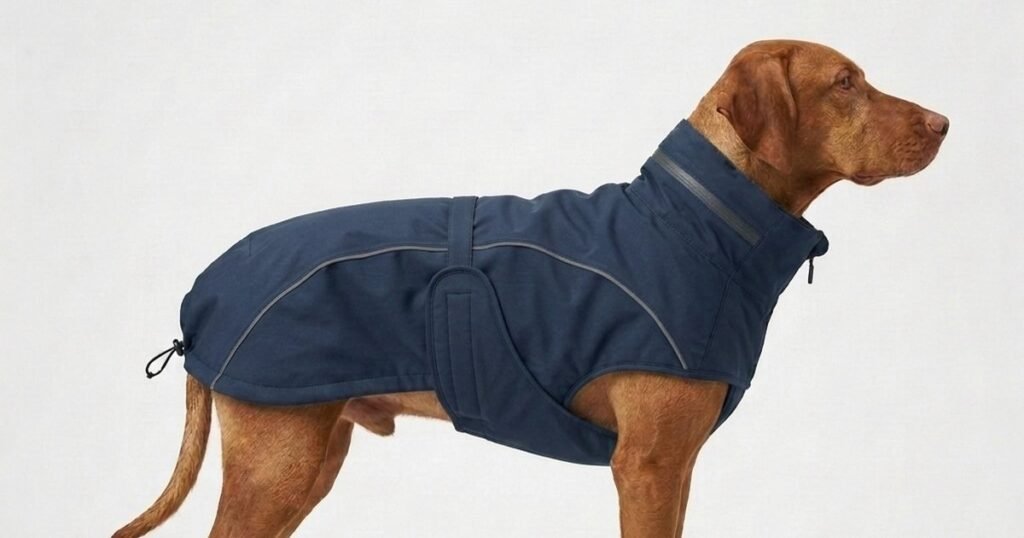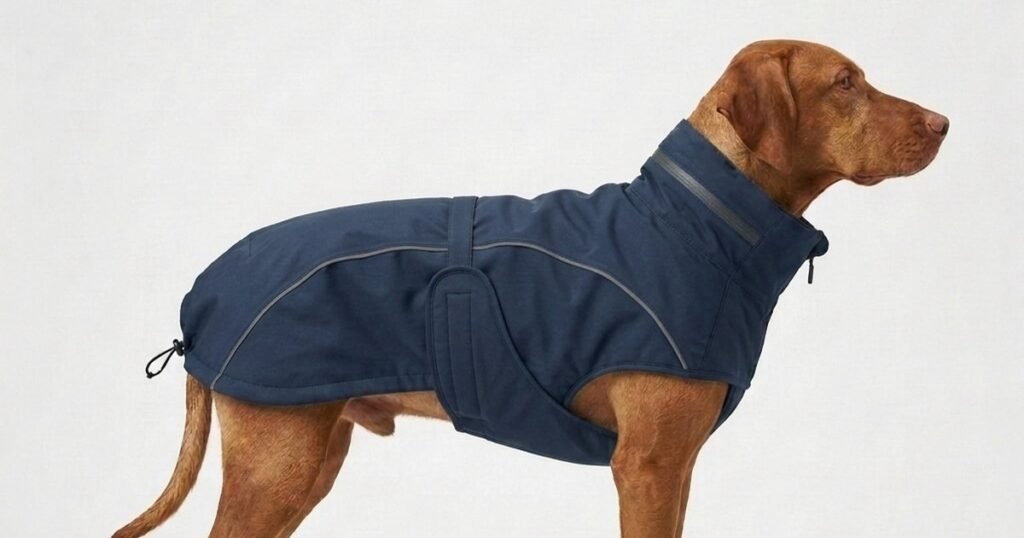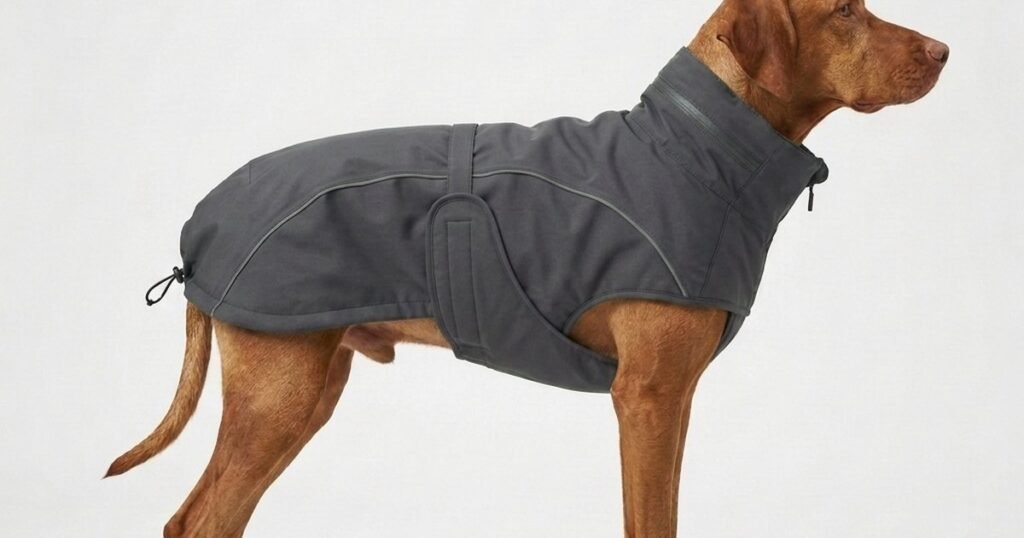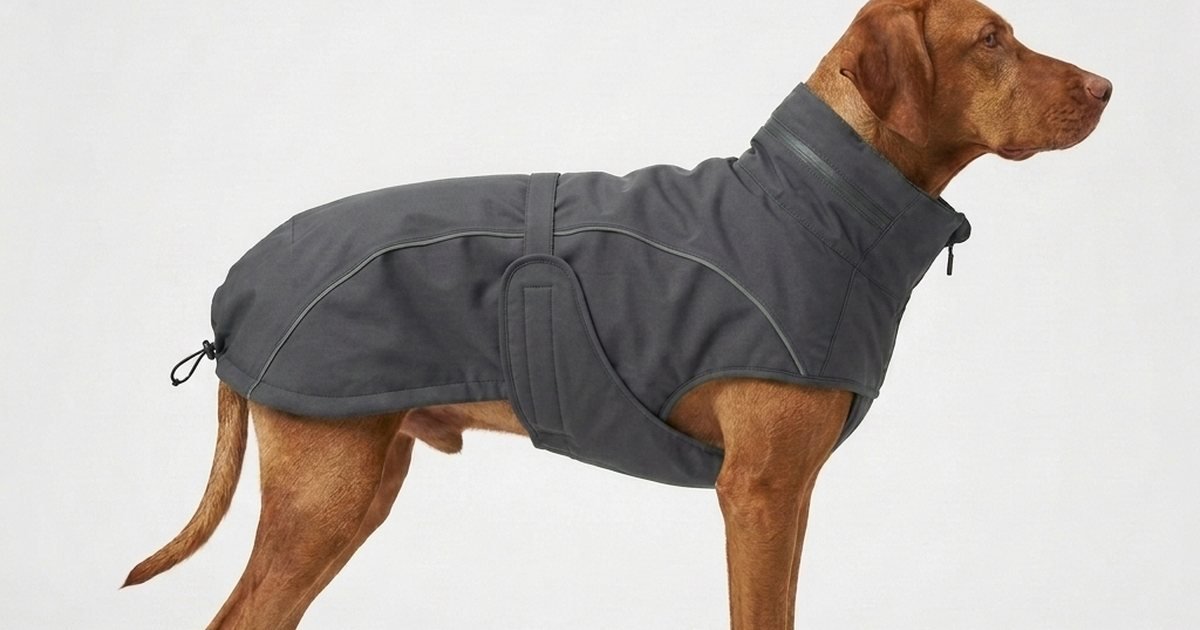
The single most expensive mistake a new pet apparel brand makes is not fabric, not color, not branding — it is sizing. A jacket that rotates, gaps at the belly, or chokes a deep-chested breed generates returns, bad reviews, and dead inventory no matter how good the materials are. This dog jacket sizing guide is written for brands and designers preparing a production tech pack: it covers the three core measurements that define a size run, how to grade them across XS–XL, the breed-group considerations that break a naive scale, the fit failures that haunt cheap pet-apparel factories, and how all of it feeds a manufacturable spec. The same discipline a technical-outerwear factory applies to a human hardshell size block is exactly what a premium dog line needs — and it is the #1 thing budget pet shops get wrong.
Executive Summary
- Sizing is a three-axis problem. A defensible dog size run is keyed to back length, chest girth, and neck girth together — never chest measurement alone. Single-axis sizing is the root cause of most fit returns.
- Grading must be deliberate. Per-size increments (roughly BL +5–7 cm, CG +8–12 cm, NG +4–6 cm) should be set as a rule and validated on real dogs, not scaled blindly from a human pattern.
- Breed body-shape varies more than human bodies. A Dachshund and a Bulldog can share a chest girth yet need completely different back-length and neck proportions — your run must acknowledge body-type clusters.
- An example XS–XL chart is a starting block, not a finished spec. Treat the chart below as a typical reference brands should validate against their target breeds and fit samples.
- Sizing decisions belong in the tech pack. Measurement method, grade rules, ease allowances, and fit-tolerance must be documented so the factory grades to your intent, not a generic block.
Why Single-Measurement Sizing Fails
Most marketplace dog coats are sized on one number — usually “chest” or a vague S/M/L. That works for a sweater with stretch and forgives almost nothing on a structured technical jacket. A waterproof shell has a fixed panel geometry; if the back length is wrong the coat slides forward and the chest closure rotates under the belly. If the neck is wrong it either chokes or lets wind and rain straight in.
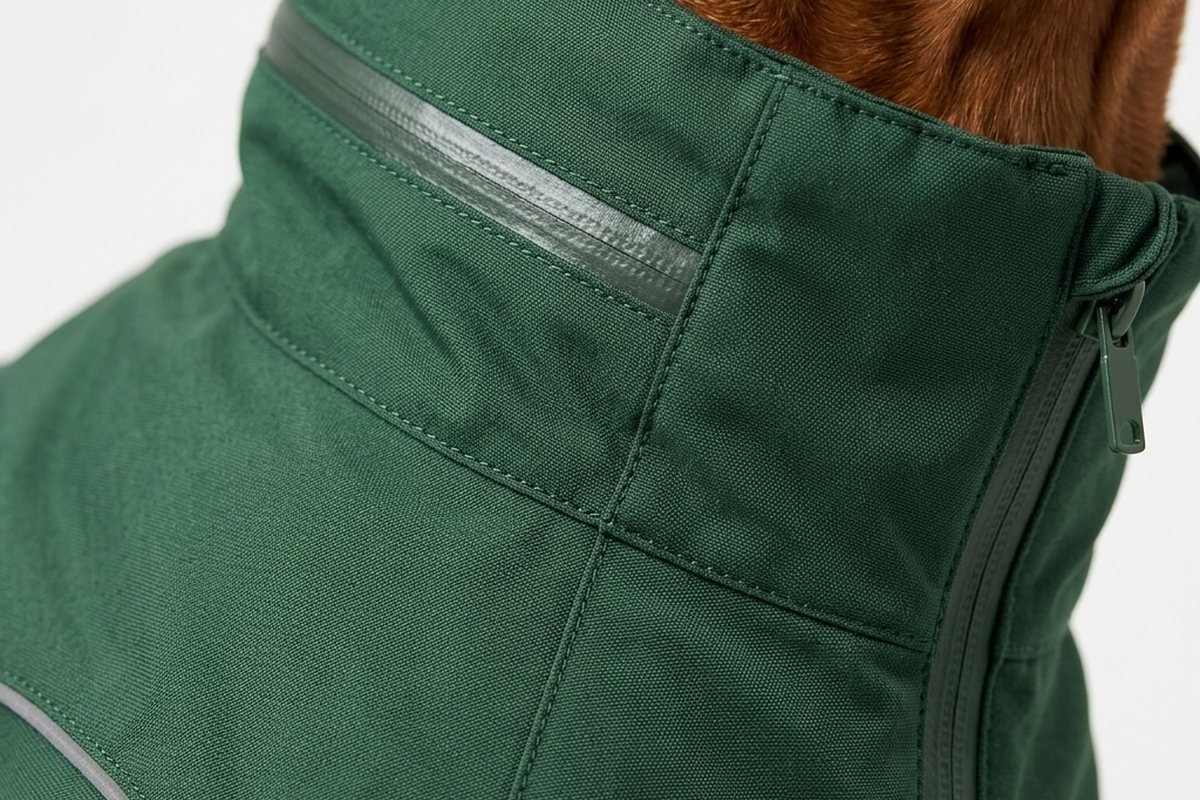
A garment built on a real dog size block treats the dog as a 3D form. The same principle drives a good human hardshell block, which is why a technical dog jacket manufacturer crossing over from outerwear tends to get fit right where a pet-only sweater shop does not — they already think in measured, graded blocks rather than “small, medium, large.”
The Three Core Dog Measurements
Every manufacturable dog garment spec starts from these three axes. Document the measurement method in your tech pack so the factory measures fit samples identically.
- Back Length (BL) — the primary sizing axis. Measured along the spine from the base of the neck (collar line, where a collar naturally sits) to the base of the tail. The jacket should end at or just before the tail base; too long restricts toileting and rear-leg movement.
- Chest Girth (CG) — the full circumference of the torso at its widest point, just behind the front legs. This is the most load-bearing dimension; it determines closure and strap geometry.
- Neck Girth (NG) — circumference at the base of the neck, where a collar sits, not the narrowest point. Drives collar opening and the front-of-chest fit.
How to Measure (for repeatable fit samples)
Measure on a calm, standing dog with a soft tape held snug but not compressing the coat. Take each measurement twice and average. Record the dog’s breed and weight alongside the numbers — this builds the validation dataset you’ll use to confirm the chart, rather than guessing. Add a consistent ease allowance (typically 2–4 cm on girths for movement and a thin base layer) and state that ease in the tech pack so it isn’t applied twice.
Breed-Group Considerations (Why One Scale Doesn’t Fit All)
Dogs vary in body shape far more than humans do, so a size run graded on a single “average” dog will fit poorly across breeds even at the correct chest girth. Group your target market into rough body types and decide which one your block is optimized for:
- Deep-chested / barrel (Labrador, Boxer, Bulldog): high chest-girth-to-back-length ratio. A block tuned to average dogs runs short and tight in the chest.
- Long-bodied / short-legged (Dachshund, Corgi, Basset): long back length relative to girth. Needs extended BL grading and careful belly coverage.
- Slim / deep-chested sighthound (Whippet, Greyhound): large chest girth, very narrow waist, slim neck — standard NG grading often chokes or gaps.
- Compact / toy (Chihuahua, Pomeranian): small all-round but disproportionate neck and head.
You do not need a finished breed database to ship — and ptoutwear does not claim to hand you one. What you need is to declare your primary body type, build the block around it, then validate fit samples on two or three representative breeds from your target segment before bulk.
Example XS–XL Size Chart (Validate Before Production)
The chart below is a typical example starting block — a sensible, manufacturable run you can use as the basis for fit samples. It is not a fixed product spec: confirm every value against your target breeds and adjust grading to your fit intent before committing to bulk.
| Size | Back Length (cm) | Chest Girth (cm) | Neck Girth (cm) | Typical Reference Build |
|---|---|---|---|---|
| XS | 22–28 | 32–40 | 20–26 | Toy / very small |
| S | 28–34 | 40–50 | 26–32 | Small terrier, Pug |
| M | 34–41 | 50–62 | 32–38 | Beagle, Corgi, Cocker |
| L | 41–48 | 62–74 | 38–44 | Border Collie, Boxer |
| XL | 48–56 | 74–88 | 44–50 | Labrador, large breeds |
Reference-build column is indicative only — actual fit depends on body type, not breed name.
Grading Rules That Stay Manufacturable
Grading is the per-size increment between sizes. Set it as an explicit rule so the factory grades predictably and so each size is genuinely distinct (overlapping sizes confuse buyers and inflate returns):
- Back Length: +5–7 cm per size step. The dominant grade — get this wrong and the coat fits a different breed than intended.
- Chest Girth: +8–12 cm per size step. The largest absolute jump; closures, straps, and panel widths must grade with it.
- Neck Girth: +4–6 cm per size step. The smallest grade; over-grading here produces a choking small and a gaping large.
Two manufacturing realities to write into the spec: (1) non-linear grade. Real dog populations aren’t evenly distributed — you may compress the XS–S step and open up the L–XL step. (2) Grade the hardware too. Strap length, drawcord travel, and leash-port placement must move with the size, or the largest sizes won’t actually close.
Common Fit Failures and Fixes
These are the recurring defects that trace directly back to sizing and grading decisions, and the construction fix for each:
| Fit Failure | Root Cause | The Fix |
|---|---|---|
| Coat rotates / rides forward | Sized on chest girth alone; BL too short | Re-key block to BL + CG + NG together |
| Gapping at belly in rain | No adjustable closure; flat human-style hem | Adjustable belly straps + hem drawcord |
| Choking at the neck | NG over-graded or measured at narrowest point | Measure NG at collar line; reduce neck grade step |
| Wind/rain entering chest | NG too loose on slim breeds | Add a body-type variant or adjustable front |
| Restricted leg movement | No articulation at limb openings | Gusseted / articulated leg openings |
| Harness incompatibility | Solid back panel | Reinforced leash port aligned to D-ring |
| Inconsistent fit between sizes | Overlapping or linear-only grade | Non-linear, distinct grade per axis |
How Sizing Feeds Your Tech Pack
A factory can only build to what you document. The sizing section of a dog jacket tech pack should specify, at minimum: the three core measurements per size, the grade rule per axis, the ease allowance baked into each girth, the measurement method for fit samples, the primary body type the block is tuned for, and the fit tolerance the factory must hold. With that, the factory grades to your intent rather than reusing a generic pattern — the same way they’d handle a custom hardshell jacket block.
The smartest path is to lock these decisions on a single development sample per size axis before bulk. A factory set up for low-MOQ technical production can sample one piece, let you fit-test on real dogs, and iterate the block cheaply — and once the geometry is right, the same line that applies fully taped seams to a human shell carries that waterproof construction straight onto your validated dog panel.
Recommended Next Step
Don’t commit a size run to bulk on paper. Build your three-axis chart from the example above, declare your primary body type, then request one development sample per size to fit-test on your target breeds. Send your draft chart, grade rules, and any reference garment, and ask for a sample quote that spells out the size-block development and construction options.
See our premium technical dog jacket for reference, or get a sample quote →.
FAQ
What are the three measurements every dog jacket size run needs?
Back length (collar line to tail base), chest girth (widest point behind the front legs), and neck girth (at the collar line). Sizing on any one alone is the most common cause of fit returns.
Can I just scale a human or generic pattern down for dogs?
No. Dog body shapes vary far more than human bodies, and panel geometry on a structured jacket doesn’t forgive a wrong back-length-to-girth ratio. Build a dedicated dog size block keyed to all three axes.
What grading increments should I use across XS–XL?
As a typical starting point: back length +5–7 cm, chest girth +8–12 cm, neck girth +4–6 cm per size step. Treat these as a rule to validate on fit samples, and consider a non-linear grade to match real dog populations.
Is the example size chart a final spec I can put into production?
No — it’s a typical reference block to start fit samples from. Confirm every value against your target breeds and your fit intent before committing to bulk; sizing is brand- and segment-specific.
Do I need a finished breed database to launch a line?
No. Declare the primary body type your block targets, build around it, and validate on two or three representative breeds. A breed-by-breed database is a later refinement, not a prerequisite for a manufacturable run.