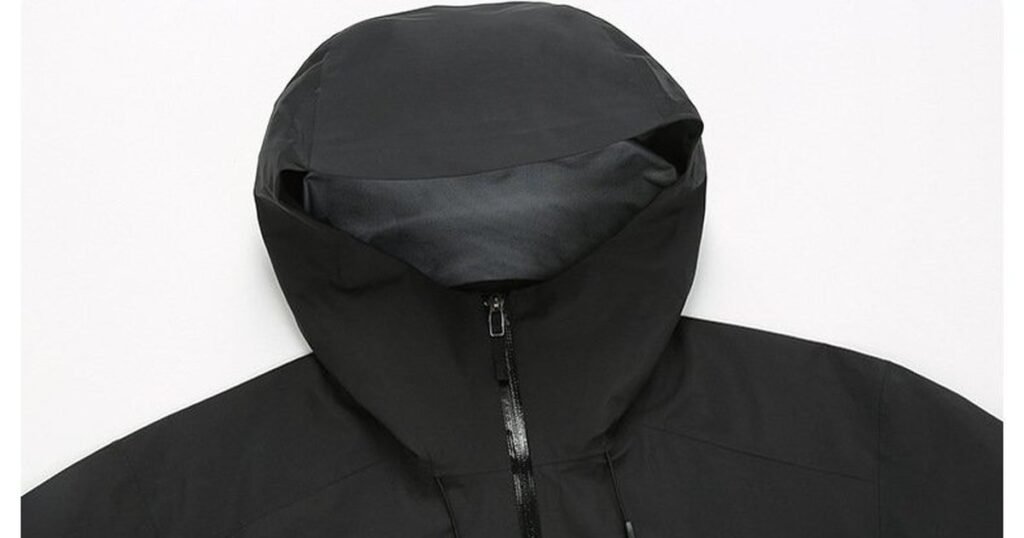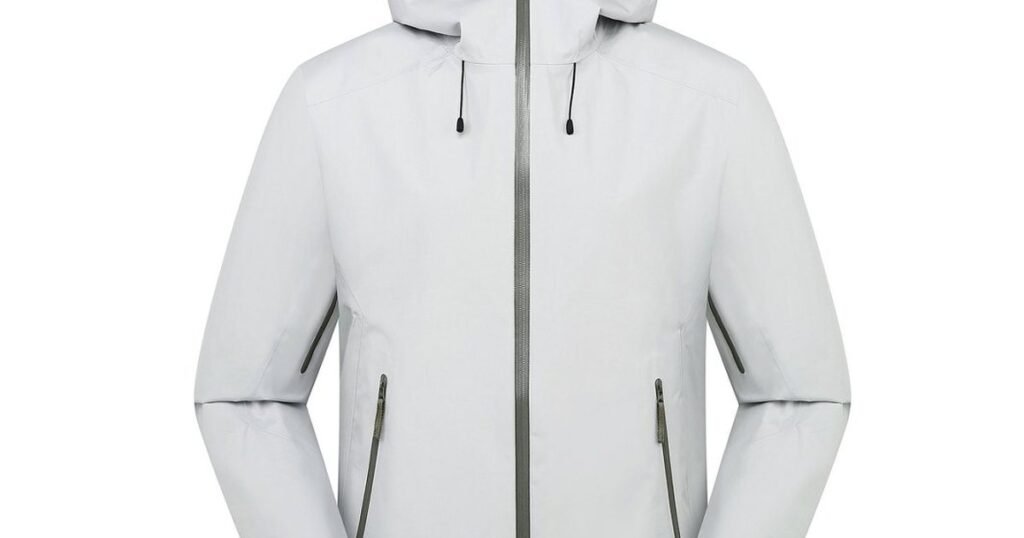
If you’re sourcing waterproof jackets for the European or North American market in 2026 and beyond, PFC-free DWR is no longer optional — it’s becoming a regulatory and brand-positioning requirement. This guide explains what PFC-free means, how it performs, and what brand owners need to know.
What Is DWR?
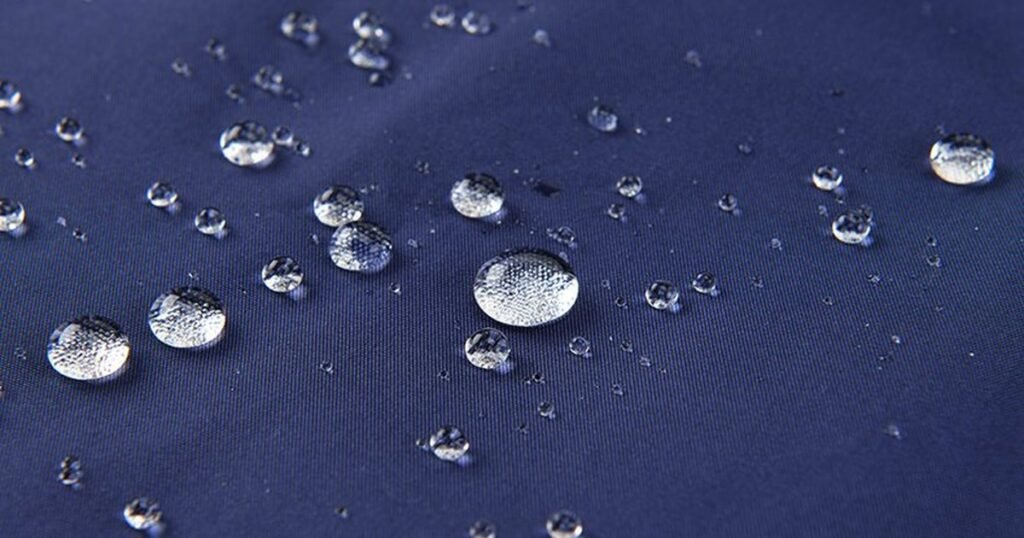
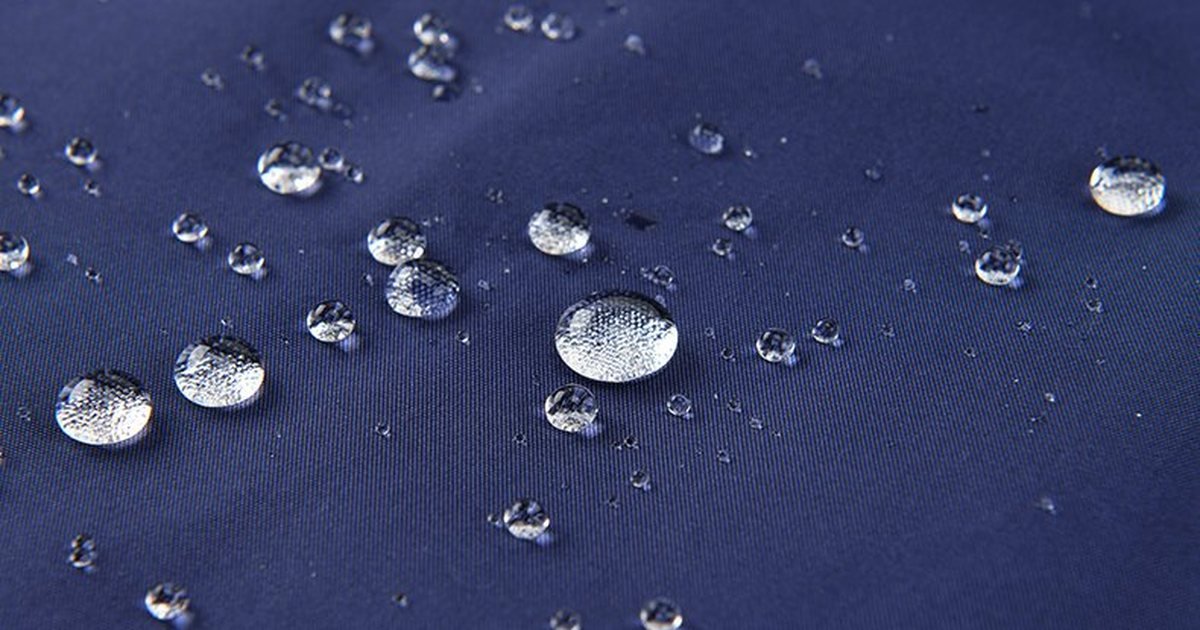
DWR (Durable Water Repellent) is a coating applied to the outer face of waterproof or water-resistant fabrics. It causes water to bead up and roll off rather than soaking into the fabric — even on jackets that have a membrane underneath.
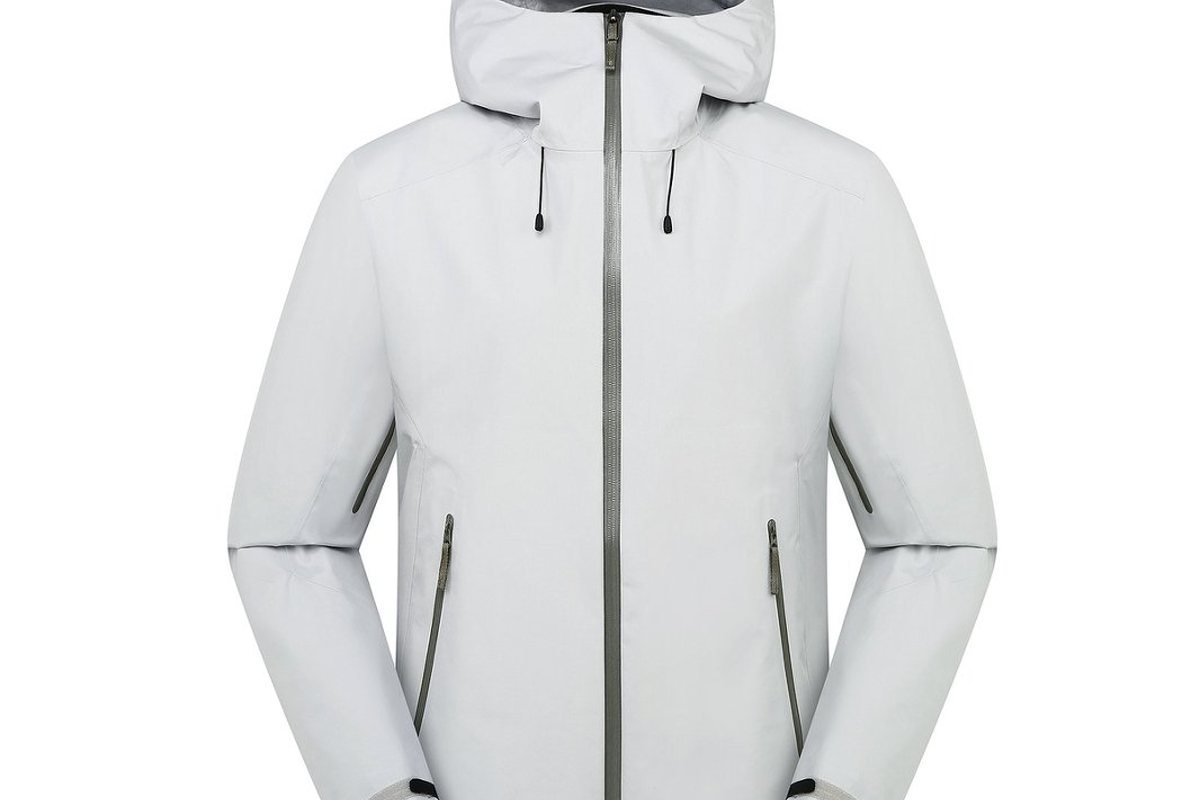
Without working DWR, even a fully-membraned hardshell will “wet out” — the face fabric absorbs water, blocks breathability, and feels clammy. Working DWR is what makes a hardshell feel like a hardshell.
What’s the Problem With Traditional DWR?
Traditional DWR chemistries used PFAS (Per- and Polyfluoroalkyl Substances) — also called “forever chemicals.”
The two main legacy categories:
– C8 DWR (used pre-2015): Contained long-chain PFOA / PFOS. These compounds bioaccumulate in animals and humans, are linked to multiple health issues, and persist in the environment indefinitely. In the EU, PFOA, its salts and related compounds have been restricted under the POPs Regulation since 4 July 2020.
– C6 DWR (industry transition 2015-2024): Shorter-chain fluorocarbons. Less toxic than C8 but still PFAS — and PFHxA, the C6 acid, is directly restricted in EU consumer clothing from 10 October 2026.
What Is Law Today — and What Is Still a Proposal
A common line on supplier sites is that “PFAS in apparel will be banned across the EU by 2027.” That is not what the rules say. As of September 2026, these are the rules that matter for a waterproof jacket — with different dates, scopes and test limits:
| Rule | Status (Sept 2026) | Applies to consumer jackets from | Limits |
|---|---|---|---|
| France — Law 2025-188 + Decree 2025-1376 | In force | 1 January 2026 (manufacture, import, export, sale). Stock made before that date: max. 12 months, i.e. to 31 December 2026 | 25 ppb any single PFAS (targeted, polymers excluded) · 250 ppb sum of PFAS (targeted, polymers excluded) · 50 ppm PFAS including polymers |
| EU REACH Annex XVII — PFHxA, Regulation (EU) 2024/2462 | Adopted | 10 October 2026 for clothing, related accessories and footwear (10 October 2027 for other consumer textiles) | 25 ppb PFHxA + salts · 1,000 ppb PFHxA-related substances, per homogeneous material |
| EU universal PFAS restriction (ECHA) | Proposal only | No date. RAC final opinion 2 March 2026; SEAC final opinion expected by end of 2026; then a Commission proposal and Member State vote | None adopted |
| California AB 1817 | In force | 1 January 2025. Outdoor apparel for severe wet conditions: 1 January 2028, but must carry a “Made with PFAS chemicals” disclosure meanwhile | Total organic fluorine: 100 ppm from 2025, 50 ppm from 1 January 2027 |
Practical reading for a brand: if you sell in France, fluorinated DWR is already out; if you sell anywhere in the EU, C6 chemistry that leaves PFHxA residues is out from 10 October 2026. Specifying C0 covers both — but the evidence your buyers need is a test report against these limits, not a “PFC-free” label.
What Does “PFC-Free DWR” Mean?
PFC-free DWR uses water repellents based on non-fluorinated chemistries — typically:
– Silicone-based polymers
– Hydrocarbon waxes (paraffin, wax dispersions)
– Modified polyurethanes
– Plant-based oils (some next-gen formulations)
The most common modern PFC-free DWR is called C0 DWR — “C0” indicates zero fluorocarbon content.
How Does PFC-Free Performance Compare?
The honest answer: slightly worse, but improving rapidly.
Water repellency (initial):
– Legacy C8: Excellent, beads water aggressively
– Legacy C6: Very good, slightly less aggressive than C8
– PFC-free C0 (2020 generation): Good, noticeably less aggressive bead-up
– PFC-free C0 (2024-2026 generation): Very good, approaching C6 performance
Durability (wash cycles before re-treatment needed):
– Legacy C8: 50-80 washes
– Legacy C6: 30-50 washes
– PFC-free C0 (2020): 15-25 washes
– PFC-free C0 (2024-2026): 25-40 washes
Oil and stain repellency:
– Legacy fluorinated DWR repelled both water AND oils (sweat, food stains)
– PFC-free DWR repels water effectively but does not repel oils well
For pure rain protection, modern PFC-free is now nearly equivalent. For oil-stain resistance (workwear, kitchen environments), PFC-free is a real downgrade.
Top PFC-Free DWR Brands
| Brand | Producer | Notes |
|---|---|---|
| Bionic-Finish® ECO | Rudolf Group (Germany) | Most widely adopted in EU outdoor brands |
| ecorepel® | Schoeller Textil (Switzerland) | Wax-based, fully biodegradable |
| HeiQ Eco Dry | HeiQ (Switzerland) | High-performance, used by Patagonia |
| C-Change® | Schoeller | Bio-based, used in premium ski apparel |
| Phobotex® | Archroma | Mass-market, lower cost |
Brand and Regulatory Drivers
Why brands are switching:
- France: PFAS-containing consumer clothing and footwear banned since 1 January 2026 (Decree 2025-1376)
- EU REACH: PFHxA (a C6 acid) restricted in consumer clothing and footwear from 10 October 2026 (Regulation (EU) 2024/2462)
- California AB 1817: regulated PFAS in textile articles restricted since 1 January 2025; the total organic fluorine threshold drops from 100 ppm to 50 ppm on 1 January 2027
- Major outdoor brands (Patagonia 2022, REI 2024, The North Face 2025) have public PFC-free commitments
- Consumer demand: Sustainability-conscious consumers actively avoid “forever chemical” brands
Certifications that require PFC-free:
- bluesign® approved fabrics
- OEKO-TEX® Made in Green (PFC-free in many fabric categories)
- Greenpeace Detox commitment brands
- Cradle to Cradle Certified™
Total Fluorine vs Targeted PFAS: Two Tests That Are Not Interchangeable
A “PFC-free” claim is only as good as the test behind it — and the test a supplier sends is often the wrong kind. PFAS are measured in two fundamentally different ways, and the regulations use both:
- Total fluorine / total organic fluorine: measures all fluorine in the material and reports it in mg F/kg (ppm). It is a screen — it catches fluorinated polymers and unknown PFAS — but it cannot say which substance is present, and it cannot see anything down at ppb level.
- Targeted PFAS analysis: measures a list of named substances (PFHxA, PFOA and so on) and reports in µg/kg (ppb). It can show a specific substance is below a legal limit, but it is blind to anything not on the list, including most polymers.
| Rule | How it is measured | Limit | Same limit in mg/kg |
|---|---|---|---|
| France — single PFAS | Targeted analysis, polymers excluded | 25 ppb | 0.025 |
| France — sum of PFAS | Sum of targeted analyses (optionally after precursor degradation), polymers excluded | 250 ppb | 0.25 |
| France — PFAS incl. polymers | PFAS including polymers; if total fluorine exceeds 50 mg F/kg, the seller must prove on request whether the fluorine comes from PFAS | 50 ppm | 50 |
| EU — PFHxA | Targeted, per homogeneous material | 25 ppb (PFHxA + salts) · 1,000 ppb (related substances) | 0.025 · 1 |
| California AB 1817 | Total organic fluorine | 100 ppm (2025) → 50 ppm (2027) | 100 → 50 |
Why this matters when you read a report: “total fluorine below 100 ppm” says nothing about the 25 ppb targeted limits. 100 ppm is 4,000 times higher than 25 ppb, so a jacket can pass the screen and still fail France or the EU PFHxA limit. It is also double France’s 50 mg F/kg total-fluorine trigger and California’s 50 ppm threshold from 2027. Ask for both tests, per component: a targeted PFAS panel that includes PFHxA, its salts and related substances, plus a total-fluorine screen.
Recycled Fabric and the French 20% Exemption
France exempts clothing and footwear containing at least 20% post-consumer recycled material, but only partly: PFAS in the finished product are limited to the recycled fraction, and the residual PFAS allowed is proportional to the recycled share. A fluorinated DWR applied at the factory is not covered, and the EU PFHxA restriction has no recycled-content exemption at all. See the step-by-step check in our European PFAS-free supplier guide →
Application and Care Considerations
For brand owners:
– PFC-free DWR usually requires slightly different curing temperatures during manufacturing
– Manufacturer must use a clean line (no cross-contamination from C6/C8 finishes)
– Some PFC-free formulas can’t be applied to certain fabric types (very tight weaves)
For end customers:
– PFC-free DWR may need more frequent re-treatment (every 10-20 wash cycles vs every 30-50)
– Customers should use PFC-free re-treatment products (Granger’s Performance Wash + Repel, Nikwax, etc.)
– Tumble-drying or gentle ironing helps re-activate DWR after washing — important customer education
Cost Implications
PFC-free DWR typically adds:
– $0.30-0.80 per yard of fabric vs legacy C6
– $0.50-1.50 per finished jacket in total production cost increase
For most outdoor brands, this is a 1-3% cost increase — well worth the market positioning, regulatory compliance, and customer acquisition benefits.
Brand Positioning Opportunity
Right now, PFC-free is a differentiation point for outdoor brands. Once the French and EU PFHxA deadlines have passed, it will be table stakes. Brands that lead this transition (rather than wait for regulation) own the sustainability narrative for the next decade.
Marketing language that works:
– “Free from PFAS forever chemicals”
– “C0 DWR — bluesign® compatible”
– “Tested below EU PFHxA and French PFAS limits” (only with a current test report behind it)
– “Safer for waterways and wildlife”
Decision Framework
✅ Specify PFC-free if:
– Your brand sells in EU or California
– Your target customer values sustainability
– You’re launching new SKUs (avoid PFC sunk-cost inventory)
– Your brand has any environmental positioning
⚠️ Be cautious with PFC-free if:
– Your product needs oil-stain repellency (workwear, kitchen safety)
– Your price point is below $40 retail (cost matters)
– Your supply chain isn’t ready (verify factory capability)
Bottom Line
PFC-free DWR is the default specification for any outdoor apparel brand entering 2026+. Performance has caught up to legacy fluorocarbons for water repellency, regulations are mandating the switch, and consumers reward early movers.
If your current factory can’t deliver PFC-free DWR with reliable performance, it’s time to find one that can.
Sourcing PFC-free DWR-treated outerwear?
PTOUTWEAR uses PFC-free DWR on its waterproof shells and holds SGS test reports. Tell us your target market and we will confirm which test limits the report needs to cover.
Discuss PFC-free specs with us →
Hardshell jacket capabilities →
Certifications & sustainability →