Even with a 20,000mm waterproof fabric, water leaks through the stitching holes if seams aren’t sealed. Seam taping is what makes a jacket actually waterproof in real-world wear. But there are two different approaches — “fully taped” and “critically taped” — and the choice has major cost and performance implications.
Why Stitching Holes Leak
Every seam in a sewn garment has thousands of needle holes from the stitching. On waterproof fabrics, water can wick through these holes via:
– Direct seepage (rain pressure pushes water through holes)
– Capillary action (water tracks along thread fibers)
– Wash-cycle stress (washing degrades stitch tension over time)
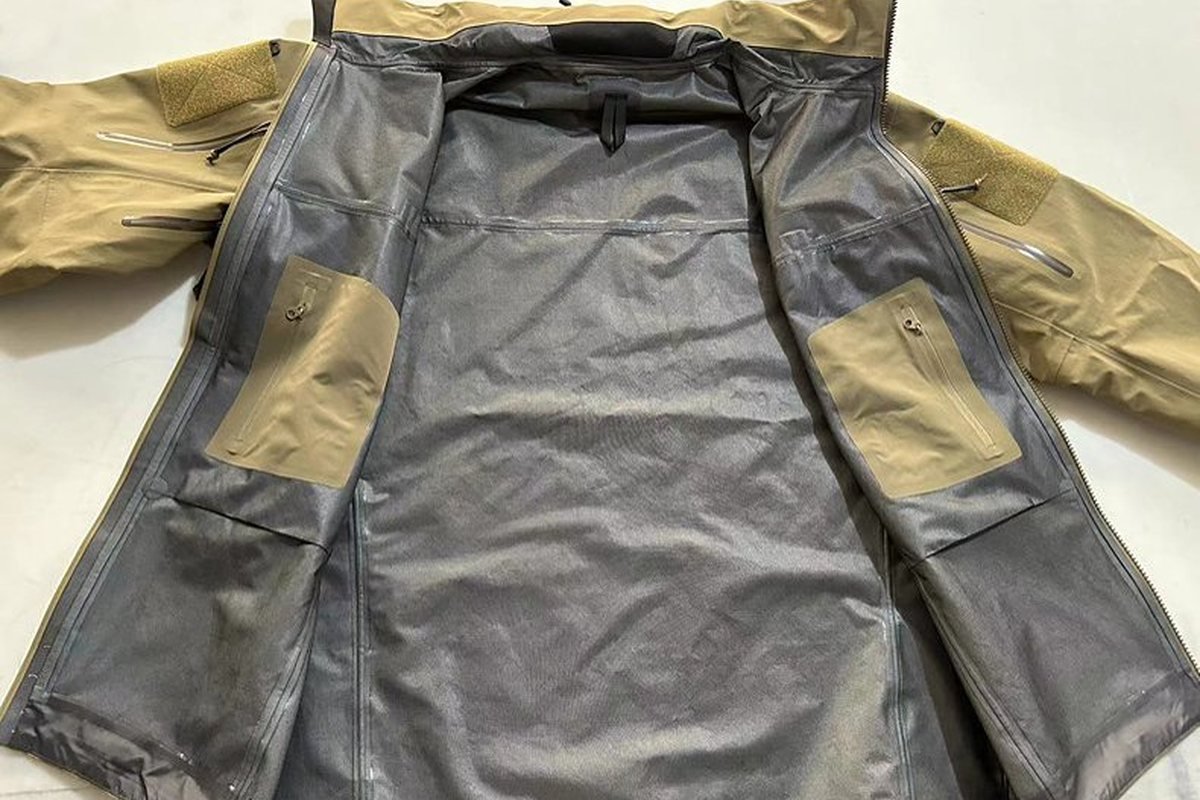
For a real waterproof jacket, every seam must be sealed.
How Seam Taping Works
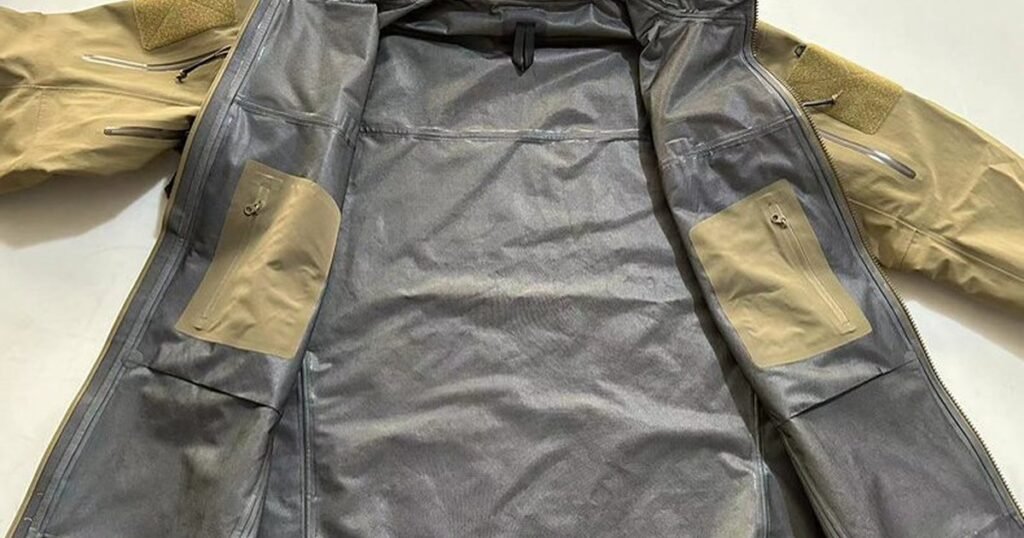
After garments are sewn, a strip of waterproof tape (typically 13-22mm wide) is applied with heat and pressure over the seam allowance on the inside of the jacket. The tape is bonded to the fabric using:
– Heat (140-180°C)
– Pressure (specialized seam-sealing machine)
– Time (controlled dwell to achieve adhesion)
When done properly, the tape forms a permanent waterproof barrier over the stitching.
Fully Taped vs Critically Taped: The Distinction
Fully Taped Seams
Every seam in the garment is sealed — including:
– Main body seams (shoulder, side, sleeve)
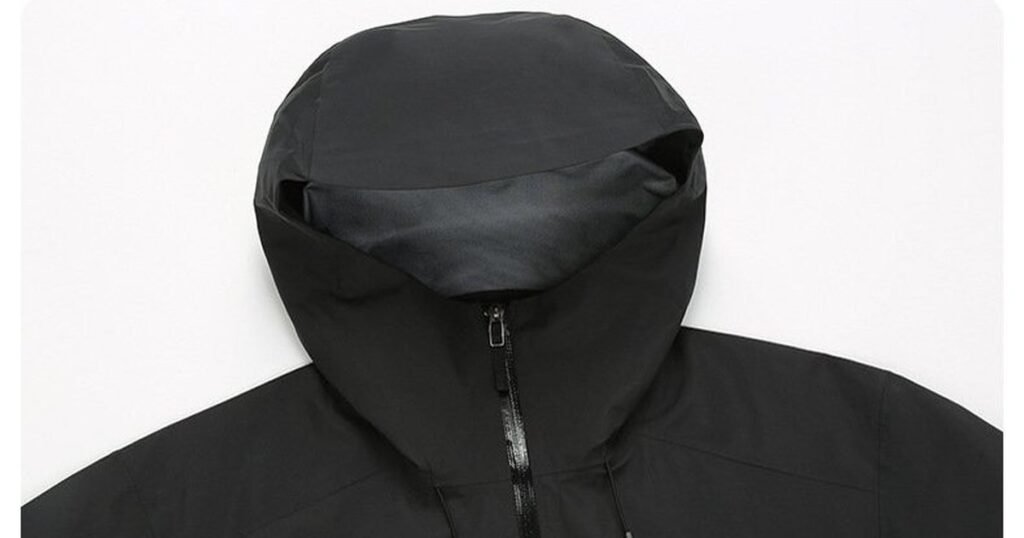
– Hood attachment seams
– Zipper attachments
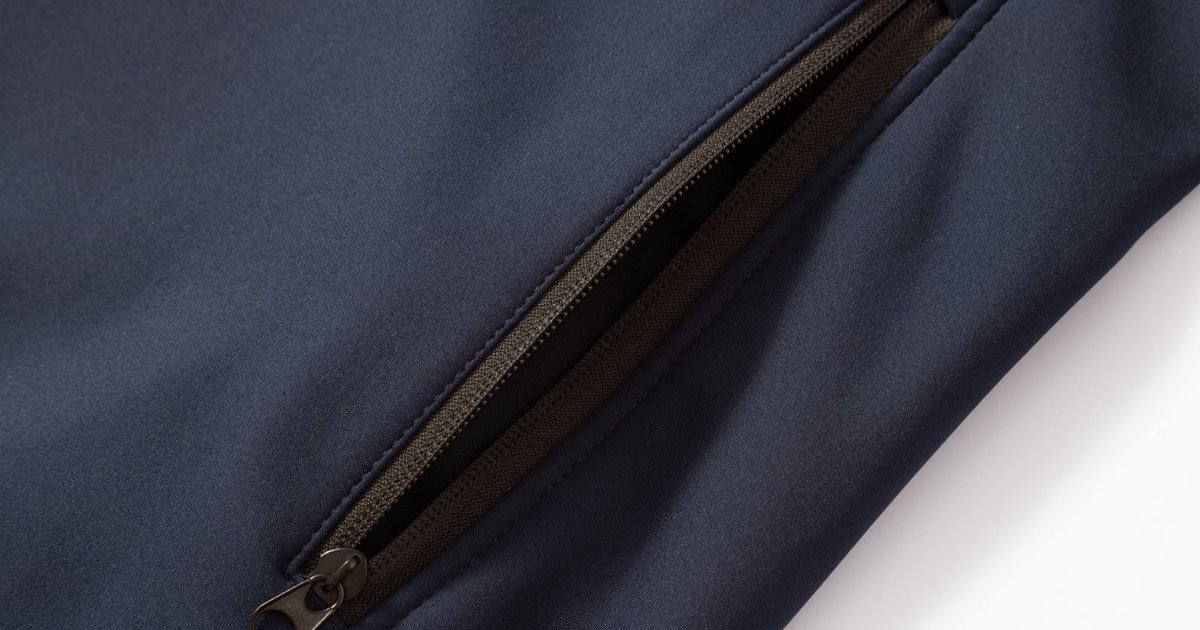
– Pocket bag attachments
– Hem and cuff stitching
– All decorative or functional stitching
Result: Water has no path through stitching anywhere.
Used in:
– True hardshells (premium ski, alpine, expedition)
– Rain jackets that need to handle prolonged exposure
– Premium-tier outerwear
Critically Taped Seams
Only the highest-exposure seams are taped:
– Shoulders (rain falls hardest here)
– Hood top
– Sometimes neck and chest seams
Other seams (under-arms, side panels, hem) are left untaped — relying on water shedding via DWR before reaching these less-exposed areas.
Result: Most rain situations stay dry, but prolonged or heavy rain leaks through untaped seams.
Used in:
– Mid-tier rain jackets
– Lightweight packable shells
– Insulated jackets where weight is a bigger concern than rain duration
Performance Difference in Real-World Use
| Scenario | Fully Taped | Critically Taped |
|---|---|---|
| 10-min light rain | ✅ Dry | ✅ Dry |
| 30-min moderate rain | ✅ Dry | ⚠️ Side seams wet |
| 2-hour heavy rain | ✅ Dry | ❌ Multiple leak points |
| Backpack straps for 4 hours | ✅ Dry | ⚠️ Shoulder seams may degrade |
| Skiing all day | ✅ Dry | ❌ Wet under arms, side panels |
| Wind-driven horizontal rain | ✅ Dry | ❌ Wet at most untaped seams |
Cost Difference
Fully taped seams add roughly $4-8 to jacket production cost:
– Critically taped: $1-3 of tape + 5-10 minutes labor per jacket
– Fully taped: $4-8 of tape + 20-30 minutes labor per jacket
Lifetime durability also differs. Critical taping can degrade in 2-3 years; full taping properly applied lasts 5-10 years.
When Critical Taping Is Adequate
✅ Critical taping is fine if:
– Your jacket is positioned for light rain / urban use
– Customers are unlikely to wear it in prolonged downpours
– You’re targeting a price point below $80-100 retail
– The jacket is insulated (water shedding via outer layer is sufficient before reaching inner)
❌ Critical taping is wrong if:
– Your jacket targets serious outdoor use
– Your customer is alpine, ski, expedition, or trekking-oriented
– You’re at premium price points ($150+ retail)
– Your brand’s reputation is on technical performance
Tape Width and Quality
Beyond the fully-taped vs critically-taped distinction, tape specifications matter:
| Tape Spec | Quality Tier | Notes |
|---|---|---|
| 13mm width | Entry / standard | Most common, adequate for most use |
| 18-22mm width | Premium | Better adhesion margin, longer lifespan |
| 8-10mm narrow tape | Lightweight applications | Less bulk, slightly lower durability |
Tape composition: Look for 3-layer tape (carrier film + adhesive + protective backing). Single-layer “economy” tape delaminates with washing.
Top tape brands:
– GORE Seam Tape (premium, $0.40-0.80/m)
– Bemis (USA, premium)
– Yi Jia (Chinese mid-tier, used by most production)
– Various Chinese mass-market (use with caution; verify adhesion testing)
What to Specify in Your Tech Pack
Demand from your manufacturer:
1. Taping approach: Fully taped or critically taped — and which seams specifically if critical
2. Tape width: 13mm / 18mm / 22mm
3. Tape brand: GORE / Bemis / specific Chinese supplier
4. Adhesion test: Peel-off resistance after 25 wash cycles
5. Visual QC: No bubbles, no gaps, no overlapping issues
Common Mistakes Brands Make
- Calling a critically-taped jacket “fully waterproof” in marketing — customer expectation mismatch → returns and reviews
- Speccing fully-taped for an entry-price product — production cost won’t fit the retail price
- Not specifying tape width — manufacturer defaults to cheapest (13mm thin tape) — quality issues
- No post-wash adhesion testing — tape failures show up only after consumer washing
Bottom Line
Seam taping is one of the most under-discussed but consequential specs in waterproof apparel. Get it wrong and your “20,000mm waterproof” jacket leaks anyway.
General rule:
– Premium hardshells (>$200 retail) → fully taped, 18-22mm tape
– Mid-tier rain jackets ($80-150 retail) → critically taped or fully taped, 13-18mm tape
– Entry rain shells (<$60 retail) → critically taped, 13mm tape
For brand owners building outdoor lines, fully-taped seams are a major trust signal. Listed in product descriptions and verified by photos, they communicate “real performance product” to technical buyers.
Building hardshell or rain jacket products that need genuine waterproof performance?
ptoutwear offers both fully-taped and critically-taped seam construction with multiple tape brands (GORE, Bemis, Yi Jia) and widths (13mm / 18mm / 22mm). All production includes adhesion testing reports.
Discuss seam construction with us →
Hardshell jacket capabilities →
3L laminate construction guide →