📋 Table of Contents
- Executive Summary
- What Bonded Fleece Softshell Construction Means
- Bonded Fleece Softshell Jacket Construction Verification Methods
- Factory-Level QC Protocols for Bonded Softshell Production
- Common Construction Failures Buyers Encounter
- Compliance and Certification Guidance
- Procurement Guidance by Buyer Segment
- Key Takeaways
- FAQ
Bonded fleece softshell jacket construction verification protects your brand from delamination claims, warranty returns, and failed performance expectations. Many buyers discover construction issues only after bulk shipment, when the fleece backing separates from the shell fabric or seams slip under normal use. Verifying bond integrity, seam stability, and wash durability before production saves thousands in rework costs and preserves customer trust.
Executive Summary
- Global outdoor apparel market: Grand View Research projects the sector will surpass $20 billion by 2026, driven by demand for technical layering and versatile softshell jackets.
- ISO 811 hydrostatic resistance: ISO 811 remains the standard method for measuring textile water penetration resistance across the textile industry, used to validate water-resistance claims on softshell fabrics.
- OEKO-TEX certification reach: OEKO-TEX reported more than 35,000 companies certified across its system in the latest reporting cycle, reflecting widespread adoption of harmful-substance screening.
- Technical textiles growth: Mordor Intelligence forecasts technical textiles will grow at a CAGR above 5% through the late 2020s, reflecting rising demand for performance materials in outdoor and workwear segments.
- Global Recycled Standard adoption: Textile Exchange reports the Global Recycled Standard is used by thousands of facilities worldwide to verify recycled content claims in textile supply chains.
What Bonded Fleece Softshell Construction Means
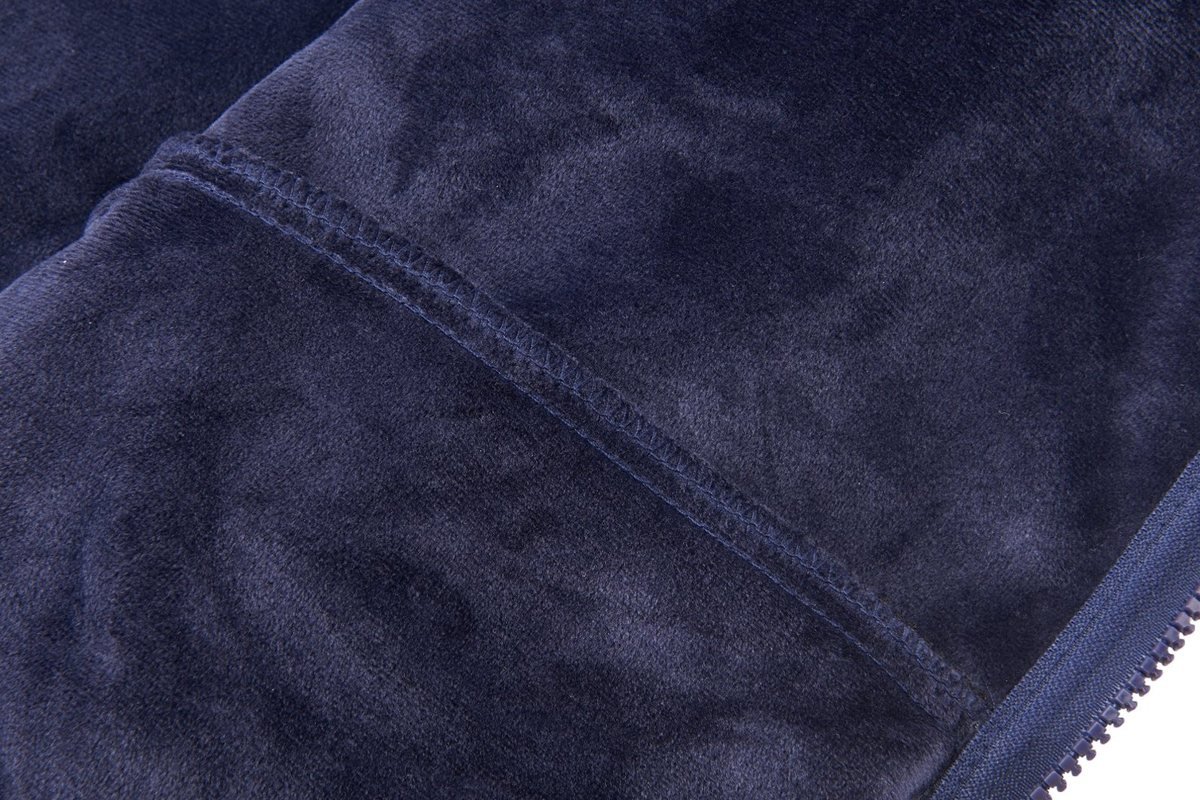
Bonded fleece softshell construction joins a weather-resistant outer shell to a fleece backing using adhesive lamination or thermal bonding. The outer shell blocks wind and resists light rain. The fleece interior traps warmth and wicks moisture. The bond layer holds both fabrics together without stitching through both layers, reducing weight and bulk.
Shell Fabric Layer
The shell fabric is typically a tightly woven polyester or nylon with a durable water repellent (DWR) finish. Fabric weight ranges from 180 to 320 g/m². Heavier shells offer better abrasion resistance. Lighter shells improve breathability and reduce garment weight. The shell’s thread count and weave density determine wind resistance and initial water resistance before the DWR finish is applied.
Fleece Backing Layer
The fleece backing is usually 100 to 280 g/m² polyester fleece. Microfleece (100-200 g/m²) suits moderate climates and active use. Midweight fleece (200-280 g/m²) provides more insulation for colder conditions. The fleece surface can be brushed for softness or left with a tighter finish to reduce pilling. Fleece weight and pile height affect warmth, breathability, and durability.
Bond Layer
The bond layer is a thin adhesive film or thermal-activated polymer applied between shell and fleece. Adhesive lamination uses polyurethane or polyester hot-melt films. Thermal bonding applies heat and pressure to fuse compatible fabrics without a separate adhesive layer. Bond strength is measured in Newtons per 25mm width (N/25mm). A bond strength below 5 N/25mm typically fails during washing or flex stress. Quality bonded softshells maintain 8-12 N/25mm peel strength after five wash cycles.
Bonded Fleece Softshell Jacket Construction Verification Methods
Bonded fleece softshell jacket construction verification requires physical testing of bond strength, seam stability, and fabric performance. Visual inspection alone misses subsurface bond defects and premature wear indicators. Testing before bulk production identifies construction weaknesses that cause warranty claims and customer dissatisfaction.
Peel Strength Testing
Peel strength testing measures the force required to separate the shell from the fleece backing. The test follows ASTM D903 or ISO 11339 standards. A 25mm-wide strip is cut from the sample. The shell and fleece layers are peeled apart at 180 degrees using a tensile testing machine. The machine records force in Newtons per 25mm width. Acceptable peel strength for outdoor softshells is 8-12 N/25mm after five standard wash cycles at 40°C. Samples below 5 N/25mm after washing indicate weak bonding that will fail in normal use. Testing should sample three locations: chest, elbow, and hem, because bond quality can vary across the garment.
Seam Slippage Testing
Seam slippage testing measures how much fabric pulls away from the seam under stress. The test follows ASTM D434 or ISO 13936-1 standards. A 100mm × 150mm sample is cut with the seam centered. The sample is clamped in a tensile tester and pulled until the seam opens 6mm. The force required is recorded in Newtons. Quality softshells require at least 350 N to cause 6mm seam slippage. Lower values indicate the seam will gap under shoulder-strap stress or arm movement. Seam slippage is especially critical at shoulder, underarm, and side seams where stress concentrates during active use.
Wash Durability Testing
Wash durability testing validates that the bond, seams, and DWR finish survive repeated laundering. The test follows ISO 6330 or AATCC 135 standards. Samples undergo five to ten wash cycles at 40°C with standard detergent and tumble drying. After washing, samples are re-tested for peel strength, seam slippage, and water resistance. Bond strength should retain at least 80% of original peel force. DWR finish should still bead water at 70-80 spray rating (ISO 4920). Fleece pilling is graded visually using ASTM D3512. Grade 3 or better (minimal pilling) is acceptable for outdoor softshells. Buyers often discover delamination issues only after the first wash, making this test essential before bulk orders.
Hydrostatic Pressure Testing
Hydrostatic pressure testing measures the fabric’s resistance to water penetration under pressure. The test follows ISO 811 standards. A fabric sample is clamped over a column of water. Pressure is increased until water penetrates the fabric. The pressure at penetration is recorded in millimeters of water column (mm H₂O). Bonded softshells without a membrane typically rate 1,500-5,000 mm H₂O. Softshells with a waterproof-breathable membrane rate 10,000-20,000 mm H₂O. Many buyers mistakenly expect bonded fleece softshells to be fully waterproof, but most are only water-resistant. Clear hydrostatic test data prevents misaligned performance expectations and customer complaints about leaks in heavy rain.
Factory-Level QC Protocols for Bonded Softshell Production
Factory-level QC protocols for bonded softshell production include in-process inspection points and acceptance criteria at each production stage. Defects caught during production cost less to fix than defects found at final inspection or after shipment. Our 3,000m² Taizhou Sanmen facility runs 20 production lines with in-house cut-and-sew and QC, allowing real-time correction when bond or seam issues appear.
Incoming Fabric Inspection
Incoming fabric inspection verifies that shell and fleece rolls meet the approved lab-dip and hand-feel standards. Each roll is checked for width, weight per square meter, color consistency, and surface defects. A 4-point system grades defects: 1 point for defects up to 75mm, 2 points for 75-150mm, 3 points for 150-225mm, and 4 points for defects over 225mm. Rolls exceeding 40 points per 100 square meters are rejected. Bond-film thickness is measured with a micrometer at three points per roll. Thickness variation beyond ±10% indicates inconsistent bonding and is flagged for re-inspection or return.
Lamination Process Control
Lamination process control monitors temperature, pressure, and line speed during bonding. Temperature is held within ±5°C of the target (typically 120-160°C for polyurethane adhesives). Pressure is set to 2-4 bar depending on fabric weight. Line speed is adjusted to ensure sufficient dwell time for complete bond activation. A test strip is pulled every 30 minutes and peel-tested. If peel strength drops below 8 N/25mm, the line is stopped and settings are recalibrated. Lamination defects such as air bubbles, wrinkles, or incomplete adhesion are logged and traced to specific process parameters.
Cut-and-Sew Inspection
Cut-and-sew inspection checks pattern alignment, seam straightness, and stitch density. Seam allowances are measured to ensure 10-12mm consistency. Stitch density is verified at 12-14 stitches per inch for main seams and 10-12 for topstitching. Seam puckering, skipped stitches, and thread tension issues are marked for rework. Zipper alignment and wind-flap placement are checked against the approved sample. Any deviation from the approved construction is photographed and reported to the buyer before proceeding.
Final Inspection and Packaging
Final inspection samples 10% of finished garments using AQL 2.5 for critical defects and AQL 4.0 for major defects. Critical defects include delamination, broken zippers, and open seams. Major defects include loose threads, minor puckering, and slight color variation. Each garment is turned inside-out to inspect seam quality and bond integrity along stress points. Garments are pressed, folded, and poly-bagged according to the buyer’s packing instructions. Carton labeling includes style number, color, size breakdown, and production date for traceability.
Common Construction Failures Buyers Encounter
Common construction failures in bonded fleece softshell jackets include delamination, pilling, seam slippage, and performance mismatches. Understanding these failure modes helps buyers set clear acceptance criteria and avoid costly returns.
Delamination at High-Flex Areas
Delamination occurs when the bond between shell and fleece separates. High-flex areas such as elbows, cuffs, and shoulder seams experience repeated bending that stresses the bond layer. Delamination typically appears after washing or extended wear. Buyers report that jackets advertised as bonded fleece start to bubble or separate within weeks of use, especially around elbows and cuffs. Weak bond strength (below 5 N/25mm) or insufficient heat during lamination causes this failure. Pre-production peel testing at elbow and cuff locations catches weak bonds before bulk production.
Fleece Pilling and Surface Degradation
Fleece pilling occurs when short fibers on the fleece surface tangle into balls. Pilling makes the garment look worn and reduces customer satisfaction. Low-quality fleece or inadequate anti-pill treatment accelerates pilling. Buyers note that some jackets pill quickly on the fleece side, which makes the garment look old long before the shell fabric fails. ASTM D3512 pilling tests grade fleece after simulated wear. Grade 3 or better indicates acceptable pilling resistance. Specifying anti-pill fleece and testing samples after five wash cycles reduces pilling complaints.
Seam Slippage Under Load
Seam slippage happens when fabric threads pull away from the seam under stress. Shoulder seams, underarm seams, and side seams carry the most load during active use. Seam slippage creates gaps that expose the wearer to wind and cold. Low thread count in the shell fabric or insufficient stitch density (below 12 stitches per inch) increases slippage risk. Seam slippage testing (ISO 13936-1) should show at least 350 N force required to open the seam 6mm. Reinforcing high-stress seams with bar-tack stitching or double-needle construction prevents slippage.
Waterproofing Misrepresentation
Waterproofing misrepresentation occurs when buyers or end-customers expect full waterproofing but receive only water resistance. Bonded fleece softshells without a membrane are water-resistant, not waterproof. They block light rain and snow but leak in sustained rain. Buyers often say a softshell is advertised as waterproof but leaks in real rain because it only has water resistance and no seam sealing. Clear labeling of hydrostatic pressure ratings (e.g., 3,000 mm H₂O water-resistant vs. 10,000 mm H₂O waterproof) and seam-sealing status prevents customer complaints and returns.
Breathability and Moisture Management
Breathability issues arise when the bonded construction traps moisture during active use. Some buyers report that the jacket blocks wind well but runs too warm and traps moisture during active use, which makes it poor for hiking or workwear. Breathability is measured in grams of water vapor transmitted per square meter per 24 hours (g/m²/24h). Bonded softshells without a membrane typically rate 3,000-8,000 g/m²/24h. Softshells with a breathable membrane rate 10,000-20,000 g/m²/24h. Specifying mesh lining panels or pit-zip vents improves ventilation for high-activity use.
Compliance and Certification Guidance
Compliance and certification guidance for bonded fleece softshell jackets varies by target market. United States, United Kingdom, Germany, France, Canada, and Australia each have specific labeling, safety, and environmental requirements. Meeting these standards avoids customs delays, fines, and product recalls.
United States: CPSIA and FTC Labeling
The Consumer Product Safety Improvement Act (CPSIA) requires testing and certification for children’s apparel. Lead content in zippers, snaps, and trims must not exceed 100 ppm. Phthalate content in plastic components must comply with CPSIA Section 108. The Federal Trade Commission (FTC) requires care labels with fiber content, country of origin, and washing instructions. Labels must be permanently attached and legible for the life of the garment. Our OEM jacket manufacturing service includes CPSIA-compliant component sourcing and FTC-compliant labeling for U.S. buyers.
European Union: REACH and CE Marking
The Registration, Evaluation, Authorization, and Restriction of Chemicals (REACH) regulation restricts hazardous substances in textiles sold in the EU. Azo dyes, formaldehyde, and certain flame retardants are banned or restricted. CE marking is not required for general apparel but is mandatory for personal protective equipment (PPE) such as high-visibility workwear. OEKO-TEX Standard 100 certification screens textiles against more than 1,000 harmful substances and satisfies many REACH requirements. Our facility holds ISO 9001 and SGS test reports, and sources OEKO-TEX-certified fabrics on request for EU compliance.
United Kingdom: UKCA Marking and Textile Labeling
The United Kingdom Conformity Assessed (UKCA) marking replaced CE marking for goods sold in Great Britain after Brexit. UKCA applies to PPE and certain regulated products. General apparel requires fiber content labeling per The Textile Products (Labelling and Fibre Composition) Regulations 2012. Labels must state fiber percentages in descending order and country of origin. Post-Brexit, separate labeling for Great Britain and Northern Ireland may be required depending on distribution channels.
Canada: Textile Labeling Act and SOR/2011-17
Canada’s Textile Labeling Act requires bilingual (English and French) fiber content labels. The Canada Consumer Product Safety Act (CCPSA) and SOR/2011-17 regulate children’s sleepwear flammability and drawstring safety. Hoods and waistbands on children’s jackets must comply with drawstring length and attachment requirements to prevent strangulation hazards. Our custom logo service includes compliant label design and placement for Canadian buyers.
Australia: Mandatory Product Information Standards
Australia’s Competition and Consumer Act 2010 requires care labeling and fiber content disclosure. The Australian Competition and Consumer Commission (ACCC) enforces mandatory product information standards. Children’s nightwear must meet flammability standards AS/NZS 1249. While bonded softshell jackets are not classified as nightwear, buyers sourcing for school uniforms should verify that jackets do not pose flammability risks if worn indoors.
Procurement Guidance by Buyer Segment
Procurement guidance for bonded fleece softshell jackets varies by buyer segment. Direct-to-consumer outdoor brands, corporate uniform buyers, and school uniform programs each have distinct priorities and constraints. Tailoring verification methods and MOQ expectations to each segment improves sourcing outcomes.
DTC Outdoor Brand Founders
Direct-to-consumer outdoor brand founders typically operate with limited budgets and need low-MOQ production. Founders prioritize product differentiation, quality assurance, and fast sampling to validate market fit before committing to bulk orders. Sample MOQ of 1 piece allows founders to test fit, construction, and branding without tying up cash. Bulk MOQ of 30 pieces per SKU enables small first orders that fit Shopify or Amazon FBA inventory limits. Founders should request peel-strength and wash-durability test reports with the first sample to confirm the jacket will survive customer use and returns. Our low-MOQ jacket manufacturer service supports DTC brands with 1-piece sampling and 30-piece bulk minimums.
Corporate and Team Uniform Buyers
Corporate and team uniform buyers prioritize consistent quality, clear performance specs, and reliable delivery timelines. Buyers often source jackets for employee teams, sales staff, or event volunteers. Uniform buyers need detailed fabric weight, membrane presence, and construction disclosure to match jackets to intended use (indoor vs. outdoor, active vs. casual). Corporate buyers complain that product pages do not clearly disclose fabric weight, membrane presence, or whether the construction is truly bonded versus just fleece-lined. Providing a detailed spec sheet with hydrostatic pressure, breathability, and peel-strength data prevents mismatched expectations. Our private-label service includes custom embroidery and woven labels for corporate branding.
School Uniform Programs
School uniform programs require durable, easy-care jackets that withstand daily wear and frequent washing. School buyers prioritize colorfastness, pilling resistance, and compliance with child-safety regulations. Jackets for younger students must comply with drawstring safety standards (SOR/2011-17 in Canada, CPSIA in the U.S.). Pilling resistance is critical because school jackets are washed weekly and must look presentable for the entire school year. Specifying anti-pill fleece and testing samples after ten wash cycles ensures jackets meet school durability expectations. Our sample development service includes wash-durability testing and compliance documentation for school uniform buyers.
Key Takeaways
- Peel strength testing per ASTM D903 or ISO 11339 should show at least 8 N/25mm bond strength after five wash cycles to prevent delamination in bonded fleece softshell jackets.
- ISO 811 hydrostatic pressure testing measures water resistance; bonded softshells without a membrane typically rate 1,500-5,000 mm H₂O, while membrane-equipped softshells rate 10,000-20,000 mm H₂O.
- Seam slippage testing per ISO 13936-1 should require at least 350 N force to open a seam 6mm, ensuring seams hold under shoulder-strap stress and active use.
- OEKO-TEX Standard 100 certification screens textiles against more than 1,000 harmful substances, satisfying many REACH and consumer-safety requirements for EU and North American markets.
- The Global Recycled Standard (GRS) requires a minimum of 20% recycled content before a product can carry the GRS label, supporting sustainability claims in outdoor apparel.
- Factory-level QC protocols should include in-process lamination checks every 30 minutes, verifying peel strength remains above 8 N/25mm to catch bond defects before final inspection.
FAQ
What is a bonded fleece softshell jacket?
A bonded fleece softshell jacket joins a weather-resistant outer shell to a fleece backing using adhesive lamination or thermal bonding. The outer shell blocks wind and resists light rain. The fleece interior traps warmth and wicks moisture. The bond layer holds both fabrics together without stitching through both layers, reducing weight and bulk compared to traditional fleece-lined jackets.
How do you verify softshell jacket construction?
Verify softshell jacket construction using peel strength testing (ASTM D903), seam slippage testing (ISO 13936-1), wash durability testing (ISO 6330), and hydrostatic pressure testing (ISO 811). Peel strength should exceed 8 N/25mm after five wash cycles. Seam slippage should require at least 350 N force to open 6mm. Hydrostatic pressure should match the claimed water-resistance rating. These tests identify weak bonds, seam failures, and performance mismatches before bulk production.
Is bonded fleece softshell waterproof or water-resistant?
Bonded fleece softshells without a membrane are water-resistant, not waterproof. They typically rate 1,500-5,000 mm H₂O hydrostatic pressure, blocking light rain and snow but leaking in sustained rain. Softshells with a waterproof-breathable membrane and sealed seams rate 10,000-20,000 mm H₂O and qualify as waterproof. Clear labeling of hydrostatic pressure ratings and seam-sealing status prevents customer complaints about leaks.
What tests are used for softshell fabric bonding?
Softshell fabric bonding is tested using peel strength tests (ASTM D903 or ISO 11339) and wash durability tests (ISO 6330 or AATCC 135). Peel strength measures the force required to separate shell from fleece, recorded in Newtons per 25mm width. Acceptable peel strength for outdoor softshells is 8-12 N/25mm after five wash cycles. Wash durability testing confirms bond strength retains at least 80% of original force after repeated laundering.
How can you tell if a softshell jacket is good quality?
A good-quality softshell jacket shows peel strength above 8 N/25mm after washing, seam slippage resistance above 350 N, and pilling grade 3 or better after five wash cycles. The DWR finish should bead water at 70-80 spray rating. Zippers should operate smoothly without snagging. Seams should be straight with 12-14 stitches per inch. The fleece backing should feel soft without excessive shedding. Request test reports for peel strength, seam slippage, and wash durability to verify quality claims before bulk orders.
Verify your bonded fleece softshell jacket construction with factory-backed testing and low-MOQ production.
Request 1-Piece Samples and Test Reports →
Written by Ivan Chen, Sales Engineer at PTOUTWEAR – 13 years in outdoor apparel manufacturing.