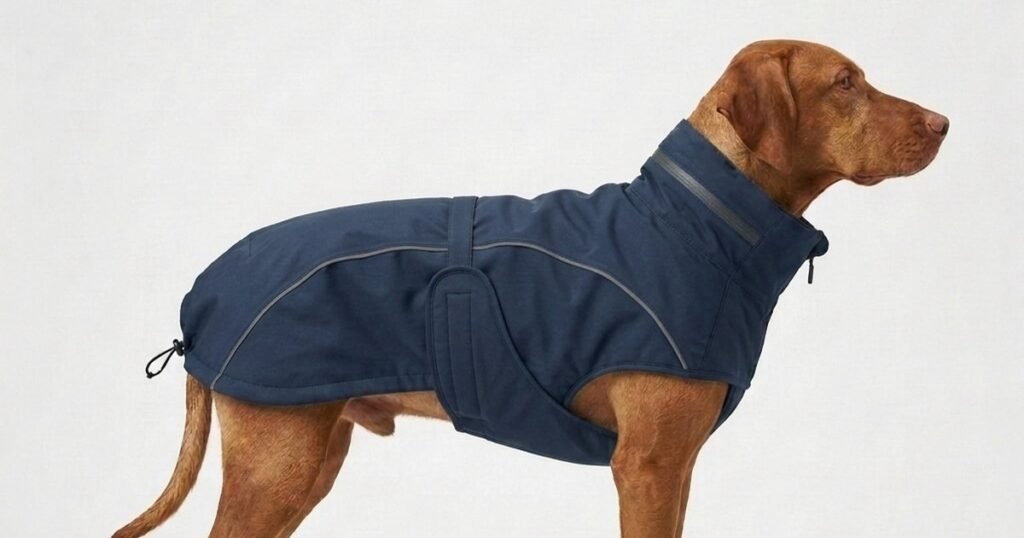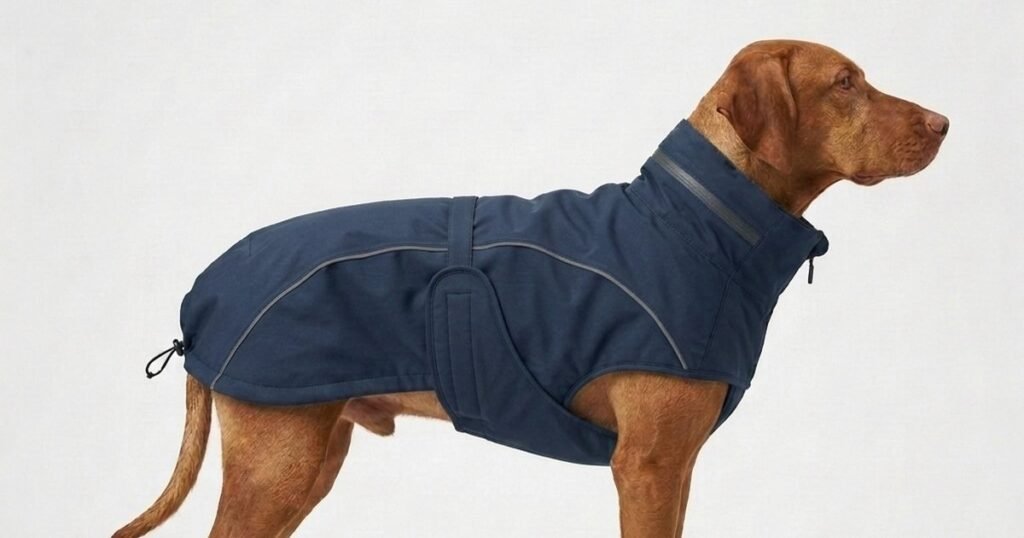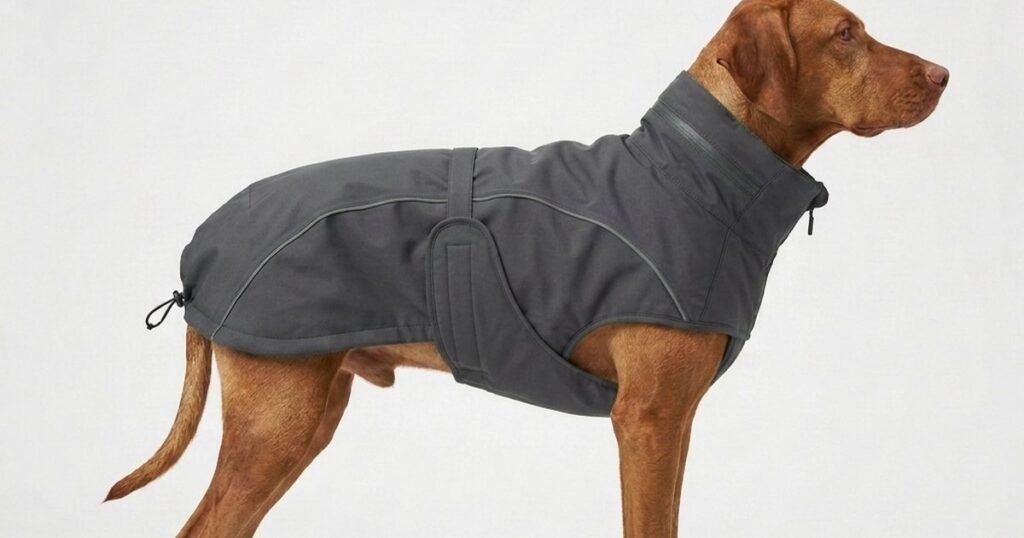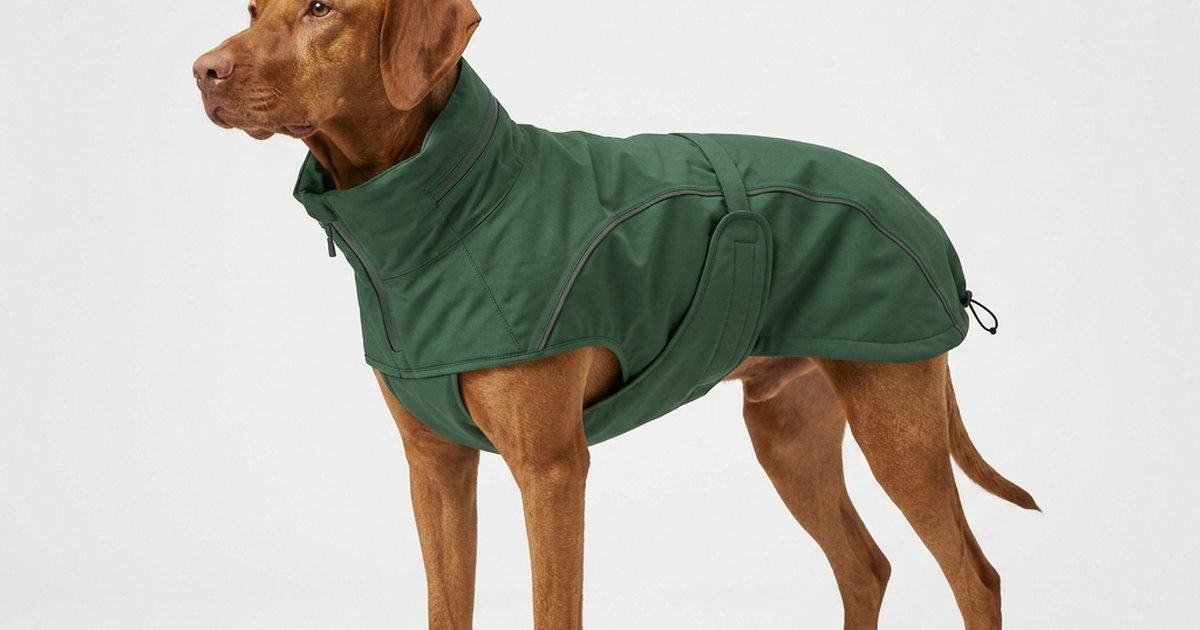
Hardshell gets the marketing, but most dogs spend their active hours in conditions a softshell handles better — cold, dry, windy, high-movement. A dog that runs, jumps, and twists needs a jacket that moves with the body, not a stiff waterproof shell built for standing in rain. The problem for brands is the same one that plagues the whole category: most pet-apparel factories build “softshell” dog coats out of bonded fleece with zero stretch and no wind membrane. A genuine dog softshell jacket manufacturer brings the human-apparel softshell stack — 4-way stretch face, bonded membrane, brushed back — onto a dog-specific size block. This guide covers what makes a real softshell, where it beats hardshell and fleece, and the construction, MOQ, and certification realities for building a premium line.
Executive Summary
- Softshell is the high-mobility, cold-dry layer. It trades full waterproofing for stretch, breathability, and abrasion resistance — exactly the trade-off an active dog needs. The full comparison is in our softshell vs hardshell jacket breakdown; the same logic scales to a dog panel.
- The fake-softshell trap: Most pet-only factories quote bonded fleece and call it softshell. Real softshell has a stretch face and a wind-resistant membrane — bonded fleece has neither.
- 4-way stretch is non-negotiable for dogs. A dog’s range of motion is far wider than a human torso. A non-stretch panel rides, bunches, and restricts the shoulders. Stretch is a fit requirement, not a comfort upgrade.
- MOQ reality: A factory set up for low-MOQ technical production supports 1-piece sampling and bulk runs around 30–50 pieces per SKU/colorway, versus 300–500 on B2B marketplaces.
- Softshell ≠ fleece. If your buyer is choosing between a softshell and a fleece program, the wind/abrasion gap decides it — see softshell vs fleece jacket.
What Makes a Dog Jacket Actually Softshell?
“Softshell” on a marketplace listing usually means a fleece coat with a zipper. A genuine softshell is a bonded laminate, not a single knit:
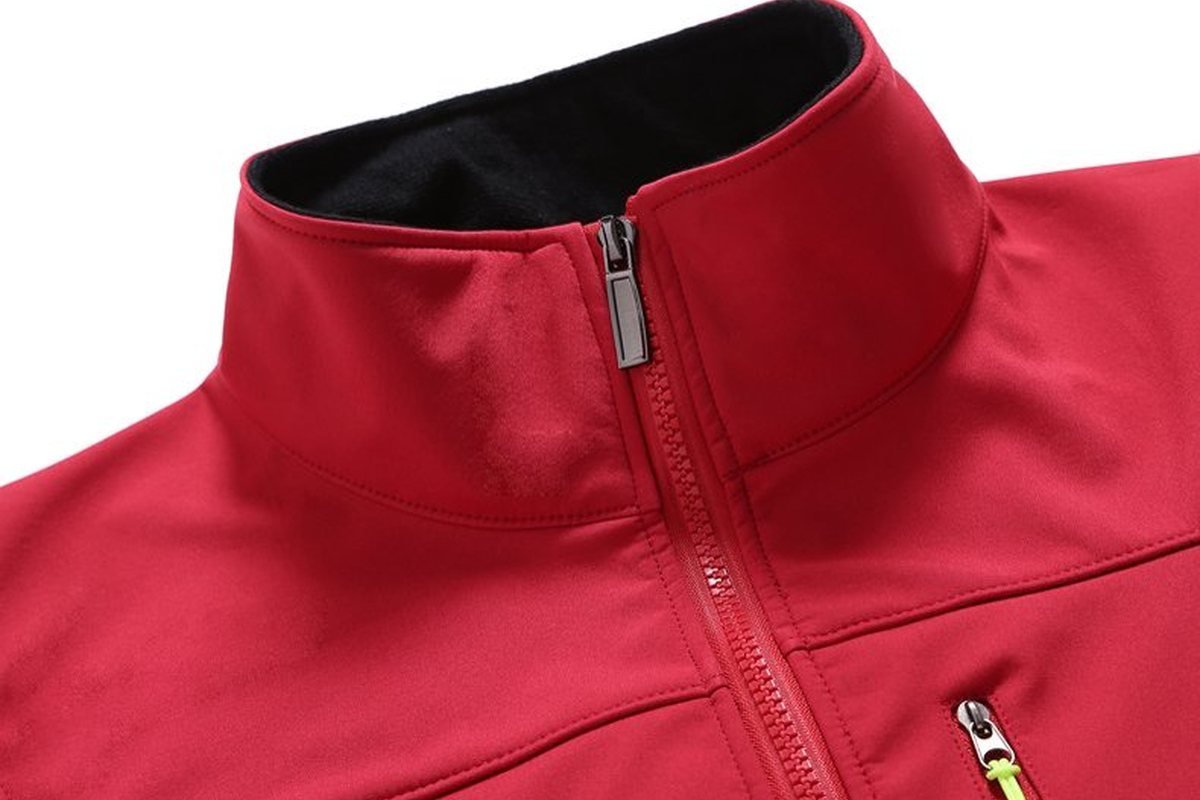
- A stretch face fabric — typically a 4-way-stretch woven or warp-knit nylon/polyester with elastane, giving the panel mechanical stretch in every direction.
- A wind-resistant (often air-permeable) membrane or coating — blocks wind while letting moisture vapor escape, which is why softshell breathes far better than a hardshell.
- A brushed or fleece back — adds warmth and next-to-fur comfort.
A factory that already laminates human softshell can bond the identical stack to a dog panel. A pet-only sweater shop typically cannot — they have no lamination line and substitute bonded fleece. This single capability separates a real dog softshell jacket manufacturer from a reseller.
The equipment gap is the clearest tell:
| Capability | Pet-only fleece shop | Technical outerwear factory |
|---|---|---|
| 4-way-stretch woven face supply | ✗ | ✓ |
| Membrane/coating lamination | ✗ | ✓ |
| Air-permeability / breathability testing | ✗ | ✓ |
| Abrasion (Martindale) testing | ✗ | ✓ |
| Certified material supply chain | ✗ | ✓ |
Verifying the Claim
Ask any candidate factory two questions: “Is your softshell a bonded 4-way-stretch laminate or a single fleece knit?” and “What is the stretch percentage and the abrasion rating of the face fabric?” A technical factory answers in numbers. A pet-only shop describes a fleece.
Where Softshell Beats Hardshell — and Where It Doesn’t
Softshell is not a downgrade from hardshell; it is a different tool. For an active dog in dry cold, softshell wins on every axis that matters:
| Condition / need | Softshell | Hardshell |
|---|---|---|
| Cold + dry + windy | ✓ Best | Overkill, less breathable |
| High-movement (running, agility) | ✓ Stretch follows the body | Stiff, restrictive |
| Sustained rain | Water-resistant only | ✓ Fully waterproof |
| Abrasion (brush, scrambling) | ✓ Tough woven face | Thinner shell face |
| Breathability during exertion | ✓ High | Lower |
The brand decision is about use-case, not quality. If the dog’s primary environment is wet, route the buyer to a waterproof hardshell program. If it’s cold-dry and active, softshell is the right layer. Many premium brands run both as a two-SKU system.
Breathability: Why Softshell Earns Its Place
Softshell’s advantage over a waterproof shell is moisture-vapor transfer. A running dog generates heat and moisture fast; a non-breathable coat traps it and the dog overheats or dampens from the inside. Softshell’s air-permeable construction lets that vapor escape — the same MVTR/RET logic we cover in breathability ratings (MVTR & RET) explained applies directly at dog scale. When briefing a factory, ask for the membrane’s breathability figure, not just “it breathes.”
Where Human-Apparel Factories Get Dog Fit Wrong
Crossing into pet softshell is a fit problem before it is a fabric problem. The most common production failures:
| Issue | Why It Happens | The Fix |
|---|---|---|
| Shoulder bind on stride | Non-stretch or single-direction-stretch panel | True 4-way-stretch face + articulated front-leg openings |
| Coat rotates / rides | Sizing built on chest girth alone | Size block keyed to back length + chest girth + neck girth |
| Bunching at the flex points | Flat human-style pattern | Dog-specific darting at the topline and chest |
| Harness incompatibility | Solid back panel | Reinforced leash port aligned to D-ring placement |
A premium dog softshell program should be built on a dedicated dog size block — never human patterns scaled down. The size run is typically XS–XL keyed to back length (collar-to-tail), chest girth, and neck girth, graded per breed group rather than scaled blindly.
Safety & Visibility
Active dogs in low light need to be seen. A softshell’s woven face takes reflective trim and bonded reflective transfers cleanly — fold in 3M-class reflective detailing where the brand wants night visibility. Our reflective vs 3M Scotchlite safety fabric breakdown covers which reflective system survives wash cycles and abrasion, which matters more on a dog garment than a human one.
MOQ, Lead Times, and Customization
The biggest sourcing barrier for emerging pet brands is minimum order quantity. Marketplace pet suppliers commonly require 300–500 pieces per SKU. A factory configured for low-MOQ technical production can typically support:
- Sampling: 1-piece development samples (7–10 days)
- Bulk MOQ: from 30–50 pieces per SKU / colorway, depending on fabric and construction complexity
- Lead time: roughly 25–35 days for bulk, depending on stretch-fabric availability
- Customization: brand-color stretch face, woven/printed labels, custom hardware, embroidered or heat-transfer logo, retail-ready packaging
This lets a brand validate a premium softshell SKU at low risk before committing to scale.
Certifications and Compliance for Brand Buyers
Pet products are increasingly held to apparel-grade standards by serious retailers. The compliance set that matters for softshell:
- OEKO-TEX / bluesign-class material certification — chemical safety, relevant because dogs lick and chew garments.
- Recycled-content standards (GRS/RCS) — many premium softshell faces are now offered in recycled nylon/polyester for sustainability-marketed lines.
Most pet-only factories cannot supply these because their material supply chain was never built for it. A crossover technical-outerwear factory can — the certified stretch-fabric relationships already exist for the human line.
Recommended Next Step
If you are building a premium dog softshell line, the fastest way to de-risk is a 1-piece development sample against your tech pack — your chosen 4-way-stretch face, membrane, and dog size block — before committing to bulk. Send your design (or a reference garment) and target specs, and request a sample quote with stretch percentage, abrasion rating, and certification options spelled out.
See our premium technical dog jacket for reference, or get a sample quote →.
FAQ
Is a “softshell” dog coat from a marketplace actually softshell?
Usually no. Most are bonded fleece with a zipper — no stretch face and no wind membrane. A real softshell is a 4-way-stretch bonded laminate.
What’s the difference between softshell and hardshell for a dog?
Softshell trades full waterproofing for stretch, breathability, and abrasion resistance — better for cold-dry, high-movement use. Hardshell is for sustained rain. Many brands run both.
What is the minimum order for a custom dog softshell jacket?
A factory set up for technical low-MOQ production can support 1-piece samples and bulk runs starting around 30–50 pieces per SKU, versus 300–500 on most B2B marketplaces.
Can you private label with our logo and colorways?
Yes — brand-color stretch face fabric, woven or printed labels, custom hardware, and embroidered or heat-transfer logos are standard for a private-label softshell program.
Is softshell warm enough for winter?
Softshell with a brushed/fleece back handles cold-dry winter well. For severe cold or wet, pair with an insulated or waterproof SKU rather than relying on softshell alone.
Why does 4-way stretch matter so much on a dog jacket?
A dog’s range of motion is far wider than a human torso. A non-stretch panel binds the shoulders and restricts the stride — stretch is a fit requirement, not a comfort upgrade.