Premium pet brands have moved past the fleece-lined dog sweater. Buyers now want winter dog coats that actually hold body heat on a freezing trail — engineered with the same insulation logic as a human down jacket, not a craft-store quilt. The problem: most pet-apparel suppliers are sweater and fleece shops with no fill-weight control, no baffle construction, and no certified down supply chain. If you are sourcing as a brand, the gap between a real insulated dog coat manufacturer and a generic pet-clothing supplier is the same gap that separates a 600-fill-power down jacket from a thin poly-batting vest. This guide breaks down down-vs-synthetic for dogs, fill power and RDS certification, baffle construction at dog scale, temperature targeting, and the MOQ and sampling realities for building a premium winter line.
Executive Summary
- Warmth is an insulation-engineering problem, not a fabric problem. A genuinely warm dog coat depends on fill type, fill weight, loft, and how the insulation is baffled — the same variables that govern a human hardshell or insulated jacket.
- Down vs synthetic is the first decision. Down gives the best warmth-to-weight ratio; synthetic wins in cold-wet conditions because it retains loft when damp — the same trade-off as human apparel.
- RDS matters for retail. Western retailers increasingly require Responsible Down Standard (RDS) certification — most pet-only factories cannot supply certified down.
- Construction controls warmth, not just material. Baffles, quilting pitch, and cold-spot management at dog scale separate a warm coat from a cold one with the same fill weight.
- Low-risk validation. A factory set up for technical low-MOQ production can support 1-piece sampling and bulk MOQs from 30–50 pieces per SKU, depending on complexity — versus 300–500 on most marketplaces.
Down vs Synthetic Insulation for Dogs
The down-vs-synthetic decision for a dog coat mirrors human apparel almost exactly, because the physics are identical. The choice should be driven by the climate and use case your brand targets, not by cost alone.
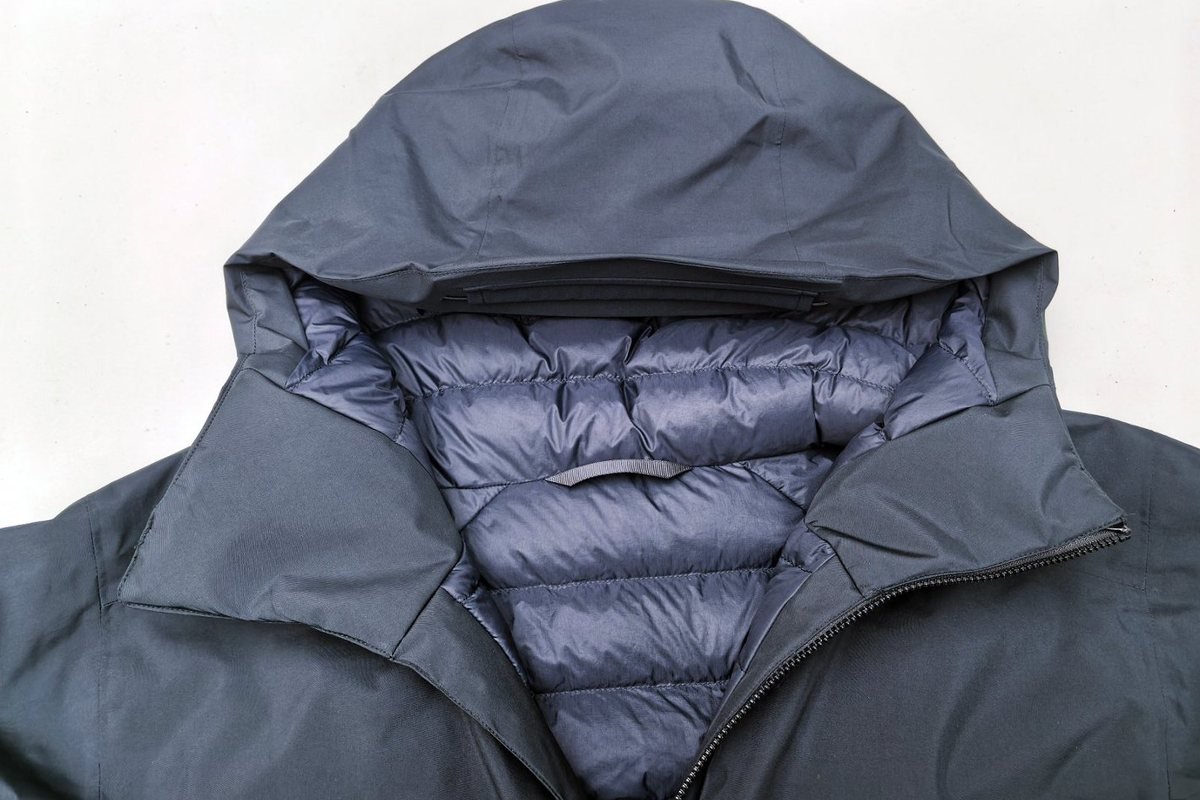
| Factor | Down Insulation | Synthetic Insulation |
|---|---|---|
| Warmth-to-weight | Best in class — maximum loft per gram | Heavier for the same warmth |
| Cold-wet performance | Loses loft when wet, slow to dry | Retains loft when damp — better for rain/snow |
| Compressibility | Packs very small | Bulkier |
| Care / washability | Needs careful washing | Machine-washable, durable |
| Cost | Higher (certified down) | Lower, more consistent |
| Best for dogs | Dry-cold climates, lightweight premium coats | Wet-cold climates, active/muddy dogs, chewers |
For most active dogs — who get wet, roll in snow, and are washed often — synthetic insulation is the safer default, and we cover the full reasoning in our breakdown of synthetic insulation vs down in cold-wet conditions. Down belongs on a lightweight, premium, dry-climate SKU. A technical factory that already sources both fills for human jackets can offer either path without retooling.
A Note on Synthetic Fill Class
“Synthetic” covers a wide quality range. Premium programs specify a high-loft, durable continuous-filament or short-staple fill (PrimaLoft-class) rather than cheap polyester batting. The difference shows up after a few wash cycles: cheap batting clumps and loses loft, while a high-grade fill holds its warmth rating. Confirm the fill class and weight (gsm), not just “synthetic,” in your tech pack.
Fill Power, Fill Weight, and RDS Certification
Two numbers define a down coat’s warmth, and brands routinely confuse them:
- Fill power measures down quality — the loft (cubic inches) one ounce of down produces. 550–650 is solid mid-premium; 700+ is high-end.
- Fill weight measures quantity — how many grams of down are actually packed into the coat. A high-fill-power coat with too little fill weight is still cold.
A warm coat needs both adequate fill power and sufficient fill weight for the temperature target. Ask any candidate factory to specify both for each SKU.
For down specifically, RDS (Responsible Down Standard) is increasingly non-negotiable for Western retail. It certifies the down was not sourced via live-plucking or force-feeding. A crossover technical-outerwear factory that already runs RDS-certified down for human jackets can carry that compliance straight into a pet line — a pet-only sweater shop almost never can, because the certified supply chain was never built.
Baffle and Quilting Construction at Dog Scale
Insulation only stays warm if it stays in place. This is a construction problem, and it is where pet-only factories most often fail even when the fill is good.
- Sewn-through quilting — stitches the outer and lining together in a grid. Simpler and cheaper, but each stitch line is a cold spot where there is no loft. Fine for mid-warmth coats.
- Boxed / baffled construction — internal walls create chambers that let the fill loft fully with no cold-spot stitch lines. Warmer, more expensive, used on premium SKUs.
At dog scale the quilting pitch (spacing between stitch lines) must be tuned so insulation does not shift to the belly or bunch at the legs. A coat with too-wide quilting will develop cold patches over the spine — exactly where the dog needs warmth most. A factory experienced in human insulated construction already understands cold-spot management; the skill transfers directly to a dog panel.
Don’t Forget the Shell
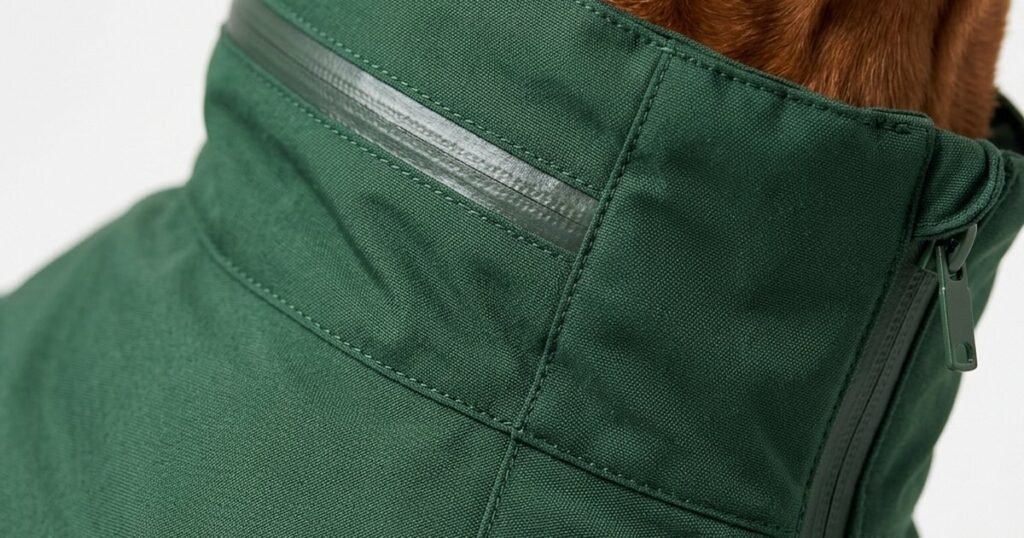
Insulation is only half the system. A winter coat that wets out loses warmth fast, so the face fabric should carry a durable water-repellent finish — and for serious wet-cold use, a PFC-free DWR is now the retail expectation. If your line needs genuine rain protection over the insulation, that crosses into shell construction and seam sealing — see our companion waterproof dog jacket sourcing guide for the full waterproofing side.
Temperature Targeting and Layering
A premium line should not sell “a warm coat” — it should sell coats matched to temperature bands, the way human outdoor brands do. A practical structure:
- Light insulated (active / shoulder-season): thin synthetic fill, prioritizes mobility and breathability for high-output dogs.
- Mid insulated (everyday winter): moderate fill weight, the volume SKU for most cold-climate markets.
- Heavy insulated (extreme cold / low-activity): high fill weight or high-fill-power down, often with extended belly coverage and a wind-resistant shell.
Layering also matters: a lightweight insulated coat that fits under a waterproof shell lets a brand sell a two-piece system. Briefing a factory on the temperature band and activity level per SKU produces far better fill specs than a vague “make it warm.”
MOQ, Sampling, and Customization
The biggest barrier for emerging pet brands is minimum order quantity. Marketplace pet suppliers commonly require 300–500 pieces per SKU. A factory configured for low-MOQ technical production can typically support:
- Sampling: 1-piece development samples against your tech pack (roughly 7–10 days).
- Bulk MOQ: from 30–50 pieces per SKU / colorway, depending on fill type and construction complexity — framed as low-risk validation before scaling.
- Customization: brand-color shell fabric, fill type and weight per SKU, woven/printed labels, custom hardware, leash-port placement, embroidered or heat-transfer logos, retail-ready packaging.
This lets a brand validate a premium winter SKU at low risk before committing to volume.
Recommended Next Step
If you are building an insulated dog coat line, the fastest way to de-risk is a 1-piece development sample against your tech pack — your chosen fill type and weight, baffle construction, and size block — before committing to bulk. Send your design (or a reference garment) with the target temperature band, and request a sample quote with fill specs and certification options spelled out.
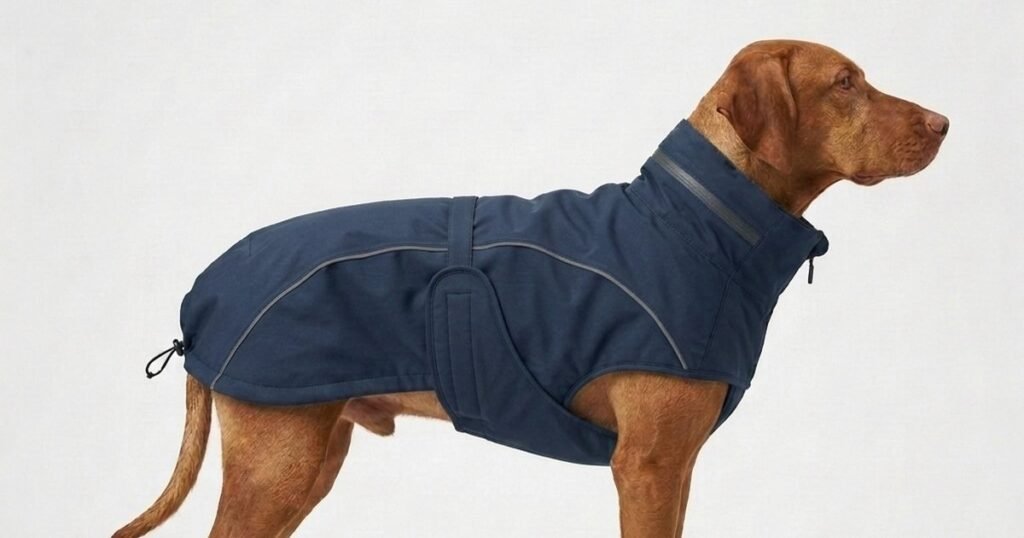
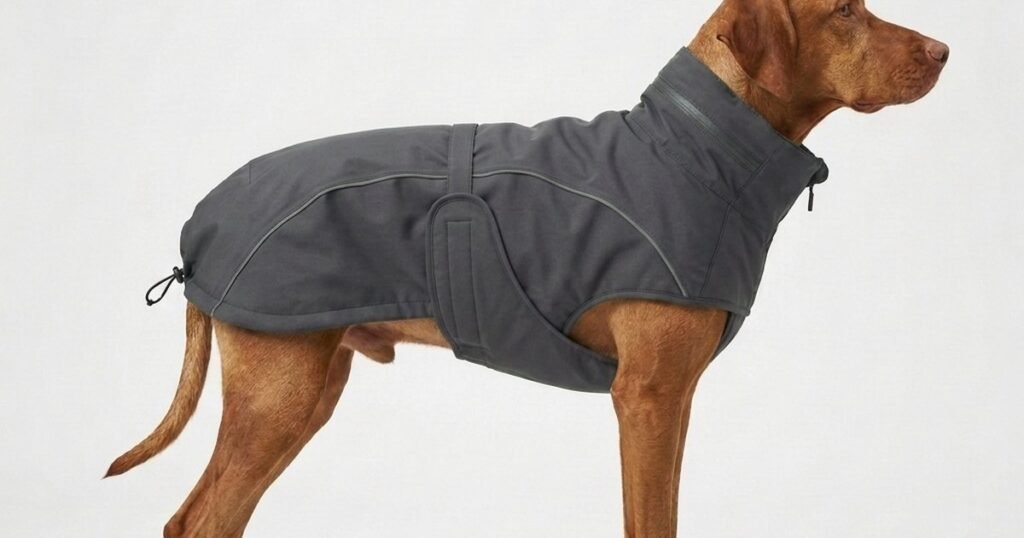
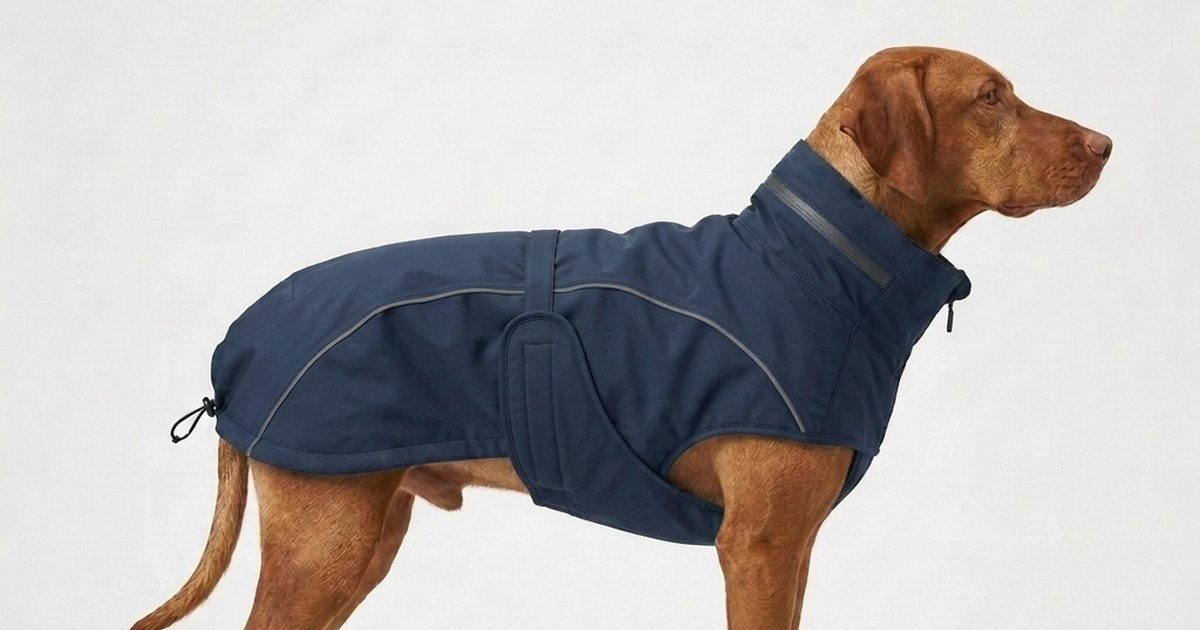
See our premium technical dog jacket for reference, or get a sample quote →.
FAQ
Down or synthetic for a winter dog coat?
It depends on climate. Down gives the best warmth-to-weight for dry-cold use, but loses loft when wet. Synthetic retains warmth when damp and machine-washes well, so it is the safer default for active or wet-climate dogs. A technical factory can supply either.
What is the minimum order for a custom insulated dog coat?
A factory set up for technical low-MOQ production can support 1-piece samples and bulk runs from around 30–50 pieces per SKU (depending on complexity), versus 300–500 on most B2B marketplaces — letting a brand validate a premium SKU before scaling.
Can you supply RDS-certified down?
For brands requiring it, RDS-certified down is sourced the same way it is for human jackets — through certified supply relationships. Confirm the certification path with the factory at the sampling stage rather than assuming any pet supplier can provide it.
What controls how warm the coat actually is?
Three things together: fill type (down vs synthetic), fill weight (grams of insulation), and construction (baffles vs sewn-through, and quilting pitch). A high-quality fill in a poorly baffled coat still develops cold spots.
Can you private label with our brand colors and logo?
Yes — brand-color shell fabric, fill type and weight per SKU, woven or printed labels, custom hardware, and embroidered or heat-transfer logos are standard customization for a private-label insulated dog coat program.