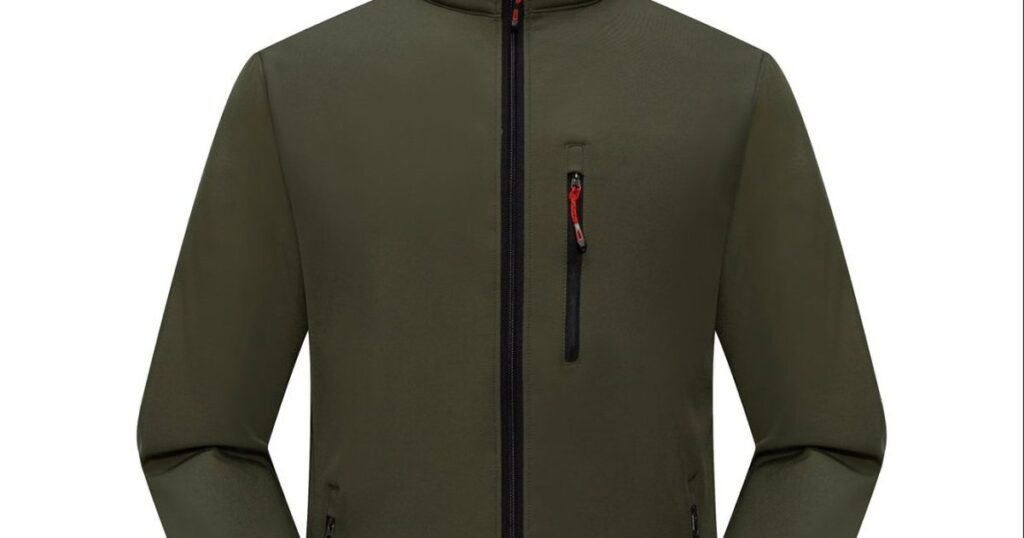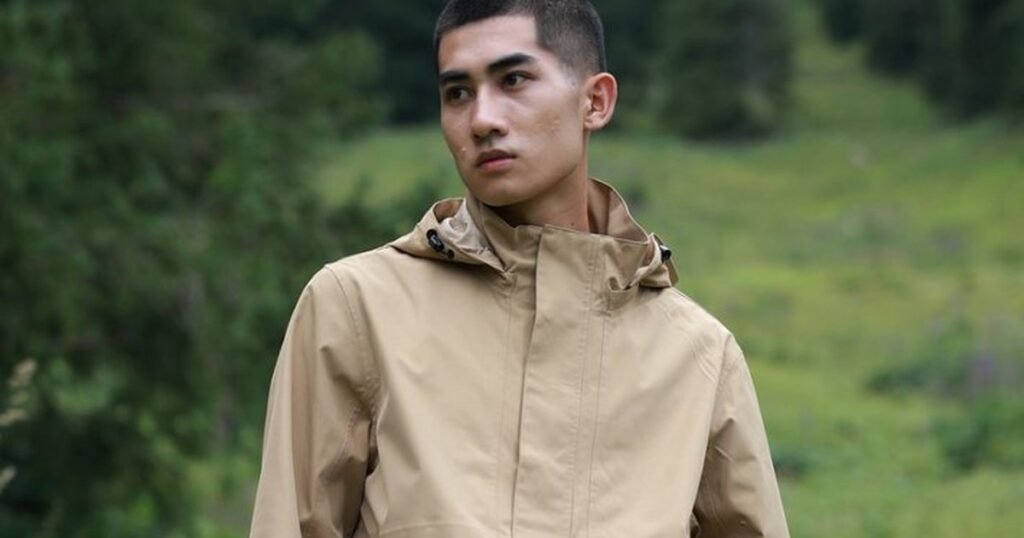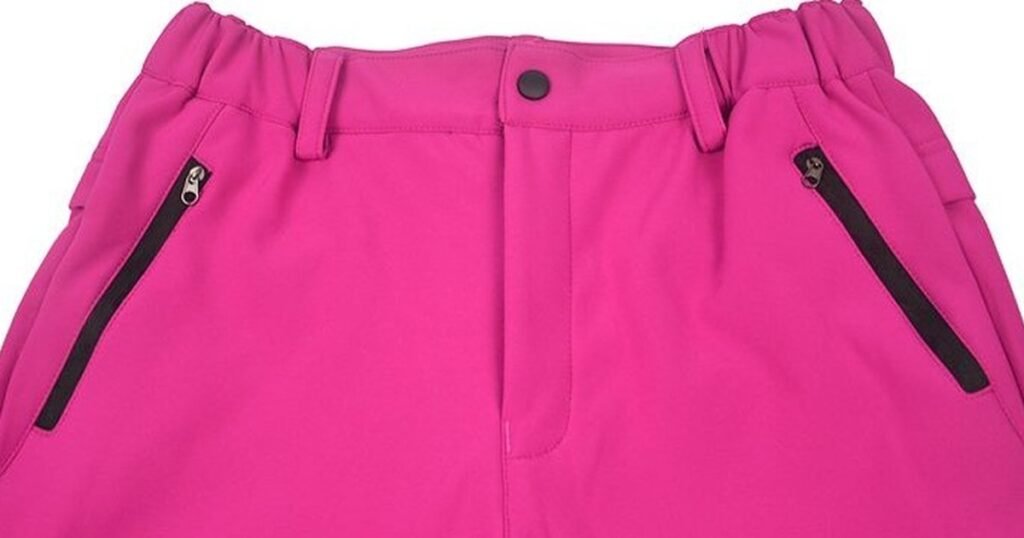
Small brands can source custom ski jackets from specialized OEM manufacturers in China, Vietnam, and Pakistan, with facilities offering 1-piece sampling and bulk minimums as low as 30 pieces per SKU. PTOUTWEAR’s Taizhou Sanmen facility produces waterproof-breathable ski shells with PFC-free DWR, fully taped seams, and YKK zippers at sample MOQ 1 piece and production MOQ 30 pieces per colorway, refunding the $100 sample fee against first orders.
📋 Table of Contents
Executive Summary
- Low-MOQ access: Specialized OEM manufacturers in China offer 1-piece sample development and 30-piece bulk minimums, enabling small brands to validate designs without tying up capital in 500-unit orders.
- Waterproof performance: Ski shells require 10,000+ mm hydrostatic head ratings, fully taped seams, and durable water-repellent finishes that survive multiple wash cycles.
- Lead time planning: Sample development takes 7-10 days, bulk production 25-35 days, and ocean freight to the US adds 18-25 days, so small brands should budget 60-70 days from sample approval to warehouse receipt.
- Cost structure: Sample fees range $80-$150 per piece, bulk FOB pricing $28-$65 depending on fabric grade and insulation, with most factories refunding sample costs against first production orders.
- Compliance necessity: Buyers increasingly require OEKO-TEX Standard 100 or similar restricted-substance proof before placing orders, especially for brands selling into EU or California markets.
Which Factories Accept Low-MOQ Ski Jacket Orders?
Small outdoor brands face a common roadblock: most large-scale ski jacket manufacturers set minimums at 500-1,000 pieces per style, locking up $15,000-$30,000 before market validation. Factories serving startups and small teams typically fall into three tiers based on their minimum order quantities and technical capabilities.
Sample-Only Development Houses
These facilities specialize in 1-5 piece prototyping for design validation. They charge $120-$200 per sample jacket, offer 7-14 day turnaround, and provide full customization of fabrics, trims, and construction methods. Sample houses rarely handle bulk production, so brands must transition to a different factory after design approval. This two-step approach works for founders who need investor-ready prototypes before committing to inventory.
Low-MOQ OEM Manufacturers
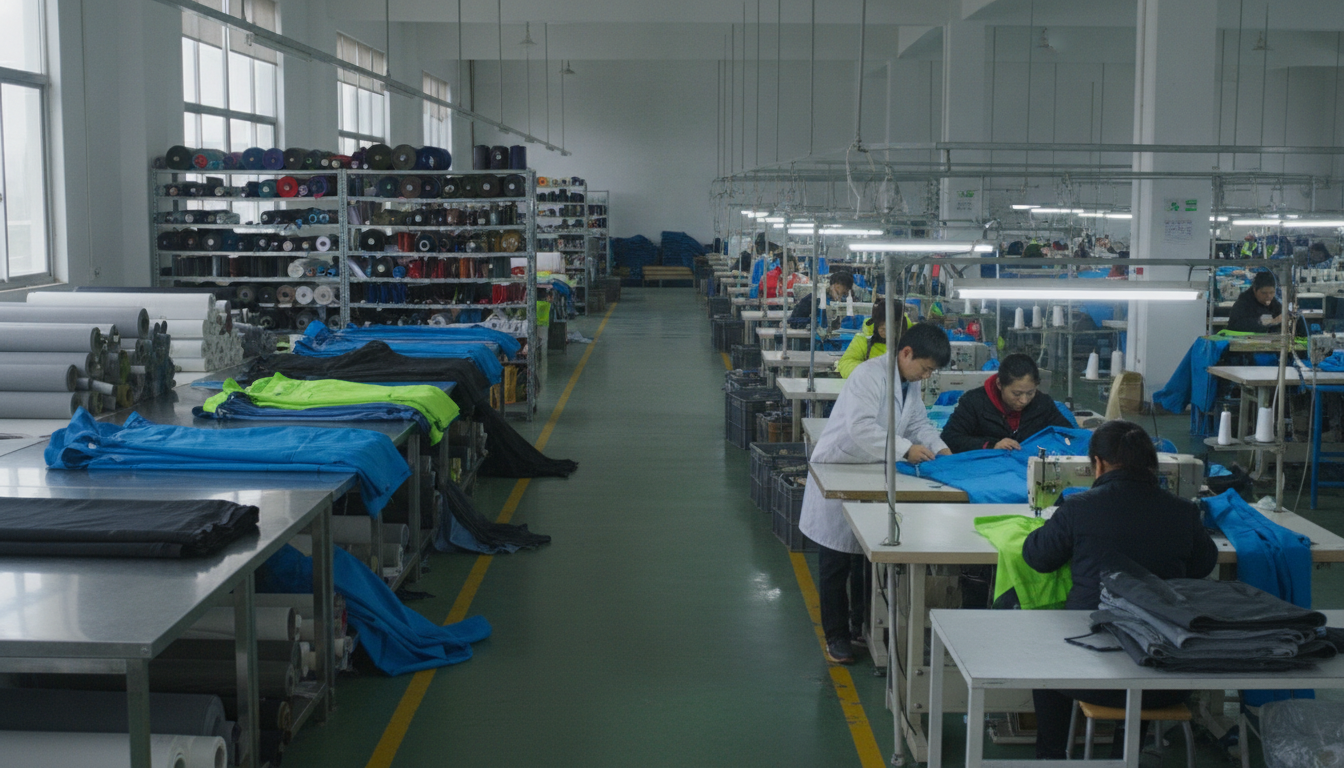
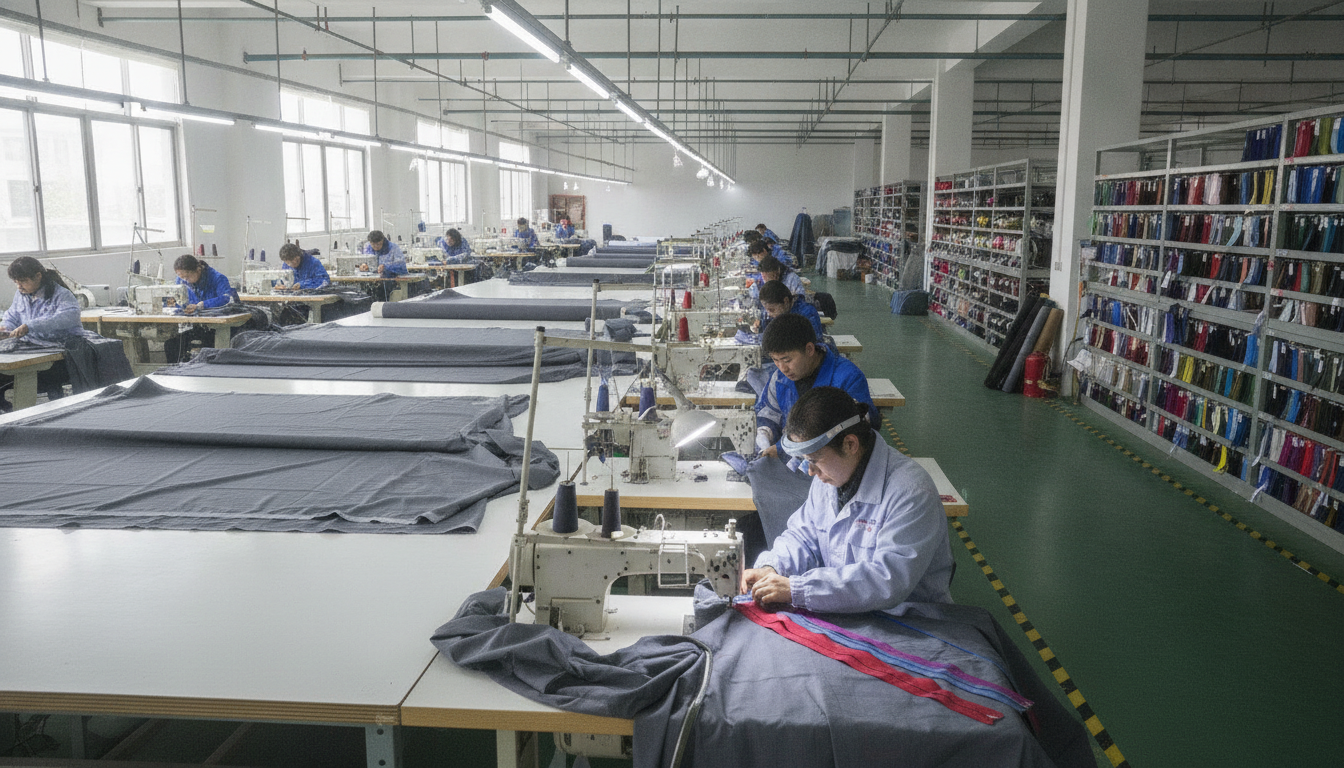
Vertically integrated factories like OEM jacket manufacturing facilities in Taizhou and Dongguan accept 30-100 piece minimums per SKU. Our 3,000m² Sanmen facility runs 20 production lines with in-house cut-and-sew, enabling 1-piece sample MOQ and 30-piece bulk minimums. These manufacturers maintain fabric stock for common technical textiles (2.5-layer laminate, 80g synthetic insulation, ripstop nylon) and can source specialized materials like Gore-Tex or Primaloft within 10-15 days.
Full-Service Private Label Suppliers
Larger OEM/ODM operations offer pre-designed ski jacket templates with customizable colorways, logos, and minor trim changes. Minimums typically start at 200-300 pieces across 2-3 colorways. Brands sacrifice some design control but gain faster sampling (3-5 days) and lower per-unit costs ($22-$38 FOB). This model suits corporate uniform buyers or team programs where unique styling matters less than reliable delivery and consistent sizing.
What Specs Should Small Brands Prioritize in Custom Ski Jackets?
Buyers frequently discover that waterproof claims fail in real use, especially when seams leak or DWR coatings stop beading after a few washes. Small brands building credibility cannot afford warranty returns or negative reviews from performance failures. Four specifications separate resort-ready ski jackets from underperforming shells.
Waterproof-Breathable Membrane Construction
Ski jackets require 10,000+ mm hydrostatic head ratings to withstand wet snow and prolonged exposure. Two-layer laminates bond the membrane directly to the face fabric, reducing cost but adding stiffness. Three-layer constructions sandwich the membrane between face and lining, improving durability and drape. Brands targeting backcountry or all-day resort use should specify 2.5-layer or 3-layer builds with MVTR (moisture vapor transmission rate) above 10,000 g/m²/24hr to prevent interior condensation during high-output activity.
Seam Sealing and DWR Treatment
Fully taped seams prevent water ingress at stitch holes, the most common leak point in technical outerwear. Factories apply 20mm polyurethane or heat-activated tape along every seam, adding $2.50-$4.00 per jacket to production cost. PFC-free durable water repellent finishes meet PFAS restrictions in California, EU, and Canada while maintaining bead-up performance through 20-30 wash cycles when properly maintained. Buyers should request lab reports showing DWR spray rating (ISO 4920) above grade 4 after five washes.
Insulation Type and Weight
Ski jackets use synthetic insulation (60-100g) for wet-weather performance or down (550-700 fill power) for maximum warmth-to-weight ratio. Synthetic fills like Primaloft or Climashield retain insulating value when damp and dry faster than down, critical for multi-day resort trips. Down provides superior warmth in dry cold but collapses when wet. Small brands should match insulation weight to their target customer’s activity level: 60-80g for aerobic backcountry use, 100-120g for lift-served resort skiing.
Hardware and Trim Durability
Zippers, cuffs, and hood adjustments breaking early rank among the top complaints in technical jacket reviews. YKK Vislon or Aquaguard zippers add $1.80-$3.20 per jacket but survive 3,000+ cycles versus 800-1,200 for generic coil zippers. Reinforced cuff construction with hook-and-loop or elastic binding prevents fabric tearing at high-stress points. Cord-lock adjusters on hoods and hems should use metal or glass-filled nylon, not injection-molded plastic that cracks in sub-zero temperatures.
How Do China, Vietnam, and Pakistan Compare for Custom Ski Jacket Production?
Small brands evaluating manufacturing regions weigh cost, lead time, and technical capability differently than large outdoor companies placing 10,000-unit orders. Three countries dominate the low-MOQ technical outerwear market, each with distinct trade-offs.
China: Vertical Integration and Technical Fabric Access
Factories in Guangdong, Zhejiang, and Fujian provinces maintain the deepest technical textile supply chains globally. A low-MOQ jacket manufacturer in Taizhou can source 2.5-layer laminate, YKK zippers, and branded insulation within 48 hours from local suppliers, reducing sampling time to 7-10 days. China-based production costs $28-$52 FOB for mid-spec ski shells (10,000mm waterproof, 80g insulation, fully taped seams). Ocean freight to Los Angeles adds 18-22 days and $4.20-$6.80 per unit for small-batch LCL shipments.
Vietnam: Cost Reduction with Longer Sampling
Vietnamese factories offer 8-15% lower FOB pricing than China on comparable specs, driven by lower labor costs and favorable trade agreements with the US and EU. However, most technical textiles and hardware still import from China or Taiwan, extending sample development to 12-18 days. Vietnam excels at high-volume cut-and-sew but fewer factories accept sub-100-piece minimums. Brands prioritizing cost over speed find value here, especially when ordering 200+ units per style.
Pakistan: Budget Tier with Limited Fabric Selection
Pakistani manufacturers compete on price ($22-$38 FOB for basic ski shells) but rely heavily on polyester taffeta and basic PU coatings rather than advanced laminates. Sampling takes 15-20 days due to fabric import lead times. Factories accepting 50-100 piece minimums serve price-sensitive buyers like school ski programs or corporate team orders where performance demands are moderate. Brands requiring Gore-Tex, Primaloft, or other branded materials face longer lead times and reduced cost advantage.
According to Grand View Research (2025), the global ski apparel market was valued at about $1.86 billion in 2024 and is projected to reach roughly $2.61 billion by 2030, reflecting growing demand for technical performance and customization options.
What Does Sampling Cost and How Long Does It Take?
Small brands and team buyers struggle to find factories willing to do low-MOQ custom work without pushing them into very limited fabric and trim choices. Sample costs and timelines vary based on customization depth and factory business model.
Basic Sampling (Template Modification)
Factories offering private label ski jackets from existing patterns charge $80-$120 per sample with 3-5 day turnaround. Buyers select from 8-12 pre-approved fabrics, change colorways, and add embroidered or screen-printed logos. This approach works for corporate buyers or teams needing quick delivery and predictable results. Sample fees typically refund against orders of 100+ pieces.
Full Custom Development
Brands designing proprietary ski jackets from scratch pay $150-$250 per sample and wait 10-14 days for first prototypes. Factories source client-specified fabrics (Gore-Tex, eVent, proprietary laminates), develop custom patterns, and produce tech packs with construction details. PTOUTWEAR charges a $100 sample fee for custom ski jackets, refundable against bulk orders of 30+ pieces per SKU, and delivers samples in 7-10 days using in-house pattern making and cut-and-sew lines.
Revision Cycles
Most brands require 1-2 sample revisions to finalize fit, pocket placement, or trim details. Each revision adds 5-7 days and $60-$100 in additional sampling costs. Buyers can reduce revision cycles by providing detailed tech packs with measurements, construction notes, and reference images before first sampling. Factories with experienced pattern makers often suggest fit improvements during initial review, catching issues before physical samples ship.
How to Verify Waterproof Claims Before Ordering
Buyers complain that waterproof claims do not match real-world use, especially when seams leak or DWR stops beading after a few outings. Small brands cannot afford the reputational damage from performance failures. Three verification steps separate credible manufacturers from those making unsubstantiated claims.
Request Lab Test Reports
Reputable factories provide third-party test reports from SGS, Intertek, or Bureau Veritas showing hydrostatic head, MVTR, and seam-seal integrity results. Reports should reference specific test methods (ISO 811 for waterproofness, ISO 11092 for breathability) and show results for the exact fabric and construction used in your order. Factories claiming 20,000mm waterproof ratings without documentation often substitute lower-grade materials during production.
Inspect Physical Samples Under Wet Conditions
Spray-test samples with a garden hose or shower for 2-3 minutes, focusing on seams, zipper tape, and pocket flaps. Water should bead on the surface without soaking through. Check interior lining for moisture penetration, especially along shoulder seams and underarm gussets where movement stress concentrates. Samples that leak during hand testing will fail catastrophically on the mountain.
Verify Certification Status
Many technical outerwear buyers now require proof of restricted-substance compliance and certified material claims before placing orders. OEKO-TEX Standard 100 certification screens textiles against harmful substances and requires annual factory audits. Factories holding ISO 9001 quality management certification demonstrate consistent process control. Sample development facilities should provide current certification documents upon request, not outdated PDFs or certificates for unrelated product categories.
- Hydrostatic head testing: measures waterproof performance by applying increasing water pressure until fabric leaks, reported in millimeters (10,000mm, 20,000mm)
- MVTR testing: quantifies breathability by measuring moisture vapor transmission rate in grams per square meter per 24 hours (g/m²/24hr)
- Seam-seal integrity: verified through tape-peel testing and visual inspection under 10x magnification for gaps or incomplete coverage
- DWR durability: assessed using spray rating tests (ISO 4920) after multiple wash cycles, with grade 4 or higher indicating effective water repellency
- Abrasion resistance: measured via Martindale testing for face fabrics, with 20,000+ cycles required for ski jacket durability
Key Takeaways
- Specialized OEM manufacturers in China, Vietnam, and Pakistan accept 30-100 piece minimums for custom ski jackets, with China-based facilities offering the fastest sampling and deepest technical fabric access.
- Ski jackets require 10,000+ mm waterproof ratings, fully taped seams, and PFC-free DWR finishes to meet performance expectations and regulatory requirements in California, EU, and Canadian markets.
- Sample development costs $80-$250 per piece depending on customization depth, with most factories refunding fees against bulk orders of 30-100+ units.
- Small brands should verify waterproof claims through third-party lab reports referencing ISO 811 and ISO 11092 test methods, physical spray testing of samples, and current OEKO-TEX or ISO 9001 certification documents.
- Lead time planning must account for 7-14 day sampling, 25-35 day production, and 18-25 day ocean freight, totaling 60-70 days from sample approval to US warehouse receipt for small-batch orders.
- YKK Vislon or Aquaguard zippers, reinforced cuff construction, and metal cord-lock adjusters prevent the hardware failures and durability complaints common in budget ski jackets.
Can a small brand order Gore-Tex ski jackets at low minimums?
Gore-Tex requires brand authorization and typically enforces 500-1,000 piece minimums through its licensed mill network. Small brands seeking waterproof-breathable performance at 30-100 piece minimums should specify non-branded 2.5-layer or 3-layer laminates with equivalent 10,000+ mm ratings and 10,000+ g/m²/24hr MVTR from mills like Hipora, Toray, or generic PU-laminate suppliers. These alternatives deliver comparable on-mountain performance at $8-$15 lower FOB cost per jacket.
How do small brands handle duty and import costs on ski jacket orders?
Ski jackets from China enter the US under HTS code 6201.93 (men’s synthetic shell jackets) or 6202.93 (women’s), carrying 27.7% duty on FOB value plus 0.21% merchandise processing fee. A 100-piece order at $42 FOB per jacket incurs roughly $1,165 in duty plus $88 MPF, adding $12.53 per unit to landed cost before freight and customs brokerage. Brands can reduce duty exposure by importing samples under personal exemption ($800 duty-free) or using de minimis shipments ($800 per shipment) for initial test orders, though this approach does not scale beyond 15-20 units.
What customization options are available at 30-piece minimums?
Factories accepting 30-piece minimums typically offer full colorway selection from stock fabrics, custom logo service via embroidery or screen printing, zipper pull and cord-lock color matching, and interior label customization. Pattern modifications (pocket placement, hood design, hem length) require 50-100 piece minimums at most facilities due to pattern-making setup costs. Brands needing proprietary fabric prints or jacquard weaves face 500-1,000 piece fabric minimums from mills, though digital printing on technical textiles now enables custom prints at 50-100 meter runs for an additional $4-$7 per meter.
Ready to develop custom ski jackets without tying up capital in 500-unit minimums?
Request 1-piece samples and bulk pricing →
Written by Ivan Chen, Sales Engineer at PTOUTWEAR – 13 years in outdoor apparel manufacturing.