A varsity jacket supplier is a factory or trading company that manufactures or sources varsity jackets for brands, schools, teams, and retailers. The critical distinction: a genuine factory controls cut-and-sew, QC, and material sourcing, while a reseller simply brokers orders. To verify a supplier, request factory photos with your inquiry reference visible, ask for a video tour showing production lines in operation, and confirm certifications apply to the specific facility producing your order-not just a parent company.
📋 Table of Contents
Executive Summary
- Factory vs. Reseller: A factory owns production equipment and employs sewing operators; a reseller outsources to third parties and adds margin without production control.
- Verification Priority: Request time-stamped factory photos, live video tours, and facility audit reports to confirm the supplier operates the production line.
- Material Transparency: Wool body fabric, leather or PU sleeves, rib-knit trim, and snap hardware should be specified by weight, origin, and supplier in the tech pack.
- MOQ and Sampling: Production minimums for varsity jackets range from 30 to 100 pieces per SKU across suppliers; sample lead times typically span 7 to 14 days.
- Compliance Documentation: Certifications such as OEKO-TEX Standard 100 and BSCI must be issued to the specific factory address on your purchase order, not a corporate headquarters.
What Defines a Factory vs. a Reseller?
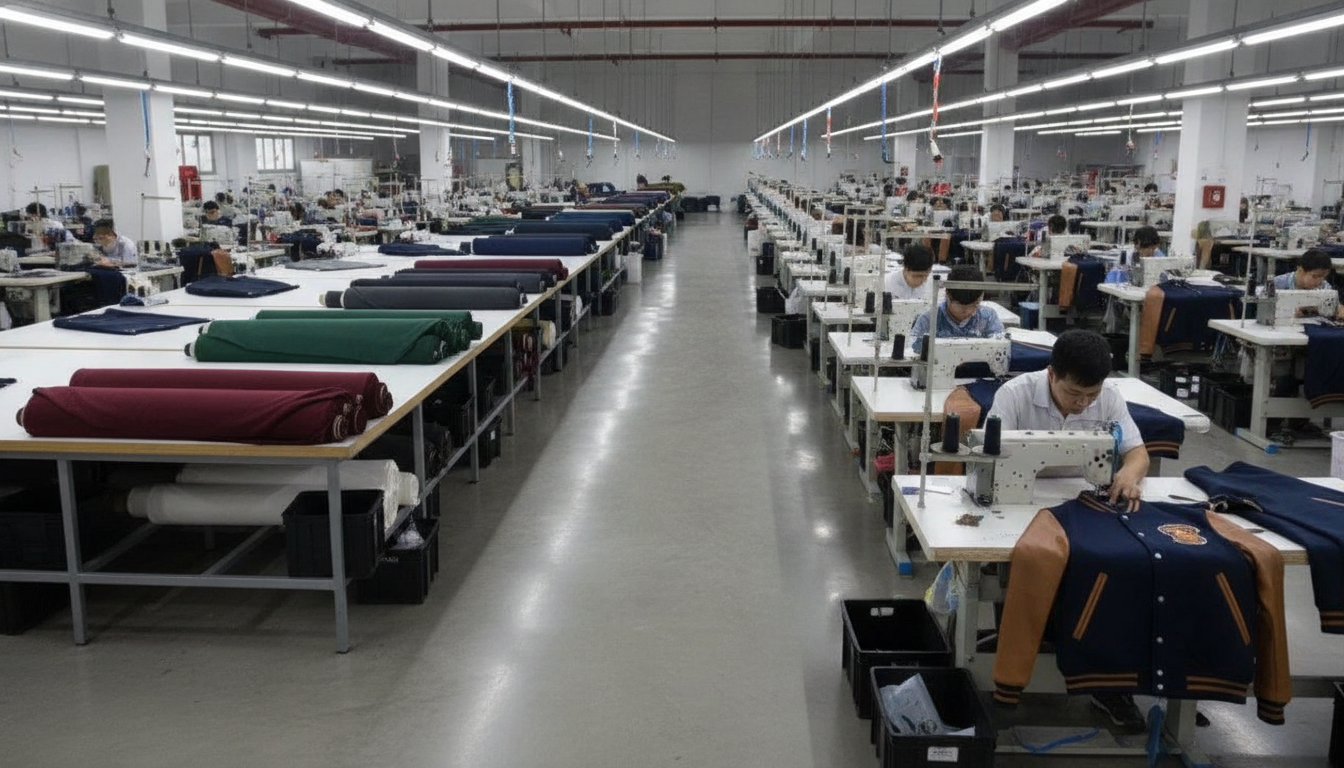
Buyers frequently struggle to distinguish a genuine production facility from a trading intermediary. A factory holds title to cutting tables, sewing machines, pressing equipment, and employs operators who execute cut-and-sew operations. A reseller, by contrast, sources finished or semi-finished goods from third-party workshops and re-brands them under a single sales front.
Production Equipment Ownership
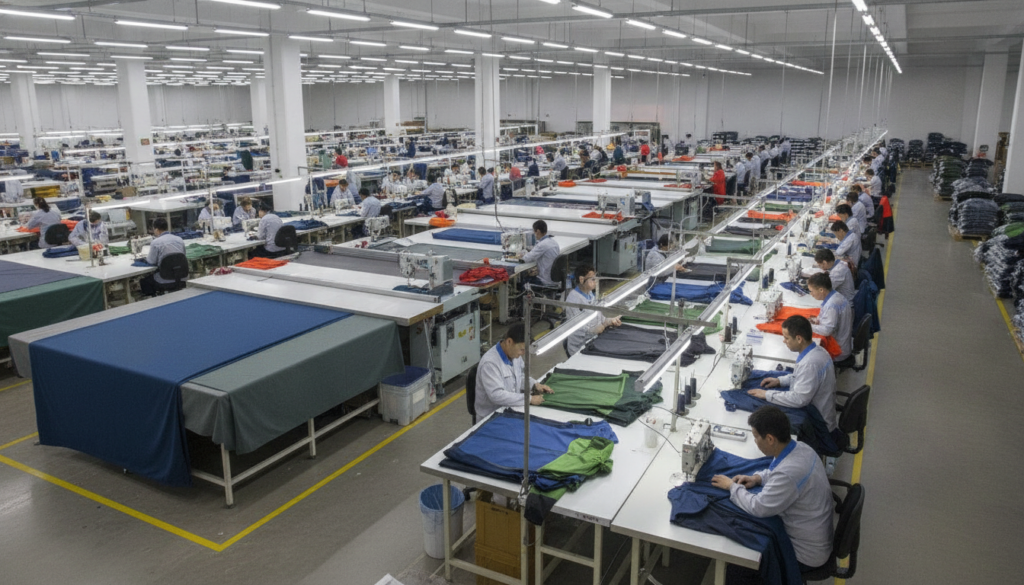
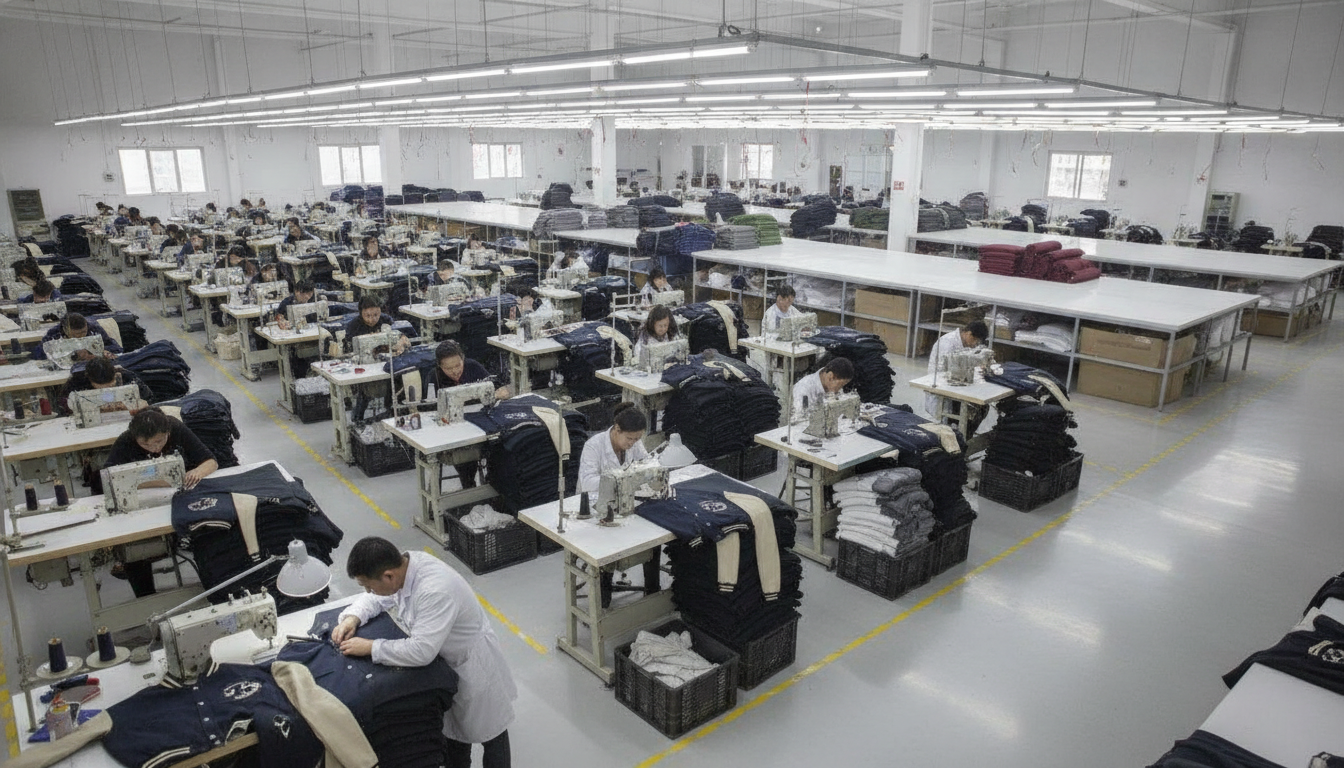
A factory maintains capital equipment on its balance sheet. Walk through any legitimate facility and you will see rows of industrial sewing machines, cutting tables, and finishing stations. Resellers operate from trade offices with sample rooms but no production floor. When you request a factory tour, a reseller will either decline or arrange a visit to a subcontractor’s site they do not control.
Direct Labor Force
Factories employ sewing operators, cutters, quality inspectors, and pattern makers on payroll. Resellers employ sales staff and coordinators who liaise with external workshops. Ask for the supplier’s worker headcount and production-line configuration. A 3,000 m² facility with 240 workers and 20 production lines, for example, signals vertically integrated manufacturing. A two-person office with no operators signals a trading model.
Quality Control Authority
Factories control QC checkpoints at fabric inspection, cutting, in-line sewing, and final packing. Resellers rely on subcontractors to self-report defects. When a defect surfaces in your shipment, a factory can pull the operator’s work history and retrain immediately. A reseller must negotiate remediation with a third party, adding time and friction.
Key Verification Steps Before Placing an Order
Verification begins before you sign a purchase order. The steps below separate legitimate manufacturers from intermediaries who lack production control.
Request Time-Stamped Factory Photos
Ask the varsity jacket supplier to send photos of their production floor with a handwritten note displaying your company name and the current date visible in the frame. A factory can produce these images within hours. A reseller will stall, offer generic stock photos, or provide images that lack your reference. This single request eliminates most trading companies.
Conduct a Live Video Tour
Schedule a video call and ask the supplier to walk through the cutting room, sewing floor, and QC area while the call is live. Genuine factories accommodate this request during working hours. Resellers will cite privacy policies, claim the factory prohibits filming, or offer pre-recorded footage that cannot be verified as current.
Verify Business Registration and Facility Address
Cross-check the supplier’s business license, facility address, and contact details against public company registries. In China, the National Enterprise Credit Information Publicity System publishes registration data for manufacturers. Confirm the registered address matches the factory location the supplier claims to operate. A mismatch indicates the supplier is a trading entity, not the production facility.
Request Third-Party Audit Reports
Ask for recent BSCI, SMETA, or ISO 9001 audit reports issued to the factory address. Audit reports list the facility’s physical location, production capacity, and worker count. If the supplier provides a certificate issued to a different address or a parent company, they likely do not control the factory producing your order.
Materials and Construction Quality Markers
Varsity jacket quality hinges on fabric selection, component sourcing, and construction techniques. Buyers who specify these elements in a detailed tech pack receive consistent output. Buyers who accept generic descriptions encounter variable quality across production runs.
Wool Body Fabric
Traditional varsity jackets use a wool-blend melton fabric for the body, typically 80% wool and 20% nylon or polyester, weighing 450 to 550 grams per square meter. The wool content provides warmth and structure; the synthetic fiber adds durability and reduces pilling. Request a lab test report for fiber content and fabric weight. Suppliers who substitute lower-wool blends without disclosure compromise the jacket’s hand feel and longevity.
Leather and PU Sleeves
Sleeves are constructed from genuine leather or polyurethane (PU) coated fabric. Genuine leather, typically cowhide or sheepskin, costs more but ages better and resists tearing. PU sleeves cost less, offer consistent color matching, and suit vegan product lines. Specify leather thickness in millimeters (1.0 to 1.2 mm is standard) or PU coating weight. A supplier who cannot provide material certifications or tannery origin raises a quality-control red flag.
Rib-Knit Trim
Collar, cuffs, and waistband use rib-knit trim, usually a cotton-acrylic blend with 5 to 10% spandex for elasticity. The rib gauge (typically 2×2 or 1×1) affects stretch and recovery. High-quality rib trim maintains tension after repeated washing and does not sag. Request a swatch with your sample order and test it for colorfastness and stretch recovery.
Snap Hardware and Lining
Metal snaps should be nickel-free to avoid skin irritation and comply with REACH regulations in Europe. Lining fabric, often polyester satin or quilted polyester, should be specified by weight (80 to 120 gsm) and finish. A supplier who sources hardware and lining from verified vendors and provides material safety data sheets (MSDS) demonstrates supply-chain transparency.
MOQ, Sampling, and Production Timelines
Minimum order quantities and lead times vary by supplier scale and production model. Understanding these parameters helps you align supplier capabilities with your cash flow and launch schedule.
Sample MOQ and Fees
Most varsity jacket suppliers require a sample fee to cover pattern making, cutting, and sewing time for a single prototype. Sample fees range from $50 to $150 per piece, depending on customization complexity. Some suppliers refund the sample fee against your first bulk order. At OEM jacket manufacturing facilities, sample MOQ is typically 1 piece, allowing you to validate fit, fabric, and construction before committing to production.
Sample MOQ: 1 piece. Bulk MOQ: 30 pieces per SKU. Sampling time: 7-10 days.
Bulk Production MOQ
Production minimums for varsity jackets commonly fall between 30 and 100 pieces per SKU. Suppliers with vertically integrated facilities can accommodate lower minimums because they control cutting and sewing in-house. Resellers who outsource to third-party workshops often impose higher minimums to offset subcontractor setup costs. A 30-piece MOQ per SKU allows emerging brands to test multiple colorways without tying up excessive capital.
Sampling Lead Time
Sampling for a custom varsity jacket typically requires 7 to 14 days from tech pack approval to finished sample. This window includes pattern digitization, fabric and trim procurement, cutting, sewing, and quality inspection. Factories with in-house pattern makers and sample rooms complete samples faster than suppliers who outsource these steps.
Bulk Production Lead Time
Bulk production for varsity jackets spans 25 to 35 days after order confirmation and deposit. This timeline covers fabric inspection, cutting, sewing, embroidery or chenille patch application, pressing, and final QC. Rush orders are possible at a premium. For example, a 1,000-piece order delivered in 2 weeks may incur a 25% surcharge to prioritize your run and add overtime shifts.
Certifications and Compliance Documentation
Certifications verify that a supplier meets labor, environmental, and product safety standards. The challenge: many supplier websites display certification logos that apply to a parent company or a different facility, not the factory producing your order.
OEKO-TEX Standard 100
OEKO-TEX Standard 100 certifies that textile products are free from harmful substances. The certification applies to specific product categories and is issued to individual factories. When a supplier claims OEKO-TEX compliance, request the certificate and verify the factory address matches your purchase order. A certificate issued to a corporate headquarters does not cover production at a subcontracted workshop.
BSCI Social Compliance
The Business Social Compliance Initiative (BSCI) audits factories for labor practices, working conditions, and worker rights. BSCI audit reports list the facility’s address, audit date, and corrective action plans. A valid BSCI audit is less than 12 months old and covers the specific factory producing your jackets. Suppliers who provide expired audits or audits for a different facility do not meet compliance requirements.
ISO 9001 Quality Management
ISO 9001 certification demonstrates that a factory operates a documented quality management system. The certificate specifies the facility address and scope of certification. ISO 9001 does not guarantee product quality, but it confirms the factory follows standardized processes for design review, production control, and corrective action. Request a copy of the certificate and verify the issuing body is accredited.
SGS Product Testing
SGS is a third-party testing and inspection company that verifies product specifications, material composition, and safety compliance. Factories that engage SGS for pre-shipment inspection provide buyers with independent confirmation that finished goods meet approved samples and technical specifications. An SGS inspection report lists the factory name, inspection date, and pass/fail results for each quality checkpoint.
Cost Structure and Pricing Transparency
Understanding how a varsity jacket supplier structures pricing helps you negotiate effectively and avoid hidden costs. Transparent suppliers break down costs by material, labor, overhead, and margin. Opaque suppliers provide a single unit price with no detail.
Material Cost Breakdown
Material costs for a varsity jacket typically account for 40 to 50% of the FOB price. This includes wool body fabric, leather or PU sleeves, rib-knit trim, lining, snaps, thread, and packaging. Request a detailed bill of materials (BOM) that lists each component’s cost per unit. A supplier who refuses to share material costs likely inflates pricing or substitutes lower-grade materials.
Labor and Overhead
Labor costs cover cutting, sewing, embroidery, pressing, and QC. Overhead includes factory rent, utilities, equipment depreciation, and administrative salaries. Labor and overhead together represent 30 to 40% of the FOB price. Factories in Guangdong and Zhejiang provinces, where wage levels are higher, charge more for labor than facilities in inland provinces. Understand regional cost differences when comparing quotes.
Margin and Payment Terms
Supplier margin ranges from 10 to 20% of the FOB price. Factories with direct production control operate on lower margins than resellers who add intermediary fees. Payment terms affect cash flow. A 30% deposit and 70% balance before shipment is standard. Some suppliers offer net-30 or net-60 terms for established buyers, but this requires a credit check and higher order volumes.
Hidden Costs to Watch
Hidden costs include sample fees not refunded, mold or tooling charges for custom hardware, embroidery digitization fees, and inspection fees. Ask for a complete cost breakdown before signing a purchase order. A low MOQ jacket manufacturer that discloses all fees upfront builds trust and avoids disputes later.
Key Takeaways
- A genuine factory owns production equipment and employs sewing operators on payroll, while a reseller outsources to third-party workshops and adds margin without production control.
- Verification steps include requesting time-stamped factory photos with your company name visible, conducting a live video tour of the production floor, and cross-checking business registration against public records.
- Wool body fabric for varsity jackets typically weighs 450 to 550 grams per square meter and contains 80% wool and 20% synthetic fiber for durability and structure.
- Sample MOQ commonly starts at 1 piece with a refundable fee, while bulk production MOQ ranges from 30 to 100 pieces per SKU depending on supplier scale and production model.
- Certifications such as OEKO-TEX Standard 100 and BSCI must be issued to the specific factory address on your purchase order, not a corporate parent or unrelated facility.
- Material costs for varsity jackets account for 40 to 50% of FOB price, labor and overhead represent 30 to 40%, and supplier margin ranges from 10 to 20%.
FAQ
How do I verify a varsity jacket supplier is a real factory and not a reseller?
Request time-stamped photos of the production floor with your company name and the current date visible in the frame. Schedule a live video call and ask the supplier to walk through the cutting room, sewing floor, and QC area while the call is in progress. Verify the business registration and facility address against public company registries. Request third-party audit reports issued to the factory address, not a parent company. A genuine factory accommodates these requests within hours; a reseller stalls or provides generic stock images.
What material specifications should I include in a varsity jacket tech pack?
Specify wool body fabric by fiber content (typically 80% wool, 20% synthetic) and weight (450 to 550 gsm). Define leather sleeve thickness in millimeters (1.0 to 1.2 mm) or PU coating weight. List rib-knit trim composition (cotton-acrylic blend with 5 to 10% spandex) and gauge (2×2 or 1×1). Include snap hardware specifications (nickel-free, REACH compliant) and lining fabric weight (80 to 120 gsm polyester satin). Request lab test reports for fiber content, colorfastness, and stretch recovery to verify compliance.
Can I order varsity jackets with custom embroidery and chenille patches at low MOQ?
Factories with in-house embroidery and appliqué capabilities can apply custom logos, chenille patches, and tackle twill lettering at lower minimums than suppliers who outsource decoration. A custom logo service integrated into the production line allows you to order 30 pieces per SKU with unique branding. Embroidery digitization fees range from $20 to $50 per design. Chenille patches require a one-time mold fee of $50 to $100, then cost $2 to $5 per patch depending on size and stitch count. Request a sample with your exact embroidery and patch placement before approving bulk production.
Ready to source varsity jackets from a verified factory with transparent pricing and low MOQ?
Request Your 1-Piece Sample →
Written by Ivan Chen, Sales Engineer at PTOUTWEAR – 13 years in outdoor apparel manufacturing.