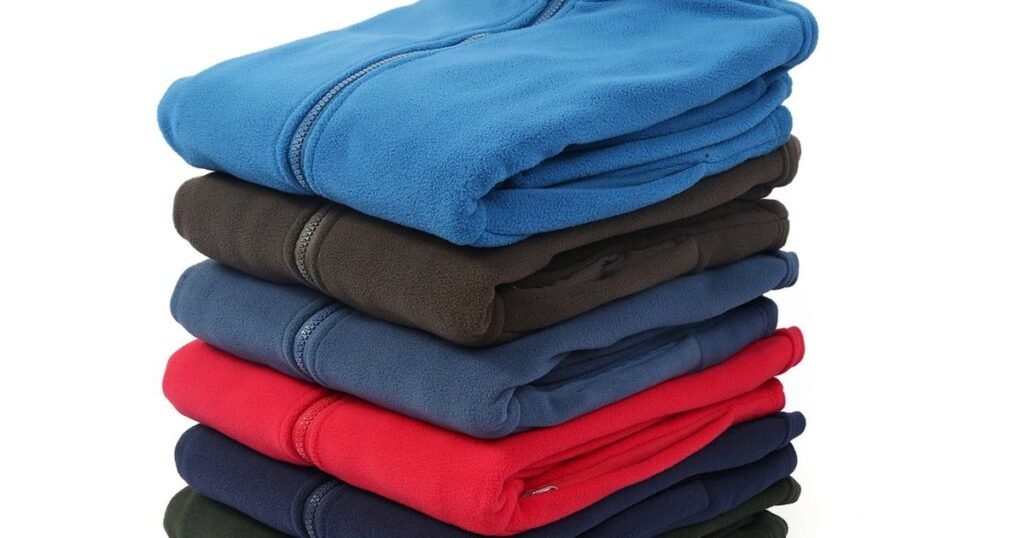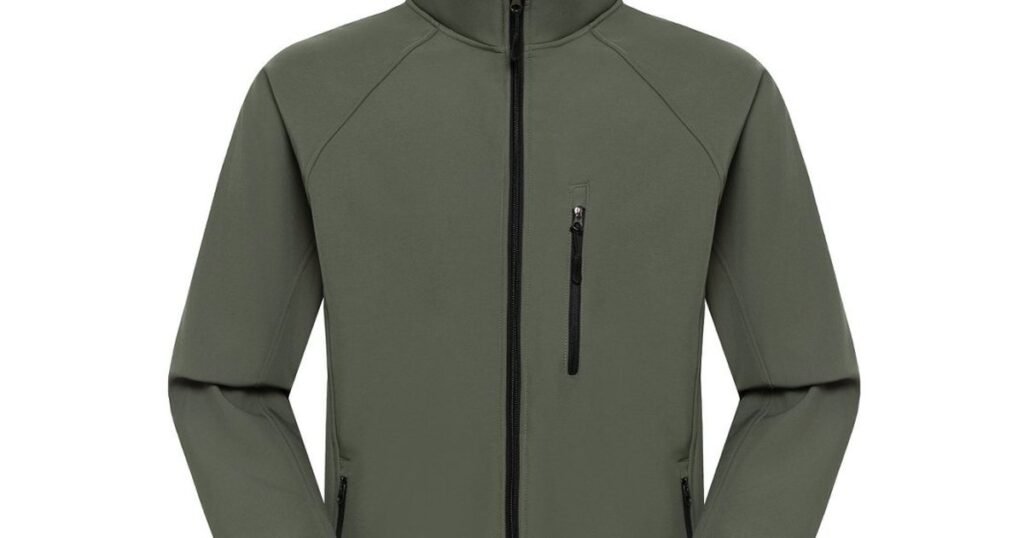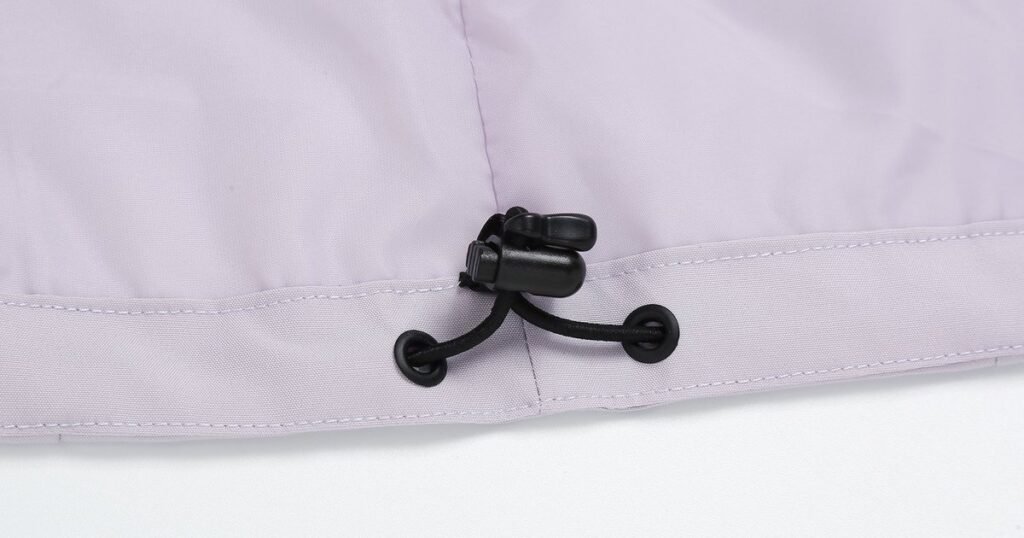
A PFAS-free DWR waterproof jacket supplier for European buyers must demonstrate PFC-free DWR chemistry, REACH-compliant fabric sourcing, and documented third-party certification-not just marketing claims. PTOUTWEAR makes waterproof jackets with PFC-free DWR, 30-piece bulk MOQs, 1-piece sampling, and SGS test reports.
📋 Table of Contents
- Executive Summary
- What PFAS-Free DWR Means at the Factory Level
- Compliance Requirements for European Buyers
- Total Fluorine vs Targeted PFAS Testing
- How to Verify a Supplier’s PFAS-Free Claims
- MOQ and Sampling for Small European Brands
- Performance Trade-offs: PFAS-Free DWR vs. Fluorinated Finishes
- Key Takeaways
- FAQ
Executive Summary
- PFAS-free DWR: Fluorine-free water-repellent finishes eliminate per- and polyfluoroalkyl substances from the outer fabric treatment, though many suppliers still use fluorinated membranes or linings.
- Rules in force: France has banned PFAS in consumer clothing and footwear since 1 January 2026 (25 ppb per substance), and the EU restricts PFHxA in clothing and footwear from 10 October 2026. The EU-wide restriction on all PFAS is still a proposal.
- Supplier verification: Request third-party targeted PFAS reports against the 25 ppb limits plus a total-fluorine screen, per component. A “total fluorine below 100 ppm” result alone does not show compliance.
- MOQ reality: European startups and small wholesalers need 30-piece bulk minimums and 1-piece sampling to validate waterproof performance before committing capital.
- Performance gap: Buyers report that PFAS-free jackets wet out faster and require more frequent reproofing than older fluorinated DWRs, especially after multiple washes or heavy rain exposure.

What PFAS-Free DWR Means at the Factory Level
PFAS-free DWR refers to a durable water repellent finish applied to the jacket’s outer fabric that contains no intentionally added per- or polyfluoroalkyl substances. Many buyers discover that a supplier’s PFAS-free claim applies only to the DWR finish, while the waterproof membrane or inner lining still uses fluorinated chemistry. European buyers sourcing for corporate uniforms, school programs, or small outdoor brands need to clarify which components are truly fluorine-free before placing an order.
Face Fabric DWR vs. Membrane Chemistry
The DWR finish sits on the outer fabric surface and causes water to bead. The waterproof membrane sits between the face fabric and lining, blocking liquid water while allowing vapor to escape. A jacket can carry a PFC-free DWR label yet still use a fluorinated ePTFE or polyurethane membrane. Request separate lab reports for face fabric, membrane, and lining — the EU PFHxA limits are measured per homogeneous material, so one report on the face fabric does not cover the jacket.
Industry Adoption of Fluorine-Free Finishes
Fluorine-free water-repellent chemistry adoption is accelerating in outdoor apparel, with several leading brands publicly moving to PFAS-free DWR across new collections, according to bluesign (2025). PTOUTWEAR uses PFC-free DWR on its waterproof shells and holds SGS test reports; the test scope and limits for your market are agreed per order. See how specifications are fixed before bulk in our OEM jacket manufacturing process.
Common Mislabeling Scenarios
Some suppliers market a jacket as PFAS-free based solely on a bluesign APPROVED fabric certification, without disclosing that the final DWR application uses a different chemistry. Others state that the membrane is PFAS-free but apply a fluorinated topcoat for durability. European buyers should request a complete bill of materials listing every chemical treatment, not just a single certificate that covers one component.
Compliance Requirements for European Buyers
Two PFAS rules already bind jackets sold in Europe: France’s ban on PFAS in consumer clothing and footwear, in force since 1 January 2026, and the EU restriction on PFHxA in consumer clothing and footwear, applying from 10 October 2026. The broader restriction on the whole PFAS class is still at the ECHA committee stage. European importers must verify that every jacket component meets these limits and that the supplier maintains a restricted-substance list aligned with EU standards. Corporate and institutional buyers also face internal procurement policies that require documented proof of PFAS-free claims before approval.
France, EU PFHxA and the Universal PFAS Proposal: What Applies When
Supplier pages often blur three different rules into one “EU PFAS ban by 2027”. They have different dates, scopes and limits:
Stock planning for France: PFAS-containing clothing made before 1 January 2026 may be sold or exported for a maximum of 12 months, so 31 December 2026 is the real cut-off for legacy stock. France exempts personal protective equipment under Regulation (EU) 2016/425, waterproofing agents for re-proofing that PPE, and clothing with at least 20% post-consumer recycled material (see below). From 1 January 2030 the French ban extends to all textiles, with narrow exceptions such as industrial technical textiles.
EU PFHxA exemptions are narrower: category III PPE for specified risks, medical devices, and construction textiles. There is no exemption for recycled content.
Still only a proposal: the EU-wide restriction covering the whole PFAS class. ECHA’s Risk Assessment Committee adopted its final opinion on 2 March 2026; the Socio-Economic Analysis Committee’s final opinion is expected by the end of 2026, after which the European Commission proposes the legal text for a Member State vote. It has no adopted date — treat any “2027 EU PFAS ban” as a forecast, not a compliance deadline.
Third-Party Certification vs. Supplier Self-Declaration
A supplier self-declaration stating PFAS-free is not sufficient for EU customs or corporate procurement departments. European buyers should request SGS, Intertek, or Bureau Veritas test reports for face fabric, membrane, and lining that state the test method and the limit applied — targeted PFAS results against 25 ppb, not only a total-fluorine figure — plus a certificate of compliance signed by the factory’s quality manager.
Customs and VAT Documentation
European customs authorities may request chemical-compliance documentation at the port of entry, especially for shipments labeled as eco-friendly or PFAS-free. Buyers should ensure the supplier provides a commercial invoice, packing list, and restricted-substance declaration that references REACH Annex XVII compliance.
Total Fluorine vs Targeted PFAS: Two Tests That Are Not Interchangeable
A “PFC-free” claim is only as good as the test behind it — and the test a supplier sends is often the wrong kind. PFAS are measured in two fundamentally different ways, and the regulations use both:
- Total fluorine / total organic fluorine: measures all fluorine in the material and reports it in mg F/kg (ppm). It is a screen — it catches fluorinated polymers and unknown PFAS — but it cannot say which substance is present, and it cannot see anything down at ppb level.
- Targeted PFAS analysis: measures a list of named substances (PFHxA, PFOA and so on) and reports in µg/kg (ppb). It can show a specific substance is below a legal limit, but it is blind to anything not on the list, including most polymers.
Why this matters when you read a report: “total fluorine below 100 ppm” says nothing about the 25 ppb targeted limits. 100 ppm is 4,000 times higher than 25 ppb, so a jacket can pass the screen and still fail France or the EU PFHxA limit. It is also double France’s 50 mg F/kg total-fluorine trigger and California’s 50 ppm threshold from 2027. Ask for both tests, per component: a targeted PFAS panel that includes PFHxA, its salts and related substances, plus a total-fluorine screen.
The French 20% Recycled-Content Exemption, Step by Step
Decree 2025-1376 exempts clothing and footwear that incorporate at least 20% post-consumer recycled material — but only partly. The decree limits PFAS in the finished product to the recycled fraction: the residual PFAS allowed is proportional to the share of recycled material incorporated. Run a style through four checks:
- Is it at least 20% post-consumer recycled material? The decree names material from post-consumer waste. Below 20%, the standard limits apply in full.
- Can you document the percentage? The exemption depends on a number, so you need chain-of-custody evidence for the recycled share of that style, such as a transaction certificate from the fabric mill. How recycled-content claims are verified →
- Where does the PFAS come from? The allowance is tied to the recycled fraction. The virgin share of the jacket and anything added in production — DWR, membrane, seam tape — does not share it. A fluorinated DWR applied over recycled fabric is not what the exemption covers.
- How much residue is tolerated? The decree sets the principle (proportional to the recycled share) but publishes no formula or per-percentage figure. Until French authorities issue guidance, treat the exemption as tolerance for legacy PFAS carried in by recycled fibre — not as room for fluorinated chemistry — and ask the lab to report per component so the recycled layer can be assessed on its own.
Where the exemption stops: it is a French rule only. The EU PFHxA restriction has no recycled-content derogation, so the same jacket still has to meet 25 ppb PFHxA anywhere in the EU from 10 October 2026.
How to Verify a Supplier’s PFAS-Free Claims
Buyers in the EU say supplier pages do not publish enough evidence of PFAS compliance, making procurement difficult for corporate and institutional purchases. A verification process includes requesting lab reports, inspecting the factory’s chemical inventory, and confirming that the DWR application process uses only approved fluorine-free chemistries. European buyers should complete this checklist before signing a purchase order.
Request Lab Reports for All Jacket Layers
Ask the PFAS-free DWR waterproof jacket supplier to provide separate SGS or Intertek reports for face fabric, membrane, and lining, each stating targeted PFAS results against the 25 ppb limits plus a total-fluorine screen. A single certificate covering only the face fabric is insufficient if the membrane or lining contains fluorinated polymers. Verify that the report date is recent and that the tested sample matches the production lot you will receive.
Inspect the Factory’s Restricted-Substance List
A factory maintaining a restricted-substance list aligned with REACH Annex XVII and ZDHC MRSL demonstrates proactive chemical management. Request a copy of the list and confirm that all long-chain and short-chain PFAS are explicitly banned.
Audit the DWR Application Process
Visit the factory or request video documentation showing the DWR spray booth, chemical storage area, and quality-control spray test. Confirm that the DWR chemistry supplier provides a technical data sheet listing zero fluorine content and that the factory does not store any fluorinated backup chemistries on-site.
Verify Wash-Durability Claims
Technical users complain that eco-friendly DWRs can require very careful washing and tumble-drying to restore performance, which is inconvenient for uniforms and school programs. Request wash-test data showing bead retention after 10, 20, and 30 home laundry cycles using ISO 6330 conditions. A PFAS-free DWR that loses water repellency after five washes will generate returns and damage your brand reputation, especially in corporate uniform programs where jackets are laundered weekly.
MOQ and Sampling for Small European Brands
European startups and small outdoor wholesalers face a capital constraint: many Asian manufacturers require 500- or 1,000-piece minimums, tying up cash before market validation. A low-MOQ jacket manufacturer offering 30-piece bulk orders and 1-piece sampling allows European buyers to test PFAS-free waterproof performance, confirm fit, and validate customer demand without committing to large inventory.
Sample MOQ: 1 Piece
Ptoutwear’s sample MOQ is 1 piece, with a $100 sample fee refundable against the first bulk order. European buyers receive a production-grade sample within 7-10 days, using the same PFC-free DWR chemistry and waterproof membrane as the bulk run. This allows you to conduct field testing, wash durability checks, and customer focus groups before placing a 30-piece order.
Bulk MOQ: 30 Pieces per SKU
Our bulk MOQ is 30 pieces per SKU, enabling European DTC brands to launch with three colorways at 10 units each or a single style at 30 units. This structure supports pre-order campaigns, crowdfunding validation, and small wholesale accounts without locking up working capital in unsold inventory. Lead time for a 30-piece PFAS-free waterproof jacket order is 25-35 days from approved pre-production sample to ex-factory shipment.
Sample MOQ: 1 piece. Bulk MOQ: 30 pieces per SKU. Sampling time: 7-10 days. Bulk lead time: 25-35 days ex-factory.
Dropshipping and Print-on-Demand Fulfillment
For European buyers testing direct-to-consumer channels, Ptoutwear offers 1-piece dropshipping and print-on-demand fulfillment. Jackets can carry custom embroidery or screen-printed logos. This model eliminates inventory risk and allows you to validate PFAS-free messaging with real customer orders before scaling to bulk production.
Performance Trade-offs: PFAS-Free DWR vs. Fluorinated Finishes
Buyers often stop beading water sooner than older fluorinated DWRs, and users complain they need frequent reproofing after a few washes or heavy rain exposure. European buyers sourcing for outdoor brands, corporate teams, or school uniforms must balance regulatory compliance with field performance. Understanding the performance gap helps you set realistic customer expectations and develop care-instruction materials that extend DWR lifespan.
Water-Bead Retention After Washing
Some buyers say PFAS-free shells feel like a downgrade because the jacket wets out faster even when the membrane is still technically waterproof. Fluorine-free DWRs typically show reduced bead retention after 10-15 home washes compared to 20-30 washes for fluorinated finishes. Ptoutwear recommends including a care card with every PFAS-free jacket, instructing end users to tumble-dry on low heat after washing to reactivate the hydrocarbon-based DWR and restore surface beading.
Field Performance in Heavy Rain
Reviewers frequently note that PFAS-free marketing is unclear, and they cannot tell whether the membrane, lining, or only the DWR finish is fluorine-free. In heavy rain, a wetted-out face fabric increases jacket weight and reduces breathability, even though the waterproof membrane continues to block liquid water. European buyers should conduct field testing in sustained rain to confirm that the PFAS-free DWR performs adequately for the intended use case, whether alpine trekking, urban commuting, or workwear applications.
Reproofing and Maintenance Requirements
PFAS-free DWRs require more frequent reproofing than fluorinated finishes, especially in high-use environments like corporate uniforms or school outdoor-education programs. Buyers should budget for aftermarket reproofing sprays or wash-in treatments and communicate maintenance requirements clearly to end users. Ask for wash-test data at the sample development stage so you can set accurate care expectations before launch.
Balancing Performance and Sustainability Messaging
Product-level chemical transparency claims are increasingly supported by third-party standards such as OEKO-TEX STANDARD 100 and bluesign APPROVED, according to OEKO-TEX (2026). European buyers can differentiate by highlighting verified PFAS-free compliance alongside realistic performance expectations. Ptoutwear’s private label service includes hang-tag design and care-instruction copywriting that explains proper maintenance, helping your brand build trust with eco-conscious customers who understand the trade-offs.
Key Takeaways
- A PFAS-free DWR waterproof jacket supplier must provide separate lab reports for face fabric, membrane, and lining with targeted PFAS results against 25 ppb plus a total-fluorine screen — “total fluorine below 100 ppm” alone does not show compliance.
- France has banned PFAS in consumer clothing since 1 January 2026 (legacy stock to 31 December 2026), and the EU restricts PFHxA in clothing from 10 October 2026; the EU-wide PFAS restriction is still a proposal.
- European buyers should request SGS or third-party test reports, a factory restricted-substance list aligned with REACH Annex XVII, and video documentation of the PFC-free DWR spray process before placing an order.
- Ptoutwear’s sample MOQ is 1 piece and bulk MOQ is 30 pieces per SKU, enabling European startups and small wholesalers to validate PFAS-free waterproof performance without tying up capital in large inventory.
- PFAS-free DWRs typically show reduced bead retention after 10-15 home washes compared to 20-30 washes for fluorinated finishes, requiring more frequent reproofing and clear care instructions for end users.
FAQ
How do I confirm a supplier’s PFAS-free claim is genuine?
Request SGS or Intertek lab reports for face fabric, membrane, and lining with targeted PFAS results against the 25 ppb limits, plus a total-fluorine screen. Verify that the report date is recent and that the tested sample matches your production lot. A supplier self-declaration or a single bluesign certificate covering only the fabric mill is insufficient for EU customs or corporate procurement.
What is the typical lead time for a 30-piece PFAS-free jacket order?
Lead time for a 30-piece PFAS-free waterproof jacket order is 25-35 days from approved pre-production sample to ex-factory shipment. This includes fabric sourcing, PFC-free DWR application, cut-and-sew, quality inspection, and packing. European buyers should add 15-20 days for ocean freight to Rotterdam or Hamburg, plus customs clearance time. Air freight is available for urgent orders at higher shipping cost.
Can I add custom logos to a 30-piece PFAS-free jacket order?
Yes. Ptoutwear’s custom logo service supports embroidery, screen printing, heat transfer, and woven labels on orders as small as 30 pieces per SKU. European buyers send vector artwork and approve logo placement before production starts.
Is a “total fluorine below 100 ppm” report enough for EU compliance?
No. The EU PFHxA limit and the French per-substance limit are both 25 ppb, measured by targeted analysis — 4,000 times lower than 100 ppm — and a total-fluorine screen cannot identify individual substances. France also treats total fluorine above 50 mg F/kg as a trigger to prove where the fluorine comes from. Ask for a targeted PFAS panel per component plus a total-fluorine screen.
Does the French PFAS ban apply to jackets made with recycled fabric?
Partly. France exempts clothing with at least 20% post-consumer recycled material, but PFAS in the finished jacket are limited to the recycled fraction, in proportion to the recycled share. A fluorinated DWR added in production is not covered, and the EU PFHxA restriction from 10 October 2026 has no recycled-content exemption.
Ready to source PFAS-free waterproof jackets with verified compliance and flexible MOQs?
Request Your 1-Piece Sample →
Written by Ivan Chen, Sales Engineer at Ptoutwear – 13 years in outdoor apparel manufacturing.