European outdoor brands launching their first sustainable jacket collection face a common sourcing trap: advertised minimums of 50 or 100 units sound accessible until fabric rolls, color breaks, and trim packages push the real commitment to 300+ pieces. For a low MOQ sustainable recycled fabric OEKO-TEX jacket order, the challenge is finding a manufacturer who can deliver genuine recycled-content proof, harmful-substance testing, and technical performance without locking up six months of working capital in inventory risk.
📋 Table of Contents
Executive Summary
- Recycled polyester market share: Recycled polyester represented more than 15% of total polyester fiber input in many sustainability-tracking summaries as of 2025, according to Textile Exchange.
- Harmful-substance testing scope: OEKO-TEX STANDARD 100 tests for more than 1,000 regulated and non-regulated harmful substances in textile products, according to OEKO-TEX.
- Chain-of-custody requirement: GRS requires verified recycled content claims and chain-of-custody controls across the supply chain, not just fabric-level testing, according to the Global Recycled Standard.
- European green-claims scrutiny: The EU and UK regulatory environment in 2025 continued to increase scrutiny on green claims, making substantiation for recycled and sustainable apparel more important, according to the European Commission and UK CMA.
- Procurement criterion shift: Approximately 60% of apparel brands surveyed in 2025 reported that recycled-content requirements had become a formal procurement criterion, according to McKinsey.
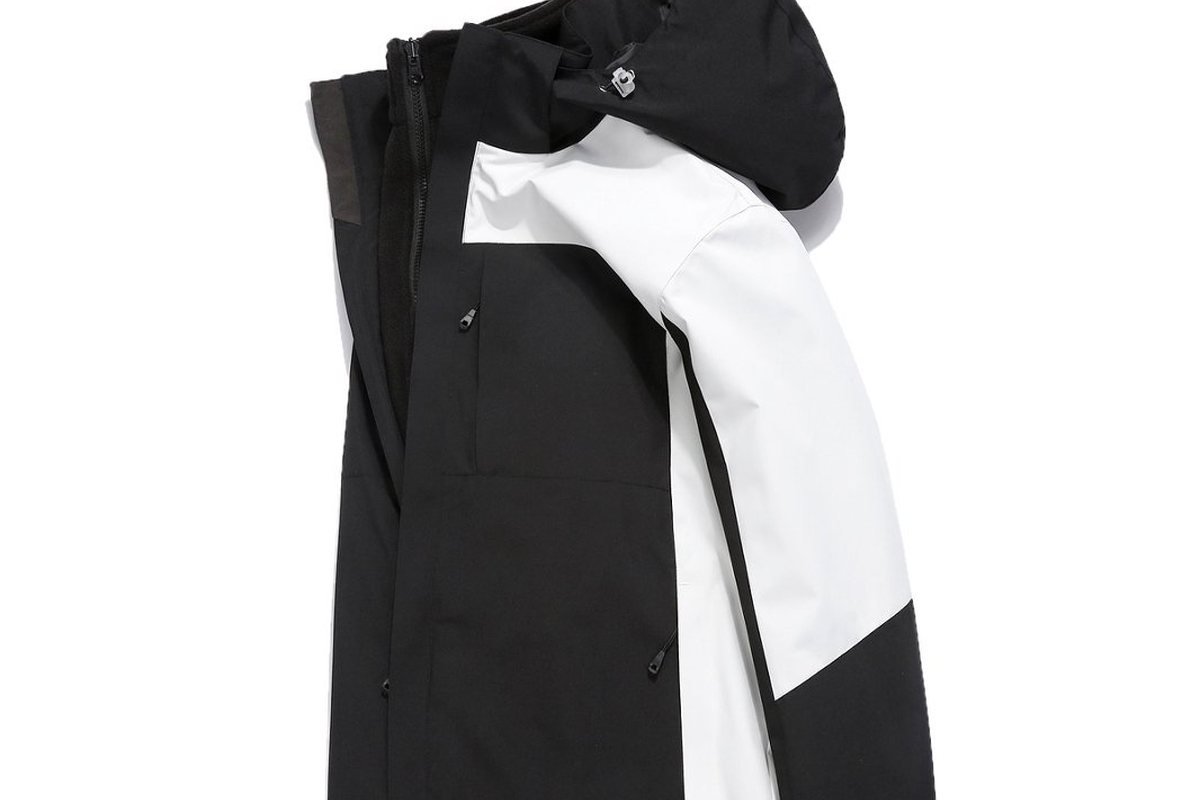
Certification Landscape: OEKO-TEX, GRS, and bluesign Compared
Outdoor brands new to sustainable sourcing often conflate harmful-substance testing with recycled-content verification. OEKO-TEX STANDARD 100, GRS, and bluesign serve distinct compliance functions, and choosing the wrong one for your market can delay customs clearance or trigger greenwashing complaints.
OEKO-TEX STANDARD 100: Harmful-Substance Testing Only
OEKO-TEX STANDARD 100 certifies that a textile product has been tested for more than 1,000 harmful substances, including azo dyes, formaldehyde, heavy metals, and phthalates. The certificate applies to the finished garment, not just the fabric, and covers every component that touches skin. OEKO-TEX does not verify recycled content percentage, chain of custody, or environmental processing standards. A jacket can carry OEKO-TEX certification and contain zero recycled material. For European buyers subject to REACH and CLP regulations, OEKO-TEX provides a recognized third-party declaration that harmful-substance limits are met, but it does not substantiate sustainability claims related to recycled input.
GRS: Recycled Content and Chain-of-Custody Verification
The Global Recycled Standard requires a minimum of 20% recycled material content before a product can be certified and labeled GRS. The standard mandates chain-of-custody documentation from post-consumer or post-industrial waste through fiber extrusion, yarn spinning, fabric weaving or knitting, dyeing, and garment assembly. GRS also includes social and environmental criteria for processing facilities, but the core function is verifying that the recycled-content claim on a hangtag or product page is traceable and accurate. A GRS certificate includes a transaction certificate (TC) number that buyers can cross-reference against the GRS database. For brands making recycled-polyester claims in Europe, GRS provides the audit trail required to defend those claims under consumer-protection enforcement.
bluesign: Chemical Input-Stream Management
bluesign’s system covers chemical management and input-stream control across textile production rather than only finished-garment testing, according to bluesign. The standard restricts hazardous chemicals at the point of input, not just at the point of output. A bluesign-certified fabric means the dyes, finishes, and processing aids used in its production meet bluesign’s restricted-substance list and resource-efficiency criteria. bluesign does not verify recycled content by itself, but many recycled-polyester suppliers pursue both GRS and bluesign to cover content traceability and chemical safety in one supply chain. For outdoor brands targeting premium European retail, bluesign certification signals process-level environmental control that OEKO-TEX and GRS do not address.
Buyers report that so-called recycled jackets sometimes arrive with weak proof of recycled content, unclear certification scope, or no chain-of-custody documentation. OEKO-TEX alone does not substantiate a recycled-polyester claim. GRS provides the transaction certificate and audit trail, but does not replace harmful-substance testing. For a low MOQ sustainable recycled fabric OEKO-TEX jacket order targeting European retail, the cleanest compliance stack is GRS for content traceability plus OEKO-TEX for harmful-substance assurance, with bluesign as an optional premium signal.
MOQ Structure: Sample, Small Batch, and Bulk Thresholds
Advertised minimums often obscure the real order commitment. A factory listing a 50-piece MOQ may require 50 units per color per style, turning a three-colorway jacket into a 150-piece order. Understanding the MOQ structure at every tier prevents cash-flow surprises.
Sample MOQ: 1-Piece Prototyping
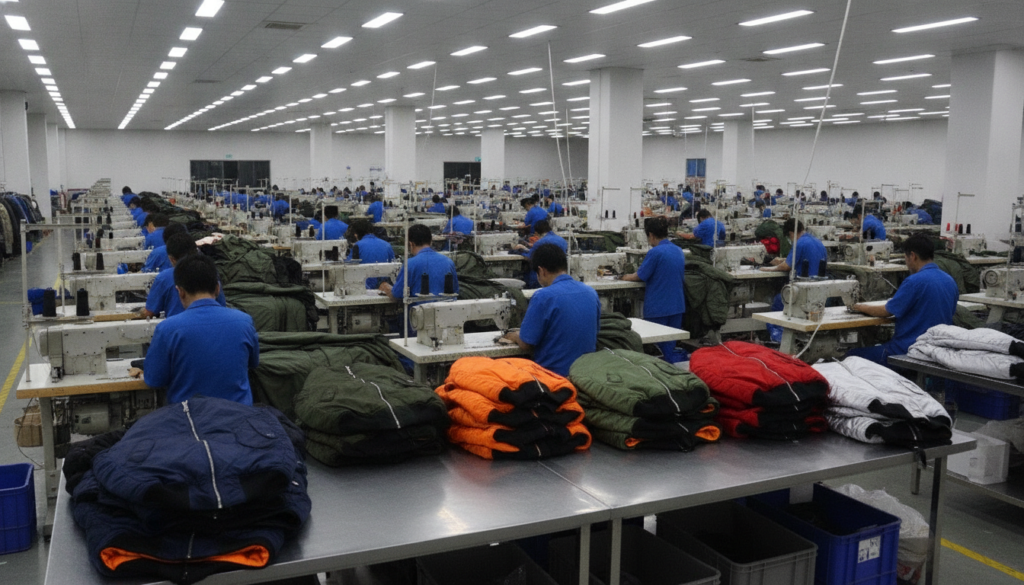
Our 3,000m² Taizhou Sanmen facility runs 20 production lines with in-house cut-and-sew and quality-control teams, allowing 1-piece sample production without outsourcing to a separate sampling workshop. Sample MOQ is 1 piece, with a refundable sample fee applied against the first bulk order. Sampling time is 7 to 10 days after fabric and trim approval. One-piece sampling lets outdoor brands validate fit, fabric hand feel, seam construction, and DWR performance before committing to bulk fabric rolls. Buyers mention that low-MOQ jacket samples sometimes look good, but the bulk order has inconsistent sizing, stitching quality, or fabric hand feel compared with the prototype. Requesting a pre-production sample from the same production line that will run the bulk order reduces this risk.
Small-Batch MOQ: 30 Pieces per SKU
Bulk MOQ is 30 pieces per SKU. SKU is defined as one style in one color in one size run. A single jacket style offered in two colors requires 60 pieces total (30 per color). Fabric minimums at most recycled-polyester mills start at 300 meters per color, which covers approximately 100 to 120 jackets depending on pattern efficiency. For orders below 100 units, the factory sources from in-stock recycled fabric or negotiates a mill run shared across multiple clients. Small-batch orders (30 to 100 pieces) typically add 8 to 12 percent to the per-unit fabric cost compared with orders above 300 pieces, but eliminate the need to pre-finance a dedicated mill run.
Hidden Minimums: Color Breaks and Trim Packages
Buyers say MOQ promises can be misleading because a factory advertises 50 or 100 units, but real pricing, color minimums, or fabric minimums make the order effectively much larger. Zipper suppliers often require 500 to 1,000 units per custom color or logo-engraved puller. Custom woven labels and hangtags typically start at 500 to 1,000 pieces. For a 30-piece order, the factory sources stock zippers, stock cord locks, and generic care labels, then applies your brand logo via heat transfer, screen print, or embroidered patch. Custom trims become cost-effective above 300 units, where the per-unit amortization of setup fees and minimum-order charges falls below 50 cents.
For European outdoor brands launching a direct-to-consumer collection, a 30-piece-per-SKU minimum allows market testing across two or three colorways without committing to a 500-unit inventory position. Low MOQ jacket manufacturing structures reduce the capital barrier to entry, but buyers should verify whether the quoted minimum is per style, per color, or per size run.
Recycled Fabric Performance: Testing Beyond the Certificate
Outdoor buyers complain that sustainable fabrics sometimes sacrifice performance, with jackets feeling less durable, less water-resistant, or less breathable than expected. Recycled polyester can match virgin-fiber performance when the polymer chain length and melt-flow index are controlled during extrusion, but not all recycled yarns are engineered for technical outerwear.
Denier and Abrasion Resistance
Recycled polyester fabric for hardshell jackets typically ranges from 50D to 150D (denier). A 75D recycled polyester ripstop offers a good balance of weight, packability, and abrasion resistance for day-hiking shells. Fabrics below 50D are prone to snags and punctures in brush or rock contact. Fabrics above 150D add durability but increase weight and reduce breathability. Abrasion resistance is tested using the Martindale method (ISO 12947), which measures how many rubs a fabric withstands before showing visible wear. A technical recycled-polyester shell should pass 20,000 to 50,000 Martindale cycles depending on the intended use case. Corporate uniform buyers targeting multi-season wear often specify 30,000+ cycles, while lightweight hiking shells may accept 15,000 to 20,000 cycles to save weight.
Waterproofness and Breathability
Waterproofness is measured in millimeters of hydrostatic head pressure (ISO 811). A fabric rated 5,000 mm can withstand a 5,000 mm column of water before leaking. Light rain shells start at 5,000 mm, all-day rain jackets require 10,000 mm or higher, and alpine hardshells target 20,000 mm. Breathability is measured in grams of water vapor transmitted per square meter per 24 hours (MVTR, ISO 11092). A breathable recycled-polyester shell with a microporous membrane typically achieves 5,000 to 15,000 g/m²/24h MVTR. Jackets below 5,000 g/m²/24h MVTR trap perspiration during aerobic activity, leading to interior condensation that buyers often mistake for leakage.
DWR Durability and PFC-Free Finishes
Durable water repellent (DWR) finishes cause water to bead and roll off the fabric surface rather than saturating the face fabric. Traditional DWR chemistries used long-chain per- and polyfluoroalkyl substances (PFAS), which persist in the environment and bioaccumulate. PFC-free DWR formulations based on shorter-chain fluorocarbons or fluorine-free polymers meet European REACH restrictions and customer expectations for PFAS-free products. PFC-free DWR performance is measured by spray rating (ISO 4920) and contact-angle testing. A spray rating of 80 or 90 indicates good initial water repellency, but PFC-free finishes typically degrade faster than long-chain PFAS finishes after 20 to 30 wash cycles. Buyers should specify DWR durability requirements and request wash-cycle testing data, not just initial spray ratings.
Performance Baseline: A technical recycled-polyester hardshell for European outdoor retail should meet 10,000 mm waterproofness, 5,000 g/m²/24h MVTR breathability, 20,000+ Martindale abrasion cycles, and PFC-free DWR with spray rating ≥80.
For a low MOQ sustainable recycled fabric OEKO-TEX jacket order, requesting fabric test reports (ISO 811, ISO 11092, ISO 12947, ISO 4920) before sample production ensures the recycled material meets technical-performance thresholds, not just certification checkboxes. OEM jacket manufacturing workflows should include pre-production fabric testing as a standard milestone.
Compliance Documentation for European Markets
European buyers face increasing scrutiny on green claims under the EU Green Claims Directive and UK CMA guidance. A recycled-polyester jacket marketed in Europe requires substantiation documentation that goes beyond a certificate PDF.
GRS Transaction Certificate and Scope Certificate
A GRS transaction certificate (TC) is issued for each individual order and includes the TC number, product description, recycled content percentage, and the certification body that audited the supply chain. The TC is the document a brand uses to substantiate a recycled-content claim on a product page or hangtag. A GRS scope certificate covers the facility’s overall certification status and lists the product categories and processes the facility is certified to handle. Buyers should request both the TC for the specific order and the scope certificate for the manufacturing facility. The TC number can be verified against the GRS public database to confirm authenticity.
OEKO-TEX Label and Test Report
An OEKO-TEX STANDARD 100 certificate allows the manufacturer to attach an OEKO-TEX label to the finished garment, showing the certificate number and product class (Class I for baby products, Class II for skin-contact garments, Class III for non-skin-contact garments, Class IV for furnishing materials). Most outdoor jackets qualify for Class II. The certificate includes a test report listing the substances tested and the limits applied. Buyers should verify that the certificate covers the complete garment (fabric, zippers, thread, labels, elastic) and not just the shell fabric. Some manufacturers hold OEKO-TEX certification for fabric but source uncertified trims, which invalidates the finished-garment claim.
Supplier Declaration and Chain-of-Custody Records
European customs authorities and market-surveillance bodies may request supplier declarations and chain-of-custody records to verify recycled-content and harmful-substance claims. A supplier declaration is a signed document from the manufacturer stating the recycled content percentage, the certification body, and the test standards applied. Chain-of-custody records trace the recycled material from post-consumer or post-industrial waste through fiber extrusion, yarn spinning, fabric production, and garment assembly. For a 30-piece order, maintaining full chain-of-custody documentation adds administrative cost, but it is the only defense against greenwashing enforcement actions. Buyers should request a sample compliance package (GRS TC, OEKO-TEX certificate, supplier declaration, chain-of-custody summary) during the sampling phase to confirm the factory’s documentation capability before placing a bulk order.
Corporate and school buyers frequently mention slow sample turnaround and long approval cycles, which make it hard to meet seasonal or uniform program deadlines. Requesting compliance documentation during the sampling phase, rather than at final inspection, prevents delays when the bulk order is ready to ship. Sample development workflows should include a documentation-review milestone before bulk fabric is ordered.
Cost Breakdown: Sampling to Landed Price
Transparent cost breakdowns prevent budget surprises. A low MOQ sustainable recycled fabric OEKO-TEX jacket order includes sampling fees, fabric and trim costs, labor, quality control, certifications, and shipping.
Sampling Costs
Sample fee is typically $100 to $150 per prototype, refundable against the first bulk order above 100 units. Sampling time is 7 to 10 days after fabric and trim approval. Rush sampling (3 to 5 days) adds 30 to 50 percent to the sample fee. Buyers placing multiple sample rounds to refine fit, fabric, or construction details should budget $300 to $500 per style for the complete sampling cycle. Fabric swatches and lab-dip color approvals are usually provided at no charge for serious inquiries, but some factories charge $20 to $50 per swatch set to filter casual requests.
Fabric and Trim Costs per Unit
Recycled polyester fabric with GRS certification and OEKO-TEX testing typically costs $3.50 to $6.00 per meter depending on denier, weave, and membrane lamination. A hardshell jacket consumes 1.8 to 2.2 meters of fabric depending on size and pattern efficiency, putting fabric cost at $6.30 to $13.20 per unit. Stock zippers, cord locks, and elastic cost $1.50 to $3.00 per unit. Custom woven labels and hangtags add $0.80 to $1.50 per unit at 500-piece minimums, but drop to $0.30 to $0.60 per unit above 1,000 pieces. For a 30-piece order using stock trims and heat-transfer branding, total materials cost is approximately $8.00 to $16.00 per unit.
Labor and Quality Control
Cut-and-sew labor for a technical jacket with taped seams, articulated sleeves, and adjustable hem runs $8.00 to $14.00 per unit depending on construction complexity. Quality-control inspection adds $0.50 to $1.00 per unit. For a 30-piece order, labor and QC total approximately $8.50 to $15.00 per unit. Larger orders (300+ units) benefit from line-efficiency improvements that reduce per-unit labor cost by 15 to 20 percent.
Certification Amortization
GRS certification audit and annual fees cost the factory approximately $2,000 to $4,000 per year, amortized across all GRS-certified orders. OEKO-TEX testing for a new fabric and trim combination costs $800 to $1,500 per test, valid for one year. For small-batch orders, the factory typically absorbs certification costs and recovers them through a slight per-unit markup ($0.50 to $1.50 per unit). Buyers requesting factory-specific GRS or OEKO-TEX certification for a single 30-piece order may be asked to cover the direct testing cost, adding $800 to $1,500 to the total order value.
Shipping and Landed Cost
Sea freight from Ningbo or Shanghai to European ports (Rotterdam, Hamburg, Felixstowe) costs approximately $1,200 to $2,500 per 20-foot container, depending on season and carrier. A 30-piece jacket order fits in a small carton (0.15 to 0.25 cubic meters), making LCL (less-than-container-load) or air freight more practical. LCL sea freight costs $150 to $300 per cubic meter, putting shipping cost at $25 to $75 for a 30-piece order. Air freight costs $4.00 to $7.00 per kilogram, with a 30-piece order weighing approximately 15 to 20 kg (jackets plus packaging), totaling $60 to $140 in air-freight charges. European import duties on textile garments from China range from 12 to 16 percent ad valorem, plus VAT at the destination country rate (19 to 25 percent in most EU markets). For a 30-piece order with an FOB value of $600 to $900, landed cost including freight, duty, and VAT is approximately $850 to $1,350.
For European outdoor brands testing a new style or colorway, a 30-piece order provides market validation at a landed cost of approximately $730 to $1,520 total, versus the $6,000 to $12,000 capital commitment required for a 300-piece order. Private label jacket manufacturing at low MOQ tiers allows brands to defer inventory risk until demand is proven.
Key Takeaways
- OEKO-TEX STANDARD 100 tests for more than 1,000 harmful substances in finished textile products but does not verify recycled content or chain of custody, according to OEKO-TEX.
- The Global Recycled Standard requires a minimum of 20% recycled material content and mandates chain-of-custody documentation from waste input through garment assembly, according to GRS.
- Recycled polyester represented more than 15% of total polyester fiber input in many sustainability-tracking summaries as of 2025, according to Textile Exchange.
- Approximately 60% of apparel brands surveyed in 2025 reported that recycled-content requirements had become a formal procurement criterion, according to McKinsey.
- The EU and UK regulatory environment in 2025 continued to increase scrutiny on green claims, making substantiation documentation for recycled and sustainable apparel more important, according to the European Commission and UK CMA.
- A technical recycled-polyester hardshell for European outdoor retail should meet 10,000 mm waterproofness, 5,000 g/m²/24h MVTR breathability, and 20,000+ Martindale abrasion cycles to balance performance with sustainability claims.
FAQ
What is the minimum order quantity for sustainable recycled fabric jackets?
Sample MOQ is 1 piece, allowing brands to validate fabric, fit, and construction before committing to bulk. Bulk MOQ is 30 pieces per SKU, defined as one style in one color in one size run. A single jacket style offered in two colors requires 60 pieces total. Fabric minimums at recycled-polyester mills start at 300 meters per color, so orders below 100 units typically source from in-stock fabric or shared mill runs, adding 8 to 12 percent to per-unit fabric cost.
Is OEKO-TEX enough for recycled jackets?
OEKO-TEX STANDARD 100 verifies that a finished garment has been tested for more than 1,000 harmful substances, but it does not verify recycled content percentage or chain of custody. A jacket can carry OEKO-TEX certification and contain zero recycled material. For brands making recycled-polyester claims in Europe, the cleanest compliance stack is GRS for content traceability plus OEKO-TEX for harmful-substance assurance. GRS provides the transaction certificate and audit trail required to substantiate recycled-content claims under EU and UK consumer-protection enforcement.
What certifications should a recycled jacket supplier have?
A recycled jacket supplier targeting European markets should hold GRS certification to verify recycled content and chain of custody, plus OEKO-TEX STANDARD 100 to prove harmful-substance testing of the finished garment. bluesign certification is optional but signals chemical input-stream management and resource efficiency at the production stage. Buyers should request both the GRS transaction certificate for the specific order and the GRS scope certificate for the facility, plus the OEKO-TEX certificate covering the complete garment including fabric, zippers, thread, labels, and elastic.
How much does a low MOQ custom jacket cost?
For a 30-piece order of recycled-polyester hardshell jackets with GRS and OEKO-TEX certification, FOB unit cost ranges from $17.00 to $32.50 depending on fabric denier, membrane lamination, and construction complexity. Landed cost in Europe including LCL sea freight or air freight, import duty (12 to 16 percent), and VAT (19 to 25 percent) totals approximately $24.35 to $50.65 per unit. A 30-piece order provides market validation at a total landed cost of approximately $730 to $1,520, versus $6,000 to $12,000 for a 300-piece order.
What is the difference between GRS and OEKO-TEX?
GRS (Global Recycled Standard) verifies recycled content percentage and chain-of-custody traceability from waste input through garment assembly, plus social and environmental criteria for processing facilities. OEKO-TEX STANDARD 100 tests the finished garment for more than 1,000 harmful substances including azo dyes, formaldehyde, heavy metals, and phthalates. GRS does not replace harmful-substance testing, and OEKO-TEX does not verify recycled content. For a complete compliance package, European buyers need both GRS for content claims and OEKO-TEX for chemical safety.
Ready to validate your sustainable jacket collection with certified recycled fabrics and transparent compliance documentation?
Request 1-Piece Samples →
Written by Ivan Chen, Sales Engineer at PTOUTWEAR – 13 years in outdoor apparel manufacturing.