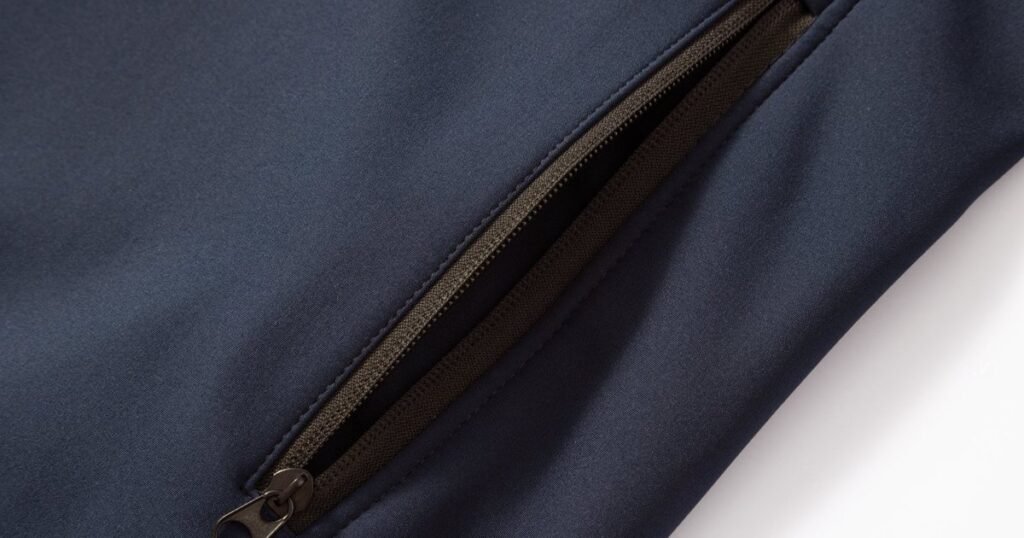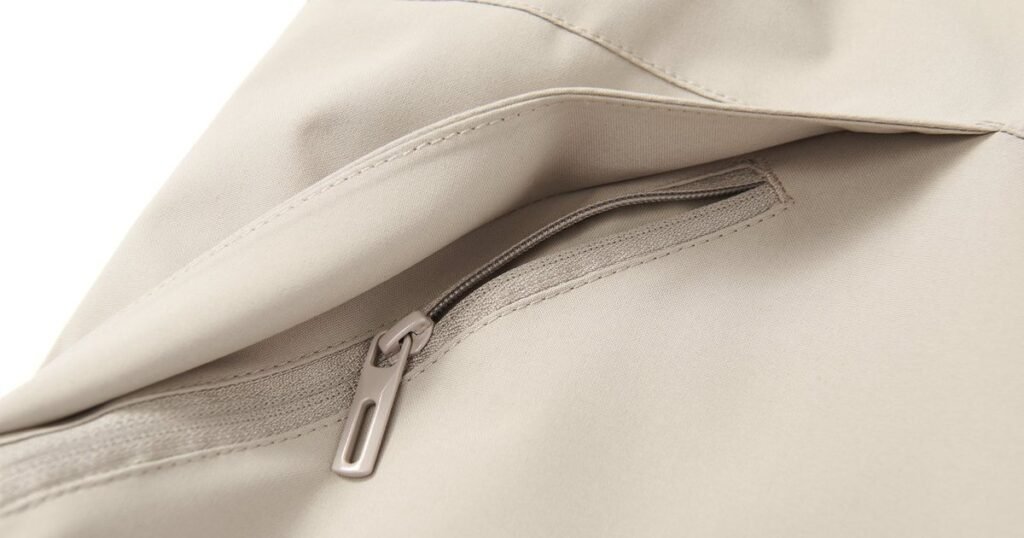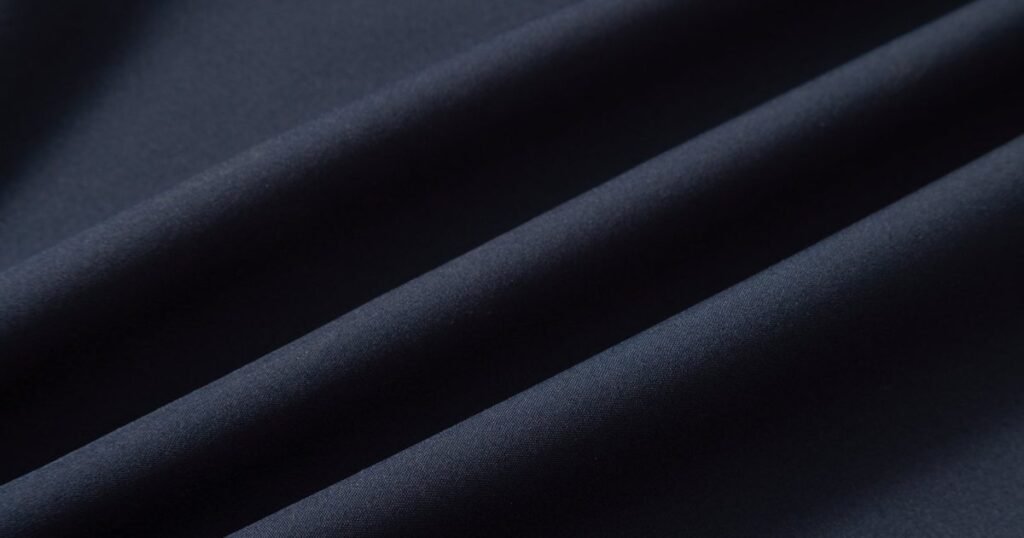
The most credible Gore-Tex alternative membranes for a private-label outdoor brand are eVent, Sympatex, Pertex Shield, Toray Dermizax, and proprietary laminates like AscentShell or Polartec NeoShell. Each offers 10,000-20,000mm hydrostatic head waterproofing and 10,000-25,000 g/m²/24h breathability, with MOQ and licensing terms that vary widely. Sympatex and eVent require membrane licensing; Pertex Shield and Toray Dermizax are available through fabric mills with lower barriers to entry for small brands.
📋 Table of Contents
- Executive Summary
- What Makes a Credible Gore-Tex Alternative?
- Licensed Membrane Alternatives: eVent and Sympatex
- Mill-Available Membranes: Pertex Shield and Toray Dermizax
- Proprietary In-House Membranes
- PFAS-Free Alternatives
- Testing Standards and Procurement Specs
- MOQ and Supply-Chain Considerations
- Key Takeaways
- Frequently Asked Questions
Executive Summary
- Membrane performance: Credible alternatives deliver 10,000-20,000mm hydrostatic head and 10,000-25,000 g/m²/24h MVTR, matching Gore-Tex Pro in lab testing but varying in real-world durability and hand-feel.
- Licensing vs mill-direct: eVent and Sympatex require formal licensing agreements, while Pertex Shield and Toray Dermizax are available through fabric mills with no licensing barrier for small brands.
- PFAS-free positioning: Sympatex is entirely PFAS-free; eVent bio and Gore-Tex ePE are PFAS-free membrane options, though DWR chemistry remains a separate compliance question.
- MOQ impact: Licensed membranes often carry higher minimum fabric yardage, while mill-direct options can support 30-piece bulk orders when the mill stocks the laminate.
- Testing verification: ISO 811 hydrostatic head, ISO 11092 MVTR, and AATCC 35 rain testing are the three buyer-side specs to request from any factory claiming waterproof-breathable performance.
What Makes a Credible Gore-Tex Alternative?
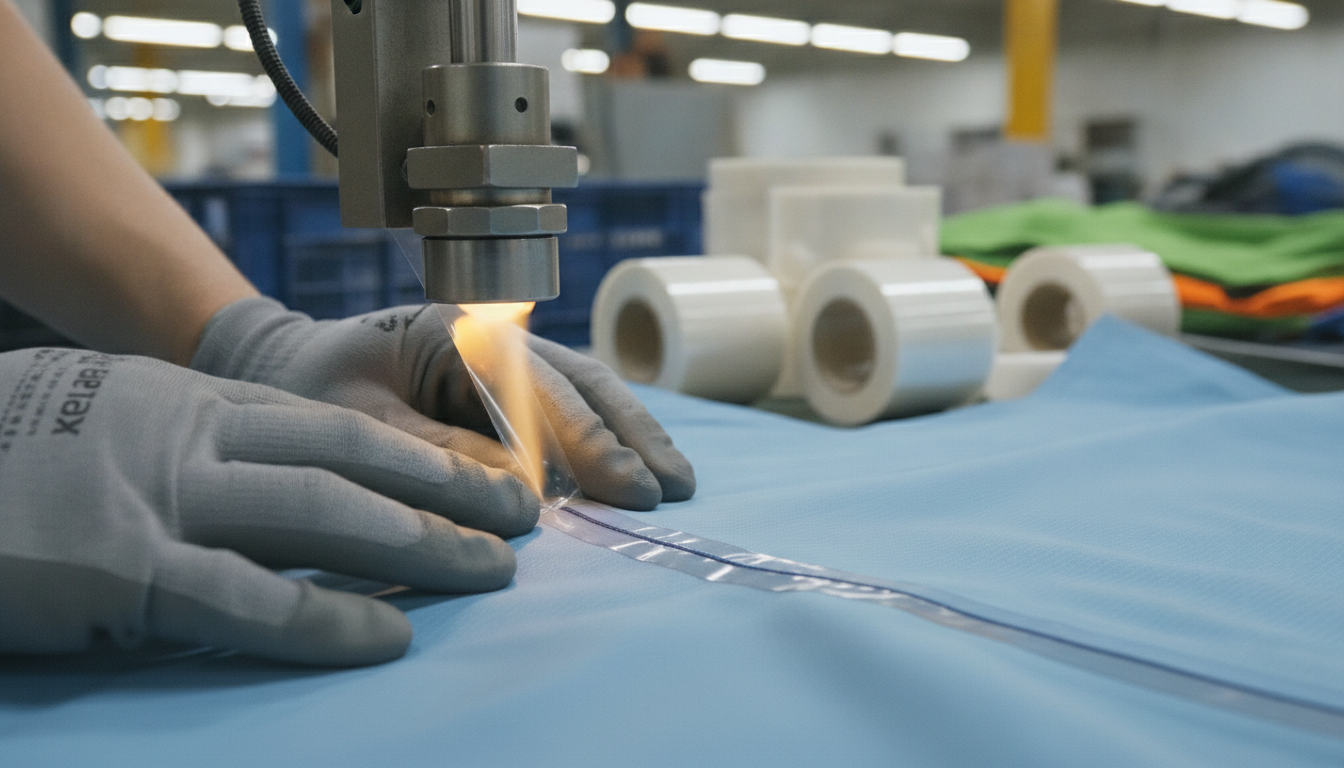
A credible Gore-Tex alternative meets three thresholds: waterproof performance above 10,000mm hydrostatic head, breathability above 10,000 g/m²/24h MVTR, and seam-tape compatibility that survives 20+ industrial wash cycles. Gore-Tex remains the benchmark because it combines ePTFE membrane technology with a supply-chain ecosystem that includes approved seam-tape suppliers, factory training programs, and quality-control audits. Any alternative must either replicate that ecosystem or solve the same problems through different means.
Waterproof Performance: Hydrostatic Head
ISO 811 hydrostatic head measures the water column height a fabric can withstand before leaking. Gore-Tex Pro fabrics typically test at 28,000mm; most credible alternatives test between 10,000mm and 20,000mm. For outdoor brands, 10,000mm is the minimum threshold for a jacket labeled “waterproof” rather than “water-resistant.” Buyers should request mill test reports showing ISO 811 results for both the membrane and the finished laminate, because bonding adhesives and face fabrics can lower the effective waterproof rating.
Breathability: MVTR Testing
ISO 11092 measures moisture vapor transmission rate in grams per square meter per 24 hours. Gore-Tex Pro fabrics range from 15,000 to 25,000 g/m²/24h depending on the construction. Buyers report that breathability is where many alternatives fall short in real-world use, especially during high-output activities like uphill hiking or ski touring. The gap between lab MVTR and perceived breathability often comes down to DWR durability: once the face fabric wets out, the membrane cannot vent moisture efficiently, regardless of its lab-tested MVTR.
Seam-Tape Durability
Seam tape is what separates a jacket that survives a wash test from one that delaminates after three cycles. Gore-Tex specifies approved seam-tape suppliers and application temperatures; many Gore-Tex alternative membranes do not. Buyers should ask the factory which seam tape they use, what application temperature and pressure they apply, and whether they have wash-test data showing the tape bond survives 20+ cycles.
Licensed Membrane Alternatives: eVent and Sympatex
eVent and Sympatex are the two Gore-Tex alternative membranes that require formal licensing. Both offer performance comparable to Gore-Tex in lab testing, but the licensing model adds cost and complexity for small brands.
eVent: Direct Venting Membrane
eVent uses a direct-venting ePTFE membrane with no internal coating, which theoretically allows faster moisture vapor transmission than Gore-Tex. eVent fabrics typically test at 20,000mm+ hydrostatic head and 25,000 g/m²/24h MVTR. The membrane is available in two variants: standard eVent and eVent bio, which replaces the fluoropolymer treatment with a PFAS-free alternative. Licensing eVent requires a minimum annual fabric commitment, typically in the range of several thousand meters, which can be prohibitive for brands launching with 30-piece bulk orders. Buyers working with OEM jacket manufacturing partners should confirm whether the factory already holds an eVent license or whether the brand needs to license directly.
Sympatex: Polyester-Polyether Membrane
Sympatex uses a non-porous polyester-polyether membrane rather than ePTFE, which makes it inherently PFAS-free. The membrane is hydrophilic, meaning it absorbs moisture vapor and transports it to the outer surface through molecular diffusion. Sympatex fabrics test at 45,000mm hydrostatic head and 10,000 g/m²/24h MVTR. The higher waterproof rating comes at the cost of lower breathability compared to eVent or Gore-Tex Pro. Sympatex licensing also requires minimum yardage commitments, and the membrane is less commonly stocked by Chinese fabric mills, which can extend lead times for small-batch production.
Mill-Available Membranes: Pertex Shield and Toray Dermizax
Pertex Shield and Toray Dermizax are the two most accessible Gore-Tex alternative membranes for small brands because they are available through fabric mills without licensing. Both are widely stocked in Zhejiang and Guangdong mills that serve the outdoor apparel industry.
Pertex Shield: 2L and 2.5L Laminates
Pertex Shield is a polyurethane membrane laminated to nylon or polyester face fabrics. It is available in 2-layer (2L) and 2.5-layer (2.5L) constructions. Pertex Shield fabrics typically test at 20,000mm hydrostatic head and 20,000 g/m²/24h MVTR. The 2.5L version uses a printed interior coating instead of a full tricot backer, which reduces weight and pack size but can feel clammy against the skin during high-output activities. Pertex Shield is one of the most common membranes specified by European outdoor brands working with Chinese factories, because it balances performance, cost, and mill availability. Buyers should confirm that the mill can provide PFC-free DWR treatment on the face fabric, as Pertex Shield itself is PFAS-free but the DWR chemistry is a separate decision.
Toray Dermizax: Hydrophilic Polyurethane
Toray Dermizax is a hydrophilic polyurethane membrane developed by Toray Industries in Japan. It is available in several variants, including Dermizax EV (enhanced vapor transmission) and Dermizax NX (next-generation stretch). Dermizax fabrics test at 20,000mm hydrostatic head and 20,000 g/m²/24h MVTR. The membrane is softer and quieter than ePTFE-based membranes, which some buyers prefer for ski jackets and urban rain shells. Dermizax is stocked by several Zhejiang mills that serve the Japanese and Korean outdoor markets, and it does not require licensing for private-label production. The main tradeoff is that Dermizax fabrics tend to wet out faster than Gore-Tex when the DWR wears off, which shortens the effective lifespan in heavy rain.
Proprietary In-House Membranes
Several established outdoor brands have developed proprietary membranes as a Gore-Tex alternative to reduce licensing costs and differentiate their product lines. These membranes are not available to third-party brands, but they illustrate the performance and cost tradeoffs that small brands face when evaluating alternatives.
AscentShell (Outdoor Research)
AscentShell is a proprietary air-permeable membrane developed by Outdoor Research. It uses mechanical stretch and air permeability to enhance breathability during high-output activities. AscentShell fabrics test at 20,000mm hydrostatic head and 20,000 g/m²/24h MVTR, similar to Pertex Shield. The membrane is not available for private-label production, but it demonstrates that air-permeable membranes can deliver waterproof performance comparable to ePTFE-based systems.
Polartec NeoShell
Polartec NeoShell is an air-permeable membrane that combines waterproof protection with high breathability. NeoShell fabrics test at 10,000mm hydrostatic head and 20,000 g/m²/24h MVTR. The lower waterproof rating reflects the tradeoff inherent in air-permeable membranes: they breathe better than non-permeable membranes, but they are more vulnerable to sustained heavy rain. NeoShell is available through Polartec licensing, but the minimum yardage commitments are similar to eVent and Sympatex.
H2No (Patagonia)
Patagonia’s H2No membrane is a proprietary polyurethane laminate used across their rain shell and ski jacket lines. Performance specs are not publicly disclosed, but Patagonia positions H2No as a PFAS-free alternative to Gore-Tex. The membrane is not available for private-label production, but it illustrates that large brands are investing in proprietary membranes to control supply-chain costs and environmental positioning.
PFAS-Free Alternatives
PFAS-free positioning is increasingly important for brands selling in the EU, UK, and California, where PFAS restrictions are tightening. A PFAS-free waterproof jacket requires both a PFAS-free membrane and a PFAS-free DWR treatment.
Membrane PFAS Status
Sympatex is the only major membrane that is inherently PFAS-free, because it uses a polyester-polyether chemistry rather than fluoropolymers. eVent bio and Gore-Tex ePE are PFAS-free membrane options that replace the fluoropolymer treatment with alternative chemistries. Pertex Shield and Toray Dermizax membranes can be PFAS-free depending on the specific laminate construction, but buyers must confirm this with the mill. The membrane PFAS status is separate from the DWR chemistry: a PFAS-free membrane can still carry a fluorinated DWR if the brand does not specify otherwise.
DWR Chemistry
DWR (durable water repellent) is the surface treatment that causes water to bead and roll off the face fabric. Traditional DWR chemistries use C8 or C6 fluorocarbons, which are PFAS compounds. PFC-free DWR alternatives use hydrocarbon or silicone chemistries, but they do not bead water as aggressively and they wear off faster. Buyers should specify PFC-free DWR in the tech pack and request a mill test report showing the DWR spray rating after 20 wash cycles. Our 3,000m² Taizhou Sanmen facility applies PFC-free DWR as standard on all private-label hardshell production, with SGS certification confirming zero detectable PFAS compounds.
Testing Standards and Procurement Specs
Buyers evaluating a Gore-Tex alternative should request three test reports from the factory: ISO 811 hydrostatic head, ISO 11092 MVTR, and AATCC 35 rain testing. These three standards cover the core performance claims that end customers expect from a waterproof-breathable jacket.
ISO 811: Hydrostatic Head
ISO 811 measures the water pressure a fabric can withstand before leaking. The test applies a column of water to the fabric and increases the pressure until water penetrates. Results are reported in millimeters of water column. For outdoor jackets, 10,000mm is the minimum threshold for a “waterproof” label; 20,000mm is the standard for technical hardshells. Buyers should request ISO 811 test reports for both the membrane and the finished laminate, because the bonding adhesive and face fabric can lower the effective waterproof rating.
ISO 11092: MVTR (Moisture Vapor Transmission Rate)
ISO 11092 measures how much moisture vapor passes through the fabric in 24 hours. The test uses a heated sweating plate to simulate perspiration and measures the vapor transmission in grams per square meter per 24 hours. Results above 10,000 g/m²/24h are considered breathable; results above 20,000 g/m²/24h are considered highly breathable. Buyers should note that ISO 11092 is a lab test under controlled conditions, and real-world breathability depends heavily on DWR durability and garment ventilation design.
AATCC 35: Rain Testing
AATCC 35 simulates rain impact by spraying water at the fabric surface and measuring how much water penetrates. The test uses a standardized spray nozzle and water pressure. Results are reported on a 0-5 scale, where 5 indicates no water penetration and 0 indicates complete wetting. Buyers should request AATCC 35 test reports for the finished garment, not just the fabric, because seam-tape application and zipper waterproofing affect the overall rain performance.
MOQ and Supply-Chain Considerations
Licensed membranes like eVent and Sympatex typically require minimum fabric commitments in the range of 1,000-3,000 meters, which translates to 300-1,000 jackets depending on the pattern. Mill-available membranes like Pertex Shield and Toray Dermizax can support smaller orders when the mill stocks the laminate. PTOUTWEAR’s low-MOQ jacket manufacturing service supports 30 pieces per SKU for bulk production using mill-stocked Pertex Shield and Dermizax laminates, with 1-piece sample development available to validate fit and performance before committing to bulk fabric yardage.
Fabric Lead Times
Licensed membranes add 4-6 weeks to the fabric procurement timeline, because the membrane supplier must laminate the fabric to order. Mill-stocked membranes can ship within 7-10 days if the mill has the specific laminate in inventory. Buyers launching a new brand should account for fabric lead time when planning their production calendar, especially if they are targeting a seasonal launch window.
Seam-Tape Sourcing
Seam tape must be chemically compatible with the membrane adhesive, or it will delaminate during washing. Gore-Tex specifies approved seam-tape suppliers; most Gore-Tex alternative membranes do not. Buyers should ask the factory which seam tape they use with each membrane and whether they have wash-test data showing the bond survives 20+ cycles. Switching seam-tape suppliers mid-production is a common cause of quality failures, so the seam-tape spec should be locked in the tech pack and verified during sample development.
Key Takeaways
- The most accessible Gore-Tex alternative membranes for small brands are Pertex Shield and Toray Dermizax, both available through fabric mills without licensing and capable of supporting 30-piece bulk orders when the mill stocks the laminate.
- eVent and Sympatex deliver performance comparable to Gore-Tex in lab testing, but both require formal licensing agreements and minimum fabric commitments that can be prohibitive for brands launching with low-MOQ production.
- Sympatex is the only major membrane that is inherently PFAS-free; eVent bio and Gore-Tex ePE are PFAS-free membrane options, though DWR chemistry remains a separate compliance question that must be specified in the tech pack.
- ISO 811 hydrostatic head, ISO 11092 MVTR, and AATCC 35 rain testing are the three buyer-side specs to request from any factory claiming waterproof-breathable performance, with test reports for both the membrane and the finished garment.
- Seam-tape compatibility and wash-test durability are where many alternatives fall short in real-world use, making seam-tape spec verification during sample development a critical quality-control checkpoint before bulk production.
- Licensed membranes add 4-6 weeks to fabric procurement timelines, while mill-stocked membranes can ship within 7-10 days if the specific laminate is in inventory, which affects seasonal launch planning for new brands.
Frequently Asked Questions
Is eVent better than Gore-Tex for breathability?
eVent typically tests higher in lab MVTR measurements (25,000 g/m²/24h vs 15,000-20,000 g/m²/24h for Gore-Tex Pro), but real-world breathability depends heavily on DWR durability and garment ventilation design. Buyers report that eVent fabrics feel more breathable during high-output activities like uphill hiking, but the difference is less noticeable in moderate rain or lower-intensity use. The breathability advantage comes from eVent’s direct-venting ePTFE membrane, which has no internal coating to slow moisture vapor transmission, but this also makes the membrane more vulnerable to contamination from body oils and sunscreen, which can reduce breathability over time unless the jacket is washed regularly.
Can I use a Gore-Tex alternative for a corporate uniform program?
Corporate uniform programs prioritize durability, washability, and consistent performance over multiple years, which makes Pertex Shield and Toray Dermizax the most practical Gore-Tex alternative options. Both membranes are available through fabric mills without licensing, which simplifies reordering and allows for custom logo service embroidery without minimum-order constraints. Buyers should specify PFC-free DWR and request wash-test data showing the seam tape and DWR survive 20+ industrial wash cycles, because corporate uniforms are laundered more frequently than consumer outdoor jackets. The lower cost per unit compared to Gore-Tex also makes these membranes more budget-friendly for large uniform orders.
What is the MOQ difference between licensed and mill-available membranes?
Licensed membranes like eVent and Sympatex typically require minimum fabric commitments in the range of 1,000-3,000 meters, which translates to 300-1,000 jackets depending on the pattern and size run. Mill-available membranes like Pertex Shield and Toray Dermizax can support 30 pieces per SKU when the mill stocks the laminate, because the fabric is already produced and sitting in inventory. Buyers launching a new brand with limited cash flow should prioritize mill-stocked membranes for the first production run, then consider licensed membranes once sales volume justifies the higher fabric commitment. PTOUTWEAR’s 30-piece bulk MOQ applies to mill-stocked Pertex Shield and Dermizax laminates, with 1-piece sample development available to validate performance before committing to bulk yardage.
Ready to develop a waterproof jacket with a credible Gore-Tex alternative membrane?
Request 1-piece samples with Pertex Shield or Dermizax →
Written by Ivan Chen, Sales Engineer at PTOUTWEAR – 13 years in outdoor apparel manufacturing.