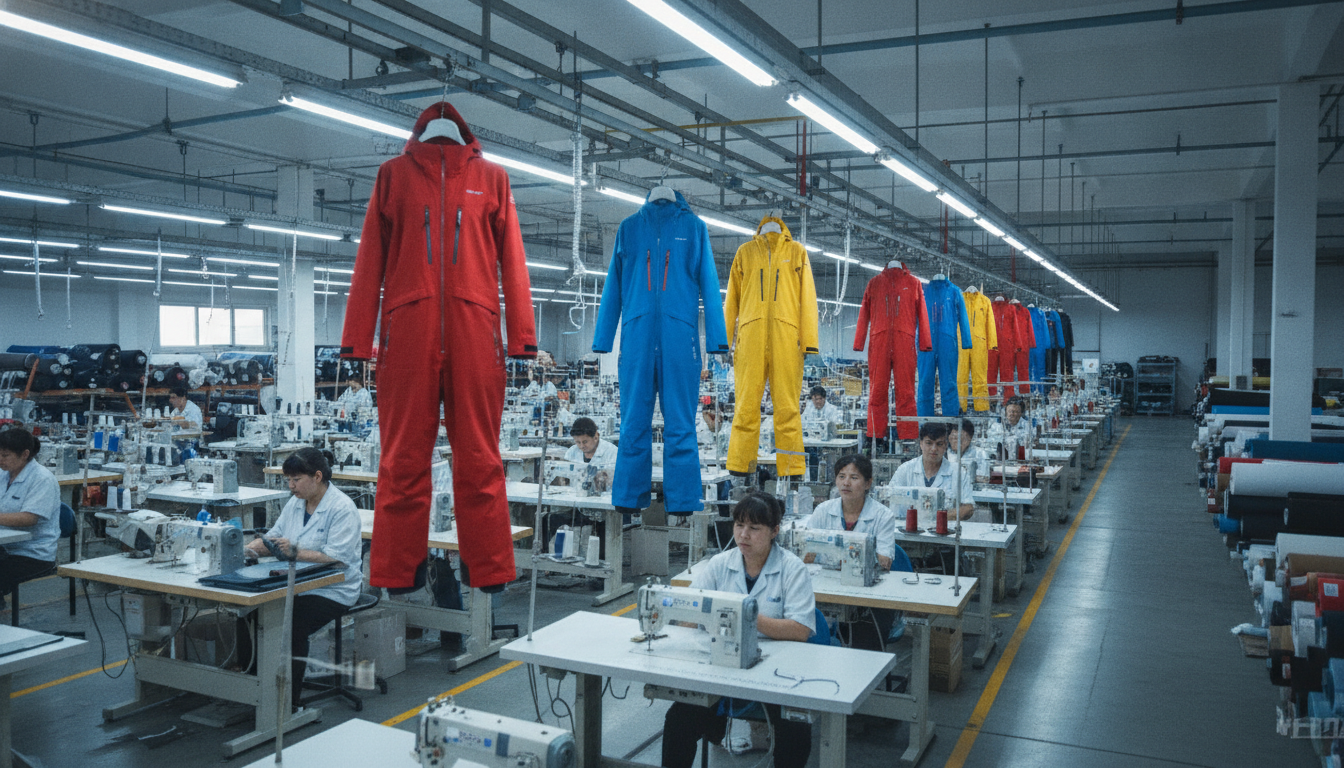
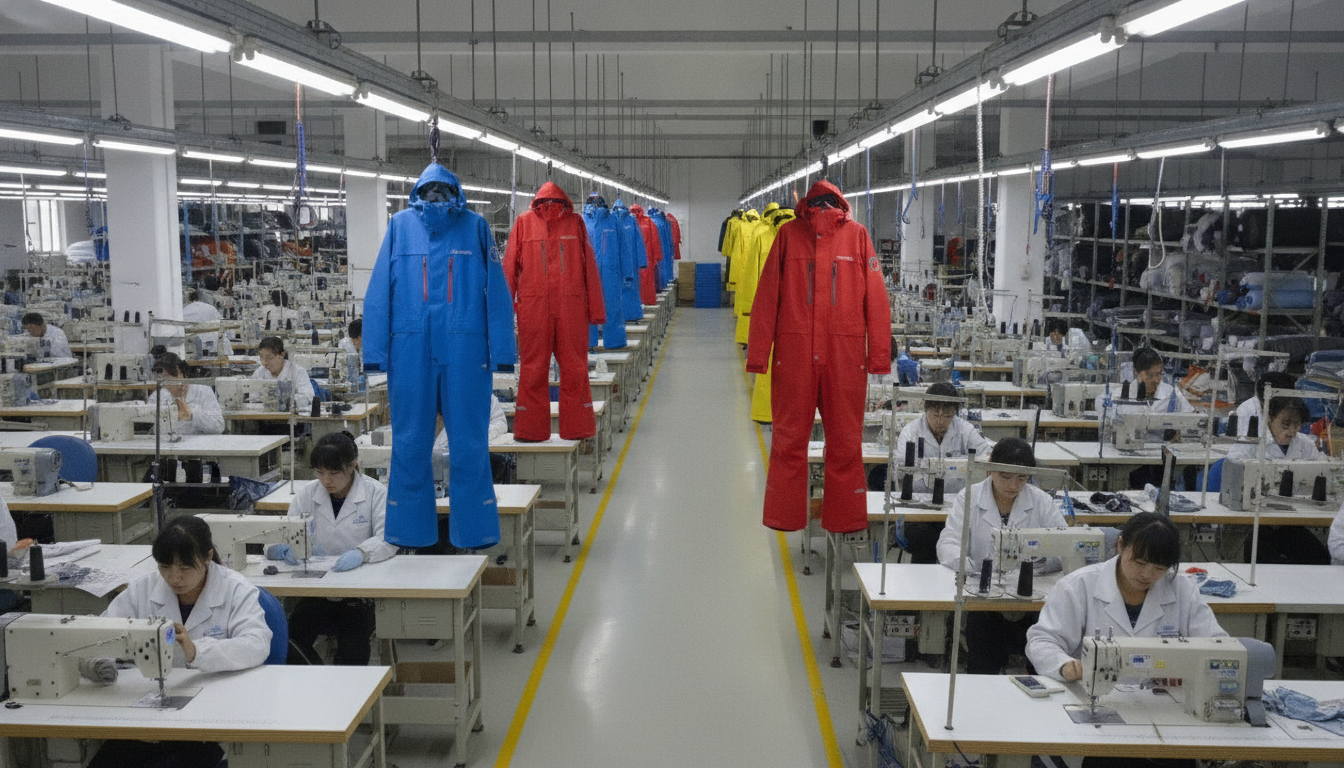
A custom ski suit is a one-piece or two-piece waterproof-breathable garment manufactured to your brand specifications-colors, logos, fit, and technical fabric-starting from 30 pieces per SKU at PTOUTWEAR. Sample MOQ is 1 piece with a $100 refundable fee, and sampling takes 7-10 days. Bulk production runs 25-35 days.
📋 Table of Contents
Executive Summary
- Custom ski suit production: Minimum order quantities start at 30 pieces per SKU for bulk, with 1-piece sampling available to validate fit and fabric before committing to production.
- Waterproof-breathable performance: Technical shell fabrics commonly benchmark at 10,000 mm waterproofing and 10,000 g breathability, with PFC-free DWR coatings that require periodic re-proofing to maintain performance.
- Lead times: Sampling takes 7-10 days, bulk production runs 25-35 days, and rush orders of 1,000 pieces can be completed in 2 weeks at a 25% surcharge.
- Branding flexibility: Custom ski suits accommodate embroidered logos, sublimated team graphics, contrast-color blocking, and sponsor patches across chest, sleeves, and back panels.
- Quality assurance: ISO 9001 and SGS certifications verify production consistency, while PFC-free DWR testing ensures environmental compliance without sacrificing water repellency.
What Defines a Custom Ski Suit?
A custom ski suit is a technical one-piece or two-piece garment engineered for winter sports, manufactured to your brand’s color palette, logo placement, and fit specifications. Unlike off-the-shelf retail suits, custom production allows you to specify shell fabric, insulation weight, seam-taping method, and ventilation features from the first sample onward.
One-Piece vs. Two-Piece Construction
One-piece ski suits offer full-torso weather protection with no gap between jacket and pants, making them popular for racing teams and resort uniform programs. Two-piece systems provide layering flexibility and easier bathroom access, which corporate buyers and school programs often prioritize. Both formats support the same waterproof-breathable shell fabrics and can be customized with identical branding and color-blocking.
Core Technical Requirements
Every custom ski suit starts with a waterproof-breathable shell fabric, sealed seams to block moisture entry, and articulated knees and elbows for movement. Waterproof/breathability performance is commonly benchmarked at 10,000 mm waterproofing and 10,000 g breathability in consumer ski outerwear listings. Insulation options range from 60g synthetic fill for high-output activities to 120g for stationary resort use.
Use Cases by Buyer Type
DTC outdoor brands use custom ski suits to differentiate their winter collections with unique color stories and technical fabric choices. Corporate and team buyers order matching suits for ski patrol, resort staff, and racing teams with embroidered logos and sponsor patches. School uniform programs specify durable, easy-care shells with reflective trim for youth safety.
Technical Fabric and Construction Choices
Shell fabric selection determines waterproofing, breathability, and durability. Most custom ski suit manufacturers offer a menu of technical fabrics, each with trade-offs in cost, performance, and environmental footprint.
Shell Fabric Options
- 2-layer polyester with PU membrane: Cost-effective waterproof-breathable shell, 10,000 mm / 10,000 g typical performance, suitable for resort and school use where budgets are tight.
- 2.5-layer nylon with TPU laminate: Lighter weight and more packable than 2-layer, preferred by touring and backcountry brands, slightly higher cost per meter.
- 3-layer bonded construction: Shell, membrane, and lining laminated into one fabric, highest durability and breathability, used by premium brands and professional racing teams.
- Recycled polyester shells: Growing in demand for sustainability-focused brands, requires GRS certification if marketed as recycled content, adds 10-15% to fabric cost.
DWR Coating and Wet-Out
Buyers frequently report that a waterproof jacket is only breathable while its DWR keeps the face fabric from wetting out; once it wets out you feel clammy and wet. PFC-free DWR coatings address environmental concerns but require re-proofing every 20-30 washes to maintain water beading. PTOUTWEAR applies PFC-free DWR as standard and tests water-repellency on every sample batch before bulk production begins.
Seam Taping and Construction
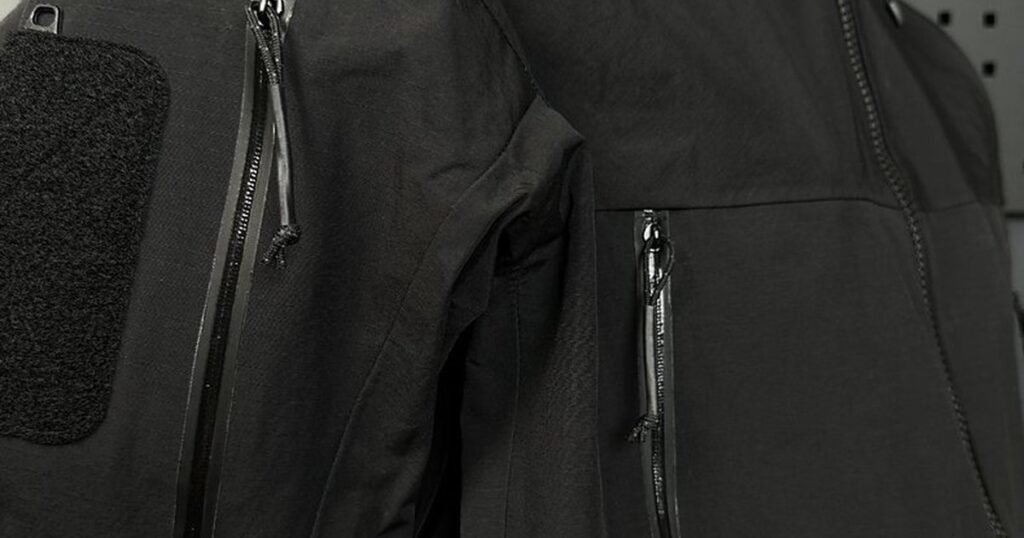
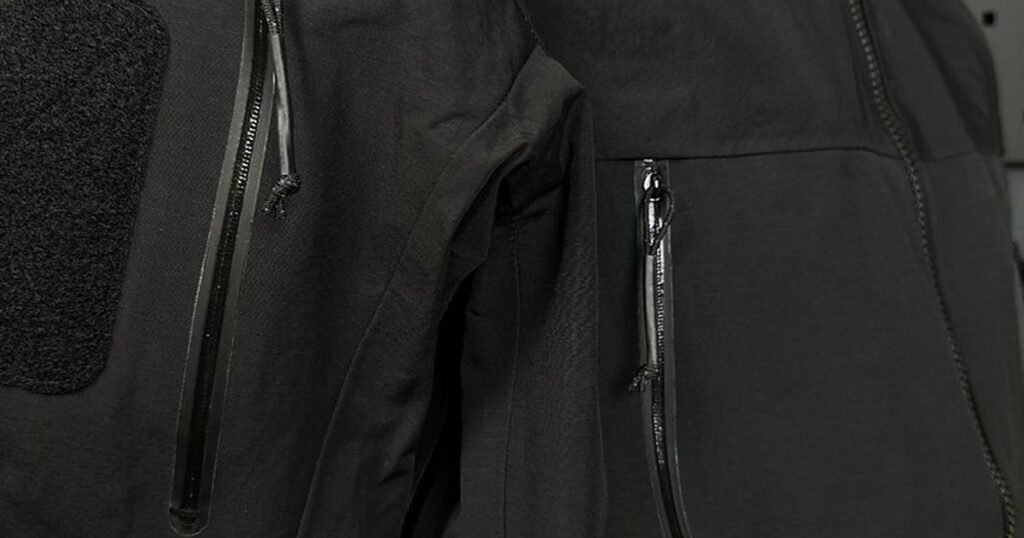
Fully taped seams prevent water intrusion at stitch lines. Two-needle tape machines apply 20 mm polyurethane tape over every seam, a process that adds 8-10 minutes per garment but is non-negotiable for true waterproof performance.
In practice: Seam taping is what separates a jacket that survives a wash test from one that delaminates after three cycles, which is why it gets checked on the sample before bulk is ever cut.
MOQ, Sampling, and Production Timelines
Minimum order quantities and lead times are the first commercial filters for custom ski suit buyers. Understanding the MOQ structure helps you plan cash flow and inventory risk before committing to a factory.
Sample MOQ: 1 piece. Bulk MOQ: 30 pieces per SKU. Sampling time: 7-10 days. Bulk production: 25-35 days.
Sample Development Process
A 1-piece sample allows you to validate fit, fabric hand-feel, and logo placement before ordering bulk. The $100 sample fee is refundable against your first bulk order. Sampling takes 7-10 days from tech-pack approval to finished garment in hand. Buyers should test the sample on snow or in a cold chamber to verify waterproofing and ventilation before approving bulk production.
Bulk MOQ and Order Sizing
The 30-piece-per-SKU minimum applies to each color and size combination. A typical first order for a DTC brand might be 30 pieces in size Medium, 30 in Large, across two colorways, totaling 120 pieces. Corporate buyers ordering team uniforms often consolidate into fewer SKUs to hit the minimum without excess inventory.
Production Lead Times
Bulk production runs 25-35 days from deposit to ex-factory, roughly 4 weeks. Rush orders of 1,000 pieces can be completed in 2 weeks at a 25% surcharge, useful for last-minute team events or retail restocks. DDP shipping to the US West Coast adds 18-22 days by sea, 5-7 days by air. OEM jacket manufacturing timelines are documented in detail on our production page.
Fit Engineering and Sizing Options
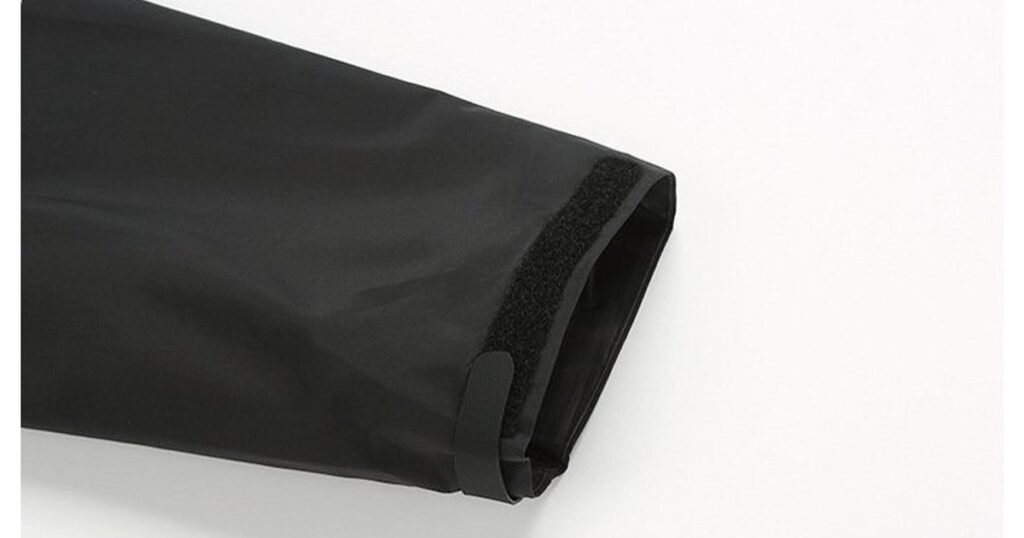
Fit engineering is where custom ski suits diverge from retail. Brands can specify longer torsos for tall athletes, wider hips for women’s-specific cuts, and adjustable cuffs for youth sizing. Fit mistakes are expensive to fix after bulk production, so sampling multiple sizes is common.
Standard vs. Custom Fit Blocks
Standard fit blocks are pre-graded patterns that cover men’s S-XXL and women’s XS-XL. Custom fit blocks require a fit model or detailed body measurements and add 2-3 weeks to sampling. Brands targeting plus-size or adaptive markets should budget for custom grading and at least two fit-sample rounds.
Youth and Junior Sizing
Youth ski suits require shorter inseams, narrower shoulders, and grow-room features like adjustable hem and cuff systems. School uniform programs often specify reflective trim on sleeves and back panels for visibility. Youth sizing adds complexity to grading but does not increase the 30-piece MOQ per SKU.
Articulation and Movement
Articulated knees and elbows use curved pattern pieces and gussets to reduce fabric tension during flexion. Racing suits add stretch panels at the back and underarms for unrestricted movement. Corporate buyers ordering for ski patrol or resort staff should test samples during actual work tasks, not just standing fits.
Branding, Customization, and Logo Placement
Branding flexibility is the primary reason buyers choose custom ski suit manufacturing over wholesale. Logos, team graphics, and sponsor patches can be placed on chest, sleeves, back, and legs, with multiple decoration methods available.
Decoration Methods
- Embroidery: Durable and professional, best for logos up to 4 inches wide, adds $2-4 per placement depending on stitch count.
- Sublimation printing: Full-color graphics with no hand-feel, requires polyester shell fabric, ideal for team jerseys and racing suits with complex designs.
- Heat-transfer patches: Cost-effective for small runs, less durable than embroidery, suitable for sponsor logos that may change season to season.
- Woven labels: High-end branding option, sewn into seams or applied as exterior patches, minimum 500 labels per design.
Color Blocking and Contrast Panels
Color blocking uses contrasting fabric panels to create visual interest and brand identity. Common placements include shoulder yokes, side panels, and sleeve stripes. Each additional color adds to cutting and sewing time but does not increase MOQ. Pantone matching is standard for custom colors; provide PMS codes at tech-pack stage to avoid shade disputes. Custom logo service details are available for embroidery and print specifications.
Sponsor and Team Graphics
Racing teams and corporate sponsors require precise logo placement and size specifications. Provide vector files (AI or EPS) for all logos at sampling stage. Sublimated graphics can cover entire panels for maximum visibility, but require polyester shell fabric and add 3-5 days to production.
Quality Control and Certifications
Quality control starts at fabric inspection and continues through every production stage. Certifications verify that the factory meets environmental and social-compliance standards, which matters to brands selling in EU and North American markets.
In-Line and Final Inspections
In-line inspections catch defects during production, before garments are finished. Final inspections check waterproofing, seam strength, and logo placement on 10% of each batch. Buyers can request third-party AQL 2.5 inspections through SGS or Bureau Veritas for an additional $300-500 per order.
Waterproofing and DWR Testing
Waterproofing is tested using a hydrostatic-head apparatus that measures how much water pressure the fabric can withstand before leaking. PFC-free DWR performance is verified with a spray test that grades water beading on a 1-5 scale. Every sample batch is tested before bulk production begins, and buyers receive test reports with their pre-production samples.
Certifications and Compliance
PTOUTWEAR holds ISO 9001, SGS, and PFC-Free DWR certifications. OEKO-TEX Standard 100, BSCI, GRS, and bluesign are pending, not yet held. Brands selling in the EU should verify that shell fabrics and trims comply with REACH restrictions on PFAS and other restricted substances. Certification documents are provided at sampling stage for buyer review. Low MOQ jacket manufacturer capabilities include compliance documentation for all certified materials.
Key Takeaways
- Custom ski suit production starts at 30 pieces per SKU for bulk orders, with 1-piece sampling available to validate fit and fabric before committing to production.
- Waterproof-breathable shell fabrics commonly benchmark at 10,000 mm waterproofing and 10,000 g breathability, with PFC-free DWR coatings that require periodic re-proofing to maintain water repellency.
- Sampling takes 7-10 days from tech-pack approval to finished garment, bulk production runs 25-35 days, and rush orders of 1,000 pieces can be completed in 2 weeks at a 25% surcharge.
- Fit engineering options include standard graded patterns for men’s and women’s sizing, custom fit blocks for plus-size and adaptive markets, and youth sizing with adjustable grow-room features.
- Branding methods include embroidery, sublimation printing, heat-transfer patches, and woven labels, with color blocking and contrast panels available to create unique brand identity.
- Quality control includes in-line and final inspections, waterproofing and DWR testing on every sample batch, and ISO 9001, SGS, and PFC-Free DWR certifications to verify production consistency and environmental compliance.
FAQ
What is the difference between a ski suit and a snowsuit?
A ski suit is a technical one-piece or two-piece garment engineered for winter sports, with waterproof-breathable shell fabric, sealed seams, and articulated knees and elbows for movement. A snowsuit is a casual winter garment, often insulated and less technical, designed for general cold-weather use rather than high-output skiing or snowboarding. Ski suits prioritize breathability and mobility, while snowsuits prioritize warmth and weather protection for stationary activities.
Can you put your own logo on a custom ski suit?
Yes, custom ski suit manufacturing allows you to place your brand logo on chest, sleeves, back, and legs using embroidery, sublimation printing, heat-transfer patches, or woven labels. Provide vector files (AI or EPS) at the tech-pack stage to ensure accurate logo placement and color matching. Embroidery is the most durable option and adds $2-4 per placement depending on stitch count, while sublimation printing allows full-color graphics with no hand-feel on polyester shell fabrics.
What fabric is best for a custom ski suit?
The best fabric depends on your use case and budget. 2-layer polyester with PU membrane offers cost-effective waterproof-breathable performance at 10,000 mm / 10,000 g, suitable for resort and school use. 2.5-layer nylon with TPU laminate is lighter and more packable, preferred by touring and backcountry brands. 3-layer bonded construction provides the highest durability and breathability, used by premium brands and professional racing teams. Recycled polyester shells are growing in demand for sustainability-focused brands but add 10-15% to fabric cost.
Ready to develop your custom ski suit with a factory that understands technical outerwear?
Request 1-Piece Samples →
Written by Ivan Chen, Sales Engineer at PTOUTWEAR, 13 years in outdoor apparel manufacturing.