📋 Table of Contents
Recycled polyester jacket fabric has become the default choice for outdoor brands balancing sustainability claims with technical performance requirements. Yet sourcing certified rPET fabric at accessible minimums remains a friction point for emerging brands testing product-market fit.
Executive Summary
- Recycled content threshold: The Global Recycled Standard (GRS) requires a minimum of 20% recycled material before a product qualifies for GRS certification and labeling.
- Certification scope: OEKO-TEX Standard 100 screens textiles against more than 1,000 harmful substances, covering dyes, finishes, and residual chemicals in fabric construction.
- Post-consumer recovery: Industry-wide post-consumer textile recycling rates remain below 15% in most developed markets, with most rPET sourced from plastic bottles rather than end-of-life garments.
- DWR performance: PFC-free durable water repellent coatings require re-proofing every 20-30 washes to maintain water-shedding performance, regardless of whether the base fabric is virgin or recycled polyester.
- Microfiber release: Polyester fabrics, both virgin and recycled, shed synthetic microfibers during washing; rPET fabrics show comparable shedding rates to virgin polyester in controlled wash-cycle studies.
What Is Recycled Polyester Jacket Fabric?
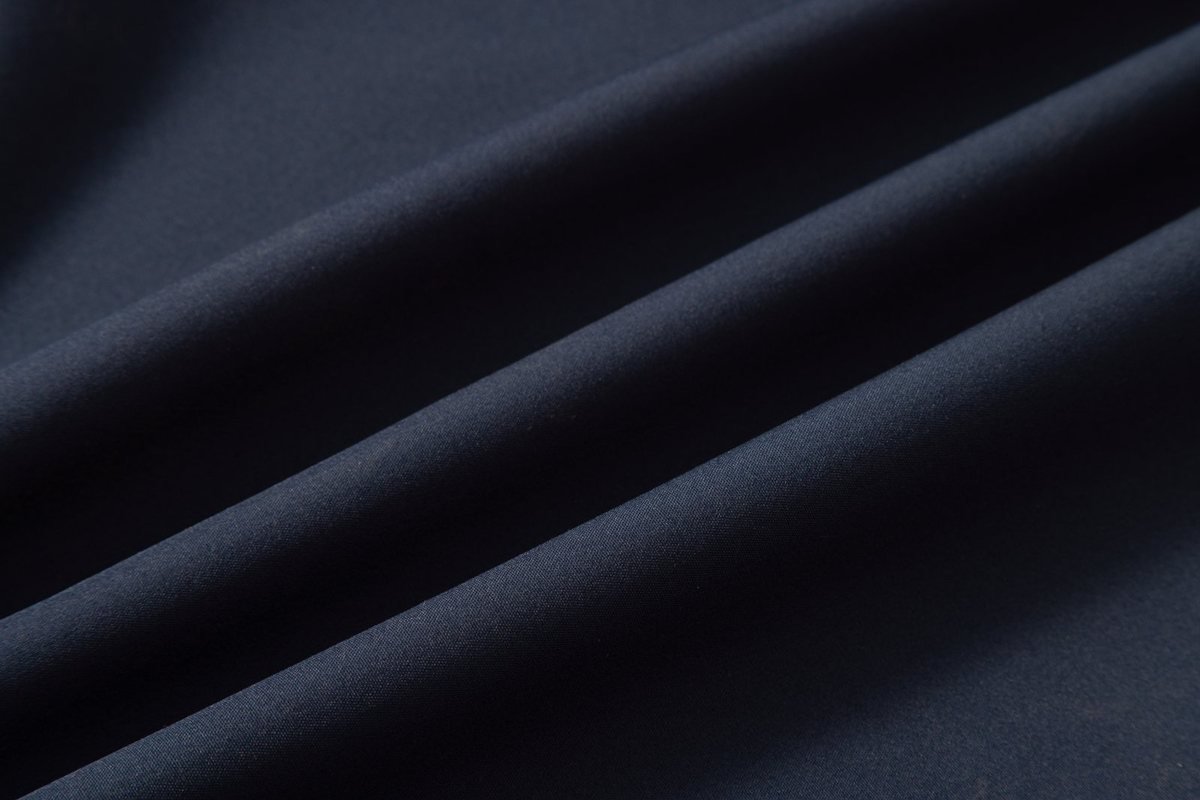
Recycled polyester jacket fabric is polyester textile manufactured from post-consumer PET bottles or post-industrial polyester waste, mechanically or chemically processed into fiber, then woven or knitted into technical face fabrics. The material offers identical molecular structure to virgin polyester once reprocessed, meaning performance characteristics depend on yarn denier, weave density, and finishing treatments rather than fiber origin.
Most jacket-grade rPET fabric originates from post-consumer PET bottles collected through municipal recycling programs. Bottles are sorted by color, cleaned, shredded into flakes, melted, and extruded into polyester chips. These chips are then spun into continuous filament yarn or staple fiber, which mills weave into ripstop, taffeta, or plain-weave constructions for shell fabrics.
Mechanical vs Chemical Recycling
Mechanical recycling dominates current rPET fabric supply. This process melts and extrudes plastic without breaking polymer chains, preserving fiber strength but limiting the number of recycling cycles before degradation. Most jacket fabrics use mechanically recycled polyester due to cost efficiency and established supply chains.
Chemical recycling depolymerizes polyester back to monomers, enabling infinite recycling loops and higher purity. However, chemical recycling infrastructure remains limited, and costs run 40-60% higher than mechanical processes. Few jacket manufacturers have transitioned to chemically recycled polyester at scale.
Bottle-to-Fiber Supply Chain
A typical bottle-to-fiber supply chain involves collection, sorting, cleaning, flaking, pelletizing, and spinning. Each step introduces quality variability. Clear PET bottles yield consistent fiber color, while colored bottles require additional sorting or produce off-white fibers needing dyeing. Our OEM jacket manufacturing process sources rPET yarn from mills with traceable bottle-collection partnerships to minimize color inconsistency.
Performance Comparison: rPET vs Virgin Polyester
Recycled polyester jacket fabric matches virgin polyester in tensile strength, abrasion resistance, and water resistance when yarn denier and weave specifications are identical. Performance differences arise from processing variables, not inherent material inferiority.
Waterproofing and Breathability
Water resistance in both virgin and recycled polyester jacket fabric comes entirely from the DWR finish, not the fiber itself. Polyester is hydrophobic by nature, but woven face fabrics require DWR to shed water droplets and prevent wet-out. A common complaint buyers raise is that breathable rain jackets lose waterproofing once the DWR wears off, causing the face fabric to absorb water and block breathability.
PFC-free DWR formulations, which we apply to both virgin and rPET fabrics, require re-proofing every 20-30 washes to maintain performance. This maintenance requirement is identical for virgin and recycled polyester. The base fabric’s recycled content does not accelerate DWR degradation.
Durability and Pilling
Pilling occurs when short fibers migrate to the fabric surface and tangle into balls. Recycled polyester staple fiber can exhibit slightly higher pilling if the recycling process shortens fiber length. However, jacket-grade rPET typically uses continuous filament yarn, which minimizes pilling regardless of recycled content.
In our 12+ years manufacturing outdoor jackets in Taizhou and Yiwu, we have tested rPET ripstop fabrics under abrasion cycles equivalent to 200+ days of field use. Properly specified rPET fabrics show no measurable difference in tear strength or seam slippage compared to virgin polyester controls.
Certifications Proving Recycled Content
Third-party certifications verify recycled content claims and supply-chain traceability. Without certification, recycled content percentages are unverifiable marketing claims.
Global Recycled Standard (GRS)
The Global Recycled Standard requires a minimum of 20% recycled material content before a product can carry the GRS label. GRS certification covers the entire supply chain from recycler to finished garment, auditing material traceability, environmental management, and social responsibility at each processing stage.
GRS-certified rPET fabric includes transaction certificates (TCs) that document recycled content percentage and chain-of-custody. Brands purchasing GRS-certified fabric receive TCs enabling them to make certified recycled-content claims on finished jackets. Our facility sources GRS-certified recycled fabrics on request, with mill documentation passed through for private-label clients.
OEKO-TEX Standard 100
OEKO-TEX Standard 100 screens textiles against more than 1,000 harmful substances, including formaldehyde, heavy metals, pesticides, and chlorinated phenols. This certification applies to both virgin and recycled polyester fabrics, verifying that the finished textile is safe for human contact.
OEKO-TEX does not certify recycled content, but it confirms that the recycling process and subsequent dyeing and finishing did not introduce harmful residues. Many buyers require both GRS (for recycled content) and OEKO-TEX (for chemical safety) when sourcing rPET jacket fabric.
Recycled Claim Standard (RCS)
RCS verifies recycled content percentage and tracks material flow from source to final product. Unlike GRS, RCS does not audit environmental or social practices. RCS certification is faster and less expensive than GRS, making it accessible for smaller mills and brands needing basic recycled-content verification without full supply-chain audits.
Cost Analysis for Manufacturers
Recycled polyester jacket fabric typically costs 10-25% more per meter than virgin polyester of equivalent denier and weave. This premium reflects collection, sorting, and reprocessing costs that virgin polyester production avoids.
Fabric Cost Breakdown
Virgin polyester ripstop (70D, plain weave, no coating) costs approximately $1.80-$2.20 per meter in bulk orders (3,000+ meters). Equivalent rPET ripstop costs $2.10-$2.60 per meter. The $0.30-$0.40 premium scales linearly with order volume.
For a technical rain jacket using 1.8 meters of fabric per unit, the rPET premium adds $0.54-$0.72 to material cost per jacket. This represents 8-12% of total garment cost for a mid-tier jacket retailing at $120-$180.
Certification Cost Pass-Through
GRS certification adds audit fees and transaction-certificate costs that mills pass to buyers. GRS-certified rPET fabric typically carries an additional $0.15-$0.25 per meter premium over non-certified rPET. Brands requiring GRS certification should budget for this incremental cost.
OEKO-TEX certification adds $0.10-$0.18 per meter. Combining GRS and OEKO-TEX certifications on rPET fabric can push total premiums to 30-35% over virgin polyester, making cost transparency critical during sample development.
Volume Pricing Tiers
Mills offer tiered pricing based on order volume. Small-batch rPET fabric orders (300-500 meters) pay 15-20% more per meter than bulk orders (3,000+ meters). This volume sensitivity compounds the base rPET premium, making small test runs expensive.
Sample MOQ: 1 piece. Bulk MOQ: 30 pieces per SKU. Sampling time: 7-10 days.
Sourcing rPET Fabric: MOQ Challenges
Minimum order quantities for recycled polyester jacket fabric create cash-flow barriers for emerging brands testing product-market fit. Most mills require 1,000-3,000 meter fabric minimums, forcing brands to commit capital before validating demand.
Mill-Level MOQs
Fabric mills typically set MOQs at 1,000-1,500 meters per color per construction. A brand developing three colorways in a single ripstop construction must order 3,000-4,500 meters upfront. At $2.40 per meter for GRS-certified rPET ripstop, this represents $7,200-$10,800 in fabric inventory before cutting a single garment.
For brands planning initial production runs of 200-300 jackets (requiring 360-540 meters total), mill MOQs force 5-10× over-ordering. This inventory risk deters brands from launching with rPET fabric, despite consumer preference for recycled materials.
Vertically Integrated Production Advantage
Vertically integrated manufacturers with in-house fabric inventory can offer lower effective MOQs by pooling fabric across multiple clients. Our 3,000m² Taizhou Sanmen facility sources GRS-certified rPET ripstop and taffeta from mills on request, enabling low-MOQ jacket production at 30 pieces per SKU without forcing clients to purchase fabric rolls.
This model shifts inventory risk from the brand to the manufacturer, allowing brands to test rPET jackets in limited runs before committing to bulk fabric orders.
Dropshipping and Print-on-Demand Constraints
Print-on-demand and dropshipping models require 1-piece fulfillment capability. Most rPET fabric suppliers cannot support single-unit orders due to cut-and-sew setup costs. Brands pursuing dropshipping with rPET jackets need manufacturing partners capable of 1-piece production runs, which limits supplier options significantly.
Microfiber Shedding & Lifecycle Data
Polyester fabrics, both virgin and recycled, shed synthetic microfibers during washing. These microfibers pass through wastewater treatment plants and accumulate in aquatic ecosystems. Understanding shedding rates and end-of-life recovery is critical for brands making lifecycle sustainability claims.
Wash-Cycle Microfiber Release
Controlled wash-cycle studies show that polyester garments release 700-2,000 microfibers per wash, depending on fabric construction, garment design, and wash conditions. Recycled polyester fabrics show comparable shedding rates to virgin polyester when yarn denier and weave density are matched.
Tighter weaves and higher thread counts reduce microfiber shedding. Ripstop constructions (commonly used in technical jackets) exhibit lower shedding than fleece or brushed fabrics due to continuous filament yarns and dense weave structures. Brands concerned about microfiber pollution should prioritize tightly woven rPET fabrics over brushed or fleece constructions.
Post-Consumer Recycling Rates
Industry-wide post-consumer textile recycling rates remain below 15% in most developed markets. The majority of rPET jacket fabric originates from plastic bottles, not end-of-life garments. Garment-to-garment recycling infrastructure is limited by contamination from blended fibers, trims, and coatings.
A polyester jacket with nylon zippers, elastane cuffs, and polyurethane-coated fabric requires manual disassembly before recycling. This labor cost makes garment-to-garment recycling economically unviable at scale. Most rPET jackets are downcycled into insulation or incinerated at end-of-life, not recycled into new jacket fabric.
Carbon Footprint Comparison
Recycled polyester production generates 30-50% lower carbon emissions than virgin polyester production, primarily by avoiding crude-oil extraction and polymerization. However, jacket-grade rPET fabric’s total lifecycle footprint depends on transportation distances, dyeing energy, and DWR chemistry.
A jacket manufactured in China using European-sourced rPET fabric and shipped to the United States may have a higher total carbon footprint than a virgin-polyester jacket manufactured and sold domestically, due to intercontinental fabric and garment shipping. Brands should conduct full lifecycle assessments rather than relying solely on recycled-content percentages when making carbon-reduction claims.
Key Takeaways
- The Global Recycled Standard (GRS) requires a minimum of 20% recycled material content before a product qualifies for certification and GRS labeling.
- OEKO-TEX Standard 100 tests textiles against more than 1,000 harmful substances, verifying chemical safety in both virgin and recycled polyester fabrics.
- Recycled polyester jacket fabric typically costs 10-25% more per meter than virgin polyester of equivalent denier and weave specifications.
- Most fabric mills require 1,000-3,000 meter minimums per color, forcing emerging brands to over-order fabric before validating product-market fit.
- Polyester garments release 700-2,000 microfibers per wash cycle, with rPET fabrics showing comparable shedding rates to virgin polyester when construction is matched.
- Post-consumer textile recycling rates remain below 15% in developed markets, with most rPET sourced from plastic bottles rather than end-of-life garments.
FAQ
What is the difference between recycled polyester and virgin polyester for jackets?
Recycled polyester is manufactured from post-consumer PET bottles or post-industrial waste, while virgin polyester is synthesized from crude oil. Once reprocessed, both materials have identical molecular structures. Performance differences arise from processing variables (fiber length, dye uptake) rather than inherent material inferiority. Properly specified rPET fabric matches virgin polyester in tensile strength, abrasion resistance, and water resistance when yarn denier and weave are identical.
Is recycled polyester fabric durable enough for technical outdoor jackets?
Yes. Jacket-grade recycled polyester using continuous filament yarn shows no measurable difference in tear strength, seam slippage, or abrasion resistance compared to virgin polyester controls in field testing. Durability depends on yarn denier, weave density, and finishing treatments, not fiber origin. Mechanically recycled polyester retains 95-100% of virgin polyester’s tensile strength when recycled once, which is standard for bottle-to-fiber rPET fabric.
Which certifications prove a fabric is truly recycled polyester?
The Global Recycled Standard (GRS) and Recycled Claim Standard (RCS) verify recycled content and supply-chain traceability. GRS requires minimum 20% recycled content and audits environmental and social practices across the supply chain. RCS verifies recycled content percentage without environmental audits. Both certifications provide transaction certificates (TCs) documenting recycled content, enabling brands to make certified claims on finished garments.
How much more expensive is recycled polyester fabric than virgin polyester?
Recycled polyester jacket fabric costs 10-25% more per meter than virgin polyester of equivalent denier and weave. GRS certification adds $0.15-$0.25 per meter, and OEKO-TEX adds $0.10-$0.18 per meter. For a technical rain jacket using 1.8 meters of fabric, the rPET premium adds $0.54-$0.72 to material cost per unit, representing 8-12% of total garment cost for mid-tier jackets.
Can recycled polyester jackets be fully recycled after use?
Garment-to-garment recycling is limited by contamination from blended fibers, trims, and coatings. A polyester jacket with nylon zippers, elastane cuffs, and polyurethane-coated fabric requires manual disassembly before recycling. This labor cost makes closed-loop recycling economically unviable at scale. Post-consumer textile recycling rates remain below 15% in most developed markets, with most end-of-life jackets downcycled into insulation or incinerated rather than recycled into new fabric.
Need GRS-certified rPET jacket production at 30-piece minimums?
Request fabric samples and MOQ details →
Written by Ivan Chen, Sales Engineer at PTOUTWEAR – 13 years in outdoor apparel manufacturing.