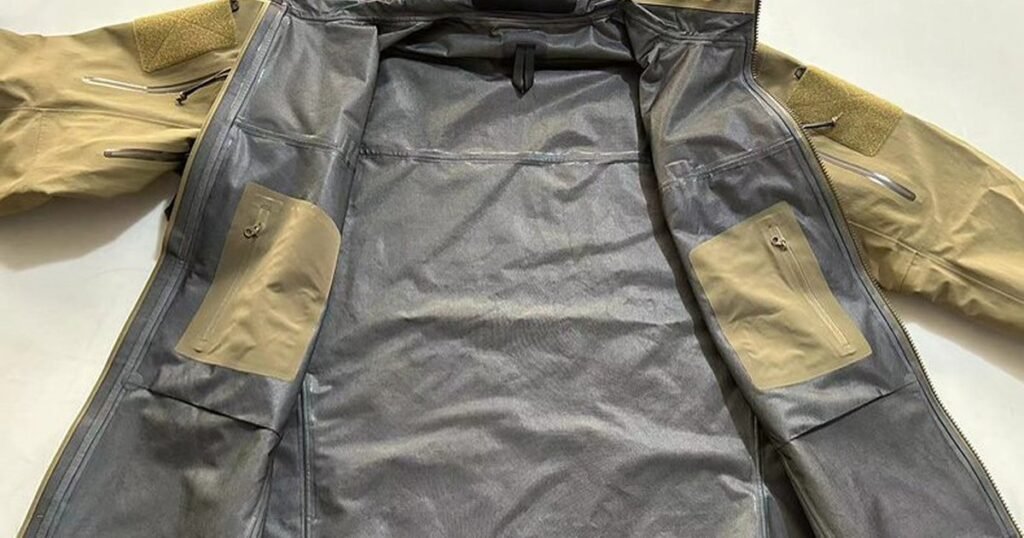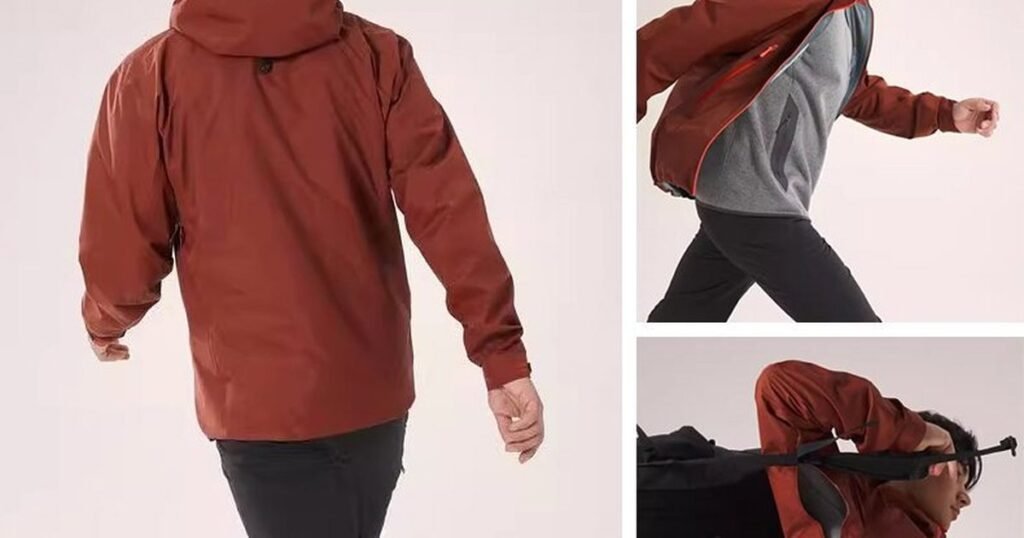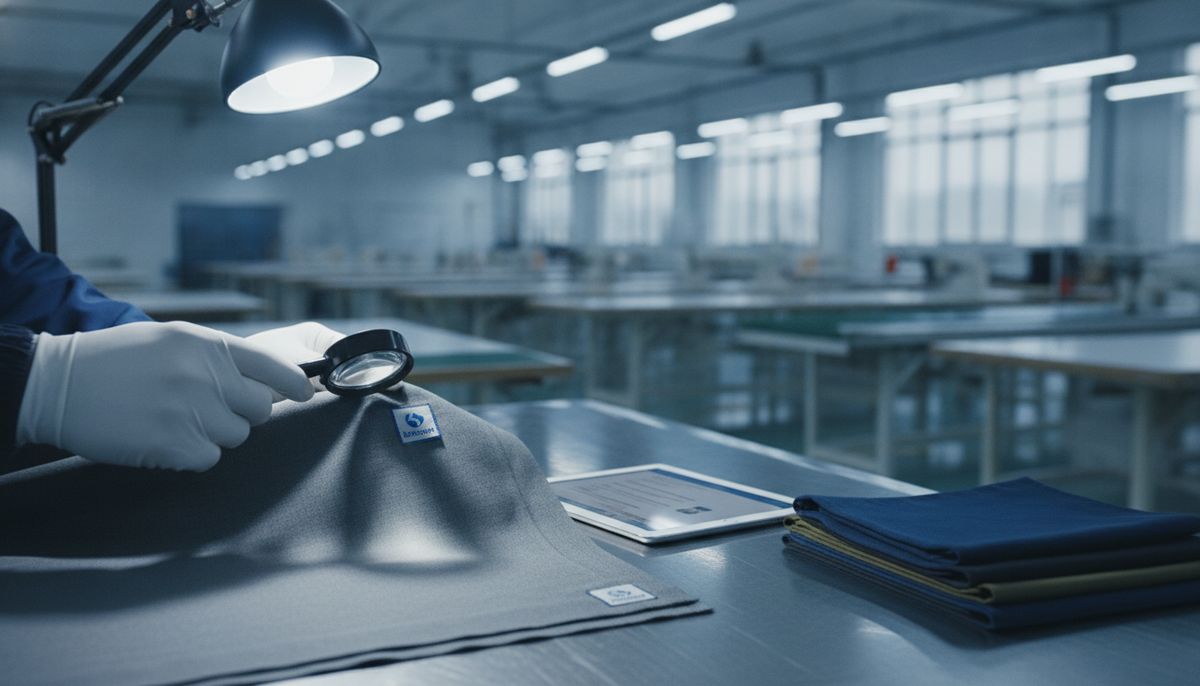
To verify bluesign oeko-tex certification outdoor apparel factory credentials, request the certificate number and legal entity name, then cross-check them in the official bluesign System Partner database or OEKO-TEX STANDARD 100 certificate search portal. Match the certificate holder’s legal name and facility address to the factory on your purchase order, confirm the certificate covers the specific materials and processes in your jacket specification, and check that the validity dates span your production timeline.
📋 Table of Contents
Key Takeaways
- OEKO-TEX STANDARD 100 verifies that finished textiles and components have been tested against harmful substances, while bluesign evaluates chemical inputs, resource use, emissions, worker safety, and production processes across the entire manufacturing chain.
- A certification logo on a factory website or product sample is insufficient; buyers should request the certificate number, legal entity name, and facility address, then verify them in the official bluesign System Partner database or OEKO-TEX certificate search portal.
- According to bluesign (2026), the bluesign system has worked with the textile industry for more than 25 years and assesses production facilities in person across six responsibility areas.
- Verification must confirm that the certificate holder’s legal name and factory address match the entity on your purchase order, that the certificate scope covers your jacket’s shell fabric, membrane, insulation, trims, zippers, and DWR treatment, and that the validity dates span your production timeline.
- Red flags include certificates issued to a different legal entity, expired validity dates, overbroad scope claims that do not specify tested materials or processes, and refusal to provide a certificate number or direct database link.
- Retailers in the United States, United Kingdom, Germany, France, Canada, and Australia increasingly require bluesign or OEKO-TEX documentation for chemical compliance, consumer transparency, and sustainability marketing claims.
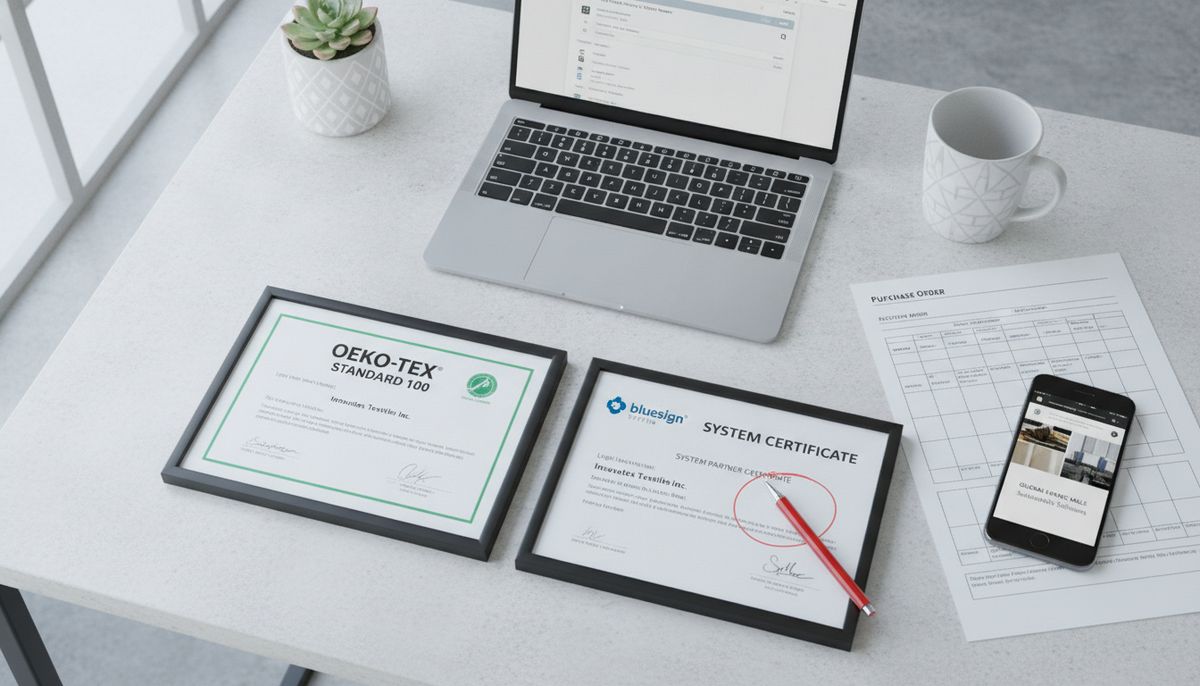
What bluesign and OEKO-TEX Actually Certify
Understanding what each certification covers is the first step to verify bluesign oeko-tex certification outdoor apparel factory credentials. The two systems evaluate different stages of the supply chain and apply different criteria.
OEKO-TEX STANDARD 100: Finished-Product Chemical Testing
OEKO-TEX STANDARD 100 certifies that a finished textile or garment component has been tested against a list of harmful substances. The certificate is issued to a specific product, material, or batch, not to the factory itself. A shell-fabric mill, a zipper supplier, or a garment factory can each hold separate OEKO-TEX certificates for the materials or finished goods they produce. The certificate specifies the tested article, the product class (I for baby items, II for skin-contact apparel, III for non-skin-contact textiles, IV for decoration), and the validity period, which is typically one year and must be renewed through re-testing.
When you verify an OEKO-TEX certificate, you are confirming that the specific fabric, zipper tape, or finished jacket listed on the certificate passed chemical-safety testing. The certificate does not evaluate the factory’s environmental controls, worker safety, or chemical-management processes. If your jacket bill of materials includes a shell fabric, a membrane laminate, insulation, a zipper, printed logos, and a DWR coating, each component would need its own OEKO-TEX certificate to claim full product certification.
bluesign: Process and Input-Material Approval
bluesign certifies production facilities and input materials, not finished products. A bluesign System Partner is a textile mill, chemical supplier, or accessory manufacturer that has passed an on-site audit of its chemical inventory, resource consumption, emissions, worker health and safety, and quality-management systems. According to The Knowledgeable Needle Project (2026), bluesign reports that its system covers more than 850 manufacturers. A bluesign-approved fabric means the fabric was produced at a certified facility using bluesign-approved dyes, finishes, and auxiliaries.
When you verify bluesign oeko-tex certification outdoor apparel factory status, you need to distinguish between a bluesign System Partner (the mill or chemical supplier) and a garment factory that sources bluesign-approved fabrics. A cut-and-sew factory is not a bluesign System Partner unless it also operates wet-processing equipment and has passed a bluesign audit. Most OEM jacket manufacturers source bluesign-approved shell fabrics and membranes from certified mills, then cut and sew them into finished jackets. The factory can state that it uses bluesign-approved materials, but it cannot claim to be a bluesign System Partner unless it holds that certification itself.
According to Vogue (2026), for apparel products using the bluepass approach, at least 90% of textile components must come from processes that have passed bluesign criteria. This threshold applies to brands that want to attach a bluepass product label to a finished jacket, not to the factory’s own certification status.
Step-by-Step Verification Workflow for Outdoor Jackets
A complete outdoor jacket includes multiple materials and processes, each of which may require separate certification. The verification workflow below applies to a typical three-layer hardshell jacket with a waterproof-breathable membrane, DWR finish, and accessory trims.
Request the Certificate Number and Legal Entity Name
Ask the factory to provide the certificate number, the legal entity name on the certificate, the facility address, the scope of certification, and the validity dates. A factory that is a bluesign System Partner should provide a link to its listing in the bluesign database. A factory that sources bluesign-approved fabrics should provide the mill’s bluesign System Partner certificate or the fabric’s bluesign-approved article number. For OEKO-TEX, request the certificate number and the tested article description.
If the factory provides only a logo image or a generic statement like “we are certified,” that is a red flag. Legitimate certificate holders provide the certificate number and a direct database link without hesitation.
Cross-Check the Certificate in the Official Database
For bluesign, search the bluesign System Partner database by company name and location. The database lists all certified mills, chemical suppliers, and accessory manufacturers. If the factory claims to be a bluesign System Partner but does not appear in the database, the claim is false. If the factory states that it sources bluesign-approved fabrics, verify that the fabric mill appears in the database and that the mill’s certification scope includes the fabric type in your specification.
For OEKO-TEX, use the OEKO-TEX certificate search portal and enter the certificate number. The portal returns the certificate holder’s name, the tested article, the product class, and the validity period. Confirm that the certificate holder’s legal name matches the entity on your purchase order and that the tested article matches the fabric or component in your bill of materials.
Match the Certificate to Your Jacket Bill of Materials
A complete outdoor jacket typically includes a shell fabric, a waterproof-breathable membrane (laminated or bonded to the shell), insulation (down or synthetic), a lining fabric, zippers, Velcro, elastic cuffs, drawcords, printed or embroidered logos, and a DWR coating. Each of these components is produced by a different supplier, and each may require its own certification.
- Shell fabric and membrane: The fabric mill should hold a bluesign System Partner certificate or an OEKO-TEX certificate for the laminated fabric. If the membrane is supplied separately and laminated at a different facility, that lamination facility should also be a bluesign System Partner or provide an OEKO-TEX certificate for the finished laminate.
- Insulation: Down and synthetic insulation suppliers often hold OEKO-TEX certificates. If the jacket uses recycled polyester insulation, the supplier may also hold a Global Recycled Standard (GRS) certificate, but that is a separate certification and does not replace OEKO-TEX or bluesign.
- Zippers and trims: Zipper manufacturers like YKK and SBS offer OEKO-TEX-certified zipper tapes and sliders. Request the certificate number for the specific zipper model in your specification.
- DWR coating: DWR is applied as a finish to the shell fabric. A bluesign-approved DWR means the chemical formulation has been approved by bluesign and is listed in the bluesign bluefinder database. An OEKO-TEX certificate for the finished fabric confirms that the DWR-treated fabric passed harmful-substance testing. If your factory applies DWR in-house, ask whether the DWR chemical is bluesign-approved and whether the finished fabric holds an OEKO-TEX certificate.
- Printing and embroidery: Screen-printed logos and embroidered patches use inks, threads, and adhesives that may contain restricted substances. If these processes are subcontracted, ask the subcontractor for OEKO-TEX certificates covering the inks and threads used.
Verify That the Certificate Validity Dates Span Your Production Timeline
OEKO-TEX certificates are valid for one year from the issue date and must be renewed annually. If your production is scheduled for March 2026 and the fabric mill’s OEKO-TEX certificate expired in January 2026, the fabric you receive will not be covered by a valid certificate. Ask the mill to provide an updated certificate before you approve the bulk fabric order.
bluesign System Partner status does not have an annual expiration date, but partners are subject to periodic re-audits. If a mill’s bluesign listing shows a suspension notice or an audit-pending status, contact bluesign directly to confirm whether the mill is authorized to supply bluesign-approved materials during your production window.
Reconcile Certificates with Purchase Orders and Production Batches
A common verification failure occurs when the certificate holder’s legal name does not match the factory name on your purchase order. This happens when a factory uses a trading company or a parent company name on the purchase order but holds certifications under a different subsidiary or facility name. Request a business license or a corporate structure document that links the certificate holder to the entity on your purchase order.
Another failure mode is batch mismatch. An OEKO-TEX certificate is issued for a specific tested batch of fabric. If the mill produces multiple batches per year and only one batch was tested, the certificate does not cover fabric from untested batches. Ask the mill to confirm that the fabric in your order comes from the certified batch, or request a new certificate covering the batch you will receive.
Red Flags: Forged, Expired, or Mismatched Certificates
Forged and misrepresented certifications are common in the outdoor apparel supply chain. The red flags below indicate that a factory’s certification claim requires additional scrutiny.
Certificate Issued to a Different Legal Entity
If the certificate holder’s legal name does not match the factory name on your purchase order, ask the factory to provide documentation linking the two entities. A parent company may hold certifications on behalf of multiple subsidiaries, or a trading office may represent a certified production facility. Request a business license, a corporate registry extract, or a letter from the certificate holder authorizing the factory to use the certification.
If the factory cannot provide this documentation, the certificate does not apply to your order.
Expired Validity Dates
An expired OEKO-TEX certificate is not valid, even if the factory claims it is “renewing” the certificate. OEKO-TEX certificates expire exactly one year after the issue date. If the certificate on file is expired, the fabric or component is not certified, and you cannot make a certified-product claim to your retailer or end customer.
Ask the factory to provide an updated certificate before you approve the bulk order. If the factory cannot provide one, either switch to a certified supplier or remove the certification claim from your product marketing.
Overbroad Scope Claims
A factory may claim “all our fabrics are OEKO-TEX certified” or “we are a bluesign factory,” but the certificate scope is narrower. An OEKO-TEX certificate lists the specific tested articles, such as “100% polyester woven fabric, article number XYZ123.” The certificate does not cover other fabrics the mill produces unless those fabrics are also listed on a certificate.
Similarly, a bluesign System Partner certificate applies only to the certified facility and the approved input chemicals. If the factory subcontracts dyeing or printing to a non-certified facility, the subcontracted processes are not covered by the factory’s bluesign status.
Refusal to Provide a Certificate Number or Database Link
A factory that refuses to provide a certificate number, a database link, or a copy of the certificate is either not certified or is misrepresenting another entity’s certification. Legitimate certificate holders share this information freely because it is publicly verifiable.
If a factory provides a certificate image but refuses to share the certificate number, reverse-image-search the certificate to check whether it has been copied from another company’s website. Forged certificates often use scanned images of real certificates with the company name digitally altered.
Certificate Does Not Cover the Production Process
An OEKO-TEX certificate for a greige (undyed) fabric does not cover the finished dyed and printed fabric unless the dyeing and printing processes were also tested. If your jacket uses a printed shell fabric, ask whether the OEKO-TEX certificate covers the fabric after printing, or request a separate certificate for the printed fabric.
For bluesign, a System Partner certificate for a weaving mill does not cover dyeing and finishing unless those processes are performed at the same certified facility. If the mill subcontracts dyeing to a third-party facility, that facility must also be a bluesign System Partner for the fabric to be bluesign-approved.
Country-Specific Compliance Expectations
Retailers and corporate buyers in different countries have varying expectations for chemical compliance and sustainability documentation. The requirements below reflect common buyer expectations as of 2026, but specific retailers may impose stricter standards.
United States
Major outdoor retailers in the United States, including REI, Patagonia, and The North Face, require suppliers to provide chemical-compliance documentation for restricted substances under California Proposition 65, the Consumer Product Safety Improvement Act (CPSIA) for children’s products, and voluntary sustainability standards. OEKO-TEX STANDARD 100 and bluesign are widely recognized and accepted as proof of chemical compliance. Some retailers require suppliers to complete a Restricted Substances List (RSL) declaration in addition to providing OEKO-TEX or bluesign certificates.
Corporate uniform buyers and school programs in the United States increasingly request OEKO-TEX certificates for jackets and workwear to meet employee safety expectations and to avoid liability for chemical exposure. A low-MOQ jacket manufacturer serving small corporate buyers should be prepared to provide OEKO-TEX certificates for shell fabrics, linings, and trims.
United Kingdom and European Union
The European Union’s REACH regulation restricts the use of certain chemicals in textiles, and UK retailers follow similar standards post-Brexit. OEKO-TEX STANDARD 100 testing includes REACH-restricted substances, so an OEKO-TEX certificate provides strong evidence of REACH compliance. bluesign System Partners are audited for compliance with EU chemical regulations, and bluesign-approved fabrics are widely accepted by UK and EU retailers.
German and French outdoor brands, in particular, expect suppliers to provide bluesign or OEKO-TEX documentation as part of the initial quotation process, not as an afterthought during production. If you are sourcing jackets for a European brand, confirm that your factory can provide valid certificates before you submit a price quote.
Canada
Canadian retailers and corporate buyers follow similar chemical-compliance expectations as the United States, with additional scrutiny for per- and polyfluoroalkyl substances (PFAS) in DWR coatings. Some Canadian outdoor retailers have committed to phasing out fluorinated DWR treatments and require suppliers to provide third-party test reports confirming that DWR coatings are PFAS-free. OEKO-TEX and bluesign both screen for restricted PFAS compounds, but buyers may request additional testing to confirm total fluorine content below a specific threshold.
Australia
Australian outdoor retailers and corporate uniform suppliers expect OEKO-TEX or bluesign documentation for chemical safety, and some buyers also require compliance with the Australian Competition and Consumer Commission (ACCC) mandatory safety standards for children’s clothing. OEKO-TEX Product Class I certification is widely recognized as meeting ACCC chemical-safety requirements for baby and toddler apparel.
Document-Request Templates for DTC Brands and Corporate Buyers
The templates below provide a starting point for requesting certification documentation from a factory. Customize them to match your product specification and your retailer’s compliance requirements.
Template for DTC Outdoor Brands
Subject: Certification Documentation Request for [Product Name]
Dear [Factory Contact],
We are preparing to place a bulk order for [product name] and need to verify that all materials meet our chemical-compliance and sustainability standards. Please provide the following documentation:
- Shell fabric: OEKO-TEX STANDARD 100 certificate number, tested article description, product class, and validity dates. If the fabric is bluesign-approved, provide the fabric mill’s bluesign System Partner listing and the bluesign-approved article number.
- Membrane laminate: OEKO-TEX certificate for the finished laminate, or confirmation that the membrane supplier is a bluesign System Partner.
- Insulation: OEKO-TEX certificate for down or synthetic insulation, including the tested article and product class.
- Zippers and trims: OEKO-TEX certificate numbers for zipper tapes, sliders, Velcro, and elastic cuffs.
- DWR coating: Confirmation that the DWR chemical is bluesign-approved (provide the bluefinder listing), and OEKO-TEX certificate for the DWR-treated shell fabric.
- Printing and embroidery: OEKO-TEX certificates for inks, threads, and adhesives used in logo application.
Please also confirm that the certificate holder’s legal name matches the entity on our purchase order, or provide documentation linking the certificate holder to the production facility.
We need this documentation within [X days] to meet our retailer compliance deadline.
Thank you,
[Your Name]
Template for School and Corporate Uniform Programs
Subject: Chemical-Safety Certification for [Jacket Model]
Dear [Factory Contact],
Our school program requires that all apparel items meet OEKO-TEX STANDARD 100 Product Class I or Class II chemical-safety standards. Please provide the following for the [jacket model] we are ordering:
- OEKO-TEX certificate number for the shell fabric, lining, and insulation.
- Product class (we require Class I for grades K-5, Class II for grades 6-12).
- Validity dates (certificate must be valid through our delivery date of [date]).
- Tested article description matching the fabric specification in our purchase order.
If any component does not hold an OEKO-TEX certificate, please provide an alternative certified option or a third-party test report confirming compliance with OEKO-TEX STANDARD 100 limits for restricted substances.
We need this documentation by [date] to finalize our order.
Best regards,
[Your Name]
Template for Small Outdoor-Apparel Wholesalers
Subject: Sustainability Documentation for Retailer Compliance
Dear [Factory Contact],
We supply outdoor jackets to retailers in [country], and several of our retail partners require proof of chemical compliance and sustainable sourcing. For the [jacket style] we are ordering, please provide:
- bluesign System Partner status: If your facility is a bluesign System Partner, provide a link to your listing in the bluesign database. If you source bluesign-approved fabrics, provide the fabric mill’s bluesign listing and the approved article number.
- OEKO-TEX certificates: Certificate numbers for all textile components (shell, lining, insulation, trims), with validity dates covering our production timeline.
- Recycled-content certification: If the jacket uses recycled polyester, provide the Global Recycled Standard (GRS) certificate or a recycled-content declaration from the fiber supplier.
- PFC-free DWR confirmation: Test report or supplier declaration confirming that the DWR coating is free of per- and polyfluoroalkyl substances (PFAS).
Please send this documentation within [X days] so we can complete our retailer compliance submissions.
Thank you,
[Your Name]
PTOUTWEAR operates a 3,000m² facility in Taizhou Sanmen with 240 workers and 20 production lines, producing softshell, hardshell, rain, ski, insulated, windbreaker, 3-in-1, workwear, and varsity jackets. Our sample development service delivers 1-piece samples in 7-10 days with a $100 sample fee, refunded against a first bulk order of 30+ pieces. Bulk MOQ is 10 pieces per style, with colours and sizes mixed. We hold ISO 9001, SGS, and PFC-Free DWR certifications; OEKO-TEX, BSCI, GRS, and bluesign certifications are pending, not yet held. Lead time for bulk production is 25-35 days, with a rush option of 1,000 pieces in 2 weeks at a +25% surcharge.
Frequently Asked Questions
How do I verify an OEKO-TEX certificate number?
Enter the certificate number in the OEKO-TEX certificate search portal at oeko-tex.com. The portal returns the certificate holder’s legal name, the tested article description, the product class (I, II, III, or IV), the validity period, and the issuing OEKO-TEX institute. Confirm that the certificate holder’s name matches the supplier on your purchase order, that the tested article matches the fabric or component in your specification, and that the validity dates cover your production timeline. If the certificate number does not return a result, or if the details do not match your order, the certificate is either expired, forged, or issued to a different product.
How can I check whether a factory is bluesign certified?
Search the bluesign System Partner database at bluesign.com by company name and location. The database lists all certified textile mills, chemical suppliers, and accessory manufacturers. If the factory claims to be a bluesign System Partner but does not appear in the database, the claim is false. Most cut-and-sew garment factories are not bluesign System Partners; they source bluesign-approved fabrics from certified mills. If the factory states that it uses bluesign-approved materials, ask for the fabric mill’s bluesign listing and the approved article number, then verify both in the bluesign database and the bluefinder input-material search tool.
What is the difference between bluesign and OEKO-TEX?
OEKO-TEX STANDARD 100 certifies that a finished textile or component has been tested against harmful substances, while bluesign certifies production facilities and input chemicals for environmental controls, resource efficiency, worker safety, and emissions. OEKO-TEX is a product-level certification issued after testing a specific batch of fabric; bluesign is a process-level certification issued after an on-site audit of a mill’s manufacturing systems. A fabric can hold both certifications: the mill is a bluesign System Partner, and the finished fabric also passed OEKO-TEX testing. The two certifications are complementary, not mutually exclusive, and many outdoor brands require both to meet retailer compliance and consumer transparency expectations.
Need help verifying bluesign oeko-tex certification outdoor apparel factory credentials for your next jacket order?
Request Documentation and Samples →
Written by Ivan Chen, Sales Engineer at PTOUTWEAR, 13 years in outdoor apparel manufacturing.