Waterproof rating explained for custom softshell jackets: the number in millimeters (mm) measures how much water pressure a fabric can withstand before leaking, tested via hydrostatic head. A 5,000 mm softshell handles light rain; 10,000 mm resists moderate sustained rain; 20,000 mm withstands heavy downpours under pack-strap pressure. Most softshells rely on DWR coatings for water resistance rather than membranes, so buyers must clarify whether the quoted rating applies to the outer shell only or includes a bonded waterproof-breathable layer.
📋 Table of Contents
Executive Summary
- 10,000 mm hydrostatic head: commonly positioned as the benchmark for moderate rain protection in tactical and outdoor softshells, according to Lasen Group (2026).
- 5,000 mm rating: described as suitable for light rain or light snow, while 20,000 mm handles heavy rain under pressure, per TrailCraft (2026).
- Fabric-only vs. finished-garment rating: buyers report confusion when sellers list a waterproof number without explaining whether it refers to fabric only, a membrane, or the finished garment.
- Seam sealing and zipper construction: users often discover that a jacket marketed as waterproof still leaks through seams, zippers, or stitching during real rain, even when the fabric itself has a high rating.
- Softshell water-resistance limits: softshells are frequently expected to behave like rain shells, but buyers complain that they only bead light rain and wet out in sustained downpours.
What Does the mm Number Actually Measure?
The waterproof rating in millimeters represents the height of a water column the fabric can support before water penetrates through to the other side. According to Colbrook (2026), a 5,000 mm rating is described as enough to withstand a 5-meter column of water before leakage begins. The test uses a sealed fabric sample clamped under a graduated tube; technicians slowly fill the tube with water and record the column height at which three separate drops pass through the material.
Hydrostatic Head Test Method
ISO 811 and AATCC 127 define the standard procedure. A 10 cm² fabric swatch is mounted in a sealed chamber. Water fills a vertical tube above the sample at a controlled rate, typically 60 mm per minute. The height at which the first three droplets appear on the underside is recorded as the hydrostatic head in millimeters. Higher numbers indicate greater resistance to water pressure.
Fabric Rating vs. Membrane Rating
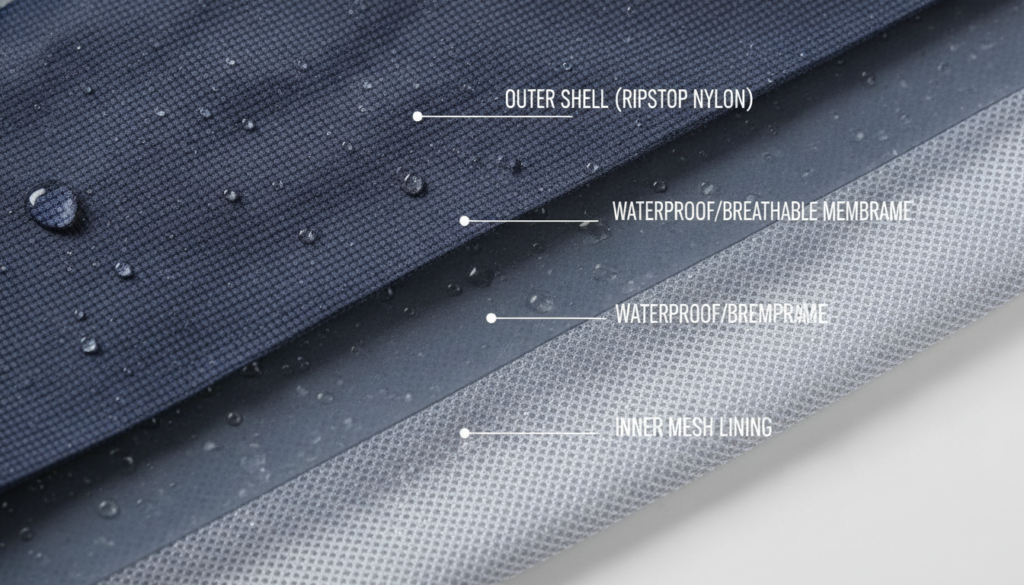
Many suppliers quote two numbers: the outer shell fabric rating and the bonded membrane rating. A softshell might use a 5,000 mm polyester face fabric with a 10,000 mm TPU membrane laminated inside. The finished garment’s effective waterproofing depends on the lower of the two values and the integrity of seam seals. OEM jacket manufacturing processes must bond membranes without delamination and seal every stitch line to deliver the advertised protection.
DWR Coating vs. Waterproof Membrane
Durable water repellent (DWR) coatings cause water to bead and roll off the surface but do not create a waterproof barrier. A DWR-treated 3,000 mm softshell will shed light drizzle for 20-30 minutes, then wet out as the coating saturates. A true waterproof softshell incorporates a bonded membrane (polyurethane, ePTFE, or PFC-free alternatives) that blocks liquid water while allowing vapor transmission. According to Zaprinta (2026), a 3,000 mm softshell example is positioned as protection from light rain rather than full waterproof performance.
How Do Rating Bands Map to Real Weather?
Rating bands translate lab numbers into practical use cases. According to TrailCraft (2026), 5,000 mm waterproof ratings are described as suitable for light rain or light snow, while 10,000 mm is framed for sustained moderate rain. According to Sail (2026), 10,000 mm is described as resisting a 10-meter water column and being the standard for sustained moderate rain.
Pressure Points Reduce Effective Rating
Static water column tests do not account for pressure from pack straps, kneeling, or sitting. According to TrailCraft (2026), 20,000 mm is presented as handling heavy rain under pressure, including pack straps or kneeling. A 10,000 mm jacket may leak at the shoulders after two hours of hiking with a loaded pack, even though the fabric itself passes the lab test. Buyers sourcing corporate uniforms or school outerwear should specify reinforced shoulders and seat panels when the end user will carry equipment or sit on wet surfaces.
Activity Level and Internal Moisture
Breathability (measured in grams per square meter per 24 hours, g/m²/24h, or moisture vapor transmission rate, MVTR) determines whether condensation builds inside the jacket. A 10,000 mm / 5,000 g/m²/24h softshell will keep rain out but trap sweat during moderate activity. People complain that breathable jackets still feel clammy during activity because waterproofing alone does not prevent internal moisture build-up. A 10,000 mm / 10,000 g/m²/24h spec balances protection and vapor escape for active use.
Why Do Softshells Leak Despite High Ratings?
Fabric waterproofing is only one component of garment performance. Users often discover that a jacket marketed as waterproof still leaks through seams, zippers, or stitching during real rain, even when the fabric itself has a high rating. Seam sealing, zipper construction, and hood design determine whether the finished jacket delivers the advertised protection.
Seam Sealing Coverage
Every stitch creates a needle hole that wicks water. Fully taped seams cover 100 percent of stitch lines with heat-bonded waterproof tape. Critically taped seams cover only high-exposure areas like shoulders and hood. A 10,000 mm softshell with no seam sealing will leak within minutes of moderate rain. Buyers should request seam-sealing specifications in the tech pack and verify coverage during pre-production sample approval. Our 3,000 m² Taizhou Sanmen facility runs 20 production lines with in-house seam-taping equipment and QC stations that test every tenth garment under simulated rain.
Zipper and Closure Design
Standard coil zippers allow water ingress through the teeth. Waterproof zippers use a polyurethane-coated chain or welded construction to block water entirely. Storm flaps (fabric overlays covering the zipper) add a secondary barrier but increase bulk. A 10,000 mm softshell with an unprotected center-front zipper will soak through the chest area in sustained rain. Sample development should include rain testing with the actual zipper and flap configuration the buyer intends to use in production.
Hood, Cuff, and Hem Construction
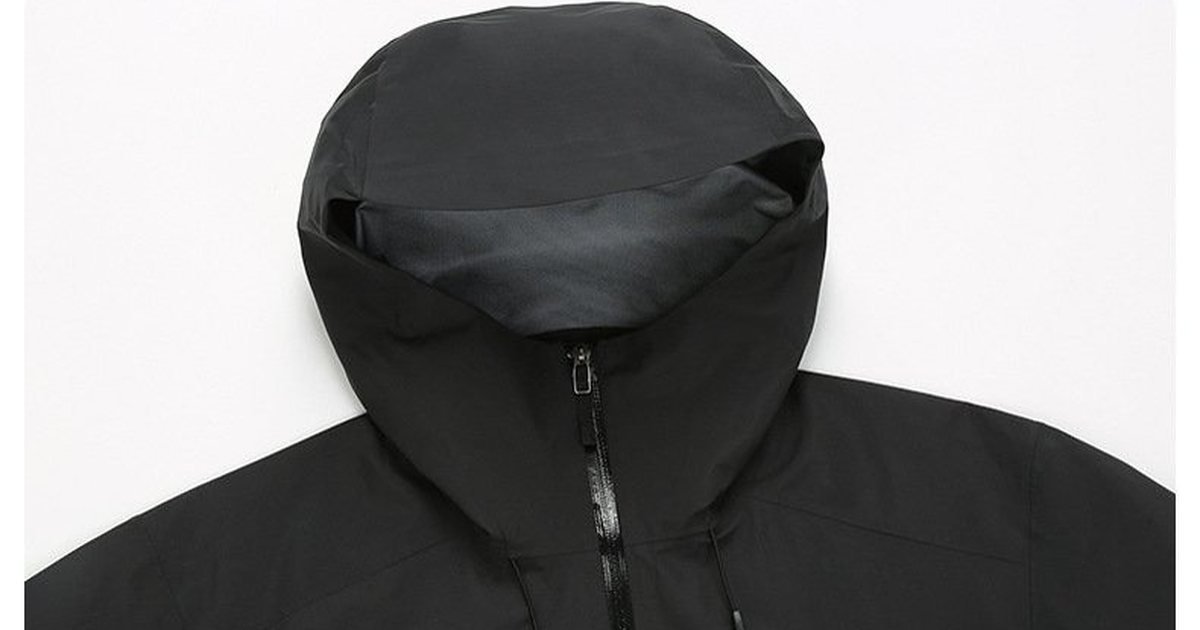
Water runs downward. A poorly fitted hood channels rain into the collar opening. Cuffs without adjustable closures let water run up the sleeves during arm movement. A dropped hem without a drawcord allows wind-driven rain to enter at the waist. Buyers sourcing waterproof softshells for corporate teams or school programs should specify adjustable cuffs, a helmet-compatible hood with a stiffened brim, and a drawcord hem in the initial tech pack.
How Do You Verify a Supplier’s Waterproof Claim?
Buyers report confusion when sellers list a waterproof number without explaining whether it refers to fabric only, a membrane, or the finished garment. Verification starts with requesting third-party lab reports and continues through physical sample testing under realistic conditions.
Request ISO or AATCC Test Reports
A legitimate factory provides ISO 811 or AATCC 127 test reports from an accredited lab (SGS, Intertek, Bureau Veritas). The report must state the tested sample description, test method, and hydrostatic head result in millimeters. A supplier quoting “10,000 mm waterproof” without a dated lab report is likely estimating or copying competitor specs. PTOUTWEAR maintains SGS certification and provides ISO 811 reports for every custom softshell membrane we source, with test results traceable to the specific fabric lot used in production.
Test Pre-Production Samples Under Real Conditions
Lab reports confirm fabric performance; field testing confirms garment performance. Buyers should wear the pre-production sample in actual rain for at least 30 minutes, checking for leaks at seams, zippers, cuffs, and hood. A garden hose test simulates moderate rain: spray the sample from 1 meter for five minutes while wearing it over a dry shirt. Any moisture on the inner layer indicates a seam or closure failure. Low MOQ jacket manufacturers offering 1-piece sample production let buyers validate waterproofing before committing to a 500-piece order.
Verify Membrane and DWR Specifications
Ask the supplier to name the membrane brand (e.g., specific TPU or ePTFE supplier) and the DWR chemistry (PFC-free C0, C6 fluorocarbon, or other). Generic descriptions like “waterproof breathable membrane” or “imported DWR” signal a supplier without direct material traceability. A factory that sources membranes from named mills and applies certified PFC-free DWR can document the supply chain and provide material safety data sheets (MSDS) for each component.
What Questions Should Buyers Ask Before Ordering?
Waterproof rating explained for custom softshell jackets requires buyers to ask specific technical questions during the RFQ and sampling phases. The answers determine whether the finished garment will meet end-user expectations and avoid costly returns.
- Does the quoted mm rating apply to the outer fabric, the membrane, or the finished garment? Many suppliers quote the membrane rating but use a lower-rated face fabric, so the effective waterproofing is limited by the weaker layer.
- What percentage of seams are taped, and which seam-taping method do you use? Ultrasonic welding, heat-bonded tape, and liquid sealant each deliver different durability and wash resistance.
- Are zippers waterproof, water-resistant, or standard coil? Waterproof zippers add $2-4 per garment but eliminate the most common leak point in softshells.
- What is the breathability rating (MVTR or g/m²/24h) of the membrane? A 10,000 mm / 3,000 g/m²/24h jacket will trap sweat during active use, leading to buyer complaints about clamminess.
- Can you provide an ISO 811 or AATCC 127 test report dated within the past 12 months? Membrane performance degrades with storage, so recent test data confirms current material quality.
Decoration Impact on Waterproofing
Custom logo embroidery and screen printing create new needle holes and heat-bonded layers that can compromise waterproof performance. Embroidery on the chest or sleeve punches 8-12 holes per linear centimeter; without backing reinforcement, these holes wick water. Screen-printed logos block breathability in the printed area, creating a sweat trap. Custom logo services should include waterproof backing patches for embroidered areas and perforated heat-transfer films for large prints to maintain the jacket’s original MVTR rating.
Balancing Waterproofing with Cost and Lead Time
Higher waterproof ratings and full seam sealing increase material and labor costs. A 20,000 mm fully taped softshell with waterproof zippers costs 30-40 percent more than a 5,000 mm DWR-only version. Lead time extends by 7-10 days when seam taping and waterproof zipper installation are added. Buyers sourcing corporate uniforms or school outerwear should define the minimum acceptable rating based on actual use conditions (urban commute vs. multi-hour outdoor work) rather than specifying the highest available rating by default.
Minimum Order Quantity and Sampling
Waterproof softshell construction requires membrane lamination and seam-taping equipment that many small factories do not own. Suppliers offering 500-piece MOQs often subcontract membrane bonding to a third-party laminator, adding quality-control risk. PTOUTWEAR operates in-house lamination and seam-taping lines in our Taizhou Sanmen facility, supporting a 30-piece per SKU bulk MOQ and 1-piece sample MOQ with $100 sample fee refundable against production orders. Buyers can validate waterproof performance and logo placement before committing to larger quantities.
Key Takeaways
- Waterproof rating in millimeters measures the height of a water column the fabric can support before leaking, tested via ISO 811 or AATCC 127 hydrostatic head procedures.
- According to Outdoor Apparels (2026), an 8,000 mm rating is described as suitable for moderate rain in wholesale outdoor wear positioning, while 10,000 mm is the common benchmark for sustained moderate rain.
- Fabric waterproof rating alone does not guarantee garment performance; seam sealing, zipper construction, and hood design determine whether the finished jacket delivers advertised protection.
- Buyers should request ISO 811 or AATCC 127 test reports from accredited labs (SGS, Intertek, Bureau Veritas) dated within the past 12 months to verify supplier claims.
- Custom embroidery and screen printing create needle holes and breathability dead zones that can compromise waterproof performance unless backing patches and perforated films are specified.
- Balancing waterproof rating with cost and lead time requires defining the minimum acceptable protection based on actual use conditions rather than specifying the highest available rating by default.
FAQ
Are softshell jackets actually waterproof or just water-resistant?
Most softshells are water-resistant rather than waterproof. They use DWR coatings that bead light rain for 20-30 minutes but wet out in sustained downpours. A true waterproof softshell incorporates a bonded membrane (TPU, ePTFE, or PFC-free alternative) rated at 5,000 mm or higher and includes taped seams to block liquid water. Buyers should clarify whether the quoted rating refers to a membrane or DWR coating before ordering.
What waterproof rating do I need for a corporate team working outdoors 3-4 hours per day?
A 10,000 mm waterproof rating with fully taped seams is the recommended minimum for sustained outdoor work in moderate rain. If the team carries equipment or wears backpacks, specify reinforced shoulders and a 15,000-20,000 mm rating to handle pressure points. Pair the waterproof rating with a breathability spec of at least 8,000 g/m²/24h to prevent internal condensation during physical activity. Request pre-production samples and field-test them under actual work conditions before placing the bulk order.
How do I verify that a factory’s waterproof claim is accurate?
Request an ISO 811 or AATCC 127 hydrostatic head test report from an accredited third-party lab such as SGS, Intertek, or Bureau Veritas. The report must state the tested sample description, test method, and result in millimeters, dated within the past 12 months. Then order a pre-production sample and conduct a garden-hose test: spray the worn sample from 1 meter for five minutes and check the inner layer for moisture. Any dampness at seams, zippers, or cuffs indicates a construction failure separate from the fabric rating.
Ready to source custom softshells with verified waterproof ratings and low-MOQ flexibility?
Request ISO 811 Reports and 1-Piece Samples →
Written by Ivan Chen, Sales Engineer at PTOUTWEAR – 13 years in outdoor apparel manufacturing.