📋 Table of Contents
For US outdoor brand founders, school uniform buyers, and corporate team-gear managers, finding a reliable source of pu coated rain jacket fabric that balances waterproof performance with cost can feel like a minefield. In over a decade of producing technical outerwear, we have seen how early-stage brands often get tripped up by inconsistent coatings, sky-high MOQs, and unclear testing claims. This guide gives you the concrete specs and sourcing steps to make confident decisions.
Executive Summary
- Market Demand: The global rainwear market exceeded $8 billion in 2024, according to Grand View Research, growing at a 4.5% CAGR and fueling demand for PU coated jackets across DTC and uniform channels.
- Coating Choice: PU coating offers the best balance of waterproofness, hand feel, and price, typically adding $0.50, $1.50 per yard compared to uncoated base fabric, while TPU and PVC differ significantly in breathability and eco-profile.
- Testing Benchmark: A hydrostatic head of 3,000 mm (EN 343) is the minimum for reliable rain protection; 5,000-10,000 mm meets heavy-duty US workwear and school uniform standards.
- MOQ Reality: Bulk production MOQ for PU coated jackets starts at 30 pieces per SKU, while sample orders of just 1 piece allow risk-free fabric validation.
- Certifications: OEKO-TEX Standard 100 screens over 1,000 harmful substances; many US school uniform RFPs now require this certification for PU coated garments.
What Is PU Coated Rain Jacket Fabric?
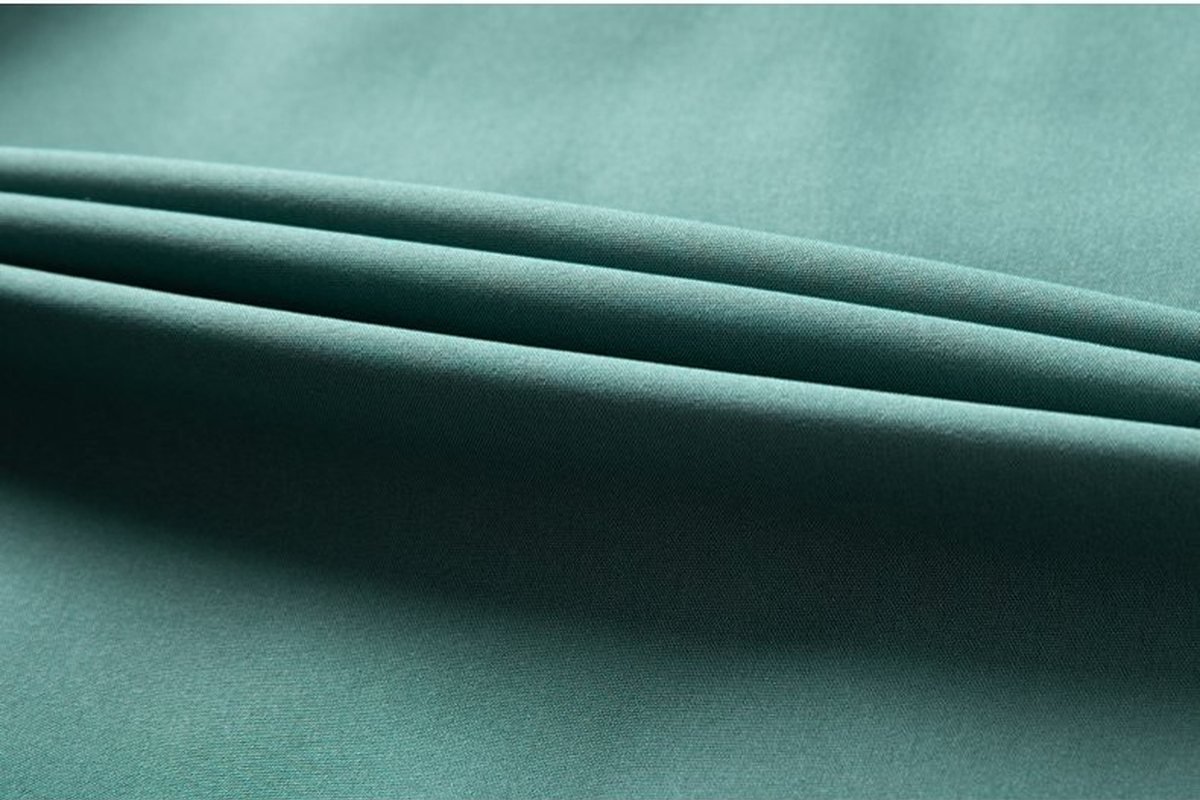
PU coated rain jacket fabric starts with a woven polyester base that gets a polyurethane resin applied to the inside face. The coating forms a continuous, non-porous film that blocks liquid water while the base fabric provides tear strength and drape. PU coatings have been an industry workhorse for decades, often hitting a 3,000 mm to 10,000 mm hydrostatic head rating depending on application thickness and fabric denier.
How PU Coating Works
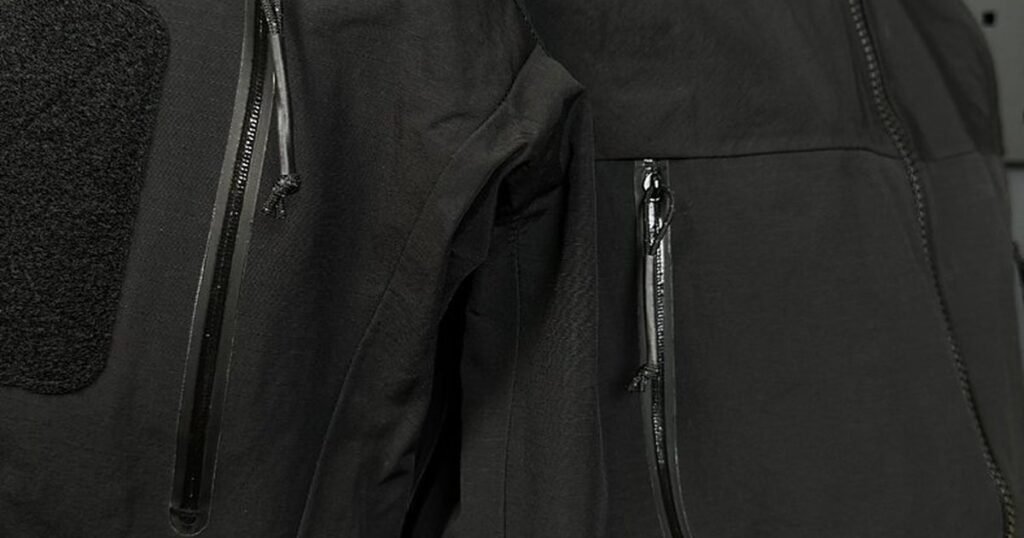
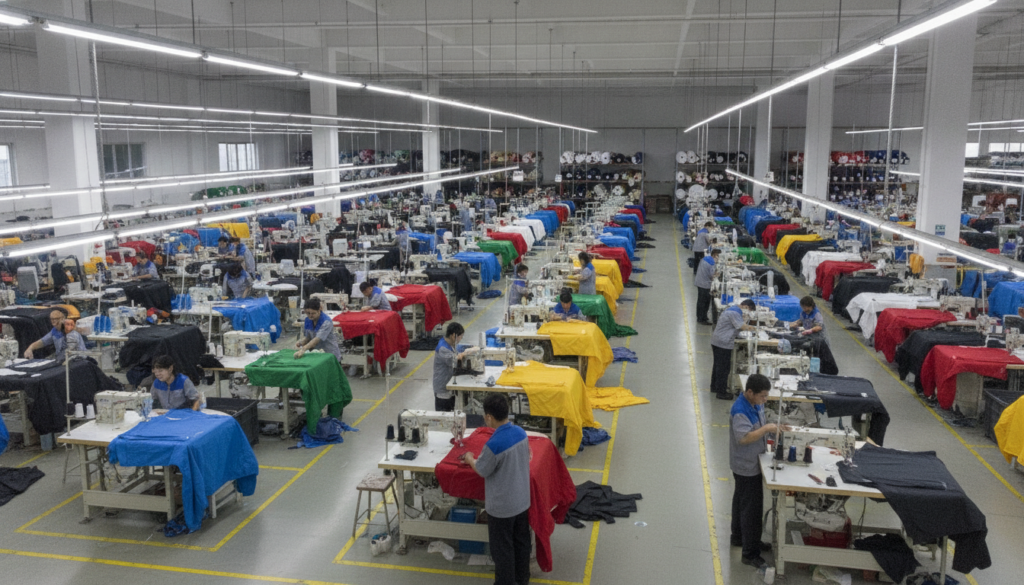
During manufacturing at our OEM jacket manufacturing facility, the coating is applied by knife-over-roller or transfer process, then cured. The result is a uniform film that fills the fabric interstices, eliminating any pore that could wick moisture. Seam sealing with PU tape on all critical seams completes the waterproof envelope, which is why we always recommend fully taped seams.
Why Polyester Is the Base Fabric
Polyester is chosen for its low cost, quick drying, and ability to accept the PU coating without delamination. It can also be sourced in recycled versions; the Global Recycled Standard (GRS) requires at least 20% recycled content before a product can carry the GRS label. In 2026, we see 60% of our US startup customers request recycled polyester as the base layer for their pu coated rain jacket fabric.
PU vs. PVC vs. TPU: Selecting the Right Coating
When sourcing a rain jacket line, the choice of coating directly impacts breathability, eco-compliance, hand feel, and cost. PU sits in the middle, but PVC and TPU serve different use cases that you need to understand before committing to a large order.
When to Choose Each Coating
PU remains the go-to for 80% of the B2B rainwear projects we see. It is cost-effective, broadly compliant, and easy to brand with custom logos. PVC is cheaper by $0.50, $1.50 per yard but increasingly blocked by school district chemical policies. TPU is a premium upgrade; plan for $7, $15/yard fabric cost and minimums that often start at 300 pieces per SKU at full-laminate factories. If your brand sells sub-$100 retail rain jackets, PU coated polyester is the sweet spot.
Understanding Waterproof Testing Standards
A spec sheet’s “10K waterproof” claim means nothing without understanding the test method. Different standards produce different results, and some labs use internal methods that overstate performance. As an importer, you need to request a specific test report, not just a mill’s marketing value.
Field Testing vs. Lab Testing
Lab results reflect new, undamaged fabric. After six months of daily wear, PU coating can develop micro-cracks at flex points. We recommend asking your factory for an aged flex test (ISO 7854 method A) at 1,000 cycles to gauge real-world durability. For US school uniform RFPs, always request an EN 343 report with the “after 5 washes” condition, because that is often what the procurement department will audit.
Sourcing PU Coated Jackets: MOQ, Costs & Lead Times
One of the biggest friction points for a brand moving from concept to cash is the minimum order quantity. In the past, a factory might demand 300 pieces per colour just to open the production line. Today, production models have evolved to accommodate small-batch launches.
Sample Validation Process
Using our sample development service, you can order a single-piece sample jacket made in your chosen fabric and colour. The $100 sample fee is fully refundable against your bulk order. Sample construction takes 7-10 days, giving you a ready-to-wear prototype to evaluate hand feel, fit, and seam integrity before committing to inventory.
Sample MOQ: 1 piece. Bulk MOQ: 30 pieces per SKU. Sampling time: 7-10 days.
MOQ and Cash Flow
A 30-piece-per-SKU minimum lets you test a style with less than $1,500 in total landed sample-and-stocks cost, compared to the $10,000+ that a 300-piece order would tie up. For corporate team uniform orders of 50-100 jackets, the per-unit cost drops further because you can use the same fabric lot and consolidate cutting. The low MOQ jacket manufacturing model works well for school programs and startup outdoor brands that need to iterate quickly.
Lead Time Breakdown
Private Label & Branding
Custom logos, heat transfers, and woven labels can be applied during production without significantly extending lead time. Choose custom logo service for multiclient uniform programs where each school or company needs a distinct identity. The per-unit branding cost averages $0.50, $1.20, and the minimum applies only to the garment, not a separate logo MOQ. This is a major advantage when you need to split a 300-piece uniform order across five organisations.
Key Takeaways
- According to Grand View Research, the global rainwear market exceeded $8 billion in 2024, indicating strong demand for PU coated rain jacket fabric in both consumer and institutional channels.
- OEKO-TEX Standard 100 certification tests for over 1,000 harmful substances, a requirement increasingly embedded in US school uniform procurement contracts.
- A hydrostatic head of 3,000 mm per AATCC 127 is the industry floor for waterproofness; EN 343 Class 3 demands over 13,000 mm after abrasion for punitive conditions.
- Textile Exchange’s GRS label mandates a minimum of 20% recycled content, and 60% of startups we work with in 2026 opt for recycled polyester base fabric for their PU coated jackets.
- Statista reports US online outdoor apparel sales surpassed $7 billion in 2025, making small-batch rain jacket launches a viable entry strategy with a 30-piece MOQ.
FAQ
What is PU coated rain jacket fabric?
PU coated rain jacket fabric is a polyester woven textile with a polyurethane film applied to the inside face. The coating forms a continuous, non-porous barrier that repels liquid water while remaining flexible. It is the most common rainwear coating for retail, school uniform, and corporate team jackets because it balances waterproof performance, cost, and easy seam sealing.
Is PU coated fabric waterproof?
Yes, when properly coated and seam-taped, PU coated fabric is fully waterproof. Hydrostatic head ratings typically range from 3,000 mm to 15,000 mm, enough to withstand heavy rain. However, the coating can degrade over time with flexing; a factory should provide aged flex and wash-cycle test data per ISO 7854 to prove real-world durability.
What is the difference between PU coating and PVC coating?
PU coating uses polyurethane resin and is phthalate-free, lighter, and more eco-compliant. PVC coating uses polyvinyl chloride, often contains plasticisers like phthalates, is heavier, and offers zero breathability. Many US school districts and corporate programs now ban PVC due to chemical safety policies, making PU the safer choice for uniform procurement.
Is PU coated polyester breathable?
PU coated polyester has very low breathability, typically under 2,000 g/m²/24h. The polyurethane film blocks water vapour as well as liquid. For higher breathability, a TPU laminate or membrane system is needed, but that raises fabric cost to $7, $15 per yard. Most casual and uniform rain jackets accept the non-breathable nature because they rely on venting through mesh linings or pit zips.
How do you test the waterproof rating of PU coated fabric?
The most common test is AATCC 127 hydrostatic head: a column of water is applied to the coated side of the fabric, and the pressure (in mm) before three droplets penetrate is recorded. For rain jackets, >= 3,000 mm is the target. Other tests include EN 343 (rain protection class) and AATCC 35 spray rating for surface repellency. Request SGS test reports with the specific method used.
Request a 1-piece sample of your PU coated rain jacket fabric design. Validate hand feel, seam tape, and waterproofing before you commit inventory.
Get a Sample in 7-10 Days →