Sourcing a private label recycled softshell jacket bluesign supplier for the European market requires verifying three critical elements: traceable recycled-content documentation, bluesign system partner status, and production capacity that matches your order volume. Buyers launching DTC outdoor brands or managing corporate uniform programs face a common trap-suppliers claim certifications they cannot prove when audited at customs or by retail partners.
📋 Table of Contents
- Executive Summary
- What Bluesign Certification Verifies in Textile Manufacturing
- Recycled Softshell Fabric Standards: GRS vs Bluesign
- Supplier Verification Checklist for European Buyers
- MOQ and Pricing Tiers for Private Label Production
- Customization Options: Fabric Weight, Trims, and Branding
- European Compliance Requirements for Recycled Softshell Imports
- Key Takeaways
- FAQ
Executive Summary
- Bluesign system partner status: Verifies that textile mills screen more than 1,000 restricted substances and use only bluesign-approved inputs, documented at every production stage.
- Global Recycled Standard (GRS) threshold: Requires a minimum of 20% recycled content before a product can carry the GRS label, with chain-of-custody audits from raw material to finished garment.
- Sample MOQ for validation: 1 piece allows brand founders to test fit, fabric hand, and DWR performance before committing capital to bulk orders of 30 pieces per SKU.
- European REACH compliance: Restricts over 200 chemical substances in textiles; bluesign certification pre-screens inputs against REACH Annex XVII to reduce customs clearance risk.
- Recycled polyester supply growth: Textile Exchange reports that recycled polyester production reached 5.8 million metric tons in 2024, driven by brand commitments to reduce virgin petroleum-based fibers.
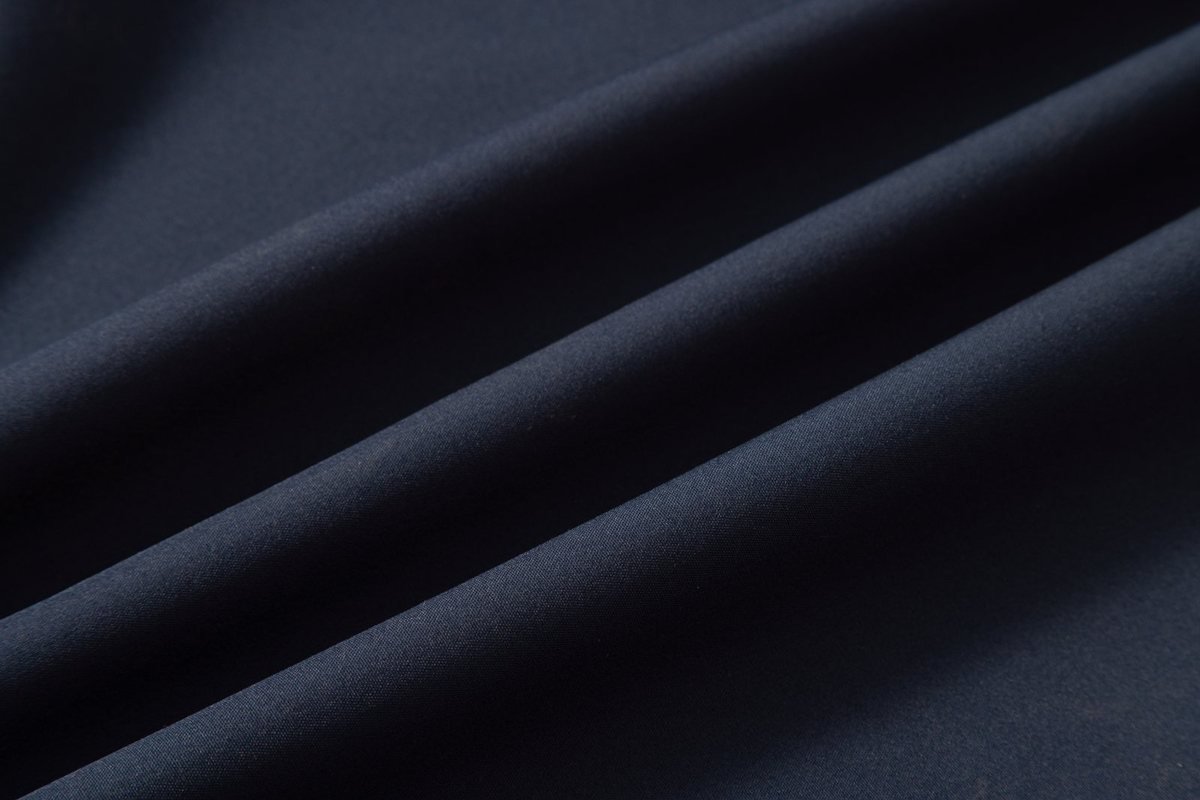
What Bluesign Certification Verifies in Textile Manufacturing
Bluesign is an independent Swiss certification system that audits textile mills for chemical safety, resource efficiency, and worker protection. A bluesign system partner undergoes annual on-site inspections covering wastewater discharge, air emissions, and occupational health. The certification does not apply to finished garment factories but to the mills that weave or knit the fabric and apply finishes like DWR (durable water repellent).
Input Stream Management
Bluesign maintains a database of approved chemicals, dyes, and auxiliaries. Mills can only use inputs listed in the bluesign bluefinder tool. This pre-screening eliminates substances banned under European REACH, California Proposition 65, and OEKO-TEX Standard 100. When a private label recycled softshell jacket bluesign supplier claims certification, ask for the mill’s bluesign ID number and verify it directly on the bluesign website.
Production Process Audits
Annual audits measure energy consumption per kilogram of fabric, water usage, and wastewater treatment efficiency. Mills must demonstrate year-over-year improvement in resource productivity. For recycled softshell fabrics, this includes tracking the origin of post-consumer PET bottles or post-industrial textile waste through the mechanical recycling process.
Consumer Safety Output Standard
Finished fabrics tested under bluesign criteria meet OEKO-TEX Standard 100 Class I limits (safe for infant skin contact) even when the end product is adult outdoor apparel. This dual-layer verification reduces the risk of non-compliance during customs inspections in Germany, France, and the UK.
Recycled Softshell Fabric Standards: GRS vs Bluesign
Buyers often confuse recycled-content certification with chemical-safety certification. GRS and bluesign address different compliance questions. Understanding the distinction prevents greenwashing claims and ensures your product meets both sustainability marketing requirements and regulatory import standards.
When to Require Both GRS and Bluesign
DTC outdoor brands marketing to environmentally conscious European consumers benefit from dual certification. GRS proves the recycled-content claim on your hangtag. Bluesign proves that the recycling process and subsequent dyeing, coating, and laminating steps used only approved chemicals. A common buyer mistake is accepting a GRS certificate alone and discovering later that the fabric mill used restricted azo dyes or PFAS-based DWR, triggering customs holds in Hamburg or Rotterdam.
Recycled Polyester Sourcing Transparency
Ask the OEM jacket manufacturing partner for the GRS transaction certificate (TC) number. This document traces the recycled PET from the bottle-flake supplier through the fiber spinner, fabric mill, and garment factory. Each entity in the supply chain must hold GRS certification. If any link is broken, the final product cannot carry a GRS label.
Supplier Verification Checklist for European Buyers
Verification failures cost buyers 4-8 weeks in production delays and expose brands to greenwashing accusations. A structured audit process before placing your first order reduces these risks.
Document Requests
- Bluesign system partner certificate: Request the mill’s current certificate (valid for 12 months) and verify the ID number on bluesign.com. If the supplier is a garment factory, ask for the fabric mill’s certificate.
- GRS transaction certificate: Each production batch receives a unique TC number. Request a sample TC from a recent order to confirm the supplier’s certification scope covers softshell fabrics.
- OEKO-TEX Standard 100 test report: Should list the specific fabric construction (e.g., 94% recycled polyester / 6% spandex, 280 gsm, bonded with TPU membrane) and confirm Class I or Class II compliance.
- REACH declaration of conformity: Required for customs clearance in the EU. The document must state that the product complies with REACH Annex XVII and does not contain substances of very high concern (SVHC) above 0.1% by weight.
Factory Capability Audit
- In-house vs outsourced processes: Confirm whether the supplier owns cut-and-sew lines or subcontracts to another facility. Subcontracting adds lead time and dilutes quality control. PTOUTWEAR operates a 3,000 m² vertically integrated facility in Taizhou Sanmen with 20 in-house production lines, eliminating the subcontractor variable.
- Sampling turnaround: Request a 1-piece pre-production sample to validate fabric hand, zipper quality, and DWR performance. Factories that require 100-piece minimums for sampling tie up capital before you confirm market fit.
- Annual production capacity: A facility producing fewer than 50,000 pieces per year may struggle to scale with your brand. PTOUTWEAR’s 200,000-piece annual capacity supports growth from startup to mid-volume wholesale.
Communication and Compliance
- English-language documentation: Certificates in Mandarin delay customs clearance. Verify that the supplier provides English translations of all compliance documents.
- Revision responsiveness: Send a technical spec sheet with custom requests (e.g., pit zips, internal media pocket, adjustable hem) and measure response time. Suppliers that take 5+ days to answer basic questions will cause delays during production.
- Payment terms transparency: Clarify deposit requirements (typically 30-50% for first orders) and balance payment timing. Hidden fees for sample revisions or expedited shipping erode your margin.
MOQ and Pricing Tiers for Private Label Production
Minimum order quantities determine cash flow risk for new brands. A low-MOQ jacket manufacturer allows you to test multiple SKUs without locking up $15,000-$30,000 in inventory. Understanding the cost structure at each volume tier helps you plan launch budgets and reorder cycles.
Sample MOQ: 1 piece. Bulk MOQ: 30 pieces per SKU. Sampling time: 7-10 days.
Cost Drivers in Recycled Softshell Production
Recycled polyester fiber costs 8-12% more than virgin polyester. Bluesign-approved DWR finishes (typically fluorine-free C0 chemistry) add $0.80-$1.20 per meter compared to conventional PFAS-based treatments. YKK AquaGuard water-resistant zippers cost $1.50-$2.00 per zipper versus $0.40-$0.60 for generic coil zippers. These material premiums are non-negotiable for certified products.
Hidden Costs to Clarify Upfront
- Sample revision fees: Some suppliers charge $50-$100 per revision round. Clarify whether the initial sample fee covers one revision or unlimited adjustments until approval.
- Custom packaging: Poly bags with printed hangtags typically add $0.30-$0.60 per unit. Recycled or compostable packaging adds another $0.20-$0.40.
- Inspection and testing: Third-party QC inspections cost $200-$350 per man-day. GRS and bluesign audits are built into the mill’s certification but do not cover your specific production batch unless you request a scope certificate extension.
Customization Options: Fabric Weight, Trims, and Branding
Private label differentiation comes from spec customization. Off-the-shelf designs limit your ability to serve niche markets like corporate team gear, school uniforms, or DTC brands targeting specific outdoor activities.
Fabric Weight and Construction
- Lightweight softshell (200-240 gsm): Suitable for spring/fall layering, active hiking, and corporate uniforms where breathability outweighs wind resistance. Common constructions pair recycled polyester face fabric with a fleece or micro-grid backer.
- Midweight softshell (260-300 gsm): Balances wind resistance, abrasion durability, and stretch. Ideal for DTC outdoor brands targeting trail running, climbing, and casual outdoor wear. Bonded constructions use a TPU or ePTFE membrane between face and backer.
- Heavyweight softshell (320-380 gsm): Provides maximum wind blocking and insulation for winter mountaineering, ski touring, and workwear applications. Higher weight increases cost and reduces breathability during high-output activities.
DWR Finish Selection
Buyers report that breathable jackets lose performance once the DWR wets out. The face fabric absorbs water, blocking air exchange through the membrane. Bluesign-approved C0 DWR (fluorine-free) performs comparably to PFAS-based treatments for the first 20-30 washes but requires more frequent re-proofing. Communicate this maintenance requirement clearly in your product care instructions to avoid customer complaints about reduced breathability.
Trim and Hardware Choices
- Zippers: YKK AquaGuard for water resistance, YKK Vislon for durability in high-abrasion areas (chest pockets, pit zips). Generic zippers fail within 6-12 months of regular use.
- Adjustable features: Hem drawcords, cuff tabs, and hood adjusters add $1.50-$3.00 per unit but significantly improve fit and weather protection. Buyers consistently cite poor fit as a reason for returns.
- Ventilation: Pit zips address the overheating complaint common in waterproof and softshell jackets. Adding underarm zippers increases cost by $2.50-$4.00 per unit but reduces return rates for active-use applications.
Branding and Logo Placement
A custom logo service includes embroidery, screen printing, heat transfer, and woven labels. Embroidery works best for corporate and school uniforms (durable, professional appearance). Screen printing suits large chest or back logos for team gear. Heat transfer allows full-color designs but may crack after 50+ washes. Clarify logo placement, size limits, and color-matching expectations in your tech pack.
European Compliance Requirements for Recycled Softshell Imports
Customs authorities in Germany, France, the Netherlands, and the UK enforce strict chemical and labeling regulations. Non-compliance triggers shipment holds, fines, and product recalls. Understanding these requirements before production prevents costly delays.
REACH Annex XVII Restricted Substances
The European Chemicals Agency restricts over 200 substances in textiles, including certain azo dyes, phthalates, and PFAS compounds. Bluesign certification pre-screens inputs against REACH, but you must still provide a declaration of conformity at customs. This document states that your product does not contain restricted substances above legal limits. Request this from your private label recycled softshell jacket bluesign supplier before shipment.
Textile Labeling Regulation (EU) 1007/2011
All garments sold in the EU must display fiber content, country of manufacture, and care instructions in the language of the country of sale. Labels must be permanently attached and legible throughout the product’s life. Removable hangtags do not satisfy this requirement. Confirm that your supplier provides compliant woven care labels in English, German, French, or the target market language.
General Product Safety Directive (GPSD)
Importers must ensure products do not pose safety risks (e.g., sharp metal components, flammable materials, choking hazards from detachable parts). While softshell jackets rarely trigger GPSD issues, drawcords on children’s garments face specific restrictions. If you plan to offer youth sizes, verify that hood and waist drawcords comply with EN 14682 standards (no free ends, breakaway mechanisms required).
Country-Specific Requirements
Documentation for Customs Clearance
Prepare a compliance folder for your freight forwarder containing the REACH declaration, GRS transaction certificate, bluesign mill certificate, OEKO-TEX test report, and commercial invoice with HS code 6201.93 (men’s anoraks and similar articles, of man-made fibers). Missing documentation adds 7-14 days to clearance time and may incur storage fees at the port.
Key Takeaways
- Bluesign system partner certification verifies that textile mills screen over 1,000 restricted substances and use only approved chemical inputs throughout the dyeing, coating, and finishing processes.
- The Global Recycled Standard (GRS) requires a minimum of 20% recycled material content and chain-of-custody audits from raw material to finished garment before a product can carry the GRS label.
- European REACH Annex XVII restricts over 200 chemical substances in textiles; bluesign certification pre-screens inputs against REACH to reduce customs clearance risk in Germany, France, and the Netherlands.
- Sample MOQ of 1 piece allows DTC brand founders to validate fabric hand, DWR performance, and fit before committing to bulk orders of 30 pieces per SKU, reducing unsold inventory risk.
- Recycled polyester fiber costs 8-12% more than virgin polyester, and bluesign-approved fluorine-free DWR adds $0.80-$1.20 per meter compared to conventional PFAS-based treatments.
- Textile Exchange reports that recycled polyester production reached 5.8 million metric tons in 2024, driven by brand commitments to reduce virgin petroleum-based fibers in outdoor and technical apparel.
FAQ
What does bluesign mean in textile manufacturing?
Bluesign is an independent Swiss certification system that audits textile mills for chemical safety, resource efficiency, and worker protection. Mills holding bluesign system partner status use only approved chemicals from the bluesign bluefinder database, undergo annual on-site inspections, and demonstrate year-over-year improvement in energy and water productivity. The certification applies to fabric production, not finished garment assembly.
Is a recycled softshell jacket really sustainable?
A recycled softshell jacket reduces virgin petroleum-based fiber consumption but is not automatically sustainable. True sustainability requires verifying recycled-content claims through GRS certification, ensuring chemical safety through bluesign or OEKO-TEX, and confirming that the DWR finish is fluorine-free. Without third-party certification, recycled-content claims may constitute greenwashing and expose brands to regulatory scrutiny in France and Germany.
How do I verify a bluesign supplier?
Request the fabric mill’s current bluesign system partner certificate and verify the ID number directly on the bluesign website. If the supplier is a garment factory rather than a textile mill, ask for the mill certificate from their fabric supplier. Bluesign certification is facility-specific and expires annually, so confirm the certificate is valid for your production timeline. A supplier claiming bluesign status without providing a verifiable certificate should be treated as non-compliant.
What is the difference between bluesign and GRS?
GRS verifies recycled-content traceability and requires a minimum of 20% recycled material by weight, with chain-of-custody audits from raw material to finished product. Bluesign verifies chemical input screening, resource productivity, and worker safety at textile mills, with no minimum recycled-content requirement. A private label recycled softshell jacket bluesign supplier ideally holds both certifications to prove recycled content and chemical safety simultaneously.
Can private label jacket suppliers provide recycled and certified fabrics?
Yes, but verification is critical. Request the GRS transaction certificate (TC) for the specific fabric and the bluesign system partner certificate for the textile mill. A private label supplier with in-house sourcing relationships can provide certified recycled softshell fabrics at 30-piece MOQs, whereas brokers often require 500+ pieces to access certified mills. Confirm that the supplier provides English-language compliance documentation for European customs clearance.
Ready to source certified recycled softshell jackets with transparent compliance documentation and 30-piece MOQs?
Request Your 1-Piece Sample →
Written by Ivan Chen, Sales Engineer at PTOUTWEAR – 13 years in outdoor apparel manufacturing.