Custom ski apparel encompasses jackets, pants, suits, and base layers manufactured to your specifications-branded, sized, and built for resale or team programs. Most factories require 500-1,000 pieces per style; OEM jacket manufacturing at PTOUTWEAR starts at 1 sample piece and 30 pieces per SKU for bulk, with 7-10 day sampling and 25-35 day production runs.
📋 Table of Contents
Executive Summary
- Sample and bulk minimums: Industry sample MOQs range from 1 to 10 pieces; bulk production typically starts at 30-100 pieces per SKU depending on construction complexity.
- Sampling timeline: Pre-production samples take 7-14 days; bulk orders take 25-35 days after deposit for 30-200 pieces.
- Waterproofing and breathability: Ski jackets demand 10,000+ mm hydrostatic head and 5,000+ g/m²/24h MVTR; seam sealing and PFC-free DWR are standard for retail programs.
- Decoration flexibility: Embroidery, heat transfer, and sublimation each suit different order sizes and design complexity; embroidery works well for small batches, sublimation requires higher minimums but offers full-color coverage.
- Compliance requirements: Retail-ready ski apparel needs fiber-content labels, country-of-origin marking, and flammability testing for children’s items; OEKO-TEX certification is increasingly requested by EU and North American buyers.
What Defines Custom Ski Apparel?
Custom ski apparel includes any garment built to your specification for skiing or snowboarding: insulated jackets, shell pants, one-piece suits, mid-layers, and base layers. Customization covers fabric selection, fit adjustments, color blocking, logo placement, and feature additions such as powder skirts, helmet-compatible hoods, and articulated knees. Buyers range from DTC outdoor brands launching their first collection to corporate teams outfitting employees for winter retreats and ski clubs ordering matching uniforms.
Jackets
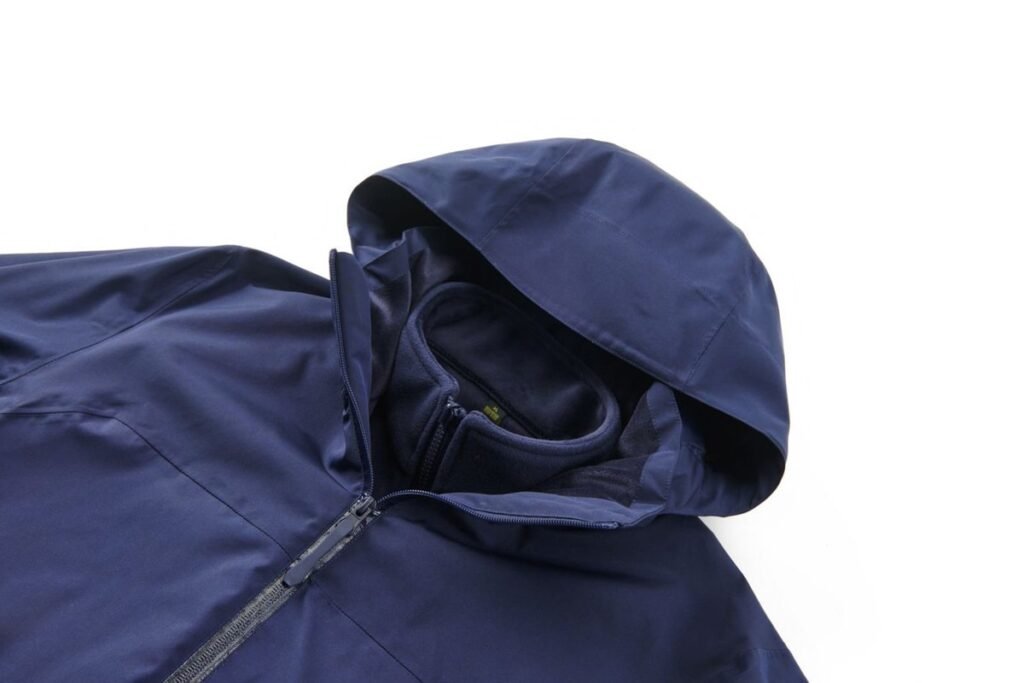
Ski jackets combine a waterproof-breathable outer shell, insulation (synthetic or down), and ventilation features. Standard construction includes taped seams, adjustable cuffs, pit zips, and internal pockets. Buyers specify shell fabric weight (typically 2-layer or 3-layer), insulation fill power or synthetic weight, and trim details. A common pain point: breathable rain jackets lose performance once the DWR coating wets out, leaving the wearer clammy during high-output activity. PFC-free DWR and mechanical ventilation (pit zips, back vents) address this issue without relying solely on membrane breathability.
Pants and Bibs
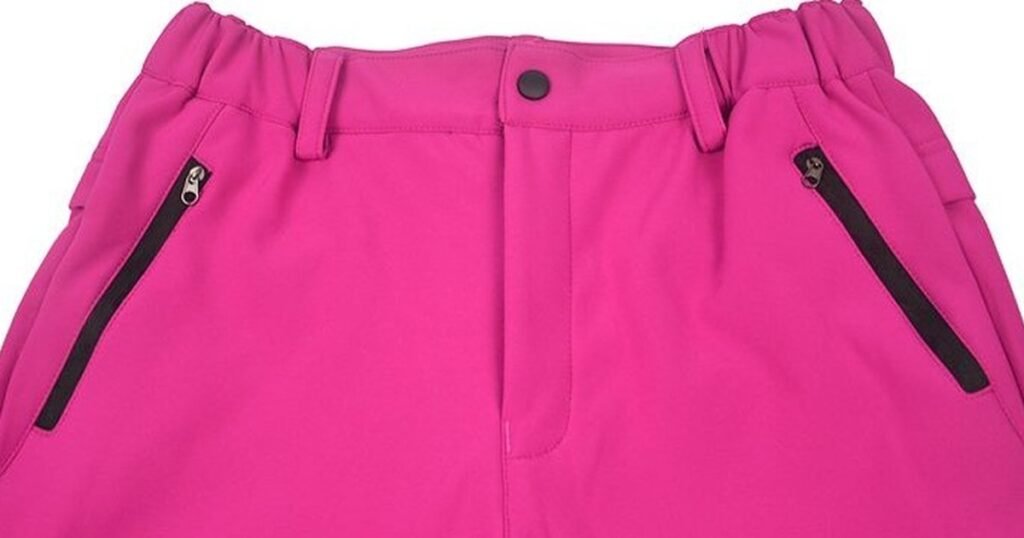
Ski pants and bibs prioritize durability in high-abrasion zones (knees, seat, cuffs) and articulated patterning for freedom of movement. Buyers choose between insulated and shell-only versions, adjustable waistbands, reinforced kick panels, and boot gaiters. Bib-style pants add shoulder straps and a chest panel for deep-powder protection. Customization includes contrast stitching, reflective piping for visibility, and internal boot-gaiter integration.
One-Piece Suits
One-piece ski suits integrate jacket and pants into a single garment, popular for racing teams, ski patrols, and retro-inspired lifestyle brands. Construction requires careful torso-length grading and two-way front zippers for bathroom access. Buyers specify insulation zones (more in torso, less in limbs), color-block layouts, and sponsor-logo placement. MOQs for one-piece suits typically run higher than separates due to pattern complexity and longer cutting time.
MOQ and Sampling: What to Expect
Minimum order quantities vary by factory capability and garment complexity. Understanding the difference between sample MOQ and bulk MOQ prevents cash-flow surprises and enables market testing before committing to large inventory.
Sample MOQ
Sample orders validate fit, fabric hand-feel, and construction quality before bulk production. Most factories charge a per-piece sample fee and require 3-10 samples per style. According to Rupt / ASI Central (2026), on-demand cut-and-sew custom outerwear can now be produced with a 1-piece minimum and 7-day production time. PTOUTWEAR offers 1-piece sample MOQ with a $100 sample fee, refundable against the first bulk order. This allows DTC founders to test three colorways or two fit blocks without tying up $3,000, $5,000 in sample inventory.
Bulk Production MOQ
Bulk MOQs reflect cutting efficiency, fabric roll minimums, and setup costs. Standard industry minimums range from 100 to 500 pieces per style for technical outerwear. Low-MOQ jacket manufacturing at PTOUTWEAR starts at 30 pieces per SKU, enabling small brands and corporate buyers to launch with three sizes in two colors (6 SKUs × 30 = 180 total pieces). Factories with higher minimums often require 300-500 pieces per colorway, not per style, which forces buyers into single-color programs or excess inventory.
Dropshipping and Print-on-Demand
Some suppliers now offer 1-piece fulfillment for custom ski apparel, eliminating inventory risk entirely. These programs work well for DTC brands testing new markets or corporate clients ordering replacement garments post-season. Lead times stretch to 10-14 days per unit, and per-piece costs run 40-60% higher than bulk pricing, but the model suits low-volume, high-mix catalogs.
In practice: A Colorado DTC ski brand ordered 1-piece samples in three shell fabrics, selected a 2-layer nylon with 15K/15K rating, then placed a 90-piece first order across three colorways without locking up cash in untested inventory
Lead Times and Production Schedule
Production timelines for custom ski apparel break into sampling, bulk manufacturing, and shipping. Buyers ordering for a November retail launch need samples approved by late June and bulk orders confirmed by mid-July to allow for ocean freight and distribution.
Sampling Phase
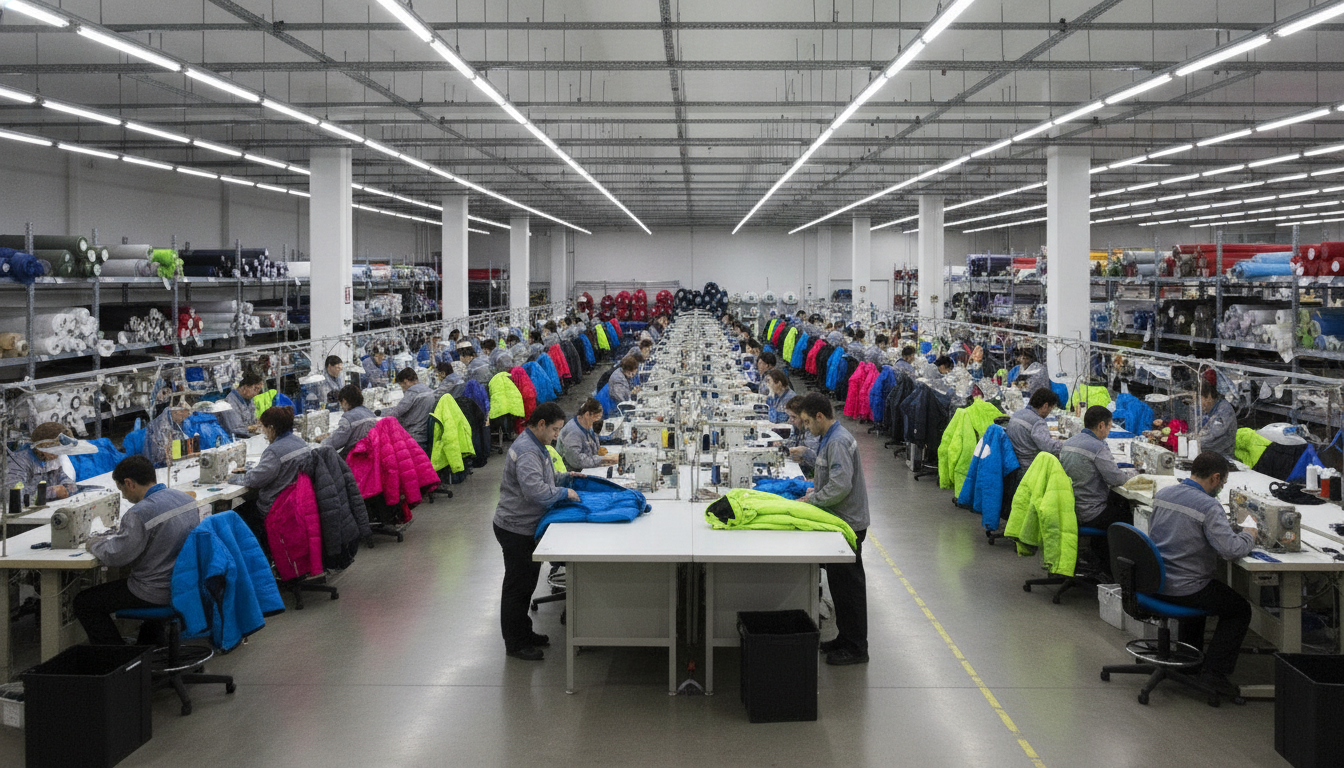
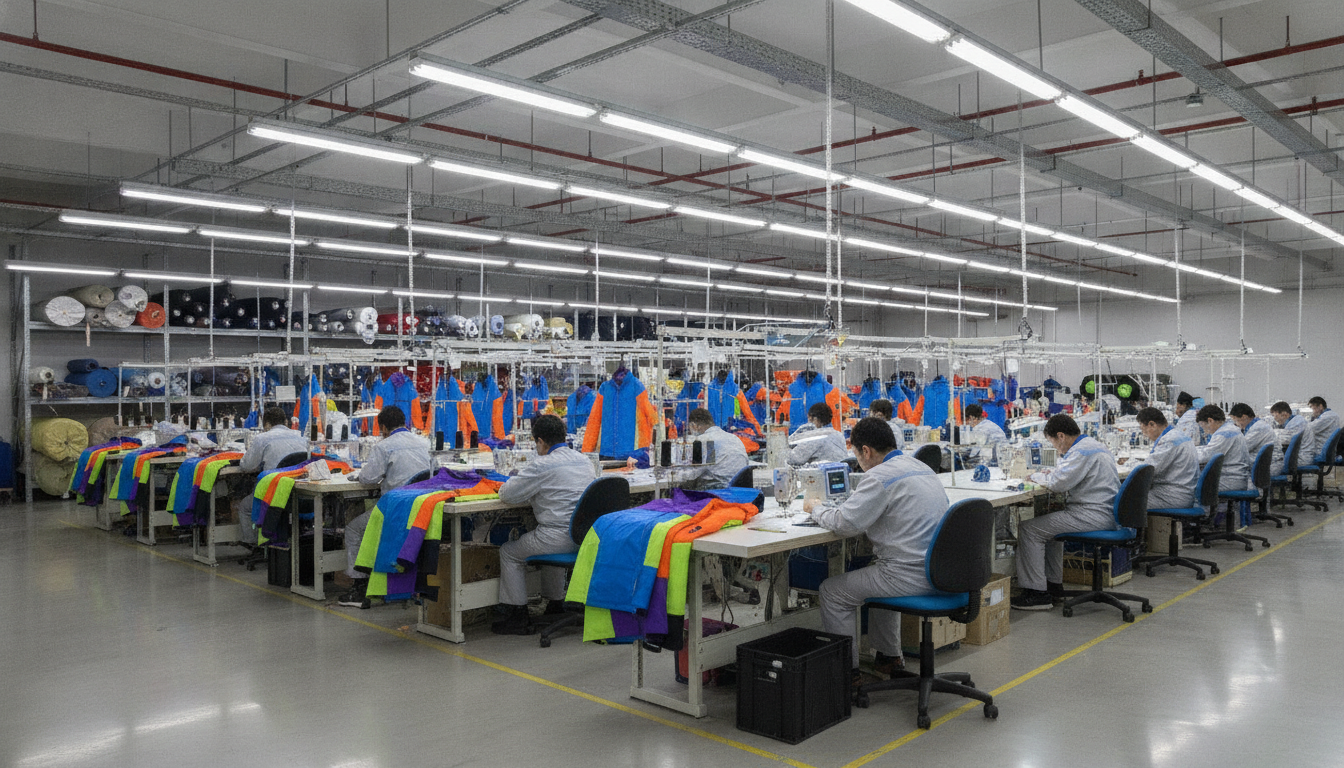
Pre-production samples take 7-10 days at PTOUTWEAR’s Taizhou Sanmen facility, which runs 20 dedicated production lines with in-house pattern-making and sample rooms. Buyers submit tech packs with fabric swatches, logo artwork, and fit specifications; the factory cuts and sews one prototype, photographs it on a fit model, and ships for approval. Revisions (collar height, pocket placement, hem length) add 5-7 days per iteration. According to JAKROO (2026), a custom Nordic ski apparel program advertises delivery in 2 weeks for clubs, reflecting the compressed timelines now expected in team and corporate markets.
Bulk Production
Bulk orders require 25-35 days from approved sample to finished goods, covering fabric procurement, cutting, sewing, quality control, and packing. Rush production is available: PTOUTWEAR can deliver 1,000 pieces in 2 weeks at a 25% surcharge, useful for late-season reorders or event-driven corporate programs. Factories without in-house fabric stock add 10-15 days for mill lead times, especially for technical membranes and specialty insulations.
Shipping and Customs Clearance
Ocean freight from Ningbo or Shanghai to Los Angeles takes 18-22 days; to Hamburg or Felixstowe, 28-32 days. Air freight cuts transit to 5-7 days but costs 6-8 times more per kilogram. DDP (Delivered Duty Paid) shipping includes customs brokerage, duties, and inland trucking; buyers receive goods at their warehouse door with no surprise fees. FOB terms leave the buyer responsible for freight, insurance, and import compliance, suitable for experienced importers with established logistics partners.
Typical Timeline: Sample approval (10 days) + bulk production (30 days) + ocean freight (20 days) + customs clearance (5 days) = 65 days port-to-door. Plan 75-90 days total to allow for revision cycles and peak-season delays.
Fabric, Waterproofing, and Insulation Specs
Ski apparel performance hinges on shell-fabric waterproofing, membrane breathability, insulation type, and DWR durability. Buyers specify these attributes in the tech pack; the factory sources materials and tests finished garments before shipment.
Waterproofing: Hydrostatic Head and Seam Sealing
Hydrostatic head measures how much water pressure a fabric withstands before leaking, expressed in millimeters. Ski jackets require 10,000 mm minimum; backcountry and resort use demands 15,000-20,000 mm. A 2-layer construction bonds the membrane to the shell fabric; 3-layer laminates add an inner protective layer, reducing weight and improving durability. All seams in waterproof garments must be taped with polyurethane or heat-sealed tape to prevent water ingress at stitch holes. Buyers verify seam-sealing coverage in pre-production samples and request photographic proof of tape application during inline inspections.
Breathability: MVTR and Real-World Performance
Moisture Vapor Transmission Rate (MVTR) measures how much sweat vapor passes through the fabric, reported in grams per square meter per 24 hours (g/m²/24h). Ski jackets need 5,000+ g/m²/24h for moderate activity; aggressive touring and ski mountaineering demand 10,000-20,000 g/m²/24h. A common buyer complaint: waterproof jackets feel clammy during strenuous activity because the DWR coating wets out, blocking vapor transmission even when the membrane remains breathable. PFC-free DWR and mechanical ventilation (pit zips, back vents) mitigate this issue without relying solely on membrane performance.
Insulation: Synthetic vs. Down
Insulation choice depends on use case, budget, and wash-care requirements. Synthetic insulation (polyester batting) retains warmth when wet, dries quickly, and costs less; down insulation offers superior warmth-to-weight ratio but loses loft when damp and requires careful laundering. Fill power (cubic inches per ounce) measures down loft: 600-fill suits resort skiing, 800-fill works for backcountry touring. Buyers specify insulation weight in grams per square meter (GSM) for synthetic or fill power and total down weight for natural insulation. Sample development includes insulation swatches and compression tests so buyers validate warmth and packability before bulk orders.
Decoration Methods: Logos, Embroidery, and Sublimation
Custom ski apparel branding spans embroidered logos, heat-transfer patches, screen-printed graphics, and full-garment sublimation. Each method suits different order volumes, design complexity, and durability requirements.
Embroidery
Embroidery works well for small batches and corporate logos with 6-10 thread colors. Setup costs run $50, $150 per design for digitizing; per-piece embroidery fees range from $3 to $8 depending on stitch count and placement complexity. Embroidered logos withstand 50+ commercial wash cycles without fading or peeling, making them ideal for team uniforms and workwear. Limitations: fine detail (text under 6 mm height, gradients, photographic images) does not reproduce well in thread. Custom logo services include digitizing, thread-color matching, and placement mockups before production starts.
Heat Transfer and Patches
Heat-transfer vinyl (HTV) and woven patches suit mid-volume orders (100-500 pieces) and multicolor designs. HTV applies in seconds with a heat press, costs $2, $5 per placement, and handles gradients and fine text better than embroidery. Woven patches offer a premium look with raised borders and intricate detail, priced at $1, $3 per patch depending on size and order quantity. Both methods require careful fabric-temperature control; excessive heat damages waterproof membranes and melts synthetic insulation.
Sublimation Printing
Dye-sublimation printing infuses ink into polyester fabric under heat and pressure, enabling full-color, all-over graphics with no hand-feel or durability loss. Sublimation suits race teams, ski patrols, and lifestyle brands seeking bold color-block designs. Minimum orders typically start at 100-300 pieces because sublimation requires pre-printed fabric yardage before cutting. Per-piece costs drop significantly at volume: $8, $12 for 100 pieces, $4, $6 for 500+ pieces. Sublimation works only on white or light-colored polyester; natural fibers and dark base colors require alternative methods.
- Embroidery: Best for small batches, corporate logos, and high-durability applications; setup $50, $150, per-piece $3, $8.
- Heat Transfer: Mid-volume solution for multicolor designs and gradients; per-piece $2, $5, fast turnaround.
- Sublimation: Full-color, all-over graphics for polyester garments; MOQ 100-300 pieces, per-piece $4, $12 depending on volume.
- Screen Printing: Large-area graphics on shell fabric; setup $50, $100 per color, per-piece $1, $4, best for 200+ pieces.
Compliance and Testing for Retail-Ready Ski Wear
Retail-ready custom ski apparel must meet labeling, safety, and chemical-restriction standards in the destination market. Compliance failures delay shipments, trigger customs holds, and expose buyers to liability claims.
Fiber Content and Country-of-Origin Labeling
United States Federal Trade Commission (FTC) rules require permanent care labels listing fiber content by percentage, country of manufacture, and washing instructions. European Union Textile Regulation 1007/2011 mandates similar fiber-content disclosure plus the responsible party’s name and address. Labels must be sewn into the garment, not printed on hang tags. Buyers supply label artwork; the factory sources woven or printed labels and attaches them during assembly. Missing or incorrect labels trigger customs holds and retailer chargebacks.
Flammability Testing for Children’s Ski Apparel
Children’s ski jackets sold in the United States must meet CPSC 16 CFR 1610 flammability standards, which classify fabrics as Class 1 (normal flammability), Class 2 (intermediate), or Class 3 (rapid and intense burning, prohibited). Most waterproof-breathable fabrics and synthetic insulations pass Class 1 without treatment. Buyers request third-party lab reports (SGS, Intertek, Bureau Veritas) before shipment; test costs run $150, $300 per fabric type. European Union children’s sleepwear follows EN 14878, which sets stricter ignition and flame-spread limits.
Chemical Restrictions: OEKO-TEX and REACH
OEKO-TEX Standard 100 certification verifies that textiles contain no harmful substances above specified limits, covering heavy metals, formaldehyde, pesticides, and flame retardants. Certification applies to finished garments, not just fabrics; the factory submits samples to an accredited lab, which issues a certificate valid for one year. EU REACH regulation restricts over 200 chemicals in consumer products; importers must request Substances of Very High Concern (SVHC) declarations from suppliers and maintain documentation for customs. PTOUTWEAR holds ISO 9001 and SGS test reports and applies PFC-free DWR across all waterproof garments; OEKO-TEX and BSCI are pending, not yet held.
- FTC / EU Textile Regulation: Permanent care labels with fiber content, country of origin, and washing instructions; non-compliance triggers customs holds.
- CPSC 16 CFR 1610: Flammability testing for children’s outerwear sold in the United States; Class 1 required, test cost $150, $300 per fabric.
- OEKO-TEX Standard 100: Third-party certification verifying no harmful substances; certificate valid one year, covers finished garments.
- EU REACH: Chemical-restriction compliance; buyers request SVHC declarations and maintain documentation for customs clearance.
In practice: A UK school ski program ordered 120 custom insulated jackets for a February Alps trip; the factory provided OEKO-TEX and flammability test reports with the pre-shipment samples, enabling the school to clear customs and distribute garments two weeks before departure
Key Takeaways
- Sample MOQs for custom ski apparel now start at 1 piece with 7-10 day turnaround, enabling DTC brands to validate fit and fabric before committing to bulk inventory.
- Bulk production minimums range from 30 to 500 pieces per SKU depending on factory capability; lower minimums suit corporate uniforms and small-brand launches, while higher minimums drive better per-piece pricing for wholesale programs.
- Ski jackets require 10,000+ mm hydrostatic head and 5,000+ g/m²/24h MVTR for reliable waterproofing and breathability; PFC-free DWR and mechanical ventilation address the wet-out and clammy-feel complaints common in technical outerwear.
- Embroidery suits small batches and high-durability applications at $3, $8 per placement; sublimation enables full-color graphics for polyester garments at $4, $12 per piece depending on volume, with 100-300 piece minimums.
- Retail-ready ski apparel must carry fiber-content labels, pass flammability testing for children’s items, and comply with chemical restrictions; missing documentation delays shipments and triggers customs holds.
- Lead times from approved sample to delivered goods span 65-90 days, covering bulk production (25-35 days), ocean freight (18-32 days), and customs clearance (5 days); buyers ordering for November retail need samples approved by late June.
FAQ
What is the difference between 2-layer and 3-layer waterproof construction in ski jackets?
2-layer construction bonds the waterproof-breathable membrane to the outer shell fabric, with a separate mesh lining protecting the membrane from abrasion and body oils. 3-layer construction laminates the membrane between the shell and a thin inner protective layer, eliminating the need for a separate lining. 3-layer garments weigh less, pack smaller, and dry faster, but cost 20-30% more per unit due to specialized lamination equipment and fabric. 2-layer jackets offer better next-to-skin comfort and easier repairs, making them popular for resort skiing and corporate uniforms where packability is less critical.
How do I verify that a factory can handle low-MOQ custom ski apparel orders?
Request a detailed quotation that separates sample fees, bulk-order minimums per SKU (not per style), and any setup charges for cutting or decoration. Ask for recent production photos showing small-batch runs, not just high-volume lines, and confirm whether the factory stocks technical fabrics in-house or sources them per order. Factories with in-house fabric inventory and dedicated sample rooms can execute 30-100 piece orders efficiently; those relying on mill minimums (300+ meters per fabric type) will push buyers toward higher quantities or longer lead times. Request a sample order with a 7-10 day turnaround as a capability test before committing to bulk.
Can I order custom ski pants and jackets in different quantities within the same production run?
Most factories allow mixed SKU quantities within a single purchase order, provided each SKU meets the stated minimum. For example, a 30-piece-per-SKU minimum lets you order 30 jackets in navy, 30 jackets in black, 60 pants in navy, and 30 pants in black (150 total pieces across 4 SKUs). Factories calculate fabric usage, cutting efficiency, and sewing-line setup per SKU, so dropping below the per-SKU minimum triggers higher per-piece costs or rejection. Buyers balancing inventory risk and assortment breadth often start with two colorways per garment type, then expand based on sell-through data from the first season.
Ready to source custom ski apparel with transparent MOQs, fast sampling, and retail-ready compliance?
Request Your Sample Pack →
Written by Ivan Chen, Sales Engineer at PTOUTWEAR, 13 years in outdoor apparel manufacturing.