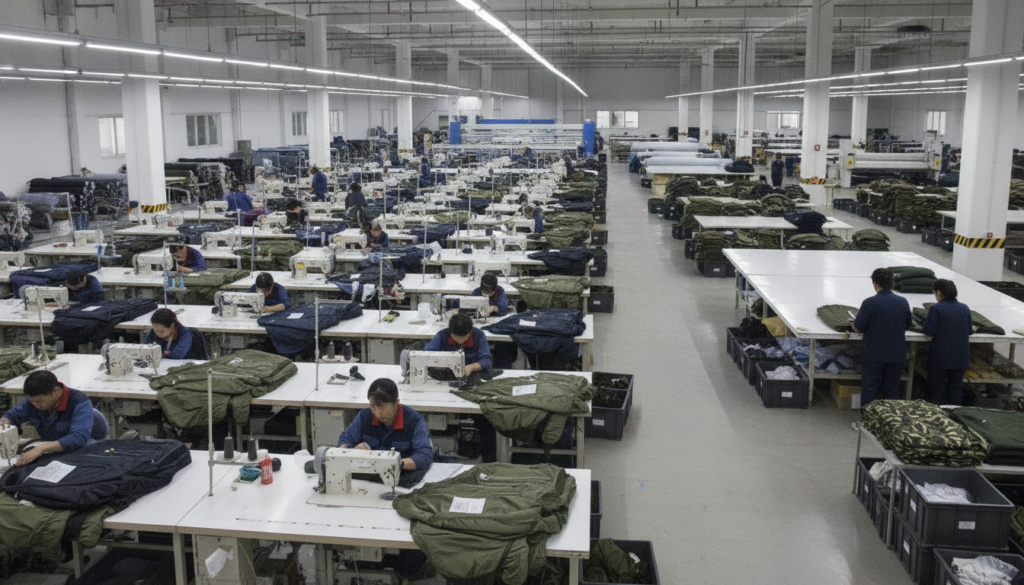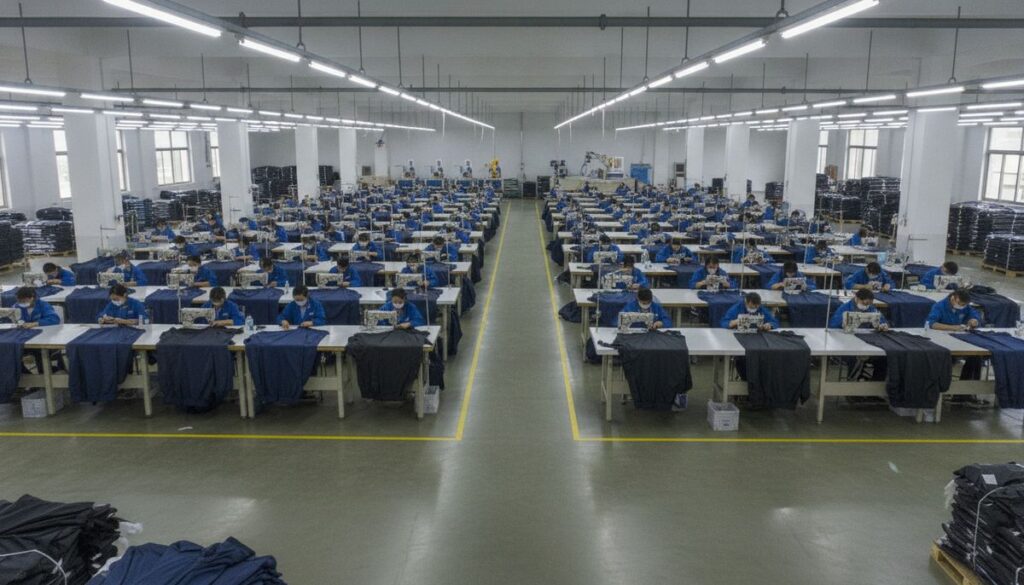
A custom windbreaker set is a two-piece garment system-jacket and matching pants-manufactured with your specified fabrics, colors, logos, and sizing, typically using windproof ripstop nylon or polyester with a DWR finish. Production MOQ for a custom windbreaker set starts at 10 pieces per style at PTOUTWEAR (colors and sizes can be mixed), with sampling available from 1 piece. Lead time is 7-10 days for samples and 25-35 days for bulk production.
📋 Table of Contents
Key Takeaways
- A custom windbreaker set comprises a jacket and matching pants manufactured to your fabric, color, logo, and sizing specifications, typically using ripstop nylon or polyester with DWR treatment.
- Production minimums for custom windbreaker sets start at 10 pieces per style at PTOUTWEAR, with colors and sizes mixable within that count, and 1-piece sampling available before bulk commitment.
- Windproof construction relies on tightly woven ripstop fabrics rated at 20-50 denier, DWR coatings that bead water on the surface, and elastic cuffs and hems that seal against wind infiltration.
- Customization spans fabric weight, color matching via Pantone or physical swatch, logo placement using embroidery or heat transfer, and graded sizing from XS to 3XL with fit adjustments.
- Lead times run 7-10 days for pre-production samples and 25-35 days for bulk orders, with inline and final random inspections checking seam strength, DWR performance, and logo placement accuracy.
- FOB pricing for custom windbreaker sets typically ranges from $18-35 per set depending on fabric grade, logo complexity, and order volume, with DDP shipping adding 15-25% to landed cost in the United States.
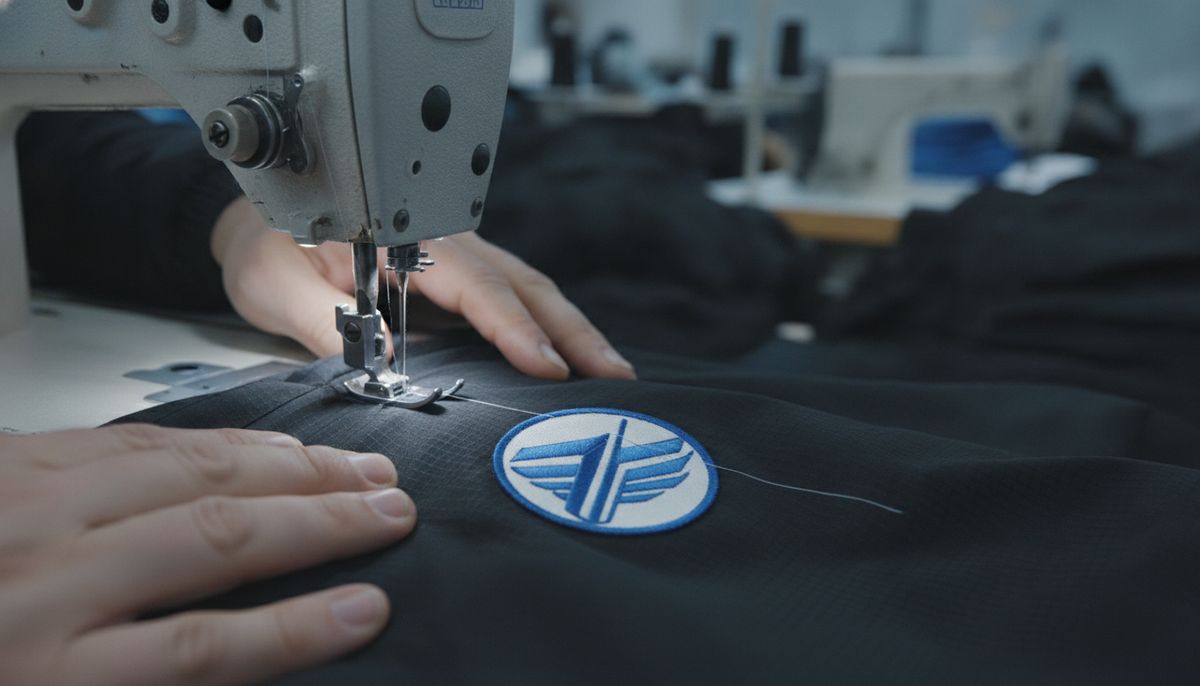
What Defines a Custom Windbreaker Set?
A custom windbreaker set is a coordinated two-piece garment system engineered for wind resistance and light weather protection. The jacket and pants share the same fabric base, color palette, and branding, creating a unified appearance for corporate teams, school athletic programs, or outdoor brand collections.
Jacket Component Construction
The jacket uses a windproof shell fabric, typically 20-50 denier ripstop nylon or polyester, treated with a durable water repellent finish. Critical construction features include a full-length front zipper with storm flap, elastic or adjustable cuffs, drawcord hem, and a hood (fixed or stowable). Buyers sourcing custom windbreaker jackets often specify mesh lining for breathability or a lightweight taffeta lining for smoother on-off wear over base layers.
Pants Component Construction
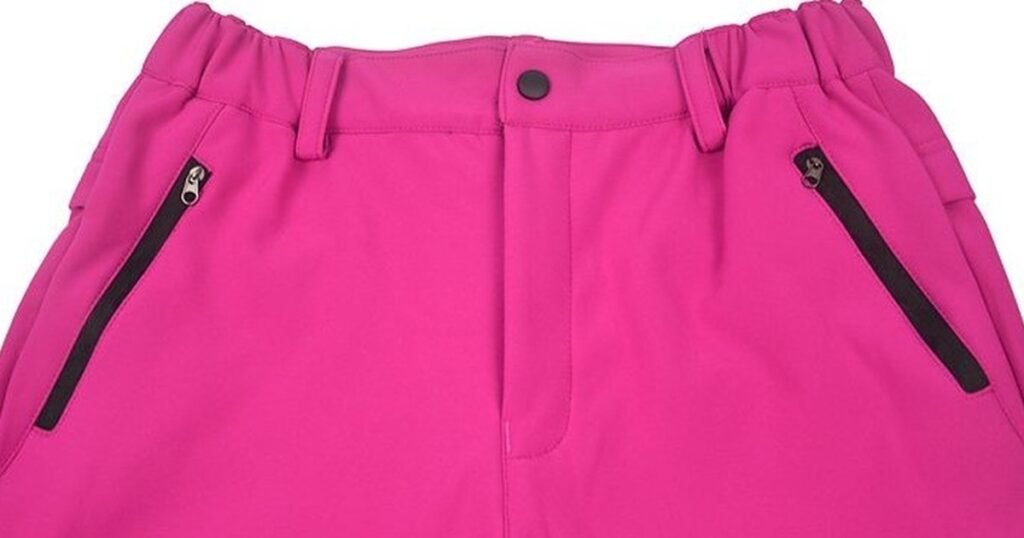
Matching pants use the same shell fabric and DWR treatment as the jacket. Design elements include an elastic waistband with internal drawcord, zippered side pockets, elastic ankle cuffs, and reinforced knee panels for durability. Corporate buyers frequently request a relaxed fit through the thigh to accommodate layering, while school programs prioritize a tapered leg that works with athletic footwear.
Windproof vs. Waterproof Distinction
Windbreaker sets are windproof but not fully waterproof. The tightly woven ripstop fabric blocks wind penetration, and the DWR coating causes light rain to bead and roll off the surface. Once the DWR wears down or the fabric saturates, water will wet through because windbreaker construction lacks sealed seams or a waterproof membrane. Buyers expecting sustained rain protection need a seam-taped rain jacket, not a windbreaker.
In practice: DWR coatings bead water on the surface when fresh, but after 20-30 washes or extended UV exposure the treatment degrades and the fabric wets out, which is why windbreakers are rated for light weather, not storm conditions.
MOQ and Production Minimums
Minimum order quantities for custom windbreaker sets vary by factory capability and the buyer’s customization requirements. Understanding MOQ tiers helps buyers match their budget and inventory capacity to the right production partner.
Sample MOQ
Sample production allows buyers to validate fit, fabric hand-feel, logo placement, and color accuracy before committing to bulk. PTOUTWEAR offers 1-piece sample MOQ with a $100 sample fee, refunded against a first bulk order of 30 or more pieces. Sampling takes 7-10 days from tech-pack approval, and buyers receive a production-grade garment identical to what bulk orders will deliver.
Bulk Production MOQ
Bulk MOQ at PTOUTWEAR starts at 10 pieces per style for jackets and pants, with colors and sizes mixable within that count. School and corporate uniform programs requiring single-color, single-logo consistency start at 30 pieces per style per color. Buyers ordering multiple colorways can split a 10-piece minimum across two colors (5 navy, 5 black) as long as the fabric base and construction remain identical.
Sample MOQ: 1 piece. Bulk MOQ: 10 pieces per style (mix colors and sizes). Sampling time: 7-10 days.
Why MOQ Matters for DTC Brands
Direct-to-consumer outdoor brands launching a new windbreaker set need low MOQ to test market demand without tying up working capital in unsold inventory. A 10-piece minimum allows a founder to order 3 smalls, 4 mediums, 2 larges, and 1 extra-large in a single colorway, validate sell-through over 60-90 days, then scale to larger orders. Factories with 500-piece minimums force brands to commit before market validation, increasing the risk of dead stock.
Fabric Construction Specifications
Fabric choice determines the windbreaker set’s weight, packability, durability, and weather resistance. Buyers specify fabric by denier, weave structure, DWR type, and optional performance treatments.
Denier and Weave Structure
Denier measures the weight of the yarn; lower denier means lighter, more packable fabric, while higher denier increases abrasion resistance. Common ranges include:
- 20D ripstop nylon: Ultralight and packable, suited for running or cycling windbreakers where weight matters more than durability.
- 30-40D ripstop polyester: Balanced weight and durability for general outdoor use, corporate uniforms, and school athletic programs.
- 50D ripstop nylon: Heavier and more abrasion-resistant, used for workwear windbreakers or high-contact team sports.
Ripstop weave incorporates thicker reinforcement threads in a crosshatch pattern every 5-8mm, preventing small tears from spreading. Plain-weave nylon costs 10-15% less but lacks tear resistance, making it unsuitable for active use.
DWR Treatment Types
Durable water repellent coatings cause water to bead on the fabric surface rather than soaking in. PTOUTWEAR applies PFC-free DWR as standard, meeting corporate sustainability requirements and avoiding PFAS chemistry flagged by California Proposition 65 and the EU REACH regulation. PFC-free DWR performs comparably to older fluorocarbon treatments for the first 15-20 washes, then requires reapplication with a spray-on or wash-in treatment.
Breathability Considerations
Windbreaker fabrics are not inherently breathable because the tight weave that blocks wind also restricts moisture vapor transmission. Buyers concerned about overheating during activity specify mesh lining panels under the arms and across the upper back, or request pit zips on the jacket. Without ventilation features, a windbreaker becomes clammy during sustained exertion, which is a common complaint buyers raise when sourcing technical outerwear for running or cycling applications.
Customization Options
Custom windbreaker set production accommodates color, logo, fit, and feature adjustments to match brand identity and end-user requirements. Each customization layer adds lead time and cost, so buyers prioritize changes that deliver measurable brand or performance value.
Color Matching
Buyers specify colors via Pantone TPX or TCX codes for textile, or submit a physical swatch for lab dip matching. PTOUTWEAR produces a lab dip sample within 5-7 days, and the buyer approves or requests adjustment before bulk dyeing begins. Matching across jacket and pants requires the same dye lot to avoid shade variation, which is why factories ask buyers to confirm both pieces simultaneously rather than ordering the jacket first and pants later.
Logo Application Methods
Logo placement options include:
- Embroidery: Durable and professional, suited for chest logos up to 4 inches wide. Setup cost runs $30-50 per design, amortized across the order.
- Screen printing: Cost-effective for large back prints or multi-color designs, but less durable than embroidery on high-flex areas.
- Heat transfer: Full-color logos or photographic images, with a slightly raised hand-feel. Durability is lower than embroidery but higher than screen printing.
- Woven labels: Sewn-in brand labels at the neck or hem, adding a premium touch for private-label programs.
Corporate buyers ordering custom windbreaker sets for employee uniforms typically choose embroidered chest logos for longevity, while DTC brands launching a seasonal collection may use screen-printed back graphics to maximize visual impact. Buyers working with custom logo services submit vector artwork (AI or EPS format) to ensure clean reproduction at production scale.
Fit and Grading Adjustments
Standard sizing runs XS through 3XL using a graded spec chart that scales proportionally from a base size (usually medium). Buyers requiring a specific fit-athletic cut, relaxed fit, or extended sizing-request a fit sample in the base size, then approve adjustments before the full size run is graded. School programs serving younger athletes often need a compressed size range (youth S-L) with shorter torso and sleeve lengths, which requires a separate grading chart.
Production Timeline and Quality Control
Production timelines for custom windbreaker sets break into distinct phases: sampling, bulk cutting and sewing, and inspection. Each phase has specific quality checkpoints that prevent defects from reaching the finished garment.
Sampling Phase
After the buyer submits a tech pack with fabric spec, color, logo placement, and sizing, the factory produces a pre-production sample. This sample undergoes fit approval, color approval, and logo placement verification. PTOUTWEAR completes sampling in 7-10 days, and buyers receive the sample via express courier for physical evaluation. Changes requested at this stage (logo size adjustment, cuff length modification) are incorporated into the bulk production spec at no additional cost.
Bulk Production Phase
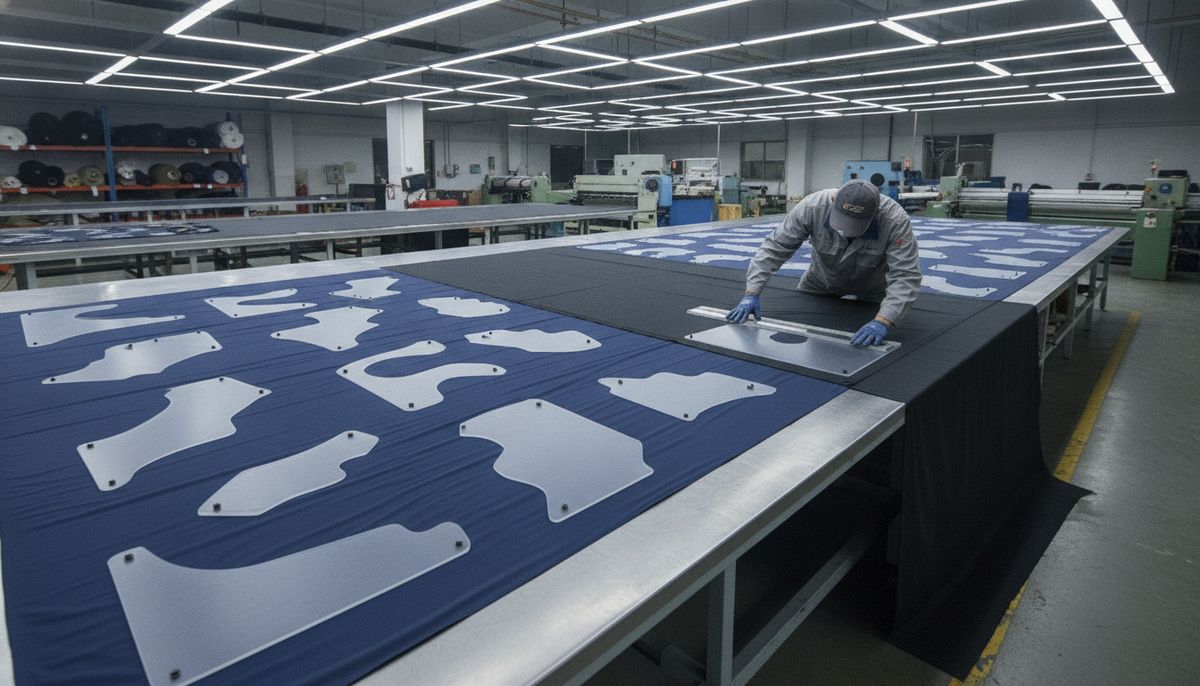
Bulk production begins once the buyer approves the sample and places a purchase order. The factory cuts fabric, applies logos, and sews jackets and pants over 25-35 days (approximately 4 weeks). Rush orders of 1,000 pieces can be completed in 2 weeks with a 25% surcharge, prioritizing the order through the cutting and sewing lines. Buyers working with OEM jacket manufacturing partners receive production updates at cutting, sewing start, and final inspection milestones.
Quality Control Checkpoints
Inline inspection occurs during sewing, checking seam strength, logo alignment, and zipper function on every 10th garment. Final random inspection samples 10% of the finished order using AQL 2.5 standards, measuring:
- Seam strength: No skipped stitches, minimum 12 stitches per inch on stress seams (shoulder, side, crotch).
- DWR performance: Water beads and rolls off the surface without soaking in.
- Logo placement: Centered within ±3mm of the specified position, with no thread breaks or puckering.
- Sizing accuracy: Measured flat against the approved spec sheet, within ±1cm tolerance on chest, length, and sleeve.
Defects found during final inspection are reworked or replaced before shipment. Buyers receive an inspection report with photos and measurements, and any garment failing AQL standards is excluded from the shipment count.
Cost Structure and Landed Pricing
Pricing for custom windbreaker sets depends on fabric grade, logo complexity, order volume, and shipping terms. Buyers planning a budget need to account for FOB cost, international freight, customs duty, and any value-added services like hang tags or polybag packaging.
FOB Pricing Breakdown
FOB (Free On Board) pricing covers the garment cost plus delivery to the departure port. Typical FOB ranges for custom windbreaker sets include:
Fabric upgrades (20D ultralight ripstop, anti-static treatment, reflective trim) add $2-5 per set. Multi-color screen printing or large back graphics add $1.50-3 per piece depending on print size and color count.
Landed Cost to United States
Landed cost includes FOB price, international freight, customs duty, and delivery to the buyer’s warehouse. For a 200-piece custom windbreaker set order shipped to Los Angeles:
- FOB cost: $25 per set × 200 = $5,000
- Sea freight (20ft container partial load): $800
- Customs duty (textile, HTS 6201.93): 16.6% of FOB = $830
- Customs brokerage and drayage: $300
- Total landed cost: $6,930, or $34.65 per set
DDP (Delivered Duty Paid) shipping transfers customs clearance and final delivery to the factory, simplifying logistics for buyers without import experience. DDP pricing adds 15-25% to the FOB cost, depending on destination and shipment size. Buyers working with low-MOQ jacket manufacturers on small initial orders often choose DDP to avoid the complexity of customs brokerage.
Payment Terms and Deposit Structure
Standard payment terms for custom windbreaker sets are 30% deposit at order confirmation, 70% balance before shipment. The deposit covers fabric procurement and cutting, while the balance is due upon final inspection approval. Buyers with established order history may negotiate net-30 or net-60 terms, but first-time orders require the 30/70 split to protect both parties.
Frequently Asked Questions
Can I order just the jacket without the pants?
Yes, buyers can order the jacket and pants separately as individual styles, each with its own 10-piece MOQ. Many corporate uniform programs order jackets first to establish the color and logo, then add matching pants in a later order once the initial batch is approved. Ordering both pieces together ensures the fabric comes from the same dye lot, avoiding potential shade variation between production runs.
How do I maintain the DWR coating after washing?
DWR coatings degrade with washing and UV exposure, typically losing effectiveness after 15-25 washes. To restore water repellency, tumble-dry the garment on medium heat for 20 minutes (heat reactivates the DWR), or apply a spray-on or wash-in DWR treatment following the product instructions. Avoid fabric softener, which leaves a residue that blocks DWR performance. Proper care extends the functional lifespan of a windbreaker set from one season to multiple years.
What certifications should I request for a school uniform program?
School uniform programs in the United States typically require CPSIA compliance for children’s products, which restricts lead content in zippers and snaps. OEKO-TEX Standard 100 certification screens textiles against harmful substances, providing assurance for parents and school administrators. Factories holding ISO 9001 quality management certification demonstrate consistent production processes and traceability, reducing the risk of defects in large uniform orders. Request certification documents during the sampling phase to verify compliance before bulk production begins.
Ready to source your custom windbreaker set with verified specs and transparent pricing?
Request 1-Piece Samples →
Written by Ivan Chen, Sales Engineer at PTOUTWEAR, 13 years in outdoor apparel manufacturing.