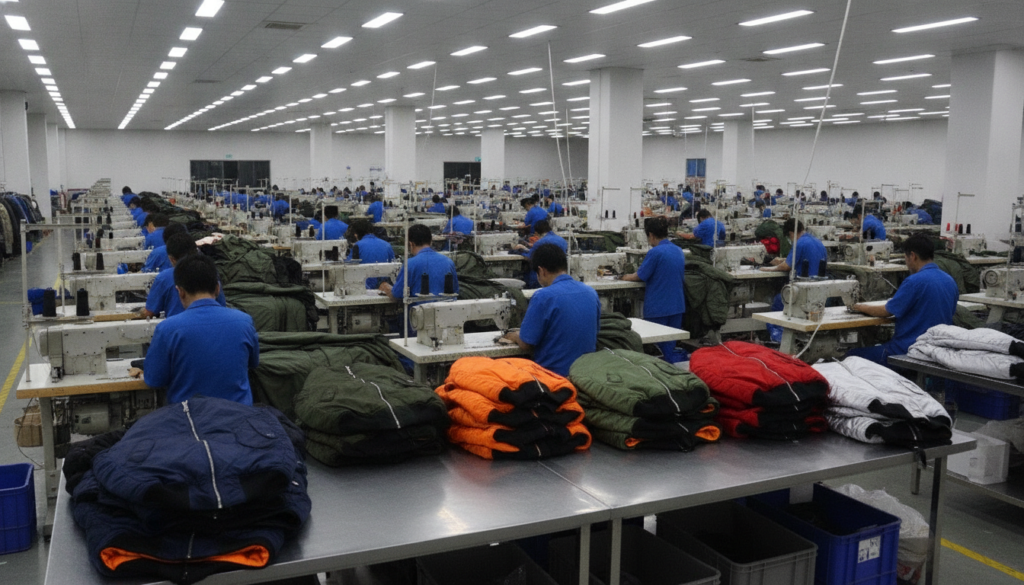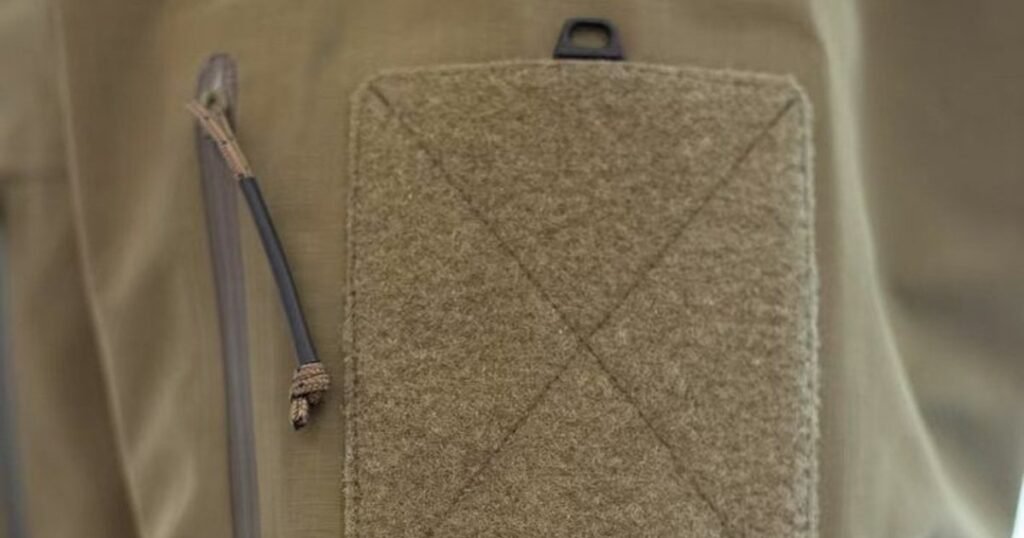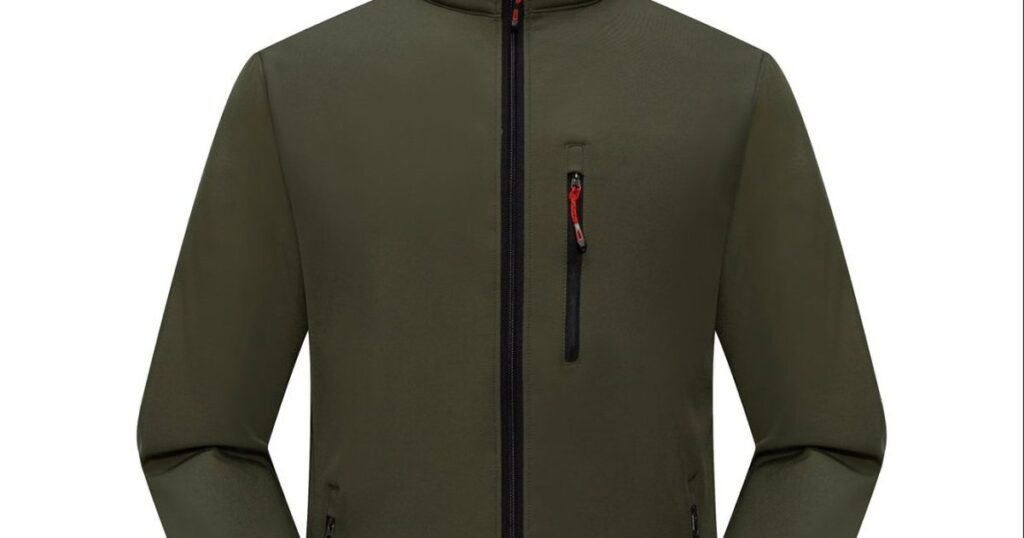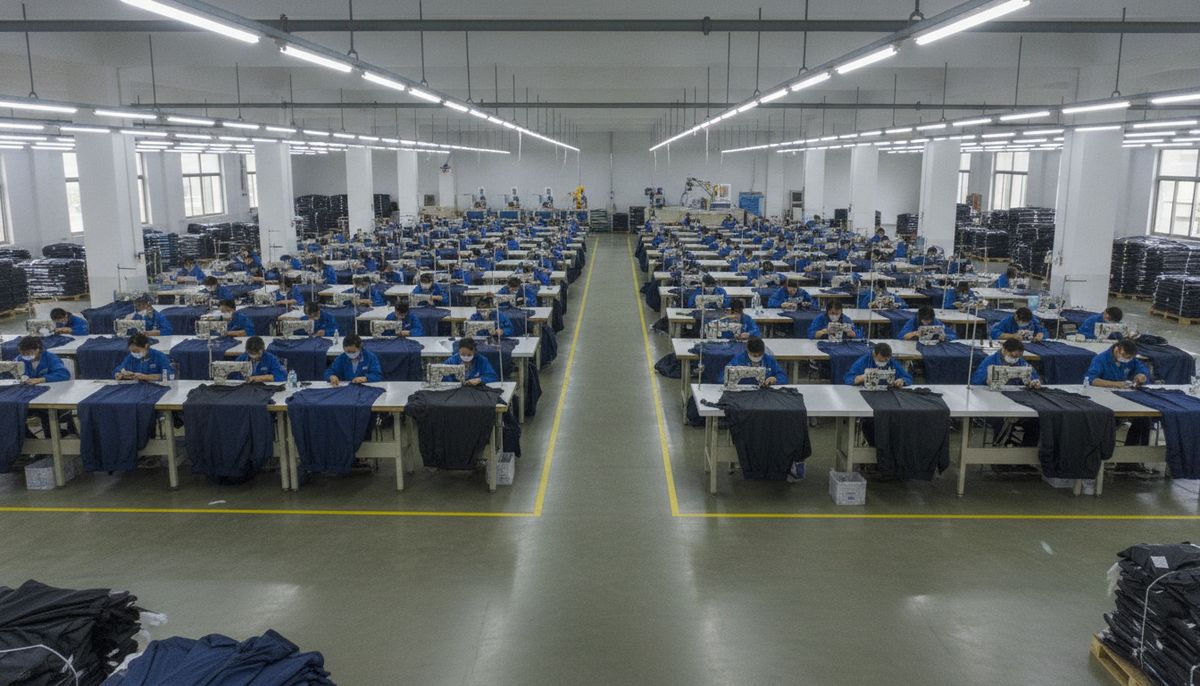
A lightweight packable rain jacket wholesale supplier should offer 1-piece sampling, 10-piece bulk MOQs per style, and verifiable waterproofing through ISO 811 hydrostatic testing and seam-tape quality control. PTOUTWEAR provides sample MOQ of 1 piece, bulk MOQ of 10 pieces per style (colours and sizes can be mixed), 7-10 day sampling, and PFC-free DWR certification, with 3,000m² production in Taizhou Sanmen and 240 workers running 20 production lines.
📋 Table of Contents
Executive Summary
- Sample MOQ: A lightweight packable rain jacket wholesale supplier should offer 1-piece sampling to validate fit, waterproofing, and packability before committing to bulk orders.
- Bulk MOQ: Expect 10-piece minimum orders per style with mixed colours and sizes, enabling small brands to launch without tying up cash in inventory.
- Waterproofing verification: Request ISO 811 hydrostatic test reports and seam-tape wash-durability data before approving bulk production.
- Lead times: Sampling takes 7-10 days, bulk production 25-35 days, with rush options available for 1,000 pieces in 2 weeks at a surcharge.
- Landed cost: US imports face Section 301 tariffs on Chinese-origin goods, customs brokerage, freight, and compliance labeling costs that can add significant margin pressure.
What Makes a Packable Rain Jacket Wholesale-Ready?
A packable rain jacket is wholesale-ready when it meets three criteria: repeatable waterproofing across production runs, consistent sizing and fit, and a pack-down system that survives repeated stuffing. Buyers report that waterproofing can deteriorate first at the shoulders, where backpack straps create repeated abrasion, and that inconsistent sizing results in trim fits in some batches and boxy cuts in others.
Waterproof vs Water-Resistant Performance
Several reviewed jackets are described as water-resistant rather than fully waterproof: they perform well in light or moderate rain but begin leaking during prolonged heavy rain. The distinction lies in hydrostatic head rating and seam construction. A jacket rated 5,000mm withstands light rain; 10,000mm handles moderate downpours; 20,000mm is expedition-grade. Seam taping determines whether water penetrates stitching holes under pressure.
- Coated fabrics: Polyurethane or acrylic coatings applied to nylon or polyester, offering 3,000-8,000mm hydrostatic head at lower cost but prone to delamination after repeated washing.
- Laminated membranes: Microporous films bonded to face fabric, delivering 10,000-20,000mm ratings with better breathability but higher unit cost.
- DWR finish: Durable Water Repellent coating causes water to bead on the surface; PFC-free versions use fluorine-free chemistry to meet REACH and California Proposition 65 compliance.
Packability and Weight
Packable jackets compress into an internal chest pocket or external stuff sack, typically weighing 200-350 grams. Lighter jackets use 20-30 denier ripstop nylon; heavier-duty versions use 40-70 denier face fabrics. The trade-off: lighter weight sacrifices abrasion resistance, which matters when the jacket is worn under a loaded backpack.
Fit Consistency Across Production Runs
Reviewers identify inconsistent sizing, with some versions fitting trim and others running roomy or boxy, and long sleeves that vary by batch. This stems from pattern-grading errors or unstable cutting when a factory switches fabric suppliers mid-production. A OEM jacket manufacturer with in-house pattern-making and fit-block libraries maintains size consistency across reorders.
In practice: Pattern grading that drifts between sample approval and bulk production creates fit complaints that erode brand trust, which is why the approved sample pattern must be locked and referenced against every production cutting ticket.
How Do You Verify Waterproofing Before Bulk Orders?
Waterproofing verification requires three tests: hydrostatic head pressure, seam-tape adhesion, and wash durability. A factory that cannot produce third-party lab reports for all three is relying on supplier claims rather than measured performance.
ISO 811 Hydrostatic Head Testing
ISO 811 measures how much water pressure a fabric withstands before leaking, expressed in millimeters. The test clamps fabric under a column of water and increases pressure until three points of leakage appear. A 10,000mm rating means the fabric held a 10-meter column of water. Request the test report with the fabric mill’s name, test date, and pass/fail threshold.
Seam-Tape Peel Strength
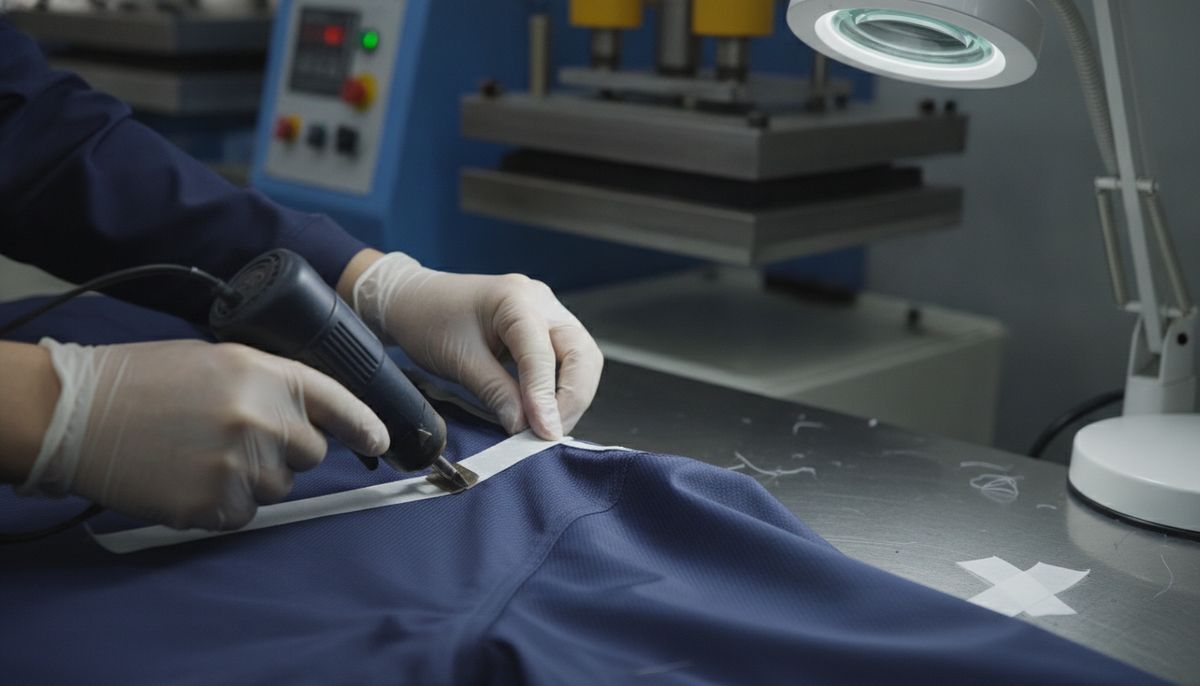
Seam tape bonds over stitching holes to prevent water ingress. Peel strength measures how much force is required to separate the tape from the fabric, typically 1.5-2.5 kg/cm for durable performance. Buyers complain that washing can damage or remove the waterproof coating, and seam-tape failure is the most common post-wash defect. A factory running seam-tape peel tests after every wash cycle catches adhesion problems before bulk shipment.
Wash Durability (20-Cycle Test)
DWR coatings degrade with repeated laundering. A 20-cycle wash test simulates two years of consumer use. The fabric is washed 20 times, dried, then spray-tested for water repellency. If water soaks in rather than beading, the DWR has failed. PFC-free DWR formulations historically showed lower wash durability than fluorocarbon versions, but recent C0 chemistries from suppliers like Rudolf and Archroma now match 15-20 wash cycles.
Testing checkpoint: Request ISO 811 hydrostatic head reports, seam-tape peel-strength data, and 20-cycle wash-test results before approving any bulk production. A sample development process that includes these three tests protects against the most common waterproofing failures.
What MOQ Should You Expect from a Supplier?
Minimum order quantities vary by factory scale and order type. Large contract manufacturers serving established outdoor brands require 500-1,000 pieces per style. Mid-tier suppliers targeting small brands and corporate buyers offer 100-300 pieces. Low-MOQ specialists serve DTC startups and school uniform programs with 10-50 pieces per style.
Sample MOQ: 1 Piece vs 5-Piece Minimums
A 1-piece sample MOQ allows brand founders to test one size and colourway before committing to a size run. Factories charging $100-150 per sample typically refund the fee against a bulk order of 30+ pieces. A 5-piece sample minimum forces you to order a full size run (XS-XL) before validating fit, tying up $500-750 in sampling cost.
Bulk MOQ: 10 Pieces per Style
PTOUTWEAR’s low MOQ jacket manufacturing starts at 10 pieces per style, with colours and sizes mixed within that minimum. A brand launching three colourways can order 10 pieces split across navy, black, and olive, rather than 10 pieces per colour. School and corporate uniform programs start at 30 pieces per style per colour to ensure size-run coverage.
Why Higher MOQs Tie Up Cash
A 300-piece MOQ at $25 per unit requires $7,500 upfront, plus freight and duties. If the style underperforms, that inventory sits. A 10-piece MOQ at $35 per unit costs $350, allowing a brand to test market response before scaling. The per-unit cost is higher at low volume, but the cash-flow risk is lower.
How Do You Prevent Common Quality Failures?
Common quality failures include zipper failure, seam leakage, and DWR coating loss after regular use, particularly among lower-priced lightweight jackets. These defects stem from component sourcing, assembly technique, and inadequate pre-shipment inspection.
Zipper Failure: Coil vs Vislon Construction
Lightweight packable jackets use either coil zippers (nylon spiral teeth) or Vislon zippers (moulded plastic teeth). Coil zippers are lighter and more flexible but prone to separation under load. Vislon zippers are heavier but self-repairing: if the slider comes off track, it resets when pulled. Specify YKK or SBS zippers with locking sliders to prevent zipper creep during wear.
Seam Leakage: Tape Width and Placement
Seam tape must cover the entire stitch line with 2-3mm overlap on each side. Narrow tape (10-12mm) saves cost but leaves gaps where the needle penetrated fabric. Standard tape width is 15-20mm. Critical seams (shoulders, hood, and front placket) require full taping; non-critical seams (hem, cuffs) can use spot taping to reduce weight.
DWR Coating Loss: Application Method
DWR is applied by spray, pad, or foam. Spray application delivers the most uniform coverage but uses more chemical. Pad application is faster and cheaper but can leave streaks. A factory applying PFC-free DWR by spray and curing at 150-160°C for 90 seconds achieves better wash durability than one using pad application with insufficient curing time.
Hood Usability: Adjustment System
Packable jackets can compromise hood usability: one review identifies an oversized hood that obscures the wearer’s face unless it is cinched correctly. A three-point adjustment system (rear elastic, side cord locks, and visor wire) allows the wearer to dial in fit. Single-point rear adjustment is lighter but less precise.
What Landed Cost Factors Affect US Imports?
Landed cost is the total expense to get a product from the factory to your warehouse, including FOB unit price, freight, duties, tariffs, customs brokerage, and compliance labeling. US imports of Chinese-origin outerwear face Section 301 tariffs, which add cost pressure that erodes margin.
Section 301 Tariffs on Chinese Goods
Section 301 tariffs apply to most Chinese-origin apparel at rates that vary by product category and trade policy. Lightweight packable rain jackets classified under HTS code 6201.93 (men’s anoraks and windbreakers, not down-filled) face standard duty plus any applicable Section 301 surcharge. Verify the current rate with a licensed customs broker before finalizing pricing.
Freight: Air vs Sea for Small Orders
Air freight costs $4-7 per kilogram with 5-7 day transit from China to the US West Coast. Sea freight costs $0.50-1.00 per kilogram with 25-35 day transit. A 10-piece order weighing 3.5 kilograms costs $14-25 by air, $1.75-3.50 by sea. Air makes sense for samples and rush reorders; sea is standard for bulk.
Customs Brokerage and Compliance Labeling
Customs brokers charge $75-150 per shipment to file entry documents and pay duties on your behalf. Compliance labeling requires a sewn-in care label showing fiber content, country of origin, and RN number (registered identification number issued by the FTC). A factory offering custom logo and labeling services can sew in compliant labels before shipment, avoiding the need for relabeling in the US.
DDP Shipping: Factory Pays Landed Cost
DDP (Delivered Duty Paid) terms shift freight, duties, and customs clearance to the supplier. The factory quotes a single per-unit price that includes delivery to your warehouse. DDP simplifies budgeting for small brands unfamiliar with import mechanics, but the factory’s freight forwarder may charge higher rates than a buyer-selected logistics provider.
- FOB pricing: Buyer arranges and pays for freight, duties, and customs brokerage; offers more control over logistics costs.
- DDP pricing: Factory delivers to buyer’s warehouse; single invoice, no surprises, but less cost transparency.
- Hybrid approach: Factory quotes FOB, buyer uses own freight forwarder for sea shipments, factory handles air samples under DDP.
Key Takeaways
- A lightweight packable rain jacket wholesale supplier should offer 1-piece sample MOQ and 10-piece bulk MOQ per style to enable market testing without tying up cash in inventory.
- Waterproofing verification requires ISO 811 hydrostatic head testing, seam-tape peel-strength measurement, and 20-cycle wash-durability testing before bulk production approval.
- Common quality failures such as zipper separation, seam leakage, and DWR coating loss stem from component sourcing and assembly technique, not fabric quality alone.
- US imports of Chinese-origin outerwear face Section 301 tariffs, customs brokerage fees, and compliance labeling requirements that add cost beyond the FOB unit price.
- DDP shipping transfers freight, duties, and customs clearance to the factory, simplifying budgeting for small brands but reducing cost transparency compared to FOB terms.
- PFC-free DWR coatings now match 15-20 wash cycles when applied by spray and cured at correct temperature, meeting REACH and California Proposition 65 compliance without performance compromise.
Frequently Asked Questions
What is the difference between water-resistant and waterproof rain jackets?
Water-resistant jackets repel light rain and mist but eventually soak through during prolonged exposure, typically rated below 5,000mm hydrostatic head. Waterproof jackets withstand sustained heavy rain, rated 10,000mm or higher, and use seam taping to prevent leakage through stitching holes. The distinction matters for buyers sourcing jackets for hiking and travel use cases where the wearer faces multi-hour rain exposure. A water-resistant jacket works for urban commuting; a waterproof jacket is required for trail use.
How much does it cost to manufacture a packable rain jacket?
Manufacturing cost depends on fabric weight, waterproofing method, and order volume. A basic 20-denier ripstop nylon shell with polyurethane coating costs $18-24 per unit at 500-piece volume, $30-40 per unit at 10-30 piece volume. Adding a laminated membrane, YKK zippers, and full seam taping raises cost by $5-8 per unit. PFC-free DWR adds $0.50-1.00 per unit compared to standard fluorocarbon DWR. Sampling cost is $100-150 per piece, typically refunded against bulk orders of 30+ pieces.
What waterproof rating should a lightweight rain jacket have?
A lightweight packable rain jacket for hiking and travel should carry a minimum 10,000mm hydrostatic head rating to handle moderate to heavy rain. Jackets rated 5,000-8,000mm are suitable for light rain and urban use but will leak during sustained downpours. Expedition-grade shells rated 20,000mm or higher are heavier and more expensive, appropriate for alpine and multi-day backcountry use. The rating alone does not guarantee waterproofness; seam taping quality and DWR wash durability determine real-world performance. Request both the fabric rating and seam-tape test reports before approving bulk production.
Ready to source a lightweight packable rain jacket wholesale supplier with 1-piece sampling and 10-piece bulk MOQ?
Request samples and MOQ details →
Written by Ivan Chen, Sales Engineer at PTOUTWEAR – 13 years in outdoor apparel manufacturing.