📋 Table of Contents
Sourcing 15k waterproof rating hardshell jacket bulk orders requires understanding what the 15,000mm water column figure actually measures, how it compares to 10K and 20K alternatives, and which construction details separate functional stormwear from marketing claims. Buyers launching outdoor brands, stocking team uniforms, or building wholesale catalogs consistently ask whether 15K performance justifies the membrane and seam-sealing cost premium over 10K shells, and whether 20K overkill drains budget without adding real-world advantage.
This guide walks through ISO 811 hydrostatic head testing, membrane lamination methods, taped-seam requirements, and bulk-order MOQ structures. It covers cost drivers by fabric layer, decoration limits on technical shells, and program-specific buying guidance for corporate uniforms, school kits, and private-label outdoor collections.
Executive Summary
- 15K waterproof rating: 15,000mm hydrostatic head measured per ISO 811, indicating the fabric withstands 15 meters of water pressure before leaking.
- Bulk MOQ: 30 pieces per SKU at PTOUTWEAR, with 1-piece sample validation available at $100 refundable fee.
- Taped seams: All critical seams require heat-sealed tape (polyurethane or polyester) to block needle-hole leakage; untaped seams fail waterproofing regardless of membrane rating.
- DWR longevity: PFC-free durable water repellent coatings need re-proofing every 20-30 washes to prevent face-fabric wet-out, which blocks breathability even in high-rated membranes.
- Cost breakdown: 15K 2-layer polyester membrane fabric adds approximately $3.20 to $4.80 per meter compared to 10K alternatives, with seam-tape labor adding $1.10 to $1.60 per garment.
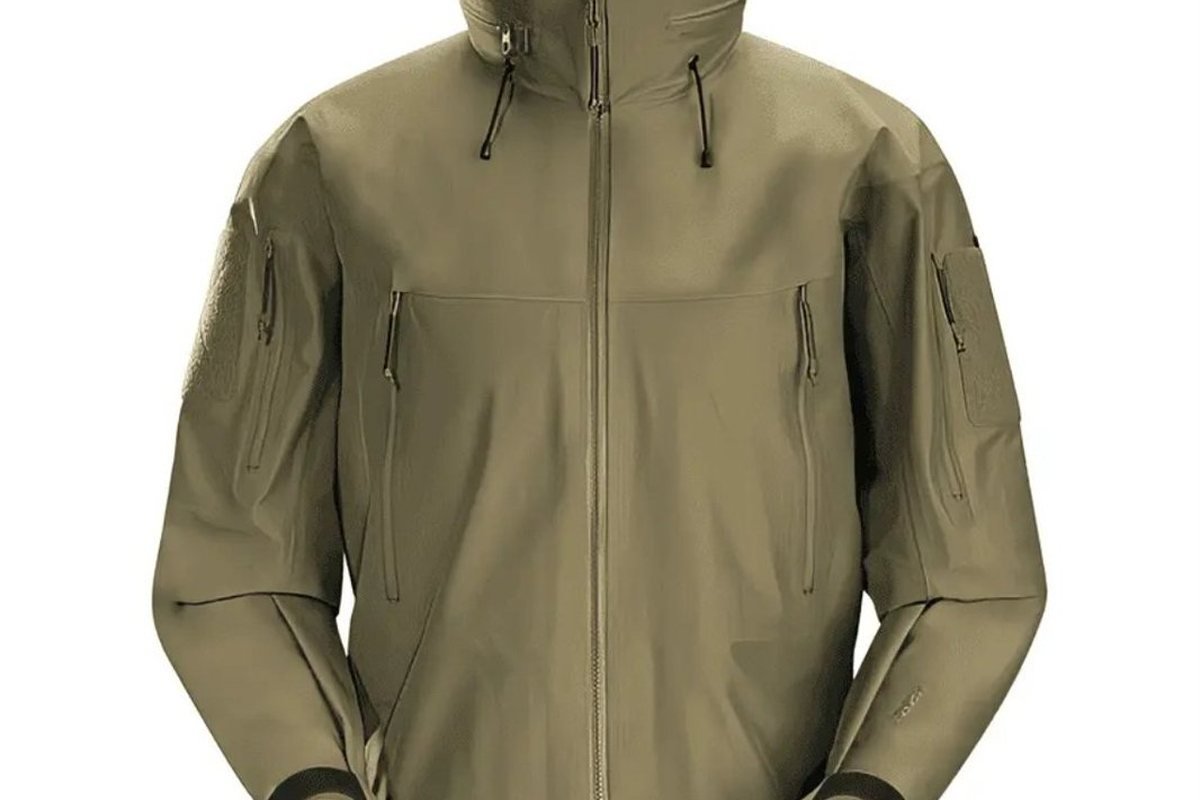
What 15K Waterproof Rating Means
The 15K figure refers to a hydrostatic head test result, not a marketing term. ISO 811 testing places fabric under a graduated water column and measures millimeters of height before three drops penetrate. A 15,000mm rating means the material withstands 15 meters of static water pressure, equivalent to sustained heavy rain or moderate snowmelt exposure.
ISO 811 Testing Protocol
ISO 811 specifies a 10cm² fabric sample clamped under a transparent cylinder. Water fills the cylinder at a controlled rate (60mm per minute or 100mm per minute depending on expected performance tier). The test stops when three separate penetration points appear on the underside. The water column height at failure, measured in millimeters, becomes the waterproof rating.
Most outdoor hardshell specifications reference ISO 811 or the equivalent AATCC 127 (common in North American supply chains). EN 343 Class 3 protective workwear standards require minimum 8,000mm for the lowest waterproof tier, making 15K solidly mid-to-upper performance.
Real-World Performance Translation
A 15,000mm rating handles sustained rain, wet snow, and brief contact with saturated surfaces. Backpack straps, shoulder seams, and pocket flaps under load concentrate pressure beyond ambient rain, so static ratings understate real-world stress. Abrasion from pack straps and repeated flexing degrade membrane coatings faster than lab testing predicts.
Buyers sourcing corporate uniforms for utility crews, ski patrol teams, or outdoor event staff find 15K adequate for 4-6 hour shifts in wet conditions. Extended alpine exposure or commercial fishing applications typically specify 20K or 3-layer Gore-Tex equivalents.
15K vs 10K vs 20K Performance
Comparing waterproof ratings requires balancing performance needs, cost, and breathability trade-offs. Higher ratings add membrane thickness and density, which improves water resistance but often reduces moisture vapor transmission.
When 15K Outperforms 10K
Buyers report 10K shells wet out faster under backpack pressure, especially at shoulder and hip-belt contact zones. A wet face fabric blocks breathability regardless of membrane rating, because liquid water on the exterior prevents vapor transmission. This wet-out phenomenon drives the most common complaint about budget rain jackets.
15K membranes tolerate higher localized pressure before leaking, extending functional waterproofing under load. School uniform programs and corporate team orders see fewer warranty returns when specifying 15K for outdoor roles (grounds crews, event staff, athletic programs).
When 20K Is Overkill
20K and 3-layer constructions add $18 to $28 per jacket in material cost alone. For applications under 6 hours of continuous exposure, or where users work near shelter, the performance gain rarely justifies budget impact. Wholesale buyers stocking retail shelves find 15K hits the price-performance sweet spot for general outdoor customers, reserving 20K for technical alpine or expedition sub-categories.
Construction Requirements for Real Waterproofing
A 15,000mm membrane rating means nothing without proper seam sealing, DWR treatment, and zipper protection. Buyers sourcing 15k waterproof rating hardshell jacket bulk orders must specify these construction details in tech packs to avoid non-functional samples.
Taped Seams
Every sewn seam creates 8-12 needle holes per inch. Without heat-sealed tape covering the seam allowance, water wicks through these holes regardless of membrane performance. Critical seams include shoulder, underarm, side panel, pocket flap, and hood attachment.
Two tape types dominate OEM jacket manufacturing:
- Polyurethane (PU) tape: Lower cost ($0.08-$0.12 per meter), adequate for 15K 2-layer constructions, bonds at 120-140°C, 3-5 year durability in moderate use.
- Polyester (PES) tape: Higher cost ($0.18-$0.26 per meter), required for 3-layer and 20K+ shells, bonds at 140-160°C, 7-10 year durability, resists delamination in high-flex zones.
Labor cost for seam taping adds $1.10 to $1.60 per garment depending on seam count and factory efficiency. Automated taping machines reduce cost but require 500+ unit runs to justify setup; 30-200 piece orders use manual taping with handheld irons.
DWR Coating
Durable water repellent treatment on the face fabric makes water bead and roll off rather than saturating the textile. Once the face fabric wets out (absorbs water), the membrane cannot breathe because liquid water blocks vapor transmission. Users feel clammy and wet from interior condensation even though the membrane never leaked.
PFC-free DWR (C0 chemistry) now dominates European and North American orders due to environmental regulations and brand sustainability commitments. C0 DWR performs 15-20% below legacy C6 or C8 fluorocarbon treatments in initial water repellency but avoids persistent organic pollutant concerns.
DWR wears off with washing, abrasion, and UV exposure. Buyers must communicate to end users that re-proofing with spray-on or wash-in DWR every 20-30 washes maintains waterproof performance. This maintenance requirement is not a defect but an inherent characteristic of all breathable waterproof shells.
Zipper and Closure Details
Water-resistant zippers (coil zippers with polyurethane coating on tape) add $1.80-$2.40 per zipper compared to standard nylon coil. Storm flaps over front zippers provide backup protection and cost $0.60-$0.95 in fabric and labor. Pit zips for ventilation require waterproof zippers and add $3.20-$4.10 per jacket but address the overheating complaint common in non-vented hardshells during high-output activity.
Bulk Sourcing Specifications
Ordering 15k waterproof rating hardshell jacket bulk quantities requires defining membrane type, construction method, testing standards, and MOQ tiers upfront. Ambiguous specs lead to samples that meet waterproof ratings in lab tests but fail in field use.
Membrane Options
Three membrane constructions appear in 15K hardshell sourcing:
- 2-layer laminate: Membrane bonded to face fabric, separate mesh lining protects membrane from interior abrasion. Most common for 15K shells. Fabric cost $8.50-$11.20 per meter. Easier to sew than 3-layer, suitable for low-MOQ jacket production (30-100 units).
- 2.5-layer laminate: Membrane with thin protective coating replacing full lining. Lighter weight, packs smaller. Fabric cost $9.80-$12.60 per meter. Less durable in high-abrasion zones (shoulders, cuffs). Popular for ultralight hiking shells.
- 3-layer laminate: Face fabric, membrane, and lining knit bonded into single layer. Most durable, best breathability. Fabric cost $14.50-$19.20 per meter. Requires specialized sewing equipment; minimum 200-300 units typical at most factories. Overkill for 15K rating, usually reserved for 20K+ performance.
Buyers launching outdoor brands with limited budgets choose 2-layer construction for initial runs. The 30-piece per SKU minimum at our 3,000m² Taizhou Sanmen facility allows testing three colorways (90 total units) without tying up $15,000-$20,000 in inventory.
Testing and Certification Requirements
European buyers increasingly request EN 343 Class 3 certification for protective workwear applications. EN 343 Class 3 requires minimum 8,000mm waterproofing (15K exceeds this) and minimum 15 m²Pa/W breathability (RET value). SGS or TÜV testing costs $420-$680 per style and takes 12-15 business days.
North American buyers typically reference AATCC 127 for waterproofing and ASTM E96 or ASTM F1868 for breathability. These tests cost $180-$320 per fabric sample and return results in 7-10 business days. Buyers ordering 200+ units often request third-party testing; smaller runs rely on mill test reports supplied with fabric purchase.
Sample MOQ: 1 piece. Bulk MOQ: 30 pieces per SKU. Sampling time: 7-10 days.
Lead Time Structure
Bulk production timelines for 15K hardshell jackets break into these phases:
Total lead time for 30-100 piece orders: 25-35 days from deposit to ex-factory. Larger orders (200-500 units) extend fabric procurement to 18-22 days and cut-and-sew to 20-28 days, pushing total timeline to 53-78 days.
Cost Breakdown by Component
Understanding where cost accumulates in 15k waterproof rating hardshell jacket bulk orders helps buyers optimize specs without sacrificing performance. A typical 15K 2-layer hardshell with taped seams breaks down as follows for a 100-unit order:
- Face fabric and membrane: $10.20-$13.50 per jacket (2.2-2.6 meters per jacket at $8.50-$11.20 per meter for 15K 2-layer polyester). Fabric represents 38-42% of total garment cost.
- Lining mesh: $1.80-$2.40 per jacket. Lightweight polyester mesh protects membrane from interior abrasion.
- Seam tape: $0.95-$1.35 in material, $1.10-$1.60 in labor (12-18 linear meters of tape per jacket at manual application rate of 4-5 jackets per hour).
- Trims: $3.20-$4.80 per jacket (zippers, cord locks, Velcro cuff tabs, hem adjusters, zipper pullers). Water-resistant zippers add $1.80-$2.40 to this figure.
- Cut, sew, and finishing labor: $6.50-$8.20 per jacket for 15K 2-layer construction (approximately 45-60 minutes per garment including seam taping).
- Overhead and margin: $2.80-$4.10 per jacket (QC, packing materials, factory overhead, manufacturer margin).
Total ex-factory cost: $25.55-$35.95 per jacket for a 100-unit order. Scaling to 300 units drops per-unit cost 12-15% through fabric bulk pricing and improved labor efficiency. Scaling to 1,000 units achieves another 8-10% reduction.
Cost Comparison: 10K vs 15K vs 20K
Membrane fabric cost drives most of the price difference between waterproof tiers:
- 10K 2-layer polyester: $5.80-$7.60 per meter. Ex-factory jacket cost $21.50-$29.80 (100-unit order).
- 15K 2-layer polyester: $8.50-$11.20 per meter. Ex-factory jacket cost $25.55-$35.95 (100-unit order).
- 20K 3-layer polyester: $14.50-$19.20 per meter. Ex-factory jacket cost $38.20-$52.60 (100-unit order, requires 200+ unit minimum at most factories).
Buyers balancing budget and performance find 15K delivers 70-80% of 20K wet-weather protection at 60-68% of the cost. For wholesale programs targeting $89-$129 retail price points, 15K hardshells maintain healthy margin while competing against 10K budget shells and 20K premium offerings.
Decoration and Branding Constraints
Corporate uniform buyers and private-label brands ordering 15k waterproof rating hardshell jacket bulk quantities face decoration limits imposed by membrane construction and seam-sealing requirements. Standard embroidery and screen-print methods risk compromising waterproofing.
Embroidery on Waterproof Shells
Embroidery penetrates face fabric and membrane with every needle stroke. A typical 4-inch logo requires 8,000-12,000 stitches, creating thousands of potential leak points. Buyers requesting chest or sleeve embroidery on 15K shells must specify:
- Backing patch: A separate fabric patch (woven label or heat-transfer label) applied to the lining side covers needle holes and prevents leakage. Adds $0.85-$1.40 per logo location.
- Stitch density limit: Maximum 6,000 stitches per 4-inch logo to minimize membrane damage. Complex logos require simplification or alternative decoration methods.
- Placement restrictions: Avoid shoulder, upper-back, and hood areas where rain pressure concentrates. Chest and sleeve locations tolerate embroidery better.
School uniform programs and corporate team orders often switch to woven labels or heat-transfer logos to preserve waterproofing. Woven labels sewn to chest pockets or sleeves cost $0.45-$0.75 per piece and eliminate needle-hole leakage risk.
Screen Printing and Heat Transfer
Screen printing applies ink to the face fabric surface without penetrating the membrane. Water-based inks bond to DWR-treated fabrics poorly, so plastisol (PVC-based) inks dominate hardshell decoration. Plastisol creates a plastic film that blocks breathability in the printed area. A 6-inch chest logo reduces local breathability by 40-60%, creating a clammy spot during high-output activity.
Heat-transfer labels (also called dye-sublimation transfers) avoid breathability loss but cost $1.20-$1.95 per logo and require minimum 100-piece orders at most decoration shops. Buyers ordering 30-50 units per colorway often absorb higher per-piece decoration costs or choose sewn woven labels instead.
Branding Strategy for Low-MOQ Orders
Startups and small outdoor brands ordering initial 30-90 unit runs through private-label programs face a decoration cost trap: embroidery setup fees ($45-$85 per logo design) and minimum digitizing charges eat into margin on small batches. Cost-effective approaches include:
- Woven main labels: Replace generic neck labels with custom woven labels showing brand name, logo, and care instructions. Cost $0.35-$0.65 per label, no MOQ penalty.
- Hangtags: Custom printed hangtags communicate brand story and technical specs without touching the garment. Cost $0.18-$0.35 per tag.
- Zipper pullers: Custom metal or silicone zipper pullers with debossed logo. Cost $0.55-$0.95 per puller, 100-piece minimum.
Buyers scale into embroidery and screen printing once order volumes reach 200+ units per design, where setup costs amortize below $0.50 per garment.
Key Takeaways
- ISO 811 hydrostatic head testing measures waterproof performance by determining the millimeters of water column a fabric withstands before three penetration points appear, making 15,000mm a quantifiable mid-to-upper performance tier.
- EN 343 Class 3 protective workwear certification requires minimum 8,000mm waterproofing and minimum 15 m²Pa/W breathability, standards that 15K hardshells exceed for European corporate and uniform applications.
- Taped seams using polyurethane tape at 120-140°C bonding temperature add $1.10 to $1.60 per garment in labor cost but remain mandatory to seal the 8-12 needle holes per inch created by sewing.
- PFC-free DWR coatings require re-proofing every 20-30 washes to maintain water repellency and prevent face-fabric wet-out, which blocks breathability regardless of membrane rating.
- 2-layer membrane construction costs $8.50-$11.20 per meter for 15K polyester fabric, delivering 70-80% of 20K performance at 60-68% of the cost for 100-unit bulk orders.
- Embroidery on waterproof shells requires backing patches on the lining side and stitch-count limits below 6,000 per logo to avoid compromising membrane integrity and creating leak points.
FAQ
Is 15K waterproof enough for a hardshell jacket?
15K waterproofing (15,000mm hydrostatic head) handles sustained rain, wet snow, and 4-6 hour outdoor shifts in wet conditions. It exceeds EN 343 Class 3 workwear minimums and performs well under backpack pressure. Extended alpine exposure or commercial marine use typically requires 20K or 3-layer constructions, but 15K serves most hiking, ski patrol, utility crew, and team uniform applications without over-specifying performance or budget.
What does 15K waterproof rating mean on a jacket?
15K refers to a 15,000mm result in ISO 811 or AATCC 127 hydrostatic head testing. The test places fabric under a graduated water column and measures the height in millimeters before water penetrates. 15,000mm equals 15 meters of water pressure, indicating the fabric withstands heavy rain and moderate pressure from backpack straps or kneeling on wet surfaces before leaking.
Is 15K better than 10K for rain jackets?
15K outperforms 10K under localized pressure (backpack shoulders, hip belts, kneeling) and in sustained wet conditions beyond 3-4 hours. 10K shells wet out faster, blocking breathability even though the membrane does not leak. Buyers report fewer warranty returns and better field performance with 15K for outdoor team uniforms, ski patrol, and hiking applications. The $4-$6 per jacket cost increase justifies the upgrade for roles involving extended exposure or loaded carry.
Do 15K hardshell jackets need taped seams?
Yes, all waterproof hardshells require taped seams regardless of membrane rating. Sewing creates 8-12 needle holes per inch that leak water even with 15K or 20K membranes. Heat-sealed polyurethane or polyester tape covers seam allowances and blocks water penetration through needle holes. Critical seams include shoulders, underarms, side panels, pocket flaps, and hood attachments. Untaped seams fail waterproofing immediately in field use.
What is the difference between waterproof and water-resistant jackets?
Waterproof jackets use a membrane or coating that blocks liquid water penetration, typically rated 5,000mm or higher in hydrostatic head testing, with taped seams sealing needle holes. Water-resistant jackets rely on DWR treatment and tight weaves to shed light rain but lack membranes or sealed seams, failing in sustained wet conditions. Waterproof shells handle hours of rain; water-resistant shells handle brief showers or mist. The distinction matters for bulk sourcing because water-resistant jackets cost $8-$15 less per unit but cannot substitute for true waterproof performance in team uniforms or outdoor workwear.
Ready to source 15K hardshell jackets with 30-piece MOQs and 1-piece sample validation?
Request samples and costing →
Written by Ivan Chen, Sales Engineer at PTOUTWEAR – 13 years in outdoor apparel manufacturing.