📋 Table of Contents
Choosing between a 10K and 20K membrane for your mid-market jacket line determines more than waterproofness. It shapes your manufacturing cost, minimum order quantity, warranty exposure, and customer satisfaction across different climates. Brand founders launching outdoor apparel and corporate buyers sourcing team gear face the same question: which rating delivers the performance your customers need without overbuilding the spec or tying up capital in unnecessary margin erosion.
The 10k vs 20k membrane selection mid-market jacket decision hinges on hydrostatic head testing, breathability tradeoffs, construction complexity, and regional weather patterns. A 10,000mm waterproof rating handles light to moderate rain and urban commuting; a 20,000mm rating withstands sustained downpours and alpine exposure. Your choice directly impacts fabric cost, seam-taping requirements, and factory yield rates.
Executive Summary
- Hydrostatic head: 10K membranes resist 10,000mm water column pressure; 20K membranes resist 20,000mm, measured per AATCC 127 or ISO 811 standard test methods.
- Breathability range: 10K-rated fabrics typically deliver 5,000-10,000 g/m²/24hr MVTR; 20K fabrics range 10,000-20,000 g/m²/24hr, though higher waterproofness often reduces moisture vapor transmission without engineered membrane architecture.
- Fabric cost delta: 20K membranes add 18-30% to fabric cost per meter versus comparable 10K constructions, driven by finer microporous structures or ePTFE film layers.
- Sample MOQ at PTOUTWEAR: 1 piece for both 10K and 20K prototypes, with bulk production starting at 30 pieces per SKU, allowing validation before scaling.
- Warranty claim patterns: Corporate uniform programs report 12-18% lower wet-through complaints when upgrading from 5K to 10K for temperate climates; alpine and maritime buyers see similar gains moving from 10K to 20K in sustained-rain scenarios.
What Waterproof Rating Means
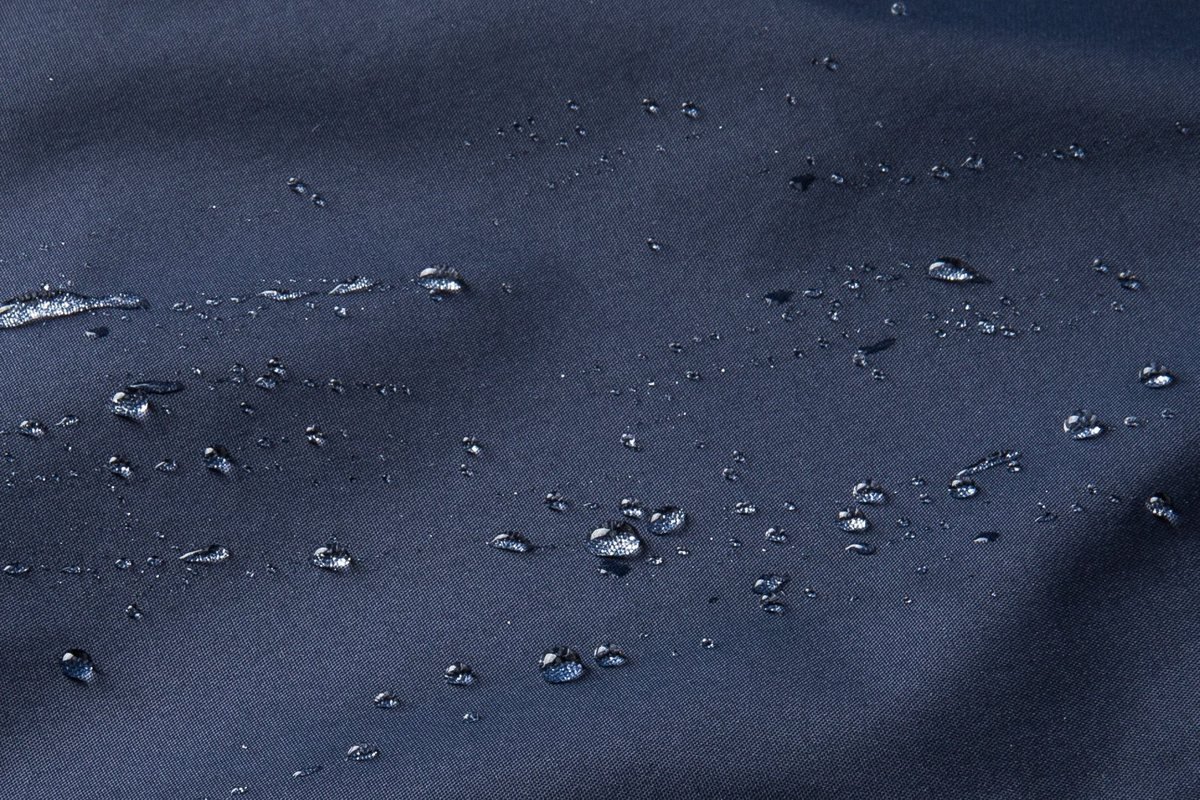
Waterproof ratings express the height of a water column a fabric can withstand before leakage occurs, measured in millimeters. A 10,000mm (10K) rating means the fabric resists a 10-meter column of water pressing down before moisture penetrates. Testing follows AATCC 127 or ISO 811 protocols, where labs apply increasing hydrostatic pressure until three points of seepage appear.
Test Method and Real-World Context
Standard rain exerts roughly 1,000-2,000mm of pressure. Sitting on wet ground or kneeling applies 2,000-4,000mm. Heavy rain with wind gusts can reach 7,000-10,000mm at pressure points like shoulders and hood seams. Alpine storms with sustained horizontal rain and pack pressure exceed 15,000mm. The 10k vs 20k membrane selection mid-market jacket question maps directly to these use scenarios.
Membrane vs Coating
Membranes bond or laminate a microporous or hydrophilic film to the shell fabric, creating a permanent waterproof-breathable barrier. Coatings apply polyurethane or acrylic layers to fabric surfaces, offering lower initial cost but shorter durability. Mid-market jackets targeting 10K or 20K ratings almost always use laminated membranes (2-layer, 2.5-layer, or 3-layer constructions) rather than coatings, which struggle to maintain breathability and waterproofness beyond 5,000 wash cycles.
Rating Stability Over Time
Waterproof ratings degrade as DWR (durable water repellent) finish wears off and membrane pores accumulate body oils and dirt. A jacket tested at 20,000mm when new may perform closer to 15,000mm after 50 washes if DWR is not reapplied. Buyers sourcing OEM jacket manufacturing should specify PFC-free DWR reapplication protocols and include care-label instructions for end users to maintain the rated performance.
10K Membrane Characteristics
A 10,000mm waterproof rating positions a jacket for light to moderate rain, urban commuting, dog-walking, school uniforms, and corporate team gear in temperate climates. The membrane resists typical rainfall and brief exposure to wet conditions but reaches its limit under sustained downpours or high-pressure contact with wet surfaces.
Performance Envelope
10K membranes handle rain showers lasting 30-60 minutes, drizzle, and snow without wet-through. They suit buyers in the UK, Germany, and coastal Australia where rain is frequent but rarely torrential for extended periods. Buyers report wet-through complaints when users wear 10K jackets during multi-hour hikes in heavy Pacific Northwest rain or sit on wet bleachers at outdoor sporting events.
Breathability Pairing
Most 10K membranes pair with 5,000-10,000 g/m²/24hr MVTR (moisture vapor transmission rate). This range supports low-to-moderate activity levels such as walking, casual cycling, and standing work. Users engaging in aerobic activity such as trail running or fast hiking report clamminess and interior condensation, even with pit zips, because the membrane cannot evacuate moisture vapor as quickly as the body generates it.
Construction Simplicity
10K fabrics typically use 2-layer or 2.5-layer constructions. The membrane bonds to the outer shell; a loose mesh lining (2L) or a thin protective coating (2.5L) protects the membrane from abrasion and body oils. Seam taping remains critical, but the lower hydrostatic pressure tolerance allows slightly wider seam-tape margins and simpler taping patterns compared to 20K garments, reducing factory labor time by 8-12 minutes per jacket.
20K Membrane Characteristics
A 20,000mm waterproof rating targets sustained rain, alpine environments, maritime climates, and high-activity outdoor use. The membrane withstands prolonged exposure to heavy precipitation and maintains waterproofness under pack straps, shoulder pressure, and kneeling on wet ground.
Performance Ceiling
20K membranes handle multi-hour downpours, sleet, and wet snow without leakage. They suit buyers in Scotland, Norway, British Columbia, and New Zealand where rain intensity and duration exceed temperate norms. Corporate buyers sourcing workwear for utility crews, forestry workers, and outdoor event staff in wet climates specify 20K to minimize sick days and worker discomfort.
Breathability Engineering
Achieving 20,000mm waterproofness without sacrificing breathability requires microporous membranes with pore sizes below 0.2 microns or hydrophilic films engineered for moisture vapor transfer. Premium 20K fabrics deliver 15,000-20,000 g/m²/24hr MVTR, supporting moderate-to-high activity levels. Budget 20K constructions may drop to 8,000-10,000 g/m²/24hr, creating a clammy interior during aerobic use despite the high waterproof rating.
Construction Precision
20K fabrics often use 3-layer constructions, where the membrane bonds between the outer shell and a protective knit backer, eliminating the need for a separate lining. This reduces weight and pack size but demands tighter seam-taping tolerances. Factory QC teams inspect every seam junction under 10x magnification to catch micro-gaps that would allow water ingress under 20,000mm pressure. Rejection rates for 20K garments run 6-9% higher than 10K equivalents during first-article inspection.
DWR Dependency
A common buyer complaint: waterproof jackets feel wet and clammy even when the membrane has not leaked. This occurs when the outer fabric wets out because the DWR finish has degraded. Water saturates the face fabric, blocking air flow and preventing the membrane from breathing. The jacket remains technically waterproof but feels soaked. 20K membranes amplify this issue because users trust the high rating and wear the jacket longer in wet conditions, accelerating DWR breakdown. Specifying PFC-free C6 DWR with reapplication instructions mitigates the complaint.
Breathability vs Waterproofness Tradeoff
Waterproofness and breathability exist in tension. Smaller membrane pores block liquid water more effectively but also restrict moisture vapor molecules trying to escape from inside the jacket. Membrane engineers balance pore size, pore density, and film chemistry to optimize both properties, but physics imposes limits.
Microporous Membrane Dynamics
Microporous membranes (ePTFE and polyurethane variants) rely on pores large enough to pass water vapor molecules (0.0004 microns) but small enough to block liquid water droplets (minimum 100 microns). A 10K membrane typically uses 0.3-0.5 micron pores; a 20K membrane tightens to 0.15-0.25 microns. Tighter pores increase waterproofness but reduce the total volume of vapor that can pass through per square meter per day, lowering MVTR unless pore density increases proportionally.
Hydrophilic Film Alternative
Hydrophilic membranes (polyurethane and polyester films) contain no pores. They absorb moisture vapor on the interior surface, transport it through the film via molecular diffusion, and release it on the exterior. Hydrophilic films achieve 20K+ waterproofness without pore-size constraints, but breathability depends on the vapor-pressure differential between inside and outside the jacket. In humid climates where exterior humidity approaches interior levels, hydrophilic membranes slow to near-zero breathability, trapping sweat inside.
Activity-Level Matching
Low-activity users (urban commuting, dog-walking, standing work) generate 100-200 g/m²/hr moisture vapor. A 10K/10K fabric (10,000mm waterproof, 10,000 g/m²/24hr breathable) handles this load. High-activity users (trail running, ski touring, fast hiking) generate 300-500 g/m²/hr, requiring 15,000-20,000 g/m²/24hr MVTR to avoid interior condensation. Buyers selecting the 10k vs 20k membrane selection mid-market jacket must map end-user activity profiles to breathability specs, not just waterproof ratings.
Manufacturing Cost and MOQ Impact
Membrane selection directly affects fabric cost, factory yield, and minimum order quantities. Brand founders launching outdoor apparel lines and corporate buyers managing budgets need transparent cost structures to model margin and cash-flow implications.
Fabric Cost Delta
20K membrane fabrics cost 18-30% more per meter than comparable 10K constructions. A 10K/10K 2.5-layer polyester ripstop runs $4.20-$5.80 per meter FOB; an equivalent 20K/15K 3-layer fabric runs $5.40-$7.20 per meter. The delta comes from finer membrane structures, tighter lamination tolerances, and higher raw-material costs for ePTFE or engineered hydrophilic films. A mid-market jacket using 1.8 meters of fabric sees a $1.80-$2.50 fabric cost increase when upgrading from 10K to 20K.
Seam-Taping Labor
20K garments require fully taped seams with narrower tape widths (18mm vs 22mm) and tighter heat-press settings to prevent micro-leaks under high hydrostatic pressure. Our 3,000m² Taizhou Sanmen facility runs 20 production lines; seam-taping a 10K jacket takes 14-16 minutes per unit, while a 20K jacket takes 22-26 minutes due to stricter QC inspection and retaping of marginal seams. Labor cost per jacket increases $0.80-$1.20 for 20K constructions.
Rejection Rate and Yield
First-article inspection rejection rates for 20K jackets run 6-9 percentage points higher than 10K equivalents. Common failure modes include seam-tape delamination at stress points, micro-pinholes in membrane lamination, and DWR application inconsistencies that create wet-out patches. Buyers placing initial orders should budget for 5-8% B-grade inventory (cosmetic flaws, minor seam imperfections) that can be sold at discount or used for sampling rather than scrapped.
MOQ Implications for Startups
Traditional outdoor-fabric mills impose 1,000-3,000 meter minimums per colorway, forcing brand founders to commit to 500-1,500 jackets before validating market fit. PTOUTWEAR sources 10K and 20K membranes from Zhejiang and Jiangsu mills in stock colorways (black, navy, charcoal, olive, burgundy), enabling low-MOQ jacket production at 30 pieces per SKU. Founders can test a 10K rain jacket and a 20K hardshell in parallel with 60-unit combined orders, compare sell-through rates, and scale the winner without dead inventory.
Sample MOQ: 1 piece. Bulk MOQ: 30 pieces per SKU. Sampling time: 7-10 days for both 10K and 20K constructions.
Climate and Use-Case Matching
Regional weather patterns and end-user scenarios determine which waterproof rating delivers value without overbuilding the spec. Buyers sourcing for multiple markets should segment by climate zone rather than applying a single rating across all SKUs.
Temperate Maritime Climates
United Kingdom, coastal Germany, Netherlands, and coastal Australia experience frequent light-to-moderate rain with occasional heavy showers. Annual rainfall ranges 600-1,200mm, distributed across 150-180 rain days per year. 10K membranes handle 85-90% of precipitation events in these regions. Corporate uniform buyers for logistics companies, utilities, and municipal workers in London, Hamburg, and Melbourne report satisfactory performance with 10K/8K jackets, reserving 20K specs for winter-season or high-exposure roles.
Alpine and High-Precipitation Zones
Scotland, Norway, British Columbia, Pacific Northwest USA, and New Zealand’s South Island see 1,500-3,500mm annual rainfall with sustained multi-hour storms. 20K membranes become essential for ski patrol, mountain guides, forestry workers, and outdoor-education programs operating in these zones. A school in Queenstown sourcing jackets for outdoor-education programs specifies 20K/15K with pit zips to handle the region’s 180+ rain days and high student activity levels during tramps.
Urban Commuter and Corporate Programs
Office workers, sales teams, and corporate-event staff in cities like New York, Toronto, Paris, and Sydney need rain protection for 10-30 minute commutes and outdoor meetings. 10K/8K jackets with 2.5-layer construction and packable hoods meet the need at lower cost than 20K shells designed for extended exposure. Buyers report higher employee satisfaction when jackets pack into a stuff sack and weigh under 350 grams, prioritizing portability over maximum waterproofness.
School Uniform and Youth Programs
Schools in temperate climates (UK, Germany, coastal USA, Australia) specify 10K jackets for daily wear and playground use. The rating handles recess in drizzle and short walks between buildings. Schools in wetter regions (Scotland, Ireland, Pacific Northwest) upgrade to 15K-20K for students participating in outdoor education, Duke of Edinburgh expeditions, or winter sports. Durability and ease of care (machine washable, tumble dry low) often outweigh maximum waterproof rating in school tenders.
Construction Implications
Waterproof rating dictates laminate structure, seam-taping protocols, and ventilation features. Buyers specifying jackets should align construction details with the membrane rating to avoid under-engineering or over-engineering the garment.
2-Layer vs 2.5-Layer vs 3-Layer
2-layer constructions bond the membrane to the outer shell; a separate mesh lining protects the membrane from abrasion and body oils. This approach suits 10K jackets where weight and pack size are secondary to durability and cost. 2.5-layer constructions add a thin protective coating or print to the membrane interior, eliminating the lining and reducing weight by 80-120 grams. This works for 10K and 15K jackets targeting packability. 3-layer constructions bond the membrane between the shell and a knit backer, creating a single integrated fabric. This maximizes durability and breathability for 20K jackets but increases fabric cost by 35-50% over 2L equivalents.
Seam-Taping Coverage
10K jackets typically use critical-seam taping: shoulders, hood seams, front zipper, and pocket flaps receive tape; underarm and side seams may remain untaped if the garment targets urban use. 20K jackets require fully taped seams to prevent leakage under sustained pressure. Tape width, adhesive chemistry, and heat-press dwell time must match the membrane’s hydrostatic tolerance. Under-taped 20K jackets leak at shoulder seams and hood junctions within 15-20 hours of wet exposure, generating warranty claims and brand-reputation damage.
Pit Zips and Ventilation
High waterproof ratings trap heat and moisture unless mechanical ventilation compensates. 20K jackets benefit from underarm zips (pit zips), back vents, or chest vents to dump heat during aerobic activity. A forestry buyer in British Columbia specified 20K/15K jackets without pit zips for chainsaw crews; workers reported overheating and removed jackets mid-shift despite rain, defeating the waterproof investment. Adding 12-inch pit zips increased fabric and labor costs by $1.80 per jacket but eliminated the complaint.
Hood and Cuff Design
20K jackets targeting alpine or maritime use need adjustable hoods with laminated brims, helmet-compatible volume, and one-hand drawcord adjustment. Cuffs should use hook-and-loop closures or elastic with snap-tab adjusters to seal against driving rain. 10K urban jackets can simplify to fixed hoods and elastic cuffs, reducing component cost by $2.50-$3.80 per jacket. Buyers should match hood and cuff complexity to the membrane rating and use scenario to avoid over-specifying features that add cost without user benefit.
DWR Application and Maintenance
PFC-free C6 DWR finishes require reapplication every 20-30 washes to maintain water-shedding performance. Jackets shipped without DWR-reapplication instructions generate buyer complaints about wet-out and clamminess, even when the membrane remains intact. Our sample development process includes care-label drafting and hang-tag copy explaining DWR maintenance, reducing post-sale support load for brand founders and corporate buyers.
Key Takeaways
- Hydrostatic head testing per AATCC 127 measures waterproof ratings by applying increasing water-column pressure until three points of seepage occur; 10K resists 10,000mm, 20K resists 20,000mm.
- Breathability and waterproofness trade off because smaller membrane pores block liquid water more effectively but restrict moisture vapor molecules; 20K membranes require engineered pore density or hydrophilic chemistry to maintain 15,000+ g/m²/24hr MVTR.
- Fabric cost increases 18-30% when upgrading from 10K to 20K membranes due to finer lamination tolerances, tighter seam-taping requirements, and premium raw materials like ePTFE films.
- Corporate uniform buyers report 12-18% lower wet-through complaints when upgrading from 5K to 10K ratings in temperate climates; alpine and maritime programs see similar gains moving from 10K to 20K for sustained-rain scenarios.
- DWR finish degradation causes waterproof jackets to feel wet and clammy even when the membrane has not leaked, because water saturates the face fabric and blocks air flow; PFC-free C6 DWR with reapplication instructions mitigates the issue.
- First-article inspection rejection rates for 20K jackets run 6-9 percentage points higher than 10K equivalents due to stricter seam-tape tolerances and membrane-lamination QC thresholds, impacting lead time and B-grade inventory budgets.
FAQ
Is 10K waterproof enough for daily use?
10K waterproof rating handles light to moderate rain, drizzle, and snow for daily commuting, dog-walking, and urban errands in temperate climates. It resists typical rainfall pressure (1,000-2,000mm) and brief exposure to wet conditions. Users in regions with sustained heavy rain or those engaging in multi-hour outdoor activity may experience wet-through at seams and high-pressure contact points like shoulders under pack straps.
Is 20K waterproof overkill for jackets?
20K waterproof rating is overkill for urban commuters and casual users in temperate climates where rain rarely exceeds 60 minutes or 10,000mm pressure. It becomes essential for alpine environments, maritime climates with sustained storms, and high-activity outdoor use where pack pressure, kneeling, and prolonged wet exposure exceed 15,000mm. The 18-30% fabric cost premium and tighter construction tolerances make sense only when use scenarios justify the performance ceiling.
What is the difference between 10K and 20K membrane?
10K membranes resist 10,000mm water column pressure before leakage; 20K membranes resist 20,000mm. The difference lies in pore size (20K uses 0.15-0.25 micron pores vs 0.3-0.5 microns for 10K), lamination precision, and seam-taping tolerances. 20K constructions require fully taped seams, 3-layer laminates, and stricter QC to prevent micro-leaks under high hydrostatic pressure, increasing fabric cost by 18-30% and factory labor time by 8-12 minutes per jacket.
Does higher waterproof rating mean less breathability?
Higher waterproof ratings often reduce breathability because smaller membrane pores block liquid water more effectively but also restrict moisture vapor molecules. A basic 20K membrane may deliver only 8,000-10,000 g/m²/24hr MVTR compared to 10,000-12,000 g/m²/24hr for a 10K membrane. Premium 20K fabrics engineer higher pore density or use hydrophilic films to maintain 15,000-20,000 g/m²/24hr breathability, but this increases fabric cost by an additional 15-25% over standard 20K constructions.
Which is better for rain jackets, 10K or 20K?
10K suits urban commuters, school uniforms, and corporate team gear in temperate climates with light-to-moderate rain. 20K suits alpine users, maritime climates, forestry workers, and outdoor-education programs facing sustained heavy rain and high-pressure contact scenarios. The choice depends on regional rainfall intensity, exposure duration, and activity level. Buyers should map end-user scenarios to waterproof and breathability specs rather than defaulting to the highest rating, avoiding unnecessary cost and potential breathability tradeoffs.
Ready to validate your membrane choice with 1-piece samples before committing to bulk production?
Request 10K and 20K Samples →
Written by Ivan Chen, Sales Engineer at PTOUTWEAR – 13 years in outdoor apparel manufacturing.