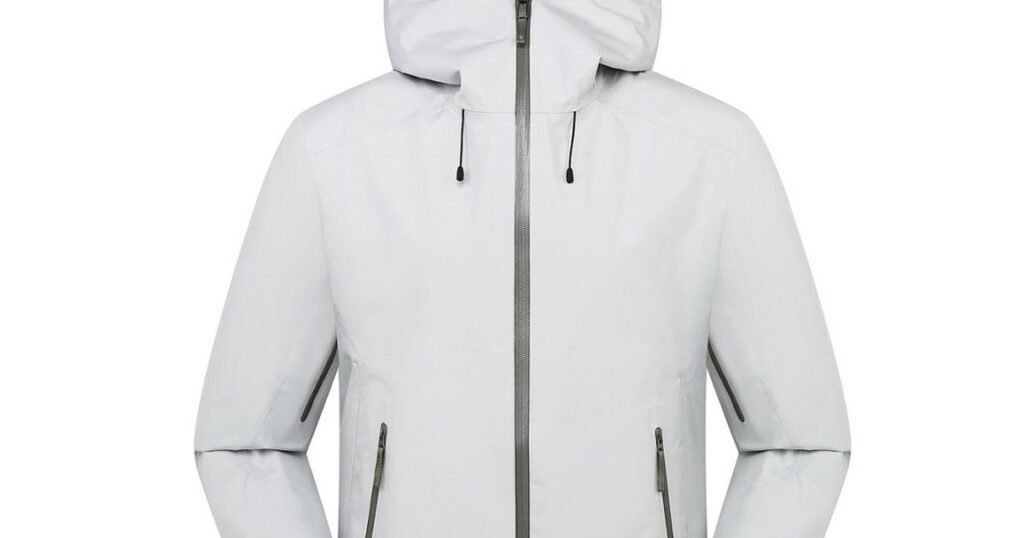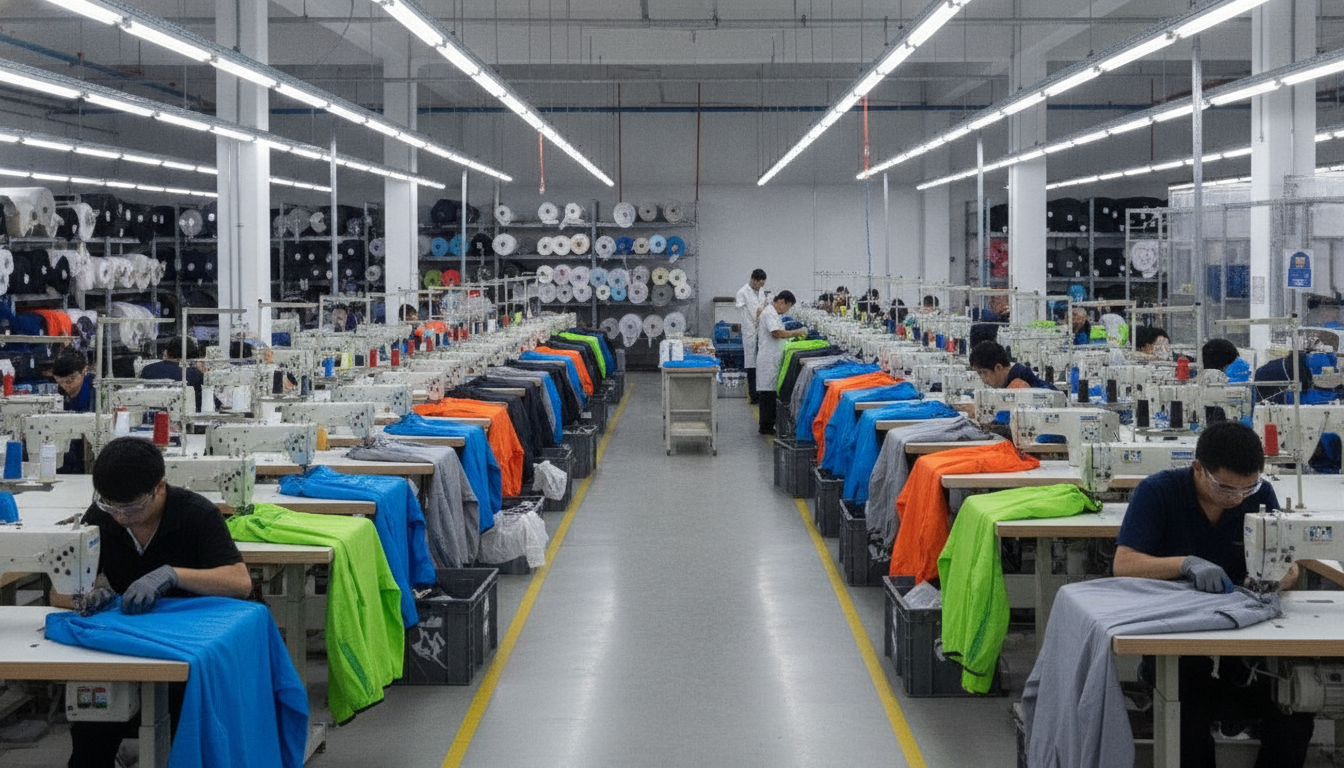
Wholesale windbreakers are lightweight, wind-resistant jackets manufactured in bulk for corporate teams, school programs, outdoor brands, and promotional distributors. Factory-direct pricing starts around $8-$15 per unit at 500+ pieces, with bulk MOQs typically ranging from 30 to 300 pieces per style depending on the supplier. Sampling takes 7-10 days, bulk production 25-35 days, and most manufacturers offer custom logo embroidery, screen printing, or heat-transfer branding.
📋 Table of Contents
Executive Summary
- Factory MOQ: Bulk minimums for wholesale windbreakers typically start at 30 pieces per SKU for vertically integrated manufacturers and can reach 300 pieces at larger contract factories.
- Pricing structure: Unit costs range from $8 to $15 at mid-volume orders, with tiered discounts applying above 500 and 1,000 pieces.
- Sampling and lead time: Pre-production samples ship in 7-10 days, bulk production completes in 25-35 days, and rush orders for 1,000 pieces can finish in two weeks at a premium.
- Fabric performance: Most wholesale windbreakers use 20D to 50D nylon or polyester ripstop with DWR coating, offering wind resistance but limited waterproofing unless specified with higher hydrostatic head ratings.
- Custom branding: Embroidery, screen printing, and heat-transfer methods are standard, with setup fees ranging from $50 to $150 per logo position depending on decoration complexity.
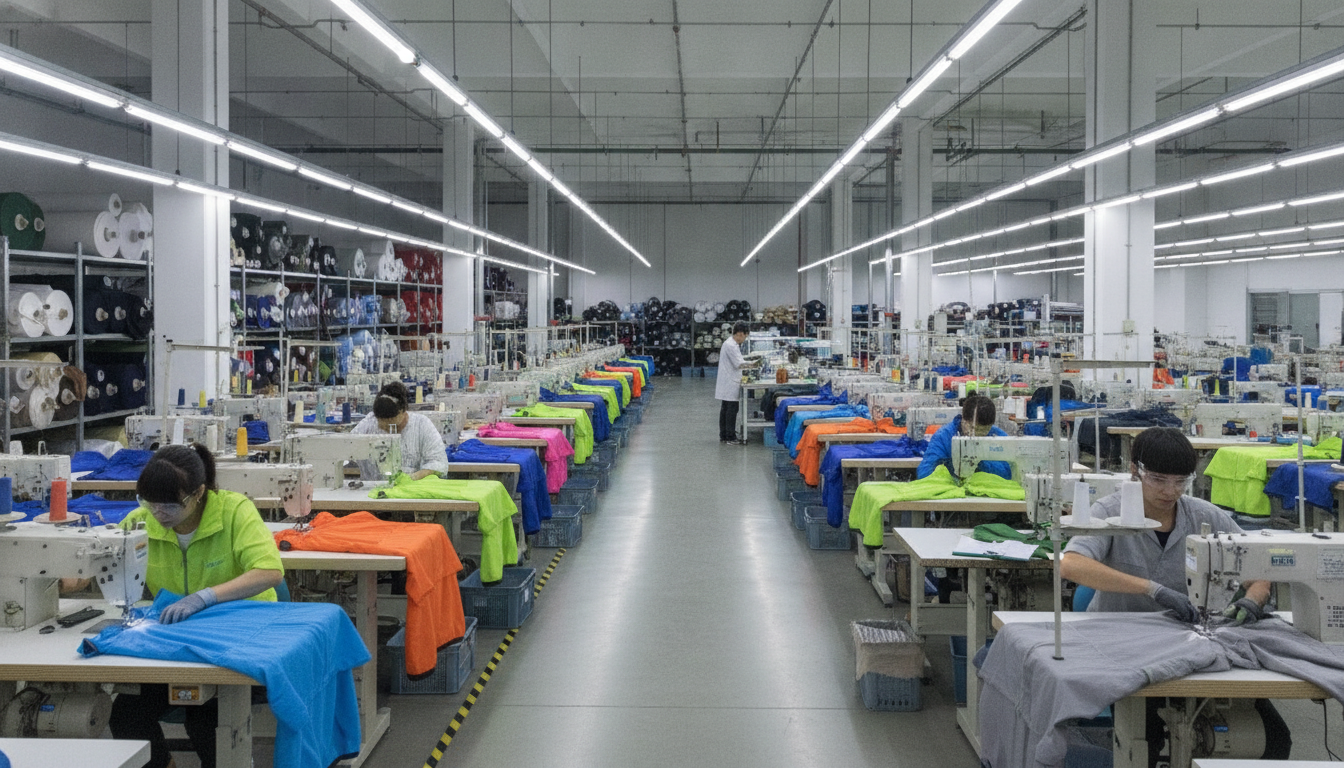
What Buyers Need to Know About Windbreaker MOQ and Pricing
Minimum order quantities for wholesale windbreakers vary widely across suppliers, and understanding the structure helps buyers avoid tying up cash in inventory they cannot move. According to Ruixing Gifts (2026), wholesale windbreaker listings commonly advertise MOQs as low as 300 units with sample turnaround in 7-10 days and bulk production in 18-22 days. Vertically integrated factories with in-house cut-and-sew operations often quote lower minimums because they control the entire production line, while trading companies and contract manufacturers aggregate orders to meet fabric mill minimums and typically require 500 to 1,000 pieces per style.
Pricing follows a tiered structure tied to volume. A 300-piece order might cost $12 per unit, a 500-piece order drops to $10, and a 1,000-piece order can reach $8 to $9. According to 1688 Wiki (2026), a wholesale platform page claims windbreaker pricing as low as ¥22.30 per unit and says it is nearly 35% below market average. Setup fees for custom logo decoration add $50 to $150 per position, and buyers ordering multiple colorways within the same style can sometimes negotiate a blended MOQ where total piece count meets the minimum but individual colors fall below it.
Sample MOQ and Refundable Fees
Sample orders let buyers validate fit, fabric hand-feel, and construction quality before committing to bulk. Most factories charge a sample fee of $80 to $150 per piece, refundable against the bulk order if it proceeds. PTOUTWEAR offers 1-piece sample MOQ with a $100 sample fee that credits back when bulk production begins, allowing first-time buyers to test one style without ordering dozens of samples upfront. Sampling is critical for team uniform buyers who need to confirm sizing across a range of body types before placing a school or corporate order.
Bulk MOQ and Volume Tiers
Bulk production minimums at PTOUTWEAR start at 30 pieces per SKU, making it accessible for small outdoor brands launching their first collection or corporate buyers outfitting a single department. Larger contract factories may quote 300 to 500 pieces per style because they source fabric in minimum rolls of 1,000 to 1,500 meters and cannot economically cut smaller runs. Buyers placing multi-style orders can often negotiate a blended minimum where the factory accepts 100 pieces of style A and 200 pieces of style B to meet a 300-piece total, reducing the risk of overstock on any single design.
Hidden Costs and Landed Pricing
Unit price is only one component of total landed cost. Buyers in the United States, United Kingdom, Germany, France, Canada, and Australia need to account for shipping, customs duty, and handling fees. DDP (Delivered Duty Paid) shipping simplifies this by rolling freight and duty into a single per-unit cost, but buyers should verify whether the quoted price includes destination port charges and last-mile delivery. According to Absolute Promotions Australia (2026), buyers often struggle to find clear all-in pricing; unit price, setup fees, and shipping are not always visible until late in the checkout flow. Requesting a detailed cost breakdown before sampling prevents surprises when the bulk invoice arrives.
Fabric and Coating Options for Wholesale Windbreakers
Fabric choice determines whether a windbreaker performs as a lightweight shell for dry, breezy conditions or doubles as a light rain jacket for unpredictable weather. According to Bulk Apparel (2026), a lot of supplier pages are vague on actual fabric performance, so buyers cannot easily tell whether a windbreaker is only wind-resistant or also rainproof and durable enough for field use. Most wholesale windbreakers use 20D to 50D nylon or polyester ripstop with a DWR (durable water repellent) coating, offering wind resistance and light water beading but no guaranteed waterproofing.
Buyers ordering for outdoor use, field teams, or school programs in rainy climates should specify a hydrostatic head rating of at least 3,000mm to ensure the fabric sheds rain rather than soaking through. Windbreakers without a stated hydrostatic head rating are typically wind-resistant only, suitable for dry conditions or layering but not reliable in sustained rain. PTOUTWEAR applies PFC-free DWR coating to all windbreaker fabrics, meeting environmental compliance requirements for buyers in Europe and North America where PFC restrictions are tightening.
Nylon vs. Polyester Ripstop
Nylon ripstop is softer, more packable, and slightly more abrasion-resistant than polyester, making it the preferred choice for outdoor brands and athletic teams. Polyester ripstop is less expensive, dries faster, and holds color better under UV exposure, making it common in promotional and corporate uniform programs. Both fabrics perform similarly in wind resistance when coated with DWR, but nylon feels more premium and packs smaller, an advantage for brands selling packable windbreakers as a product feature.
DWR Coating and Reapplication
DWR coating is a surface treatment that causes water to bead and roll off the fabric rather than soaking in. It wears off over time with washing and abrasion, and buyers should inform end users that DWR can be reapplied with spray-on or wash-in treatments available at outdoor retailers. PFC-free DWR formulations perform nearly as well as older fluorocarbon-based coatings and meet REACH and California Proposition 65 compliance, critical for buyers selling into regulated markets.
Mesh Lining and Breathability
Windbreakers with a full mesh lining improve breathability and comfort during high-output activities like running or cycling. Unlined windbreakers are lighter and more packable but can feel clammy against skin when the wearer is active. Buyers ordering for athletic teams should specify mesh lining, while buyers prioritizing packability and weight for outdoor brands may prefer unlined construction.
Custom Logo and Decoration Methods
Custom branding transforms a blank windbreaker into a team uniform, corporate gift, or branded product. Embroidery, screen printing, and heat-transfer are the three most common decoration methods, each with trade-offs in durability, cost, and visual impact. Buyers should match the decoration method to the end use and budget rather than defaulting to the cheapest option, because a poorly executed logo undermines the perceived quality of the entire garment.
Embroidery is the most durable and professional-looking option, ideal for corporate uniforms, school programs, and outdoor brands building a premium image. Setup fees run $80 to $150 per logo position because the design must be digitized into a stitch file, but the per-unit embroidery cost is low once setup is complete. Screen printing is less expensive per unit and works well for large, simple logos on promotional windbreakers, but it can crack or fade after repeated washing. Heat-transfer allows full-color logos and photographic detail but is the least durable method, best reserved for short-term promotional use or one-off event apparel.
Embroidery Setup and Stitch Count
Embroidery cost is driven by stitch count, the number of individual stitches required to complete the logo. A simple text logo might require 3,000 to 5,000 stitches, while a detailed graphic with gradients and fine lines can exceed 15,000 stitches, increasing both setup time and per-unit cost. Buyers should provide vector artwork in.AI or.EPS format to minimize digitizing errors, and request a digital proof before production begins to confirm thread colors and placement.
Screen Printing for High-Volume Orders
Screen printing works best for orders above 300 pieces where the per-unit cost advantage offsets the screen setup fee. Each color in the logo requires a separate screen, so a three-color logo incurs three setup fees. Buyers ordering promotional windbreakers for events or giveaways often choose screen printing because it delivers bold, high-contrast logos at the lowest per-unit cost, even though durability is lower than embroidery.
Heat-Transfer for Full-Color Logos
Heat-transfer decoration uses a vinyl or sublimation transfer applied with heat and pressure, allowing full-color logos, gradients, and photographic images without the stitch-count limitations of embroidery. It is the fastest decoration method, with no digitizing or screen setup required, but the transfer can peel or crack after 20 to 30 wash cycles. Buyers ordering for short-term events, trade shows, or seasonal campaigns often accept the durability trade-off in exchange for speed and color flexibility.
In practice: A common sourcing failure is ordering embroidered logos without confirming thread color matching, which results in a logo that looks correct on the digital proof but mismatched on the finished garment because the factory substituted a similar thread color without approval.
Lead Times: Sampling and Bulk Production
Lead time planning determines whether a buyer receives windbreakers in time for a product launch, team event, or seasonal selling window. Sampling takes 7-10 days at most factories, bulk production requires 25-35 days, and shipping adds another 10 to 30 days depending on the destination and freight method. Buyers ordering for a fixed event date should work backward from the event to calculate the order-placement deadline, adding a two-week buffer for production delays or shipping holdups.
PTOUTWEAR completes sampling in 7-10 days and bulk production in 25-35 days, with a rush option that delivers 1,000 pieces in two weeks at a 25% surcharge. Rush production is feasible only when the factory has available line capacity and the required fabric in stock, so buyers needing expedited delivery should confirm availability before placing the order. DDP shipping to the United States, United Kingdom, Germany, France, Canada, and Australia is available, simplifying logistics and eliminating surprise duty charges at the destination port.
Sampling Timeline and Revision Cycles
Pre-production samples are physical prototypes that confirm fit, fabric, construction, and logo placement before bulk production begins. The factory ships the sample via express courier, and the buyer has 3 to 5 days to review and request revisions. Each revision cycle adds another 7 to 10 days, so buyers should provide detailed feedback in the first round to minimize back-and-forth. Common sample revisions include adjusting logo size or placement, changing zipper hardware, or modifying cuff and hem construction.
Bulk Production and Cutting
Bulk production begins once the buyer approves the sample and issues a purchase order. The factory orders fabric, confirms dye lot, and schedules cutting and sewing. Cutting takes 2 to 3 days for a 500-piece order, sewing takes 12 to 18 days depending on construction complexity, and final inspection and packing add another 3 to 5 days. Buyers ordering multiple colorways should confirm that all colors will be cut and sewn in the same production batch to ensure consistent sizing and construction across the order.
Shipping and Customs Clearance
Air freight delivers in 7 to 10 days but costs $4 to $6 per kilogram, making it practical only for small orders or rush deliveries. Sea freight takes 25 to 35 days to the United States or Europe and costs $0.50 to $1.00 per kilogram, suitable for orders above 500 pieces where cost per unit matters more than speed. DDP shipping includes customs clearance and delivery to the buyer’s warehouse, eliminating the need for the buyer to arrange a customs broker or pay duty separately.
Compliance and Testing for School and Corporate Programs
School uniform programs and corporate buyers often require compliance documentation and third-party testing that standard wholesale orders skip. According to Northern Garment (2026), factory pages emphasize low MOQ and fast samples, but often stop short of giving complete compliance, testing, or certification details buyers need for school and corporate programs. Buyers ordering for regulated markets should request certificates and test reports before placing the bulk order, because retrofitting compliance after production is expensive and sometimes impossible.
PTOUTWEAR holds ISO 9001 quality management certification, SGS testing approval, and applies PFC-free DWR coating to all windbreaker fabrics. OEKO-TEX Standard 100, BSCI, and GRS certifications are pending and not yet held, so buyers requiring those specific certifications should confirm availability before sampling. ISO 9001 ensures consistent production processes and quality control, SGS testing validates fabric performance and safety, and PFC-free DWR meets environmental compliance requirements in Europe and North America.
OEKO-TEX Standard 100 for School Uniforms
OEKO-TEX Standard 100 is a textile certification that screens fabrics and trims against harmful substances, required by many school districts in the United States, United Kingdom, and Germany. The certification tests for restricted chemicals, heavy metals, formaldehyde, and skin-sensitizing dyes, and applies to every component of the garment including fabric, thread, zippers, and labels. Buyers ordering windbreakers for school uniform programs should request a valid OEKO-TEX certificate that covers the specific fabric and colorway being produced, because certificates are product-specific and do not transfer across different fabric lots.
BSCI Social Compliance for Corporate Buyers
BSCI (Business Social Compliance Initiative) is a factory audit that verifies labor practices, working conditions, and environmental management. Corporate buyers in Europe and North America increasingly require BSCI or equivalent audits as part of their supplier onboarding process. The audit covers worker safety, wage compliance, working hours, and environmental waste management, and factories must pass a follow-up audit every two years to maintain certification. Buyers should request a copy of the most recent BSCI audit report and confirm the audit date is within the past 24 months.
California Proposition 65 and PFC-Free DWR
California Proposition 65 requires products sold in California to carry a warning label if they contain chemicals known to cause cancer or reproductive harm. PFC-based DWR coatings fall under this requirement, which is why many buyers now specify PFC-free DWR formulations. PFC-free coatings use hydrocarbon or silicone-based chemistries that perform nearly as well as fluorocarbon coatings and do not trigger Proposition 65 labeling. Buyers selling into California or other regulated markets should confirm the DWR formulation is PFC-free and request a certificate of compliance from the coating supplier.
Key Takeaways
- Wholesale windbreakers typically require bulk MOQs of 30 to 300 pieces per SKU, with vertically integrated factories offering lower minimums than contract manufacturers who aggregate orders to meet fabric mill requirements.
- Factory-direct pricing ranges from $8 to $15 per unit at mid-volume orders, with tiered discounts applying above 500 and 1,000 pieces, and setup fees for custom logo decoration adding $50 to $150 per position.
- Most wholesale windbreakers use 20D to 50D nylon or polyester ripstop with DWR coating, offering wind resistance and light water beading but requiring a hydrostatic head rating of at least 3,000mm for reliable rain protection.
- Embroidery is the most durable decoration method for corporate and school uniforms, screen printing offers the lowest per-unit cost for high-volume promotional orders, and heat-transfer allows full-color logos but with reduced wash durability.
- Sampling takes 7-10 days, bulk production requires 25-35 days, and DDP shipping to the United States, United Kingdom, Germany, France, Canada, and Australia simplifies logistics by including customs duty and delivery in a single per-unit cost.
- School uniform programs and corporate buyers should request ISO 9001, OEKO-TEX Standard 100, BSCI, and PFC-free DWR compliance documentation before placing bulk orders, because retrofitting certifications after production is costly and sometimes impossible.
What is the difference between a windbreaker and a rain jacket?
A windbreaker is designed to block wind and resist light moisture through DWR coating, but it is not waterproof unless the fabric has a hydrostatic head rating of at least 3,000mm. A rain jacket uses a waterproof membrane or coating with taped seams to prevent water penetration, making it suitable for sustained rain. Windbreakers are lighter and more packable but offer less weather protection than rain jackets, so buyers should specify the intended use case and request fabric performance specs before ordering.
Can windbreakers be customized with embroidered logos for team uniforms?
Yes, embroidery is the most common and durable decoration method for team uniforms, corporate apparel, and school programs. The factory digitizes the logo into a stitch file, which incurs a one-time setup fee of $80 to $150, and then embroiders each garment during production. Buyers should provide vector artwork in.AI or.EPS format and request a digital proof to confirm thread colors and placement before bulk production begins. Embroidery holds up better than screen printing or heat-transfer through repeated washing and wear.
How long does it take to produce a bulk order of custom windbreakers?
Bulk production for custom windbreakers takes 25 to 35 days after sample approval, including fabric sourcing, cutting, sewing, logo decoration, and final inspection. Rush production can deliver 1,000 pieces in two weeks at a 25% surcharge if the factory has line capacity and the required fabric in stock. Shipping adds another 7 to 10 days for air freight or 25 to 35 days for sea freight, so buyers ordering for a fixed event date should place the order at least 60 to 90 days in advance to account for production and transit time.
Ready to source wholesale windbreakers with transparent pricing, low MOQ, and factory-direct quality?
Request a 1-Piece Sample →
Written by Ivan Chen, Sales Engineer at PTOUTWEAR, 13 years in outdoor apparel manufacturing.