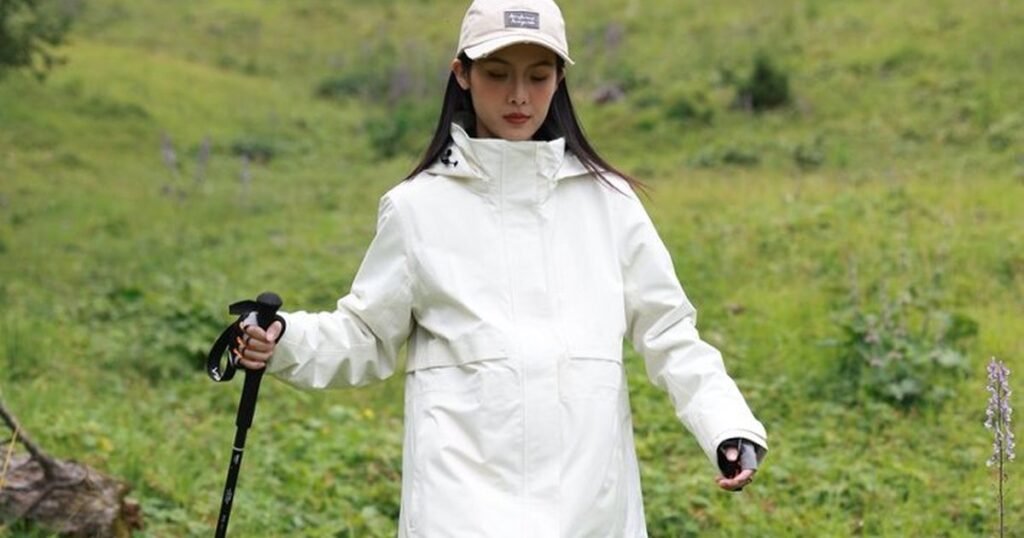
Finding a wholesale waterproof jacket distributor low volume partner means securing suppliers who accept orders between 10 and 30 pieces per SKU without forcing you into 500-piece commitments that tie up working capital before you validate market fit. According to ApparelnBags (2026), blank jackets can be ordered with no minimum requirement, while custom jackets may start at 6 to 12 pieces. PTOUTWEAR operates at a sample MOQ of 1 piece and a bulk MOQ of 30 pieces per SKU, positioned for DTC outdoor brands, corporate uniform buyers, and school programs testing new styles without inventory risk.
📋 Table of Contents
- Key Takeaways
- Executive Summary
- What Qualifies as Low-Volume in Waterproof Jacket Wholesale?
- Supplier Types and Their Real MOQ Ranges
- How Do You Verify Seam-Sealing Claims Before Ordering?
- What Hidden Costs Offset Low-MOQ Savings?
- What Lead Times Should You Expect for Low-Volume Orders?
- Frequently Asked Questions
Key Takeaways
- Low-volume waterproof jacket orders typically range from 10 to 30 pieces per SKU, with some suppliers accepting as few as 6 pieces for custom decoration.
- PTOUTWEAR offers a sample MOQ of 1 piece with a $100 refundable fee and a bulk MOQ of 30 pieces per SKU, supporting small brands testing market demand.
- Seam-sealed waterproof construction differs from water-resistant coatings; buyers should request hydrostatic head test reports and photos of taped seams before placing bulk orders.
- Hidden setup charges, decoration minimums, and per-piece shipping costs often eliminate the savings promised by low-MOQ suppliers, making total landed cost the critical comparison metric.
- Lead times for low-volume custom waterproof jackets range from 2 to 6 weeks depending on fabric availability, decoration method, and factory production schedule.
- ISO 9001 and SGS certifications indicate consistent quality systems, while PFC-free DWR treatments address environmental compliance requirements in UK and EU markets.
Executive Summary
- MOQ landscape: Blank waterproof jackets are available with no minimum from some distributors, while custom-branded orders typically start at 6 to 30 pieces depending on decoration method and supplier.
- Waterproof vs. water-resistant: Many low-MOQ suppliers list jackets as waterproof when they only carry a DWR coating; true waterproofing requires seam-sealed construction and a minimum 5,000mm hydrostatic head rating.
- Cost structure: Low per-piece pricing often masks high setup fees, embroidery minimums above garment MOQ, and international shipping charges that raise total landed cost above domestic alternatives.
- Lead time trade-offs: Low-volume orders compete for production slots with larger contracts, extending sampling to 10-14 days and bulk production to 4-6 weeks unless you pay rush surcharges.
- Quality consistency risk: Small-batch buyers report frequent fit and finish discrepancies between approved samples and delivered bulk goods when factories prioritize higher-volume clients during QC.
What Qualifies as Low-Volume in Waterproof Jacket Wholesale?
Low-volume in waterproof jacket wholesale means order quantities between 10 and 50 pieces per SKU. This threshold sits below the 100 to 500-piece minimums common among traditional garment factories but above the 1 to 5-piece retail or sample orders that distributors treat as one-offs. According to Twing (2026), custom jackets can start from 10 units, with minimums varying by jacket type and decoration method.
Blank vs. Custom Order Minimums
Blank waterproof jackets carry no decoration and ship immediately from distributor stock. These often have no minimum order requirement, allowing buyers to purchase singles or dozens without setup fees. Custom orders add embroidery, screen printing, or heat-transfer logos, which introduce setup costs and minimum piece counts. Embroidery typically requires 12 to 24 pieces to justify digitizing and machine setup, while screen printing may start at 50 pieces per design due to screen preparation labor.
How Decoration Method Drives MOQ
Heat-transfer and direct-to-garment printing accept lower minimums than embroidery or screen printing because they skip the physical setup stage. A heat-transfer logo can be applied to as few as 6 jackets, making it the preferred decoration method for startup brands validating designs before committing to embroidery. Screen printing delivers the lowest per-piece cost at volume but forces higher minimums because each color requires a separate screen, and setup labor remains constant whether you print 50 or 500 pieces.
Material and Construction Complexity
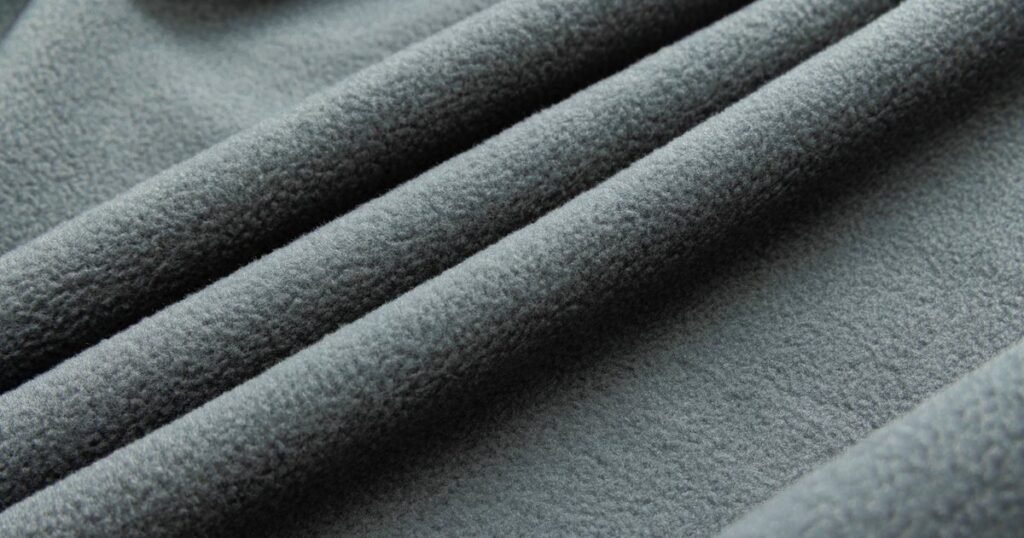
Softshell and fleece-lined jackets typically carry lower MOQs than hardshell waterproof styles because they use simpler construction with fewer specialized components. A seam-sealed hardshell requires waterproof zippers, taped seams, and laminated fabrics, each adding supplier coordination and quality-control steps that factories amortize across larger order quantities. According to customworkjacket.com (2026), work jackets are offered with a minimum order of 12 and include sealed-seam waterproof options, demonstrating that some suppliers do accommodate low-volume technical construction.
Supplier Types and Their Real MOQ Ranges
Waterproof jacket suppliers fall into four categories, each with distinct MOQ structures and service models. Understanding which type matches your order size and customization needs prevents wasted sampling time and misaligned expectations.
Promotional Product Distributors
These suppliers stock blank jackets from brands like Port Authority, North End, and Charles River, offering decoration services in-house or through partner shops. MOQs start at 6 to 12 pieces for embroidered logos and 1 piece for blank inventory. Lead times run 7 to 14 days for in-stock styles with standard decoration. Pricing includes markup on both the garment and decoration, making per-piece costs 20% to 40% higher than direct-factory sourcing but eliminating overseas shipping risk and communication barriers. Buyers report that waterproof claims from these distributors often mean water-resistant DWR coatings rather than seam-sealed construction, requiring explicit specification of hydrostatic head ratings and taped seams during quoting.
Custom Apparel Manufacturers
Factories like PTOUTWEAR produce jackets to buyer specifications, offering fabric selection, fit customization, and private-label branding. According to Lethletic (2026), technical outerwear options are listed at an MOQ of 20 pieces with a 2-week turnaround and price bands around $12 to $22 per piece. PTOUTWEAR operates at a sample MOQ of 1 piece and a bulk MOQ of 30 pieces per SKU, with 7-10 day sampling and 25-35 day bulk production from the 3,000m² Taizhou Sanmen facility. This route suits brands building proprietary designs but requires active involvement in fabric sourcing, fit approval, and quality specification. Buyers gain control over construction details like seam-sealing method, zipper brand, and DWR treatment type, eliminating the ambiguity common in off-the-shelf waterproof claims.
Marketplace Factory Listings
Platforms like Made-in-China and Alibaba surface hundreds of waterproof jacket factories with MOQs ranging from 10 to 1,000 pieces depending on style complexity and customization level. According to Made-in-China (2026), marketplace listings show low-MOQ waterproof jacket offers as low as 10 pieces, with some listings at 50, 100, 300, or 1,000 pieces depending on factory and style. Pricing appears competitive but often excludes shipping, customs duties, and quality-control costs that buyers discover during negotiation. The primary risk is supplier verification; many listings represent trading companies rather than factories, adding a markup layer and complicating quality accountability when defects appear in delivered goods.
Domestic Contract Manufacturers
UK and EU-based cut-and-sew shops accept low-volume orders with faster communication and shorter lead times than Asian suppliers, but per-piece costs run 40% to 80% higher due to labor rates. MOQs start at 50 to 100 pieces for most technical outerwear, though some shops accept 25-piece minimums for simpler softshell styles. This option works for brands prioritizing Made in UK labeling or needing 2-week turnarounds, but budget constraints push most sub-500K revenue brands toward Asian OEM jacket manufacturing despite the longer lead times.
How Do You Verify Seam-Sealing Claims Before Ordering?
Seam-sealing verification prevents the most common quality failure in low-volume waterproof jacket sourcing: jackets that pass visual inspection but leak after the first wash. True waterproofing requires taped seams, waterproof zippers, and laminated or coated fabrics tested to measurable standards.
Request Hydrostatic Head Test Reports
Hydrostatic head measures the water column height a fabric can withstand before leaking, expressed in millimeters. A rating of 5,000mm means the fabric resists a 5-meter water column, sufficient for moderate rain. Ratings of 10,000mm or higher indicate technical outerwear suitable for prolonged exposure. Request test reports from accredited labs (SGS, Intertek, Bureau Veritas) showing both fabric and seam performance, not just fabric-only results. Many suppliers test fabric before seam construction, which does not account for needle-hole leakage or tape adhesion failures that occur during use.
Inspect Seam-Tape Application Method
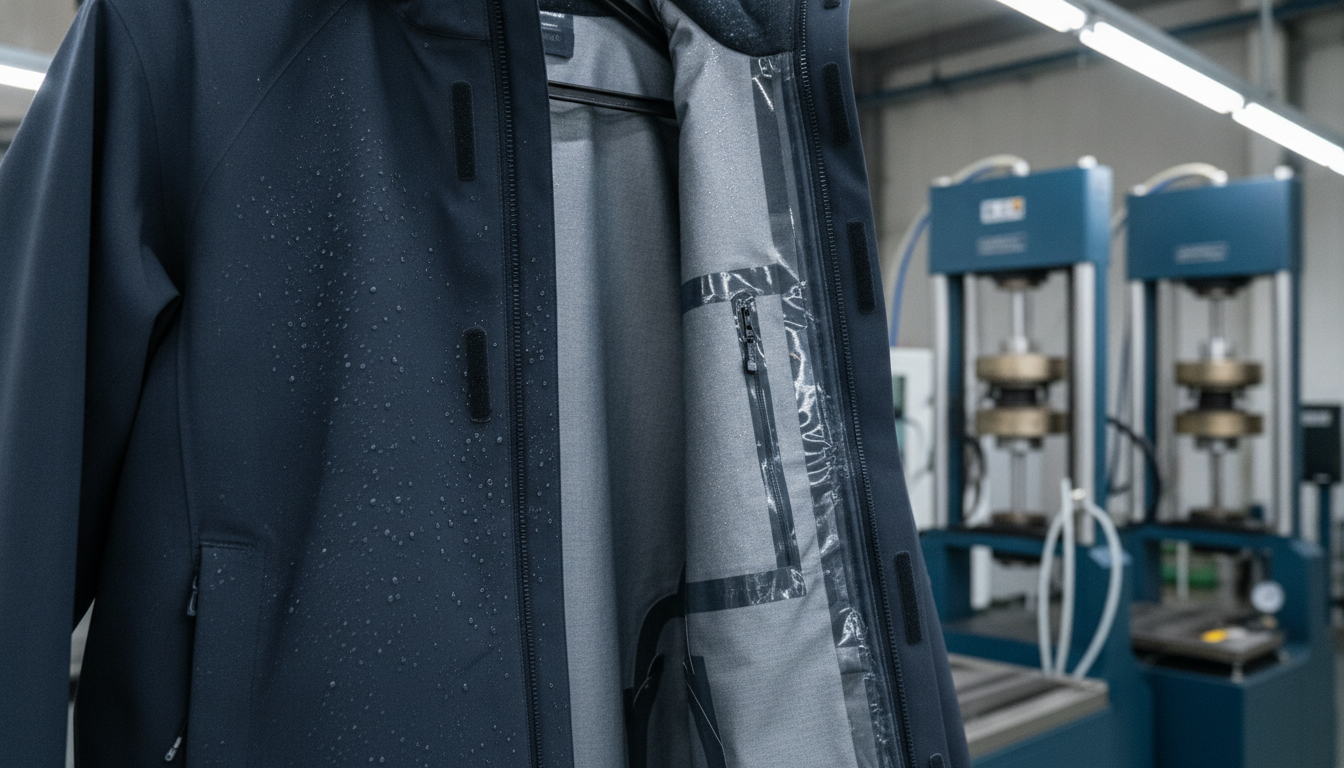
Seam tape is applied via hot-air or hot-melt machines that bond waterproof tape over stitched seams. Request photos of the taping machine and close-up images of finished seams showing continuous tape coverage with no gaps or bubbles. Buyers report that low-volume orders sometimes receive hand-applied tape rather than machine-bonded tape, which delaminates after 3 to 5 washes. Specify machine taping in your purchase order and request a pre-production sample showing the exact seam finish you will receive in bulk.
Verify Zipper and Closure Waterproofing
Waterproof zippers use coil construction with laminated or welded tape, preventing water ingress through the closure. Standard coil zippers with storm flaps are water-resistant but not waterproof; water eventually penetrates the flap overlap during heavy rain. Request zipper brand and model number (YKK AquaGuard, SBS Waterproof, or equivalent) and confirm that all closures, including pocket zippers and ventilation openings, use the same waterproof construction. Buyers frequently discover that only the main front zipper is waterproof while pocket and pit zips use standard hardware, creating leak points that undermine the jacket’s overall performance.
Sample MOQ: 1 piece. Bulk MOQ: 30 pieces per SKU. Sampling time: 7-10 days. PTOUTWEAR provides hydrostatic head test reports and seam-tape application photos with every pre-production sample.
In practice: Seam taping is what separates a jacket that survives a wash test from one that delaminates after three cycles, which is why pre-production samples get tested under simulated rain before bulk cutting begins.
Test Breathability Alongside Waterproofing
Moisture vapor transmission rate (MVTR) measures how much internal moisture escapes through the fabric, preventing the clammy feeling buyers describe when waterproof jackets trap sweat. Fabrics with MVTR below 5,000 g/m²/24hr feel uncomfortable during active use, while ratings above 10,000 g/m²/24hr provide adequate breathability for moderate activity. Request MVTR test results alongside hydrostatic head data, and specify a minimum acceptable rating in your technical specification. Low-cost waterproof jackets often use non-breathable PU coatings that achieve high waterproof ratings but fail breathability, making them unsuitable for work teams or outdoor events where wearers remain active for extended periods.
What Hidden Costs Offset Low-MOQ Savings?
Low-MOQ suppliers advertise per-piece prices that appear competitive, but total landed cost includes setup fees, decoration minimums, sampling charges, and shipping that buyers discover during order finalization. Calculating true cost per piece requires adding every fee and dividing by total quantity.
Setup and Decoration Minimums
Embroidery setup fees range from $30 to $75 per design, covering digitizing and machine programming. Screen printing adds $25 to $50 per color per design for screen preparation. These costs remain constant whether you order 12 or 120 pieces, making per-piece setup cost inversely proportional to order quantity. A $50 setup fee adds $4.17 per piece to a 12-piece order but only $0.50 per piece to a 100-piece order. Decoration minimums compound this issue; suppliers may accept a 12-piece garment order but require 24 pieces for embroidery, forcing you to order twice your planned quantity or switch to a higher-per-piece decoration method like heat transfer.
Sample Fees and Shipping
Pre-production samples cost $50 to $150 per piece depending on construction complexity and decoration method. Some suppliers refund sample fees against bulk orders, while others treat sampling as a separate revenue stream. International shipping for samples runs $30 to $60 via courier, adding 7 to 10 days to the sampling timeline. Buyers testing three colorways and two logo placements can spend $400 to $600 on sampling before placing a single bulk order, a cost that makes sense for 500-piece orders but represents a significant percentage of total spend on 30-piece runs.
Per-Piece Shipping and Customs
Air freight costs $4 to $8 per kilogram, making it prohibitively expensive for jackets weighing 400 to 600 grams each. Sea freight drops per-piece cost to $1 to $3 but extends lead time by 4 to 6 weeks and requires minimum shipment volumes that force consolidation with other orders. Customs duties in the UK run 12% on synthetic-fiber jackets (HS code 6201.93), plus 20% VAT calculated on the combined value of goods, freight, and duty. A $15 ex-factory jacket incurs approximately $5.50 in landed costs before domestic shipping, raising the true cost to $20.50 per piece. Buyers comparing a $15 Asian-sourced jacket to a $25 UK-distributed jacket often find the gap narrows to $2 to $4 after accounting for all fees, making domestic sourcing competitive for orders under 100 pieces.
Quality Control and Defect Replacement
Low-volume orders receive less factory attention during quality control because they generate lower revenue per production run. Buyers report defect rates of 3% to 8% on small-batch orders compared to 1% to 3% on larger contracts, with common issues including mismatched sizing between samples and bulk, inconsistent logo placement, and seam-tape gaps. Replacing defective units requires negotiating with the supplier, shipping replacements internationally, and absorbing the cost of unusable inventory. Building a 5% to 10% overage into your order quantity mitigates this risk but raises total cost, while third-party inspection services add $150 to $300 per visit, economical for 500-piece orders but burdensome for 30-piece runs.
What Lead Times Should You Expect for Low-Volume Orders?
Lead time for low-volume waterproof jackets spans sampling, bulk production, and shipping, with each stage extending when your order competes against larger contracts for factory capacity and material allocation.
Sampling Timeline
Pre-production samples require 7 to 14 days from specification approval to delivery, covering fabric sourcing, pattern cutting, sewing, decoration, and international shipping. Factories prioritize sampling for large-volume clients who represent repeat business, pushing small-order samples to the back of the queue unless you pay rush fees of 25% to 50% of the sample cost. PTOUTWEAR completes sampling in 7-10 days with no rush surcharge, treating low-volume buyers as potential long-term partners rather than one-off transactions. Requesting multiple rounds of sample revisions extends the timeline by 1 to 2 weeks per iteration, making it critical to provide detailed specifications and reference photos upfront rather than discovering fit or finish issues after the first sample arrives.
Bulk Production Scheduling
Bulk production for 30 to 50-piece orders runs 25 to 45 days from deposit payment to factory departure, depending on fabric lead time and production-line availability. Factories batch small orders together to fill production lines, meaning your 30-piece run may wait for complementary orders totaling 200 to 300 pieces before cutting begins. Custom fabric orders add 15 to 25 days to the timeline because mills require minimum yardage that exceeds your small-order needs, forcing the factory to source from stock or absorb the cost of excess fabric. Stock fabric in common colorways (black, navy, charcoal) ships within the standard 25-35 day window, while custom colors or prints extend production by 3 to 5 weeks.
Shipping and Customs Clearance
Air freight delivers in 5 to 7 days door-to-door but costs $6 to $10 per kilogram, adding $2.40 to $6 per jacket depending on weight and packaging. Sea freight requires 25 to 35 days from Asian ports to UK destinations, with an additional 3 to 5 days for customs clearance and domestic delivery. DDP (Delivered Duty Paid) shipping transfers customs and duty responsibility to the supplier, simplifying your logistics but adding 8% to 12% to the quoted price. Buyers managing their own customs clearance save money but assume responsibility for tariff classification, duty payment, and clearance delays that can extend delivery by 1 to 2 weeks when documentation is incomplete.
Rush Production Trade-Offs
Rush production compresses the bulk timeline to 14 to 21 days by prioritizing your order over scheduled work, but availability is limited and surcharges run 20% to 35% of the base order value. PTOUTWEAR offers a rush option for orders up to 1,000 pieces, delivering in 2 weeks at a 25% surcharge, suitable for buyers facing unexpected demand spikes or event deadlines. Quality control suffers under rush timelines because inspection steps are compressed or skipped to meet the deadline, raising defect risk from the typical 2% to 5% or higher. Buyers should reserve rush production for genuine emergencies rather than treating it as standard service, and always request photo updates during production to catch issues before final packing.
Frequently Asked Questions
Can I order waterproof jackets with custom logos in quantities under 20 pieces?
Custom logo waterproof jackets are available from some suppliers at minimums as low as 6 to 12 pieces, depending on decoration method. Heat-transfer and direct-to-garment printing accept the lowest minimums because they eliminate physical setup steps like screen preparation or embroidery digitizing. Embroidery typically requires 12 to 24 pieces to justify setup costs, while screen printing may start at 50 pieces per design. PTOUTWEAR accepts custom logo orders at a bulk MOQ of 30 pieces per SKU, with custom logo service including embroidery, screen printing, and heat-transfer options. Requesting a 1-piece sample with your proposed logo placement before committing to bulk production prevents costly revisions and ensures the final product matches your brand standards.
How do I verify a supplier actually manufactures jackets rather than reselling from another factory?
Request a video tour of the production facility showing cutting tables, sewing lines, and quality-control stations with your company name and the current date visible in the footage. Trading companies and resellers cannot provide this because they do not control the factory floor. Ask for the factory’s business license and export registration number, then cross-reference those details with customs databases or third-party verification services. PTOUTWEAR operates a 3,000m² facility in Taizhou Sanmen with 240 workers and 20 production lines, and provides facility tours via video call for buyers evaluating low-MOQ jacket manufacturing partners. Suppliers who hesitate to share facility details or offer generic factory photos likely operate as middlemen, adding markup without contributing to quality control or production oversight.
What waterproof rating should I specify for jackets used in UK weather conditions?
UK weather conditions require a minimum 5,000mm hydrostatic head rating for moderate rain protection, with 10,000mm or higher recommended for prolonged exposure or active use. Ratings below 5,000mm indicate water-resistant rather than waterproof construction, suitable for light drizzle but prone to leaking during sustained rain. Specify both fabric waterproof rating and seam-sealed construction in your purchase order, because high-rated fabric with unsealed seams still leaks through needle holes. Request test reports from accredited labs showing both fabric and seam performance, and confirm that all closures use waterproof zippers rather than standard coil zippers with storm flaps. PTOUTWEAR produces hardshell jackets with hydrostatic head ratings from 5,000mm to 20,000mm depending on fabric selection, with full seam taping and waterproof YKK AquaGuard zippers standard on all technical outerwear styles.
Ready to source waterproof jackets at 30-piece MOQs with verified seam-sealing and transparent pricing?
Request 1-piece samples →
Written by Ivan Chen, Sales Engineer at PTOUTWEAR, 13 years in outdoor apparel manufacturing.