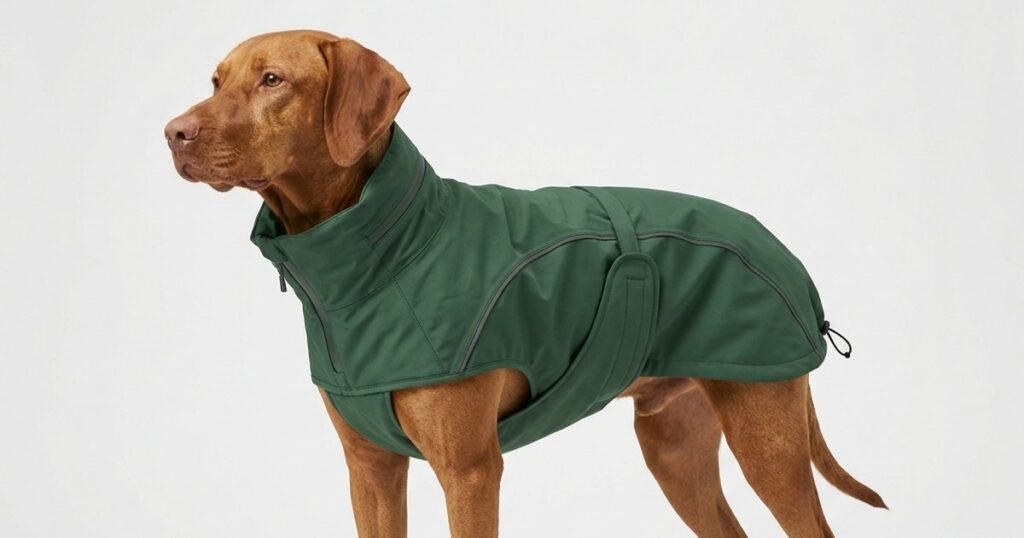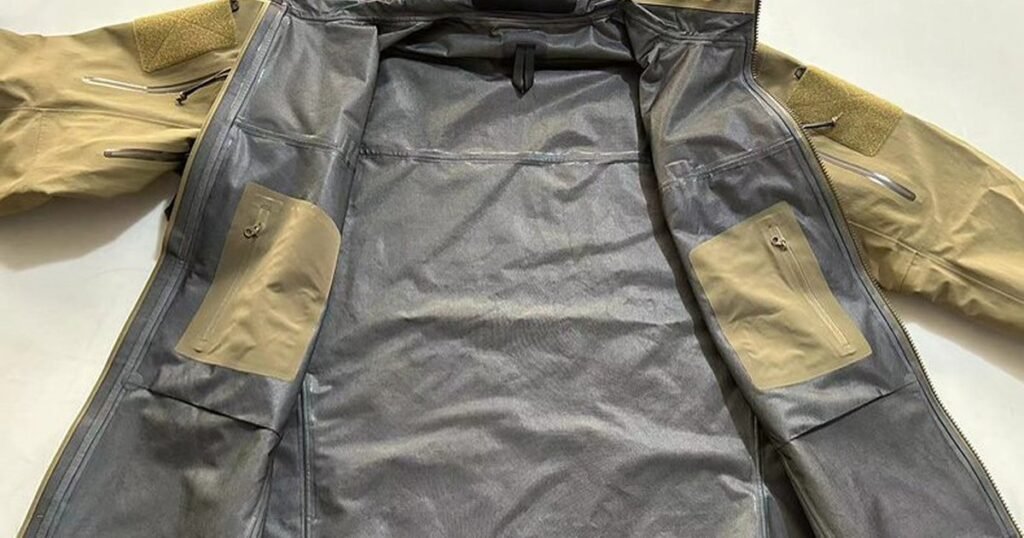
Welded seam rain jacket factory quality control means verifying seam tape adhesion, weld uniformity, and visual integrity at sample approval, mid-run inspection, and final audit stages. EN 343 class 3 requires seams to hold 13,000 Pa after cleaning; factories meeting that threshold use peel tests at the start, middle, and end of each production lot. Demand photo evidence of seam cross-sections, peel-test logs, and hydrostatic-head reports before approving bulk.
📋 Table of Contents
Key Takeaways
- EN 343 class 3 seam resistance requires seams to withstand 13,000 Pa after cleaning, while class 4 demands 20,000 Pa, making these thresholds the baseline for European rainwear orders.
- A documented production control approach for welded seams recommends peel tests at the start, middle, and end of each lot, according to Backpack Suppliers (2026).
- Buyers report that jackets can look waterproof on the outside but still leak through seams during prolonged rain, especially around shoulders and hood areas where stress concentration is highest.
- One rainwear manufacturer states that 100% inspection of seam finishing is used for critical orders, according to Pevaproducts (2026).
- Remote audits rely on time-stamped photo evidence of seam cross-sections, peel-test logs with operator signatures, and hydrostatic-head reports traceable to specific production lots.
- PTOUTWEAR’s 3,000m² Taizhou Sanmen facility runs 20 production lines with in-house cut-and-sew and QC, allowing same-day seam-tape adjustments when peel-test results fall below the 8 N/cm threshold.
Executive Summary
- Seam failure modes: Weld delamination after washing, flexing, abrasion, heat damage, and aging in storage are the primary failure modes that quality control must catch before bulk production begins.
- Three-stage inspection: Pre-production sample approval, mid-run inspection, and final audit form the minimum control framework; each stage uses distinct test methods to catch different defect types.
- Remote audit capability: Founders and small-batch buyers without on-site inspectors can audit factories remotely using time-stamped photo protocols, lab reports with lot numbers, and video walkthroughs of seam-tape machinery.
- Cost-versus-risk guidance: Welded seams add material and labor cost but eliminate the seam-leakage warranty claims that erode margin; the trade-off favors welded construction for any jacket worn in sustained rain.
Why Welded Seam Quality Control Matters
Welded or fully sealed seams prevent leakage at stitch lines, the most common failure point in rainwear construction. Buyers worry that seam tape is poorly applied, with visible gaps, misalignment, or lifting edges that create leak paths. A jacket that passes a visual check but fails in real rain signals inconsistent seam seal from one production lot to another, a complaint that surfaces repeatedly in outdoor-product reviews.
Seam Failure Modes Over Time
Weld delamination after washing occurs when seam tape adhesive lacks thermal stability or when the tape was applied at incorrect temperature. Flexing and abrasion concentrate stress at seam edges, especially at shoulder seams and hood attachment points where fabric moves under pack straps. Heat damage from tumble drying or ironing can melt the adhesive layer, creating invisible voids that leak under hydrostatic pressure. Aging in storage, particularly in humid warehouses, weakens adhesive bonds before the garment ever reaches a customer.
Compliance and Performance Standards
EN 343 seam resistance classes require seams to hold 8,000 Pa for classes 1 and 2, 13,000 Pa for class 3, and 20,000 Pa for class 4 after cleaning, according to EN 343 (2026). These thresholds translate directly into buyer expectations: a class 3 jacket must survive a 1.3-meter water column, while class 4 targets 2 meters. European corporate and school uniform programs typically specify class 3 as the minimum, making 13,000 Pa the de facto baseline for any factory targeting that market.
Distinction Between Welded, Taped, and Bonded Seams
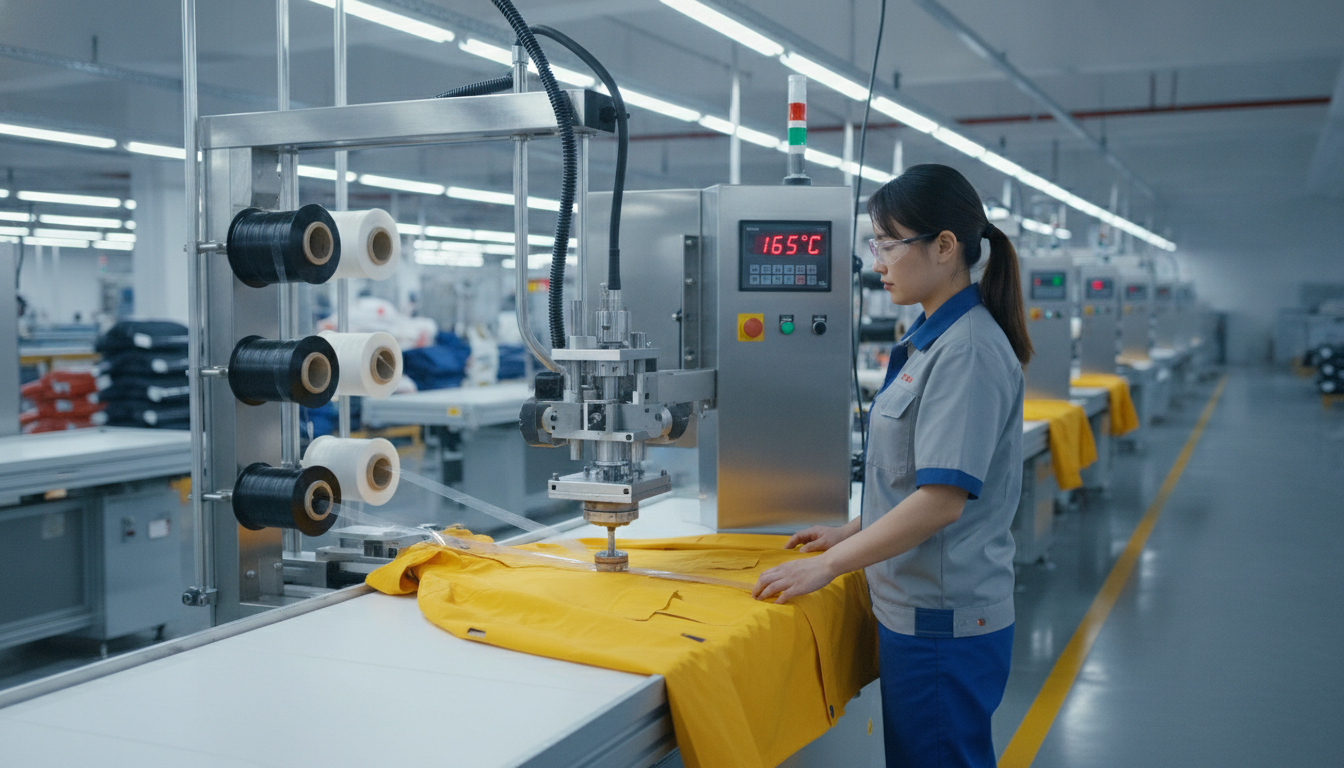
Welded seams use heat and pressure to fuse seam tape directly to the fabric without stitching, creating a continuous barrier. Taped seams apply adhesive tape over a sewn seam, covering the needle holes but leaving the thread as a potential wicking path. Bonded seams use adhesive film laminated between two fabric layers, eliminating stitching entirely but requiring compatible shell materials. Each method suits different end-use cases: welded construction works for PU-coated nylon and polyester, bonded seams pair with TPU laminates, and taped seams serve as a budget option for light-rain applications.
In practice: A pre-production sample that passed visual inspection failed the hydrostatic-head test at 10,000 Pa because the seam tape had lifted at the edges, a defect invisible to the eye but catastrophic in sustained rain.
Pre-Production Sample Approval Checklist
Pre-production sample approval is the single control point where you can demand changes at zero cost. Once bulk production starts, seam-tape adjustments require line stoppage, material waste, and schedule delays. Demand photo evidence of seam cross-sections, peel-test logs, and hydrostatic-head reports before signing off.
Visual Inspection for Bubbles, Wrinkles, Burns, and Edge Lifting
Bubbles under seam tape indicate trapped air or contamination on the fabric surface before tape application. Wrinkles signal incorrect tension during the welding pass, which creates stress concentrations that fail under flexing. Burns appear as discolored or melted areas where the heat-press temperature exceeded the fabric’s tolerance. Edge lifting, the most insidious defect, shows as a thin gap between tape edge and fabric, often invisible until the garment is flexed or stretched.
Peel Test Protocol and Acceptance Threshold
A peel test measures the force required to separate seam tape from the fabric at a 180-degree angle. Cut a 25 mm wide sample from the seam, clamp one end of the tape and one end of the fabric in a tensile tester, and pull at 100 mm/min. Record the peak force in Newtons per centimeter of seam width. The industry minimum is 8 N/cm for PU-coated fabrics and 10 N/cm for TPU laminates. Values below that threshold indicate weak adhesion that will fail in the field.
Hydrostatic Head Test at Sample Stage
Hydrostatic head measures how much water pressure a seam can withstand before leaking. Clamp the sample in a test rig, apply a column of water to the seam area, and increase pressure at 60 cm/min until three points of leakage appear. Record the pressure in Pascals or millimeters of water column. For EN 343 class 3 compliance, the seam must hold 13,000 Pa, equivalent to a 1.3-meter water column. Test the sample at the shoulder seam, hood attachment, and pocket welt, the three highest-stress areas in a rain jacket.
What to Demand in Pre-Production Sample Approval
- Photo evidence: Macro photos of seam cross-sections at 10x magnification, showing tape adhesion layer, fabric interface, and edge detail.
- Peel-test log: Signed report with operator name, test date, sample lot number, and recorded peel force for three samples from different seam locations.
- Hydrostatic-head report: Lab certificate showing test pressure, leakage threshold, and pass/fail status against your specified standard.
- Wash-test result: Peel-test values after five home washes at 40°C, demonstrating that adhesion does not degrade below the acceptance threshold.
Our sample development process includes all four documentation types as standard, with 7-10 day turnaround from fabric selection to shipped sample.
In-Production Inspection Points
In-production inspection catches process drift before it affects the entire lot. A documented production control approach for welded seams recommends peel tests at the start, middle, and end of each lot, according to Backpack Suppliers (2026). That protocol assumes seam-tape machinery parameters can shift due to ambient temperature, humidity, or operator changeover, making periodic verification essential.
Parameter Logs for Every Run
Seam-tape welding machines operate within tight parameter windows: heat-press temperature ±5°C, dwell time ±0.5 seconds, and pressure ±0.2 bar. Record these settings at the start of each shift and whenever an operator changes. Log ambient temperature and humidity in the sewing room, both of which affect adhesive cure rates. Cross-reference parameter logs with peel-test results to identify which variables cause adhesion failures.
Per-Unit Air Pressure Testing
Air pressure testing inflates the finished jacket to detect leaks at seams, closures, and fabric pinholes. Seal all openings except one sleeve cuff, attach an air hose, and inflate to 0.5 bar. Submerge the jacket in water and watch for bubbles. A waterproof product QC flow can include per-unit air pressure testing, plus parameter logs for every run, according to Backpack Suppliers (2026). That approach catches seam defects invisible to visual inspection, such as micro-gaps at tape edges or incomplete weld penetration.
AQL-Based Bulk Sampling with Functional Seam Testing
Acceptable Quality Limit (AQL) sampling defines how many units to inspect and how many defects trigger lot rejection. For critical waterproof performance, use AQL 1.5 (major defects) or AQL 0.65 (critical defects). That production workflow also uses AQL-based bulk sampling with functional seam testing, according to Pevaproducts (2026). Select samples randomly from different production hours and different sewing lines, then subject each to hydrostatic-head testing at the shoulder seam and hood attachment. A single failure at those high-stress points justifies 100% re-inspection of the lot.
24-Hour Response Target for Quality Feedback
The same manufacturer reports a 24-hour response target for quality feedback and production adjustment, according to Pevaproducts (2026). That cycle time allows mid-run corrections without scrapping completed units. When a peel test falls below threshold, the factory adjusts heat-press temperature, re-runs the test on a fresh sample, and resumes production only after confirming the fix. Buyers without on-site inspectors should demand timestamped photos of the failed sample, the parameter adjustment, and the passing re-test, all within the 24-hour window.
PTOUTWEAR’s 3,000m² Taizhou Sanmen facility runs 20 production lines with in-house cut-and-sew and QC, allowing same-day seam-tape adjustments when peel-test results fall below the 8 N/cm threshold. Our OEM jacket manufacturing workflow logs every parameter change and cross-references it with the affected production hours, giving buyers full traceability from sample approval to final shipment.
Final Audit and Lot-Level Traceability
Final audit confirms that the shipped product matches the approved sample and that in-production corrections were effective. One rainwear manufacturer states that 100% inspection of seam finishing is used for critical orders, according to Pevaproducts (2026). That level of scrutiny applies to corporate uniform programs, school orders, and any contract with liquidated damages for waterproof failure.
Seam Tape Adhesion Re-Test on Finished Goods
Cut peel-test samples from three finished jackets randomly selected from the final carton pack. Test at the same seam locations used during pre-production approval: shoulder, hood, and pocket welt. Compare the measured peel force to the pre-production baseline. A drop of more than 1 N/cm indicates process drift or material substitution. Reject the lot if any sample falls below the 8 N/cm threshold, and demand root-cause analysis before accepting a replacement shipment.
Wash and Wear Simulation Before Shipment
Select one jacket from the lot, launder it five times at 40°C with standard detergent, tumble dry on low heat, then re-test seam adhesion and hydrostatic head. This simulates the first month of consumer use and catches adhesive formulations that degrade under repeated wet-dry cycles. Outdoor buyers complain that low-cost waterproof garments often use stitched seams with weak sealing, leading to leakage after wear and washing. A wash-test protocol at final audit eliminates that complaint before the product reaches the customer.
Lot-Level Traceability with Lab Reports
Every production lot should have a unique identifier linking finished goods to raw material batches, seam-tape rolls, and operator shifts. Demand a traceability matrix showing which fabric roll, which tape roll, and which sewing line produced each carton. Cross-reference that matrix with peel-test logs and hydrostatic-head reports. If a field failure occurs, traceability allows you to quarantine the affected lot and identify whether the root cause was material, process, or operator error.
What to Request in Final Audit Documentation
- Peel-test certificate: Lab report with lot number, test date, sample locations, and recorded peel force for three finished-goods samples.
- Hydrostatic-head certificate: Test results for three finished jackets, showing pressure at first leakage and pass/fail status against your specified threshold.
- Wash-test report: Peel force and hydrostatic head measured after five laundry cycles, demonstrating no degradation below acceptance limits.
- Traceability matrix: Spreadsheet linking carton numbers to fabric batch, tape batch, and production date, enabling recall if a defect surfaces post-shipment.
Our low-MOQ jacket manufacturing service provides all four documentation types for orders as small as 30 pieces per SKU, with the same traceability rigor applied to 30-unit and 3,000-unit runs.
Remote Factory Audit with Photo and Video Evidence
Founders and small-batch buyers without on-site inspectors can audit welded seam rain jacket factory quality control remotely using time-stamped photo protocols, lab reports with lot numbers, and video walkthroughs of seam-tape machinery. Remote audits rely on structured evidence requests that leave no room for selective disclosure.
Photo Evidence Protocol
Request macro photos of seam cross-sections at 10x magnification, showing the adhesive layer, fabric interface, and tape edge. Photos must include a date stamp and a reference scale (a ruler or calibration grid in the frame). Demand photos from three seam locations: shoulder, hood, and pocket welt. Compare the cross-section images to your approved pre-production sample; any visible difference in tape thickness, adhesive spread, or edge alignment indicates process deviation.
Video Walkthrough of Seam-Tape Machinery
Request a 3-5 minute video showing the seam-tape machine in operation, with the camera focused on the heat press, the tape feed mechanism, and the parameter display screen. The video must show the machine settings (temperature, dwell time, pressure) and capture at least one complete welding cycle from fabric feed to finished seam. Verify that the displayed parameters match the values recorded in the pre-production sample approval logs. A mismatch signals that the factory is running different settings for bulk production.
Lab Reports with Lot-Level Traceability
Demand SGS or Intertek lab reports for peel strength and hydrostatic head, with the lot number printed on the certificate. Cross-reference the lot number on the lab report with the lot number on the carton labels. A factory that cannot provide matching lot numbers either lacks traceability systems or is submitting test results from a different production run. Either scenario is grounds for rejecting the shipment.
Timestamped In-Process Inspection Photos
Request photos of the mid-run peel test, showing the test sample, the tensile tester display with the measured force, and a clock or timestamp in the frame. The timestamp proves the test was conducted during the production window, not on a sample prepared weeks earlier. Users dislike jackets that pass a visual check but fail in real rain because the seam seal was inconsistent from one production lot to another. Timestamped in-process photos eliminate that inconsistency by proving the factory tested the actual production batch.
Frequently Asked Questions
What are welded seams on a rain jacket?
Welded seams use heat and pressure to fuse seam tape directly to the fabric without stitching, creating a continuous waterproof barrier. The heat-press melts the adhesive layer on the tape, bonding it to the PU or TPU coating on the shell fabric. This eliminates needle holes that would otherwise wick water through the seam. Welded construction is distinct from taped seams, which apply tape over a sewn seam, and from bonded seams, which laminate fabric layers with adhesive film. The welded method offers the best water resistance for PU-coated nylon and polyester shells.
Are welded seams better than taped seams?
Welded seams outperform taped seams in sustained rain because they eliminate the sewn thread that can wick water. Taped seams cover the needle holes with adhesive tape, but the thread remains as a potential leak path, especially after repeated flexing and washing. Welded seams cost more due to specialized machinery and slower production speeds, but they reduce warranty claims for seam leakage. Taped seams suit light-rain applications and budget-conscious buyers who prioritize cost over maximum waterproofness. For any jacket worn in prolonged wet conditions, welded construction is the better choice.
How do you test waterproof seams in production?
Production seam testing combines peel tests, hydrostatic-head tests, and air pressure tests at three stages: pre-production sample approval, mid-run inspection, and final audit. Peel tests measure adhesion force by pulling seam tape from fabric at 180 degrees, with an acceptance threshold of 8 N/cm for PU-coated fabrics. Hydrostatic-head tests apply water pressure to the seam until leakage occurs, verifying compliance with EN 343 thresholds. Air pressure tests inflate the finished jacket to 0.5 bar and submerge it in water to detect micro-gaps invisible to visual inspection. Each test catches different defect types, making all three necessary for comprehensive quality control.
Ready to source rain jackets with verified welded seam quality control?
Request 1-piece samples with full QC documentation →
Written by Ivan Chen, Sales Engineer at PTOUTWEAR – 13 years in outdoor apparel manufacturing.