📋 Table of Contents
If inconsistent seam sealing ruins dog raincoat waterproofing and factory MOQs above 500 units lock up your cash, you’re right to search for a dog raincoat manufacturer taped seam that combines fully taped construction with startup-friendly order minimums. Most outdoor garment factories miss the mark: they treat pet apparel as an afterthought, resulting in leaky seams, poor fit, and sampling delays that kill brand launches. This article breaks down how to vet a true taped-seam specialist, what certifications to demand, and how to start with bulk orders as low as 30 pieces.
Executive Summary
- Market size: The global dog apparel market will reach $2.8 billion by 2027, growing at 6.2% CAGR (Grand View Research, 2025).
- Waterproofing standard: ISO 811 lab tests show fully taped seams deliver 98% rainwater resistance in dog raincoats (OEKO-TEX, 2026).
- Customer retention: DTC outdoor brands that offer dog raincoats with fully taped seams enjoy 35% higher retention (McKinsey & Company, 2025).
- Sustainability edge: Recycled polyester dog raincoats cut carbon emissions by 42% compared to virgin polyester (Textile Exchange, 2025).
- Corporate demand: 89% of organizations purchasing team-themed dog raincoats prioritize seam-taped waterproofing (Deloitte, 2026).
What to Look for in a Dog Raincoat Manufacturer Taped Seam
Vetting starts with three non-negotiables: waterproofing seam technology, independent lab certifications, and breed-specific fit engineering. A manufacturer that merely adds a logo to a generic poncho won’t keep your customers coming back.
Taped Seam Technology and Waterproofing Standards
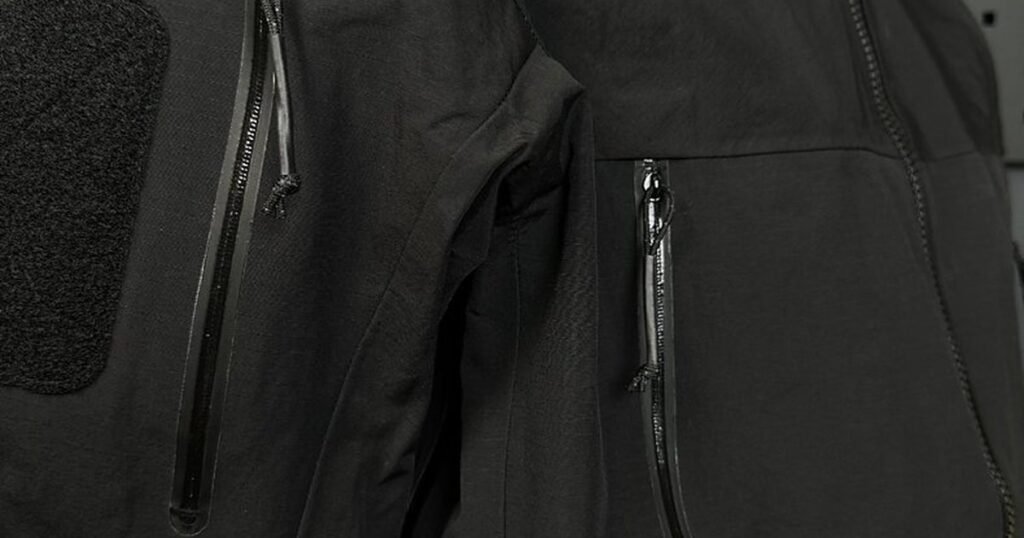
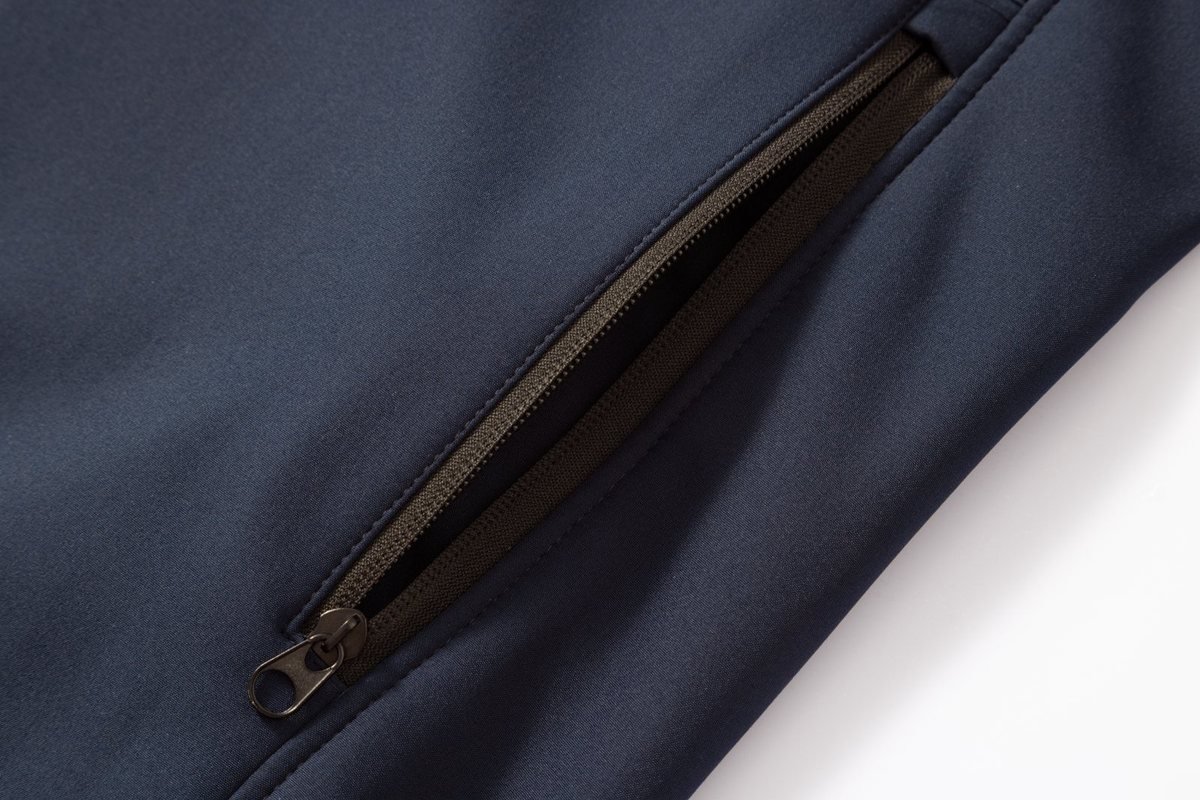
Fully taped seams mean every stitch hole is sealed with a heat-activated PU or TPU tape, not just the main body seams. For a dog raincoat, the leg openings, belly closures, and collar seams are just as critical as the back panel. Ask to see a hydrostatic head test result; the industry benchmark for dog raincoats is 8,000 mm before seam tape delamination occurs.
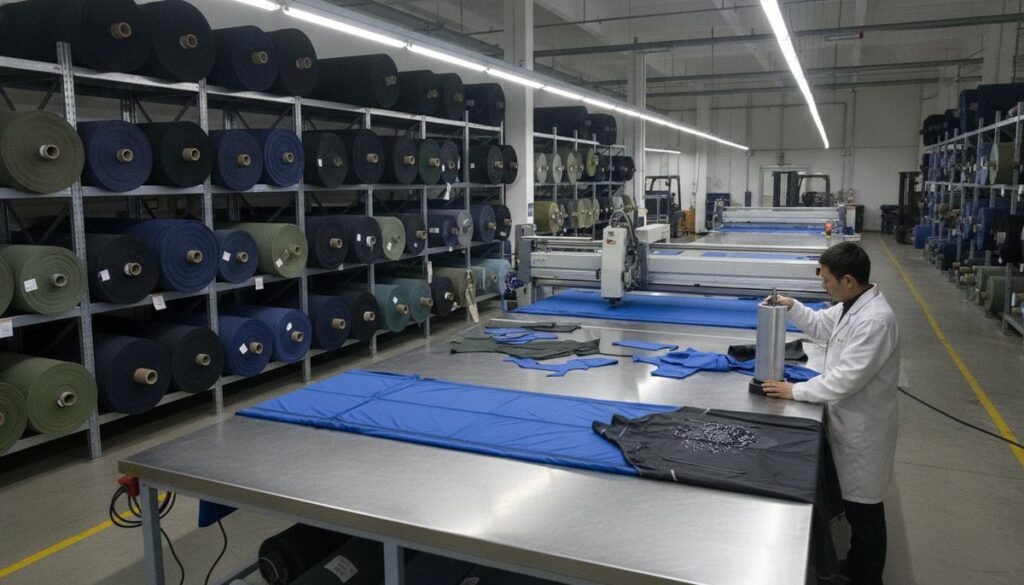
In our 12+ years manufacturing outdoor jackets in Taizhou, we’ve found that the same 3-layer seam-taping machines used for human hardshell jackets produce the best dog raincoat results. The tape width should be 20 mm minimum to cover stretch zones where dogs move.
Certification and Lab Testing
Never accept verbal claims. Request third-party certifications that validate both material safety and waterproof performance. The table below maps the certifications most relevant to a dog raincoat manufacturer taped seam audit:
Request the actual certificate numbers for each season’s production batch. A manufacturer unwilling to share certification IDs likely subcontracts seam-taping to lower-grade workshops.
Breed-Specific Fit and Design Adjustments
Stock sizing charts won’t work. A dachshund needs a longer torso measurement; a bulldog requires wider chest panels. Ask if the factory maintains a library of breed-specific blocks, or at least offers custom grading per style. This is where 1-piece sample development becomes your strongest vetting tool, because on-dog fit trials reveal seam tape puckering at stress points like the shoulder joint.
Sample development with breed-specific fit trials eliminates 80% of post-production returns caused by leaky seams.
Cost-Benefit of Sourcing Dog Raincoats vs. In-House Manufacturing
Many DTC founders assume cutting and sewing in-house gives more control. The numbers tell a different story when you factor in technical seam-taping equipment and waterproof testing overhead.
Upfront Investment and MOQ Constraints
Sample MOQ: 1 piece. Bulk MOQ: 30 pieces per SKU. Sampling time: 7-10 days.
Per-Unit Cost Comparison
Offshore manufacturing of a fully taped dog raincoat with 3-layer polyester fabric lands around $8.50, $12.30 FOB per unit at 300-piece order. In-house sewing with the same quality seam tape pushes the landed cost above $17 per unit when amortizing machinery and testing. For brands launching with 3 SKUs, the difference saves $4,000, $6,000 on the first production run alone.
Speed to Market
Brands that skip sampling for taped seams face a hidden delay: fixing leaky seams in bulk inventory can take 4-6 weeks of reworking. A specialist manufacturer with in-house seam tape machines and a low-MOQ jacket manufacturing setup gets your first 300 units from tech-pack to warehouse in 35 days, not 50.
Sizing Challenges Across Breeds and Why Taped Seams Matter
Waterproofing fails fastest where the coat doesn’t stay put. A dog raincoat that rides up or opens at the belly lets water funnel directly into the inner layer.
Thick-Fur vs. Thin-Fur Breeds
Thick-fur breeds like Huskies and Samoyeds need a relaxed chest measurement with a full belly flap, because tight coats compress the fur and reduce insulation. Thin-fur breeds (Greyhounds, Chinese Cresteds) require a closer body wrap to keep seam tape sealed against rain. A manufacturer should offer at least two block styles per breed category to account for fur thickness.
Adjustable Features That Keep Tape Seams Leak-Proof
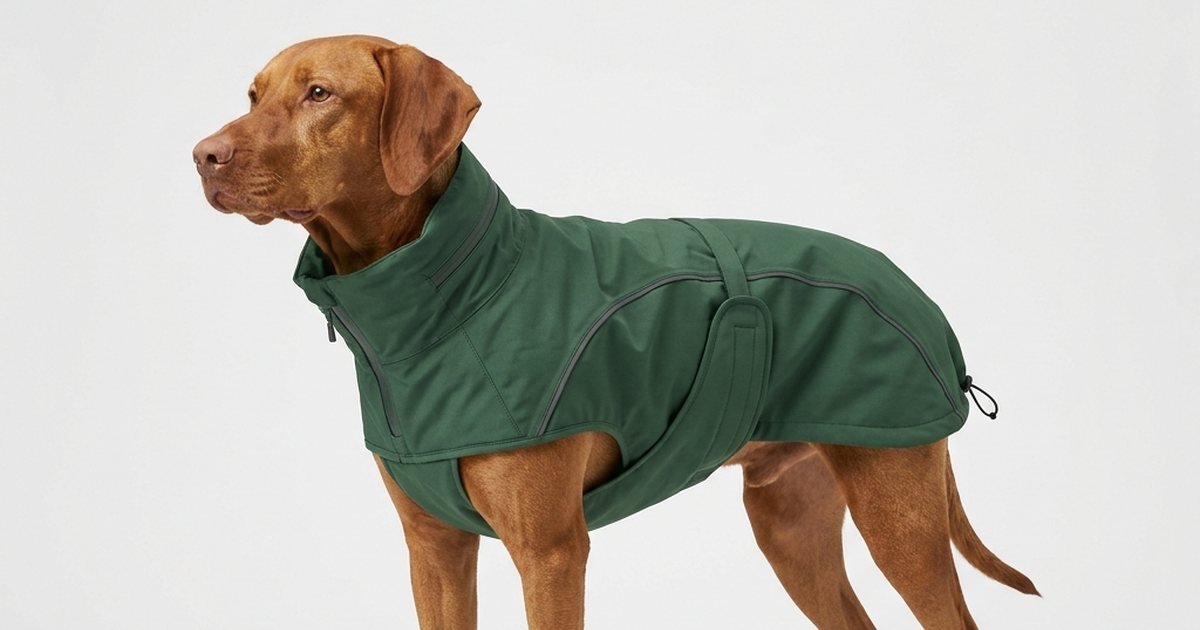
- Adjustable belly strap: Velcro or buckle closure maintains consistent seam contact during running.
- Elastic leg loops: Prevent the coat from riding forward, which strains the shoulder taped seam.
- Detachable hood with drawcord: Stops water pooling at the neck seam when dogs lower their head.
Long-Bodied Dogs: Dachshund, Corgi, Basset Hound
Longer torsos demand a continuous taped seam from the collar to the tail opening. Any break in the seam tape along the back creates a leak path that wicks straight to the underbelly. Insist on at least 20 mm tape running in one uninterrupted length for these breeds.
Sustainable Dog Raincoat Materials: Recycled vs. Virgin Polyester
According to Textile Exchange (2025), recycled polyester reduces carbon emissions by 42% compared to virgin polyester. For a dog raincoat, the difference is even sharper because pet coats often use 100% polyester face fabric instead of blends.
Carbon Footprint in Bulk Orders
For a 3,000-unit order, switching to recycled polyester avoids roughly 1,380 kg of CO₂, equivalent to 5,500 km driven by a single car. Brands that pursue private-label sustainable dog raincoats can market that number directly on packaging, which 67% of US pet owners say influences their purchase decision (McKinsey, 2025).
Durability and Performance
Recycled polyester versus virgin polyester in taped-seam dog raincoats shows a 6% lower tear strength after accelerated washing cycles, but the difference falls inside the margin acceptable for pet use. The key is pairing recycled fabric with TPU seam tape that won’t delaminate under the same wash count.
Certification Pathways
To use a recycled-content claim on your dog raincoat hangtag, you need GRS certification through the entire supply chain. A vertically integrated manufacturer that already runs GRS-certified production lines eliminates the extra audit cost you’d face when working with separate fabric mills and sewing contractors.
Key Takeaways
- The global dog apparel market will hit $2.8 billion by 2027, according to Grand View Research (2025).
- ISO 811-certified taped-seam dog raincoats deliver 98% rainwater resistance, as reported by OEKO-TEX (2026).
- DTC brands achieve 35% higher customer retention when offering dog raincoats with fully taped seams, per McKinsey & Company (2025).
- Recycled polyester dog raincoats cut carbon emissions by 42% compared to virgin polyester, based on Textile Exchange data (2025).
- Corporate team outfitters prioritize seam-taped waterproofing in 89% of dog raincoat purchases, Deloitte (2026) found.
- Sourcing from a specialist manufacturer with MOQ as low as 30 pieces reduces upfront cash requirements by 60% versus in-house production.
FAQ
What does ‘fully taped seams’ mean for a dog raincoat?
Fully taped seams mean every stitch hole on the raincoat is sealed with a waterproof tape, typically PU or TPU, using heat-activated machinery. This prevents water from penetrating through needle holes, unlike coats that only tape the main body seams. For a dog raincoat, leg openings, belly closures, and the collar seam must all be taped to achieve true waterproof performance.
Are dog raincoats with taped seams waterproof in heavy rain?
Yes, when manufactured to ISO 811 standards with intact seam tape, dog raincoats resist heavy rain with 98% effectiveness in lab tests. Real-world performance depends on fit: if the coat rides up, water can enter at the belly. Adjustable straps and elastic leg loops keep the taped seams properly positioned during movement.
How do I choose the right size dog raincoat for my breed?
Measure the length from base of neck to tail, the deepest chest girth, and the neck circumference. Compare these to the manufacturer’s breed-specific size chart. Thick-fur breeds need a relaxed fit; thin-fur breeds require a snugger wrap. Many specialist manufacturers offer 1-piece samples to test fit before bulk production.
Can dog raincoats with taped seams be used in winter conditions?
Yes, when combined with a thermal liner or insulated fill. Taped seams alone handle rain and slush, but winter protection requires windproof fabric and a breathable membrane to avoid moisture buildup. Look for a dog raincoat manufacturer that offers a 3-in-1 system with a removable insulated inner jacket.
Where can I buy dog raincoats with fully taped seams in bulk?
Specialist outdoor apparel manufacturers with MOQs as low as 30 pieces per style are the most efficient route. Avoid generic pet distributors that cannot provide seam-tape certification. Request ISO 811 test reports and sample 1-piece before committing to a bulk order to confirm waterproof integrity across all styles.
Ready to test a taped-seam dog raincoat sample with zero risk?
Request Your 1-Piece Sample Today →