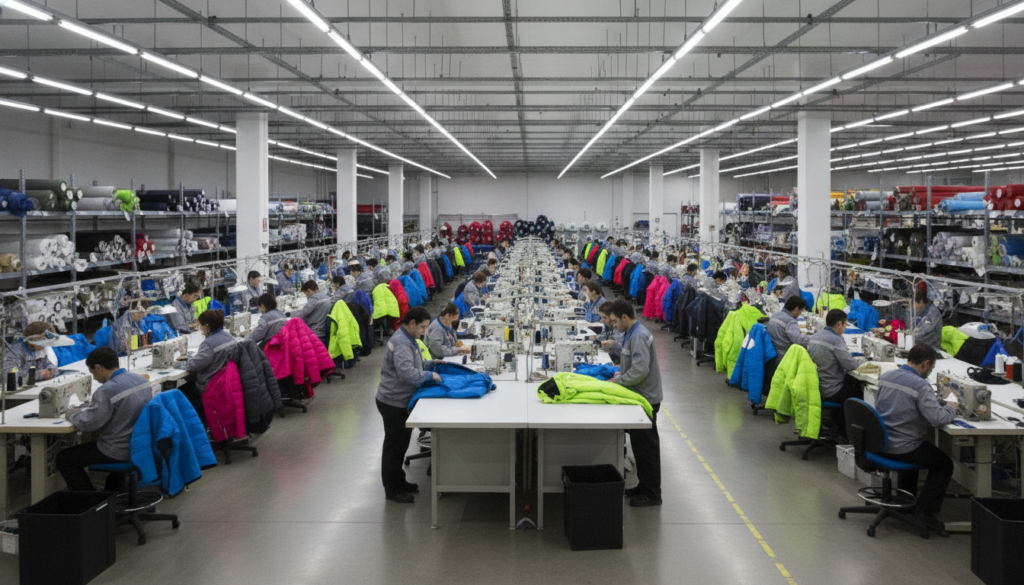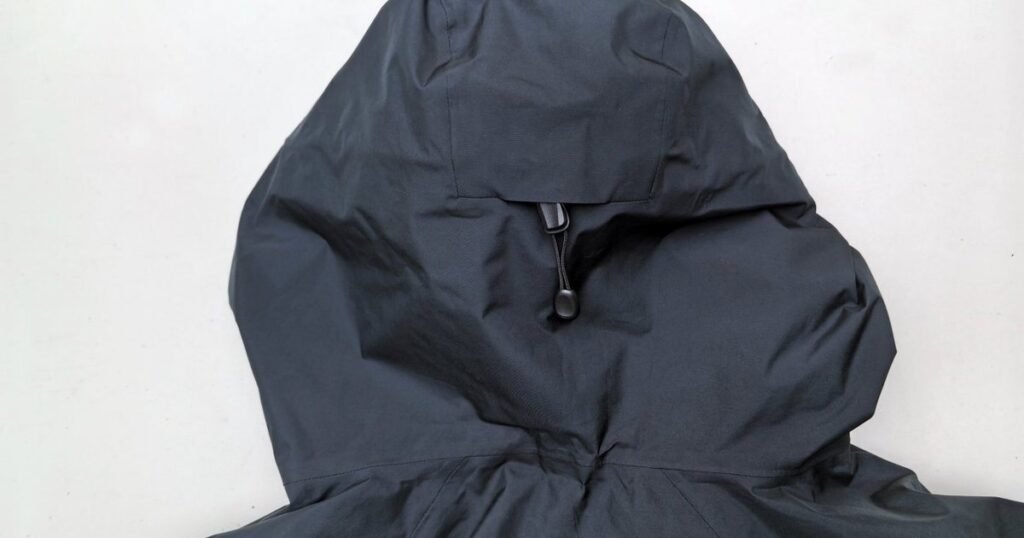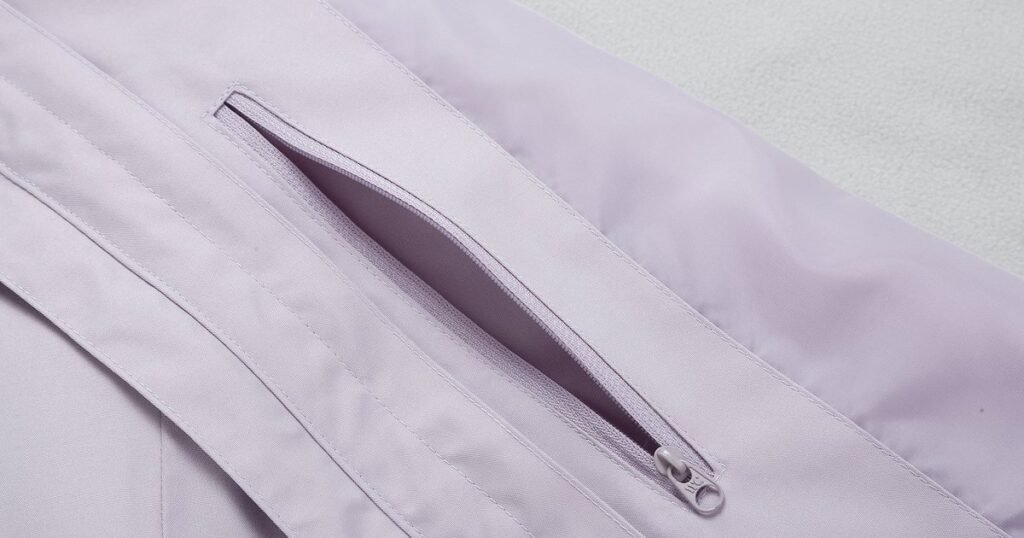
Wholesale windbreaker jacket custom Pantone color matching requires a lab dip approval process where the factory dyes fabric swatches to your specified PMS code, you approve the physical color under controlled lighting, and bulk production follows that approved standard with a ±5% deviation tolerance measured by spectrophotometer. Printed Pantone swatches on coated or uncoated paper will not match dyed polyester or nylon because ink on paper and dye in synthetic fabric reflect light differently. PTOUTWEAR’s OEM jacket manufacturing process starts with a 1-piece sample at a $100 fee (refunded against a 30+ piece first order), followed by lab dip submission within 7-10 days, so you validate the exact color before committing to bulk.
📋 Table of Contents
Executive Summary
- Lab dip submission: Factory dyes physical fabric swatches to your Pantone reference and ships them for approval before bulk cutting begins.
- Lighting standards: Approve lab dips under D65 daylight-equivalent lighting to avoid metamerism, where colors shift under incandescent or fluorescent sources.
- Spectrophotometer measurement: Bulk fabric is measured against the approved lab dip using a spectrophotometer; ±5% Delta E is the industry-standard tolerance for solid colors.
- Sample MOQ: 1 piece at PTOUTWEAR, with a $100 sample fee refunded against a first bulk order of 30+ pieces, letting you validate color and construction before committing capital.
- Bulk MOQ: 10 pieces per style, with colors and sizes mixed, so a 50-piece order can span five Pantone colors at 10 pieces each without tying up cash in a single SKU.
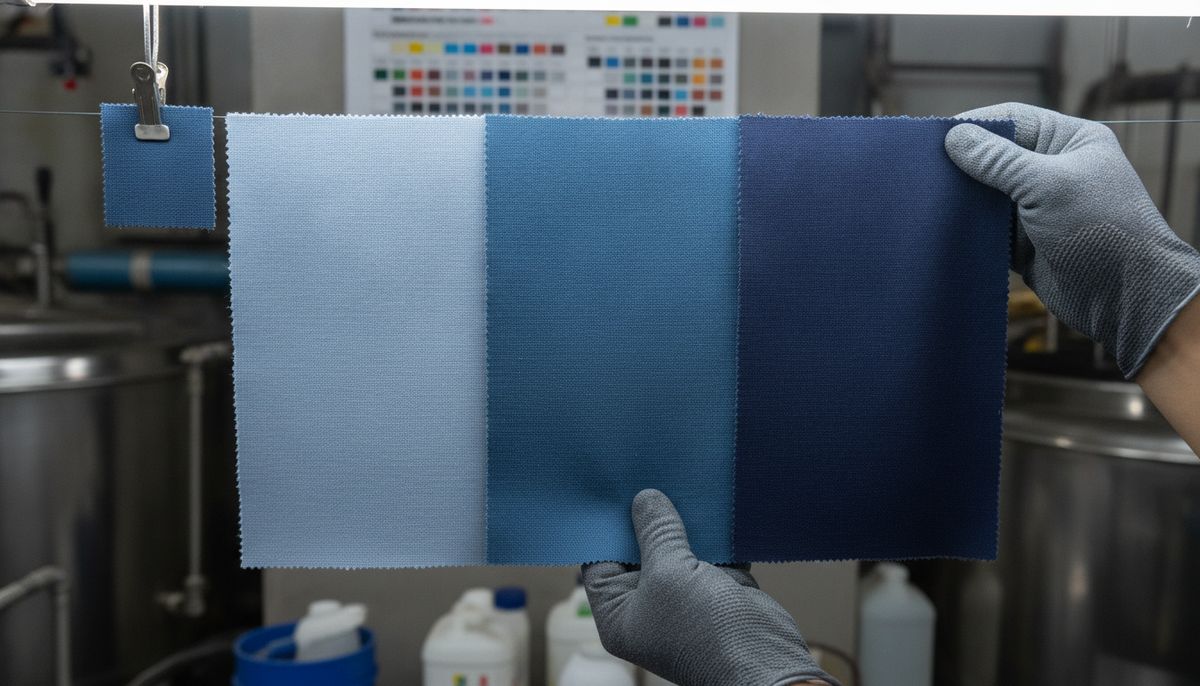
Why Printed Pantone Swatches Do Not Match Dyed Fabric
Pantone guides use ink on coated or uncoated paper; windbreaker shells use disperse dye on polyester or nylon. Ink sits on the paper surface and reflects light directly, while dye penetrates synthetic fibers and scatters light through the yarn structure. A Pantone 2945 C swatch printed on coated stock will appear darker and more saturated than the same PMS code dyed onto 210T polyester taffeta because the fabric’s weave and finish alter how much light bounces back to your eye.
TPX, TCX, and PMS Code Differences
Pantone TPX and TCX are textile-specific color systems printed on cotton or polyester swatches, closer to final fabric than paper-based PMS codes. TPX uses a polyester knit base; TCX uses cotton. If your brand style guide specifies PMS 2945 C, request the factory convert it to the nearest TPX or TCX equivalent before dyeing the lab dip, or accept that the dyed result will approximate rather than exactly replicate the paper swatch.
Metamerism and Lighting Conditions
Two fabrics that match under daylight may look different under store fluorescent or evening incandescent light because dyes absorb and reflect wavelengths differently. Approve lab dips in a light box with D65 (daylight), TL84 (European store), and A (incandescent) sources. If the color shifts noticeably between light types, the dye formulation needs adjustment before bulk production starts.
Fabric Finish Impact on Perceived Color
A matte DWR-coated polyester shell will look lighter than a glossy PU-coated shell dyed to the same Pantone code because the glossy finish reflects more light. Specify the exact fabric construction (210T polyester taffeta with matte PFC-free DWR, for example) when requesting the lab dip so the factory dyes the same base cloth you will use in bulk.
Lab Dip Approval Workflow
The lab dip process takes 7-14 days from Pantone reference submission to approved swatch in hand. You send the factory your PMS code or a physical Pantone swatch; the factory’s dye house runs a small batch (typically 5-10 meters) on the specified fabric base; the dyed swatch is couriered to you; you approve or request adjustment; the factory re-dyes if needed; once approved, that swatch becomes the production standard.
Step 1: Submit Pantone Reference and Fabric Specification
Email the factory your PMS code (or TPX/TCX if available) and the exact fabric construction: fiber content, weight, weave, and finish. A request for “PMS 2945 C on polyester” is incomplete; specify “PMS 2945 C on 210T polyester taffeta, matte PFC-free DWR, 60 g/m²” so the dye house uses the correct base cloth and finish chemistry.
Step 2: Factory Dye House Runs Lab Dip
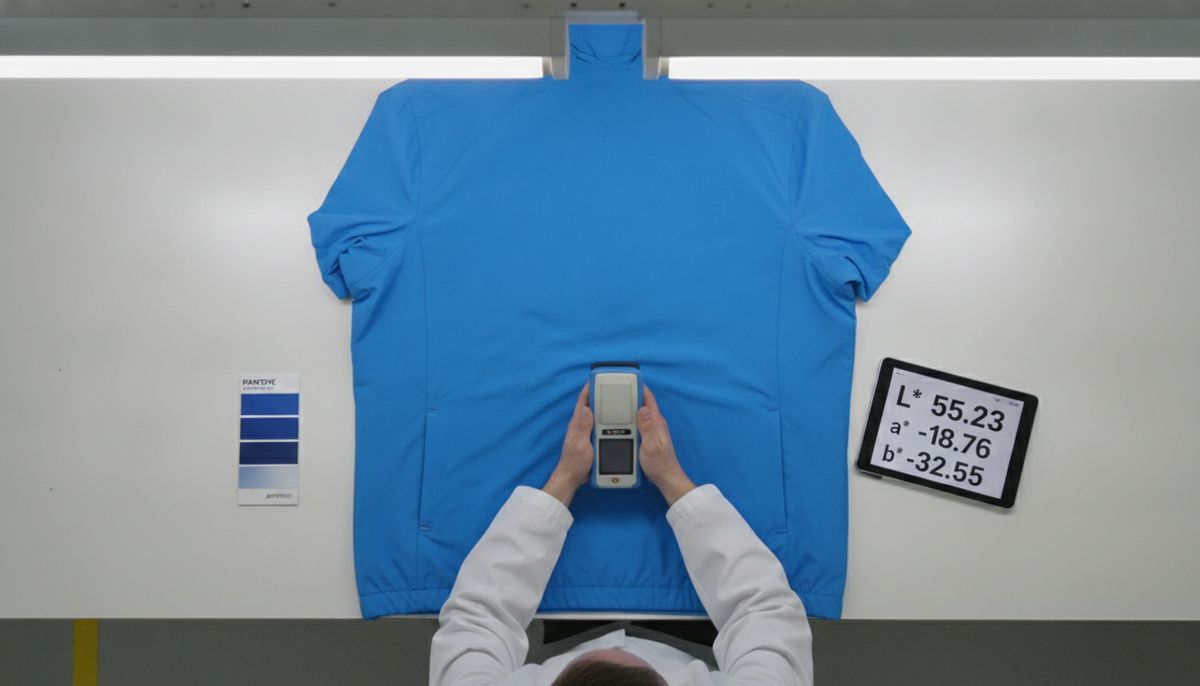
The dye house mixes disperse dyes to approximate your Pantone code, dyes a 5-meter sample, heat-sets the color, applies the DWR finish, and cuts a 20 cm × 20 cm swatch. This swatch is measured with a spectrophotometer to record L*a*b* values, which become the numeric target for bulk production. The factory photographs the swatch under D65 lighting and emails the image for preliminary approval, then couriers the physical swatch.
Step 3: Buyer Approves or Requests Adjustment
Inspect the physical swatch in a light box under D65, TL84, and A sources. If the color is too light, too dark, too red, or too blue, mark the deviation on the swatch and return it with written notes. The factory adjusts the dye recipe and submits a second lab dip. Most colors are approved within two rounds; complex colors like burgundy or forest green may need three.
Step 4: Approved Lab Dip Becomes Production Standard
Once you sign off on the lab dip, the factory files the swatch and its spectrophotometer data as the master standard. Bulk fabric is dyed in 500-1,000 meter lots and measured against this standard; any lot that deviates beyond ±5% Delta E is re-dyed or rejected before cutting begins.
Sample MOQ: 1 piece. Bulk MOQ: 10 pieces per style (mix colors and sizes). Lab dip turnaround: 7-10 days from Pantone submission to physical swatch in hand.
Acceptable Color Deviation Tolerances
Delta E measures the perceptible difference between two colors in the CIE L*a*b* color space. A Delta E of 1.0 is the smallest difference a trained observer can detect under controlled lighting; ±2.0 is imperceptible to most buyers; ±5.0 is the industry standard for apparel because fabric texture and lighting variability make tighter tolerances impractical at scale.
Delta E Measurement Method
The factory’s quality team uses a handheld spectrophotometer (common models include X-Rite SP60 or Konica Minolta CM-700d) to measure L* (lightness), a* (red-green axis), and b* (yellow-blue axis) values on the approved lab dip and on each bulk fabric lot. The device calculates Delta E using the CIE 2000 formula, which weights lightness and chroma differences according to human perception. A reading of Delta E ≤5.0 passes; >5.0 triggers re-inspection or re-dye.
Visual Inspection Under Standard Lighting
Spectrophotometer data is supplemented by visual comparison in a light box. The QC inspector places the bulk fabric swatch next to the approved lab dip under D65 lighting and checks for shade variation. If the bulk fabric looks noticeably lighter or darker, even if Delta E is within tolerance, the lot is flagged for review because perceived color matters more than numeric values in customer-facing products.
Acceptable Tolerance by Color Family
- Neutral colors (black, white, grey): ±3.0 Delta E, because buyers are highly sensitive to grey undertones in neutrals.
- Primary colors (red, blue, yellow): ±5.0 Delta E, the standard apparel tolerance.
- Complex colors (burgundy, teal, forest green): ±6.0 Delta E, because multi-dye formulations introduce more variability.
- Neon or fluorescent colors: ±7.0 Delta E, because fluorescent pigments fade faster and are harder to control in high-temperature dyeing.
Lot-to-Lot Variation in Bulk Orders
A 2,000-piece windbreaker order may span four dye lots if the fabric mill runs 500-meter batches. Each lot is measured against the approved lab dip, but slight variation between lots is unavoidable. If you need absolute color consistency across a multi-thousand-piece order, specify single-lot dyeing in the purchase order and accept a longer lead time (typically +7 days) while the mill accumulates enough greige fabric to dye the full quantity in one run.
Bulk Production Color Consistency
Color consistency in bulk production depends on three control points: greige fabric quality, dye-house calibration, and final inspection. Greige fabric (undyed base cloth) must be uniform in weight and weave density; variations cause uneven dye uptake. Dye-house equipment must be calibrated weekly using standard color chips. Final inspection measures every fabric lot before cutting and flags deviations for buyer approval or re-dye.
Greige Fabric Uniformity
Polyester taffeta greige fabric is woven in continuous rolls of 500-1,000 meters. If the weaving tension varies, some sections will be tighter and absorb less dye, creating lighter patches. PTOUTWEAR sources greige fabric from mills that measure weight per square meter (GSM) every 50 meters and reject rolls with >±3% GSM variation, ensuring uniform dye uptake across the entire lot.
Dye House Calibration and Recipe Management
The dye house maintains a digital recipe library where each approved Pantone color is stored as a dye formula (grams of each dye per kilogram of fabric) and process parameters (temperature, time, pH). Before dyeing a bulk lot, the operator runs a 5-meter strike-off using the stored recipe and measures it against the approved lab dip. If Delta E exceeds ±2.0 on the strike-off, the recipe is adjusted before the full lot enters the dye vat.
During-Production and Final Inspection
Fabric is inspected on a light table as it comes off the dye line. The QC team cuts a swatch every 100 meters, measures it with the spectrophotometer, and compares it to the lab dip. If a section drifts beyond tolerance, that portion is marked and either re-dyed or set aside for non-critical components like inner pockets. Final inspection happens after cutting: the QC team lays out shells from different fabric lots side by side under D65 lighting to confirm no visible shade variation between garments in the same shipment.
Remedies for Failed Bulk Production
If bulk fabric fails color tolerance after cutting has started, the factory has three options: re-dye the remaining uncut fabric and absorb the delay; offer a discount on the off-shade garments and ship them as B-grade; or scrap the lot and restart with a new dye run at the factory’s cost. PTOUTWEAR’s sample development process front-loads color approval so bulk failures are rare, but when they occur, the buyer receives photographic evidence of the deviation and a written proposal (re-dye timeline, discount percentage, or replacement schedule) within 24 hours.
In practice: Bulk fabric that passed spectrophotometer tolerance still showed visible banding under daylight because the greige fabric had tension variation, which is why visual light-box inspection supplements numeric Delta E checks.
Key Takeaways
- Printed Pantone swatches on paper will not match dyed polyester or nylon fabric because ink and dye reflect light differently; always approve a physical lab dip on the actual fabric construction before bulk production starts.
- Lab dip approval takes 7-10 days at PTOUTWEAR and requires inspection under D65 daylight, TL84 store lighting, and A incandescent sources to catch metamerism before bulk cutting begins.
- Industry-standard color tolerance for wholesale windbreaker jacket custom Pantone color matching is ±5.0 Delta E measured by spectrophotometer, with tighter ±3.0 Delta E for neutral colors and looser ±7.0 for fluorescent shades.
- Bulk fabric is measured every 100 meters during dyeing and every lot is compared to the approved lab dip under controlled lighting; deviations beyond tolerance trigger re-dye or buyer approval before garments are cut.
- Sample MOQ at PTOUTWEAR is 1 piece with a $100 fee refunded against a 30+ piece first order, and bulk MOQ is 10 pieces per style with colors and sizes mixed, so you validate exact Pantone color and construction before committing to inventory.
- Greige fabric weight variation of more than ±3% causes uneven dye uptake and visible color banding, which is why fabric inspection happens before dyeing and again after finishing.
Frequently Asked Questions
Can a manufacturer match a Pantone color on a windbreaker jacket?
A manufacturer can approximate a Pantone color on a windbreaker jacket by dyeing fabric to your PMS reference and submitting a lab dip for approval, but the dyed fabric will not exactly replicate a printed Pantone swatch because dye in synthetic fibers scatters light differently than ink on paper. Specify TPX or TCX textile Pantone codes instead of paper-based PMS codes for closer matches, and approve the lab dip under D65 daylight lighting to confirm the color meets your brand standard before bulk production begins.
What is the difference between Pantone TPX, TCX, and PMS for apparel?
Pantone TPX uses a polyester knit swatch base, TCX uses cotton, and PMS codes are printed on coated or uncoated paper. TPX and TCX are textile-specific systems designed to approximate how dye will look on fabric, while PMS codes are for graphic design and packaging. When requesting a wholesale windbreaker jacket custom Pantone color matching, provide the factory with a TPX or TCX code if your brand uses one; if you only have a PMS code, the factory will convert it to the nearest textile equivalent and submit a lab dip for your approval before dyeing bulk fabric.
How do I approve a fabric lab dip before bulk jacket production?
Inspect the physical lab dip swatch in a light box under D65 daylight, TL84 European store fluorescent, and A incandescent sources to check for metamerism, where the color shifts between lighting conditions. Compare the swatch to your Pantone reference and any existing samples from your brand. If the color is too light, too dark, or shifted in hue, mark the deviation on the swatch and return it to the factory with written notes requesting adjustment. Once the color matches your standard under all three light sources, sign and date the approved swatch; the factory will file it as the master standard and measure all bulk fabric lots against it using a spectrophotometer with a ±5.0 Delta E tolerance.
Ready to validate your exact Pantone color on a 1-piece windbreaker sample before committing to bulk?
Request Lab Dip Samples →
Written by Ivan Chen, Sales Engineer at PTOUTWEAR – 13 years in outdoor apparel manufacturing.