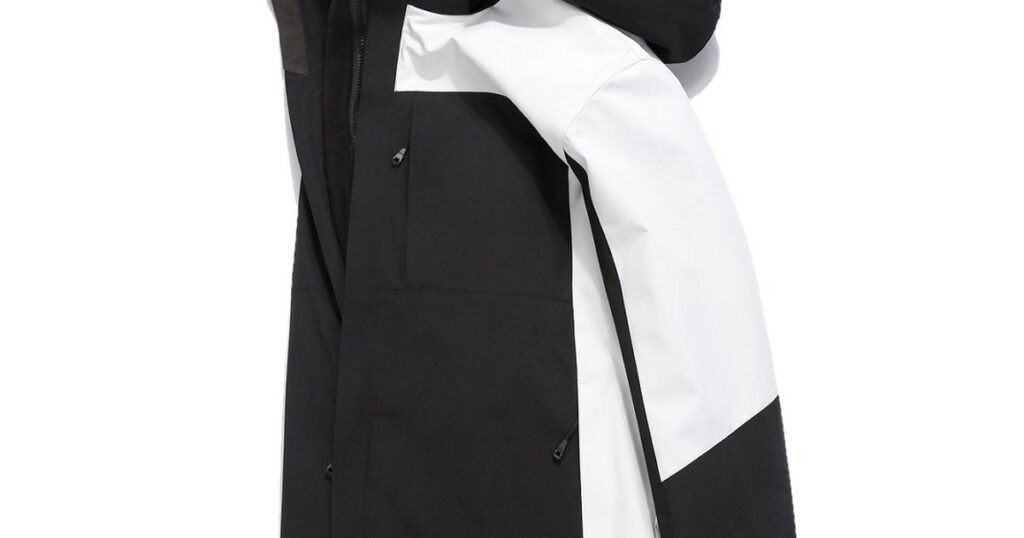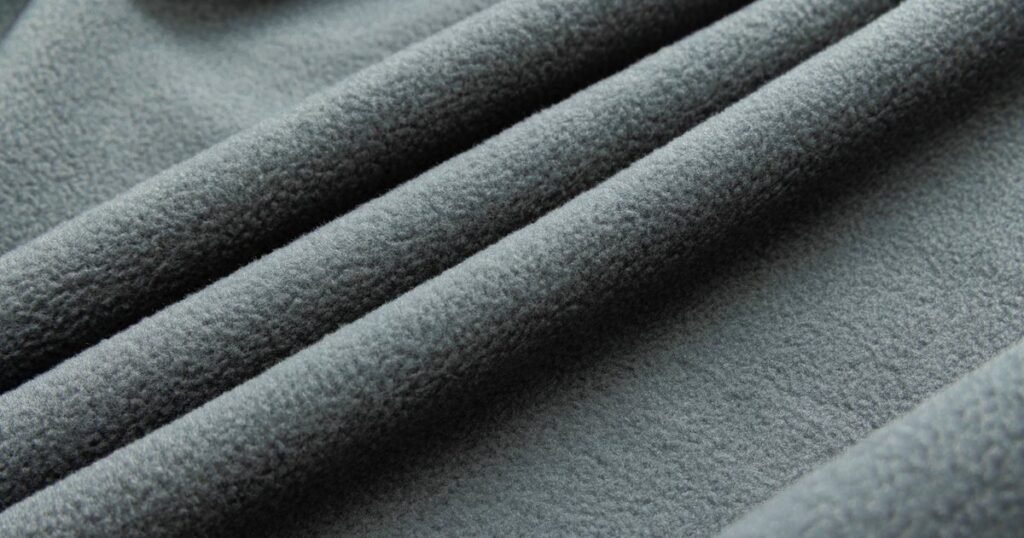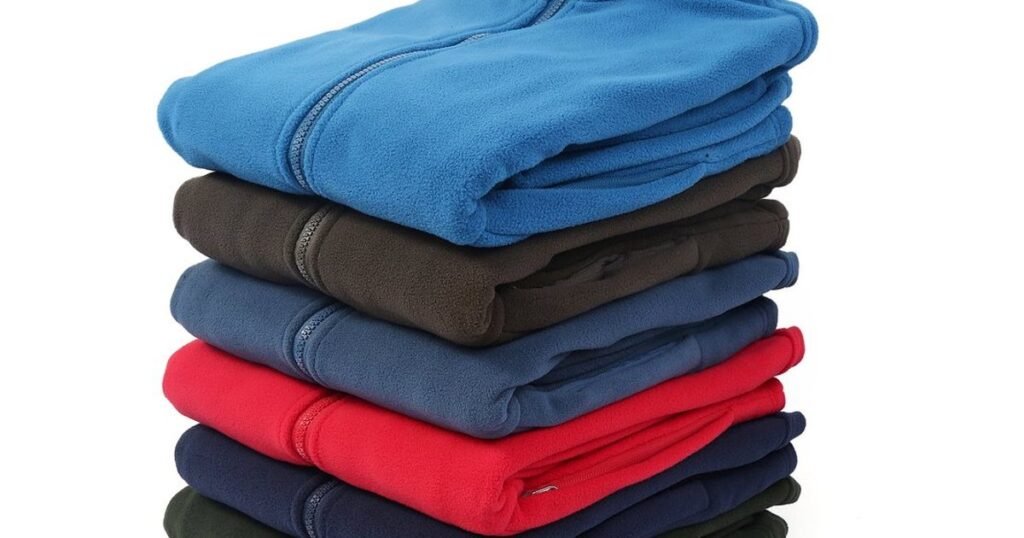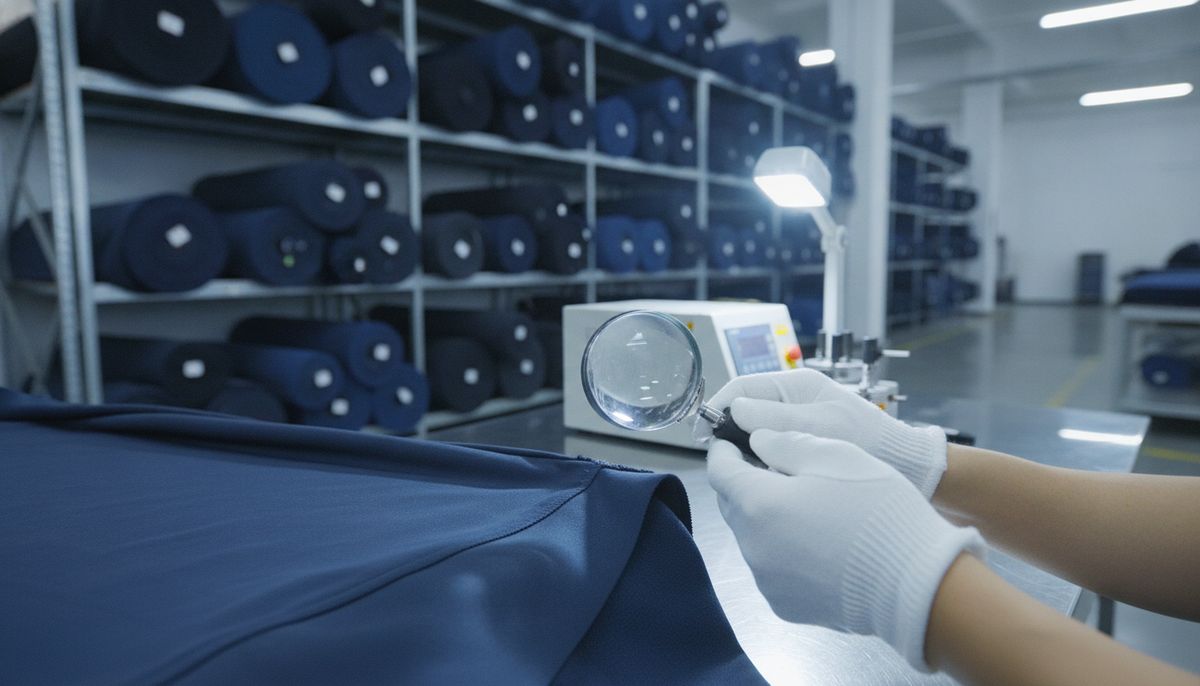
Bonded softshell jacket factory quality verification requires a three-layer protocol: laboratory testing of bonded-fabric performance (peel strength ≥8 N/cm, hydrostatic head ≥8,000 mm, breathability ≥5,000 g/m²/24h), independent validation of factory certifications (certificate-number cross-checks, audit-date verification, production-floor video), and finished-garment inspection using AQL 2.5 sampling at pre-production, inline, and pre-shipment stages. A factory that passes fabric tests but lacks traceable certifications or fails AQL sampling exposes your order to delamination, water-resistance failure, and batch rejection.
📋 Table of Contents
Executive Summary
- Three-layer verification: Bonded softshell jacket factory quality verification combines laboratory testing of bonded-fabric performance, independent validation of factory certifications, and finished-garment AQL sampling at three production stages.
- Peel-strength threshold: A bonded softshell requires peel strength ≥8 N/cm between the outer shell and fleece backing to survive washing and abrasion without delamination.
- Certificate cross-checks: Verify OEKO-TEX, BSCI, or ISO certificate numbers directly with the issuing body, confirm audit dates are within 12 months, and check that the certificate scope explicitly covers bonded softshells.
- AQL 2.5 sampling: According to GarmentSpec (2026), AQL 2.5 is commonly used as the apparel finished-goods acceptance level, with critical defects treated as zero-tolerance defects.
- Post-wash testing: Real-world durability validation includes five home-wash cycles followed by spray-rating and peel-strength retests to catch adhesive failure, bubbling, and loss of water repellency before bulk shipment.
Bonded-Fabric Laboratory Testing Protocol
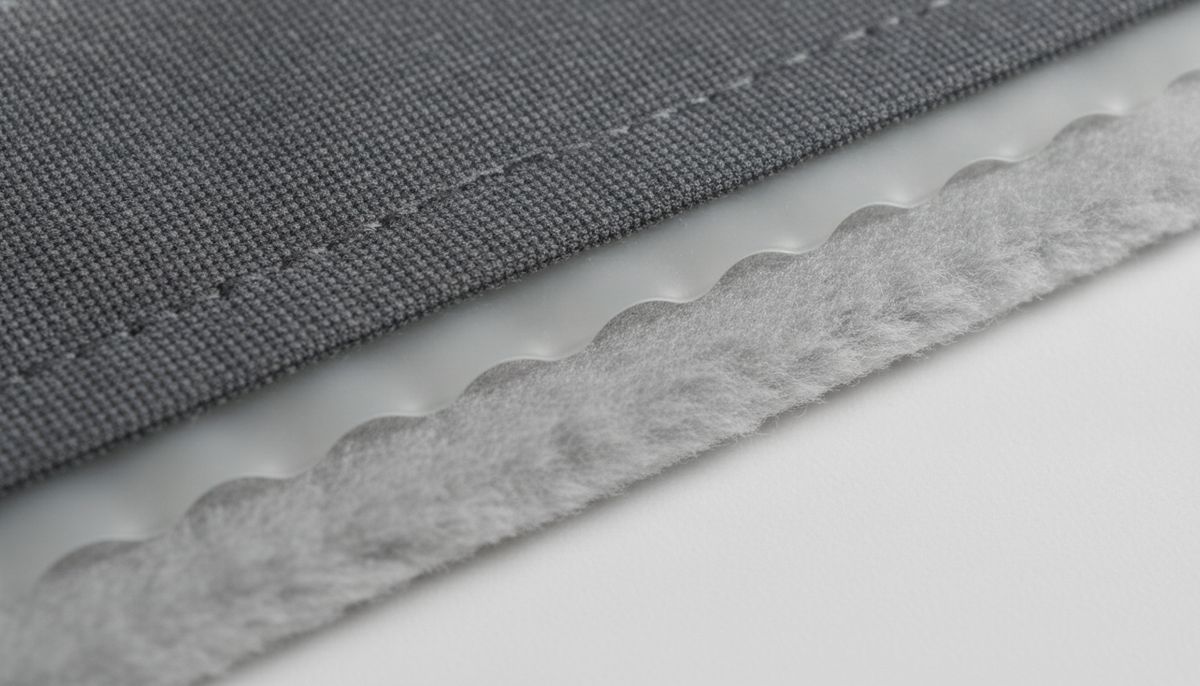
Bonded softshell jacket factory quality verification starts with laboratory testing of the bonded fabric itself, before any garment is cut. Bonded construction combines an outer woven face, a membrane or film, and a fleece backing into a single laminate. Each layer contributes to performance, and each interface is a potential failure point.
Peel Strength (Adhesion Between Layers)
Peel strength measures the force required to separate the outer shell from the fleece backing. A bonded softshell requires ≥8 N/cm (newtons per centimetre) to survive washing, abrasion, and flexing without delamination. Factories test peel strength using ISO 2411 or ASTM D1876, applying a 180-degree peel to a 25 mm-wide strip at 100 mm/min. Samples that peel below 8 N/cm will bubble or separate after 5-10 washes.
Hydrostatic Pressure (Water Resistance)
Hydrostatic head measures how much water pressure the bonded membrane can withstand before leaking. ISO 811 is the standard test method. A bonded softshell for general outdoor use requires ≥8,000 mm H₂O; workwear and high-exposure applications require ≥10,000 mm. Request a test report showing the exact hydrostatic head, the test standard used, and the date of the test.
Breathability (Moisture Vapor Transmission Rate)
Breathability is measured as MVTR (moisture vapor transmission rate) in grams per square metre per 24 hours, using ISO 15496 or ASTM E96. A bonded softshell for active use requires ≥5,000 g/m²/24h; static or low-activity garments can function at ≥3,000 g/m²/24h. Factories that cite only a spray rating or a “breathable” claim without an MVTR figure are skipping the most critical breathability test.
Abrasion Resistance
According to ModaGiusta (2026), a current workwear softshell review cites abrasion resistance above 90,000 Martindale cycles. Martindale abrasion testing (ISO 12947) simulates rubbing and wear. A bonded softshell for workwear or high-abrasion outdoor use requires ≥20,000 cycles before visible wear; premium garments target ≥50,000 cycles. Request the Martindale cycle count and confirm the test was performed on the bonded laminate, not just the outer fabric.
Factory Certification Validation
A factory can claim OEKO-TEX, BSCI, ISO 9001, or GRS certification, but bonded softshell jacket factory quality verification requires independent validation of every certificate. Professional softshell reviews emphasize the need to validate real performance rather than relying only on specifications or star ratings; construction, weather resistance, and durability vary substantially between products.
Certificate-Number Cross-Checks
Every legitimate certification has a unique certificate number and an online verification portal. For OEKO-TEX Standard 100, visit the OEKO-TEX database and enter the certificate number; the result will show the certificate holder, the scope (which products are covered), and the expiry date. For BSCI, request the audit report and verify the audit ID with Amfori. For ISO 9001, request the certificate and confirm the issuing body is an accredited registrar (check IAF or national accreditation-body databases).
Audit-Date Validation
Certifications expire and must be renewed. A certificate issued more than 12 months ago may no longer be valid. Request the most recent audit date and confirm the certificate is current. Factory buyers face difficulty distinguishing genuine production capability from marketing claims, making facility photographs, production-line video, business credentials, workforce size, and independent verification necessary.
Scope Verification
A factory may hold OEKO-TEX certification for woven fabrics but not for bonded laminates. Check the certificate scope to confirm it explicitly covers bonded softshells or laminated textiles. If the scope is limited to single-layer fabrics, the certification does not apply to your bonded garment.
Production-Floor Video and Equipment Evidence
Request a short video or time-stamped photographs showing the lamination equipment, seam-sealing machines, and quality-control stations in operation. A factory with genuine bonded-softshell capability will have dedicated lamination presses, climate-controlled curing areas, and peel-strength testing equipment visible on the production floor. Our 3,000m² Taizhou Sanmen facility runs 20 production lines with in-house lamination, seam sealing, and QC, and we provide production-floor video to buyers before sample development begins.
Finished-Garment AQL Inspection
Laboratory fabric tests validate material performance, but bonded softshell jacket factory quality verification also requires finished-garment inspection at three production stages: pre-production sample approval, inline inspection at 25% completion, and pre-shipment inspection at 100% completion. According to GarmentSpec (2026), AQL 2.5 is commonly used as the apparel finished-goods acceptance level, with critical defects treated as zero-tolerance defects.
Pre-Production Sample Approval
The pre-production sample (also called a golden sample or PP sample) is the reference standard for the entire production run. Inspect the pre-production sample for peel-strength integrity at stress points (shoulder seams, zipper tape, pocket edges), seam-sealing coverage and adhesion, zipper water-resistance (test by spraying water directly onto the closed zipper), and fleece-backing uniformity (no thin spots, pilling, or shedding). Approve the sample in writing and retain it as the quality benchmark.
Inline Inspection at 25% Production Complete
Inline inspection catches defects early, before the majority of the order is finished. When 25% of the order is complete, inspect a random sample using ISO 2859-1 or ANSI/ASQ Z1.4 sampling tables. For a 500-piece order, the sample size is typically 50 pieces. Check for delamination at seams, bubbling or separation of the bonded layers, inconsistent DWR (water beading should be uniform across the shell), and stitching defects (skipped stitches, broken threads, uneven seam allowances).
Pre-Shipment Inspection at 100% Complete
Pre-shipment inspection is the final gate before the order ships. Inspect the finished, packed garments using the same AQL 2.5 sampling. Critical defects (delamination, seam failure, missing seam sealing, non-functional zippers) trigger automatic rejection of the entire lot. Major defects (inconsistent DWR, misaligned seams, loose threads, color variation) are accepted up to the AQL 2.5 threshold (2.5% of the sample). Minor defects (small thread tails, slight puckering) are accepted up to AQL 4.0.
What Happens When a Lot Fails AQL Inspection
If the pre-shipment inspection fails AQL 2.5, you have three options: reject the entire lot and request a full remake, accept the lot at a discounted price (negotiate a price reduction proportional to the defect rate), or request on-site sorting and rework (the factory inspects 100% of the order, removes defective pieces, and replaces them). The choice depends on your timeline, budget, and the severity of the defects. For OEM jacket manufacturing programs, we build a 5% buffer into production quantities to cover AQL rejections and rework without delaying shipment.
Post-Wash and Real-Use Durability Verification
Bonded softshell jacket factory quality verification does not end with pre-shipment inspection. Real-world durability failures often appear only after washing, wearing, and exposure to UV, abrasion, and temperature cycling. Post-wash testing catches adhesive failure, bubbling, membrane separation, fleece shedding, zipper leakage, and loss of water repellency before you commit to bulk production.
Five-Wash Cycle Protocol
Wash the pre-production sample five times using a standard home washing machine (40°C, regular detergent, tumble dry low or hang dry). After five cycles, inspect for delamination at seams and stress points, bubbling or wrinkles in the bonded layers, loss of DWR (spray water onto the shell; it should bead and roll off, not soak in), fleece pilling or shedding, and zipper water-resistance (spray water onto the closed zipper and check for leakage).
Post-Wash Peel-Strength Retest
After the five-wash cycle, cut a 25 mm strip from a low-stress area (lower back or sleeve) and retest peel strength. The post-wash peel strength should remain ≥7 N/cm (a 10-15% drop from the pre-wash figure is acceptable; a drop below 7 N/cm signals adhesive failure and predicts delamination in the field).
Spray-Rating Retest
ISO 4920 spray rating measures water repellency on a 0-5 scale (5 = no wetting, 0 = complete wetting). A bonded softshell with functional DWR should score ≥4 before washing and ≥3 after five washes. A drop to 2 or below means the DWR has failed and the garment will wet out in light rain.
Real-Use Field Testing (Optional but Recommended)
If timeline and budget allow, wear the pre-production sample in real conditions (rain, wind, active movement) for 8-10 hours. Check for breathability under exertion (does the inside feel clammy or dry?), water resistance in sustained rain (does the shell bead water or soak through?), and abrasion at high-wear points (cuffs, elbows, shoulders). Real-use testing surfaces issues that laboratory tests miss, such as poor fit, inadequate ventilation, or zipper snagging.
In practice: Seam taping is what separates a jacket that survives a wash test from one that delaminates, which is why it gets checked on the sample before bulk is ever cut.
Sample MOQ: 1 piece. Bulk MOQ: 10 pieces per style (mix colours and sizes). Sampling time: 7-10 days. PTOUTWEAR provides bonded-fabric lab reports, production-floor video, and AQL inspection support for every low-MOQ jacket order.
Key Takeaways
- Bonded softshell jacket factory quality verification combines three independent layers: laboratory testing of bonded-fabric performance, validation of factory certifications through certificate-number cross-checks and production-floor evidence, and finished-garment AQL inspection at pre-production, inline, and pre-shipment stages.
- Peel strength ≥8 N/cm between the outer shell and fleece backing is the minimum threshold to prevent delamination after washing and abrasion, tested using ISO 2411 or ASTM D1876 on a 25 mm-wide strip at 100 mm/min.
- Hydrostatic pressure ≥8,000 mm H₂O (ISO 811) and breathability ≥5,000 g/m²/24h MVTR (ISO 15496) define the baseline water resistance and moisture management for general outdoor bonded softshells; workwear applications require ≥10,000 mm hydrostatic head.
- Certificate validation requires cross-checking the certificate number with the issuing body’s online database, confirming the audit date is within 12 months, verifying the scope explicitly covers bonded softshells, and requesting production-floor video showing lamination equipment and seam-sealing machines in operation.
- AQL 2.5 sampling (ISO 2859-1) treats critical defects such as delamination, seam failure, and non-functional zippers as zero-tolerance failures that trigger automatic lot rejection, while major defects are accepted up to 2.5% of the sample and minor defects up to 4%.
- Post-wash durability verification includes five home-wash cycles followed by peel-strength retesting (≥7 N/cm post-wash), spray-rating retesting (≥3 on the ISO 4920 scale), and real-use field testing to catch adhesive failure, bubbling, fleece shedding, and loss of water repellency before bulk production.
Frequently Asked Questions
How do you verify a bonded softshell factory’s certifications without visiting in person?
Request the certificate number and verify it directly with the issuing body’s online database (OEKO-TEX, Amfori for BSCI, or the ISO registrar). Confirm the audit date is within 12 months, check that the scope explicitly covers bonded softshells or laminated textiles, and request time-stamped production-floor video showing lamination equipment, seam-sealing machines, and peel-strength testing stations in operation. Cross-reference the factory’s legal business name on the certificate with the name on the commercial invoice and business license to confirm they match.
What is the difference between a spray rating and a hydrostatic-head test for water resistance?
Spray rating (ISO 4920) measures surface water repellency by spraying water onto the fabric and observing how much wets through, scored 0-5. Hydrostatic head (ISO 811) measures the water pressure the membrane can withstand before leaking, expressed in millimetres of water column (mm H₂O). A high spray rating (4-5) means the DWR coating is functional and water beads off the surface; a high hydrostatic head (≥8,000 mm) means the bonded membrane itself resists water penetration under pressure. Both are required: spray rating validates the DWR, hydrostatic head validates the membrane.
Can you request laboratory test reports from the factory, or do you need to commission independent testing?
Request the factory’s in-house or third-party lab reports for peel strength, hydrostatic head, MVTR, and abrasion resistance, and verify the test dates are recent (within 6 months) and the test standards match ISO or ASTM methods. For high-value or high-risk orders, commission independent testing through SGS, Intertek, or Bureau Veritas using fabric samples you select and ship directly to the lab. Independent testing costs $300-800 per fabric but eliminates the risk of altered or outdated factory reports, and the lab report becomes a contractual acceptance criterion for the bulk order.
Ready to verify your bonded softshell factory with laboratory testing, certification validation, and AQL inspection support?
Request 1-piece samples and lab reports →
Written by Ivan Chen, Sales Engineer at PTOUTWEAR, 13 years in outdoor apparel manufacturing.