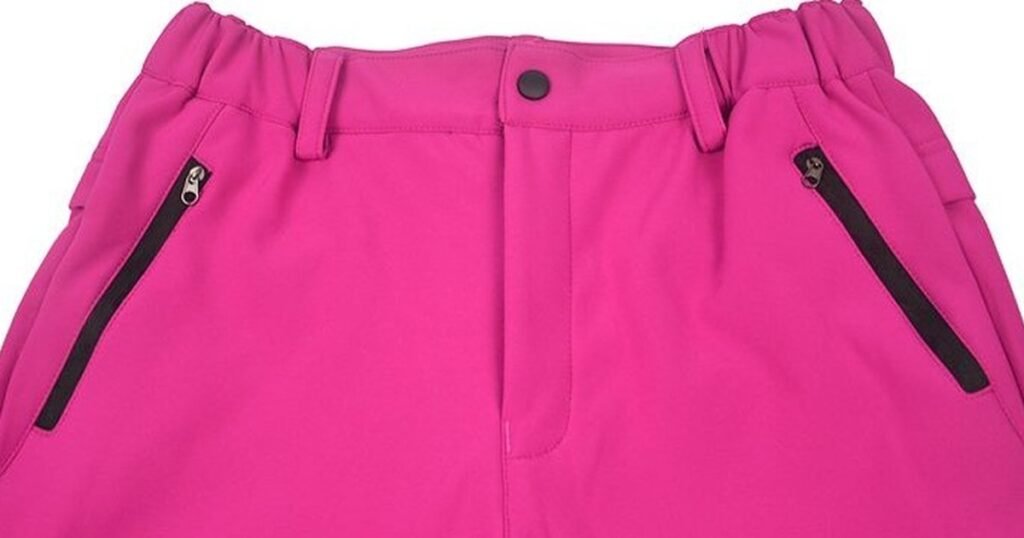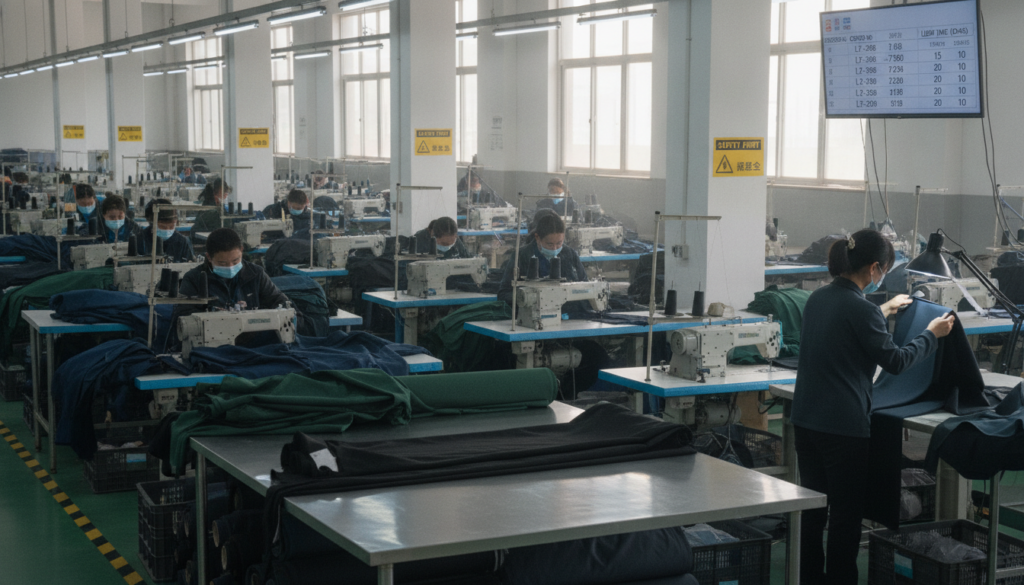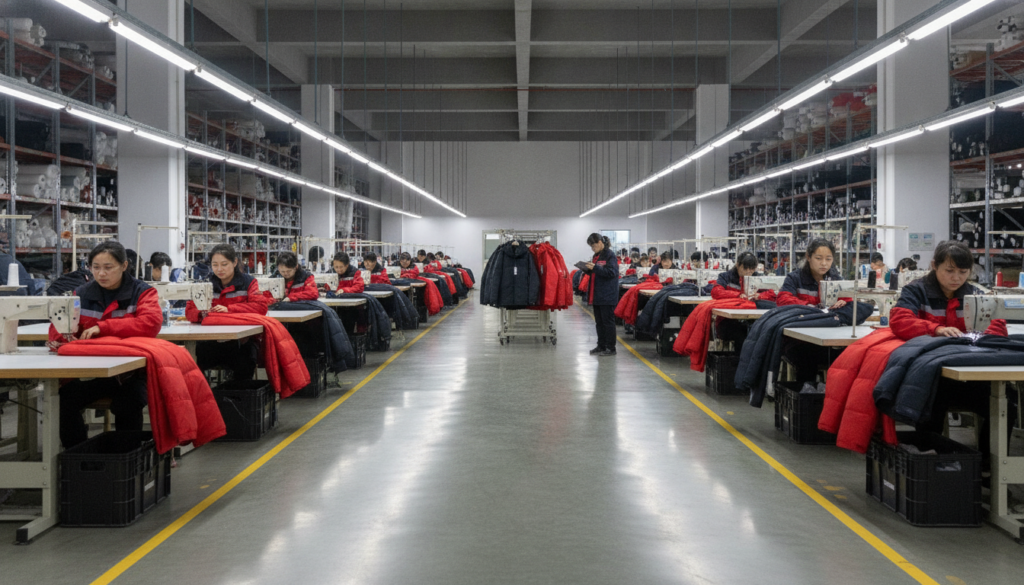
A hardshell manufacturer versus cut and sew factory comparison comes down to scope: a hardshell manufacturer handles full-package production including fabric sourcing, waterproof membrane lamination, seam taping, and compliance testing, while a cut and sew factory executes garment assembly from your supplied materials and tech pack. Hardshell manufacturers typically require 10-50 pieces minimum and 25-35 days lead time; cut and sew shops often quote 50-500 piece MOQs and expect you to deliver fabric, membranes, and pre-graded patterns.
📋 Table of Contents
Executive Summary
- Scope: Hardshell manufacturers deliver full-package production including fabric sourcing, waterproof membrane lamination, seam taping, and ISO 811 water-resistance testing; cut and sew factories assemble garments from your supplied materials and tech pack.
- MOQ: Hardshell manufacturers typically start at 10-50 pieces per style; cut and sew shops commonly quote 50-500 piece minimums.
- Lead Time: Full-package hardshell production runs 25-35 days; cut and sew assembly is faster but you absorb the fabric procurement timeline.
- Technical Capability: Hardshell manufacturers own seam-taping equipment and waterproofing expertise; many cut and sew factories lack the machinery or know-how for critical seam sealing.
- Best Fit: Choose a hardshell manufacturer when you need fabric sourcing, membrane lamination, and compliance support; choose cut and sew when you control fabric supply, have a graded pattern, and require unique construction.
What Is a Hardshell Manufacturer?
A hardshell manufacturer is a full-package production partner that handles every step from fabric procurement to finished garment. You provide a design brief or tech pack; the factory sources waterproof membranes, laminates them to face fabric, cuts panels, assembles the garment, applies seam tape, and runs water-resistance tests before shipping. This model suits brands that lack fabric contacts, need waterproofing expertise, or want a single point of accountability for quality and compliance.
Full-Package Services Included
Full-package OEM jacket manufacturing bundles material sourcing, production, and quality control under one roof. The manufacturer selects fabrics that meet your water-column and breathability specs, laminates membranes using heat or adhesive methods, and validates seam integrity with ISO 811 hydrostatic-head testing. You receive finished garments ready for branding and distribution, eliminating the need to coordinate separate suppliers for fabric, membranes, and assembly.
Seam Taping and Waterproofing Expertise
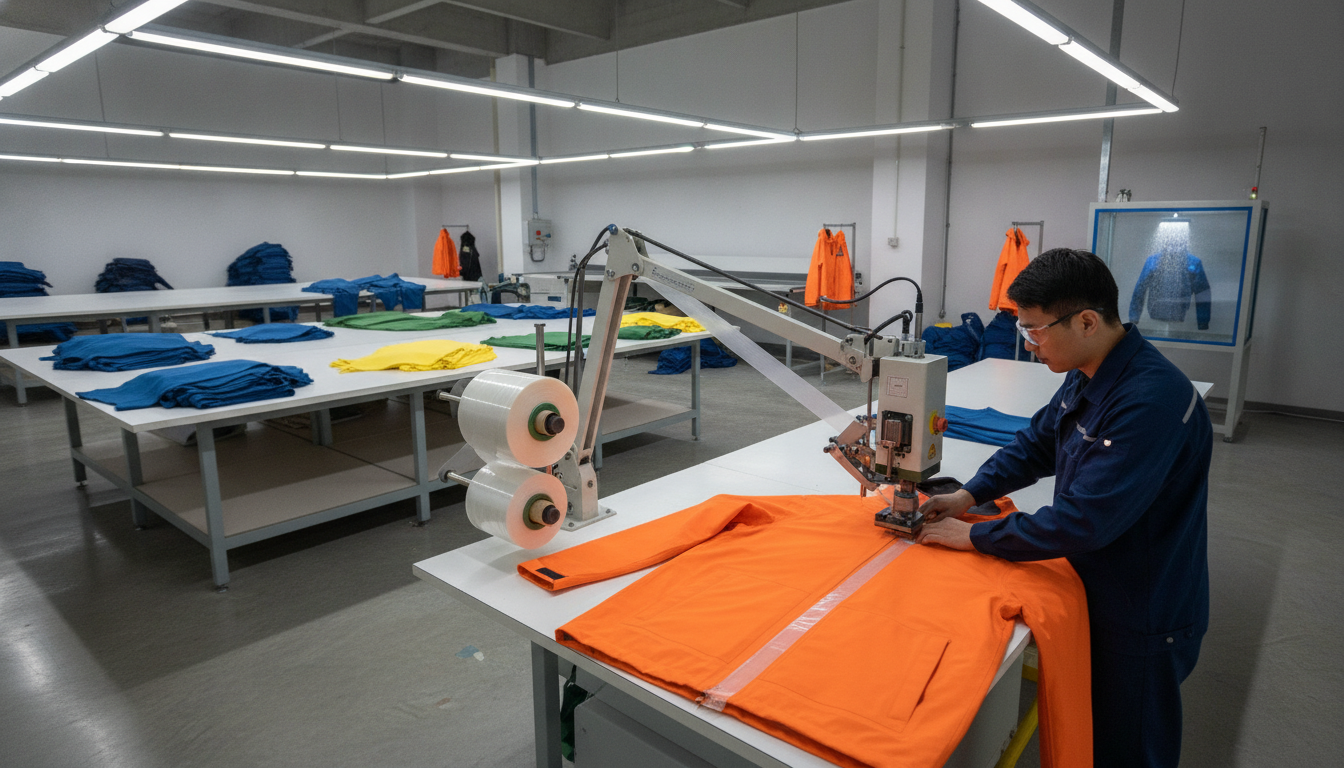
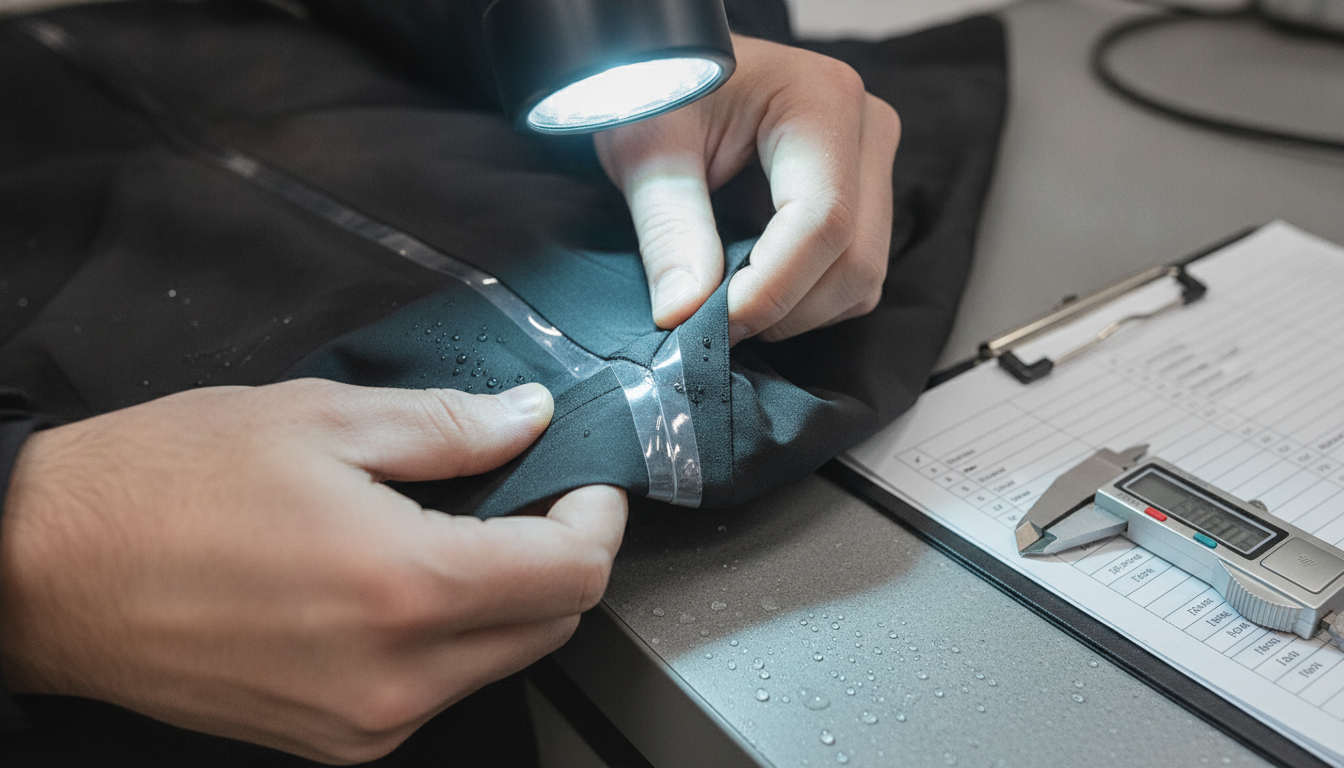
Seam taping is the critical step that prevents water ingress through needle holes. Hardshell manufacturers operate seam-taping machines that apply polyurethane or thermoplastic tape under heat and pressure, bonding it to the seam allowance. They test samples for water resistance using ISO 811 protocols, which measure the hydrostatic head in millimeters before leakage occurs. A jacket rated 10,000 mm withstands a 10-meter column of water, a common threshold for alpine and ski use.
Compliance and Certification Support
Hardshell manufacturers navigate compliance requirements for target markets. They source OEKO-TEX Standard 100 certified fabrics free from harmful substances, apply PFC-free DWR coatings to meet EU REACH restrictions, and provide SGS test reports for water resistance, breathability, and colorfastness. This support is essential when selling into the European Union, where REACH Annex XVII limits perfluorinated compounds, or into corporate and school uniform programs that mandate third-party lab verification.
What Is a Cut and Sew Factory?
A cut and sew factory executes garment assembly from materials and patterns you supply. You deliver fabric, waterproof membranes, graded patterns, and a detailed tech pack; the factory cuts panels, sews seams, attaches trims, and returns finished garments. This CMT (cut, make, trim) model works when you control fabric sourcing, have a proven pattern, and need custom construction that standard manufacturers do not offer.
What You Must Provide
Cut and sew factories expect you to arrive with a complete production package. That includes graded patterns in all sizes, fabric yardage calculated with a marker layout, waterproof membranes pre-laminated or ready to bond, zippers, Velcro, cord locks, and seam tape. Many also require a pre-production sample or wear-test garment to validate fit and construction before bulk cutting begins. Buyers often say they cannot get a factory to work from a rough idea alone; they are told to arrive with a tech pack, graded pattern, and sometimes the fabric.
Assembly-Only Scope
The factory’s responsibility starts when fabric arrives and ends when garments are packed. They do not source materials, laminate membranes, or arrange compliance testing. If seam taping is required, confirm the shop owns the equipment and has trained operators; many apparel cut and sew factories lack seam-taping machines and cannot seal waterproof seams. If the factory cannot tape seams, you must outsource that step to a specialty finisher, adding cost and lead time.
MOQ and Pricing Structure
According to SourceBridge (2026), cut-and-sew manufacturers commonly quote MOQs of 50-500 pieces for custom garments, with some low-MOQ factories advertising 50-piece minimums. According to CrewCust (2026), another custom apparel guide places cut-and-sew manufacturing at 50-500 pcs as the typical MOQ range. Pricing is quoted per garment and reflects labor only; you absorb fabric cost, freight, and duty separately. Small brands complain that overseas or full-package production can be cheap per unit, but the launch gets delayed because samples, freight, and duty eat the budget and timeline.
Key Differences Between Hardshell Manufacturers and Cut and Sew Factories
The hardshell manufacturer versus cut and sew factory decision hinges on four dimensions: scope of service, technical capability, MOQ flexibility, and risk allocation. Each model serves a distinct buyer profile and production scenario.
Scope of Service
Hardshell manufacturers deliver turnkey production. You provide a design or tech pack; they source fabric, laminate membranes, cut panels, sew garments, apply seam tape, run water-resistance tests, and ship finished goods. Cut and sew factories handle assembly only. You supply all materials, patterns, and trims; they cut, sew, and pack. The hardshell manufacturer model consolidates accountability; the cut and sew model demands you manage a multi-vendor supply chain.
Technical Capability
Hardshell manufacturers own seam-taping equipment, lamination presses, and ISO 811 water-resistance test chambers. They employ technicians trained in waterproofing, breathability, and DWR application. Cut and sew factories focus on garment construction; many lack the machinery or expertise for membrane bonding and seam sealing. If your product requires a 10,000 mm water column, taped seams, and MVTR breathability above 10,000 g/m²/24h, verify the cut and sew shop has the equipment and process knowledge before committing.
MOQ Flexibility
Hardshell manufacturers balance fabric mill minimums with production efficiency. PTOUTWEAR’s 3,000m² Taizhou Sanmen facility runs 20 production lines with a bulk MOQ of 10 pieces per style, mixing colors and sizes. Cut and sew factories quote higher piece counts to justify setup labor. According to Jiashun Clothing (2026), one low-MOQ apparel factory advertises 50 pc MOQ for custom outerwear and jackets. Founders say a small run is possible domestically, but the unit cost is much higher than overseas and the factory may still expect the buyer to handle a lot of preparation.
Risk Allocation
With a hardshell manufacturer, quality risk sits with the factory. If seams leak, membranes delaminate, or water resistance fails ISO 811 testing, the manufacturer absorbs rework cost. With a cut and sew factory, you own material quality and specification risk. If the membrane you supplied delaminates after three washes, the factory fulfilled its assembly contract; you bear the warranty and return cost. This risk shift makes the cut and sew model attractive only when you have proven fabric suppliers and a validated pattern.
Which Partner Fits Your Needs?
Your choice between a hardshell manufacturer versus cut and sew factory depends on three factors: whether you have fabric contacts, whether you need waterproofing expertise, and whether you control a proven pattern.
Choose a Hardshell Manufacturer When
- You lack fabric suppliers: The manufacturer sources waterproof membranes, face fabrics, and DWR coatings that meet your water-column and breathability specs, eliminating the need to vet mills and negotiate minimums.
- You need seam-taping capability: The factory owns seam-taping equipment, applies polyurethane or thermoplastic tape under controlled heat and pressure, and validates seam integrity with ISO 811 hydrostatic-head testing.
- You require compliance support: The manufacturer provides OEKO-TEX Standard 100 fabric certificates, PFC-free DWR documentation, and SGS test reports for water resistance, breathability, and colorfastness to satisfy EU REACH or corporate uniform program requirements.
- You want single-point accountability: One partner handles fabric procurement, membrane lamination, garment assembly, QC, and shipping, reducing coordination overhead and consolidating quality risk.
Choose a Cut and Sew Factory When
- You control fabric sourcing: You have established relationships with membrane suppliers, face-fabric mills, and DWR finishers, and you negotiate better pricing or access to proprietary materials than a third-party manufacturer can secure.
- You own a graded pattern: You have a proven pattern in all sizes, validated through wear testing, and you need assembly labor only.
- You require unique construction: Your design uses unconventional seam placement, articulated elbows, or hybrid-weld seams that standard hardshell manufacturers do not offer in their catalog.
- You can absorb material risk: You accept responsibility for membrane delamination, water-resistance failure, or DWR wash-off, because you specified and supplied the materials.
Hybrid Scenario: Sample Development
Some buyers use a hardshell manufacturer for sample development and pattern validation, then switch to a cut and sew factory for bulk production once the design is proven. This approach captures the manufacturer’s technical expertise during the high-risk prototyping phase, then leverages the cut and sew shop’s lower labor cost for repeatable production. The tradeoff is coordination complexity: you manage two vendors, transfer patterns and material specs, and accept quality variation between sample and bulk.
How to Verify Capabilities Before You Order
Verification prevents costly surprises. A factory that claims seam-taping capability may own one manual machine operated by an untrained worker; a manufacturer that promises ISO 811 testing may outsource to a third-party lab with a two-week turnaround.
Request Process Photos and Videos
Ask for timestamped photos of the seam-taping line, lamination press, and water-resistance test chamber. Video of a seam-taping operator applying tape to a jacket seam, with visible machine settings and tape roll branding, confirms the factory owns the equipment and has trained staff. Photos of a lab technician running an ISO 811 test, with the pressure gauge and sample fixture visible, verify in-house testing capability rather than outsourced reports.
Validate Certifications and Test Reports
Request copies of OEKO-TEX Standard 100 certificates for fabrics, SGS test reports for water resistance and breathability, and ISO 9001 quality-management certification. Cross-check certificate numbers on the issuing body’s public database. OEKO-TEX certificates list the certified product by name and the valid-from and valid-to dates; expired certificates or certificates issued to a different legal entity signal misrepresentation.
Order a Pre-Production Sample
A low-MOQ jacket manufacturer should offer 1-piece sampling before bulk commitment. PTOUTWEAR provides a sample MOQ of 1 piece with a $100 sample fee, refunded against a first bulk order of 30+ pieces. The sample validates fabric hand-feel, seam-taping quality, water resistance, and fit. Cut a seam open to inspect tape adhesion; run the sample under a shower for five minutes to check for leakage; wash it three times to verify DWR durability. A sample that passes is your quality benchmark for bulk production.
Verify Lead Times with a Trial Order
Lead-time promises collapse under real-world constraints: fabric delays, equipment breakdowns, and competing orders. Place a small trial order of 10-30 pieces to measure actual sampling and bulk lead times. PTOUTWEAR’s lead times are 7-10 days for sampling and 25-35 days for bulk production, with a rush option delivering 1000 pieces in 2 weeks at a +25% surcharge. A trial order de-risks your first season and establishes a performance baseline for future orders.
In practice: Seam taping is what separates a jacket that survives a wash test from one that delaminates after three cycles, which is why buyers inspect tape adhesion on the sample before bulk production begins.
Key Takeaways
- A hardshell manufacturer delivers full-package production including fabric sourcing, waterproof membrane lamination, seam taping, and ISO 811 water-resistance testing; a cut and sew factory assembles garments from your supplied materials and tech pack.
- Hardshell manufacturers typically require 10-50 pieces per style minimum; cut and sew factories commonly quote 50-500 piece MOQs.
- Hardshell manufacturers own seam-taping equipment and waterproofing expertise; many cut and sew factories lack the machinery or process knowledge for critical seam sealing.
- Full-package production consolidates accountability: the manufacturer absorbs quality risk for fabric, membranes, and construction; cut and sew shifts material risk to the buyer.
- Verify capabilities with timestamped process photos, OEKO-TEX and SGS certificates cross-checked on public databases, and a 1-piece pre-production sample that you test for seam integrity and water resistance.
- Lead times for full-package hardshell production run 25-35 days; cut and sew assembly is faster but you absorb the fabric procurement timeline.
Frequently Asked Questions
Can a cut and sew factory apply seam tape to hardshell jackets?
Some cut and sew factories own seam-taping equipment, but many do not. Seam taping requires a specialized machine that applies polyurethane or thermoplastic tape under controlled heat and pressure, bonding it to the seam allowance. Before committing to a cut and sew partner for hardshell production, request timestamped photos or video of their seam-taping line in operation, showing the machine model, tape roll, and an operator applying tape to a jacket seam. If the factory lacks seam-taping capability, you must outsource that step to a specialty finisher, adding cost and lead time to your production schedule.
What materials do I need to supply to a cut and sew factory for hardshell jackets?
You must provide graded patterns in all sizes, face fabric yardage calculated with a marker layout, waterproof membranes pre-laminated or ready to bond, zippers, Velcro, cord locks, elastic cuffs, seam tape, and a detailed tech pack specifying stitch type, seam allowance, and construction sequence. Many cut and sew factories also require a pre-production sample or wear-test garment to validate fit and construction before bulk cutting begins. If the factory does not laminate membranes, you must deliver fabric already bonded to the waterproof layer. Buyers often say they cannot get a factory to work from a rough idea alone; they are told to arrive with a tech pack, graded pattern, and sometimes the fabric.
How do I verify a hardshell manufacturer can meet ISO 811 water-resistance standards?
Request an SGS or third-party lab test report showing ISO 811 hydrostatic-head results for a recent production run, with the fabric description, test date, and pressure reading in millimeters. Cross-check the report number with the lab’s public database if available. Ask for timestamped photos of the factory’s water-resistance test chamber, showing the pressure gauge, sample fixture, and water reservoir. A manufacturer with in-house ISO 811 testing capability can validate samples within 24-48 hours; one that outsources testing adds a week or more to the sampling timeline. Order a 1-piece pre-production sample and run your own field test: wear the jacket in heavy rain for 30 minutes, then inspect seams and fabric for water penetration.
Written by Ivan Chen, Sales Engineer at PTOUTWEAR, 13 years in outdoor apparel manufacturing.
Ready to compare hardshell manufacturers and cut and sew factories for your next production run?
Request 1-Piece Samples →