Stretch fabric softshell jacket manufacturer requirements center on fabric composition (typically 93% polyester / 7% elastane or 96% recycled polyester / 4% spandex for 4-way stretch), 3-layer bonded construction with microfleece backing, DWR finish (preferably PFC-free), and performance benchmarks including 8,000 mm hydrostatic head waterproofing and 1,000 g/m²/24h breathability. Buyers should verify the factory holds ISO 9001 and SGS certifications, offers sample MOQ of 1 piece with 7-10 day turnaround, and maintains bulk MOQ at or below 30 pieces per SKU to accommodate small-batch private-label orders.
📋 Table of Contents
Executive Summary
- Fabric composition: Stretch softshells require elastane content between 4% and 11% blended with polyester or nylon to deliver 4-way stretch and articulated movement without restricting the wearer.
- 3-layer bonded construction: A face fabric bonded to a membrane and a microfleece or fleece backing provides wind resistance, light water resistance, and comfort without the bulk of separate layering systems.
- Weather protection clarity: Softshells shed light rain but are not fully waterproof; buyers must specify hydrostatic head targets to avoid overstated claims that confuse end users.
- MOQ and sampling: Factories offering 1-piece sample MOQ and bulk MOQ at or below 30 pieces per SKU enable DTC outdoor brands and small uniform programs to validate fit and fabric before committing capital.
- Certifications: ISO 9001 and SGS confirm process control and material testing capability; OEKO-TEX Standard 100 and bluesign are pursued by buyers prioritizing textile safety and chemical management.

Fabric Composition and Stretch Requirements
Stretch is the defining feature of a softshell jacket, and elastane content determines how much freedom of movement the garment delivers. According to NXT Sports TeamShop (2026), a featured softshell listing uses 93% polyester / 7% elastane, a common benchmark set by sellers. According to Klättermusen (2026), a premium fabric platform highlights 10% elastane in a recycled-polyamide softshell blend, showing stretch content remains central even in sustainability-led material stories. According to REI (2026), REI’s soft-shell jacket listing uses 63% nylon, 26% polyester, and 11% spandex, which reflects higher-stretch technical outdoor construction than standard workwear softshells.
Polyester-Elastane Blends
Polyester-elastane blends in the 93/7 to 96/4 ratio are the workhorse of corporate softshells, team uniforms, and mid-tier outdoor apparel. Polyester provides abrasion resistance and color retention through repeated washes. Elastane (also called spandex or Lycra) contributes recovery, meaning the fabric returns to its original shape after stretching. A 7% elastane content delivers 4-way stretch, allowing the jacket to move with the wearer during reaching, climbing, or repetitive motion.
Nylon-Spandex Blends
Nylon-spandex blends offer higher tear strength and a softer hand feel than polyester but cost more per meter. An 11% spandex content, as seen in technical outdoor softshells, provides maximum mobility for alpine activities and trail running. Nylon also dries faster than polyester, which matters for multi-day backcountry use. Buyers targeting premium outdoor brands or athletic performance lines should specify nylon-spandex construction and request fabric weight between 280 gsm and 320 gsm to balance stretch with durability.
Recycled Content and Sustainability Signals
According to MPower Distributor Store (2026), another softshell listing specifies a 1,000 mm waterproof rating and recycled polyester stretch softshell bonded to recycled microfleece, signaling the market’s move toward lighter water resistance plus comfort lining. Recycled polyester softshells meet growing buyer demand for sustainability stories without sacrificing stretch or performance. Buyers should verify the factory can source GRS-certified recycled yarns and request a mill certificate showing recycled content percentage. PTOUTWEAR’s OEM jacket manufacturing facility in Taizhou Sanmen works with GRS-certified mills for recycled polyester softshell orders and provides mill traceability documentation with every bulk shipment.
Bonded Construction and Layer Specifications
3-layer bonded softshell construction is what separates a jacket that holds up through a season from one that delaminates after a dozen washes. The face fabric, membrane, and backing are laminated together in a single pass, creating a unified material that stretches, breathes, and resists wind without the weight or bulk of a separate shell and insulation layer.
Face Fabric Layer
The face fabric is the outermost layer the wearer sees and touches. It must resist abrasion, hold color through UV exposure, and accept a DWR finish that causes water to bead and roll off. A tightly woven face fabric also blocks wind, which is critical for softshells used as outer layers in spring and fall. Buyers should specify a face fabric weight between 280 gsm and 320 gsm. Lighter weights sacrifice durability; heavier weights reduce breathability and increase garment weight.
Membrane or Film Layer
The middle layer is a microporous membrane or a non-porous film that provides wind resistance and limited water resistance while allowing moisture vapor to escape. According to NXT Sports TeamShop (2026), a featured softshell listing uses a 320 gsm 3-layer bonded fabric with an 8,000 mm waterproof rating and 1,000 g breathability rating, a common benchmark set by sellers. The membrane is what gives a softshell its weather protection. Buyers must understand that softshells are not fully waterproof. They shed light rain but eventually soak through in sustained wet conditions, a recurring pain point buyers raise when product pages overstate weather protection.
Microfleece or Fleece Backing
The backing layer sits against the wearer’s skin or base layer and provides warmth, moisture wicking, and comfort. Microfleece backings (typically 100-150 gsm) are lighter and less bulky, making them suitable for active use and layering under a hardshell. Heavier fleece backings (200 gsm or more) add warmth but reduce breathability, which can cause overheating during high-output activities. Buyers sourcing softshells for manual labor, outdoor education programs, or corporate uniforms should specify microfleece backing to avoid complaints that the jacket is too warm for all-day wear.
In practice: Bonded construction is what prevents delamination, which is why the sample must pass a 20-cycle wash test before bulk production begins, confirming the adhesive holds under real-world laundering stress.
Weather Resistance and Performance Benchmarks
Weather resistance in a softshell jacket is defined by three measurable properties: hydrostatic head (waterproofness), moisture vapor transmission rate (breathability), and DWR finish durability. Buyers must specify each one to avoid ambiguous claims that lead to returns and negative reviews.
Hydrostatic Head (Waterproofness)
Hydrostatic head measures how much water pressure a fabric can withstand before water penetrates. It is expressed in millimeters and tested per ISO 811 or AATCC 127. An 8,000 mm hydrostatic head rating is the benchmark for softshells used in light rain and snow. A 1,000 mm rating, as cited in some product listings, provides minimal water resistance suitable only for brief exposure to drizzle. Buyers should specify 5,000 mm minimum for team uniforms and 8,000 mm minimum for outdoor brands. Softshells are not hardshells, and buyers must communicate to end users that sustained rain requires a fully waterproof shell.
Breathability (MVTR)
Moisture vapor transmission rate (MVTR) measures how much moisture vapor passes through the fabric in 24 hours, expressed in grams per square meter per 24 hours (g/m²/24h). A 1,000 g/m²/24h breathability rating is common in mid-range softshells. Higher MVTR values (3,000 g/m²/24h or more) are necessary for high-output activities like trail running or ski touring. Buyers sourcing softshells for static outdoor use (coaching, event staffing, school uniforms) can accept lower breathability. Buyers targeting athletic or technical outdoor markets must specify 3,000 g/m²/24h minimum and request lab test reports from the fabric mill.
DWR Finish and PFC-Free Options
Durable water repellent (DWR) finish is a chemical coating applied to the face fabric that causes water to bead and roll off rather than soak in. Traditional DWR finishes contain per- and polyfluoroalkyl substances (PFAS), which are persistent environmental contaminants. According to MPower Distributor Store (2026), another softshell listing specifies a 1,000 mm waterproof rating and recycled polyester stretch softshell bonded to recycled microfleece, signaling the market’s move toward lighter water resistance plus comfort lining. Buyers in the United States, United Kingdom, and European Union face increasing regulatory pressure to eliminate PFAS from apparel. PTOUTWEAR holds PFC-Free DWR certification and applies fluorocarbon-free water repellent finishes to all softshell production. Buyers should request a test report confirming the DWR finish is free of C6 and C8 fluorocarbons.
MOQ, Sampling, and Lead Time Requirements
Minimum order quantity, sampling cost, and lead time are the commercial gatekeepers that determine whether a buyer can afford to validate a stretch fabric softshell jacket manufacturer before committing to bulk production. High MOQ and slow sampling lock out small DTC outdoor brands, school uniform programs, and corporate buyers testing new suppliers.
Sample MOQ and Turnaround
A 1-piece sample MOQ allows buyers to validate fit, fabric hand feel, and construction quality without ordering 100 or 500 pieces. Sample turnaround time should be 7-10 days from approved tech pack to finished sample in hand. Buyers should expect to pay a sample fee (typically $100 per piece) that is refundable against bulk orders. PTOUTWEAR offers 1-piece sample MOQ with a $100 sample fee refundable against bulk orders, and delivers samples in 7-10 days from our Taizhou Sanmen facility. Buyers can request multiple colorways or size runs to validate grading before bulk production.
Bulk MOQ and Order Flexibility
Bulk MOQ is the minimum number of pieces per SKU (style-color-size combination) the factory will produce in a single production run. A 30-piece-per-SKU MOQ is the threshold that makes private-label softshell production accessible to small outdoor brands and uniform programs. Factories quoting 100-piece or 500-piece MOQs force buyers to carry excess inventory or limit their product line to a single colorway. PTOUTWEAR maintains a 30-piece-per-SKU bulk MOQ across all softshell jacket categories, and buyers can mix sizes within each SKU to match their sales forecast.
Production Lead Time
Standard production lead time for softshell jackets is 25-35 days (approximately 4 weeks) from deposit to ex-factory. This assumes fabric is in stock at the mill and the factory has capacity on the production line. Buyers ordering custom fabric (unique colorway, custom print, or special finish) should add 2-3 weeks for fabric production and testing. Rush orders are possible for buyers willing to pay a premium. PTOUTWEAR offers rush production for orders of 1,000 pieces or more, delivering in 2 weeks at a 25% surcharge. Buyers should request a detailed production timeline during the sampling phase to avoid surprises.
Sample MOQ: 1 piece. Bulk MOQ: 30 pieces per SKU. Sampling time: 7-10 days. Bulk production: 25-35 days.
Quality Certifications and Compliance
Certifications verify that the factory follows documented quality management systems, tests materials for harmful substances, and complies with social and environmental standards. Buyers sourcing for the United States, United Kingdom, European Union, and Australia must confirm the factory holds certifications that meet import and retail compliance requirements.
ISO 9001 Quality Management
ISO 9001 is the international standard for quality management systems. It confirms the factory documents production processes, tracks non-conformances, and implements corrective actions. ISO 9001 does not guarantee product quality, but it does confirm the factory has a system in place to maintain consistency across production runs. Buyers should request a copy of the factory’s ISO 9001 certificate and verify the certificate is current and covers the production facility where their order will be manufactured.
SGS and Third-Party Testing
SGS is a global inspection and testing company that verifies product quality, material composition, and compliance with buyer specifications. SGS testing includes fabric weight, colorfastness, hydrostatic head, breathability, and pilling resistance. Buyers should specify which tests are required and request SGS or equivalent third-party test reports before bulk production begins. PTOUTWEAR holds SGS certification and conducts third-party testing on all softshell fabric batches to confirm performance benchmarks match buyer specifications.
OEKO-TEX Standard 100 and Chemical Safety
OEKO-TEX Standard 100 is a textile certification that screens fabrics and trims against harmful substances including heavy metals, formaldehyde, and restricted dyes. It is required by many European retailers and is increasingly requested by North American outdoor brands. Buyers should confirm the factory sources OEKO-TEX-certified fabrics and trims, and request a copy of the certificate for each fabric used in production. OEKO-TEX Standard 100 certification is pending for PTOUTWEAR and is not yet held.
BSCI Social Compliance
Business Social Compliance Initiative (BSCI) audits verify the factory meets labor standards including fair wages, safe working conditions, and freedom of association. BSCI is required by many European importers and is a common prerequisite for selling into major retail chains. Buyers should request a copy of the factory’s BSCI audit report and verify the audit is current (within the past 12 months). BSCI certification is pending for PTOUTWEAR and is not yet held.
- ISO 9001: Confirms documented quality management system and process control across production runs.
- SGS testing: Third-party verification of fabric weight, hydrostatic head, breathability, colorfastness, and pilling resistance.
- OEKO-TEX Standard 100: Screens textiles against harmful substances; required by many European retailers.
- BSCI: Social compliance audit covering labor standards, wages, and working conditions.
- PFC-Free DWR: Certification confirming DWR finish is free of C6 and C8 fluorocarbons.
Buyers should also confirm the factory can provide traceability documentation for all materials, including mill certificates for recycled content and chemical test reports for DWR finishes. PTOUTWEAR provides full material traceability and lab test reports with every bulk shipment, and maintains documented QC records for audit and compliance purposes.
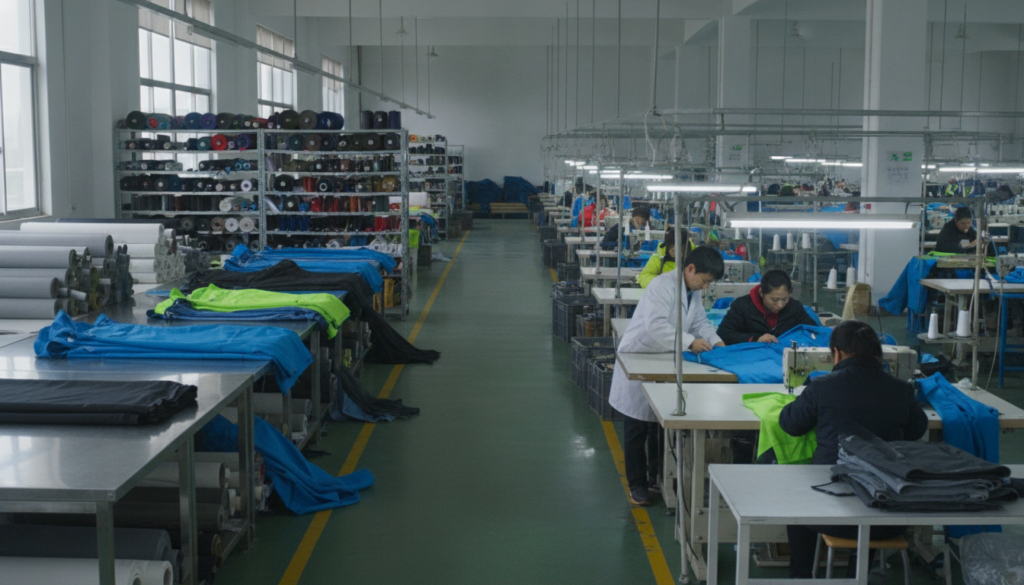
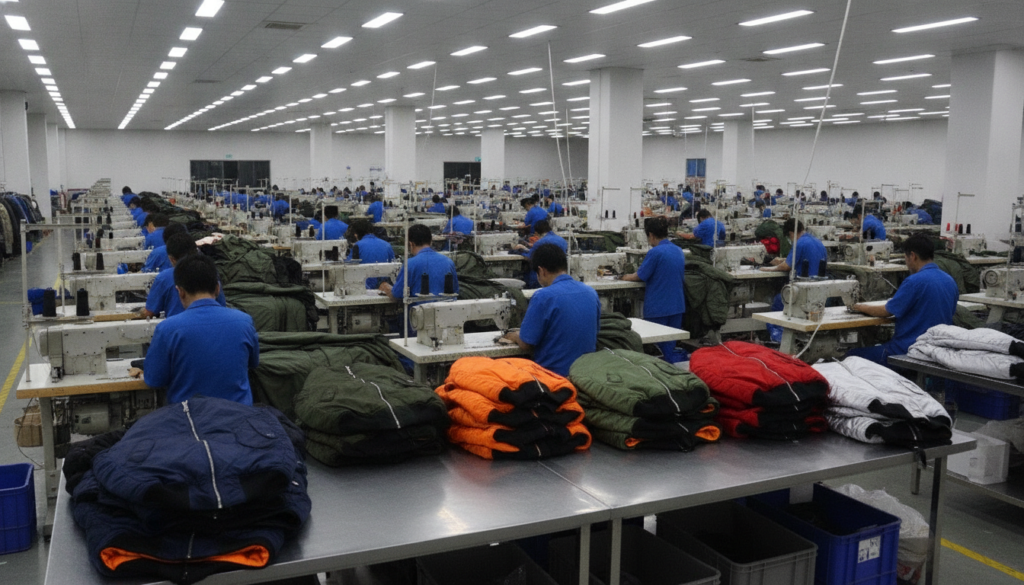
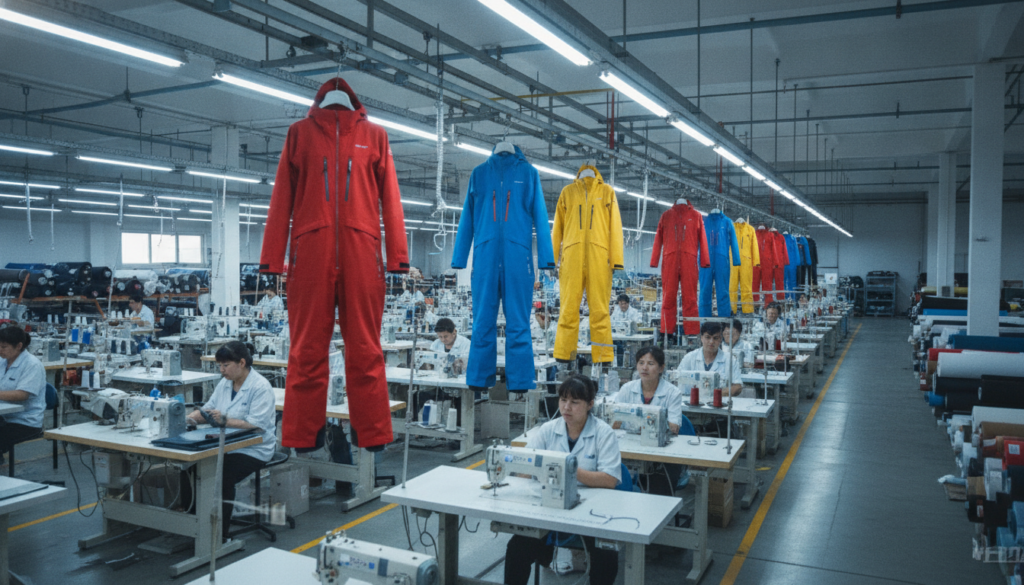
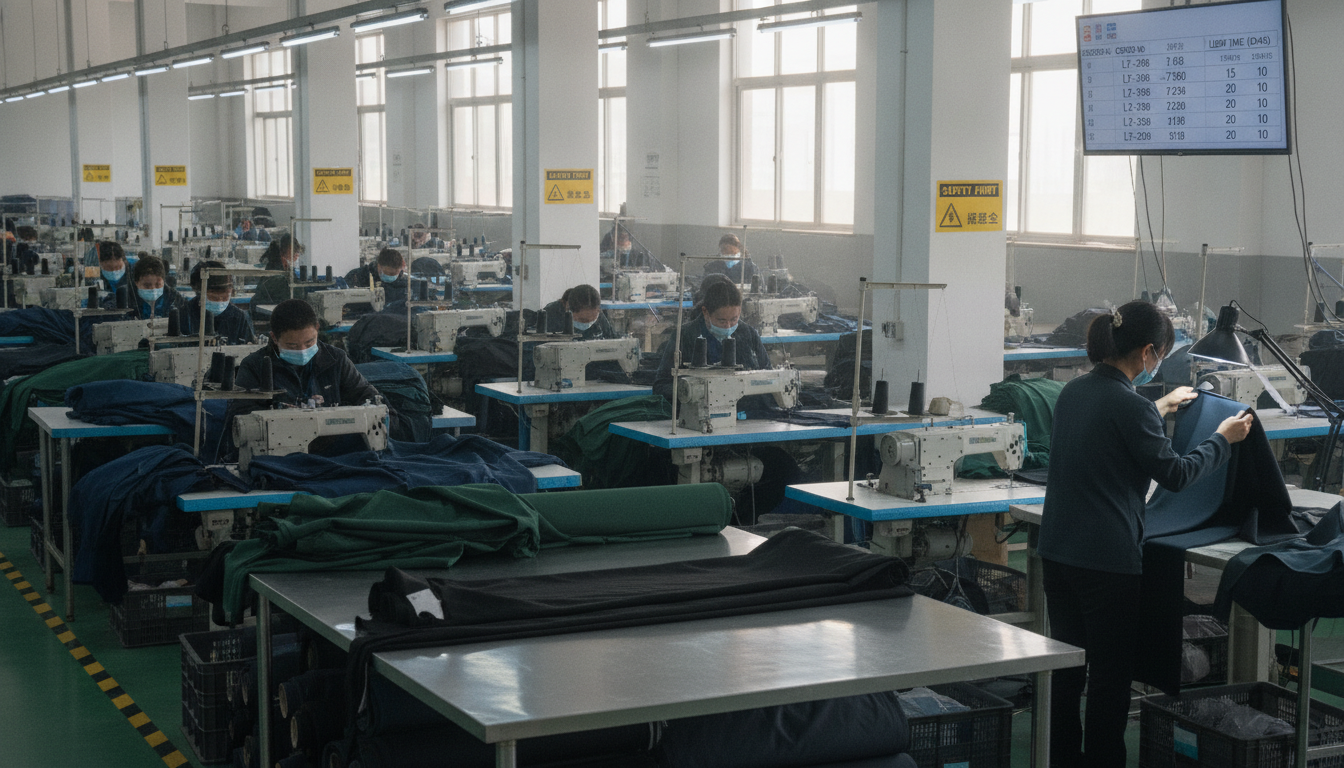
For buyers navigating the complexities of stretch fabric softshell jacket manufacturer requirements, the path forward starts with a clear technical specification, a factory that offers low-MOQ production, and verifiable certifications. Buyers should request 1-piece samples to validate fabric hand feel, stretch recovery, and bonded construction before committing to bulk orders. A factory that delivers samples in 7-10 days, maintains a 30-piece bulk MOQ, and provides third-party test reports is equipped to support small outdoor brands and uniform programs through their first production run and beyond. Buyers should also confirm the factory sources PFC-free DWR finishes and can provide mill certificates for recycled content, as these are increasingly non-negotiable for North American and European markets. PTOUTWEAR’s 3,000m² facility in Taizhou Sanmen runs 20 production lines with in-house cut-and-sew and QC, and we work with DTC outdoor brand founders, corporate uniform buyers, and school programs to specify softshells that meet performance benchmarks without locking up capital in high-MOQ orders. Our sample development process includes wash testing, stretch recovery testing, and seam strength testing before bulk production begins, and we provide SGS test reports and mill traceability documentation with every shipment.
Key Takeaways
- Stretch softshells require elastane content between 4% and 11% blended with polyester or nylon to deliver 4-way stretch and articulated movement without restricting the wearer.
- 3-layer bonded construction bonds the face fabric, membrane, and microfleece backing in a single lamination pass, creating a unified material that resists wind, sheds light rain, and breathes without the bulk of separate layering systems.
- An 8,000 mm hydrostatic head rating is the benchmark for softshells used in light rain and snow, and buyers must specify this minimum to avoid ambiguous water-resistance claims that lead to returns.
- A 1-piece sample MOQ and 30-piece bulk MOQ enable DTC outdoor brands and small uniform programs to validate fit and fabric before committing capital to high-volume orders.
- ISO 9001 and SGS certifications confirm the factory follows documented quality management systems and conducts third-party testing on fabric performance, while PFC-Free DWR certification verifies the finish is free of persistent environmental contaminants.
- Buyers sourcing for the United States, United Kingdom, European Union, and Australia should confirm the factory can provide mill certificates for recycled content and chemical test reports for DWR finishes to meet import and retail compliance requirements.
Frequently Asked Questions
What is the difference between a softshell and a hardshell jacket?
A softshell jacket uses a 3-layer bonded fabric with stretch, breathability, and light water resistance, making it suitable for active use in dry or light-rain conditions. A hardshell jacket uses a fully waterproof and windproof membrane (typically 2-layer or 3-layer Gore-Tex or equivalent) with taped seams, designed for sustained rain and snow. Softshells are more breathable and comfortable for high-output activities, but they eventually soak through in heavy rain. Hardshells are fully waterproof but less breathable and heavier, making them better suited for static outdoor use or severe weather. Buyers must choose based on the activity level and weather exposure their end users will face.
How do you verify a factory’s certifications before placing an order?
Request a copy of the factory’s ISO 9001 certificate, SGS test reports, and any social or environmental compliance audits (BSCI, OEKO-TEX, bluesign). Verify the certificate is current, covers the production facility where your order will be manufactured, and lists the specific product categories you are sourcing. For OEKO-TEX and bluesign, confirm the certificate covers the fabric and trims used in your product, not just the factory. Cross-check the certificate number on the issuing body’s website to confirm authenticity. Buyers should also request mill certificates for recycled content and chemical test reports for DWR finishes to confirm material traceability and compliance with import regulations.
Can a softshell jacket be used as an outer layer in winter?
A softshell jacket can be used as an outer layer in dry, cold conditions or as a mid-layer under a hardshell in wet or snowy conditions. Softshells with heavier fleece backing (200 gsm or more) provide enough insulation for static outdoor use in temperatures down to freezing, but they are not warm enough for prolonged exposure to sub-zero temperatures without additional insulation. Buyers sourcing softshells for winter use should specify microfleece backing for active use or heavier fleece backing for static use, and recommend end users layer the softshell under a hardshell or insulated jacket when weather turns severe. Softshells are not a replacement for insulated winter jackets, but they are a versatile layering piece that extends the usability of a hardshell system.
Written by Ivan Chen, Sales Engineer at PTOUTWEAR, 13 years in outdoor apparel manufacturing.
Ready to source stretch fabric softshell jackets with verified performance specs and low-MOQ flexibility?
Request 1-Piece Samples →