If you’ve researched performance swimwear or stretch sportswear, you’ve likely seen “PBT” listed in the fabric composition. PBT (polybutylene terephthalate) is one of the most under-discussed performance fibers in apparel manufacturing — and for B2B brands developing outdoor or athletic products, it’s worth understanding what it does and where it shines.
This guide covers what PBT is, how it compares to similar fibers, and when to specify it in your product development.
PBT in One Sentence
PBT is a thermoplastic polyester fiber with built-in mechanical stretch — meaning it returns to shape without needing added elastane (spandex/Lycra).
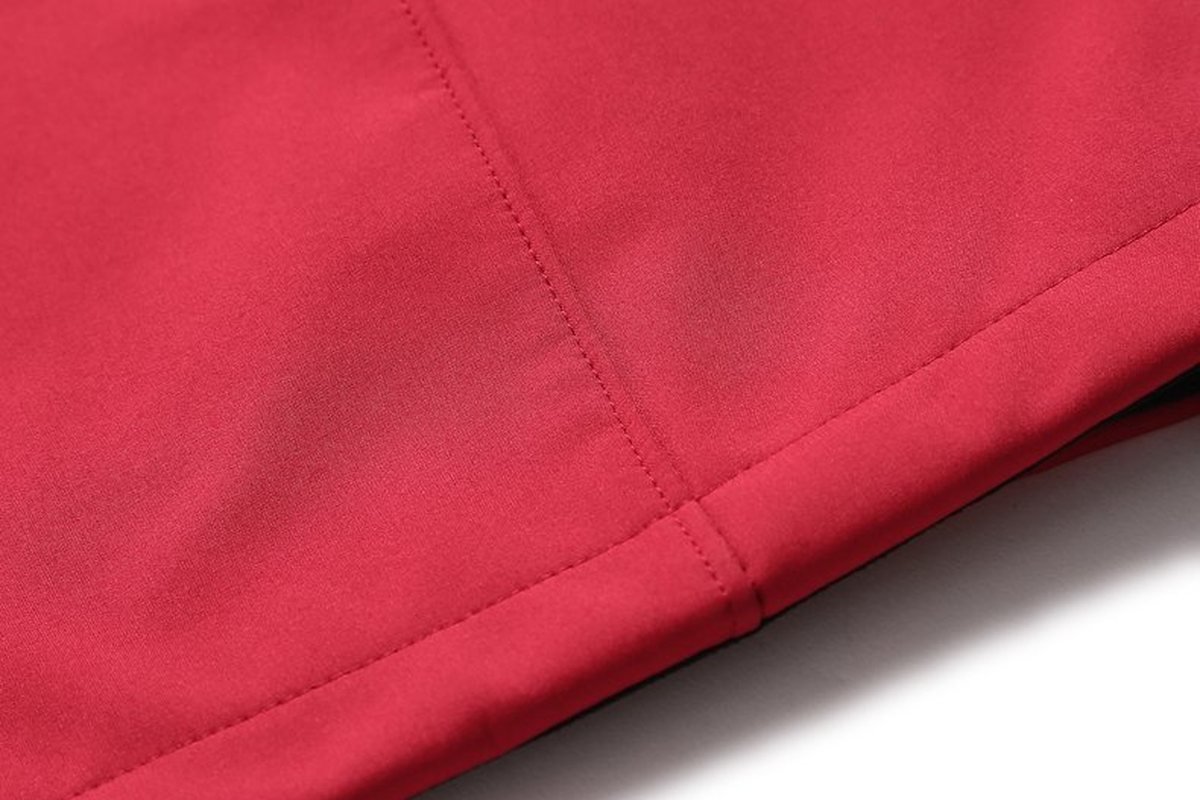
How PBT Is Made
PBT is a sister polymer to PET (polyethylene terephthalate — the polyester in most clothing). The chemical difference: PBT uses 1,4-butanediol where PET uses ethylene glycol, giving PBT a more flexible molecular chain.
Practically, this means:
– PBT has natural elasticity built into the fiber structure (~15-25% stretch and recovery)
– PBT melts at a lower temperature than PET (~225°C vs 260°C), making it slightly more energy-efficient to manufacture
– PBT crystallizes faster during cooling, giving it better dimensional stability
Key Properties That Matter for Outdoor Apparel
1. Chlorine Resistance ⭐
PBT is highly resistant to chlorine degradation — far more than nylon or standard polyester. This is why elite competitive swimwear (FINA-approved racing suits) uses PBT as a core fiber. Chlorine eats spandex in 50-100 wash cycles; PBT-based fabrics often last 5-10x longer in pool environments.
2. UV Resistance
PBT shows roughly 20-30% better UV stability than untreated nylon, making it a good base fiber for outdoor activewear that sees prolonged sun exposure.
3. Quick-Drying
PBT absorbs very little water (typically <0.4% moisture regain vs 4-5% for nylon). Water beads on the surface and runs off, making PBT garments dry significantly faster than polyamide alternatives.
4. Mechanical Stretch Without Elastane
For brands targeting PFC-free or fully recyclable product lines, PBT lets you build a stretchy fabric without adding non-recyclable elastane. A 100% PBT or PBT/PET blend can be melted down and re-spun at end-of-life — true mono-material recyclability.
5. Color and Wash Fastness
PBT holds dye well and resists fading. After 50 industrial wash cycles, PBT typically retains 90-95% of original color saturation vs 75-85% for standard polyester.
Common Applications in Outdoor & Performance Apparel
| Application | Why PBT |
|---|---|
| Competition swimwear | Chlorine resistance + stretch |
| Stretch softshell jackets | Mechanical stretch without spandex |
| Athletic compression layers | Wash durability + recovery |
| Cycling apparel | Quick-dry + UV resistance |
| Sports bras and base layers | Hypoallergenic + colorfast |
PBT vs Spandex/Elastane
| Property | PBT | Spandex (Elastane) |
|---|---|---|
| Stretch capacity | 15-25% | 400-700% |
| Recovery (return to shape) | Excellent | Excellent (when new) |
| Chlorine resistance | Excellent | Poor (degrades fast) |
| UV resistance | Good | Poor |
| Recyclability | Mono-material recyclable | Not recyclable |
| Wash durability | 200+ cycles | 50-100 cycles |
| Heat tolerance | High (225°C melt) | Low (135°C degrades) |
The trade-off: Spandex stretches further, but PBT lasts much longer in real-world conditions. For brands building durable performance products, PBT often delivers a better lifecycle cost.
PBT vs Polyester (PET)
PBT is a polyester variant, so the comparison is more about emphasis:
– Standard PET → priced lower, no inherent stretch, slightly better tensile strength
– PBT → more expensive (~30-50% premium over standard polyester), has stretch, faster drying
For high-end performance apparel where stretch matters, PBT is worth the premium. For basic athleisure where structure and price drive decisions, PET dominates.
Sourcing and Cost Considerations
PBT fibers and yarns are primarily produced in:
– Japan (Toray, Toyobo — highest-grade FINA-spec PBT)
– South Korea (Hyosung, Kolon — premium activewear yarns)
– China (Shenghong, Zhejiang Hailide — mass-market PBT)
– Taiwan (Far Eastern — mixed grades)
Cost benchmarks (2025):
– Standard PBT yarn: $3-5/kg
– Chlorine-resistant FINA-grade PBT: $7-12/kg
– Recycled PBT (rPBT, made from PET bottle waste with PBT chemistry): $4-7/kg
When to Specify PBT in Your Product Brief
✅ Specify PBT if:
– Your product is positioned as durable performance (swimwear, athletic, technical stretch)
– You’re targeting sustainability-focused buyers (mono-material recyclability)
– Your customer base washes the product frequently (gym, sports)
– You want stretch without elastane allergen concerns
❌ Skip PBT if:
– Your product needs >25% stretch (use spandex or hybrid)
– You’re optimizing for the lowest cost per piece
– Your end-use doesn’t justify the price premium
Bottom Line
PBT is a workhorse fiber for performance and outdoor brands that need durable stretch, chlorine and UV resistance, and quick drying — all without the recyclability problems of spandex blends.
If your product line includes stretch softshells, performance swimwear, or technical sports layers, ask your manufacturer about PBT or PBT-blend options.
Building a stretch performance jacket or technical outerwear line?
ptoutwear works with both standard polyester and PBT-blend fabrics across our softshell, windbreaker, and performance outerwear collections. Our Zhejiang sourcing network includes domestic and Korean PBT yarn suppliers.
Talk fabric specs with our team →
See softshell jacket capabilities →
Browse the fabric library →