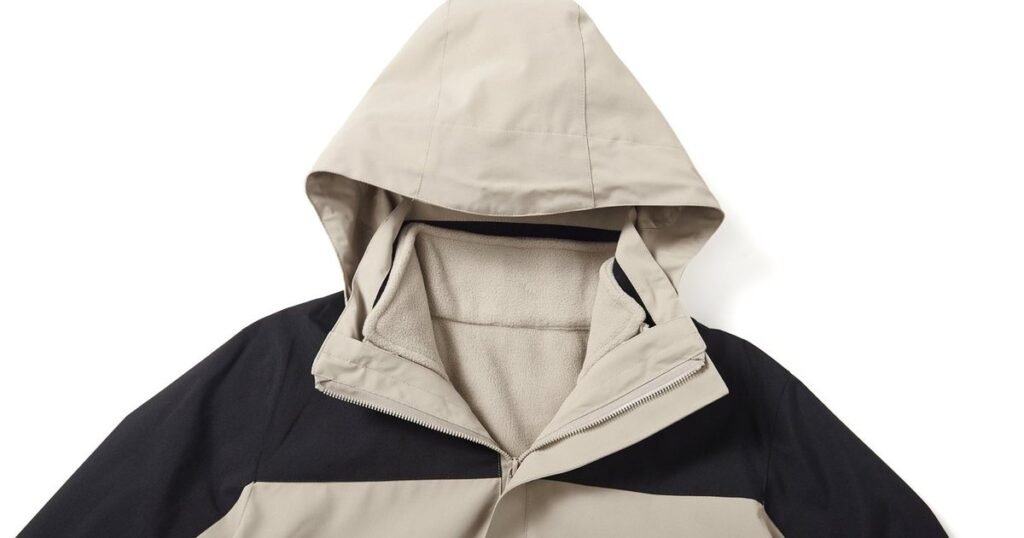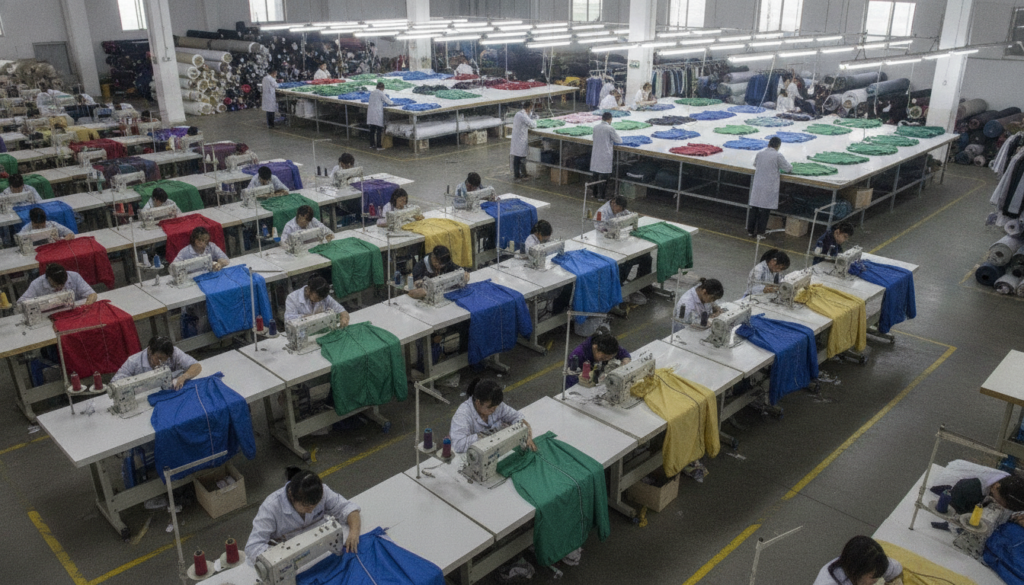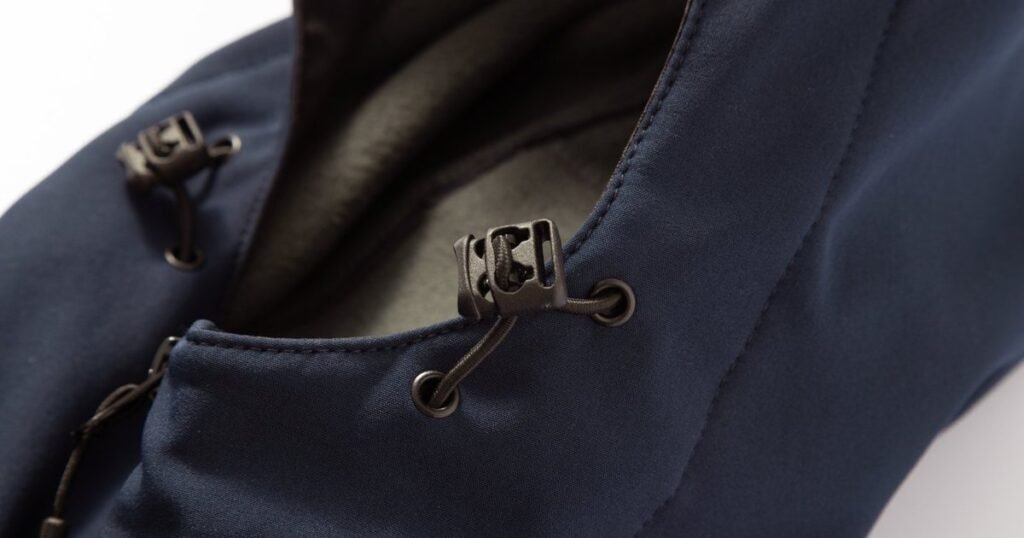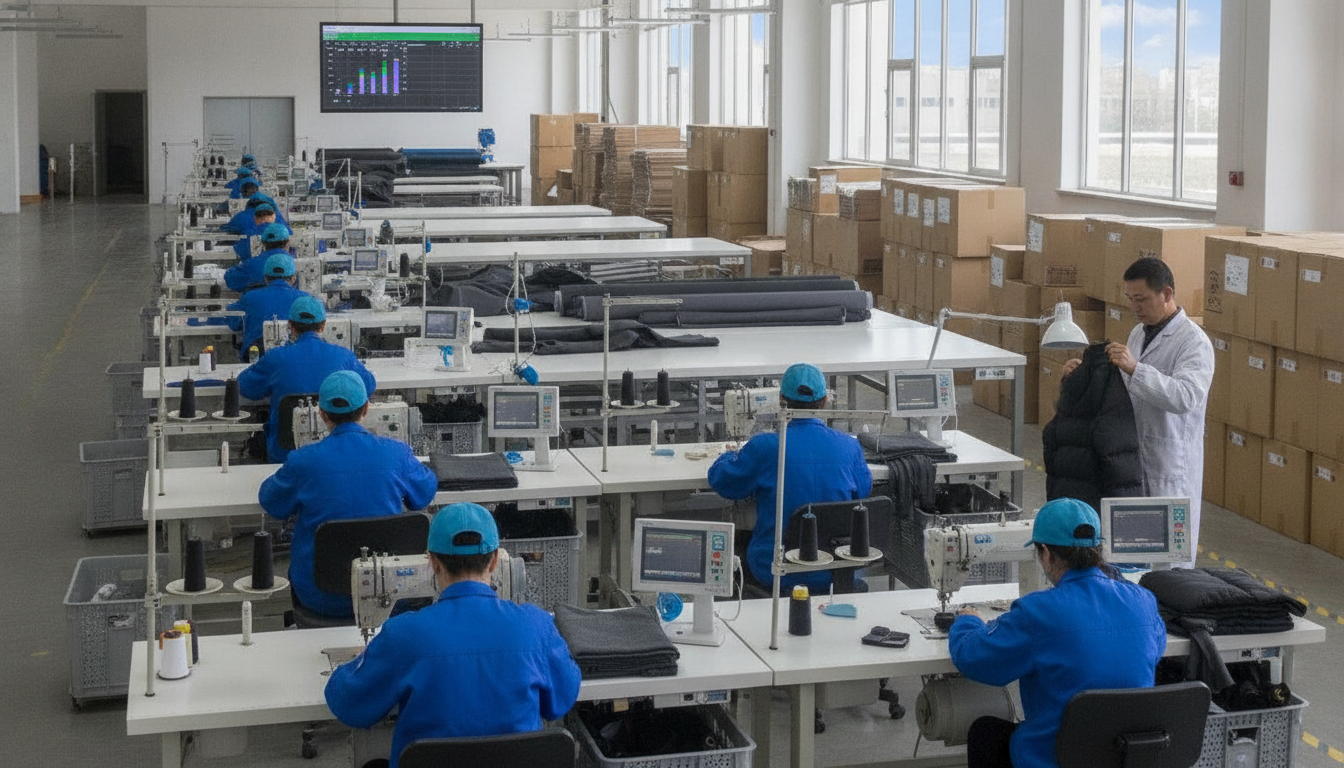
A custom snow jacket typically takes roughly 45 to 67 days from initial inquiry to delivery at your dock by sea. That breaks down to 7-10 days for pre-production sampling, 25-35 days for bulk production after deposit, and 12-22 days for ocean freight and customs clearance. Order size, fabric complexity, and technical features like seam taping or insulation type all shift the timeline.
📋 Table of Contents
- Key Takeaways
- Executive Summary
- What Is the Typical Timeline for Custom Snow Jacket Production?
- How Does Order Size Affect Production Time?
- Which Technical Features Add Lead Time?
- How Do Sampling and Approval Cycles Impact the Schedule?
- What Are Realistic Rush Production Options?
- How Should You Plan Your Order Calendar for Winter Season?
- FAQ
Key Takeaways
- Pre-production samples for a custom snow jacket typically require 7 to 10 days, while bulk production for 30 to 200 units takes 25 to 35 days after deposit.
- Small-batch orders of 30 to 300 pieces usually add 10 to 15 days compared to larger runs because cutting and sewing setups cannot be amortized across as many units.
- Technical features such as fully taped seams, down insulation with baffled construction, and waterproof-breathable membranes each add 3 to 7 days to the production cycle.
- Ocean freight from China to the US West Coast averages 12 to 18 days, while East Coast or inland distribution centers add another 4 to 7 days for rail or truck transit.
- Rush production can shorten bulk manufacturing by 7 to 10 days but typically increases unit cost by 15 to 25 percent and may compromise quality-control checkpoints.
- Winter-season orders placed after July face longer queue times as factories prioritize pre-booked clients, so planning a 90-day lead time from inquiry to warehouse receipt is prudent for November delivery.
Executive Summary
- End-to-end timeline: A custom snow jacket order takes roughly 45 to 67 days from inquiry to delivery, including sampling, bulk production, and freight.
- Sampling phase: Pre-production samples require 7 to 10 days; revisions add another 5 to 7 days per iteration.
- Bulk production: Runs of 30 to 200 pieces take 25 to 35 days after deposit; a rush option delivers 1,000 pieces in about 2 weeks at a 25% expedite fee.
- Technical complexity: Seam taping, insulation baffling, and membrane lamination each add 3 to 7 days to the manufacturing schedule.
- Rush options: Expedited production can save 7 to 10 days but increases cost by 15 to 25 percent and may skip mid-production inspections.
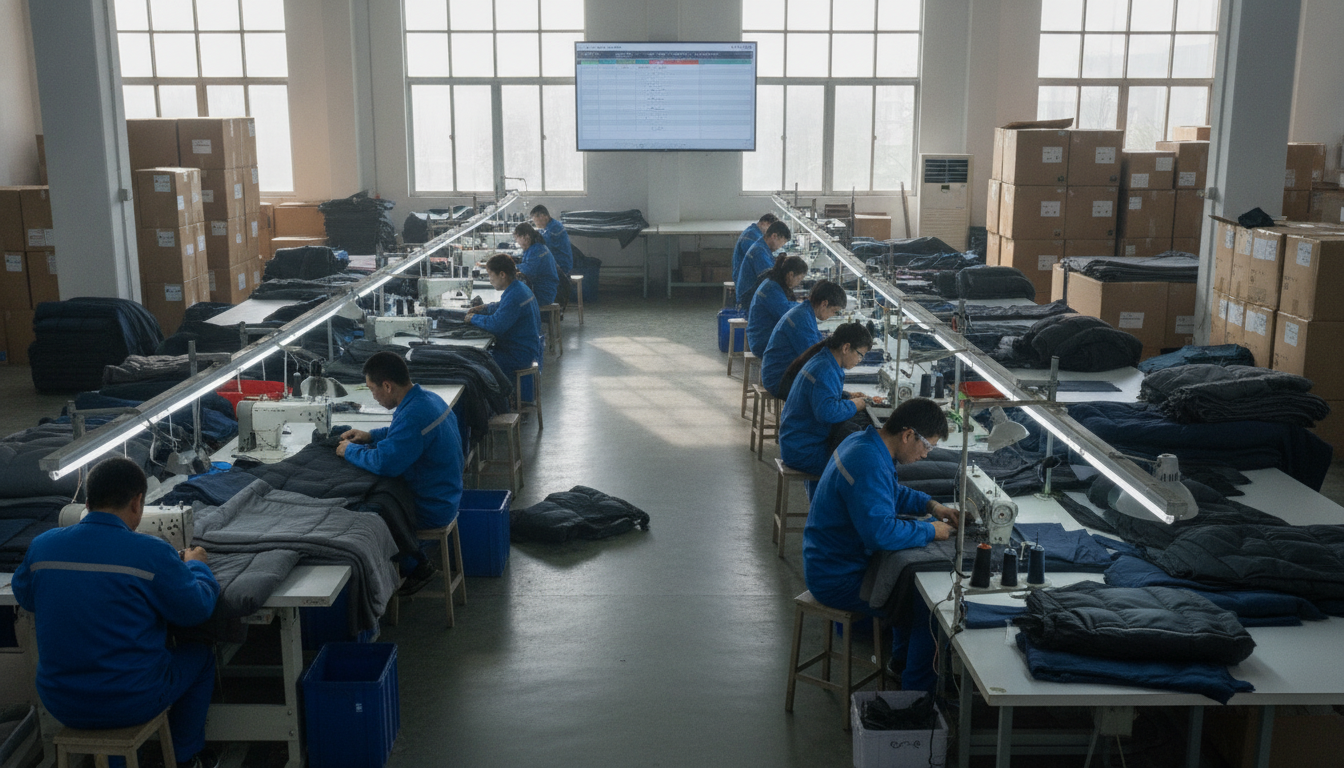
What Is the Typical Timeline for Custom Snow Jacket Production?
A complete custom snow jacket project spans three main phases: sampling, bulk production, and logistics. The sampling phase takes 7 to 10 days for a factory to cut, sew, and finish a pre-production sample based on your tech pack. Bulk production begins only after you approve that sample and typically runs 25 to 35 days after deposit for orders of 30 to 200 pieces. Freight and customs clearance add another 12 to 22 days depending on destination and shipping method.
Sampling Phase
Sampling starts when the factory receives a complete tech pack with fabric swatches, trim specifications, and construction details. The cut-and-sew team produces one or two samples in your specified colorways. According to PTOUTWEAR (2026), a pre-production sample for custom outerwear typically takes 7 to 10 days. If you request revisions to fit, fabric weight, or hardware placement, each iteration adds another 5 to 7 days. Many buyers underestimate this revision cycle and find their launch date slipping when they request a second or third sample round.
Bulk Production Phase
Once you sign off on the sample, the factory orders fabrics, trims, and zippers in bulk quantities and schedules your job on the production line. According to PTOUTWEAR (2026), bulk production for 30 to 200 units takes 25 to 35 days after deposit. Smaller runs of 30 to 300 pieces often extend to 45 to 60 days because setup time for cutting tables, sewing stations, and quality checkpoints cannot be spread across as many units. Factories prioritize larger orders during peak season, so a 300-piece job placed in August may wait longer for line availability than the same order placed in March.
Logistics and Clearance
Ocean freight from China to the US West Coast averages 12 to 18 days port-to-port. East Coast destinations add another 4 to 7 days for rail or truck transit from the West Coast hub. Customs clearance usually takes 2 to 4 days if your documentation is complete and your HS code classification is correct. Air freight can cut transit to 5 to 7 days but doubles or triples your per-unit shipping cost, making it viable only for sample shipments or emergency restock orders.
How Does Order Size Affect Production Time?
Order size directly influences both factory priority and line efficiency. A 1,000-piece order justifies dedicated cutting tables and sewing teams, while a 50-piece run must share equipment with other jobs. According to PTOUTWEAR (2026), bulk production for 30 to 200 oversized snowboard jackets typically takes 25 to 35 days after deposit.
Small-Batch Orders (30-300 Pieces)
Small-batch production incurs longer per-unit setup time. Cutting a 50-piece job requires the same pattern-making and marker-layout work as a 500-piece job, but the setup cost is spread across fewer units. Sewing operators need time to adjust tension, stitch length, and seam allowances for each new style, and that setup cannot be amortized when the run ends after 50 jackets. Quality-control checkpoints also take proportionally longer because inspectors must verify construction details on a higher percentage of the total output.
Mid-Volume Orders (300-1,000 Pieces)
Orders in the 300 to 1,000 range hit the efficiency sweet spot. The factory can dedicate one or two sewing lines to your job for a full production cycle, and operators build muscle memory on your specific construction sequence. According to PTOUTWEAR (2026), custom jacket production for 30 to 200 pieces typically requires 25 to 35 days after deposit. Scaling to 500 pieces rarely adds more than 5 to 7 days because the same team simply runs additional shifts.
Large-Volume Orders (1,000+ Pieces)
Orders above 1,000 pieces may actually take longer if the factory must source additional fabric yardage or wait for a second dye lot. However, the per-piece production time drops because cutting, sewing, and finishing operations run in parallel across multiple lines. Factories often offer shorter lead times for large orders during off-peak months (March through June) when line capacity is available and fabric mills have shorter dye and weaving queues.
Which Technical Features Add Lead Time?
Technical features such as seam taping, insulation baffling, and waterproof-breathable membranes each add discrete steps to the production workflow. A basic shell jacket with a simple DWR finish can move through cut-and-sew in 20 to 25 days, but adding fully taped seams extends that to 27 to 32 days because each seam must pass through a separate heat-press station after sewing.
Seam Taping
Fully taped seams require a secondary operation after the jacket is sewn. Workers feed each seam through a hot-air or ultrasonic taping machine that bonds a waterproof tape over the stitch holes. This process adds 3 to 5 days to the production schedule and requires careful quality control because poorly applied tape peels after a few washes. Buyers frequently complain that waterproof jackets leak at the seams after limited use, especially when the factory promises performance features but the seam sealing is weak. Inspecting taped seams under magnification during mid-production checks catches adhesion failures before the entire batch ships.
Insulation and Baffling
Down or synthetic insulation adds 4 to 7 days because the outer shell and inner lining must be quilted or baffled before final assembly. Box-baffle construction, which creates vertical walls between insulation chambers, requires precise stitching to prevent down migration. Some buyers report that insulation is thinner than expected, so the jacket looks like a snow jacket but does not feel warm enough in real winter conditions. Specifying fill power (e.g., 650-fill or 800-fill down) and requesting a fill-weight verification during production ensures the finished garment meets your warmth target.
Waterproof-Breathable Membranes
Laminating a waterproof-breathable membrane to the shell fabric adds 5 to 7 days because the fabric must be sent to a specialized lamination facility before cutting. The membrane is bonded to the face fabric under heat and pressure, then rolled and shipped back to the cut-and-sew factory. Membrane availability also affects lead time; popular options like 2-layer or 3-layer laminates may have longer lead times during peak season when multiple brands are ordering the same substrate.
Seam taping: +3 to 5 days. Insulation baffling: +4 to 7 days. Membrane lamination: +5 to 7 days.
How Do Sampling and Approval Cycles Impact the Schedule?
Sampling and approval cycles are the most common source of timeline slippage. A single revision round adds 5 to 7 days, and buyers who request three or four iterations can add a month to the project before bulk production even starts. Reviewers often say the jacket sizing runs inconsistent, making it hard to place team or uniform orders without sample fitting. Requesting samples in multiple sizes during the first round catches fit issues early and avoids costly revisions later.
First Sample Round
The first sample is sewn from your tech pack and the fabric swatches you provided. If your tech pack is complete and the factory has the specified fabrics in stock, the sample ships within 7 to 10 days. Incomplete tech packs that omit stitch types, seam allowances, or hardware specifications force the factory to make assumptions, and those assumptions often require correction in a second sample.
Revision Rounds
Each revision round adds another 5 to 7 days because the factory must adjust patterns, re-cut fabric, and re-sew the sample. Common revision requests include adjusting sleeve length, changing zipper placement, or switching to a heavier-weight fabric. Buyers who approve samples quickly and limit revisions to one round typically receive their bulk order 10 to 14 days sooner than buyers who request multiple changes.
Fit Sample vs. Pre-Production Sample
Some factories offer a fit sample before the full pre-production sample. The fit sample uses a placeholder fabric to verify sizing and proportions, then the pre-production sample is sewn in the actual production fabric. This two-step process adds 7 to 10 days but reduces the risk of discovering a fit issue after the factory has already ordered bulk fabric yardage.
What Are Realistic Rush Production Options?
Rush production can shorten the bulk manufacturing phase by 7 to 10 days but typically increases unit cost by 15 to 25 percent. Factories achieve faster turnaround by running overtime shifts, prioritizing your job ahead of other clients, or skipping mid-production quality checks. According to Chaos Garment (2026), custom puffer jacket projects often take 45 to 60 days for a first order and 30 to 40 days for reorders. Reorders move faster because the factory already has your patterns, approved samples, and supplier relationships in place.
Overtime Shifts
Overtime shifts allow the factory to run your job outside normal production hours. This option works well for small batches (100 to 300 pieces) but becomes cost-prohibitive for larger orders because labor rates increase by 50 to 100 percent for evening and weekend shifts. Overtime production also increases the risk of quality issues because workers are fatigued and may miss construction defects.
Priority Queue Placement
Some factories offer priority queue placement for an additional fee. Your job moves to the front of the production schedule, but this option is only available if the factory has open line capacity. During peak season (July through October), most factories are fully booked and cannot offer priority placement regardless of price.
Air Freight
Air freight reduces transit time from 12 to 18 days (ocean) to 5 to 7 days but increases shipping cost by 200 to 300 percent. A 500-piece jacket order that costs $1,200 for ocean freight may cost $3,600 to $4,000 by air. Air freight makes sense for sample shipments or emergency restock orders but rarely justifies the cost for initial bulk orders.
How Should You Plan Your Order Calendar for Winter Season?
Winter-season orders placed after July face longer queue times as factories prioritize pre-booked clients. Planning a 90-day lead time from inquiry to warehouse receipt is prudent for November delivery. That means initiating contact with your OEM jacket manufacturing partner no later than early August to allow time for sampling, revisions, bulk production, and freight.
Pre-Season Booking Windows
Factories begin accepting winter-season orders in March and April. Brands that book production slots during this window secure better pricing and shorter lead times because the factory can plan fabric purchases and line schedules months in advance. Orders placed in July or August compete for the remaining capacity and often face 10 to 15 percent higher unit costs due to rush fees and expedited fabric sourcing.
Peak-Season Queue Impact
Between July and October, most outdoor-apparel factories operate at 90 to 100 percent capacity. A 500-piece order that would take 35 days in April may stretch to 50 days in August because the factory must juggle multiple clients and cannot dedicate full lines to a single job. Customers often say delivery takes much longer than advertised once sampling, approvals, and shipping are added together. Building a 10 to 15 day buffer into your timeline accounts for peak-season delays and ensures your inventory arrives before your sales window opens.
Reorder Planning
Reorders move faster than first orders because the factory already has your approved samples, patterns, and supplier relationships in place. According to Chaos Garment (2026), reorders typically take 30 to 40 days compared to 45 to 60 days for a first order. Planning a mid-season reorder in September or October for January delivery avoids peak-season congestion and locks in better pricing.
- March-April booking: Best pricing, shortest lead times, full fabric selection available.
- May-June booking: Standard pricing, moderate lead times, most fabrics still in stock.
- July-August booking: Rush fees apply, longer queue times, limited fabric availability.
- September-October booking: Emergency orders only, 20-30% cost premium, air freight often required.
Our 3,000m² Taizhou Sanmen facility runs 20 production lines with in-house cut-and-sew, seam-taping equipment, and final QC. We maintain a sample MOQ of 1 piece and a bulk MOQ of 30 pieces per SKU, allowing you to validate your design and test your market before committing to large inventory. Our sample development team delivers pre-production samples within 7 to 10 days, and our standard bulk production window is 25 to 35 days after deposit for orders of 30 to 200 pieces.
FAQ
Can I request a custom snow jacket with a 30-piece minimum order quantity?
Yes, our bulk MOQ is 30 pieces per SKU. That allows you to order one colorway or multiple colors as long as each SKU meets the 30-piece threshold. Sample orders start at 1 piece with a $100 sample fee that is refundable against your bulk order. This structure lets you validate fit, fabric, and construction before committing to larger inventory, and it suits DTC brands, corporate team buyers, and school uniform programs that need smaller production runs without tying up cash in excess stock.
What happens if I need my custom snow jacket order faster than the standard 45 to 67 days?
Rush production can shorten bulk manufacturing by 7 to 10 days through overtime shifts or priority queue placement, but it typically increases unit cost by 15 to 25 percent. Air freight can reduce transit time from 12 to 18 days down to 5 to 7 days but doubles or triples shipping cost. Rush options work best for small batches (100 to 300 pieces) or emergency restock orders. For first-time orders, planning a full 90-day lead time from inquiry to warehouse receipt avoids the need for expedited production and keeps costs predictable.
How many revision rounds should I expect during the sampling phase?
Most projects require one or two revision rounds. The first sample verifies overall construction, fabric weight, and fit. If you request changes to sleeve length, zipper placement, or fabric weight, the factory produces a second sample within 5 to 7 days. Requesting samples in multiple sizes during the first round catches fit issues early and avoids a third revision. Buyers who approve samples quickly and limit changes to one round typically receive their bulk order 10 to 14 days sooner than buyers who request multiple iterations.
Ready to start your custom snow jacket project with clear timelines and no surprises?
Request a production timeline and sample quote →
Written by Ivan Chen, Sales Engineer at PTOUTWEAR – 13 years in outdoor apparel manufacturing.