📋 Table of Contents
Launching a custom jacket few hundred pieces per color program requires balancing fabric availability, factory minimums, and cash flow. Most outdoor jacket factories quote 100 to 500 pieces per style per color, but stock-fabric strategies and vertically integrated production can unlock runs as small as 30 pieces per SKU. This guide walks through MOQ thresholds, sampling protocols, landed-cost breakdowns, and program-design tactics for DTC brands, corporate uniform buyers, and school outerwear programs ordering in the few-hundred-piece range.
Executive Summary
- Standard MOQ: According to Ruiniu Jacket (2026), most custom outdoor jacket factories state 100 to 500 pieces per style per color as the baseline minimum order quantity.
- Stock-fabric advantage: According to Jiashun Clothing (2026), production can start from 50 pieces per design and color when using stock fabrics, while heavier builds may require 100 pieces.
- Sampling time: According to Clothing Producer (2026), sampling usually takes 15 to 20 days and production for 50, 100, or 300 pieces typically requires around 45 days.
- Bulk lead time: According to Mingxing Clothing (2026), standard production timelines are 7 to 10 days for samples and 25 to 30 days for bulk orders at 100 pieces per style per color.
- Lightweight softshell MOQ: According to Made-in-China (2026), a lightweight softshell jacket listing shows a 300 pieces per color MOQ with a total order of 600 pieces across two colors.
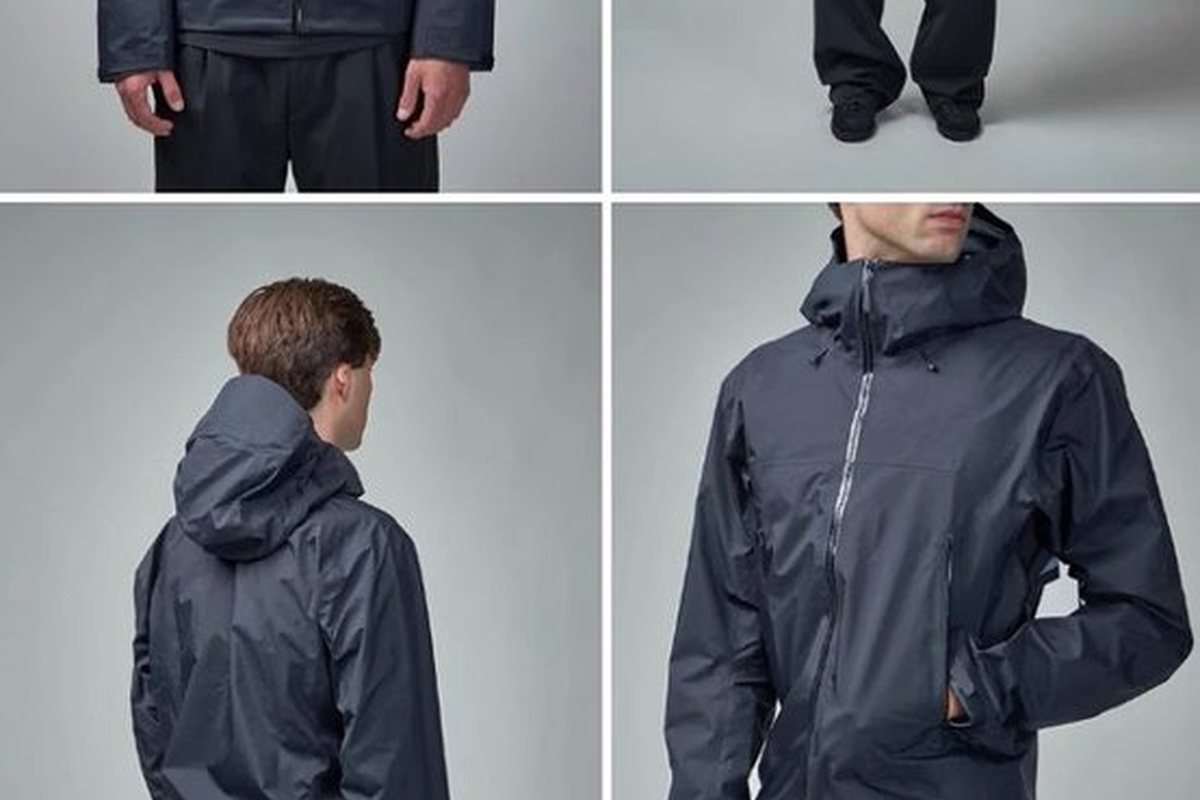
MOQ Thresholds for Custom Jackets Per Color
Factory minimums for custom jacket few hundred pieces per color orders vary by jacket complexity, fabric sourcing, and production setup. Understanding these thresholds helps brands allocate budgets and choose the right manufacturing partner.
Stock Fabric vs. Custom-Dyed Fabric
Stock fabrics eliminate dye-lot minimums and fabric mill lead times. A factory holding 3,000 meters of black softshell can cut 30 jackets per color without waiting for a new dye batch. Custom-dyed fabrics typically require 500 to 1,000 meters per color, pushing MOQ to 200 pieces or more. Buyers ordering custom jacket few hundred pieces per color should prioritize factories with stock-fabric libraries in popular outdoor colorways.
Jacket Complexity and Pattern Pieces
A simple windbreaker with five pattern pieces accepts lower MOQ than a 3-in-1 hardshell with removable liners and pit-zip construction. According to Renrui Textile (2026), technical outerwear typically starts from 100 pieces due to higher pattern complexity. Factories amortize cutting-table setup, quality-control protocols, and trim inventory across the order quantity. Simpler styles hit profitability at smaller batch sizes.
Trim and Hardware Inventory
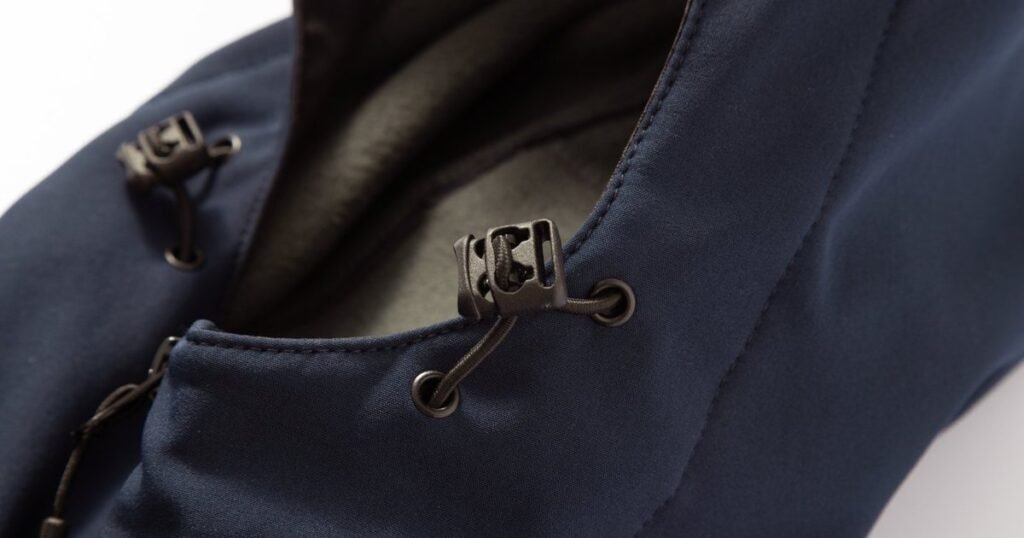
Zippers, snap buttons, cord locks, and branded pulls carry their own minimums. A YKK AquaGuard zipper supplier may require 500 units per color, forcing brands to either commit to larger orders or accept stock zipper colors. Factories with existing trim inventory for corporate and school programs can offer lower MOQ because they order trims in bulk and allocate across multiple clients.
PTOUTWEAR MOQ: Sample MOQ 1 piece. Bulk MOQ 30 pieces per SKU. Stock fabrics and in-house trim inventory enable few-hundred-piece color runs without locking up cash in minimums.
Fabric Strategy for Few-Hundred-Piece Runs
Fabric choice directly impacts MOQ, lead time, and landed cost. Brands ordering custom jacket few hundred pieces per color should evaluate stock availability, performance requirements, and dye-lot economics before finalizing specifications.
Stock Functional Fabrics
Many OEM jacket manufacturing facilities stock 10 to 15 performance fabrics in black, navy, charcoal, and forest green. Common stock options include 20D ripstop nylon with PFC-free DWR, 4-way stretch softshell, and 2.5-layer waterproof-breathable membranes. These fabrics support 30 to 100 piece minimums because the factory absorbs fabric inventory risk across multiple clients.
Custom-Dyed Technical Fabrics
Brands requiring proprietary colors face higher MOQ. A fabric mill dyeing 1,000 meters of custom teal softshell will charge setup fees and require minimum yardage. That 1,000 meters translates to roughly 400 jackets, pushing total order quantity above the few-hundred-piece threshold unless the brand commits to multi-season inventory. Custom dye lots also add 15 to 25 days to the production timeline.
Recycled and Certified Fabrics
GRS-certified recycled polyester and OEKO-TEX Standard 100 fabrics carry premium pricing but support sustainability claims. The Global Recycled Standard requires at least 20 percent recycled material content before a product can carry the GRS label. Stock availability for certified fabrics is lower, so brands should confirm fabric inventory before committing to delivery dates. Factories with OEKO-TEX and GRS partnerships can source certified stock fabrics in smaller quantities.
Sampling and Production Timeline
Accurate timeline expectations prevent cash-flow surprises and missed launch windows. Sampling and bulk production for custom jacket few hundred pieces per color orders follow a predictable sequence when fabric and trims are confirmed upfront.
Pre-Production Sample
A pre-production sample validates fit, construction, and material performance before bulk cutting. Most factories charge a sample fee of 100 to 200 USD per piece, refundable against bulk orders. Sampling time ranges from 7 to 20 days depending on fabric availability and trim sourcing. Brands should request samples in all planned colors to verify dye-lot consistency and DWR application.
Tech-Pack Review and Approval
A complete tech pack includes flat sketches, construction details, stitch specifications, trim callouts, and graded size charts. Factories review tech packs for manufacturability and flag potential issues like seam-tape compatibility or zipper-length constraints. Buyers without in-house technical designers can work with sample development teams to translate brand sketches into production-ready specifications.
Bulk Production and QC
Bulk production for 30 to 200 pieces per color takes 25 to 35 days after deposit. Cutting, sewing, seam-taping, and final QC happen in sequence. Factories with in-house QC teams inspect every garment for stitch integrity, waterproofing, and trim attachment before packing. Buyers should specify AQL inspection standards in the purchase order to align quality expectations.
Shipping and Customs Clearance
Ocean freight from China to the US West Coast takes 18 to 25 days, while air freight delivers in 5 to 7 days at three to four times the cost. Customs clearance adds 3 to 7 days depending on port congestion and documentation accuracy. Brands ordering custom jacket few hundred pieces per color for seasonal launches should add a 10-day buffer to the factory lead time for logistics and clearance.
True Landed Cost Breakdown
Landed cost includes unit price, shipping, duties, and compliance testing. Brands ordering few-hundred-piece runs must account for per-unit logistics costs that decrease at higher volumes.
FOB Unit Price
FOB pricing for stock-fabric softshell jackets ranges from 18 to 35 USD per piece at 100-unit quantities, depending on fabric weight, lining, and trim quality. Custom-dyed fabrics and branded hardware add 3 to 8 USD per unit. Factories offering low MOQ jacket manufacturing typically price 10 to 15 percent higher than bulk-tier pricing to offset setup amortization.
Freight and Insurance
Ocean freight for a 200-piece jacket shipment costs approximately 800 to 1,200 USD from China to US West Coast ports, translating to 4 to 6 USD per unit. Air freight for the same shipment runs 2,500 to 3,500 USD, or 12 to 18 USD per unit. Insurance adds 0.5 to 1 percent of cargo value. Buyers should request door-to-door quotes that include port handling and drayage to avoid surprise fees.
Duties and Compliance
US import duties for synthetic outerwear jackets fall under HTS code 6201.93, with rates between 27.7 and 29.5 percent depending on fiber content and construction. A 25 USD FOB jacket incurs roughly 7 USD in duty. OEKO-TEX Standard 100 testing screens textiles against more than 1,000 harmful substances, with lab fees ranging from 300 to 600 USD per style. Brands should budget 1 to 2 USD per unit for compliance and testing when ordering custom jacket few hundred pieces per color.
Mixed-Color Program Design
School uniform programs and corporate team-gear buyers often require multiple colors in smaller quantities per SKU. Structuring mixed-color orders to meet factory minimums while controlling inventory requires careful program design.
Total-Order vs. Per-Color MOQ
Some factories quote MOQ as total pieces across all colors, while others enforce per-color minimums. A 300-piece total-order MOQ allows a buyer to order 100 black, 100 navy, and 100 red jackets. A 100-piece per-color MOQ requires 100 black, 100 navy, and 100 red separately, pushing the total to 300 pieces minimum. Buyers should clarify MOQ structure before requesting quotes to avoid budget overruns.
Size Assortment and Grading
A balanced size run for 100 jackets might break down as 10 XS, 20 S, 30 M, 25 L, 10 XL, and 5 XXL. Factories charge grading fees when size ratios deviate significantly from standard distributions. School programs ordering custom jacket few hundred pieces per color should provide enrollment data by size to minimize leftover inventory in uncommon sizes.
Phased Production for Multi-Season Programs
Annual uniform contracts can split production into fall and spring deliveries, reducing upfront cash outlay and warehouse space. A 600-piece annual program becomes two 300-piece orders, each meeting the factory MOQ while aligning inventory with enrollment cycles. Buyers should negotiate pricing and lead-time commitments for phased orders in the initial contract.
- Single-color focus: Ordering 200 to 300 pieces in one color maximizes economies of scale and simplifies inventory management for DTC brands testing a new style.
- Two-color split: A 200-piece order split into 100 black and 100 navy meets most factory minimums while offering customers choice without excess SKU complexity.
- Three-color program: Corporate buyers ordering 300 total pieces across black, navy, and charcoal should confirm whether the factory enforces per-color or total-order MOQ before finalizing the purchase order.
Risk Mitigation Checklist
Ordering custom jacket few hundred pieces per color from overseas factories introduces risks around quality, communication, and payment security. A structured checklist helps buyers validate factory capabilities and protect deposits.
Factory Verification
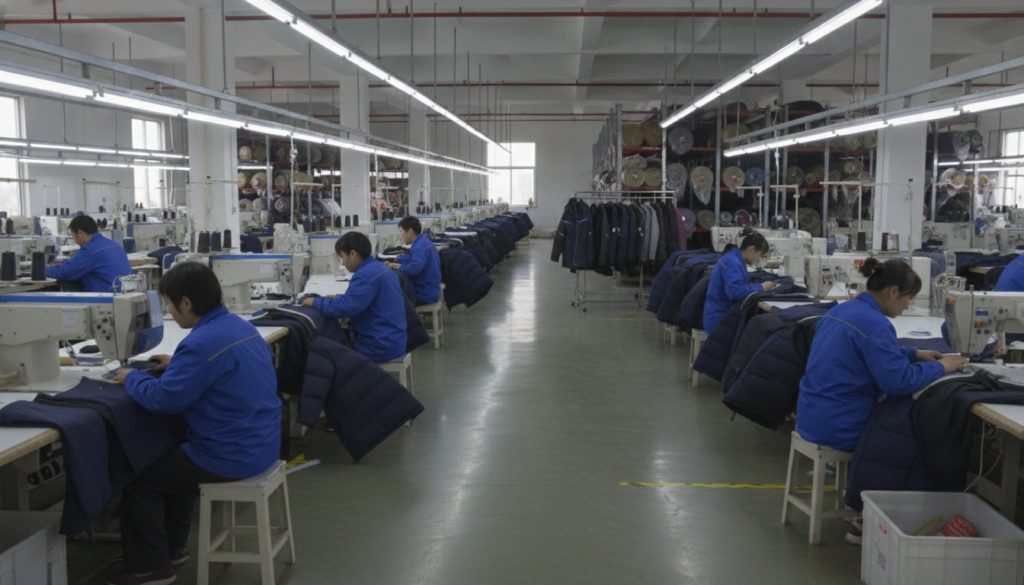
Request business licenses, export records, and third-party audit reports before placing deposits. BSCI and ISO 9001 certifications indicate established quality-management systems. Buyers should verify certifications directly with the issuing body rather than relying on factory-provided PDFs. Video factory tours showing cutting tables, sewing lines, and QC stations provide additional confidence.
Sample Approval Protocol
Never approve bulk production based on digital mockups or photos alone. Physical samples reveal fabric hand-feel, seam strength, and waterproofing performance that images cannot convey. Buyers should wash and wear-test samples under realistic conditions. A rain shell that passes a 30-minute shower test in the factory may fail after three wash cycles if the DWR application is substandard.
Payment Terms and Escrow
Standard terms are 30 percent deposit, 70 percent before shipment. Buyers uncomfortable with full pre-payment can negotiate inspection-based release or use trade-assurance platforms that hold funds until QC approval. Avoid factories demanding 100 percent upfront payment for first orders. Our 3,000m² Taizhou Sanmen facility runs 20 production lines with in-house cut-and-sew and QC, supporting flexible payment terms for established accounts.
QC and Inspection Standards
Specify AQL inspection levels in the purchase order. AQL 2.5 allows a 2.5 percent defect rate, suitable for mid-tier retail. AQL 1.0 tightens tolerances for premium brands. Third-party inspection companies charge 250 to 400 USD per visit and provide photo reports of defects, measurements, and packaging quality. Buyers should schedule inspections when 80 percent of the order is complete to allow time for rework.
Key Takeaways
- According to Ruiniu Jacket (2026), standard MOQ for custom outdoor jackets is commonly stated as 100 to 500 pieces per style per color, with some factories offering 50 to 100 pieces when using stock fabrics.
- According to Jiashun Clothing (2026), production can start from 50 pieces per design and color for lighter builds, while heavier technical outerwear may require 100 pieces due to pattern complexity.
- According to Clothing Producer (2026), sampling usually takes 15 to 20 days and production for 50, 100, or 300 pieces typically requires around 45 days from sample approval to shipment.
- According to Mingxing Clothing (2026), a custom outerwear manufacturer states a standard MOQ of 100 pieces per style per color with 7 to 10 day samples and 25 to 30 day bulk production timelines.
- The Global Recycled Standard requires a minimum of 20 percent recycled content before a product can carry the GRS label, supporting sustainability claims for brands using certified fabrics.
- OEKO-TEX Standard 100 testing screens textiles against more than 1,000 harmful substances, with lab fees ranging from 300 to 600 USD per style for brands prioritizing chemical-safety compliance.
FAQ
What is the MOQ for custom jackets per color?
MOQ for custom jackets per color typically ranges from 100 to 500 pieces depending on fabric sourcing and jacket complexity. Factories using stock fabrics can offer 30 to 100 piece minimums, while custom-dyed fabrics require 200 to 400 pieces to meet fabric-mill dye-lot minimums. Simpler windbreaker styles accept lower MOQ than technical 3-in-1 hardshells with removable liners and pit-zip construction.
Can I order custom jackets in multiple colors with a few hundred pieces total?
Yes, many factories accept mixed-color orders with a total-order MOQ rather than per-color minimums. A 300-piece total order can split into 100 black, 100 navy, and 100 red jackets. Buyers should clarify whether the factory enforces per-color or total-order MOQ before requesting quotes. Stock-fabric programs make mixed-color runs more feasible because the factory holds inventory across multiple colorways.
How long does it take to manufacture custom jackets?
Sampling takes 7 to 20 days depending on fabric availability and trim sourcing. Bulk production for 30 to 200 pieces takes 25 to 35 days after deposit. Ocean freight from China to US ports adds 18 to 25 days, while air freight delivers in 5 to 7 days. Buyers should add a 10-day buffer for customs clearance and port handling when planning seasonal launch windows.
What fabrics allow lower MOQ for custom outerwear?
Stock functional fabrics like 20D ripstop nylon with PFC-free DWR, 4-way stretch softshell, and 2.5-layer waterproof-breathable membranes support 30 to 100 piece minimums. Custom-dyed fabrics require 500 to 1,000 meters per color, translating to 200 to 400 jackets. GRS-certified recycled polyester and OEKO-TEX Standard 100 fabrics carry premium pricing but are available in smaller stock quantities from factories with certification partnerships.
What is the difference between OEM and ODM jacket manufacturing?
OEM manufacturing produces jackets to the buyer’s exact specifications, tech pack, and branding. The buyer owns the design and provides detailed construction instructions. ODM manufacturing offers pre-designed jacket styles from the factory’s catalog that buyers can customize with logos and color changes. ODM programs typically have lower MOQ and faster sampling because patterns and construction methods are already validated. Brands with in-house design teams prefer OEM, while corporate uniform buyers often choose ODM for speed and simplicity.
Ready to validate your custom jacket program with 1-piece samples and 30-unit bulk minimums?
Request Your Sample Pack →
Written by Ivan Chen, Sales Engineer at PTOUTWEAR – 13 years in outdoor apparel manufacturing.