📋 Table of Contents
Launching a corporate uniform line, school program, or DTC outdoor brand with a signature color requires more than choosing a Pantone swatch. Custom Pantone matching windbreaker jacket OEM production involves exact color approval across shell fabric, lining, zippers, and trim, plus factory workflows that balance sampling speed, bulk MOQ, and color-fastness testing. Many buyers discover mid-production that their approved lab dip does not match the finished garment under different lighting, or that wash fastness falls short of export-market standards.
Executive Summary
- Sample MOQ: PTOUTWEAR offers 1-piece sampling with a $100 refundable fee, enabling color validation before committing to bulk.
- Bulk MOQ: 30 pieces per SKU for custom Pantone-matched windbreakers, lower than industry norms that often require 100+ pieces.
- Pantone Tolerance: ISO 105 color-fastness testing screens for Grade 4 or higher wash and light fastness to meet US and EU export requirements.
- Lead Time: 7-10 days for lab-dip approval and pre-production samples, 25-35 days for bulk production after final sign-off.
- Component Matching: Shell fabric, mesh lining, elastic cuffs, zipper tape, and woven labels all require separate dye-lot coordination to maintain color consistency.
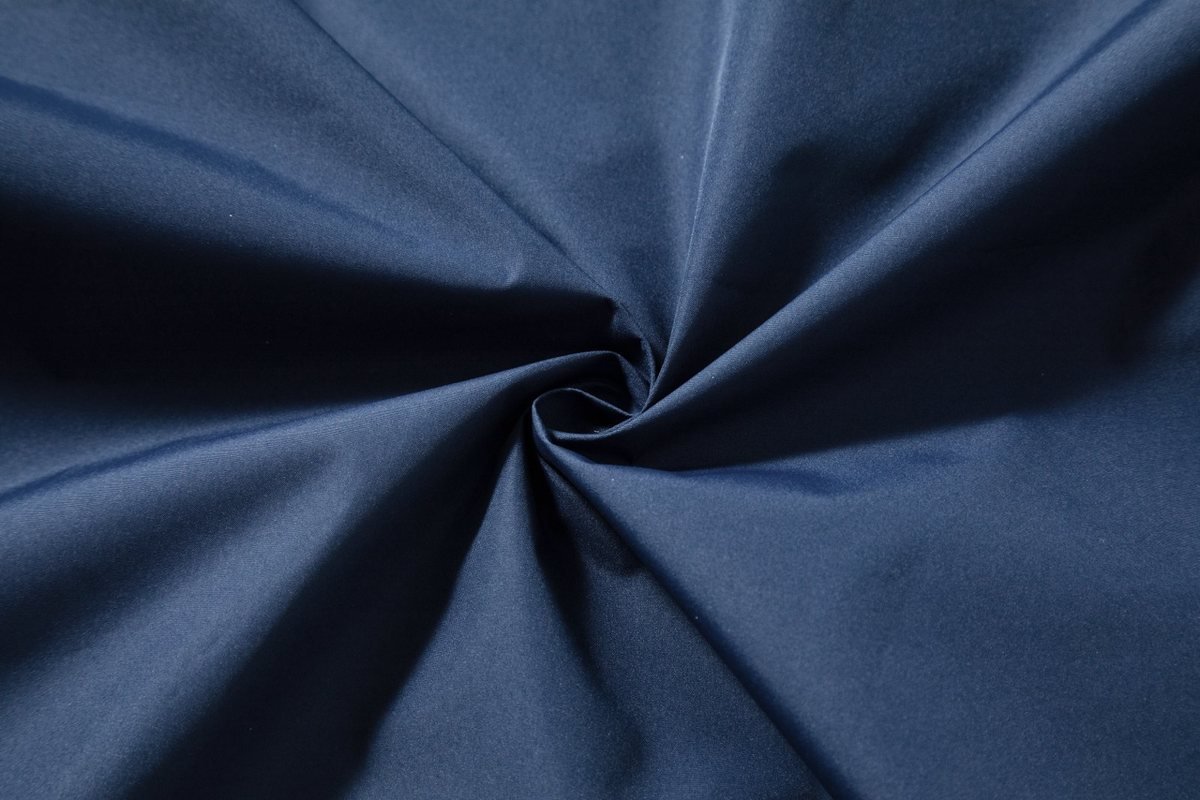
Why Pantone Matching Matters for Windbreakers
Corporate buyers and DTC brand founders specify Pantone codes to ensure every production run matches their brand identity exactly. A school uniform program ordering 200 windbreakers in Pantone 287 C (royal blue) cannot accept a shipment where half the jackets read closer to Pantone 286 C under daylight. Polyester windbreaker fabric is dyed in large batches, and dye-lot variation between batches can shift hue by several Delta E units if the factory does not control temperature, pH, and dye concentration precisely.
Brand Consistency Across Channels
DTC brands selling through their own site, Amazon, and wholesale accounts need every SKU to photograph identically. A windbreaker that reads as navy online but arrives as midnight blue generates returns and damages brand trust. OEM jacket manufacturing with Pantone approval locks color across all channels and production runs.
Corporate and School Uniform Requirements
Corporate uniform buyers often manage multi-year contracts where employees order replacements annually. A 2026 jacket must match the 2024 batch exactly, which requires the factory to archive approved lab dips and maintain dye formulas. School programs face the same challenge when new students join mid-year and need jackets that match the existing stock.
Export Market Color-Fastness Standards
US and EU buyers require windbreakers to pass ISO 105 wash-fastness and light-fastness tests at Grade 4 or higher. A Pantone-matched shell that fades two shades after five washes fails compliance and triggers chargebacks. Buyers should request SGS or Intertek test reports for both the shell fabric and any printed or embroidered logos before bulk production.
Pantone Approval Workflow: Lab Dip to Bulk
Custom Pantone matching windbreaker jacket OEM production follows a three-stage approval process: lab-dip submission, pre-production sample, and bulk sign-off. Each stage requires buyer approval before the factory proceeds, and skipping any step risks color mismatch in the final shipment.
Stage 1: Lab Dip Submission
The factory dyes a small fabric swatch (typically 10 cm × 10 cm) to the buyer’s specified Pantone code and ships it for approval. Buyers should evaluate the lab dip under D65 daylight-equivalent lighting, not office fluorescents, because polyester reflects light differently than the coated paper of a physical Pantone swatch book. A lab dip that matches indoors may read too warm or too cool outdoors.
Approval turnaround is typically 2-3 days for the buyer to review and 3-5 days for the factory to adjust and resubmit if the first attempt misses. Factories charge for each lab-dip iteration beyond the first two, so buyers should provide a physical Pantone swatch or specify the exact code (e.g., Pantone 2728 C, not just “royal blue”) to minimize revisions.
Stage 2: Pre-Production Sample with Full Components
Once the shell fabric lab dip is approved, the factory produces a complete jacket sample using the approved fabric plus all trim: lining, zippers, elastic cuffs, drawcords, and any woven or printed labels. This sample reveals whether the lining mesh (often a different base fiber) matches the shell under the same lighting, and whether zipper tape dyed to the same Pantone code reads lighter or darker due to nylon’s different dye uptake.
PTOUTWEAR’s sample development service ships pre-production samples within 7-10 days of lab-dip approval, enabling buyers to validate fit, construction, and full-component color match before committing to a 30-piece bulk order.
Stage 3: Bulk Production Sign-Off
After the buyer approves the pre-production sample, the factory orders fabric and trim in bulk quantities. Polyester shell fabric is typically dyed in 500-meter minimum runs, so the factory may combine multiple buyers’ orders into a single dye batch to meet the mill’s MOQ. Buyers should request a strike-off (a small cutting from the actual bulk fabric roll) before the factory begins cut-and-sew, because even approved lab dips can shift slightly when scaled to production-size dye vats.
Timeline: Lab-dip approval takes 7-12 days total (factory 5 days + buyer review 2-3 days + possible revision 5 days). Pre-production sample adds 7-10 days. Bulk production requires 25-35 days after final sign-off.
Material Color Consistency Across Components
Windbreaker jackets combine multiple materials, each with different dye-uptake characteristics. Achieving Pantone consistency across all components requires separate dye formulas and careful factory coordination.
Shell Fabric: Polyester Taffeta or Ripstop
Most windbreakers use 190T or 210T polyester taffeta, or 20D-40D ripstop nylon. Polyester accepts disperse dyes at 130°C, while nylon requires acid dyes at lower temperatures. A Pantone 2728 C formula for polyester will not produce the same hue on nylon, so buyers mixing shell and lining fibers must approve separate lab dips for each.
Mesh Lining and Pocket Bags
Mesh lining is typically 100% polyester but uses a different knit structure than the shell’s woven taffeta. The same dye formula applied to mesh often reads 5-10% lighter due to the open-weave structure reflecting more light. Factories address this by increasing dye concentration slightly for the lining batch, but buyers should verify the match on the pre-production sample under daylight.
Zippers, Elastic, and Drawcords
YKK and SBS zippers use nylon tape, which requires a different Pantone formula than the polyester shell. Elastic cuffs and waistbands blend polyester with spandex, and spandex does not accept dye, so the visible color comes only from the polyester threads. Drawcords are often polypropylene, which is notoriously difficult to dye and may need to be sourced pre-dyed in the closest available stock color rather than custom-matched.
Buyers should specify which components must match exactly (typically shell and lining) and which can use the closest stock color (often drawcords and zipper pulls). This flexibility reduces cost and lead time without compromising the garment’s overall appearance.
Printed and Embroidered Logos
Screen-printed logos use plastisol or water-based inks mixed to Pantone codes, but ink opacity and the base fabric color both affect the final appearance. A Pantone 287 C logo printed on a white polyester shell will appear brighter than the same ink on a heather-gray shell. Embroidered logos use polyester thread, which can be dyed to match Pantone codes but may read slightly different due to thread sheen and stitch density.
PTOUTWEAR’s custom logo service includes a logo strike-off on the approved shell fabric, so buyers see the exact logo appearance before bulk production begins.
MOQ and Cost Structure for Custom Pantone Runs
Custom Pantone matching windbreaker jacket OEM pricing depends on order quantity, fabric type, and the number of unique Pantone colors per order. Most factories impose higher MOQs for custom colors because mills require minimum dye-batch sizes.
Cost Factors Beyond MOQ
Custom Pantone matching adds $0.50-$1.50 per piece compared to stock colors, because the factory must order a dedicated dye batch and cannot blend the buyer’s order with other clients’ stock-color runs. Buyers ordering multiple Pantone colors in a single order (e.g., a school uniform program with navy shell, gold lining, and white trim) pay the custom-color premium on each component but benefit from consolidated shipping and sampling.
Stock-Color Alternatives for Budget-Conscious Buyers
Factories maintain stock fabric in 15-25 popular colors (black, navy, red, royal blue, forest green, gray) that do not require custom dyeing. A buyer whose brand color is close to Pantone 2728 C (royal blue) can often use stock royal and save $1-$2 per piece, though the exact shade will vary slightly between production runs. Stock colors also reduce lead time by 7-10 days because the fabric is already in the factory’s warehouse.
Lead Time and Factory Workflow Planning
Custom Pantone matching windbreaker jacket OEM production requires 40-55 days total from initial inquiry to finished goods, broken into distinct phases that buyers must plan for when launching seasonal collections or fulfilling corporate uniform contracts.
Phase 1: Inquiry to Lab-Dip Approval (7-12 Days)
Buyers submit their Pantone code, target price, and MOQ. The factory quotes pricing, confirms fabric availability, and dyes the first lab-dip swatch. Buyers review under daylight and approve or request adjustments. A second lab-dip iteration adds 5-7 days.
Phase 2: Pre-Production Sample (7-10 Days)
The factory sources all trim (zippers, elastic, lining mesh, labels) in the approved Pantone color, cuts and sews one complete jacket, and ships it for buyer approval. Buyers check fit, construction quality, and component color match. Adjustments to pattern or trim add another 7-10 days.
Phase 3: Bulk Fabric Procurement (10-15 Days)
After final sample approval, the factory orders shell fabric and lining in bulk quantities. Polyester mills require 7-10 days to dye and finish the fabric, plus 3-5 days for shipping to the factory. Buyers ordering during Chinese New Year (late January to mid-February) or Golden Week (early October) should add 10-14 days to this phase.
Phase 4: Cut, Sew, and QC (15-20 Days)
The factory cuts fabric, sews garments, and conducts in-line and final QC. A 30-piece order typically requires 3-5 days of cutting and sewing, plus 2-3 days for QC and packing. Larger orders (300+ pieces) may take 15-20 days depending on the factory’s current production load.
Phase 5: Shipping (5-30 Days)
Air freight to the US, UK, or EU takes 5-7 days and costs $6-$10 per kilogram. Sea freight takes 25-30 days but costs $1-$2 per kilogram. Buyers with tight deadlines (e.g., a corporate event in 60 days) should budget for air freight, while those with flexible timelines can save 60-70% on shipping by choosing ocean.
PTOUTWEAR’s Taizhou Sanmen facility runs 20 production lines with 240 workers, enabling parallel production of multiple orders. A buyer placing a 30-piece custom Pantone order does not wait behind a 5,000-piece bulk run, because the factory assigns small-batch orders to dedicated quick-turn lines.
Quality Standards: Color Tolerance and Fastness
Custom Pantone matching windbreaker jacket OEM production must meet quantitative quality standards for color accuracy, wash fastness, and light fastness to satisfy US, UK, and EU import requirements and avoid chargebacks.
Delta E Color Tolerance
Delta E measures the perceptual difference between two colors on a 0-100 scale. A Delta E of 0 means perfect match; 1-2 is imperceptible to the human eye; 3-6 is noticeable under direct comparison; above 6 is an obvious mismatch. Most buyers specify Delta E ≤ 2.0 for shell fabric and ≤ 3.0 for trim, because small components like zipper tape are less visually prominent.
Factories measure Delta E using a spectrophotometer, comparing the finished fabric to the approved lab dip under D65 lighting. Buyers should request the Delta E report for each production batch before shipment, especially for large orders where multiple dye lots may be combined.
ISO 105 Wash Fastness
ISO 105-C06 tests how much color bleeds or fades after repeated washing. Grades range from 1 (severe fading) to 5 (no change). US and EU buyers typically require Grade 4 or higher for garments that will be laundered frequently, such as corporate uniforms or school windbreakers. A Grade 3 jacket may lose 10-15% color intensity after 10 washes, which is unacceptable for professional or institutional use.
Polyester windbreakers dyed with high-quality disperse dyes and heat-set at 180-190°C typically achieve Grade 4-4.5 wash fastness. Buyers should request an SGS or Intertek wash-fastness report for the approved fabric before bulk production, not just a factory self-test.
ISO 105 Light Fastness
ISO 105-B02 measures color fading under prolonged UV exposure, graded 1-8. Outdoor windbreakers worn in sunlight require Grade 4 or higher; jackets stored indoors (e.g., warehouse workwear) can accept Grade 3. A Grade 2 jacket left in a car window for a week may fade noticeably, triggering customer complaints.
Polyester dyed with UV-stable disperse dyes typically achieves Grade 4-5 light fastness. Nylon shell fabric may require additional UV inhibitors to reach the same grade, adding $0.30-$0.60 per meter to fabric cost.
Colorfastness to Crocking (Rubbing)
ISO 105-X12 tests whether dye transfers from the fabric to skin or other garments during wear. Grades range from 1 (severe transfer) to 5 (no transfer). Buyers shipping to the US or EU should require Grade 4 or higher for both dry and wet crocking, because dye transfer can trigger CPSC safety recalls if the garment is marketed for children under 12.
Polyester windbreakers with properly heat-set dyes rarely fail crocking tests, but buyers should verify the factory conducts this test on every production batch, not just the initial sample.
Key Takeaways
- PTOUTWEAR offers 1-piece sample MOQ with a $100 refundable fee, enabling buyers to validate Pantone color accuracy before committing to bulk production.
- Bulk MOQ for custom Pantone matching windbreaker jacket OEM is 30 pieces per SKU, significantly lower than competitors requiring 100-500 pieces.
- ISO 105-C06 wash-fastness testing at Grade 4 or higher ensures polyester windbreakers retain color through repeated laundering, meeting US and EU export standards.
- Delta E color tolerance of 2.0 or less between approved lab dip and bulk fabric ensures perceptually accurate Pantone matching under daylight conditions.
- Lead time from inquiry to finished goods is 40-55 days: 7-12 days for lab-dip approval, 7-10 days for pre-production sample, 10-15 days for bulk fabric procurement, and 15-20 days for cut-and-sew.
- Component color consistency requires separate dye formulas for polyester shell, nylon zippers, and polyester-spandex elastic, each validated on the pre-production sample.
FAQ
How do I get a windbreaker jacket custom matched to a Pantone color?
Submit your Pantone code (e.g., Pantone 2728 C) to the factory, which dyes a lab-dip fabric swatch for your approval. Review the swatch under D65 daylight-equivalent lighting, approve or request adjustments, then the factory produces a pre-production sample with all components (shell, lining, zippers, trim) in the matched color. After final approval, bulk production begins with the approved dye formula archived for future reorders.
Can polyester windbreakers be color matched exactly to Pantone?
Polyester windbreakers can achieve Delta E ≤ 2.0 color accuracy to Pantone codes using disperse dyes and spectrophotometer verification. However, polyester reflects light differently than coated Pantone swatch paper, so the fabric may appear slightly warmer or cooler under certain lighting. Buyers should approve lab dips under the same lighting conditions where the finished garment will be worn or photographed.
What is the minimum order quantity for custom Pantone matching windbreakers?
PTOUTWEAR’s bulk MOQ is 30 pieces per SKU for custom Pantone-matched windbreakers, with 1-piece sampling available for $100 (refundable against bulk orders). Many competitors require 100-500 pieces for custom colors because textile mills impose minimum dye-batch sizes, but vertically integrated factories can combine multiple buyers’ orders into a single dye run to lower individual MOQs.
How do manufacturers approve Pantone colors for OEM jackets?
Manufacturers dye a lab-dip swatch to the buyer’s Pantone code, measure Delta E accuracy with a spectrophotometer, and ship the swatch for buyer approval. After lab-dip sign-off, the factory produces a pre-production sample using the approved fabric plus all trim components. Buyers review the sample under daylight, check component color match, and approve or request adjustments before bulk fabric is ordered.
What is the difference between Pantone matching and dye sublimation?
Pantone matching dyes the entire fabric to a solid color using batch dyeing, achieving uniform color across shell, lining, and trim. Dye sublimation prints full-color graphics onto white polyester using heat-transfer inks, enabling complex patterns and gradients but requiring white base fabric. Pantone matching is used for solid-color corporate uniforms and school programs; dye sublimation is used for all-over-print designs and photo-realistic graphics.
Written by Ivan Chen, Sales Engineer at PTOUTWEAR – 13 years in outdoor apparel manufacturing.
Ready to validate your brand color with a 1-piece sample before committing to bulk?
Request Pantone-Matched Samples →