📋 Table of Contents
Finding a bio-based membrane technical jacket ODM factory that delivers on both sustainability claims and performance specs is a challenge for emerging outdoor brands and corporate uniform buyers. Many factories market “eco-friendly” membranes without transparent testing data, leaving you to validate waterproof ratings, breathability, and durability thresholds yourself. This guide walks through the performance benchmarks, certification requirements, and sourcing criteria that separate genuine bio-based membrane production from greenwashing.
Executive Summary
- Bio-based content: ASTM D6866 testing quantifies the percentage of plant-derived carbon in a membrane, typically reported as 20-60% bio-based content for commercial technical outerwear membranes.
- Waterproof threshold: A technical jacket membrane must achieve a minimum 10,000mm hydrostatic head to qualify as waterproof for moderate outdoor use, with 20,000mm+ required for alpine and extended-exposure conditions.
- Breathability standard: MVTR (moisture vapor transmission rate) of 10,000 g/m²/24hr is the baseline for active-use jackets, preventing the clammy wet-out issue common in non-breathable waterproof shells.
- Sample MOQ: PTOUTWEAR offers 1-piece sample development with a $100 refundable fee, allowing brand founders to validate fit and performance before committing to bulk orders.
- Bulk MOQ: Production minimums of 30 pieces per SKU enable small DTC brands and school uniform programs to launch technical outerwear lines without tying up capital in 500+ unit orders.
- Certification timeline: OEKO-TEX Standard 100 testing typically requires 4-6 weeks for initial submission, while GRS (Global Recycled Standard) certification for a new product line takes 8-12 weeks including factory audits.
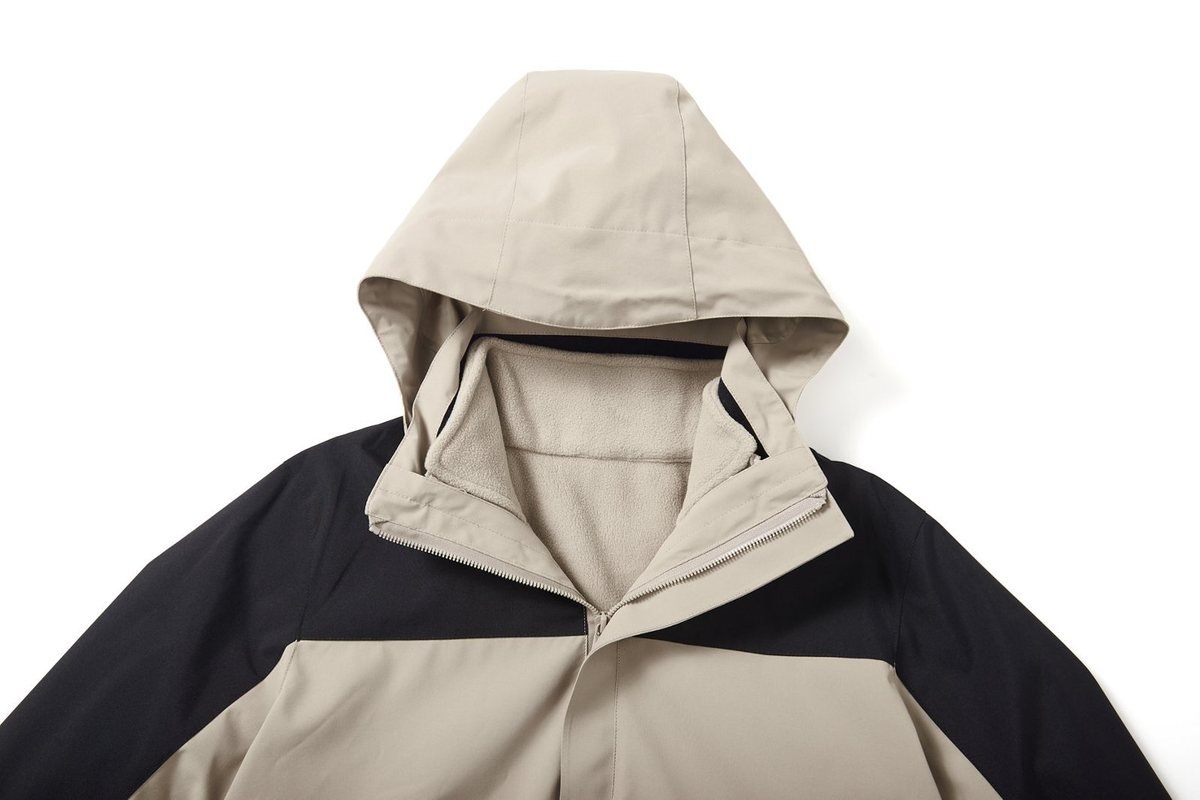
What Is a Bio-Based Membrane in Technical Jackets?
A bio-based membrane uses plant-derived polymers instead of petroleum-based polyurethane or ePTFE to create the waterproof-breathable layer in technical outerwear. The membrane sits between the outer shell fabric and inner lining, blocking liquid water while allowing water vapor (sweat) to escape. Bio-based versions replace 20-60% of fossil-fuel carbon with renewable sources like castor oil, corn starch, or algae-derived polyols.
How Bio-Based Content Is Measured
ASTM D6866 uses radiocarbon dating to measure the ratio of biogenic carbon (from recently living plants) to petrochemical carbon in a polymer sample. A result of “40% bio-based” means 40% of the membrane’s carbon atoms came from renewable feedstock. This test is the only way to verify a supplier’s bio-content claims. Without ASTM D6866 documentation, you’re relying on marketing language.
Performance Trade-Offs
Early-generation bio-based membranes (2015-2020) struggled with durability under abrasion and UV exposure compared to traditional PU coatings. Current formulations from specialized membrane suppliers have closed that gap, achieving 50+ wash cycles and 100+ hours of UV exposure without delamination. When evaluating a bio-based membrane technical jacket ODM factory, request third-party wash-cycle and UV-resistance test reports, not just waterproof ratings.
ODM vs OEM: Which Model Fits Your Brand?
The distinction between ODM (Original Design Manufacturer) and OEM (Original Equipment Manufacturer) determines how much control you retain over jacket design, and how quickly you can bring a product to market.
When ODM Accelerates Time-to-Market
If you’re launching a technical outerwear line without a technical designer on staff, ODM lets you a factory’s existing jacket patterns and construction methods. You select from proven silhouettes (softshell, hardshell, 3-in-1), specify your membrane and DWR requirements, and customize branding. Our OEM jacket manufacturing facility maintains a library of 40+ technical jacket patterns optimized for bio-based membranes and PFC-free DWR systems.
When OEM Protects Your Design IP
Brands with proprietary fit systems, patented ventilation features, or unique seam-sealing methods require OEM production to maintain design ownership. You submit CAD files and construction specs; the factory sources materials to your standards and builds to your tolerances. OEM also makes sense when your target customer expects a specific silhouette (school uniforms requiring a traditional blazer cut, corporate teams needing a specific chest-logo placement).
Performance Specs That Matter
Bio-based membrane marketing often emphasizes sustainability credentials while glossing over the performance data buyers need to validate. These four specs determine whether a jacket performs in real-world conditions.
Hydrostatic Head (Waterproof Rating)
Measured in millimeters, this test determines how much water pressure a membrane can withstand before leaking. A column of water is placed on the fabric; the height at which three drops penetrate is the hydrostatic head rating.
- 5,000mm: Light rain, urban commuting, minimal outdoor exposure
- 10,000mm: Moderate rain, hiking, school field trips
- 20,000mm+: Heavy rain, alpine conditions, extended outdoor work
A common complaint buyers raise is that waterproof jackets fail after a season of use. This happens when the DWR (durable water repellent) coating on the face fabric wets out, allowing water to saturate the outer layer. The membrane remains waterproof, but the jacket feels clammy because sweat vapor can’t escape through the wet face fabric. Specifying a high-quality PFC-free DWR and educating end-users on reproofing (washing and tumble-drying to reactivate DWR) extends functional waterproofness.
MVTR (Breathability)
Moisture vapor transmission rate measures how many grams of water vapor pass through one square meter of fabric in 24 hours. Higher MVTR means better breathability and less internal condensation during active use.
- 5,000 g/m²/24hr: Minimal breathability, suitable only for stationary use (rain ponchos, event staff jackets)
- 10,000 g/m²/24hr: Baseline for active use (hiking, cycling, outdoor work)
- 20,000 g/m²/24hr+: High-output activities (trail running, ski touring, alpine climbing)
Bio-based membranes using castor-oil polyols typically achieve 10,000-15,000 g/m²/24hr MVTR, comparable to mid-tier polyurethane membranes. ePTFE (expanded polytetrafluoroethylene) membranes still dominate the 20,000+ MVTR category, but the gap is narrowing as bio-based formulations improve.
Abrasion Resistance
Martindale testing measures how many rubs a fabric withstands before showing visible wear. For technical jackets, the membrane itself is protected by the face fabric, but seam tape and high-wear zones (shoulders under pack straps, elbows) experience direct abrasion.
- 20,000 cycles: Minimum for casual outdoor use
- 50,000 cycles: Standard for hiking and light mountaineering
- 100,000 cycles+: Required for workwear and heavy-duty outdoor use
Seam-Sealing Quality
A membrane is only as waterproof as its weakest seam. Seam tape must be applied with consistent heat and pressure to bond fully without creating pinholes. Request a cross-section photo of seam tape application during factory audits. Poor seam-sealing shows up as intermittent leaking along stitching lines after 5-10 washes.
Certifications and Compliance for Eco-Material Claims
Regulatory bodies in the US, EU, UK, and Canada enforce different standards for environmental marketing claims. A bio-based membrane technical jacket ODM factory must provide documentation that satisfies these jurisdictions if you’re selling into those markets.
US Market: FTC Green Guides
The Federal Trade Commission’s Green Guides prohibit unqualified environmental claims. Stating “eco-friendly jacket” without specifying which component is eco-friendly and to what degree is considered deceptive marketing. Acceptable claims include “jacket shell fabric contains 50% recycled polyester (GRS-certified)” or “membrane contains 40% bio-based carbon (ASTM D6866-verified).” The FTC does not pre-approve claims; enforcement happens through competitor complaints and consumer protection investigations.
EU Market: EU Ecolabel and REACH
The EU Ecolabel sets strict limits on hazardous substances in textile production, including restricted use of PFCs (per- and polyfluorinated chemicals) in DWR treatments. REACH (Registration, Evaluation, Authorisation, and Restriction of Chemicals) requires suppliers to disclose any Substance of Very High Concern (SVHC) present above 0.1% by weight. A PFC-free DWR system is now the baseline for EU market access; older C8 and C6 fluorocarbon DWRs are restricted.
Canada: Competition Bureau Environmental Claims Guidelines
Similar to US FTC rules, Canada’s Competition Bureau requires environmental claims to be specific, verifiable, and not misleading. “Sustainable jacket” is too vague; “jacket made with 60% bio-based membrane and PFC-free water repellent” is acceptable if you hold test reports proving those figures.
Factory Selection Criteria
Selecting a factory based solely on per-unit cost is the fastest way to end up with a container of jackets that fail waterproof testing or arrive with inconsistent seam-sealing. These five criteria separate capable bio-based membrane producers from generic cut-and-sew contractors.
Membrane Sourcing and Testing
Does the factory source membranes from a reputable supplier with published test data, or do they apply an in-house coating of unknown formulation? Request the membrane supplier’s name, bio-based content percentage (ASTM D6866 report), and third-party waterproof/breathability test results. A factory that hesitates to share this documentation likely doesn’t have it.
Seam-Sealing Equipment
Automated seam-sealing machines apply tape with consistent heat and pressure; manual seam-sealing is prone to gaps and pinholes. Ask whether the factory uses hot-air or hot-wedge seam-sealing equipment, and request photos of the sealing station. In our 3,000m² Taizhou Sanmen facility, we run dedicated seam-sealing lines for waterproof jacket production, separate from standard softshell and windbreaker lines that don’t require taped seams.
Quality Control Process
A waterproof jacket requires in-process inspection at three stages: after cutting (to catch fabric defects before sewing), after seam-sealing (to verify tape adhesion), and final inspection (hydrostatic head spot-testing on finished garments). Factories that only inspect finished goods miss defects that should have been caught earlier, leading to higher rejection rates and delayed shipments.
Sampling Capability
Can the factory produce a single sample garment for fit approval before you commit to a bulk order? Many factories require a minimum sample order of 5-10 pieces, which ties up $500-1,000 before you’ve validated the product. Our sample development process allows 1-piece sampling with a $100 fee (refundable against your first bulk order), letting you test fit, fabric hand, and construction quality without upfront capital risk.
Communication and Documentation
Overseas factory communication is a common pain point for first-time importers. Does the factory provide English-language tech packs, progress photos during production, and pre-shipment inspection reports? A factory that communicates proactively (sending photos of fabric swatches for approval, flagging potential delays before they become critical) is worth a 5-10% price premium over one that goes silent between deposit and shipment.
MOQ, Lead Time, and Sampling
Minimum order quantities and production timelines determine whether a factory is viable for your brand stage and budget.
Sample MOQ
Most technical outerwear factories require 5-10 sample pieces per style, with per-piece costs of $80-150 depending on complexity. For a brand validating three colorways, that’s $1,200-4,500 in sampling cost before a single unit is sold. Low-MOQ jacket manufacturers like PTOUTWEAR offer 1-piece sampling, reducing upfront validation cost to $100 per style.
Bulk Production MOQ
Standard technical jacket MOQs range from 300-500 pieces per style for most Chinese manufacturers, driven by fabric minimums and production-line efficiency. For a DTC brand testing a new product category, that’s $15,000-25,000 tied up in inventory before market validation. Factories offering 30-piece per-SKU minimums allow you to launch with $1,500-2,500 in inventory per style, leaving capital free for marketing and customer acquisition.
Sample MOQ: 1 piece. Bulk MOQ: 30 pieces per SKU. Sampling time: 7-10 days. Bulk production: 25-35 days after deposit.
Lead Time Breakdown
A typical bio-based membrane technical jacket production timeline includes these phases:
- Fabric sourcing: 10-15 days (membrane, face fabric, lining, zippers, trims)
- Cutting and sewing: 12-18 days depending on order size
- Seam-sealing and finishing: 3-5 days
- Quality inspection: 2-3 days
- Packing and export documentation: 2-3 days
Total production time from deposit to ready-to-ship: 25-35 days for orders of 30-200 units. Add 20-35 days for ocean freight to US West Coast ports, 30-40 days to East Coast.
Air Freight for Urgent Orders
Air freight reduces shipping time to 5-7 days but costs $4-8 per kilogram versus $0.50-1.00/kg for ocean. A technical jacket weighs approximately 600-800 grams; air freight adds $2.40-6.40 per unit. This makes sense for sample shipments or restocking a sold-out SKU, but not for initial inventory builds.
Key Takeaways
- ASTM D6866 testing is the only verifiable method to confirm bio-based carbon content in a membrane, with commercial technical outerwear membranes typically reporting 20-60% bio-based content.
- A minimum hydrostatic head of 10,000mm is required for moderate outdoor use, while alpine and extended-exposure conditions demand 20,000mm or higher waterproof ratings.
- OEKO-TEX Standard 100 certification screens textiles against more than 1,000 harmful substances and is required for EU market access and many school uniform programs.
- The Global Recycled Standard (GRS) requires a minimum of 20% recycled content before a product can carry the GRS label and mandates full supply-chain traceability audits.
- PTOUTWEAR’s 1-piece sample MOQ with $100 refundable fee allows brand founders to validate fit and membrane performance before committing to 30-piece bulk production minimums.
- Seam-sealing quality determines real-world waterproof performance; automated hot-air or hot-wedge seam-sealing machines deliver consistent tape adhesion compared to manual application methods.
FAQ
What is a bio-based membrane in technical jackets?
A bio-based membrane is a waterproof-breathable layer made with plant-derived polymers (such as castor oil or corn starch) instead of petroleum-based materials. The membrane sits between the outer shell and lining, blocking liquid water while allowing sweat vapor to escape. Bio-based content is verified through ASTM D6866 testing, which measures the percentage of renewable carbon versus fossil-fuel carbon in the polymer. Commercial bio-based membranes for technical outerwear typically contain 20-60% plant-derived content.
What is the difference between OEM and ODM jacket manufacturing?
OEM (Original Equipment Manufacturer) means you provide complete design specifications and tech packs; the factory executes your design. ODM (Original Design Manufacturer) means the factory owns the base jacket design; you customize colors, logos, and minor details from their existing patterns. ODM accelerates time-to-market (30-45 days versus 60-90 days for OEM) and works well for brands without in-house technical designers. OEM is necessary when you require proprietary fit systems or patented construction features.
How do I find a technical jacket ODM factory?
Start by requesting membrane supplier documentation (ASTM D6866 bio-content reports, hydrostatic head and MVTR test results) and photos of seam-sealing equipment. Verify the factory has dedicated waterproof-jacket production lines separate from standard softshell lines. Ask for 1-piece sample capability to validate construction quality before bulk orders. Check for relevant certifications (OEKO-TEX Standard 100 for EU market access, GRS for recycled-content claims, BSCI for ethical sourcing). Request references from brands in your category (DTC outdoor, corporate uniforms, school programs).
What certifications should a sustainable outerwear factory have?
For bio-based membrane claims, ASTM D6866 verification is mandatory. OEKO-TEX Standard 100 certifies the finished product is free from harmful chemicals and is required for EU sales and many institutional buyers. GRS (Global Recycled Standard) is necessary if you’re marketing recycled polyester face fabrics or recycled-content components. BSCI audits labor practices and is increasingly required by UK and EU corporate buyers. ISO 9001 demonstrates quality management systems. PFC-free DWR certification is essential for EU market access due to REACH restrictions on fluorocarbon water repellents.
What is the MOQ for custom technical jackets?
Most technical outerwear factories require 300-500 pieces per style for bulk production, driven by fabric minimums and production efficiency. Sample MOQs typically range from 5-10 pieces at $80-150 per sample. Factories specializing in small-batch production offer bulk MOQs as low as 30 pieces per SKU, allowing DTC brands and school uniform programs to launch with $1,500-2,500 in inventory per style instead of $15,000-25,000. For private label programs, 1-piece sampling enables fit validation before committing to bulk orders.
Ready to validate bio-based membrane performance with 1-piece samples before committing to bulk production?
Request Technical Specs and Sampling Timeline →
Written by Ivan Chen, Sales Engineer at PTOUTWEAR – 13 years in outdoor apparel manufacturing.