Sourcing a 20k waterproof 3 layer laminate jacket manufacturer requires understanding membrane construction, DWR treatment durability, and production minimums that don’t lock up working capital. Brands launching technical outerwear face a common pain: high MOQs force inventory risk before market validation, while inconsistent waterproofing leads to customer returns and damaged reputation. This guide walks through the technical specifications, manufacturing processes, and commercial terms you need to evaluate suppliers confidently.
Executive Summary
- 20k waterproofing rating: withstands 20,000mm water column pressure, suitable for sustained heavy rain and alpine conditions
- 3-layer laminate construction: bonds outer fabric, waterproof membrane, and inner lining into a single durable layer, eliminating internal delamination
- Sample MOQ at PTOUTWEAR: 1 piece with $100 refundable sample fee; bulk MOQ 30 pieces per SKU enables brand validation without cash lock-up
- PFC-free DWR treatment: eliminates perfluorinated chemicals while maintaining water repellency, though requires periodic re-proofing like all DWR finishes
- Production lead time: 7-10 days for pre-production samples, 25-35 days for bulk orders depending on fabric sourcing and customization complexity
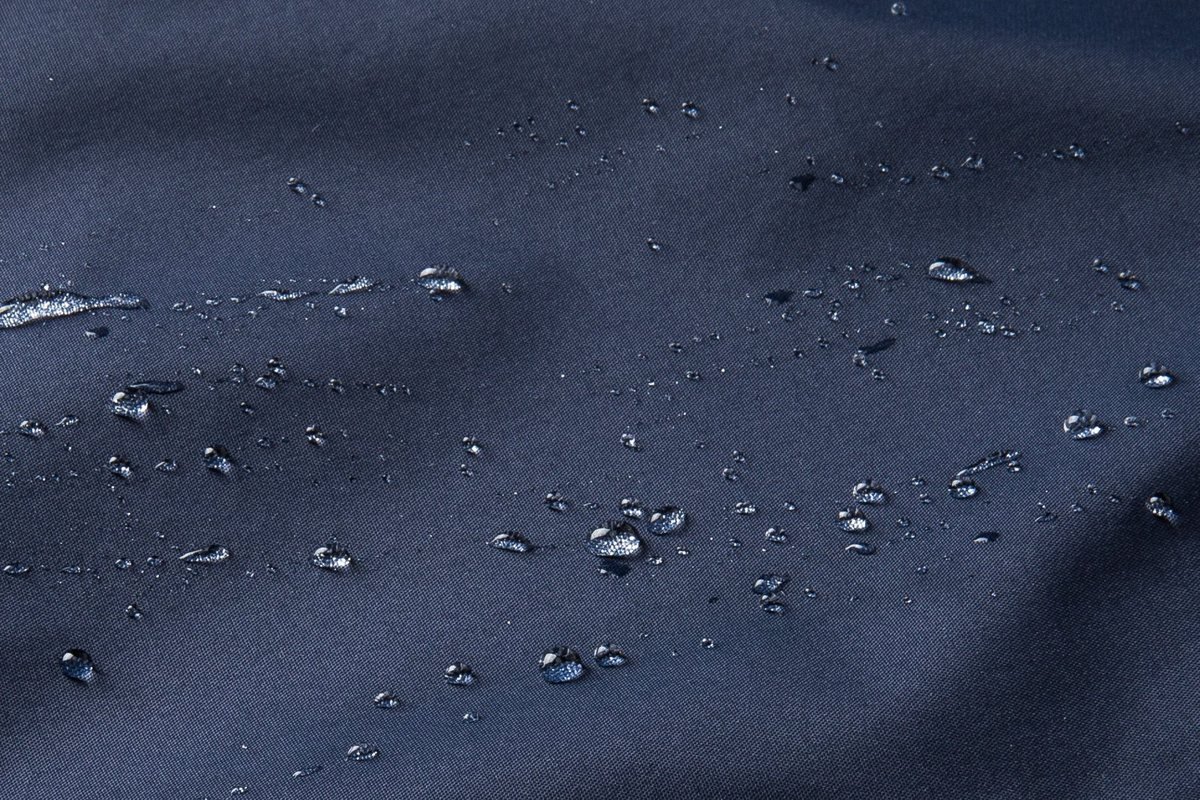
What Is a 20k Waterproof Rating?
A 20,000mm waterproof rating measures the hydrostatic pressure a fabric can withstand before water penetrates. Testing involves placing a sealed tube of water on the fabric and measuring the column height at which three drops seep through. A 20k rating handles sustained heavy rain, wet snow, and alpine storm conditions. Most urban rain jackets use 5k-10k ratings; 20k targets serious outdoor use.
How 20k Compares to Other Ratings
Light rain and drizzle requires only 5,000mm. Steady rain needs 10,000mm. Heavy rain and wet snow demand 15,000-20,000mm. Extreme alpine and expedition conditions require 25,000-30,000mm. A 20k waterproof 3 layer laminate jacket manufacturer positions your product between serious outdoor performance and expedition-grade overkill, matching the needs of weekend backpackers, ski tourers, and corporate outdoor programs without the cost premium of 28k Gore-Tex Pro.
Breathability Pairing: MVTR Ratings
Waterproofing alone creates a plastic-bag effect. Breathability, measured in moisture vapor transmission rate (MVTR), determines comfort during exertion. A 20k waterproof membrane typically pairs with 10,000-15,000 g/m²/24hr MVTR. Lower breathability causes internal condensation during aerobic activity. Higher breathability adds cost without proportional comfort gain for most users. The pairing depends on intended use: static belay jackets tolerate lower MVTR; ski touring and trail running demand higher.
3-Layer Laminate Construction Explained
A 3-layer laminate bonds the outer shell fabric, waterproof-breathable membrane, and inner protective layer into a single permanent structure. This differs from 2-layer (membrane bonded to outer fabric only, with a separate hanging lining) and 2.5-layer (membrane with a printed protective pattern instead of a full inner layer). The 3-layer approach delivers durability, eliminates internal delamination, and reduces weight compared to 2-layer systems.
Layer 1: Outer Shell Fabric
The face fabric protects the membrane from abrasion, UV degradation, and punctures. Common choices include 20-40 denier nylon ripstop or polyester plain weave. Lower denier reduces weight but sacrifices abrasion resistance. The outer fabric also carries the DWR treatment, which prevents the face from wetting out. A common complaint buyers raise: once the DWR wears off, even a waterproof jacket feels clammy because the wet face fabric blocks breathability. PFC-free DWR addresses environmental and regulatory concerns but requires more frequent reapplication than legacy fluorocarbon treatments.
Layer 2: Waterproof-Breathable Membrane
The membrane itself provides the 20k waterproofing. Polyurethane (PU) and polyester-based membranes dominate the non-Gore-Tex market. PU membranes offer cost efficiency and reliable waterproofing but lower breathability than ePTFE (expanded polytetrafluoroethylene). Polyester membranes balance cost and performance. Membrane thickness ranges from 10-25 microns; thicker membranes improve durability but reduce breathability. When evaluating a 20k waterproof 3 layer laminate jacket manufacturer, ask for membrane composition, thickness, and independent test reports confirming the 20k rating under ISO 811 or AATCC 127 standards.
Layer 3: Inner Protective Layer
The inner layer shields the membrane from body oils, sweat salts, and abrasion from pack straps. Lightweight tricot knit or circular knit fabrics (30-50 gsm) are standard. This layer also wicks moisture away from skin, improving comfort. In 2.5-layer construction, a printed or sprayed protective coating replaces this full fabric layer, saving 20-30 grams but creating a clammy feel against skin during extended wear.
Manufacturing Process for 3-Layer Laminates
Producing a 3-layer laminate jacket involves fabric lamination, pattern cutting, seam sealing, and quality control. Each step impacts final waterproof performance and durability. Understanding the process helps you evaluate supplier capabilities and identify where quality failures occur.
Lamination: Bonding the Three Layers
Lamination bonds the outer fabric, membrane, and inner layer using heat, pressure, and adhesive (typically polyurethane-based). The process requires precise temperature control (140-180°C depending on membrane type) and uniform pressure across the fabric width. Poor lamination causes delamination after 20-30 wash cycles or under UV exposure. A qualified OEM jacket manufacturing partner runs peel-strength tests (minimum 1.5-2.0 N/cm under ASTM D903) on every lamination batch to confirm bond integrity.
Pattern Cutting and Assembly
Automated cutting machines ensure pattern accuracy within ±1mm tolerance. Manual cutting introduces variation that affects fit consistency across production runs. Assembly uses flatlock or overlock stitching; every needle puncture creates a potential leak point. Seam sealing (covered below) addresses this. Critical stress points-shoulder seams, underarm gussets, pocket edges-require reinforcement patches or bar-tack stitching to prevent membrane tear-out under pack-strap load.
Seam Sealing: Waterproofing the Stitch Lines
Fully taped seams use heat-activated waterproof tape (typically 18-22mm width) applied over every stitch line. The tape bonds to the laminate under heat and pressure, creating a continuous waterproof barrier. Critically taped seams seal only high-exposure areas (shoulders, hood, main body seams) to save cost; this approach works for urban rain jackets but fails in sustained downpours. A 20k jacket demands fully taped seams. Inspect sample garments for tape adhesion: peel a corner gently; if it lifts easily, the sealing process is inadequate.
Quality Control Checkpoints
QC occurs at lamination (peel strength, visual inspection for bubbles or wrinkles), cutting (pattern accuracy), assembly (stitch tension, seam alignment), sealing (tape adhesion), and final inspection (water spray test, fit check). A water spray test involves misting the finished garment and inspecting the interior for moisture penetration. This catches sealing failures before shipment. Our 3,000m² Taizhou Sanmen facility runs inline QC at each production stage, with final inspection sampling 10% of each batch for destructive peel-strength and hydrostatic testing.
Key Specifications to Request from Manufacturers
When evaluating a 20k waterproof 3 layer laminate jacket manufacturer, request detailed specifications and test reports. Vague claims like “waterproof” or “breathable” without supporting data signal either inexperience or deliberate evasion. The table below outlines critical specs and acceptable ranges.
Request third-party test reports from SGS, Intertek, or Bureau Veritas. In-house test claims without independent verification are unreliable. OEKO-TEX Standard 100 certification confirms the fabric is free from harmful substances; this matters for corporate uniform programs and school outerwear contracts where chemical safety is a procurement requirement. PTOUTWEAR holds ISO 9001 and SGS test reports and uses PFC-free DWR across all waterproof shell production; OEKO-TEX is pending, not yet held.
MOQ and Pricing Structure for 20k Laminates
Minimum order quantities and pricing tiers determine whether a manufacturer fits your cash flow and inventory risk tolerance. Traditional outdoor jacket suppliers demand 500-1,000 pieces per style, tying up $15,000-$30,000 before you validate product-market fit. Low-MOQ manufacturers enable phased market entry.
Sample Development Costs
Sample fees range from $80-$150 per piece depending on customization complexity. Basic samples (standard pattern, single colorway, screen-printed logo) cost less. Fully custom samples (unique pattern, YKK AquaGuard zippers, woven labels, multiple colorways) cost more. PTOUTWEAR charges a $100 sample fee, refundable against bulk orders of 30+ pieces per SKU. Sampling time is 7-10 days after pattern approval and fabric selection. Brands testing three styles can validate fit, waterproofing, and customer feedback for $300 total, refunded when they scale.
Bulk Production Minimums
A low MOQ jacket manufacturer offering 30-50 pieces per SKU enables DTC brands to launch with $3,000-$5,000 inventory investment instead of $20,000+. This matters for crowdfunding campaigns, pop-up retail tests, and corporate uniform trials. Factories achieving low MOQs do so through mixed-batch production (running multiple small orders on the same production line) and flexible fabric sourcing (purchasing laminate rolls in 500-meter minimums and allocating across clients). Factories demanding 500+ pieces per style typically source fabric in 3,000-meter minimums, forcing the MOQ up.
Pricing Tiers by Order Volume
Unit costs decrease as volume rises due to fabric-roll efficiency, setup amortization, and labor learning curves. A 30-piece order might cost $45-$55 per jacket FOB. A 100-piece order drops to $38-$48. A 500-piece order reaches $32-$42. A 1,000-piece order hits $28-$38. Exact pricing depends on fabric grade (20D vs. 40D face fabric), membrane type (PU vs. polyester), customization (embroidered logos, custom zippers, unique colorways), and trim choices (YKK vs. generic zippers, woven vs. printed labels).
Customization Options for Brand Differentiation
A 20k waterproof 3 layer laminate jacket manufacturer should offer customization beyond logo placement. Differentiation comes from fit, feature set, and material choices that align with your target user’s activity profile.
Fit and Pattern Adjustments
Standard patterns (athletic fit, regular fit, relaxed fit) serve most buyers. Custom patterns require fit-sample iterations, adding 2-3 weeks to development time and $200-$400 in pattern-making fees. Common adjustments include sleeve length for tall users, torso length for climbing harness compatibility, and hem drop for cycling coverage. Brands targeting specific demographics (women’s-specific fit, Asian versus Western sizing) need custom grading. Provide detailed fit specs (chest circumference, sleeve length, back length) and reference garments to minimize iteration cycles.
Feature Add-Ons
- Pit zips: underarm zippers improve ventilation during aerobic activity; a common complaint about waterproof jackets is overheating during exertion, which pit zips directly address
- Helmet-compatible hood: adjustable hood with rear volume and visor stiffener accommodates climbing or ski helmets
- Internal pockets: mesh or zippered chest pockets for valuables, phone, or avalanche transceiver
- Adjustable cuffs: Velcro or elastic cuffs seal out rain and snow; over-glove compatibility requires wider cuff openings
- Powder skirt: snap-in skirt prevents snow entry during skiing or snowboarding; adds cost and weight for non-winter users
Branding and Logo Placement
A custom logo service offers screen printing, embroidery, heat transfer, and woven labels. Screen printing works for large, simple logos on flat surfaces (chest, back). Embroidery suits smaller logos (chest, sleeve) and adds perceived quality but increases cost by $1.50-$3.00 per placement. Heat transfer enables full-color gradients and photographic detail. Woven labels (neck, hem) carry care instructions and brand identity. Corporate uniform programs often require multiple logo placements (company logo on chest, department identifier on sleeve, safety certification on back).
Lead Times and Production Planning
Production timelines impact launch schedules, pre-order campaigns, and seasonal inventory readiness. Understanding each phase helps you plan backward from your target ship date.
Pre-Production Sample Phase
Sample development takes 7-10 days after fabric and trim selection. This assumes the manufacturer has the laminate in stock. Custom laminate orders (unique colorway, proprietary membrane) add 15-20 days for fabric-mill production. Fit adjustments require additional sample rounds; budget 7 days per iteration. Brands launching via crowdfunding should complete sampling 45-60 days before campaign launch to photograph and test the final product.
Bulk Production Timeline
Bulk production spans 25-35 days for standard orders (single colorway, standard features, in-stock fabric). Custom fabric orders extend this to 40-50 days. Production phases include fabric procurement (5-7 days if in stock, 15-20 days if custom), cutting (2-3 days), assembly (10-15 days depending on order size), seam sealing (2-3 days), and final QC (2-3 days). Rush orders require factory schedule availability; the PTOUTWEAR rush option is 1,000 pieces in about 2 weeks at a 25% expedite fee.
Shipping and Customs Clearance
Sea freight from China to Europe takes 25-35 days port-to-port, plus 5-10 days for customs clearance and inland delivery. Air freight takes 5-7 days but costs 4-6x more; use air only for sample shipments or urgent restocks. DDP (Delivered Duty Paid) terms simplify customs but transfer risk to the seller; DAP (Delivered At Place) or FOB (Free On Board) terms give you more control but require a customs broker. European buyers should confirm the manufacturer’s experience with EU customs documentation (EORI numbers, HS code classification, CE marking where applicable).
Quality Assurance and Testing Protocols
Quality failures in waterproof jackets manifest as seam leaks, delamination, DWR failure, and zipper malfunction. Each has a root cause in material selection, process control, or QC gaps. Effective QA catches these before shipment.
Incoming Material Inspection
Inspect laminate rolls for visual defects (bubbles, wrinkles, color variation), measure waterproof rating on random samples (hydrostatic head test), and verify DWR performance (spray test). Reject rolls that fail spec. Zippers, snaps, and Velcro should meet pull-strength and cycle-life standards (YKK AquaGuard zippers rated for 2,000+ cycles). Trims (drawcords, toggles, Velcro) should pass flammability and chemical-safety tests if targeting EU or US markets.
In-Process Quality Checks
Monitor seam-sealing tape adhesion during production. Pull-test random seams; tape should not peel under 1.5 N/cm force. Check stitch tension; loose stitches create large needle holes that sealing tape may not fully cover. Inspect laminate handling; rough handling or sharp edges cause micro-tears that grow into leaks. Inline QC catches these before the garment reaches final assembly, reducing rework cost.
Final Inspection and Testing
Final QC includes dimensional checks (chest, sleeve, length measurements within ±2cm tolerance), visual inspection (stitching, sealing, logo placement), and functional testing. A water spray test involves misting the garment and checking the interior for moisture. A full hydrostatic test on random samples confirms the 20k rating holds across production. AQL (Acceptable Quality Limit) sampling plans (typically AQL 2.5 for major defects, AQL 4.0 for minor defects) determine pass/fail thresholds. Third-party inspection services (SGS, Intertek, Bureau Veritas) provide independent verification for high-value orders.
Certifications and Compliance for European Markets
European buyers require compliance with REACH (Registration, Evaluation, Authorisation, and Restriction of Chemicals), OEKO-TEX, and product-safety directives. Non-compliance blocks customs clearance and exposes you to legal liability.
REACH Compliance
REACH restricts hazardous substances in textiles. Waterproof laminates must not contain banned phthalates, heavy metals (lead, cadmium), or certain azo dyes. Manufacturers should provide REACH declarations for all fabric, membrane, and trim components. PFC-free DWR addresses the REACH restriction on long-chain perfluorinated compounds (C8 chemistry). Short-chain PFC (C6) remains legal but faces increasing scrutiny; PFC-free alternatives (wax-based or dendrimer chemistry) eliminate regulatory risk entirely.
OEKO-TEX Standard 100
OEKO-TEX Standard 100 certifies textiles are free from harmful substances. Testing screens for pesticides, heavy metals, formaldehyde, phthalates, and allergenic dyes. Certification applies to the finished product, not just raw materials, so every component (fabric, thread, zippers, labels) must be OEKO-TEX certified or tested. PTOUTWEAR sources OEKO-TEX-certified fabrics on request for waterproof shell production; current production uses SGS-tested PFC-free DWR and complies with REACH substance restrictions.
Product Safety and Labeling
EU regulations require care labels in the language of the destination country, fiber content disclosure, and country-of-origin marking. Flammability standards (EN 14878 for outdoor clothing) apply to certain categories. Corporate workwear may require high-visibility (EN ISO 20471) or flame-retardant (EN ISO 11612) treatments. Verify your end-use category and confirm the manufacturer’s compliance documentation before production.
Common Production Pitfalls and How to Avoid Them
Production failures in waterproof jackets often stem from material substitution, process shortcuts, or miscommunication. Knowing where problems arise helps you set clear specs and inspection criteria.
Material Substitution
Unscrupulous suppliers substitute cheaper membranes or face fabrics after sample approval. A 20k PU membrane might be swapped for a 10k coating, cutting cost by $3-$5 per jacket but halving waterproof performance. Prevent this by specifying material brands (e.g., “20D nylon ripstop, Toray membrane, YKK AquaGuard zippers”) and requiring pre-production material samples for approval. Third-party inspection during production catches substitutions before shipment.
Incomplete Seam Sealing
Partial seam sealing (taping only main seams, skipping pocket edges or zipper flaps) saves cost but creates leak points. Specify 100% seam sealing in your tech pack and inspect random garments by turning them inside-out to verify every stitch line is taped. Water spray testing catches incomplete sealing before shipment.
DWR Application Failures
DWR must be applied at the correct concentration and cured at the correct temperature. Under-application causes premature wet-out. Over-application creates a stiff hand-feel and may not improve performance. Verify DWR application via AATCC 22 spray test on pre-production samples and require the same test on bulk production. PFC-free DWR requires more careful application than legacy fluorocarbon treatments; work with a 20k waterproof 3 layer laminate jacket manufacturer experienced in PFC-free chemistry.
Sizing and Fit Inconsistencies
Fit variation across production runs frustrates customers and increases returns. Causes include pattern drift (cutting tolerances exceed ±1mm), fabric stretch variation (different laminate batches have different mechanical properties), and grading errors (size scaling doesn’t maintain proportions). Lock patterns after sample approval, specify cutting tolerances in your tech pack, and run dimensional checks during final QC.
Evaluating Manufacturer Capabilities
Not all factories claiming waterproof-jacket expertise can deliver consistent 20k performance. Capability assessment involves facility audits, reference checks, and technical questioning.
Facility and Equipment Verification
Visit the factory or request video documentation of lamination equipment, seam-sealing machines, and QC testing apparatus. A capable facility has dedicated lamination lines (not outsourced), automatic seam-sealing machines (not manual tape application), and in-house hydrostatic testing equipment. Our 3,000m² Taizhou Sanmen facility runs 20 production lines with inline QC, in-house cutting and sewing, and dedicated seam-sealing stations for waterproof shell production.
Reference Projects and Client Testimonials
Request references from brands operating in your target market. Ask about on-time delivery rate, defect rates, responsiveness to quality issues, and communication quality. A manufacturer serving European outdoor brands understands REACH compliance, CE marking, and EU sizing conventions better than one serving only domestic Chinese or US markets. Verify claimed certifications (ISO 9001, BSCI, OEKO-TEX) through certificate numbers and issuing-body websites.
Technical Communication and Responsiveness
Test communication during the RFQ phase. Does the supplier ask clarifying questions about your intended use case, target waterproof rating, and feature requirements? Do they provide detailed answers with spec numbers and test standards? Vague responses (“our jackets are very waterproof”) signal lack of technical depth. Detailed responses (“we use a 20k PU membrane tested to ISO 811, paired with 20D nylon ripstop and PFC-free DWR rated AATCC 22 Grade 90+ after 20 washes”) demonstrate expertise.
Cost Optimization Strategies Without Sacrificing Quality
Reducing per-unit cost while maintaining 20k waterproof performance requires strategic choices in materials, features, and order planning.
Fabric and Trim Selection
- Face fabric denier: 20D fabric costs less than 15D and offers better abrasion resistance; use 15D only where weight savings justify the cost premium
- Zipper brand: YKK AquaGuard zippers cost $2-$4 more than generic waterproof zippers but offer superior reliability and brand recognition; use YKK for main zippers, generic for internal pockets
- Membrane type: PU membranes cost 15-25% less than polyester membranes with similar waterproof ratings; PU suits budget-conscious buyers, polyester suits brands emphasizing durability
- DWR treatment: PFC-free DWR costs the same as C6 fluorocarbon but requires more frequent reapplication; educate customers on care to reduce returns
Feature Rationalization
Every feature adds cost and complexity. Pit zips add $3-$5 per jacket. Helmet-compatible hoods add $2-$4. Internal pockets add $1.50-$3. Powder skirts add $4-$6. Prioritize features your target user actually needs. A trail-running rain shell doesn’t need a powder skirt. A ski jacket doesn’t need a stuff-sack pocket. Match features to use case.
Order Consolidation and Planning
Consolidating multiple small orders into fewer larger orders reduces per-unit cost through setup amortization and fabric-roll efficiency. Instead of ordering 30 pieces in March, 30 in June, and 30 in September, order 90 pieces in March with staggered delivery. This reduces unit cost by 8-12% while maintaining cash-flow control through phased payment terms (30% deposit, 40% at production midpoint, 30% before shipment).
Working with a Vertically Integrated Manufacturer
Vertically integrated manufacturers control lamination, cutting, sewing, sealing, and QC in-house. This reduces lead times, improves quality consistency, and simplifies communication compared to brokers who outsource production steps.
Advantages of Vertical Integration
In-house lamination ensures membrane quality and eliminates the risk of third-party substitution. In-house seam sealing allows real-time process adjustments if tape adhesion issues arise. Single-facility production reduces logistics complexity and communication overhead. You deal with one team, not three subcontractors. Quality issues are resolved faster because the production manager controls all process steps. In our 12+ years manufacturing outdoor jackets in Taizhou and Yiwu, vertical integration has reduced our average lead time from 40 days (when we outsourced lamination) to 28 days (in-house lamination), while improving first-pass QC yield from 92% to 97%.
Transparency and Traceability
Vertical integration enables full traceability from raw laminate roll to finished garment. You can request batch numbers for fabric, membrane, and trim components, linking them to test reports and QC records. This matters for brands pursuing sustainability certifications (Global Recycled Standard, bluesign) or responding to customer quality complaints. Brokers often cannot provide this level of traceability because they don’t control upstream suppliers.
Sustainability Considerations in Waterproof Jacket Production
Sustainability in technical outerwear involves material sourcing, chemical management, and end-of-life planning. European buyers increasingly require suppliers to demonstrate environmental responsibility beyond regulatory compliance.
PFC-Free DWR and Membrane Chemistry
Legacy fluorocarbon DWR (C8 and C6 chemistry) persists in the environment and bioaccumulates. PFC-free alternatives use wax-based or dendrimer chemistry. Performance gaps have narrowed; modern PFC-free DWR achieves AATCC 22 Grade 90+ when new, though it requires more frequent reapplication than C6. Membrane chemistry also matters: PU membranes are not recyclable in standard textile streams, while polyester-based membranes can be mechanically recycled if separated from face fabric. Brands targeting sustainability-conscious buyers should specify PFC-free DWR and explore recyclable membrane options.
Recycled and Organic Face Fabrics
Recycled polyester and nylon face fabrics reduce virgin-material demand. The Global Recycled Standard (GRS) requires at least 20% recycled content and tracks material from source to finished product. Recycled fabrics cost 5-10% more than virgin but enable marketing claims that resonate with eco-conscious buyers. Organic cotton is rarely used in waterproof shells (cotton absorbs water and loses insulation when wet) but appears in soft-shell jackets where breathability outweighs waterproofing.
Waste Reduction and Energy Efficiency
Fabric waste during cutting can reach 15-20% of total material. Automated nesting software optimizes pattern placement, reducing waste to 8-12%. Lamination and sealing processes consume energy; factories using waste-heat recovery and LED lighting reduce environmental impact. Ask potential manufacturers about waste-reduction programs and energy-efficiency initiatives. Brands pursuing B Corp or similar certifications need suppliers who can document these efforts.
Next Steps for Brand Founders and Buyers
Launching a waterproof jacket line or sourcing corporate outdoor uniforms requires aligning technical specs, MOQ, budget, and timeline. The process breaks into three phases: specification, sampling, and scaling.
Phase 1: Define Technical Requirements
Document your target waterproof rating (20k for serious outdoor use), breathability needs (10k-15k MVTR for active use), fit preferences (athletic, regular, relaxed), and feature set (pit zips, helmet-compatible hood, internal pockets). Create a simple tech pack with sketches, measurements, and material callouts. This doesn’t require professional CAD; hand-drawn sketches with dimensions and notes suffice for initial RFQs. The clearer your spec, the more accurate the quotes and samples.
Phase 2: Request Samples and Validate
Contact 2-3 manufacturers, share your tech pack, and request quotes for sample development and bulk production. Order 1-3 samples per supplier to compare quality, fit, and waterproof performance. Test samples in real conditions: wear them in rain, check seam integrity, assess breathability during exertion. Collect feedback from target users (team members, beta customers, focus groups). Refine fit and features based on feedback before committing to bulk.
Phase 3: Scale with Confidence
Once samples validate your design, place a small bulk order (30-100 pieces) to test market demand and refine logistics. Use this first order to establish QC protocols, finalize packaging, and train your fulfillment team. Monitor customer feedback on waterproofing, fit, and durability. Scale to larger orders (200-500 pieces) only after proving product-market fit. This phased approach minimizes cash risk and maximizes learning before you commit serious capital.
FAQ
What does 20k waterproof rating mean in practical terms?
A 20k waterproof rating means the fabric withstands 20,000mm of water column pressure before leaking. This translates to protection in sustained heavy rain, wet snow, and alpine storm conditions. Most urban rain jackets use 5k-10k ratings; 20k targets serious outdoor activities like backpacking, ski touring, and mountaineering where prolonged exposure to precipitation is expected.
How does 3-layer laminate construction differ from 2-layer?
3-layer laminate permanently bonds the outer shell fabric, waterproof membrane, and inner protective layer into a single structure. 2-layer construction bonds only the membrane to the outer fabric, with a separate hanging lining inside. 3-layer laminates are more durable, lighter, and eliminate the risk of internal delamination, but cost 15-25% more than 2-layer systems.
What is the typical MOQ for 20k waterproof jackets?
Traditional manufacturers require 500-1,000 pieces per style. Low-MOQ factories like PTOUTWEAR offer 30 pieces per SKU for bulk orders and 1-piece sample MOQ, enabling brand founders and small buyers to validate designs and test markets without tying up $15,000-$30,000 in inventory. Sample fees are typically refundable against bulk orders.
How long does PFC-free DWR treatment last?
PFC-free DWR performs well when new, achieving AATCC 22 spray-test ratings of 90+ after 20 washes. However, it requires more frequent reapplication than legacy fluorocarbon treatments. Expect to re-proof the jacket every 20-30 washes or once per season with heavy use. Proper care (washing with technical detergent, tumble-drying on low heat to reactivate DWR) extends treatment life.
What certifications should I require from a waterproof jacket manufacturer?
Request ISO 9001 for quality management, OEKO-TEX Standard 100 for chemical safety, and REACH compliance documentation for European markets. SGS or Intertek test reports confirming the 20k waterproof rating (ISO 811 or AATCC 127) and breathability (ASTM E96) are essential. For sustainability-focused brands, look for Global Recycled Standard (GRS) or bluesign certification on fabrics and trims.
Written by Ivan Chen, Sales Engineer at PTOUTWEAR – 13 years in outdoor apparel manufacturing.
Ready to source 20k waterproof 3-layer laminate jackets with 1-piece sample MOQ and 30-piece bulk minimum?
Request Your Sample Pack →