📋 Table of Contents
Finding a 500 piece MOQ waterproof jacket supplier that delivers genuine waterproof performance, not just water-resistant marketing claims, requires careful verification of seam-sealing processes, membrane specifications, and factory testing protocols. Many outdoor brands discover after bulk production that jackets marketed as waterproof fail in sustained rain because critical construction steps were skipped or misunderstood during quoting.
This guide walks through factory capability verification, waterproof performance standards, landed-cost calculation for US/UK/EU/AU buyers, and risk-management strategies for 500-unit orders. You will learn how to distinguish factory-direct suppliers from trading companies, identify hidden costs that inflate quoted prices by 18-30%, and structure quality-assurance checkpoints that catch defects before shipping.
Executive Summary
- MOQ range: According to Cosmo Sourcing (2026), most Vietnam apparel factories set MOQs between 500 and 1,000 pieces per style for cut-and-sew technical outerwear.
- Specialty pilot runs: According to Cosmo Sourcing (2026), some specialty factories accept 200 to 500-piece pilot runs for technical apparel, allowing brands to test market fit before committing to larger volumes.
- Pricing span: According to Cosmo Sourcing (2026), technical jacket pricing typically ranges from $15 to $60+ FOB depending on membrane type, DWR coating, seam sealing, zipper quality, and lining construction.
- Lower-MOQ example: According to Renrui Textile (2026), taped waterproof shells start at $24.00 per piece FOB for 100-piece orders, demonstrating that sub-500 MOQs exist with premium pricing.
- OEM vs ODM minimums: According to Ginwen Wear (2026), OEM ski jacket MOQs commonly sit at 500 pieces per style, while ODM orders may drop to 200 pieces per style when using existing patterns.
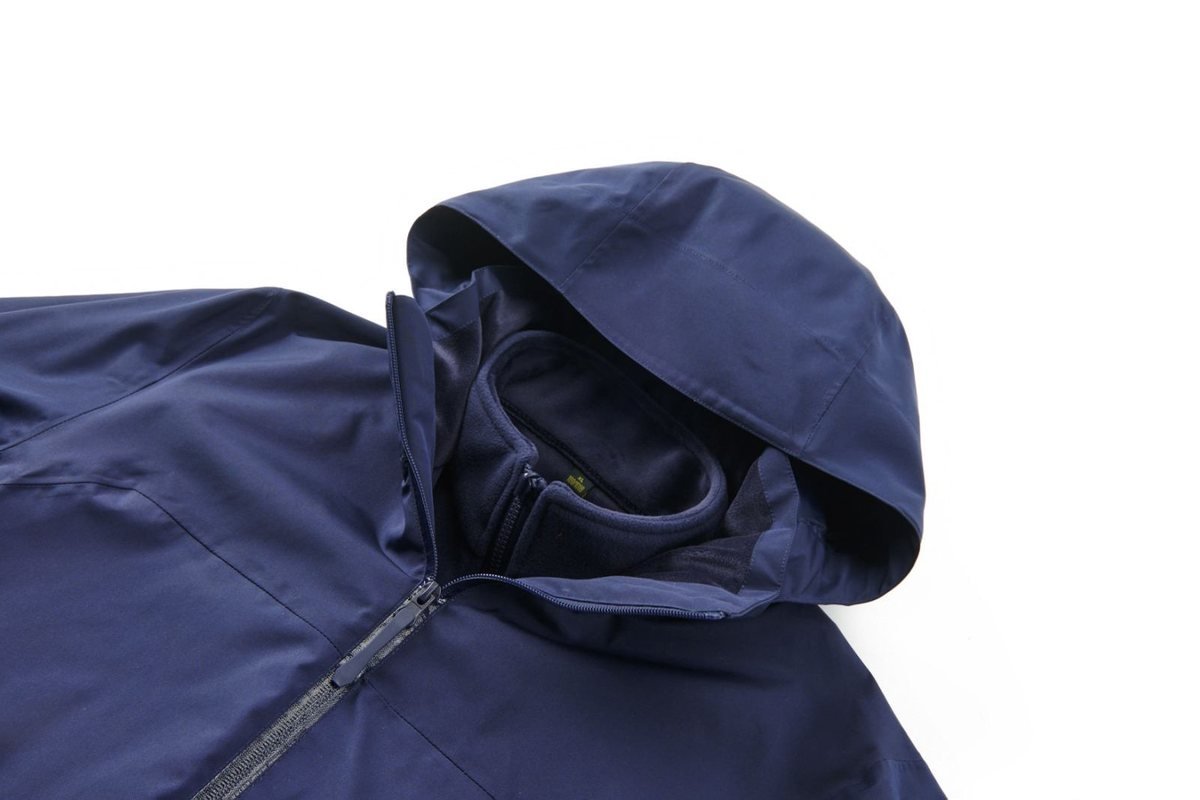
What 500-Piece MOQ Actually Means in Factory Terms
A 500-piece minimum order quantity typically applies per style, not per color or size within that style. Factories calculate MOQ based on the setup cost for pattern grading, cutting-table efficiency, and sewing-line changeover time. When a supplier quotes “500 pieces MOQ,” clarify whether that figure allows color and size assortment or requires 500 units of a single SKU.
Per-Style vs Per-SKU Minimums
Most OEM jacket manufacturing facilities structure MOQ around the style (a unique design with its own pattern and bill of materials), permitting multiple colors and sizes within that 500-piece total. A typical breakdown might be 500 pieces across three colors and five sizes, yielding roughly 33 units per SKU. Trading companies and marketplace sellers sometimes impose per-color minimums that push effective MOQ to 1,500 pieces when you need three colorways, so ask for the factory’s actual per-style policy in writing.
Setup Costs Hidden in MOQ
Factories absorb pattern grading, sample development, and first-article inspection costs into the per-piece price when MOQ reaches 500 units. Below that threshold, suppliers often separate these charges. Small brands report that factories accepting lower minimums add $300 to $800 in tooling and sample fees that raise true cost above expectations, even when the quoted unit price looks competitive. Request an itemized quote showing setup fees, sample charges, and per-unit cost to compare total outlay accurately.
ODM Pattern Libraries
Factories offering Original Design Manufacturing (ODM) maintain libraries of existing patterns that buyers can customize with fabric, color, and logo changes. ODM orders typically carry lower MOQs, sometimes 200 to 300 pieces, because pattern development and fit sampling are already complete. Brands willing to select from a factory’s existing silhouettes can access 500-piece production runs without the full OEM development cycle, cutting lead time by three to four weeks.
Waterproof Performance Standards You Must Verify
Buyers frequently encounter jackets labeled “waterproof” that perform only as water-resistant in field use. The gap between marketing claims and actual performance stems from incomplete seam sealing, untested membrane adhesion, and DWR coatings that wash out after minimal use. Verifying waterproof capability requires checking specific test standards and construction methods before production begins.
Hydrostatic Head Testing
Hydrostatic head measures the water column height a fabric can withstand before leaking, expressed in millimeters. A rating of 10,000mm means the fabric resists a 10-meter column of water pressing against it. Entry-level rain shells typically test at 5,000mm to 10,000mm, mid-range technical jackets at 10,000mm to 20,000mm, and alpine hardshells above 20,000mm. Ask your 500 piece MOQ waterproof jacket supplier for third-party test reports showing hydrostatic head results, not just fabric-mill spec sheets, because lamination and stitching can reduce effective waterproofing below the raw fabric rating.
Seam-Sealing Methods
Unsealed seams are the primary failure point in waterproof jackets. Every stitch punctures the membrane, creating a potential leak path. Factories use heat-activated seam tape to cover stitching lines, but application quality varies widely. Fully taped seams cover every stitched seam in the jacket, including shoulder, side, sleeve, and pocket seams. Critically taped seams seal only high-exposure areas like shoulders and hood, leaving side seams and pockets untaped. Buyers ordering corporate uniforms or school outerwear often assume “waterproof” means fully sealed, then discover leaks at side seams during the first rain. Specify full seam sealing in your purchase order and request pre-production samples showing tape placement on all seams.
DWR Coating Durability
Durable Water Repellent (DWR) finish causes water to bead and roll off the shell fabric rather than soaking in. Standard DWR coatings lose effectiveness after 10 to 15 washes, causing the shell to “wet out” (absorb water into the face fabric) even though the underlying membrane remains waterproof. Wet-out reduces breathability and makes the jacket feel cold and clammy. PFC-free DWR formulations, which avoid perfluorinated chemicals, currently show shorter lifespan than legacy C8 treatments but meet environmental and safety standards required in EU and California markets. Our 3,000m² Taizhou Sanmen facility applies SGS-certified PFC-free DWR and tests wash durability to 20 cycles, ensuring the coating survives a full season of field use before requiring reapplication.
Breathability Ratings
Waterproof-breathable membranes allow water vapor (sweat) to escape while blocking liquid water. Breathability is measured in grams of moisture vapor transmitted per square meter per 24 hours (g/m²/24h). Ratings below 5,000 g/m²/24h trap sweat during moderate activity, creating the clammy interior that buyers frequently complain about in reviews. Mid-range membranes test at 10,000 to 15,000 g/m²/24h, and high-performance membranes exceed 20,000 g/m²/24h. Match breathability to the jacket’s intended use: low-activity corporate uniforms can tolerate 5,000 g/m²/24h, but hiking and work jackets need 10,000+ to avoid sweat buildup.
Factory Capabilities Checklist for 500-Unit Orders
Evaluating a 500 piece MOQ waterproof jacket supplier requires verifying in-house technical capabilities, not just reviewing product catalogs. Trading companies and consolidators often present themselves as manufacturers, then subcontract production to multiple workshops with inconsistent quality systems. Direct factory relationships give you control over construction standards, fabric sourcing, and inspection protocols.
In-House vs Subcontracted Production
Ask whether the supplier owns the facility where your jackets will be sewn, or whether they broker production to third-party workshops. Factory-owned operations provide stable quality because the same team handles pattern grading, cutting, sewing, and finishing. Subcontracted production introduces variability: one batch may come from a high-capability workshop, the next from a lower-tier facility with different equipment and training. Request a factory-floor video call showing the seam-taping machine, cutting tables, and QA station to confirm in-house capability.
Seam-Taping Equipment
Fully sealed waterproof jackets require dedicated seam-taping machines that apply heat-activated tape with precise pressure and temperature control. Factories lacking this equipment send garments to external sealing workshops, adding three to five days to lead time and introducing a handoff point where quality can degrade. Verify that your supplier operates seam-taping machines on-site and ask for photos of the taping station with your fabric and tape combination, because different membrane types require different temperature settings.
Fabric and Trim Sourcing
Waterproof performance depends on the membrane, DWR coating, and seam tape working as a system. Factories that source fabric, zippers, and tape from multiple suppliers without coordinated testing risk compatibility issues. Membrane adhesives may not bond properly to certain tapes, or zipper tapes may wick water if not treated with DWR. Ask your supplier whether they test fabric-tape-zipper combinations before production and request a sample showing the actual materials you will receive, not a generic development sample.
Sampling and Pre-Production Timeline
A credible sample development process for waterproof jackets includes pattern creation, fit sample, seam-sealing test, and wash-durability check before bulk production. This cycle typically requires three to four weeks. Suppliers promising samples in five to seven days are likely pulling stock garments from inventory and adding your logo, not developing a custom pattern. Brands ordering technical outerwear for the first time often skip the fit-sample step to save time, then face costly sizing adjustments when bulk production arrives with fit issues that samples would have revealed.
Sample MOQ: 1 piece. Bulk MOQ: 30 pieces per SKU. Sampling time: 7-10 days for stock-pattern ODM, 18-25 days for full OEM development with custom pattern and seam-seal testing.
Certifications and Testing Protocols
ISO 9001 certification indicates a factory maintains documented quality-management processes, but does not guarantee waterproof performance. OEKO-TEX Standard 100 confirms that fabrics and trims are tested for harmful substances, important for school uniforms and corporate wear where skin contact and washability matter. SGS and Intertek provide third-party testing for hydrostatic head, breathability, and seam-sealing integrity. Request copies of test reports for the specific fabric and construction method your order will use, not generic certifications that may apply to a different product line.
Pricing and Landed-Cost Breakdown for 500-Piece Orders
FOB (Free On Board) pricing represents the cost to manufacture and deliver jackets to the departure port, but does not include freight, customs duties, or destination handling. Small brands often compare suppliers based solely on FOB price, then discover that total landed cost varies by 25% to 40% depending on shipping method, duty rates, and import-country regulations. Calculating true cost requires adding all post-factory charges to the FOB quote.
FOB Unit Cost Drivers
Waterproof jacket FOB pricing depends on membrane type, seam-sealing coverage, zipper quality, and lining construction. Entry-level jackets using coated polyester (no membrane) and critically taped seams typically range from $12 to $18 FOB. Mid-range jackets with 2-layer laminated membranes, fully taped seams, and YKK water-resistant zippers run $22 to $35 FOB. High-performance 3-layer Gore-Tex or eVent shells with premium trims and reinforced high-wear areas start at $45 FOB and can exceed $80 for complex designs with pit zips, helmet-compatible hoods, and internal pockets.
Freight and Shipping
Air freight delivers 500 jackets in 7 to 10 days but costs $4 to $7 per unit for US/EU destinations. Sea freight drops shipping cost to $1.20 to $2.50 per unit but extends transit to 25 to 35 days. Brands launching seasonal products or restocking fast-moving SKUs often split orders: air-ship 200 units for immediate sale, sea-ship the remaining 300 to restock inventory four weeks later. This hybrid approach balances speed and cost, preventing stockouts while controlling freight expense.
Customs Duties by Destination
US import duties on waterproof jackets (HTS 6201.93 for men’s, 6202.93 for women’s synthetic shell jackets) range from 7.1% to 27.7% depending on fiber content and country of origin. China-origin jackets face Section 301 tariffs adding 7.5% to 25% on top of standard duty rates as of 2026. EU duties on technical outerwear average 12%, with preferential rates for certain ASEAN countries under trade agreements. UK post-Brexit duties mirror EU rates but require separate customs declarations. Australia applies 5% duty plus 10% GST on landed value. Factor these percentages into your total cost model: a $25 FOB jacket becomes $32 to $38 landed in the US depending on tariff applicability, $30 to $33 in the EU, and $29 to $31 in Australia.
Hidden Costs and Add-On Charges
Suppliers accepting 500-piece MOQs sometimes add charges for color changes, custom packaging, or quality inspection that were not included in the initial quote. Small brands complain that factories quote a competitive unit price, then invoice separately for sample fees ($100 to $300), mold costs for custom zipper pullers ($200 to $500), and color-matching fees ($50 to $150 per Pantone shade). Request an all-inclusive quote showing setup fees, sampling, tooling, packaging, and inspection costs itemized separately from the per-unit price. This transparency allows accurate budget planning and prevents surprise invoices before shipment release.
Risk Management: QA and Defect Prevention for Bulk Orders
Quality failures in 500-unit orders can eliminate profit margins and damage brand reputation. Buyers report receiving jackets with inconsistent sizing across the same production run, zipper failures after minimal use, and seam-tape delamination that renders the garment non-waterproof. Preventing these defects requires structured quality checkpoints at pre-production, during production, and pre-shipment stages.
Pre-Production Sample Approval
The pre-production sample (PPS) is the final prototype that serves as the quality reference for bulk manufacturing. This sample should use the exact fabrics, trims, and construction methods specified in your purchase order. Inspect the PPS for seam-tape placement, zipper function, DWR water-beading, and fit accuracy before approving production. Small brands often approve PPS based on photos rather than physical inspection, then discover that the actual bulk production differs in zipper brand, lining weight, or seam-sealing coverage. Request physical PPS delivery and test it under simulated use conditions: spray it with water to verify seam sealing, wear it during activity to check breathability, and wash it twice to confirm DWR durability.
During-Production Inspection (DUPRO)
During-production inspection catches defects while the factory can still make corrections. An inspector visits the production line when 30% to 50% of the order is complete, checking random samples for construction accuracy, measurement compliance, and seam-sealing quality. Buyers ordering low MOQ jacket manufacturing runs sometimes skip DUPRO to save the $250 to $400 inspection fee, then face costly rework or rejection when final inspection reveals systemic defects that could have been corrected mid-production. DUPRO is especially critical for waterproof jackets because seam-taping errors compound quickly: if the taping-machine temperature is set incorrectly, every jacket in the batch will have weak tape adhesion that fails after a few wears.
Final Random Inspection (FRI)
Final random inspection occurs when 100% of the order is complete and packed for shipment. The inspector selects a statistically valid sample (typically 80 to 120 pieces from a 500-unit order) and checks each for construction defects, measurement accuracy, and functional performance. AQL (Acceptable Quality Limit) 2.5 is the industry standard for apparel, permitting 2.5% major defects and 4% minor defects in the inspected sample. Waterproof jackets should be tested for seam-sealing integrity using a spray test: the inspector sprays water on seams and checks for interior leakage. Buyers who rely solely on factory self-inspection report defect rates 3 to 5 times higher than those who use independent third-party inspection.
Sizing Consistency Across Production Runs
Sizing inconsistency is a common complaint when ordering custom outerwear from overseas factories. Buyers report that samples fit correctly, but bulk production arrives with sleeves 2cm shorter or chest measurements 4cm wider than approved specs. This drift occurs when factories switch cutting tables, adjust patterns to improve fabric utilization, or use different operators for grading. Specify that all measurements must match the approved PPS within ±1cm tolerance and include measurement verification in your FRI checklist. Factories with ISO 9001 systems maintain measurement logs for each production run, allowing you to trace sizing drift back to specific process changes.
Zipper and Hardware Failure Prevention
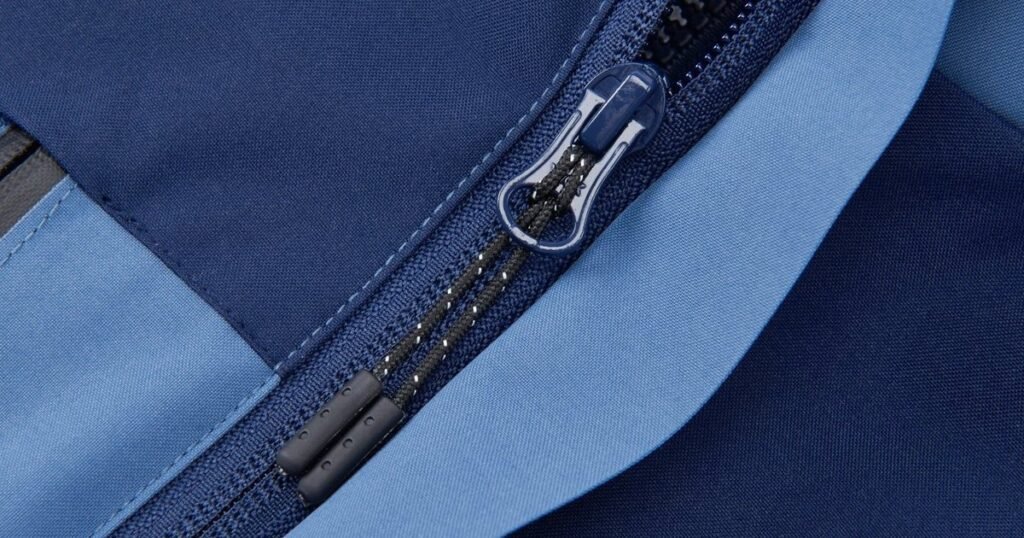
Reviewers frequently mention zipper failure or leakage at the zipper placket after short use. This failure stems from three causes: low-quality zipper tape that stretches under tension, incorrect zipper-tape DWR treatment allowing water wicking, and inadequate storm-flap coverage leaving the zipper exposed. Specify YKK water-resistant zippers (Aquaguard or Vislon series) in your purchase order and verify that the storm flap overlaps the zipper by at least 3cm on each side. Test the PPS zipper by cycling it 50 times while the jacket is worn to simulate field use; zippers that bind or separate under this test will fail quickly in customer hands.
In practice: A corporate uniform buyer ordered 500 waterproof jackets for field staff, approved samples based on photos, then discovered 18% of bulk production had seam-tape delamination at shoulder seams because the factory switched to a lower-temperature tape mid-production without notification. A DUPRO inspection would have caught the tape change when only 150 units were affected, limiting rework cost to $800 instead of the $4,200 required to re-tape 90 jackets post-shipment.
Alternative MOQ Models for Smaller Brands and Pilot Programs
Brands with limited capital or uncertain demand can access 500 piece MOQ waterproof jacket supplier production through alternative models that reduce upfront commitment. These approaches trade higher per-unit cost for lower volume risk, allowing market validation before scaling to full 500-piece orders.
ODM Stock-Pattern Orders
Factories offering ODM programs maintain libraries of proven patterns that buyers customize with fabric, color, and branding changes. Because pattern development and fit sampling are complete, ODM orders often carry 200 to 300-piece minimums instead of 500. A DTC outdoor brand can select a stock hardshell pattern, specify three custom colorways and custom logo service placement, and launch with 200 units per color (600 total across three SKUs) rather than committing to 500 units of a single untested design. Per-unit cost runs 8% to 15% higher than full OEM because the factory’s pattern investment is amortized over fewer buyers, but lead time drops from 65 days to 35 days.
Hybrid Sample-to-Bulk Programs
Some manufacturers offer 1-piece sampling with refundable sample fees that credit against bulk orders. Brands pay $100 to $150 for a fully functional sample with custom fabric, logo, and seam sealing, test it in the field for two to four weeks, then apply the sample fee toward a 30-piece minimum bulk order. This model allows outdoor startups to validate waterproof performance, fit, and market appeal with minimal cash outlay before committing to larger production. Our facility provides 1-piece sampling at $100 (refundable against bulk orders of 30+ pieces per SKU), giving brands the option to test three colorways for $300 total investment, then scale the best-performing SKU to 500 units once demand is confirmed.
Dropshipping and Print-on-Demand for Market Testing
Dropshipping models allow brands to sell waterproof jackets without holding inventory, with the factory shipping individual units directly to end customers. Minimum order is typically 1 piece, with per-unit cost 40% to 60% higher than 500-piece bulk pricing. This approach suits DTC brands testing new designs or seasonal colorways before committing production capital. According to Eliian (2026), a custom outdoor jacket supplier advertises a 10-piece MOQ per design and delivery in 20 to 25 days after sample approval, demonstrating that sub-100 minimums exist for brands willing to pay premium unit pricing. Dropshipping works for market validation and pre-order campaigns, but margins compress quickly: a jacket costing $45 FOB in 500-unit bulk jumps to $72 in 1-piece dropship, leaving little room for retail markup after shipping and platform fees.
Consignment and Inventory-Partnership Models
Experienced factories sometimes offer consignment arrangements where they hold finished inventory and release units as the brand sells them, charging a storage fee and higher per-unit price in exchange for eliminating the buyer’s upfront inventory investment. This model suits school uniform programs and corporate team-gear buyers who need ongoing replenishment but cannot forecast exact quantities. The factory produces 500 units, stores them in a bonded warehouse, and ships 50 to 100 units per month as orders arrive. Per-unit cost increases 12% to 18% to cover storage and financing, but the buyer avoids tying up $12,000 to $18,000 in inventory that may take six months to sell.
Key Takeaways
- According to Cosmo Sourcing (2026), most Vietnam apparel factories set MOQs between 500 and 1,000 pieces per style for cut-and-sew technical outerwear, with some specialty facilities accepting 200 to 500-piece pilot runs.
- According to Cosmo Sourcing (2026), technical jacket pricing typically ranges from $15 to $60+ FOB depending on membrane type, DWR coating, seam sealing, zipper quality, and lining construction.
- According to Renrui Textile (2026), taped waterproof shells start at $24.00 per piece FOB for 100-piece orders, demonstrating that sub-500 MOQs exist with premium pricing for smaller brands.
- According to Ginwen Wear (2026), OEM ski jacket MOQs commonly sit at 500 pieces per style, while ODM orders may drop to 200 pieces per style when using existing patterns and reducing development time.
- Hydrostatic head ratings of 10,000mm to 20,000mm define mid-range waterproof performance suitable for hiking and work jackets, while entry-level jackets test at 5,000mm to 10,000mm and alpine shells exceed 20,000mm.
- US import duties on waterproof jackets range from 7.1% to 27.7% under HTS codes 6201.93 and 6202.93, with additional Section 301 tariffs of 7.5% to 25% on China-origin goods as of 2026, significantly impacting landed cost.
FAQ
What is the MOQ for a waterproof jacket supplier?
MOQ for waterproof jackets typically ranges from 200 to 1,000 pieces per style depending on whether you choose OEM (custom pattern development) or ODM (existing pattern customization). Full OEM orders commonly require 500 to 1,000 pieces, while ODM using stock patterns may accept 200 to 300 pieces. Some factories offer hybrid programs with 30-piece minimums for brands willing to pay 12% to 18% higher per-unit cost. Always clarify whether MOQ applies per style (allowing color and size assortment) or per SKU (requiring 500 units of a single color-size combination).
Can you order 500 custom jackets from a manufacturer?
Yes, 500 pieces is a standard MOQ for custom waterproof jacket manufacturing, allowing full OEM development including custom pattern grading, fabric selection, seam-sealing specification, and branding. At this volume, factories absorb setup costs into the per-unit price rather than charging separate tooling fees. Lead time for 500-piece custom orders typically runs 55 to 75 days including sampling, pattern development, production, and quality inspection. Brands should budget 18 to 25 days for pre-production sampling and fit approval before bulk manufacturing begins.
How much does a custom waterproof jacket cost at 500 pcs?
Custom waterproof jacket FOB cost at 500 pieces ranges from $22 to $45 for mid-range performance (10,000mm to 20,000mm hydrostatic head, fully taped seams, YKK water-resistant zippers, breathable 2-layer membrane). Entry-level jackets with coated polyester and critically taped seams run $12 to $18 FOB, while high-performance 3-layer Gore-Tex or eVent shells with premium trims start at $45 and can exceed $80 FOB. Total landed cost in the US adds 25% to 40% for freight, duties, and handling, bringing mid-range jackets to $28 to $60 per unit delivered.
What waterproof rating should a technical jacket have?
Technical jackets for hiking, trail work, and moderate outdoor activity should have a hydrostatic head rating of 10,000mm to 20,000mm and breathability of 10,000 to 15,000 g/m²/24h. Entry-level rain shells for light rain and corporate uniforms can use 5,000mm to 10,000mm ratings, while alpine and backcountry shells require 20,000mm+ waterproofing and 20,000+ g/m²/24h breathability. Verify that the rating applies to the finished garment after seam sealing, not just the raw fabric, because stitching and lamination can reduce effective waterproofing by 15% to 25%.
How long does custom outerwear production take?
Custom waterproof jacket production requires 55 to 75 days total: 18 to 25 days for pattern development and pre-production sampling, 25 to 35 days for bulk manufacturing and seam sealing, and 7 to 15 days for quality inspection and packing. ODM orders using existing patterns reduce lead time to 35 to 45 days by eliminating pattern-development steps. Add 7 to 10 days for air freight or 25 to 35 days for sea freight to calculate total time from order placement to warehouse delivery. Brands launching seasonal products should place orders 90 to 120 days before target in-stock date to accommodate sampling, production, and shipping.
Written by Ivan Chen, Sales Engineer at PTOUTWEAR – 13 years in outdoor apparel manufacturing.
Ready to source waterproof jackets with verified seam-sealing and transparent MOQ terms?
Request 1-Piece Samples Today →