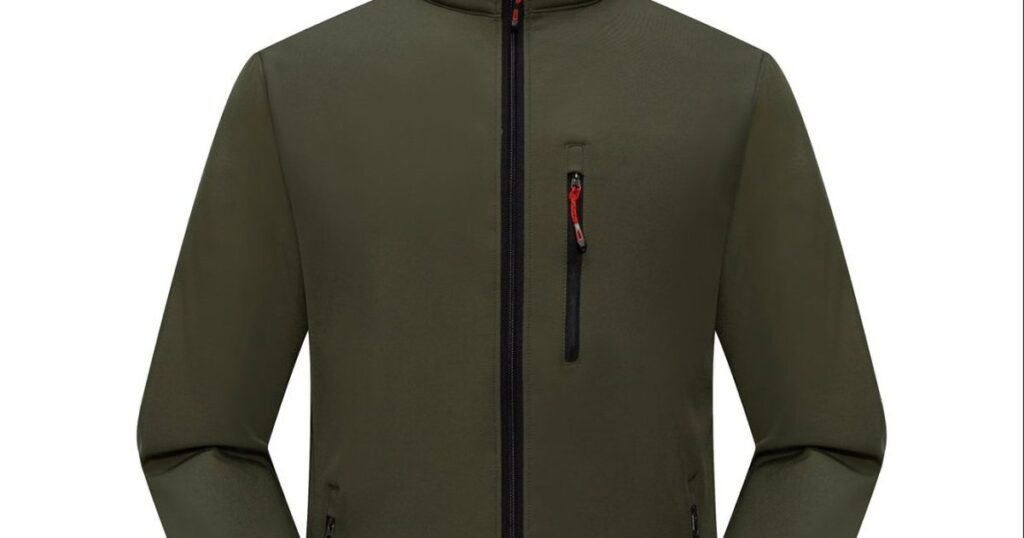
Windbreaker jacket manufacturers specialize in lightweight, wind-resistant outerwear for outdoor brands, corporate teams, and school programs. The best factories offer sample MOQ as low as 1 piece, bulk minimums from 30-100 pieces per SKU, and production lead times of 25-35 days. Key decision factors include fabric testing protocols (air permeability, DWR durability), seam-sealing capability, and certifications like OEKO-TEX Standard 100 or bluesign.
📋 Table of Contents
Executive Summary
- Global market context: The outdoor apparel market is expanding, driven by demand for lightweight, packable technical outerwear across lifestyle and performance segments.
- Manufacturing geography: Asia offers lower costs and faster sampling; Europe and North America deliver shorter shipping and easier compliance verification but at higher unit prices.
- MOQ reality: Sample minimums range from 1 to 10 pieces; bulk production typically requires 30 to 500 pieces per SKU depending on the factory’s scale and target customer.
- Quality gatekeepers: Air permeability testing, DWR wash-cycle durability, and seam-sealing inspection separate jackets that perform from those that fail in real wind and drizzle.
- Lead time benchmarks: Sampling takes 7-14 days; bulk production runs 25-45 days; rush orders are possible but often carry a 20-30% surcharge.
What Defines a Quality Windbreaker Manufacturer?
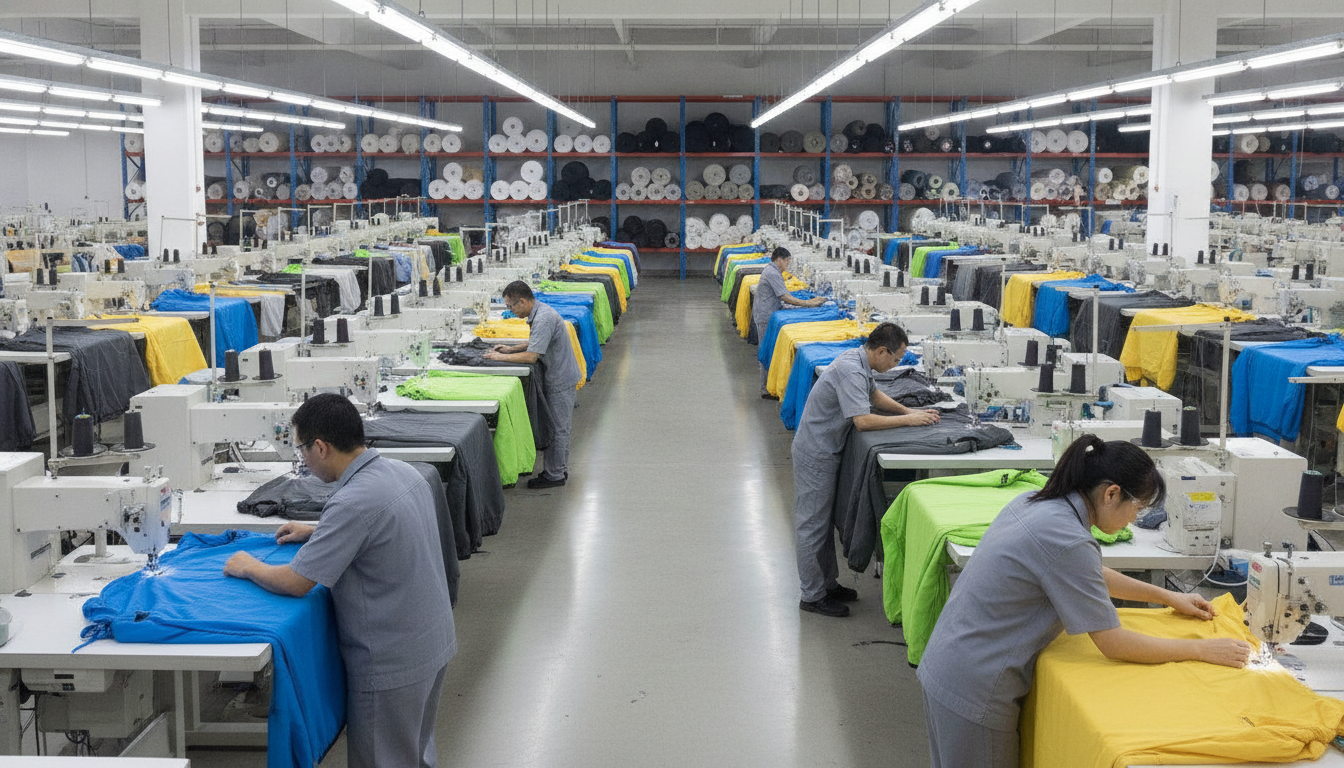
A quality windbreaker manufacturer controls fabric sourcing, cut-and-sew precision, and finishing processes in-house or through audited partners. The factory should provide third-party test reports for air permeability (typically ≤5 CFM at 125 Pa for true wind resistance) and water-repellent durability (DWR performance after 20+ home washes). Buyers often discover that jackets feel too thin or offer minimal protection beyond blocking a light breeze, which points to inadequate fabric weight or loose weave construction.
Fabric Selection and Testing
Windbreaker shells use tightly woven nylon or polyester, typically 20-70 denier, with a DWR coating applied to the face. The fabric must balance breathability and wind resistance. Factories that skip air-permeability testing or rely on generic mill specs often ship jackets that trap moisture or allow wind penetration at the chest and sleeves. Request lab reports showing CFM readings and DWR spray ratings before approving any sample.
Seam Construction and Sealing
Flat-felled or taped seams prevent wind channeling and extend garment life. Buyers frequently note that water-repellent coatings wear off quickly after washing, which traces back to poor seam sealing or low-quality tape. A manufacturer with in-house seam-taping equipment and post-tape QC inspection delivers more consistent results than one outsourcing the step to a subcontractor.
Fit Engineering for Layering
Packable jackets often ride up, fit awkwardly over layers, or run too short in the sleeves and torso. This stems from pattern grading that prioritizes fabric economy over ergonomic movement. Ask the factory for graded size specs (chest, sleeve, and back length across S-XXL) and request a pre-production fit sample in your target size before committing to bulk.
Asia vs. Western Production: Cost and Lead Time Trade-Offs
Choosing between Asian and Western windbreaker jacket manufacturers hinges on order volume, speed requirements, and compliance complexity. Asian factories dominate the global supply chain for technical outerwear, offering lower per-unit costs and deep fabric networks. European and North American producers appeal to brands prioritizing shorter lead times, simpler customs, and local sustainability messaging.
Cost Advantage
A 30-piece MOQ windbreaker order in China or Vietnam typically costs $12-$22 per unit FOB, depending on fabric grade and customization. The same jacket produced in Portugal or the United States runs $28-$50 per unit, reflecting higher labor rates and smaller production runs. Shipping and duty add 15-25% to the landed cost for Asian imports into the US or EU, narrowing but not eliminating the price gap.
Lead Time
Asian manufacturers ship samples in 7-10 days and complete bulk orders in 25-35 days, plus 20-40 days ocean freight or 5-7 days air. European factories sample in 5-7 days and produce in 20-30 days, with 3-5 day ground shipping to most EU destinations. US-based cut-and-sew shops offer 10-14 day sampling and 15-25 day production but struggle to source technical fabrics domestically, often importing rolls from Asia and adding 2-3 weeks to the timeline.
Compliance and Traceability
EU buyers face stricter chemical-restriction enforcement under REACH and need OEKO-TEX or bluesign documentation. Asian suppliers with established export programs maintain these certifications; smaller factories may lack them. US buyers importing under Section 301 tariffs or UFLPA rules must verify country of origin and labor practices, which adds due diligence overhead. Western factories simplify compliance but offer fewer fabric options and higher minimums.
How Do You Verify Fabric Testing and Seam Quality Before Ordering?
Verification starts with requesting third-party lab reports for the exact fabric the factory plans to use. Generic data sheets from a mill do not confirm that the factory’s current lot matches the spec. Team buyers often struggle when manufacturers are vague about testing protocols or refuse to share reports, which signals weak QC or reliance on untested stock fabric.
Air Permeability Testing
Air permeability measures how much air passes through the fabric under pressure, reported in cubic feet per minute (CFM) at 125 Pascals. A true windbreaker fabric scores ≤5 CFM; anything above 10 CFM allows noticeable wind penetration. Request a test report following ASTM D737 or ISO 9237, showing the actual reading for the fabric batch. Factories that cannot provide this data are guessing at wind resistance.
DWR Durability
Durable water repellent (DWR) finishes degrade with washing and abrasion. A quality DWR maintains a spray rating of 80+ (AATCC 22) after 20 home wash cycles. Ask for wash-cycle test data, not just initial spray ratings. Jackets that claim weatherproof performance but fail at cuffs, zippers, or hem sealing in real wind and drizzle often use low-durability DWR or skip post-wash testing entirely.
Seam-Sealing Inspection
Seam tape bonds to the fabric under heat and pressure. Poor tape application causes delamination after 5-10 washes. Inspect a pre-production sample by flexing the taped seam and checking for lift or bubbling. A factory with automated taping machines and a post-tape peel-strength test delivers more reliable sealing than one applying tape manually without QC checks.
In practice: Seam taping separates jackets that survive repeated washing from those that delaminate after a few cycles, which is why verifying tape adhesion on the sample before bulk production prevents costly rework.
MOQ and Sampling Timelines: What to Expect
Minimum order quantities and sampling costs vary widely across windbreaker jacket manufacturers. Understanding the trade-offs helps brands and buyers allocate budgets and avoid cash-flow strain from over-ordering.
Sample Development Process
Most factories charge a sample fee to cover pattern making, fabric cutting, and sewing labor. Fees range from $50 to $200 per piece depending on complexity and customization. Reputable manufacturers refund the fee against the first bulk order, typically once the order exceeds 100-300 pieces total. Sampling timelines of 7-10 days are standard for stock fabrics; custom fabric development adds 2-4 weeks.
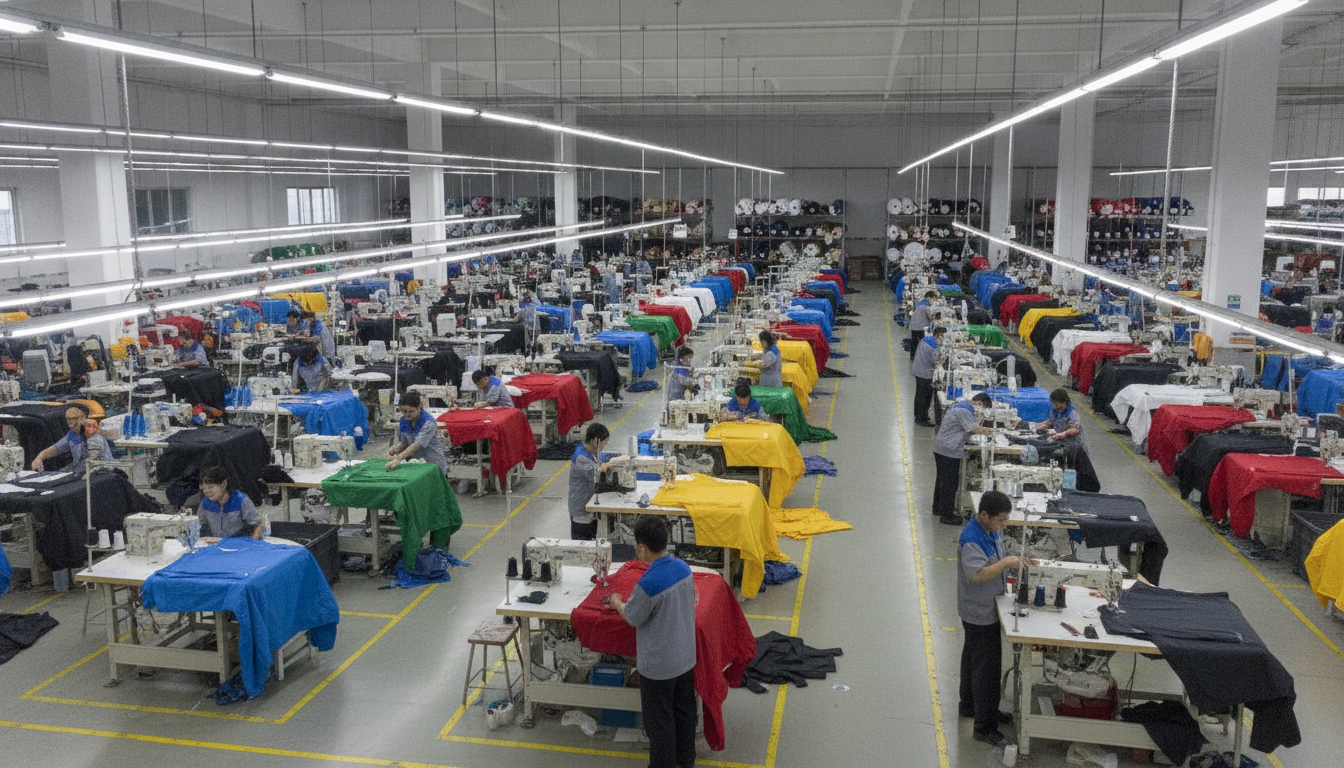
PTOUTWEAR operates a 3,000m² facility in Taizhou Sanmen with 20 production lines and in-house cut-and-sew capability, enabling 1-piece sample MOQ with a $100 refundable fee and 7-10 day turnaround. Bulk production starts at 30 pieces per SKU and ships in 25-35 days, with a rush option delivering 1,000 pieces in 2 weeks at a 25% surcharge. This structure suits outdoor brands validating new styles and corporate buyers managing seasonal uniform refreshes. Learn more about our OEM jacket manufacturing process.
Bulk Order Scaling
Factories set higher minimums to justify setup costs: cutting-table time, thread and zipper procurement, and quality-control labor. A 300-piece order spreads these fixed costs across more units, lowering the per-piece price by 25-40% compared to a 30-piece run. Brands launching with limited capital can start at lower minimums and scale as sell-through data confirms demand, avoiding the cash-flow trap of over-ordering unproven SKUs.
Customization and Branding Limits
Custom logo placement, color blocking, and pocket configurations add complexity. Simple screen-print or embroidered logos require no MOQ increase. Multi-panel color blocking or custom zipper pulls may push the minimum to 100-200 pieces per colorway to justify fabric cutting and sewing-line changeovers. Clarify customization limits during sampling to avoid surprises when scaling to production. Our custom logo service supports embroidery, screen print, and woven labels with no MOQ penalty on orders above 30 pieces per SKU.
Reorder Stability for Uniforms and Teams
School and corporate buyers need consistent sizing and color matching across multi-year programs. Factories that discontinue fabrics or shift suppliers between orders create fit and shade drift, forcing buyers to re-spec entire programs. Ask whether the factory maintains fabric lot reserves or guarantees reorder availability for 12-24 months. Suppliers focused on fast-fashion cycles rarely offer this stability; those serving uniform and workwear markets typically do.
Key Takeaways
- Quality windbreaker jacket manufacturers provide third-party air permeability and DWR wash-cycle test reports, not generic fabric data sheets, to verify wind resistance and water-repellent durability.
- Asian production delivers lower per-unit costs and faster sampling but adds ocean freight time and compliance documentation overhead; European and US factories offer shorter lead times and simpler customs at higher unit prices.
- Sample MOQ ranges from 1 to 10 pieces with refundable fees of $50-$150 per piece; bulk minimums typically start at 30-100 pieces per SKU for small-batch orders and 300-1,000 pieces for volume pricing.
- Seam-sealing quality determines whether a jacket survives repeated washing or delaminates after a few cycles, making pre-production seam inspection a critical checkpoint before approving bulk orders.
- Corporate and school uniform buyers should confirm that the factory maintains fabric lot reserves or guarantees reorder availability for 12-24 months to avoid fit and color drift across multi-year programs.
- Customization such as multi-panel color blocking or custom hardware may increase bulk minimums to 100-200 pieces per colorway to justify fabric cutting and sewing-line setup costs.
FAQ
What is the difference between a windbreaker and a softshell jacket?
A windbreaker uses a lightweight, tightly woven nylon or polyester shell with minimal insulation, designed to block wind and light rain while packing into a small stuff sack. A softshell jacket combines a stretchy outer fabric with a fleece or brushed interior lining, offering more warmth, abrasion resistance, and breathability but less packability. Windbreakers excel in high-output activities where weight and compressibility matter; softshells suit cooler conditions where moderate insulation and durability are priorities. Neither is fully waterproof without a membrane or heavy coating.
Are windbreaker jackets waterproof or just water-resistant?
Most windbreakers are water-resistant, not waterproof. A DWR coating causes light rain and mist to bead and roll off the fabric surface, but prolonged exposure or heavy downpours will eventually soak through because the fabric itself is breathable and lacks a waterproof membrane. True waterproof jackets use a laminated or coated membrane (such as Gore-Tex or polyurethane) with fully taped seams, which blocks liquid water while allowing vapor to escape. Windbreakers prioritize breathability and packability over sustained rain protection, making them ideal for variable weather and high-output activities but inadequate for extended wet conditions.
How do I choose a windbreaker manufacturer for a small outdoor brand?
Start by confirming the factory’s sample MOQ and refund policy, which determines whether you can validate fit and fabric before committing cash to bulk inventory. Request third-party test reports for air permeability and DWR durability to verify the fabric meets your performance claims. Check that the factory offers in-house seam taping and post-tape QC inspection, not outsourced finishing, to ensure consistent sealing quality. Compare lead times for sampling (7-14 days is standard) and bulk production (25-45 days) against your launch calendar. Finally, clarify customization limits for logos, color blocking, and hardware to avoid MOQ surprises when scaling from samples to production. Factories serving outdoor and performance brands typically understand these requirements better than those focused on fast-fashion or promotional apparel.
Ready to source windbreaker jackets with verified fabric testing, transparent MOQ, and 7-10 day sampling?
Request a Sample Pack →
Written by Ivan Chen, Sales Engineer at PTOUTWEAR, 13 years in outdoor apparel manufacturing.