📋 Table of Contents
Finding a reliable custom softshell jacket manufacturer requires balancing technical performance, order minimums, and production speed. Most outdoor brands launching their first jacket line face the same bottleneck: factories demand 500-piece minimums before you’ve validated fit or market demand, while sampling costs pile up across multiple vendors.
This guide walks through the commercial and technical checkpoints that separate functional sourcing partnerships from costly mistakes. You’ll see how MOQ structures, fabric certifications, and production timelines directly affect your cash flow and go-to-market speed.
Executive Summary
- Sample MOQ: 1-piece sampling allows DTC brands to validate fit and fabric performance before committing capital to bulk orders.
- Bulk MOQ: 30 pieces per SKU represents the lower threshold for custom softshell production with full customization options.
- Sampling lead time: 7-10 days for pre-production samples when fabric is in stock, 15-20 days when custom dyeing or lamination is required.
- PFC-free DWR: Water-repellent finishes without perfluorinated chemicals meet EU REACH restrictions and address the wet-out complaint frequently raised by outdoor users.
- ISO 9001 certification: Quality management standard covering process control, inspection protocols, and corrective-action procedures across production lines.
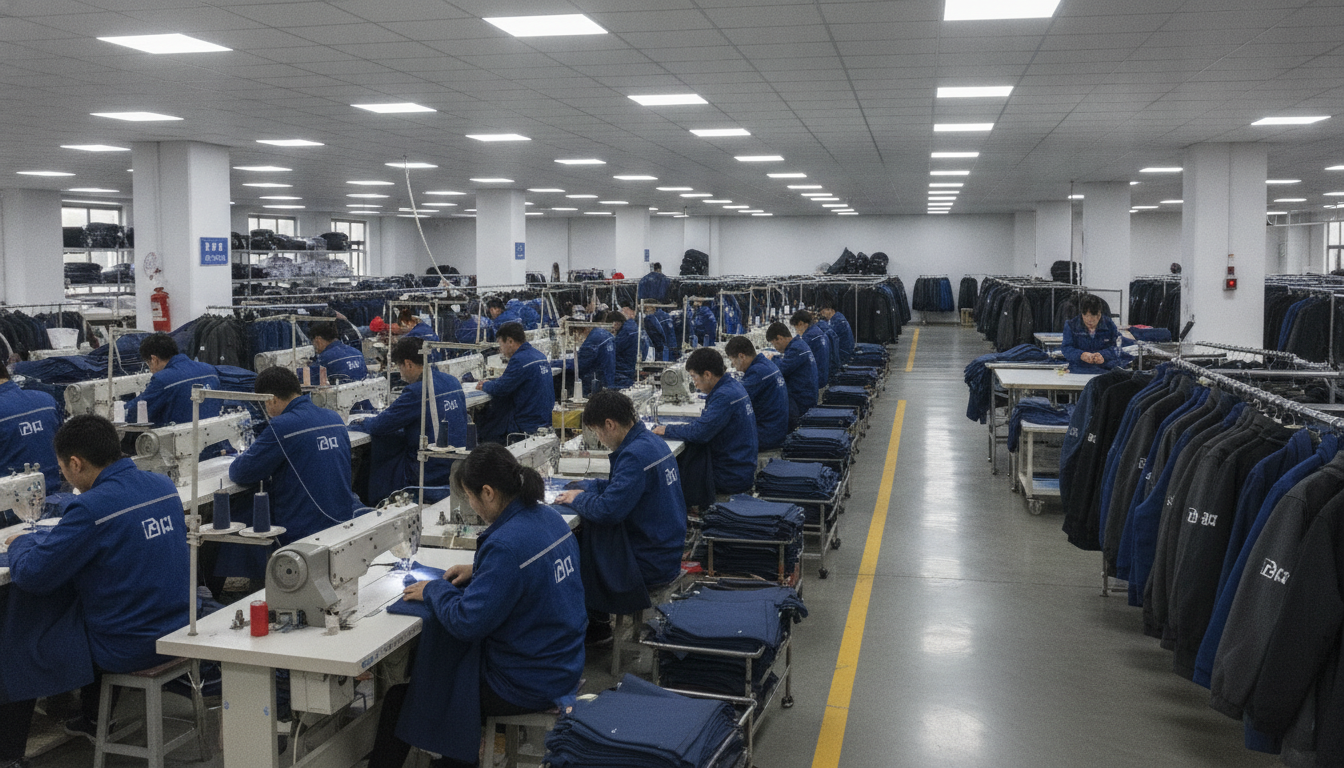
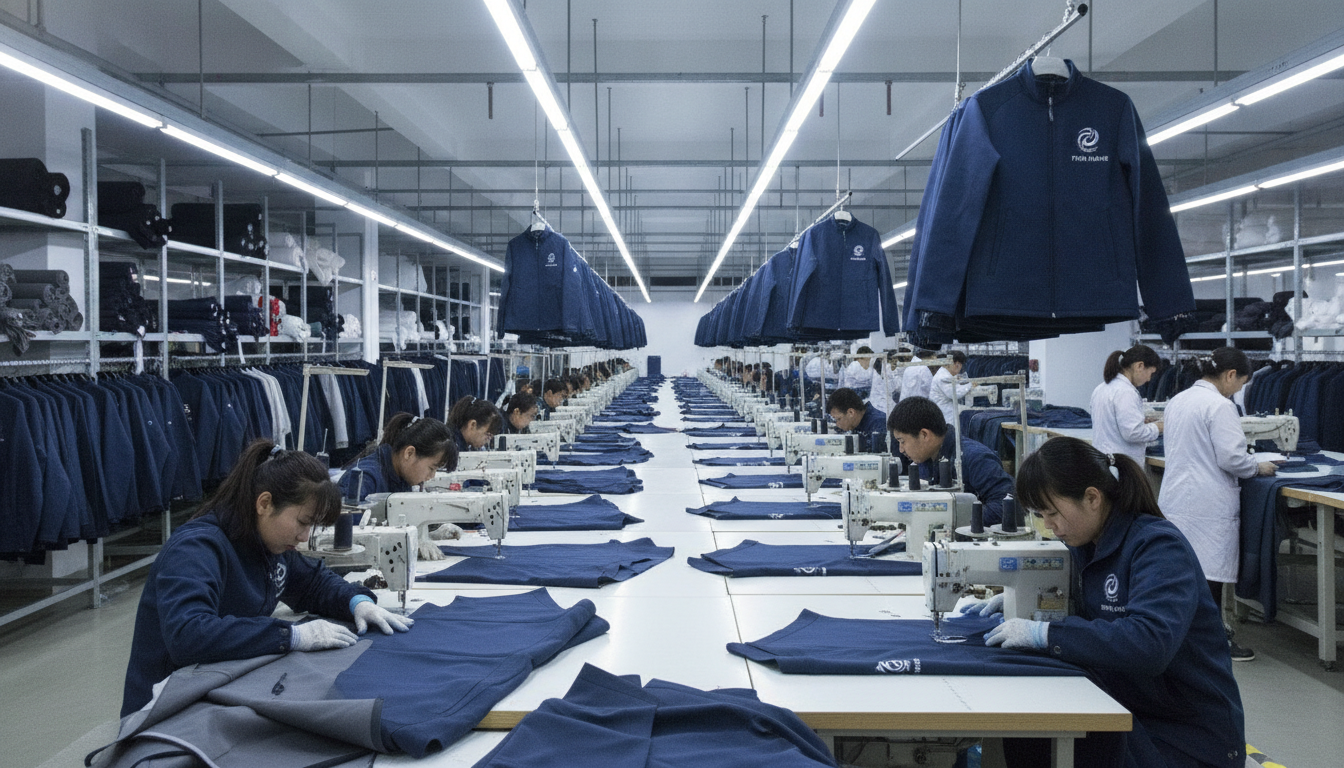
- Production capacity: A 3,000m² facility with 20 production lines and 240 workers can output approximately 200,000 jackets annually across softshell, hardshell, and insulated categories.
What Defines a Quality Softshell Jacket?
A softshell jacket combines stretch fabric, breathability, and weather resistance for active outdoor use. The construction differs fundamentally from hardshell rain jackets: softshells prioritize mobility and vapor transmission over absolute waterproofing.
Fabric Construction
Softshell fabrics typically use a 2-layer or 3-layer laminate. The face fabric is a woven nylon or polyester with mechanical stretch (usually 10-15% in both directions). A membrane or coating on the interior provides wind resistance and light water repellency. The inner layer may be a fleece backer for warmth or a lightweight tricot for reduced bulk.
A common buyer frustration with softshell jackets centers on breathability claims that don’t hold up during high-output activity. The issue is straightforward: if the DWR finish on the face fabric wets out, the fabric absorbs water and blocks vapor transmission. You feel clammy even though the membrane itself remains breathable.
DWR Performance
Durable Water Repellent (DWR) finishes cause water to bead and roll off the face fabric. PFC-free DWR formulations use fluorine-free chemistry to meet REACH and other environmental regulations. These finishes require reapplication after 20-30 washes, but they avoid the bioaccumulation concerns linked to older C8 and C6 fluorocarbon treatments.
Our 3,000m² Taizhou Sanmen facility applies PFC-free DWR in a controlled bath process with SGS-verified chemical compliance, ensuring consistent bead-up performance across production runs.
Ventilation Features
Pit zips, back vents, or chest vents address the overheating problem that occurs when you push hard in a wind-resistant shell. Without mechanical ventilation, even a highly breathable membrane can’t dump heat fast enough during aerobic activity. Buyers sourcing jackets for trail running, ski touring, or high-exertion work environments should specify vent placement and zipper length in the tech pack.
MOQ and Pricing Structure for Custom Orders
Minimum order quantities and unit pricing vary by customization level, fabric choice, and factory capacity utilization. Understanding the cost structure helps you plan cash flow and avoid tying up capital in unsold inventory.
Sampling MOQ
A 1-piece sample MOQ allows you to test fit, fabric hand, and construction quality before placing a bulk order. The sample fee (typically $100-150 per piece depending on complexity) is refundable against the bulk order. Sampling time runs 7-10 days when using in-stock fabrics, or 15-20 days if custom dyeing or membrane lamination is required.
In practice: A Colorado-based outdoor brand founder ordered 1-piece samples in three colorways to validate fit on their target demographic, then placed a 90-unit first order (30 pieces per color) without locking up cash in untested inventory
Bulk Production MOQ
The bulk MOQ for a custom softshell jacket manufacturer typically sits at 30 pieces per SKU. This threshold allows full customization: custom logo embroidery or screen printing, custom color matching (within standard fabric availability), adjustments to pocket placement, hem length, or hood design.
Higher-volume orders (300+ pieces per SKU) unlock price breaks of 8-12% due to fabric purchasing economies and reduced setup time per unit. For corporate uniform programs or school outerwear orders, consolidating multiple departments or grade levels into a single colorway can hit these volume tiers.
Payment Terms
Standard terms for new clients are 30% deposit upon order confirmation, 70% balance before shipment. Established clients with 3+ successful orders may negotiate net-30 or net-60 terms. Letter of credit (LC) arrangements are available for orders exceeding $50,000.
Fabric Selection and Performance Testing
Fabric choice determines the jacket’s weight, stretch, breathability, and durability. Matching fabric specs to your end-use scenario prevents returns and warranty claims.
Common Softshell Fabric Types
- 2-layer mechanical stretch: Woven nylon or polyester face with elastane (typically 10-15% stretch), bonded to a fleece or tricot backer. Weight ranges from 220-320 g/m². Suitable for general outdoor use, light hiking, casual wear.
- 3-layer laminate: Face fabric, waterproof-breathable membrane (e.g., 10K/10K rating), and protective inner layer. Heavier (300-400 g/m²) but offers better weather protection. Common in alpine and ski-touring applications.
- Windproof fleece: High-loft fleece exterior with a thin windproof membrane. Prioritizes warmth and breathability over water resistance. Popular for cold, dry conditions.
Performance Testing Standards
Reputable manufacturers test fabrics for water resistance (spray test or hydrostatic head), breathability (moisture vapor transmission rate), and abrasion resistance (Martindale cycles). A 10,000mm hydrostatic head rating means the fabric can withstand a 10-meter column of water before leaking. A 10,000 g/m²/24hr MVTR indicates the fabric transmits 10,000 grams of water vapor per square meter over 24 hours.
Abrasion testing using the Martindale method measures how many cycles (rubs) the fabric endures before showing visible wear. Softshell fabrics for technical outdoor use should exceed 25,000 cycles. Work-wear applications may require 50,000+ cycles.
Fabric Sourcing and Lead Time
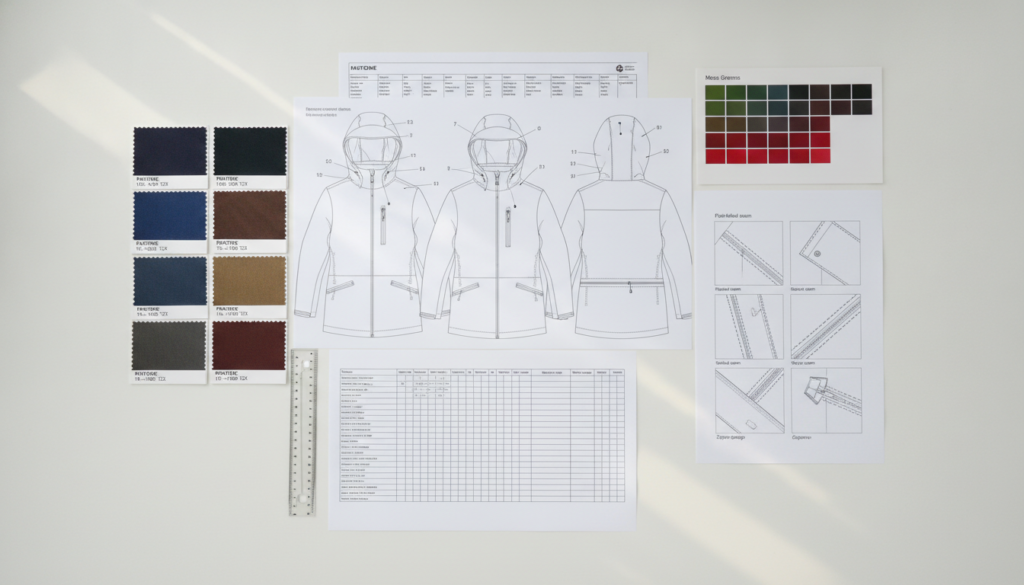
In-stock fabrics from regional suppliers (Zhejiang, Jiangsu, Guangdong) ship within 3-5 days. Custom dyeing or lamination extends lead time to 15-20 days. If you need a specific Pantone color match or a proprietary membrane, factor this into your production timeline. Our sample development process includes fabric swatch approval before cutting, so you confirm color and hand before committing to bulk yardage.
Customization Capabilities: Logo, Fit, Features
Customization spans branding, fit adjustments, feature additions, and color selection. Each option affects cost and lead time differently.
Logo and Branding
- Embroidery: Durable, professional appearance. Suitable for chest logos, sleeve badges, or back yokes. Setup fee $30-50 per design. No minimum stitch count, but intricate designs with 15,000+ stitches may require size reduction to avoid fabric puckering.
- Screen printing: Cost-effective for large, simple graphics. Setup fee $20-40 per color. Best for interior labels, large back prints, or promotional runs. Ink may crack after repeated washing if not properly cured.
- Heat transfer: Full-color logos or photographic images. No setup fee, but per-piece cost is higher ($2-5 per transfer). Suitable for small runs or complex multi-color designs.
- Woven labels: Custom woven neck labels, hem tags, or interior care labels. MOQ 100-200 pieces per design, $0.30-0.80 per label depending on size and thread count.
Fit and Pattern Adjustments
Standard sizing follows US or EU grading (XS-3XL). Custom grading for tall, petite, or athletic fits requires pattern adjustments and a fit sample round. Budget an additional 7-10 days for fit sampling and 1-2 revision cycles. Corporate uniform programs often need extended sizing (4XL-6XL) to accommodate all employees. School programs may require adjustments for youth sizing (YS-YXL).
Fit consistency across reorders is critical for uniform programs. A reliable custom softshell jacket manufacturer maintains digital patterns and size-spec sheets for each client, ensuring that a reorder 18 months later matches the original run within ±5mm tolerance on key measurements (chest, sleeve length, body length).
Feature Customization
- Pockets: Add or relocate chest pockets, hand pockets, interior pockets. Zippered vs. open-entry. Media pocket with cable port for earbuds.
- Hoods: Removable vs. fixed. Adjustable vs. elastic binding. Helmet-compatible volume for climbing or cycling use.
- Cuffs: Elastic binding, hook-and-loop tabs, or thumb loops. Thumb loops prevent sleeve ride-up during active movement.
- Hem: Drawcord adjustment, elastic binding, or drop-tail design for additional coverage.
- Ventilation: Pit zips (typically 8-12 inches), back vents, or chest vents. Mesh-backed zips improve airflow without adding weight.
Production Timeline and Sampling Process
Understanding each production phase helps you plan launch dates and manage buyer expectations.
Pre-Production Sample
The pre-production sample (PPS) is a full-spec prototype made on the production line using the approved fabric, trims, and construction methods. This sample confirms that the factory can execute your tech pack accurately. Sampling time is 7-10 days for straightforward designs using in-stock materials, or 15-20 days if custom fabric development is required.
Review the PPS for fit, fabric hand, seam quality, logo placement, and hardware function. Check zipper pull strength, snap closure alignment, and Velcro adhesion. A thorough PPS review catches issues before they multiply across 300 units.
Bulk Production
Once you approve the PPS, bulk production begins. Lead time depends on order size and factory capacity:
- 30-99 pieces: 25-30 days from deposit to ex-factory.
- 100-299 pieces: 30-35 days.
- 300-999 pieces: 35-45 days.
- 1,000+ pieces: 45-60 days, with potential for phased delivery if warehouse space is limited.
Production scheduling is tightest during peak season (August-October for fall/winter orders, February-April for spring orders). Placing orders 60-90 days before your target in-warehouse date reduces the risk of delays.
Quality Control Checkpoints
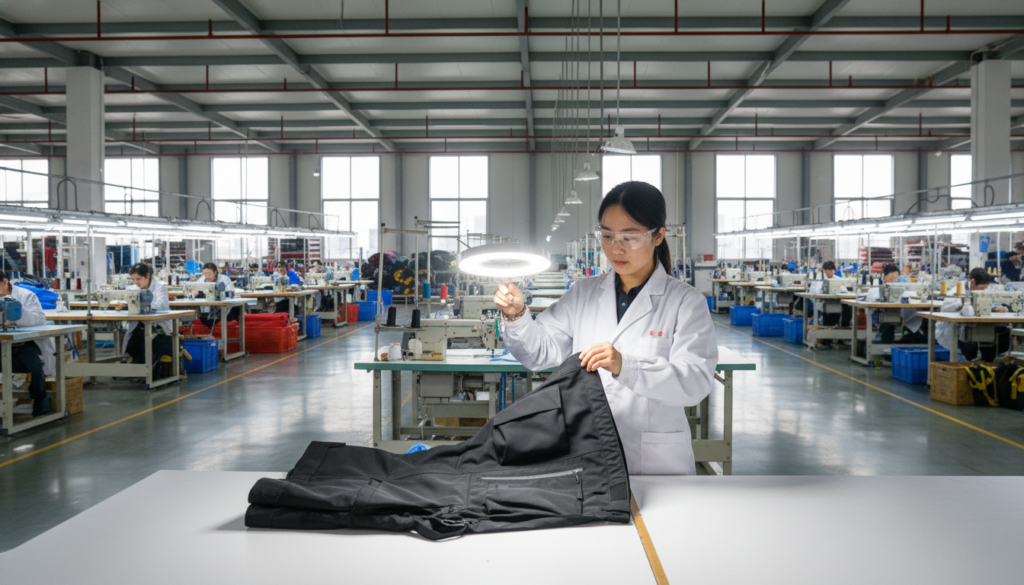
Our OEM jacket manufacturing process includes three QC stages: inline inspection at 30% and 70% completion, and final random inspection (AQL 2.5 standard) before packing. ISO 9001 certification requires documented inspection records, defect tracking, and corrective-action procedures for any non-conformance.
Common defects flagged during QC include uneven stitching tension, misaligned logo placement (tolerance ±3mm from spec), incomplete seam sealing, and zipper function issues. Catching these during inline inspection allows real-time correction before the full batch is completed.
Certification and Compliance Requirements
Certifications verify that materials, labor practices, and chemical usage meet regulatory and ethical standards. Different markets prioritize different certifications.
ISO 9001
ISO 9001 is a quality management standard covering process control, documentation, and continuous improvement. It does not certify product safety or environmental performance, but it demonstrates that the factory follows consistent procedures for production, inspection, and corrective action.
OEKO-TEX Standard 100
OEKO-TEX Standard 100 tests finished textiles for harmful substances including heavy metals, formaldehyde, pesticides, and allergenic dyes. The standard screens against more than 1,000 regulated and unregulated chemicals. Product classes range from Class I (baby products, strictest limits) to Class IV (furnishing materials). Outdoor apparel typically falls under Class II (skin-contact products).
OEKO-TEX certification is renewed annually and applies to specific fabric lots. If a factory changes fabric suppliers or dye batches, re-testing is required. Buyers sourcing for EU markets or eco-conscious brands should verify that the certification covers the exact fabric and colorways in their order.
BSCI (Business Social Compliance Initiative)
BSCI audits cover labor practices, working hours, health and safety, and freedom of association. The audit assigns a rating (A, B, C, D, or E) based on compliance with the BSCI Code of Conduct. Many European retailers require suppliers to hold a BSCI rating of C or better.
BSCI audits are conducted by third-party firms and are valid for two years. Factories with a D or E rating must implement a corrective action plan and undergo re-audit within six months.
PFC-Free DWR
Perfluorinated chemicals (PFCs) used in traditional DWR treatments persist in the environment and bioaccumulate in living organisms. The EU REACH regulation restricts certain long-chain PFCs, and brands like Patagonia and The North Face have committed to eliminating PFCs from their supply chains.
PFC-free DWR formulations use shorter-chain fluorine-free chemistry or plant-based waxes. Performance is comparable to C6 DWR for the first 20-30 washes, after which reapplication is needed. SGS testing verifies that finished garments contain no detectable PFCs above the 1 µg/m² threshold.
Restricted Substances List (RSL)
Many brands maintain an RSL that goes beyond legal requirements, banning or restricting substances like azo dyes, phthalates, and certain flame retardants. Share your RSL with the factory during the sampling phase so they can source compliant materials and avoid costly rework.
Our facility maintains an updated RSL database cross-referenced with REACH, California Prop 65, and CPSIA (Consumer Product Safety Improvement Act) requirements. We source dyes and finishes from suppliers who provide Material Safety Data Sheets (MSDS) and test reports for each chemical batch.
Key Takeaways
- A 30-piece per SKU minimum order quantity allows full customization (logo, fit, features, color) without tying up excessive capital in untested inventory.
- PFC-free DWR treatments meet EU REACH restrictions and avoid the bioaccumulation concerns linked to older fluorocarbon finishes, though they require reapplication after 20-30 washes.
- ISO 9001 certification covers quality management processes including inspection protocols, defect tracking, and corrective-action procedures across production lines.
- OEKO-TEX Standard 100 screens textiles against more than 1,000 harmful substances, with product-class limits ranging from strict (baby products) to moderate (furnishing materials).
- Martindale abrasion testing measures fabric durability in cycles; softshell jackets for technical outdoor use should exceed 25,000 cycles, while workwear applications may require 50,000+.
- A 10,000mm hydrostatic head rating indicates the fabric can withstand a 10-meter column of water before leaking, suitable for light rain and wind protection.
FAQ
What is a softshell jacket used for?
A softshell jacket is used for active outdoor pursuits where breathability and mobility matter more than absolute waterproofing. Common applications include hiking, trail running, climbing, ski touring, and cycling. The stretch fabric and high vapor transmission keep you comfortable during high-output activity, while the DWR finish and wind-resistant construction handle light precipitation and cold wind. Softshells also serve as mid-layers under hardshell rain jackets in severe weather.
How do I choose a custom jacket manufacturer?
Choose a custom jacket manufacturer by evaluating MOQ flexibility, sampling process, fabric sourcing capabilities, and certification compliance. Request a pre-production sample to assess construction quality, seam finish, and logo placement accuracy. Verify that the factory holds relevant certifications (ISO 9001 for process control, OEKO-TEX for chemical safety, BSCI for labor practices). Check lead times for both sampling and bulk production, and confirm that the factory can source your preferred fabrics within your timeline. A low-MOQ manufacturer allows you to test the market before committing to large inventory buys.
What is the minimum order quantity for custom softshell jackets?
The minimum order quantity for custom softshell jackets typically ranges from 30 to 100 pieces per SKU, depending on the factory and customization level. A 30-piece MOQ allows full customization including logo embroidery, custom color matching, and feature adjustments. Some manufacturers offer 1-piece sampling to validate fit and fabric before committing to bulk orders. Higher MOQs (300+ pieces) unlock volume discounts of 8-12% due to fabric purchasing economies and reduced setup time per unit.
What is the difference between softshell and hardshell jackets?
Softshell jackets prioritize breathability, stretch, and comfort for active use, while hardshell jackets prioritize waterproofing and wind protection for severe weather. Softshells use 2-layer or 3-layer laminates with mechanical stretch (10-15% elasticity) and moderate water resistance (typically 10,000mm hydrostatic head). Hardshells use fully waterproof membranes (20,000mm+ hydrostatic head) with taped seams and minimal stretch. Softshells work best for high-output activity in dry or light-precipitation conditions; hardshells excel in heavy rain, snow, or extended exposure.
How long does it take to manufacture custom jackets?
Manufacturing custom jackets takes 7-10 days for pre-production sampling (using in-stock fabrics) and 25-45 days for bulk production, depending on order size. A 30-99 piece order requires 25-30 days from deposit to ex-factory. Orders of 100-299 pieces take 30-35 days, while 300+ piece orders run 35-45 days. Custom fabric development (dyeing, lamination, or printing) adds 15-20 days to the sampling phase. Peak-season orders (August-October, February-April) may experience longer lead times due to capacity constraints.
Ready to source custom softshell jackets with a 30-piece MOQ and 1-piece sampling?
Request Your Sample →
Written by Leo Chen, Technical Outerwear Engineer at Ptoutwear, 12 years in jacket development.