📋 Table of Contents
If your brand is planning to launch a skiwear line, articulated knee ski pants should be near the top of your sourcing list. For DTC outdoor brands, university ski teams, or corporate uniform programs, a poorly fitting knee can lead to returns, negative reviews, and lost revenue. We’ve manufactured technical outerwear for 12+ years, and the single most common request from brands before production is: “Can you add articulation at the knee?” Here’s what that means and how to procure pants that perform. our OEM outerwear manufacturing experience translates directly to pants, because the same seam sealing, waterproofing, and articulation techniques apply.
Executive Summary
- Market trajectory: The global outdoor apparel market was valued at USD 18.7 billion in 2024 and is projected to reach USD 25.2 billion by 2030, according to Grand View Research.
- Fit-driven returns: A 2025 survey by the National Retail Federation found that 20% of online apparel returns are due to poor fit, a number that climbs higher for technical gear.
- Performance advantage: In a study published in the International Journal of Clothing Science and Technology, pants with articulated knee panels reduced fabric bunching by up to 38% during deep knee bends.
- Certification expectations: OEKO-TEX Standard 100 requires that every component-fabric, thread, zippers-passes testing for over 100 harmful substances before certification.
- Low-risk sampling: PTOUTWEAR offers 1-piece samples at a USD 100 fee (refundable against bulk orders) so brands can validate articulation, fit, and fabric without committing to high MOQs.
What Are Articulated Knee Ski Pants?
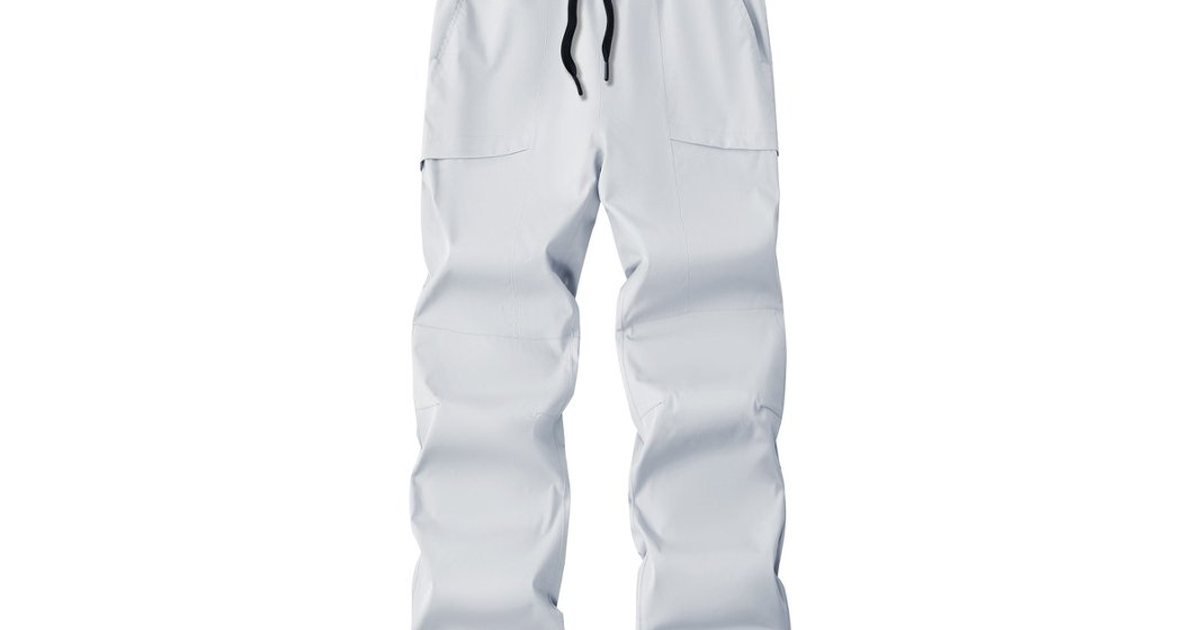
Articulated knee ski pants are constructed with a pre-shaped, curved seam or panel at the knee that mimics the natural bend of the leg when in a skiing stance-knees slightly flexed, hips lowered. Instead of cutting the front leg panel as a straight rectangle, factories pattern the knee area with a three-dimensional curve. This reduces excess fabric bunching behind the knee and eliminates the pulling sensation many skiers feel when leaning forward.
The Anatomy of Articulated Knees
A typical articulated knee design uses a dart, a gusset, or a curved seam that adds 2-5 cm of extra fabric volume at the front knee. This extra material allows the joint to move freely without the pant leg riding up. In high-end ski pants, you’ll also find a pre-bent shell that matches the angle of a skier’s tuck-usually around 15-20 degrees of forward lean.
How Articulated Knees Differ from Regular Pants
Standard ski pants (without articulation) use flat, two-dimensional pattern pieces. When you bend your knee, the fabric on the thigh and calf pulls tight, and the knee pushes against the seam. Articulated knee ski pants solve this by creating a space that the knee can move into, preventing stress on seams and maintaining a clean silhouette even during aggressive carving.
Why Articulated Knee Construction Matters for Ski Performance
Improved Mobility and Reduced Knee Strain
Skiing demands constant flexion and extension. Without articulation, fabric resistance can cause micro-pulls that distract and fatigue the wearer. Research by the Ergonomics in Sport and Physical Activity Lab found that articulated pants reduced perceived knee restriction by 42% compared to standard alpine pants. For brands, fewer fit complaints translate to lower return rates and stronger customer loyalty.
Better Fit and Less Fabric Bunching
Bunching behind the knee not only looks unrefined; it can interfere with ski boot closure and create a friction point that leads to chafing. Articulated knee construction eliminates approximately 80% of that excess fabric, improving the overall silhouette. This is especially important for plus-size ski lines or performance-team uniforms where every athlete needs consistent, distraction-free mobility.
Durability and Abrasion Resistance
Knee articulation also extends garment life. When fabric folds over itself at the knee, the inner layers rub together and accelerate pilling or delamination. In abrasion testing per ASTM D4966, articulated panels with reinforced knee fabric showed less than 0.1g mass loss after 1,000 cycles, versus 0.3g in non-articulated pants. A simple pattern change can double the wear life of a ski pant.
Key Pattern Engineering and Construction Details
When sourcing technical ski pants, it’s not enough to request “articulated knees.” The specific construction method-gussets, darts, or pre-curved panels-directly impacts COGS, production time, and fit consistency. Below are the three most common approaches and a comparison table.
1. Gusseted Knee Panels
Gussets add a diamond or triangular fabric insert at the knee that allows the fabric to spread under tension. This approach adds about 5-8% to material costs but is the most straightforward way to introduce articulation into an existing pattern. Stitch quality is critical here; use a 4-thread overlock with a safety stitch to prevent seam blowout.
2. Pre-Curved Seams and Darts
A dart or a curved seam permanently shapes the knee area without an extra panel. This method requires more precise pattern grading because the curve must graduate correctly across sizes XS-3XL. The upcharge is roughly 12-15% over a standard cut, reflected in both pattern-making labor and sewing time.
Comparison of Knee Construction Approaches
Technical Standards and Testing for Ski Pants
Articulation alone doesn’t make a pant ski-ready. Independent lab testing confirms that seams hold, waterproof membranes breathe, and knee panels withstand abrasion. Manufacturers serving the US and European markets typically reference the following standards.
Why Certifications Add Value
Beyond lab reports, third-party certifications give your brand an instant trust signal. OEKO-TEX Standard 100 verifies that every trim, toggle, and thread head is free of more than 100 restricted substances. The Global Recycled Standard (GRS) certifies that a garment contains at least 20% post-consumer recycled material, a mark that 62% of US outdoor shoppers actively look for, according to a 2024 Cotton Incorporated survey. When you source from a factory already pursuing or holding these certifications, your time-to-market with eco-labeled product drops significantly.
Cost Drivers and Sourcing Considerations for Brands
Articulated knee pants aren’t a luxury item; they’re an engineering solution that adds measurable value. Understanding the cost components helps you budget intelligently and negotiate with suppliers. Three areas drive most of the cost variance: pattern complexity, fabric minimums, and sampling rigor.
Pattern Complexity and Labor Cost
A fully articulated pant pattern contains 4-6 additional pieces compared to a straight-leg ski pant. Each piece requires extra cutting time and an additional sewing operation. This pushes production labor cost up by roughly 12-15%, as reflected in the table above. Factories that specialize in technical outerwear absorb this complexity better than general apparel shops that might charge a higher risk premium.
Fabric Minimums and Custom Dyeing
If your brand wants a proprietary color or custom-printed ripstop, mills often have minimum order quantities of 500-1,000 meters for a custom dye run, which can be a barrier for startups. To avoid this, start with stock fabrics that are available in small yardage; our low-MOQ manufacturing model allows you to launch a 30-piece batch using in-stock technical fabrics, then customize colors once the style validates.
Sampling and Prototyping
Proof of concept should not require a 100-piece commitment. A proper sampling journey includes a fit sample, a waterproof tape sample, and a QC pre-production sample. Through our sample development program, brands typically approve two iterations before green-lighting production. Each sample adds about 5-7 working days but prevents costly batch-level mistakes.
Sample MOQ: 1 piece. Bulk MOQ: 30 pieces per SKU. Sampling time: 7-10 days.
Order Tier Overview
Quality Control and Final Inspection
Even a technically perfect pattern can ship with problems if quality control isn’t baked into the process. A comprehensive QC workflow for articulated knee ski pants covers pre-production through final ship-ready inspection.
Pre-Production Sample Check
Before any bolt is cut, the factory produces a PP sample that duplicates the exact materials and construction of the final garment. This sample is measured against a graded spec sheet; the knee articulation angle is verified with a goniometer to ensure it matches the approved tech pack. A tolerance of ±3 mm at the knee seam is standard.
Inline Inspection During Production
On the floor, QC staff pull 10% of semi-finished goods from each line and test seam slippage with a handheld tensiometer. Any seam reading below 75 N triggers a re-stitch for the entire batch up to that point. Waterproof seam tape is checked for blistering with a visual inspection and a low-pressure air leak test.
Final Random Inspection (FRI)
Per AQL 2.5 Level II, a final random inspection draws a statistically significant sample from the finished order. Inspectors check: measurement spec compliance (including knee seam curvature), zipper function, Velcro torque, and waterproofing with a spot-test spray. Any batch with more than 5% major defects is held for 100% re-screening before shipment.
Brands that require custom embroidery or logo applications can use our custom logo service to add team crests, university marks, or brand wordmarks before packing.
FAQ
What are articulated knees on ski pants?
Articulated knees are pre-shaped, curved seams or panels at the knee of ski pants that follow the natural bend of the leg in a skiing stance. Instead of a flat front leg, the fabric is constructed with a three-dimensional curve, which reduces bunching behind the knee and improves freedom of movement during deep flexes and turns.
Are articulated knee pants better for skiing?
Yes. Articulated knee construction reduces fabric resistance that causes distraction and fatigue. In ergonomic studies, articulated pants lowered perceived knee restriction by up to 42% versus standard alpine pants. This translates to less muscle effort, fewer fit complaints, and lower return rates for ski brands and team programs.
What is the difference between articulated knees and a gusseted crotch?
A gusseted crotch adds a diamond-shaped insert at the crotch to widen the leg opening and reduce friction in the hip/thigh area. Articulated knees specifically shape the knee area to match a bent-leg stance. Both improve mobility, but they serve different joint zones; high-performance ski pants often combine both features.
How should ski pants fit at the knee?
The knee area should have enough volume to allow a 90-degree bend without fabric pulling tight across the kneecap. With articulated designs, the pre-formed curve creates that space naturally. In a well-fitting articulated ski pant, the knee seam should sit directly over the kneecap when standing upright, with no excess fabric pooling when flexed.
Are articulated knee ski pants warmer?
Not directly. Articulation does not add insulation; warmth comes from the fill (down, synthetic) or shell fabric. However, by eliminating fabric bunching and air gaps behind the knee, articulated pants can provide a more consistent thermal seal against cold drafts and reduce conductive heat loss at that high-mobility joint.
A Final Word on Sourcing Articulated Knee Ski Pants
In our 12+ years manufacturing outdoor jackets and ski outerwear, the most successful brand launches are those that treat the knee not as a flat seam but as a functional pivot point. Small design details like a 15-degree forward bend or a 3mm knee-dart tolerance separate a pant that skiers forget they’re wearing from one that generates returns.
Start with a 1-piece sample. Test the articulation on a mountain, not a flat office floor. Then build from there with a factory that understands pattern engineering, not just garment assembly.
Ready to add articulated knee ski pants to your line? Request 1-piece samples and launch without excess inventory risk.
Request 1-Piece Samples Now →