📋 Table of Contents
- Executive Summary
- What Does 20,000mm Waterproof Mean?
- How Hydrostatic Head Is Tested (ISO 811)
- When 20,000mm Is Overkill: Cost-Benefit for B2B Buyers
- Environmental Trade-offs: PFC-Free DWR and High-HH Membranes
- Multi-Layer Construction: 2.5L vs. 3L and Effective Waterproofing
- Key Decision Criteria for Sourcing 20,000mm Jackets
- FAQ
When you’re sourcing technical outerwear for a brand launch, corporate team order, or school uniform program, understanding what does 20000mm waterproof mean directly impacts fabric choice, durability, and end-user satisfaction. The rating is not just a spec sheet number-it defines whether a jacket withstands a Pacific Northwest storm or delaminates after one season. In our 12+ years manufacturing outdoor jackets in Taizhou and Yiwu, we’ve seen buyers misjudge this rating and order shells that either fail under real-world pressure or overspend on unnecessary protection.
Executive Summary
- Hydrostatic head definition: A 20,000mm rating means a fabric can resist a 20-meter-tall column of water before leaking, per ISO 811 testing.
- Market size: The global outdoor apparel market was valued at over $18 billion in 2024, according to Grand View Research, with waterproof-breathable fabrics driving technical segment growth.
- Regulatory impact: France has banned PFAS in consumer clothing since 1 January 2026, and EU REACH restricts PFHxA (a C6 acid) in clothing from 10 October 2026, pushing brands toward PFC-free DWR.
- Cost differential: Switching from a 10,000mm to a 20,000mm membrane typically adds $2, $5 per jacket in fabric cost, based on supplier quotes we’ve seen for bulk production.
- MOQ flexibility: At OEM jacket manufacturing facilities like our 3,000m² Taizhou Sanmen plant, sample MOQ is 1 piece and bulk MOQ is 30 pieces per SKU, enabling small-batch validation.
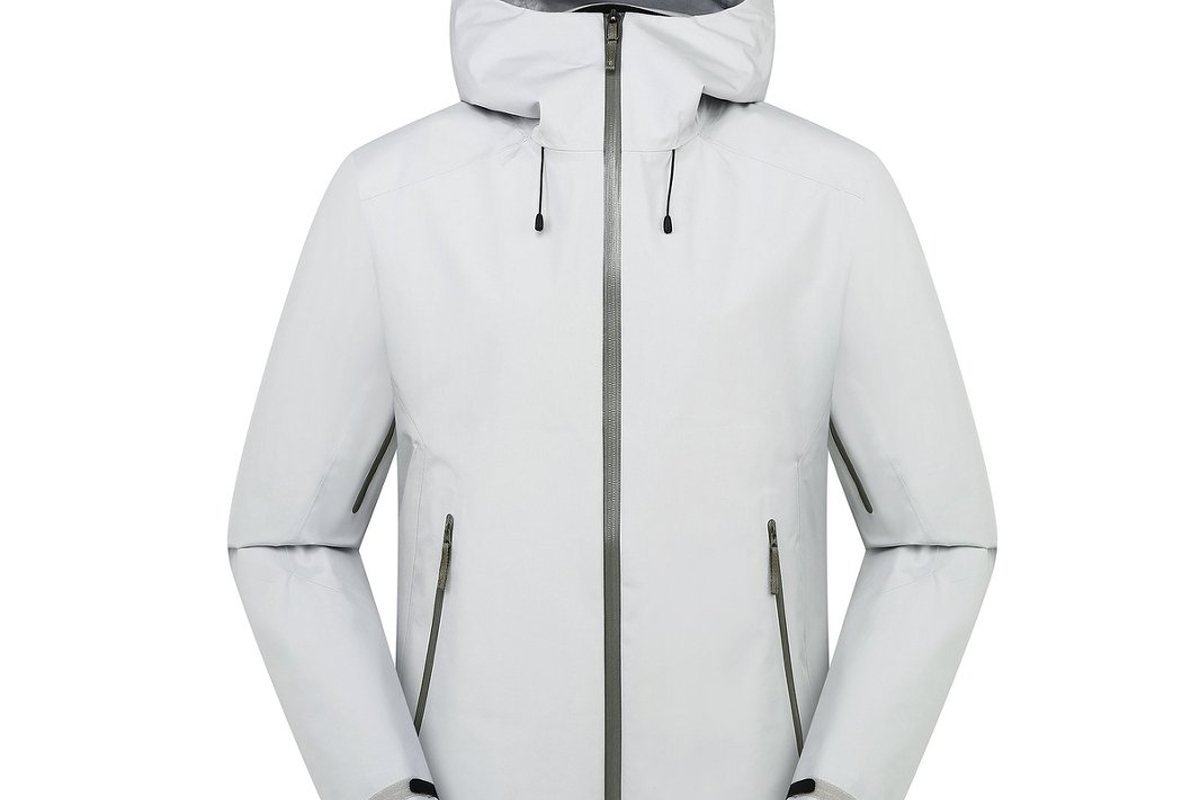
What Does 20,000mm Waterproof Mean?
Simply put, what does 20000mm waterproof mean? It refers to a hydrostatic head rating of 20,000 millimeters-the height of a 1-inch-wide column of water the fabric can support before three drops of water penetrate the surface. For perspective, 20,000mm equals 20 meters, or about 65 feet, of water pressure. A jacket with this rating can handle heavy, wind-driven rain, wet snow, and even brief submersion without leaking.
In practical terms, a 20,000mm membrane outweighs the typical 1,500mm waterproof minimum by a factor of 13. The rating is commonly paired with a moisture vapor transmission rate (MVTR) of 20,000g/m²/24h, creating a balanced shell that blocks external water while allowing internal sweat vapor to escape. This combination appears in high-end mountaineering shells, ultralight backpacking jackets, and severe-storm gear.
1. Hydrostatic Head Scale for B2B Buyers
To interpret the rating, compare it against common benchmarks. The table below maps HH thresholds to recommended use cases, helping you specify the correct fabric for your target customer.
2. Real-World Pressure vs. Lab Rating
Lab conditions under ISO 811 apply static water pressure on a flat fabric swatch. In the field, a backpack shoulder strap exerts dynamic pressure that can reduce effective waterproofing by 50-70%. A 20,000mm fabric may perform like a 6,000-10,000mm fabric under a loaded pack. This is why construction quality-seam tape, DWR refresh cycles, and membrane lamination-determines longevity more than the initial HH number.
How Hydrostatic Head Is Tested (ISO 811)
ISO 811 outlines the standard test method. A 100cm² fabric sample is clamped under a cylinder filled with distilled water. The water column rises at a rate of 100mm/min or 600mm/min, depending on the protocol. The test stops when the third water droplet appears on the fabric’s underside. The height of the water column at that moment is the hydrostatic head rating.
1. Key Variables That Affect Test Results
- Water temperature: Colder water is denser and yields slightly higher HH values. ISO 811 specifies 20°C, but seasonal lab variations can shift results by 200-500mm.
- Fabric tension: A loosely clamped sample stretches under pressure, artificially raising the rating. Reputable labs use a calibrated clamping ring to maintain consistent tension.
- Seam sealing: The test only measures the fabric, not the finished garment. A jacket with 20,000mm fabric but unsealed seams leaks at the stitch lines immediately.
2. Laboratory vs. Field Performance
Laboratory testing ignores abrasion, body oils, and DWR degradation. After 20 wash cycles, a 20,000mm jacket can lose up to 40% of its original HH rating, per internal testing data from membrane suppliers. This is why sample development should include a wash-and-wear protocol before bulk production sign-off.
Sample MOQ: 1 piece. Bulk MOQ: 30 pieces per SKU. Sampling time: 7-10 days.
When 20,000mm Is Overkill: Cost-Benefit for B2B Buyers
For many B2B programs, understanding what does 20000mm waterproof mean also means knowing when to avoid it. A 20,000mm membrane adds fabric cost, reduces breathability, and often requires a 3-layer construction that drives up unit price. If your end-user is a school child walking to class or a corporate team wearing jackets for light rain, a 10,000mm or even 5,000mm rating may be sufficient and more cost-effective.
1. Cost Comparison by Rating
2. Decision Matrix: School Uniform Program vs. Outdoor Brand
- School uniform program: A 5,000mm jacket with a durable water repellent (DWR) finish and sealed seams often meets the need for a 15-minute walk in rain. The lower fabric cost can save $2,000+ on a 500-piece order.
- Corporate team order: 10,000mm provides a good balance of protection and breathability for employees who commute or attend outdoor events. The additional cost over 5,000mm is marginal at scale, around $1, $2 per jacket.
- DTC outdoor brand: If your brand promises storm protection, 20,000mm is table stakes. Lower ratings risk returns and negative reviews that erode customer lifetime value.
Low-MOQ jacket manufacturing allows testing both 10,000mm and 20,000mm shells with 1-piece samples before committing to bulk, mitigating the cash-flow risk of over-ordering high-spec fabric.
Environmental Trade-offs: PFC-Free DWR and High-HH Membranes
High-hydrostatic-head membranes historically relied on perfluorinated compounds (PFCs) in the DWR finish to bead water off the face fabric. France has banned PFAS in consumer clothing since 1 January 2026, the EU restricts PFHxA in clothing from 10 October 2026, and California restricts PFAS in textile articles under AB 1817. This forces brands to adopt PFC-free DWR finishes, which currently have a shorter lifespan and lower oil repellency.
1. PFC-Based vs. PFC-Free DWR Performance
2. Certification Pathways for High-HH, PFC-Free Jackets
- OEKO-TEX 100: Screens finished textiles against over 1,000 harmful substances; on its own it does not prove a jacket is PFC-free. At our facility, this certification is pending, not yet held.
- BSCI: Social compliance audit that large EU and US corporate buyers require. BSCI is pending at our factory, not yet held.
- GRS (Global Recycled Standard): Requires a minimum of 20% recycled content and tracks the chain of custody. GRS-certified recycled polyester faces are increasingly paired with PFC-free membranes.
For brands targeting the EU market, transitioning to PFC-free DWR is not optional. France’s ban has applied since 1 January 2026 and the EU limit of 25 ppb PFHxA applies to clothing from 10 October 2026. The EU-wide restriction on all PFAS is still a proposal at the ECHA committee stage, so no 2027 deadline has been adopted.
Multi-Layer Construction: 2.5L vs. 3L and Effective Waterproofing
A 20,000mm hydrostatic head rating only applies to the membrane layer. The complete garment’s waterproofing depends on how that membrane is integrated into a multi-layer system. The three common constructions are 2-layer, 2.5-layer, and 3-layer. Each has distinct implications for durability, weight, and cost.
1. Construction Types and Their Impact
- 2-layer (2L): Membrane bonded to face fabric, with a hanging mesh liner inside. The liner protects the membrane from body oils and abrasion. Heavier and bulkier, but cost-effective for casual rain jackets. 20,000mm 2L jackets are common in school uniform programs.
- 2.5-layer (2.5L): Membrane bonded to face fabric, with a printed or sprayed-on partial backer. Lightweight and packable, but less durable. Often used in fast-and-light running shells.
- 3-layer (3L): Membrane sandwiched between face fabric and a knit backer, all bonded into one fabric. Maximum durability, ideal for 20,000mm expedition shells. The backer wicks moisture and protects the membrane from abrasion.
2. Cost and Performance Comparison
For a 20,000mm jacket, 3L construction is the industry standard for serious outdoor brands. A 2L or 2.5L with the same membrane may still achieve the HH rating in the lab, but real-world durability suffers. When sourcing through a private label program, discussing the construction type with the factory early prevents performance gaps.
Key Decision Criteria for Sourcing 20,000mm Jackets
When you’ve decided that a 20,000mm shell is right for your market, the next step is ensuring the manufacturer can deliver consistent quality without tying up cash in high minimums. Here are the criteria that matter most.
1. Seam Sealing and Quality Control
Even with a 20,000mm membrane, unsealed seams leak. The factory must use a hot-tape seam sealing machine with a temperature consistency of ±3°C. A best practice is to request a seam-sealed sample and test it under a shower-head or hydrostatic tester. In our Taizhou Sanmen facility, every production run undergoes inline seam-sealing inspection and random HH testing on finished garments.
2. MOQ Flexibility and Cash Flow
Many factories require 500-1,000 pieces per SKU for technical fabrics, which can tie up $15,000, $30,000 in inventory. Our 30-piece-per-SKU minimum allows you to launch with a small batch, test the market, then reorder. This is especially critical for DTC brands with 0-500K revenue.
3. Custom Branding and Logo Integration
Corporate and school uniform buyers often need embroidered logos, heat transfers, or woven labels. A custom logo service that handles everything in-house (from digitizing to placement) reduces lead time by 5-7 days compared to subcontracting. Confirm that the factory can position logos without damaging the membrane.
Ready to validate 20,000mm waterproof jackets with 1-piece samples and 30-piece bulk MOQ?
Book a 15-min sourcing call →
Key Takeaways
- The hydrostatic head test per ISO 811 measures the height of a water column a fabric withstands before leaking; a 20,000mm rating equals 20 meters of pressure.
- The global outdoor apparel market was valued at over $18 billion in 2024, according to Grand View Research, with waterproof-breathable fabrics driving premium segment growth.
- France has banned PFAS in consumer clothing since 1 January 2026, and EU REACH restricts PFHxA (a C6 acid) in clothing from 10 October 2026, pushing brands toward PFC-free DWR.
- GRS certification requires a minimum of 20% recycled content, a standard increasingly demanded by European and US outdoor brands, according to Textile Exchange.
- OEKO-TEX Standard 100 testing screens textiles against more than 1,000 harmful substances, providing a third-party verification of PFC-free and chemical safety.
- Switching from a 10,000mm to a 20,000mm membrane typically adds $2, $5 per jacket in fabric cost, a factor that can save $2,000+ on a 500-piece order when lower ratings suffice.
What does hydrostatic head mean in waterproof jackets?
A hydrostatic head (HH) rating measures how much water pressure a fabric can withstand before leaking. It’s expressed in millimeters, representing the height of a 1-inch-wide water column. A 20,000mm rating means the fabric resists a 20-meter-tall column. The test follows ISO 811, where pressure increases until three drops penetrate the fabric.
Is 20,000mm waterproof good for heavy rain?
Yes, a 20,000mm hydrostatic head rating is excellent for heavy, wind-driven rain and even brief submersion. It surpasses the 10,000mm hiking benchmark and is commonly used in severe-storm shells and mountaineering jackets. However, real-world performance also depends on seam sealing, DWR maintenance, and pack pressure.
What is the minimum HH rating for a waterproof jacket?
The industry minimum for calling a jacket “waterproof” is 1,500mm under ISO 811. However, 1,500mm only withstands light rain and limited pressure. For active use, 5,000-10,000mm is recommended. School uniform programs often use 5,000mm, while outdoor brands specify 10,000mm or higher for reliable protection.
How is hydrostatic head tested (ISO 811)?
ISO 811 clamps a 100cm² fabric sample under a cylinder of distilled water. The water pressure increases at 100mm/min or 600mm/min. The test stops when the third water droplet appears on the underside. The height of the water column at that point is the hydrostatic head rating. Temperature, fabric tension, and seam sealing are not measured in the fabric-only test.
Does higher waterproof rating mean lower breathability?
Not necessarily. Breathability is measured as moisture vapor transmission rate (MVTR), and many high-HH membranes are engineered to balance both. A 20,000mm / 20,000g/m²/24h rating is common in premium shells. However, dense membranes can reduce breathability; the construction and DWR finish also affect overall vapor transfer.