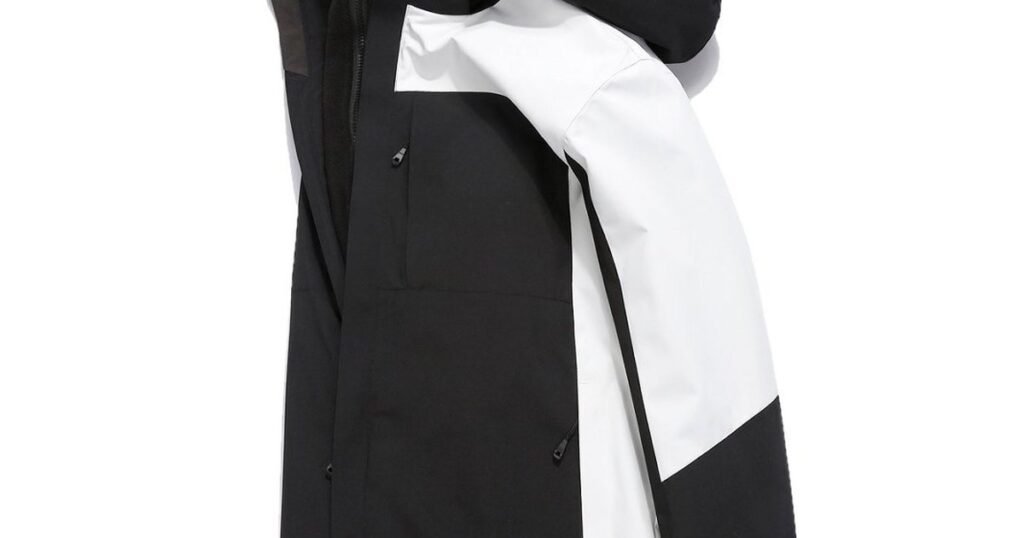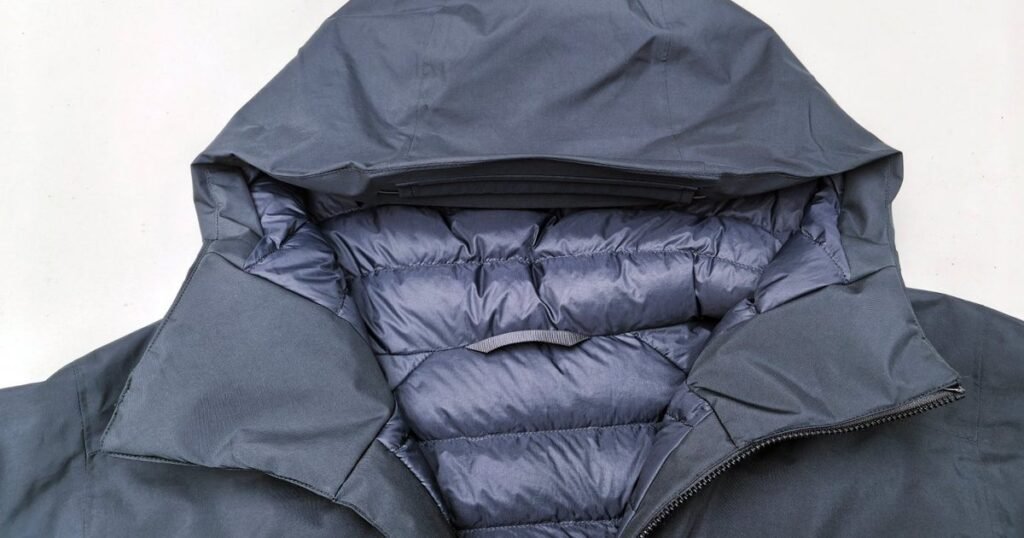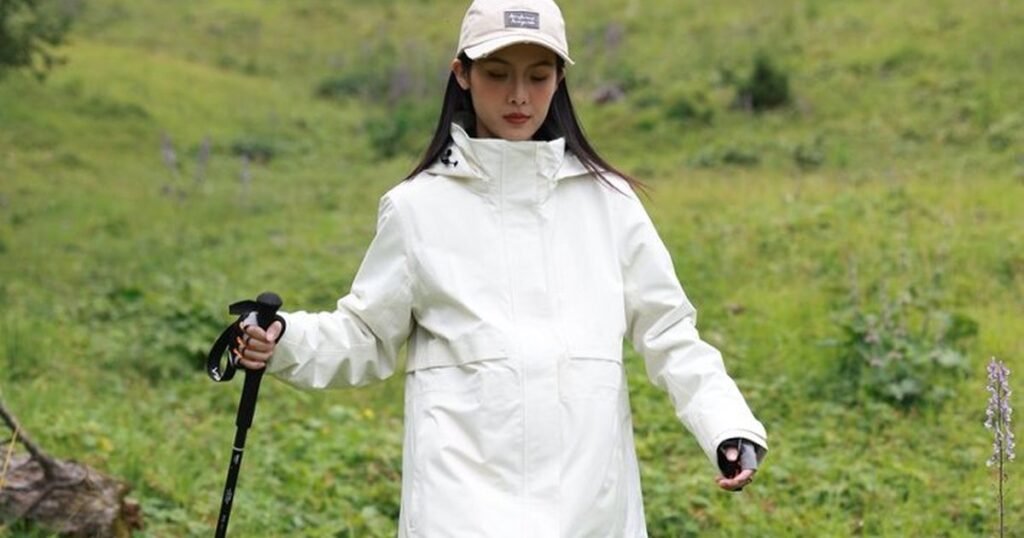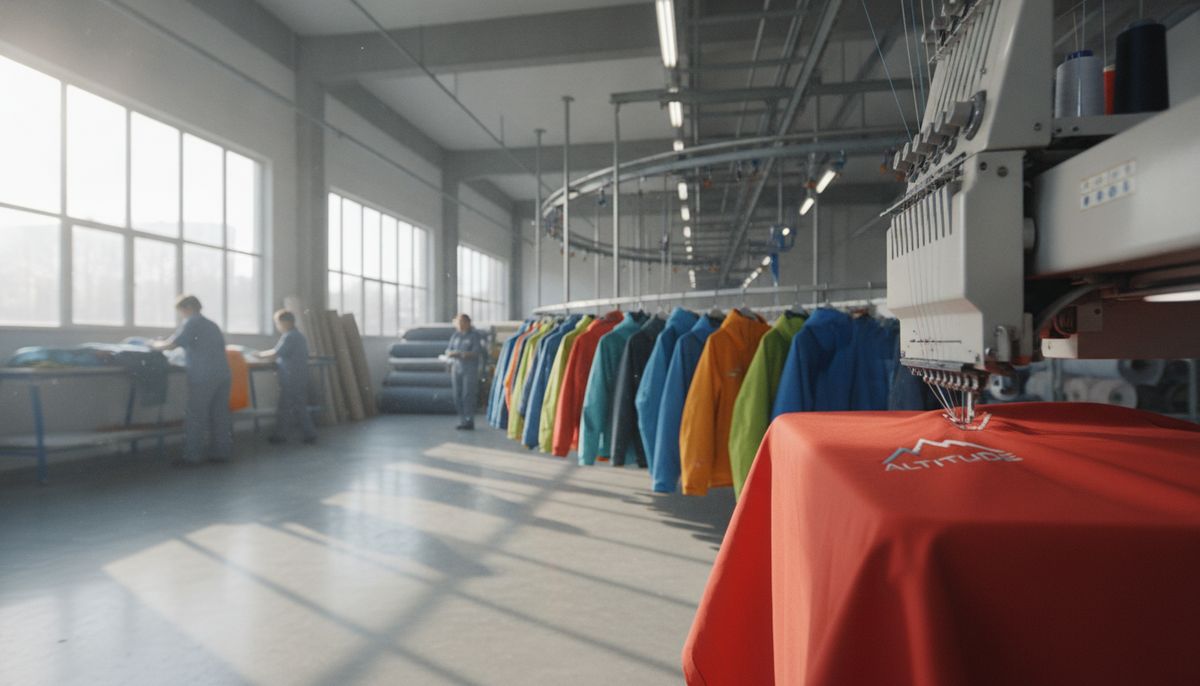
A ski jacket logo can be applied through embroidery, heat transfer, silicone badges, woven labels, or patches-each with different durability, waterproofing impact, and minimum-order requirements. Embroidery offers the longest lifespan but requires careful needle-hole sealing on technical shells, while heat-transfer methods avoid punctures but may delaminate under repeated washing. Sample MOQ for decorated ski jackets starts at 1 piece; bulk production typically requires 10 pieces per style.
📋 Table of Contents
Executive Summary
- Decoration methods: Embroidery delivers the longest lifespan but requires needle-hole sealing on waterproof shells; heat transfer avoids punctures but may fail under repeated washing.
- Waterproofing preservation: Seam-tape every embroidered logo on the interior, apply PFC-free DWR after heat transfer, and test wash performance before bulk production to avoid delamination.
- MOQ and sampling: Sample MOQ starts at 1 piece with a $100 sample fee refunded on bulk orders of 30+ pieces; bulk production requires 10 pieces per style with mixed colors and sizes.
- Landed-cost transparency: US buyers should budget for sampling, embroidery or heat-transfer tooling, freight, duties, and third-party testing when calculating total unit economics.
- Compliance requirements: US market requires fiber-content labeling under the Textile Fiber Products Identification Act, care instructions, country-of-origin marking, and California Prop 65 compliance for certain dyes.
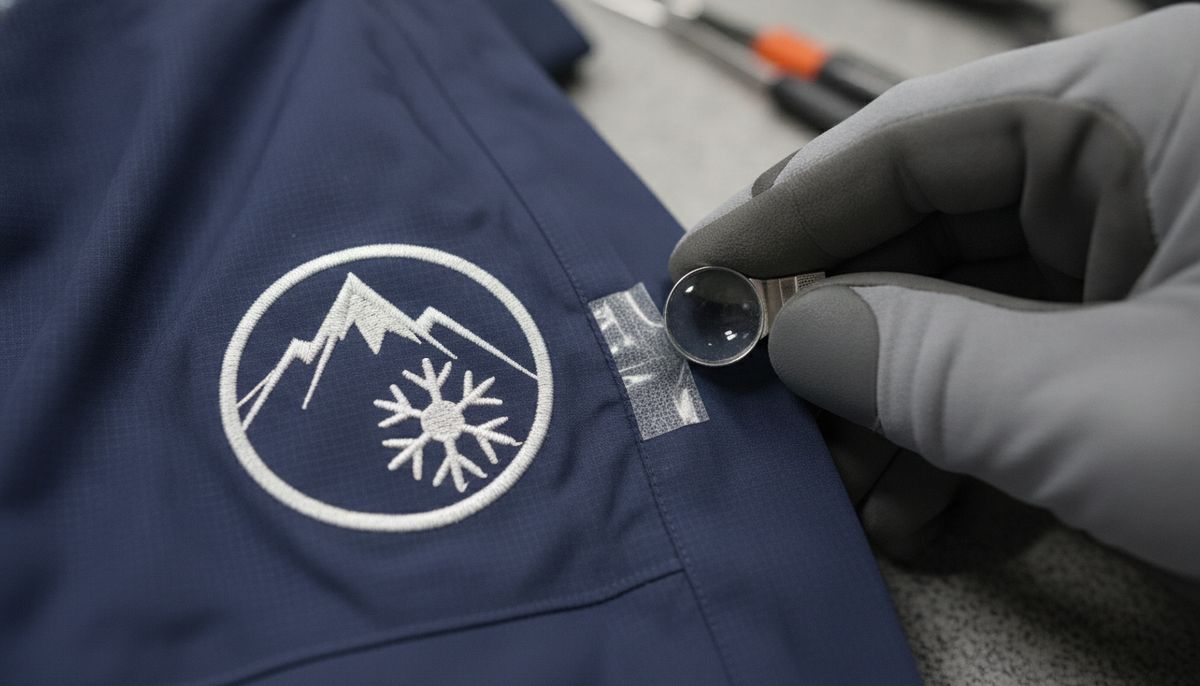
Which Decoration Method Fits Your Ski Jacket?
The choice of ski jacket logo application depends on shell fabric, expected wash cycles, brand visibility requirements, and whether the jacket uses a waterproof membrane. Embroidery, heat transfer, silicone badges, woven labels, and patches each carry trade-offs in durability, waterproofing impact, and cost.
Embroidery
Embroidery delivers the most durable ski jacket logo for corporate uniforms, school programs, and premium outdoor brands. Thread penetrates the shell fabric and backing, creating a raised texture that survives 50+ industrial wash cycles when properly sealed. The primary risk is needle-hole water ingress on jackets with waterproof membranes or laminated shells.
Buyers report that adhesive repair patches can detach within a week or fail after the first wash, making them unreliable for repeatedly washed ski clothing. Embroidery avoids this failure mode because the thread is mechanically locked through the fabric, not bonded to the surface. However, every needle penetration creates a potential leak point. OEM jacket manufacturing workflows address this by applying seam-tape to the interior of every embroidered logo on waterproof shells, sealing the needle holes while preserving the exterior graphic.
Embroidery setup requires digitizing the logo artwork into a stitch file, which incurs a one-time tooling cost. Stitch count drives production time and cost: a simple text logo may require 3,000 stitches, while a detailed graphic can exceed 15,000 stitches. Dense embroidery on lightweight shells can cause puckering or distortion, so buyers should request a 1-piece sample on the actual production fabric before committing to bulk.
Heat Transfer
Heat transfer applies a ski jacket logo using heat-activated adhesive film, avoiding needle holes entirely. This method suits low-MOQ runs, photorealistic graphics, and jackets where interior seam-taping is not feasible. Heat-transfer logos can reproduce gradients, fine detail, and full-color artwork that embroidery cannot match.
The adhesive bond relies on pressure, temperature, and dwell time during application. Insufficient heat or pressure causes edge lifting; excessive heat can scorch synthetic shells or damage waterproof membranes. Buyers purchasing custom ski jackets should specify the shell fabric composition and request a wash-performance test on the sample before bulk production. Heat-transfer logos typically survive 15 to 30 wash cycles before delamination begins, compared to 50+ cycles for embroidery.
Some customers say the smallest patches are too small and that the patch is nearly invisible, reducing its usefulness when a visible branded repair or logo is required. Heat-transfer sizing can be adjusted to any dimension without additional tooling cost, making it ideal for chest logos, back graphics, and sleeve branding on the same production run. However, the adhesive layer adds a slight stiffness to the fabric, which may be noticeable on lightweight softshell or stretch-woven shells.
Silicone Badges and Woven Labels
Silicone badges offer a middle ground between embroidery durability and heat-transfer flexibility. The badge is molded in 3D relief, then stitched to the jacket at the perimeter. The center of the badge remains waterproof because it has no needle holes, while the stitched edge can be sealed with interior seam-tape. Silicone badges survive 40+ wash cycles and provide a premium tactile feel for technical outdoor brands.
Woven labels use polyester or nylon thread woven into a fabric strip, then cut and stitched to the jacket. They deliver sharp text and simple graphics at a lower cost than embroidery, with similar wash durability. Woven labels are commonly used for interior neck tags, exterior chest branding, and hem labels. The stitched perimeter requires interior sealing on waterproof shells, but the small surface area minimizes water-ingress risk.
]
How Do You Maintain Waterproofing After Logo Application?
Waterproofing depends on the shell fabric, membrane or coating, and DWR finish. Logo decoration can compromise each layer, so buyers must specify sealing and re-treatment steps in the production specification.
Seam-Tape Interior Needle Holes
Every embroidered or stitched logo creates needle holes that penetrate the shell fabric. On jackets with waterproof membranes (such as 2-layer or 3-layer constructions), these holes allow water to bypass the membrane and reach the interior. Seam-tape applied to the interior of the logo seals the needle holes with a thermoplastic adhesive film, restoring waterproofing.
Seam-tape width, adhesive type, and application temperature must match the shell fabric and membrane. Polyurethane-based seam-tape bonds well to nylon and polyester shells; polyester-based tape suits recycled-content fabrics. Buyers should request a hydrostatic-head test on the sample after seam-taping to verify that the sealed logo meets the target waterproof rating. A recurring product-level concern is that a fleece jacket may support embroidery or patches but is not itself windproof or water-resistant, so buyers still need a technical shell for ski conditions.
DWR Re-Application After Heat Transfer
Heat-transfer logos sit on top of the shell fabric, blocking the original DWR finish in that area. Water no longer beads on the logo surface, creating a wet spot that can wick moisture into the fabric. Re-applying PFC-free DWR after heat-transfer decoration restores water repellency across the entire shell, including the logo area.
DWR can be applied by spray, dip, or foam methods. Spray application delivers the most uniform coverage on pre-decorated garments, while dip methods are more economical for bulk production. PTOUTWEAR applies PFC-free DWR certified by SGS to all custom-logo ski jackets, ensuring that decorated areas maintain water repellency after 20+ wash cycles. Buyers should specify DWR re-application in the production specification and request a spray-test video on the finished sample.
Wash-Performance Testing
Wash durability separates a ski jacket logo that survives a season from one that fails after a single laundry cycle. Buyers should request a 5-wash or 10-wash test on the sample before bulk production, using the same detergent and water temperature specified in the care label. The test reveals adhesive delamination, thread breakage, color bleeding, and DWR degradation.
ISO 6330 defines standard domestic washing and drying procedures for textile testing, but does not itself publish performance benchmarks. Buyers set their own pass/fail criteria based on expected use. A corporate ski uniform washed weekly for a full season requires 20+ wash cycles; a rental-fleet jacket may see 50+ cycles per year. Testing the sample under realistic conditions prevents bulk-production failures that cannot be remediated after cutting.
What Are Realistic MOQ and Landed Costs for Logo Ski Jackets?
Minimum-order quantities, tooling fees, and landed costs vary by decoration method, shell fabric, and target market. US buyers should budget for sampling, production, freight, duties, and third-party testing when calculating total unit economics.
Sample MOQ: 1 piece. Bulk MOQ: 10 pieces per style (mix colors and sizes). Sampling time: 7-10 days.
Sampling and Tooling Costs
A 1-piece sample allows buyers to validate fit, fabric hand-feel, logo placement, and waterproofing before committing to bulk production. Sample fee is $100, refunded against a first bulk order of 30+ pieces. Embroidery digitizing incurs a one-time setup fee, typically $30 to $80 depending on stitch count and complexity. Heat-transfer tooling is lower, often $20 to $50 for a single-color graphic.
Silicone-badge molds carry higher tooling costs, ranging from $200 to $500 for a custom 3D design. Woven-label setup is similar to embroidery, with digitizing fees of $30 to $60. Buyers launching multiple SKUs should request a consolidated sample package with one sample per colorway and logo placement, allowing side-by-side comparison of decoration methods on the actual production fabric.
Bulk Production and Freight
Bulk MOQ is 10 pieces per style, with colors and sizes mixed within that total. School and corporate uniform programs start at 30 pieces per style per color to qualify for volume pricing and sample-fee refunds. Production lead time is 25 to 35 days after sample approval, with a rush option delivering 1,000 pieces in 2 weeks at a +25% surcharge.
Freight cost depends on shipment size, incoterm, and destination. A 500-piece ski jacket order shipped FOB Ningbo to Los Angeles incurs ocean freight of approximately $1.50 to $2.50 per piece, while air freight raises that to $8 to $12 per piece. DDP shipping transfers freight, customs clearance, and duty payment to the manufacturer, simplifying landed-cost calculation for low-MOQ buyers without import experience.
Duties and Compliance Testing
US import duty on ski jackets falls under HTS code 6201 (men’s) or 6202 (women’s), with rates ranging from 16% to 27.7% depending on shell fabric, insulation type, and country of origin. Jackets made from man-made fibers typically incur a 27.7% duty rate, while down-insulated styles may qualify for lower rates. Buyers should consult a licensed customs broker to confirm HTS classification and duty exposure before placing bulk orders.
Third-party testing for OEKO-TEX Standard 100, California Prop 65, or CPSIA lead content adds $300 to $800 per test, depending on the number of components and colorways. Testing is optional for B2B buyers but required for consumer-facing brands selling through US retail channels. Buyers should budget for testing costs when calculating total landed cost per unit, especially for multi-color or multi-fabric styles that require separate tests per component.
Which Compliance and Sustainability Standards Apply?
US, UK, EU, Canada, and Australia buyers face different labeling, chemical-restriction, and sustainability requirements. Meeting these standards at the production stage avoids costly rework, shipment delays, and regulatory penalties.
US Market Requirements
The Textile Fiber Products Identification Act requires fiber-content labeling on all ski jackets sold in the US. The label must list fiber types by percentage (e.g.,